When you want a serum for hydration, ingredient names and words such as “rich” can make it hard to know what to compare. First check the moisturizing purpose on the label, then separate how it feels while spreading from how it feels afterward. Thickness and the price of the container alone do not determine how long hydration lasts or whether it suits your skin.
Here are points to help narrow the options before buying a facial hydrating serum. You do not need to replace all your current toner and emulsion or layer several serums. Consider purpose, feel, and conditions of use in order, and think about a bottle that fits your daily routine.
Match your reason for moisturizing to the product label
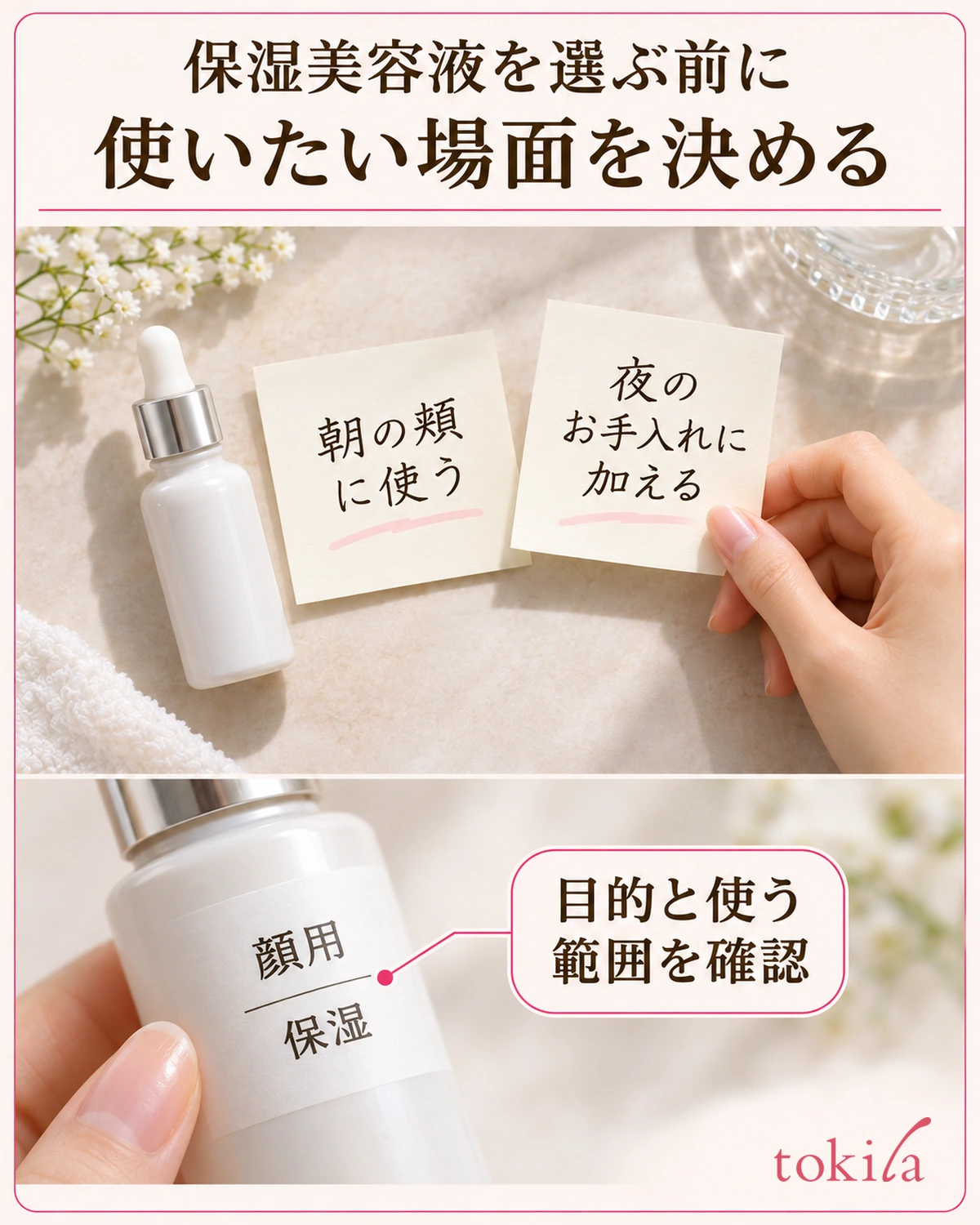
First write down what you want a serum to add. Specifying the area and time, such as “an extra moisturizing step before morning makeup” or “care for my cheeks at night,” makes your questions more concrete. Even if dryness bothers you, avoid expecting one new bottle to solve it without checking the amounts and order you already use.
Look for moisturizing purposes in the product description, such as adding moisture to skin or retaining it. A prominently displayed ingredient name does not necessarily match the way you want to use it. Check whether it is for the whole face or a specific area, and distinguish facial products from those for limited areas such as around the eyes.
The names “serum” and “essence” do not indicate that every product has the same role or position in a routine. Do not compare moisturizing cosmetics and quasi-drugs with other effects by container size alone. Nor do you need to interpret “medicated” as meaning the moisturizing feel is necessarily better.
If you already have pain, intense itching, or redness, prioritize dealing with your skin’s condition over comparing purchases. Do not add serum to cover up a problem. Follow the precautions for the cosmetics you use and consult a dermatologist when needed. Choosing moisturizing cosmetics and treating skin disease are separate matters.
Once you decide on one purpose, briefly note the wording you could confirm in each product description. Something like “for cheeks that feel dry, suitable for mornings too” is enough. Prioritizing what your situation needs, rather than finding one bottle that meets every advertising phrase, helps keep the list manageable.
Read ingredient purposes rather than ranking names alone
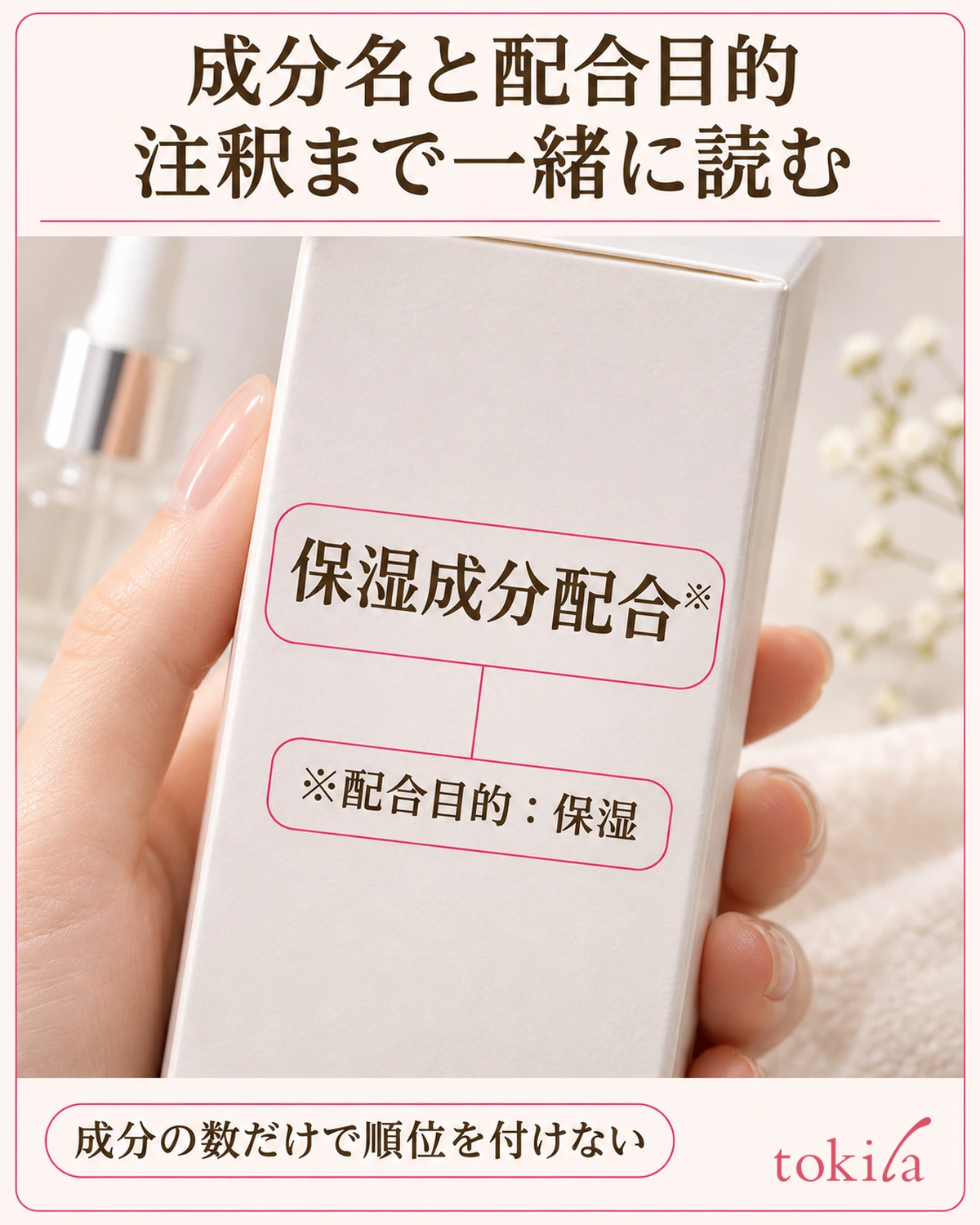
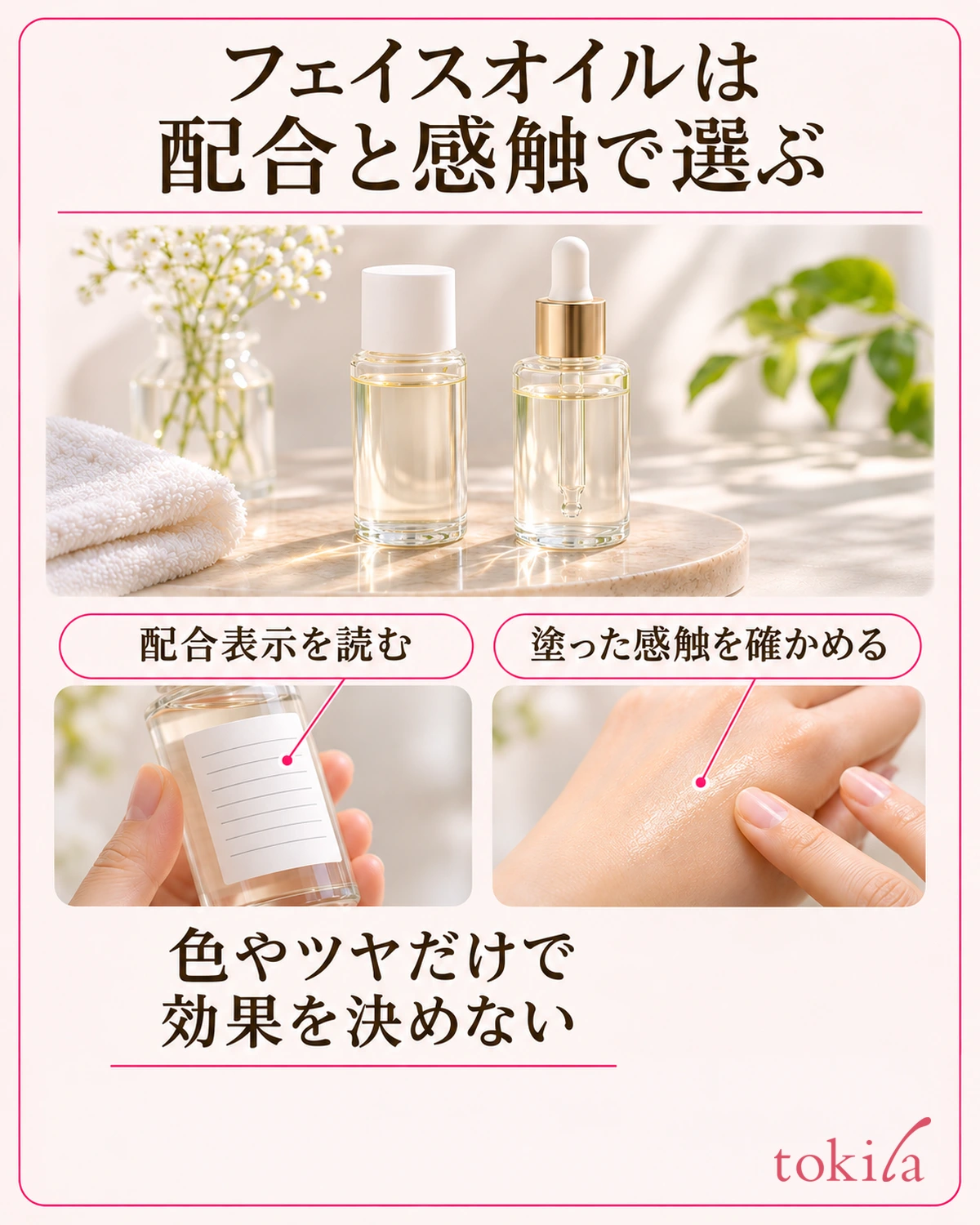
When comparing ingredients, look at each name together with its purpose in the formula. Even if words such as hyaluronic acid or ceramide are prominent, ingredient names alone cannot rank how moisturizing finished products are. Read the symbols and notes in the description to understand the purpose for which that product presents an ingredient.
If a product says it contains a certain number of ingredients, that number is separate from how it feels to you. Avoid assuming that more is always better or fewer always suits your skin. If a percentage is given, read which ingredient or mixture it refers to, rather than comparing numbers for different things.
Do not calculate concentrations yourself from the ingredient list or assume a transparent liquid contains fewer ingredients. If a previous product did not suit you, or you have been told to avoid an ingredient, those records can help a consultation. Keep that separate from deciding, based on one experience, whether all products containing that ingredient suit you.
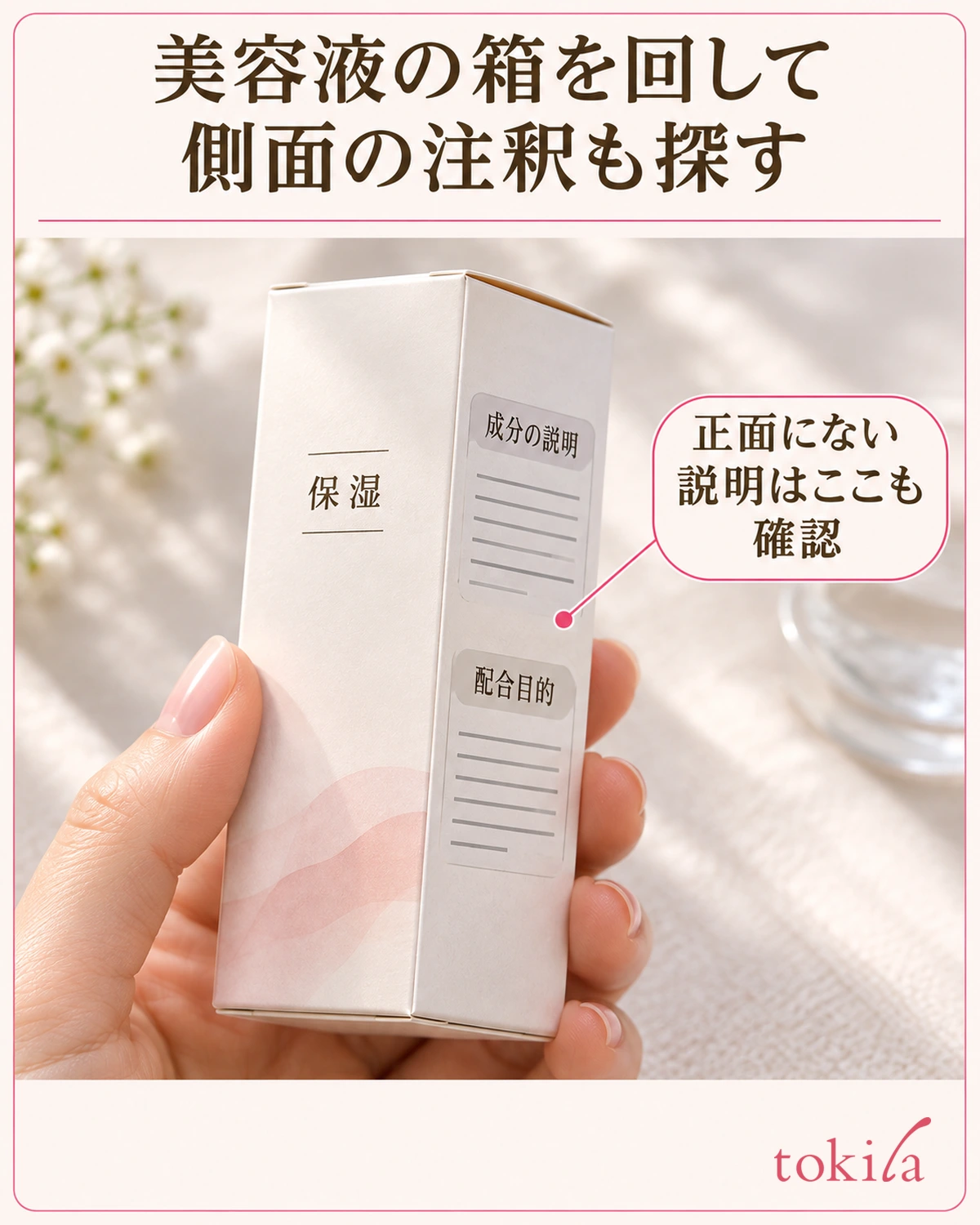
If notes are not visible on the front of the box, look on the side or back. The additional photo shows the side information panel hidden when the front faces you. Its purpose is to locate the notes that correspond to prominent wording, rather than simply admire the container’s color or shape.
An undisclosed percentage alone need not exclude a product. Mark anything you cannot confirm as “unknown” and consider comparable conditions such as purpose, feel, and the specified routine. If collecting ingredient names becomes the goal, return to your original question: when and where do you want to use it?
Check spreading feel and after-feel separately
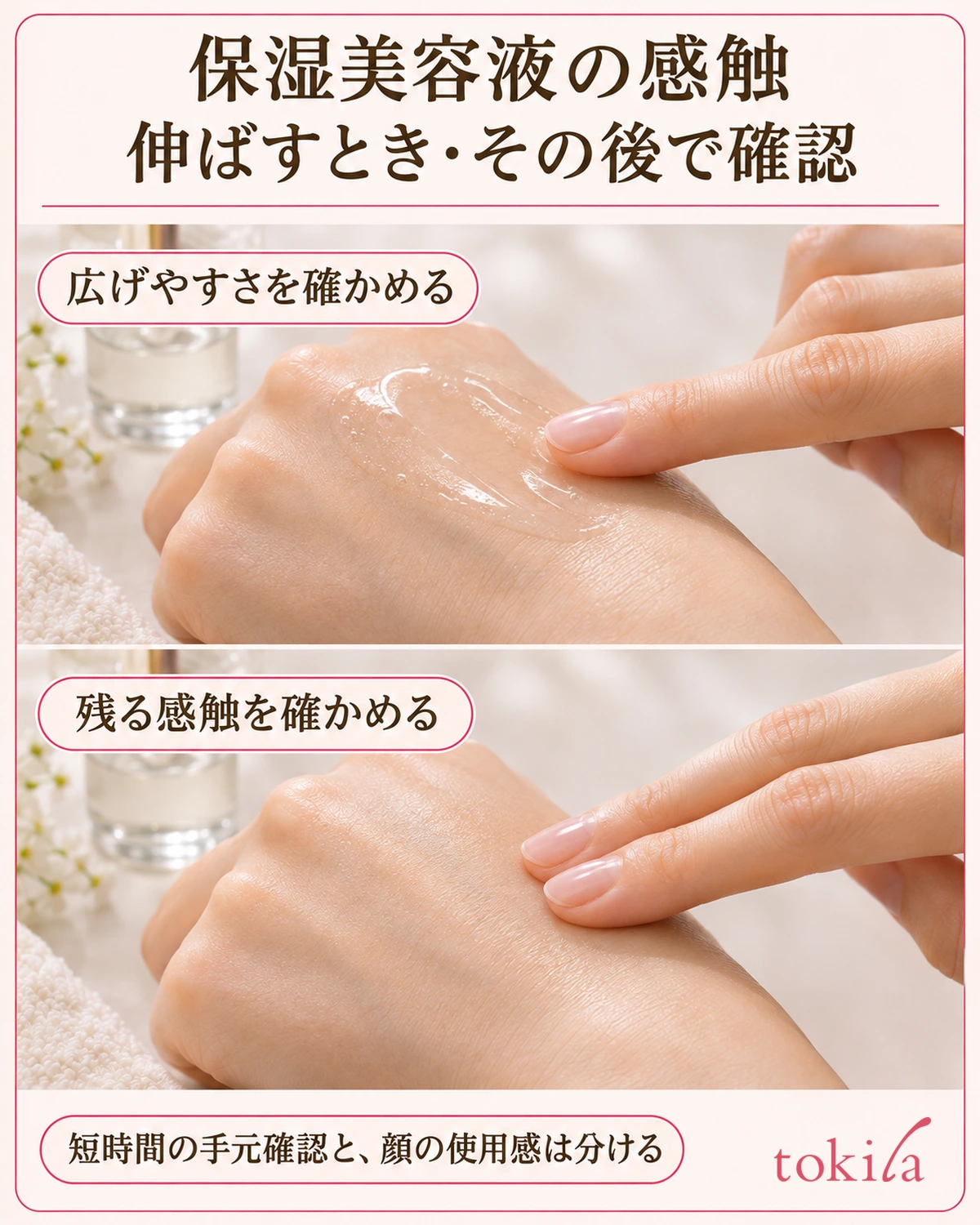
If testers are available, follow the store’s guidance and check where and how much to apply before trying one. You do not have to assume direct application to your face. Observe slip and ease of spreading first, then the sensation left afterward. The key is not to combine everything into the single word “moist.”
For example, a liquid that seems thick when dispensed may feel light after spreading. Conversely, a liquid that looks runny may leave a noticeable after-feel. Rather than treating visible viscosity as moisturizing performance itself, note the resistance as you move your fingers and the sensation afterward in your own words.
If trying two options, compare nearby areas under the same conditions within the guidance provided. Avoid attributing a difference solely to the products when one was applied generously and the other sparingly. If recommended amounts differ, record that too; do not change the instructions to force equal amounts.
The presence and strength of fragrance can also affect ease of continued use. However, a mild scent does not guarantee suitability for your skin. A brief observation on your hand does not confirm irritation on your face or all-day hydration. Separate the feel you can observe there from longer-term conditions you have not checked.
If shopping online without testing, compare the feel described for each product and turn unknowns into questions to ask before buying. Do not take shine in a photograph as evidence that dryness improved. Product images alone cannot convey resistance to the hand or after-feel. If feel is decisive, waiting for a chance to try it is another option.
Check morning and evening steps and whether the amount is practical
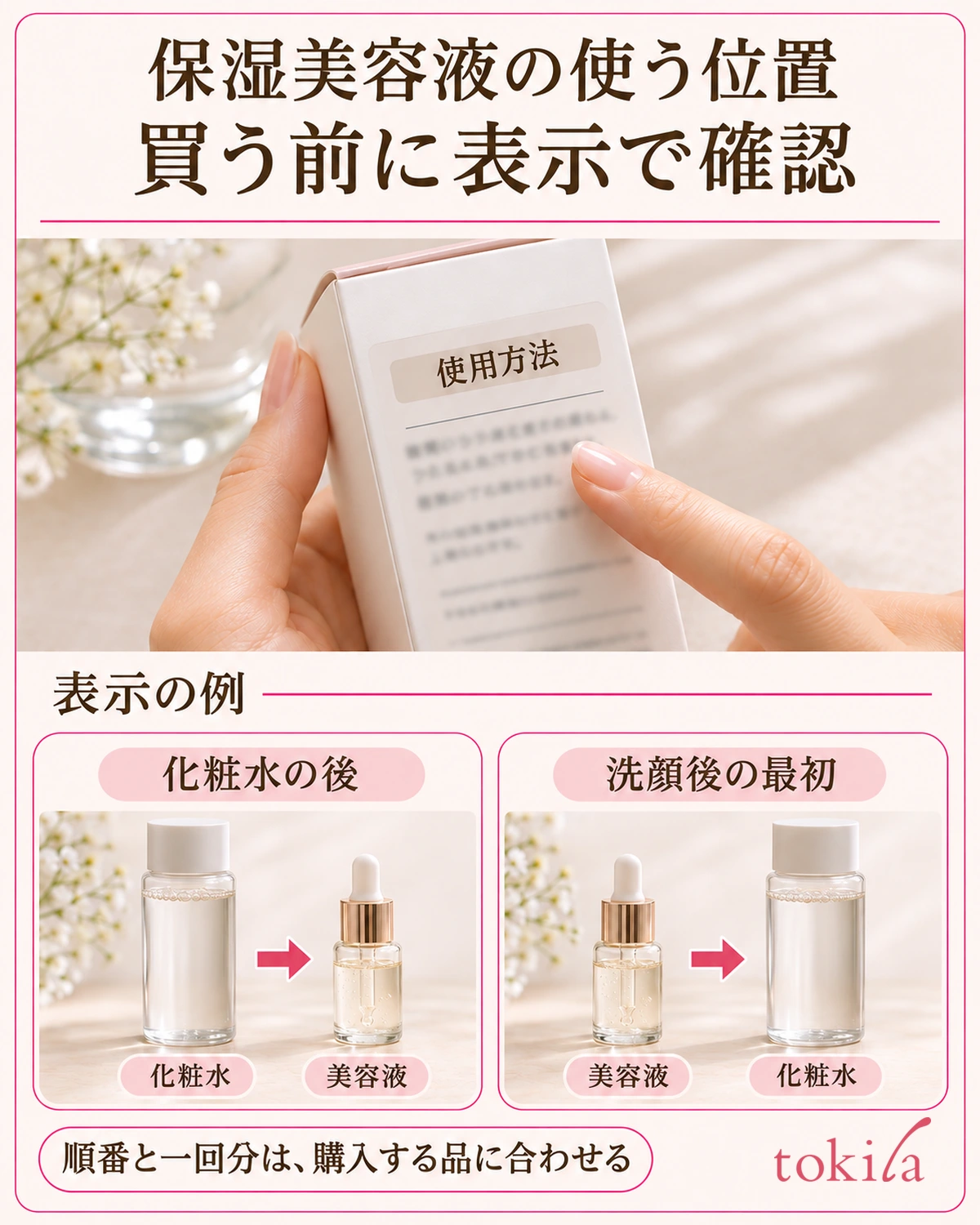
Once you narrow the options to about two, read the directions from the beginning. Even serums differ in placement: some follow toner, while others come first after cleansing. Prioritize the product’s instructions over a general order diagram, and check whether the routine includes continuing your current emulsion or cream.
Adding serum does not necessarily let you skip emulsion or cream. Distinguish products described as completing care in one step from those added to regular moisturizing care. For morning use, consider whether the specified steps fit into the time available, including sunscreen and makeup afterward.
Read the recommended pumps, drops, or container markings for each option. Even droppers need not deliver the same amount per drop, and one pump of one product does not translate to another. Rather than buying with plans to use far less than directed to save money, budget for use according to that product’s guidance.
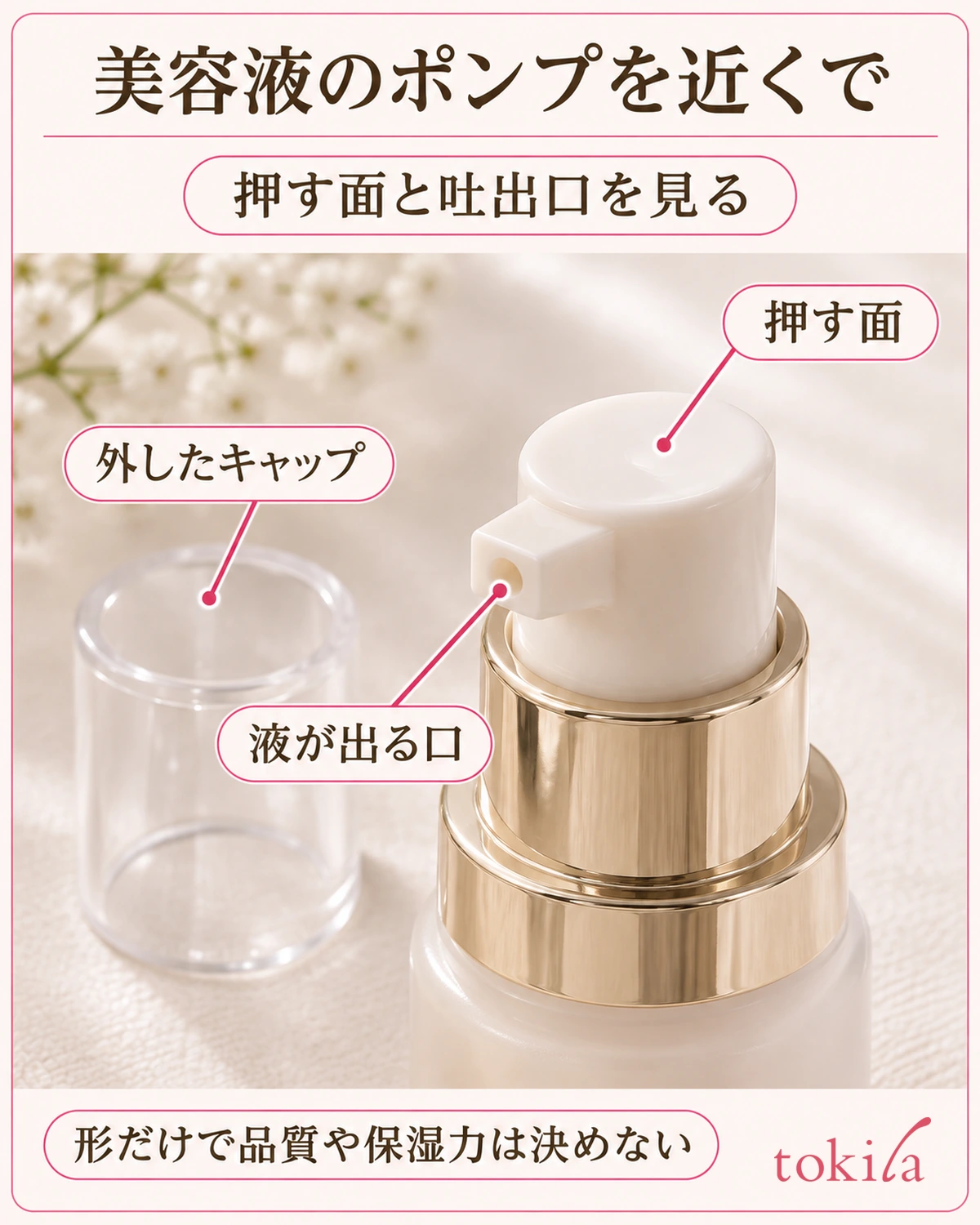
Look closely at the container tip’s structure too. The additional photo separates a pump outlet and removed cap, showing that the pressing surface and liquid outlet occupy different positions. It helps you imagine one-handed use; it does not judge liquid quality or hydration from the container shape.
If you already own several serums, you can organize their placement using checks before layering serums before buying another. If you cannot decide whether to replace your current bottle or whether simultaneous use is necessary, leave the routine question open rather than proceeding with the purchase first.
Compare purpose, feel, and routine, and record your reason
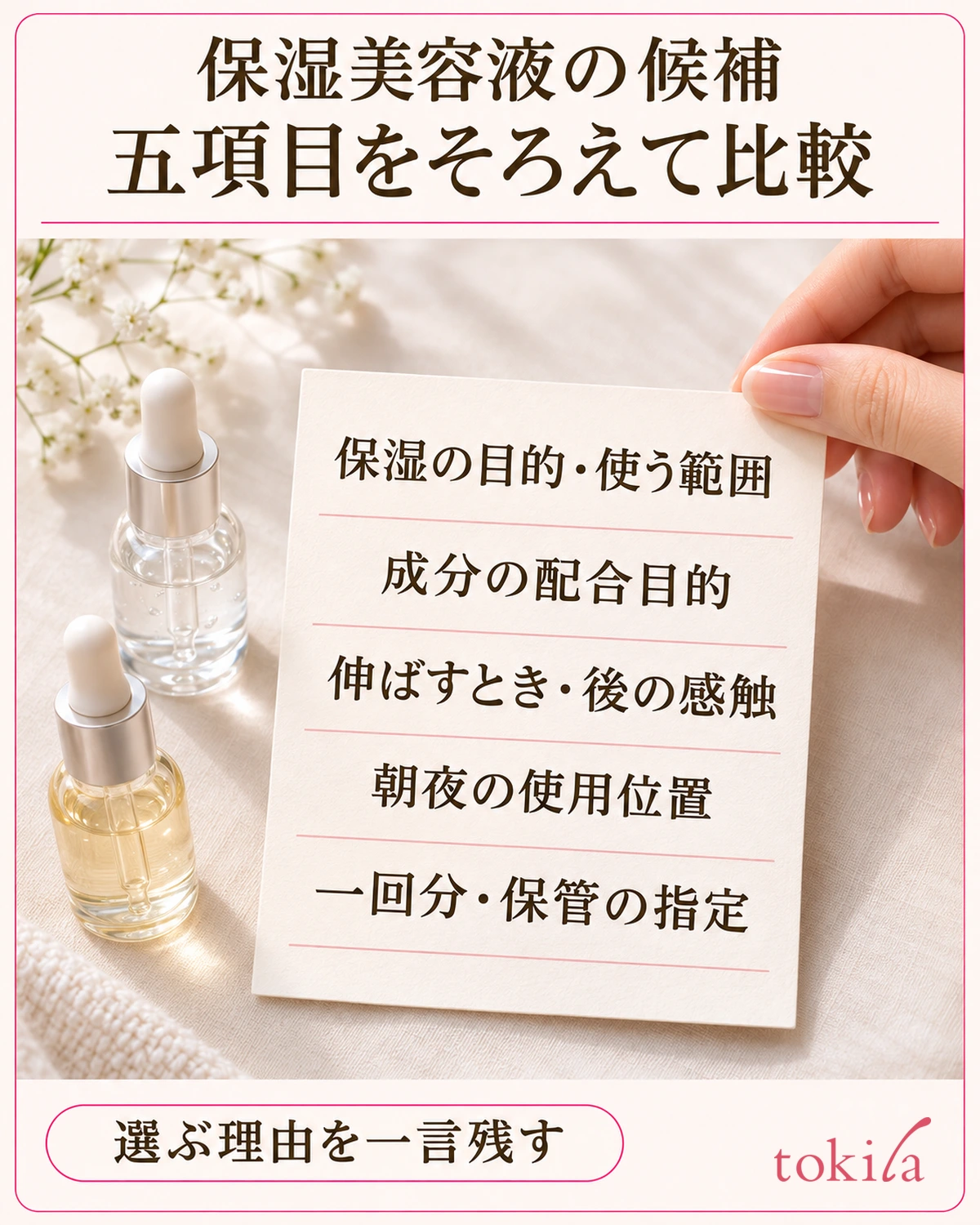
Finally, list five items for each option: moisturizing purpose and application area, explanation of ingredient purposes, feel while spreading and afterward, placement morning and evening, and recommended amount and handling. If you were comparing one product’s ingredient names with another’s container design, applying the same questions to both reveals missing information.
For someone wanting it before morning makeup, placement and after-feel may be decisive. For someone adding it to evening moisturizing, instructions for use with their current cream and the dispensed amount may matter more. Priorities vary, so there is no need to conclude that one bottle is optimal for everyone.
Compare capacity and price using the same kinds of information. Do not assume a large bottle lasts longer; check whether the amount per use and frequency are known. Avoid inventing an unlisted number of applications to calculate a definite daily cost. If buying only a refill, owning the compatible container is another condition.
After buying, keep the box and instructions in a form you can consult. Follow the product label for storage temperature and sunlight precautions. Do not assume refrigeration makes every product last longer. Rather than adding several new products at once, recording what changed makes it easier to review your routine later.
It is fine to wait if you could not try the decisive feel or do not know the conditions for combining it with products you own. If choosing one, leave a brief reason such as “usable in the morning, and I liked the after-feel.” If an abnormal reaction occurs after starting, do not continue on the assumption that it means the product is working; stop use and follow the precautions.