You want to buy liquid eyeshadow, but everything sparkles in its container and you cannot tell the differences. First, distinguish whether you want visible color or added sparkle over eyeshadow you already own. Even among liquid formulas, base-color intensity, the appearance of particles, permitted application areas, and layering methods vary.
This article explains how to compare options under matching conditions before buying. Separate this from application amounts and blending techniques, and identify what you need to check in a store or online to choose one. Leave textures and combinations that photographs cannot establish as unknowns instead of filling them in with assumptions.
Decide whether you want color or added sparkle
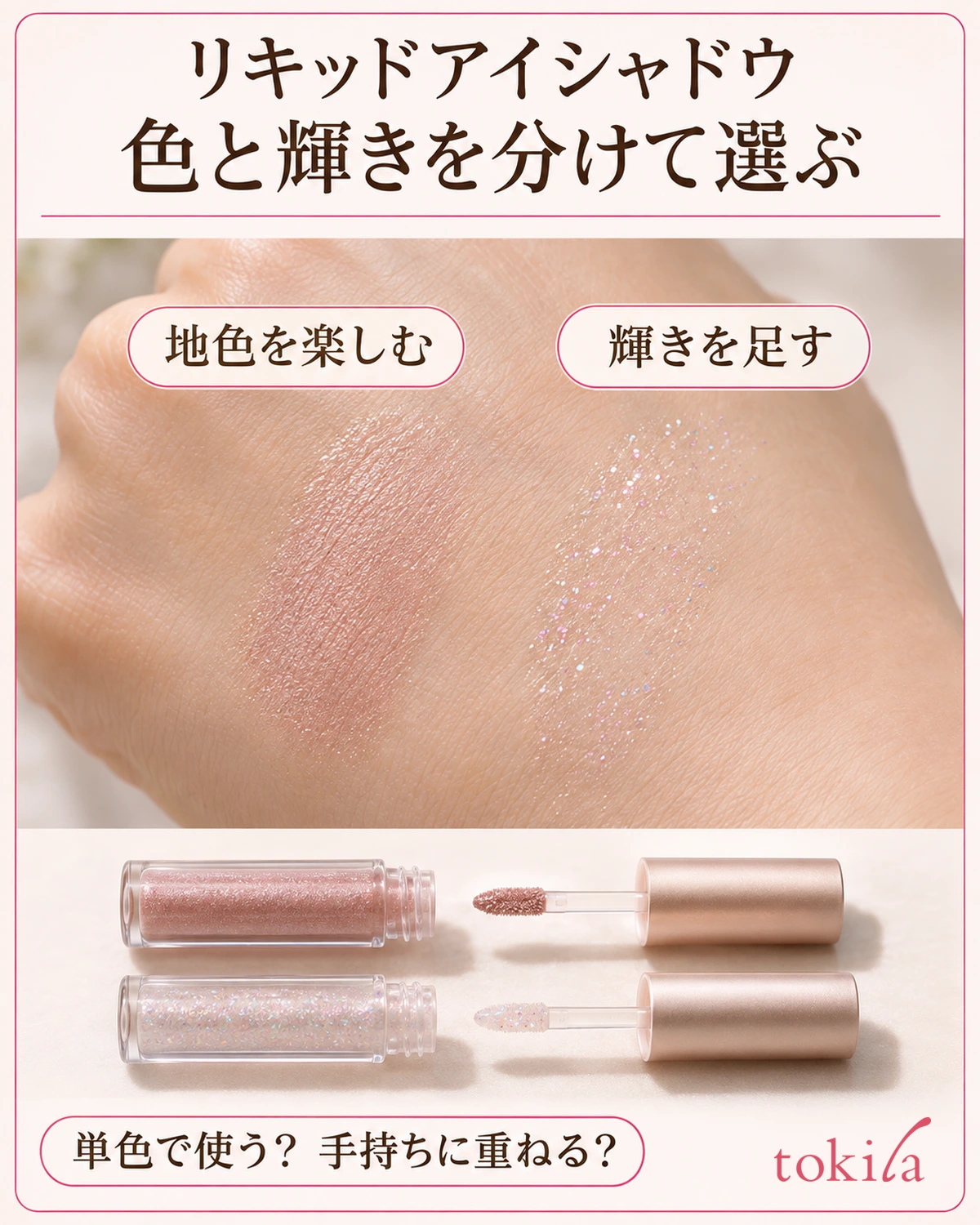
First, decide on one thing you want to change about your usual eye makeup. Do you want to spread one color across the eyelid, or add light over a color you already own? Even within pink shades, a visible base color and particles scattered in a sheer base serve different purposes. Do not assume the same use from the container's appearance alone.
For single-color use, look at the base color remaining when spread thinly. A sample with concentrated liquid in one spot may not help you imagine it across an eyelid. If testing is available, follow the store's guidance, check the permitted area and amount, and observe a thin spread of color. You do not have to test directly on your face.
For layering over existing makeup, distinguish added color from added light. If you choose a strong base color intending only sparkle, you must also consider its combination with the color underneath. Even something that looks almost clear may change the color when layered. Note your current shade names or photographs and specify the combination you want to compare.
Always check that the product is intended as liquid eyeshadow. Do not assume a similarly shaped gloss or highlighter can go on eyelids just because its container looks the same. Even eye products vary in their permitted areas, such as lower lids or near the lash line. Before buying, match your intended area to the stated application area.
Consider whether you usually want one product to complete the look or an addition to existing makeup only on days off. Rather than adding a role you rarely need, briefly describe what your current makeup lacks to help avoid buying similar shades repeatedly. Connect your choice to an actual occasion, beyond simply thinking a liquid seems convenient.
Observe base color and particle reflections separately
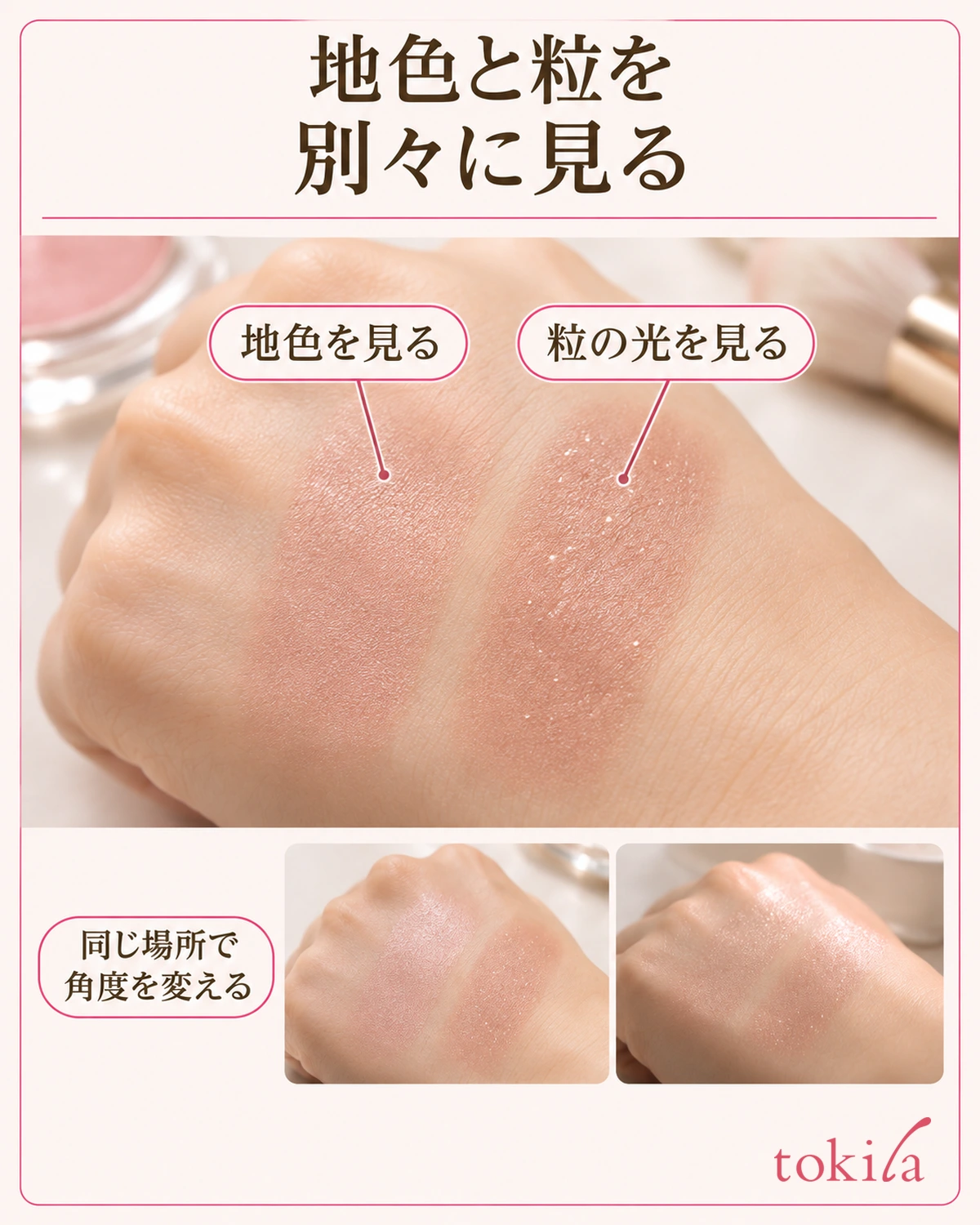
Next, separate color intensity from the appearance of sparkle. Observe the base color as the thinly spread surface color, and sparkle as the appearance of light-reflecting particles or pearl. Large, brightly reflecting particles do not necessarily mean strong base color. Conversely, clearly visible color does not mean large particles.
If you can try two options, use the same location and lighting and nearby areas. Do not interpret a thick application of one and a thin application of the other as a product difference. Record differences when the instructed methods prevent matching conditions. Do not layer or mix store samples without permission to make conditions match.
After looking at the base color straight on, turn your hand slightly to see whether light appears as individual points or a fine surface sheen. Comparing again at the original angle in the same location, rather than only directly beneath strong lighting, helps distinguish why the appearance changed. A photograph with intensified lighting is not evidence of the amount of sparkle itself.
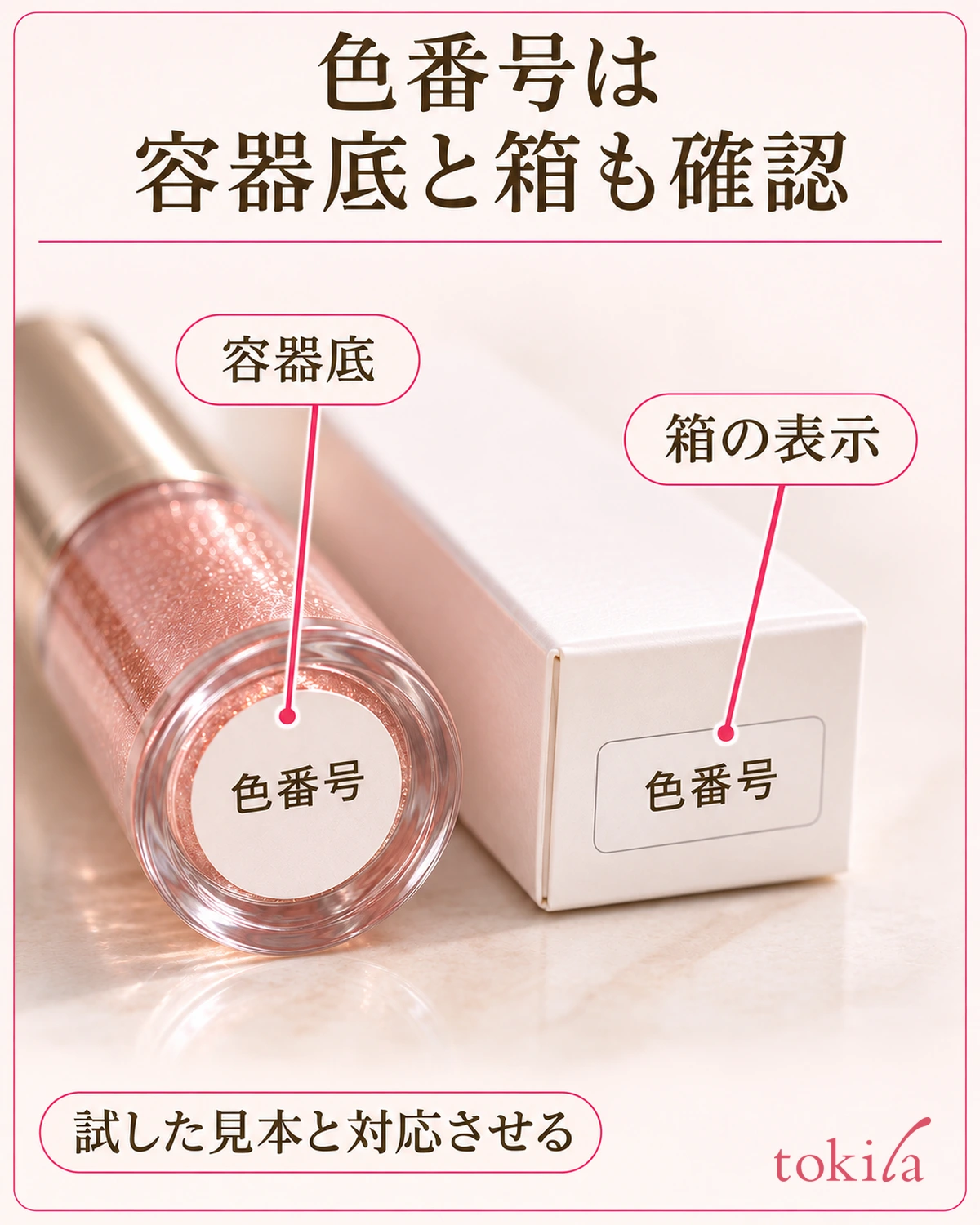
Shade numbers may be printed in small type on containers. When moving between similar options, locate the markings on the container bottom and box and match the number to the sample you tried. The supplementary photograph shows where to find these markings up close. Recording the sample and number together makes options easier to revisit later.
Online, do not treat the color of liquid alone, thinly spread color, and a finished-look photograph as equivalent information. Screens and shooting conditions also change appearance. A shade name such as "clear" or "brown" does not establish its color on your skin. If a decisive color remains uncertain, you can wait for a chance to check it.
Check layering conditions with your own makeup before buying
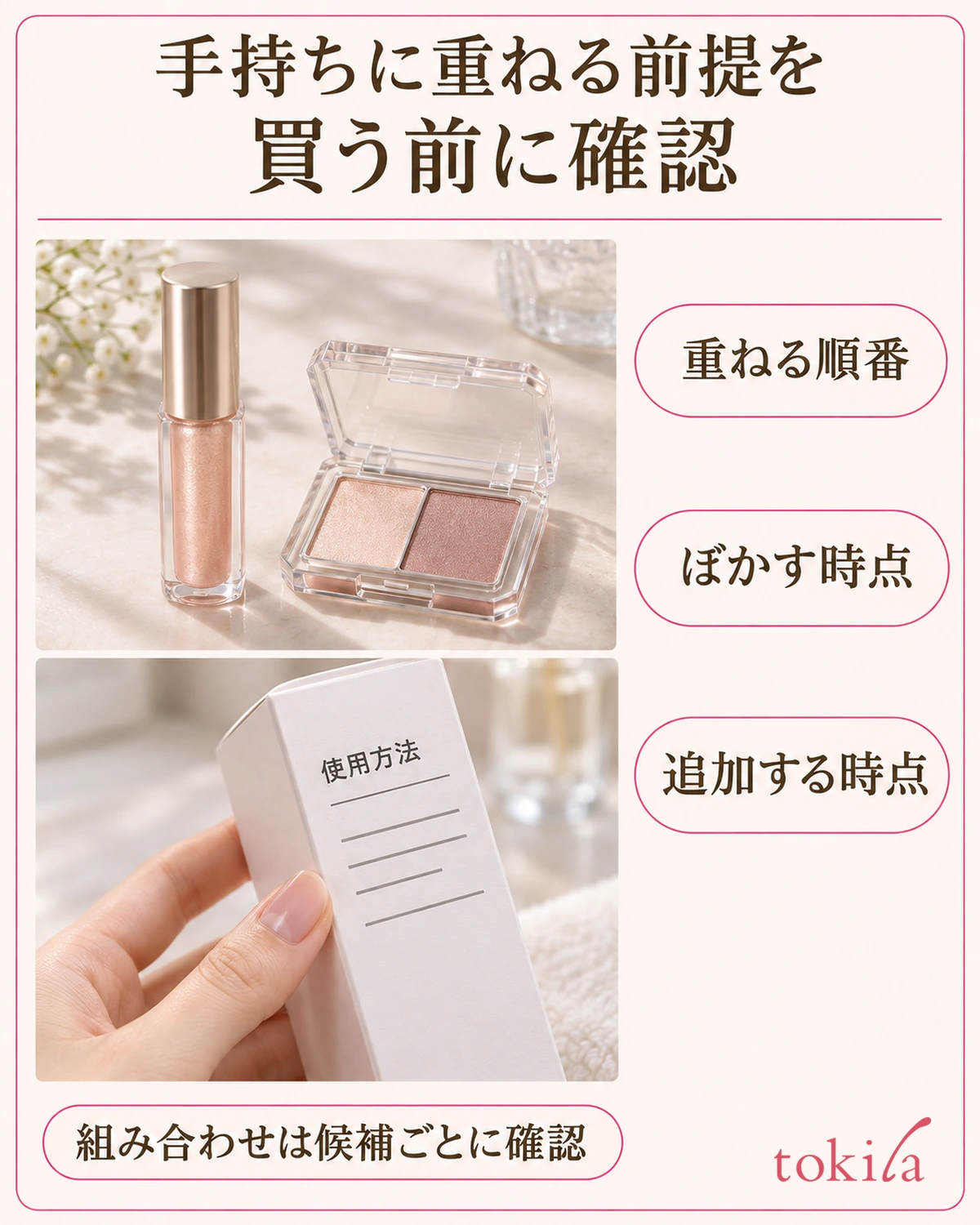
If you want to layer it after buying, read the candidate's full directions. Separately check whether it can be used alone, combined with other eyeshadows, and in what order. One product's combination example does not establish that every liquid can go either under or over powder.
Instructions to blend before the liquid dries and instructions to layer after drying may refer to different stages. Before buying, see whether the method allows time for blending or requires waiting before adding more. Rather than setting a universal number of seconds, use this to consider whether the steps fit your normal makeup time.
If you want to preserve your matte shade and add sparkle only in places, check whether the candidate permits that use. Conversely, if one liquid color will be the focus, clarify whether you really need to buy another powder. Separating desired combinations from necessary additional purchases reveals costs beyond the product itself.
A feel tested on your hand is not a result from prolonged eyelid wear. Looking dry does not prove it will not crease or come off; check the product's stated conditions for claims such as color wear. Distinguish a brief buying assessment from an all-day test, and do not add results of tests you have not performed to your notes.
If compatibility with your own makeup is unclear, turn the unknown into a question. Specific questions such as "Can I use it over this powder?" or "Is it blended with a finger?" make checking easier. Do not base a purchase on unconfirmed improvised methods such as mixing products in the container or thinning with another cosmetic.
Compare whether the applicator and removal method fit your routine
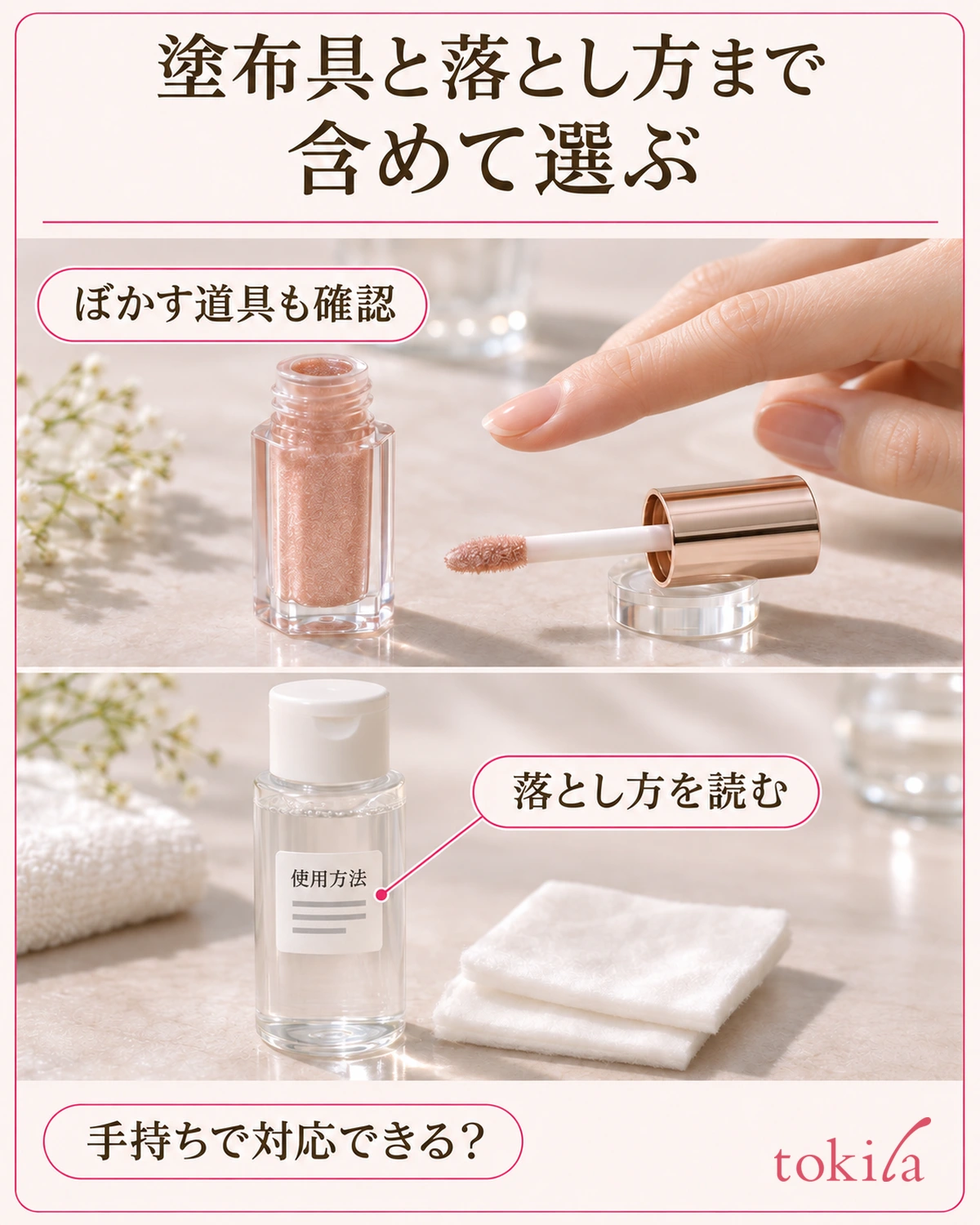
Compare dispensing formats such as tips, brushes, and tubes. Look at whether a narrow tip targets a small area or a broad applicator carries liquid. Even if you like its shape, blending may actually require a finger. Distinguish the container's appearance from the tools needed to finish.
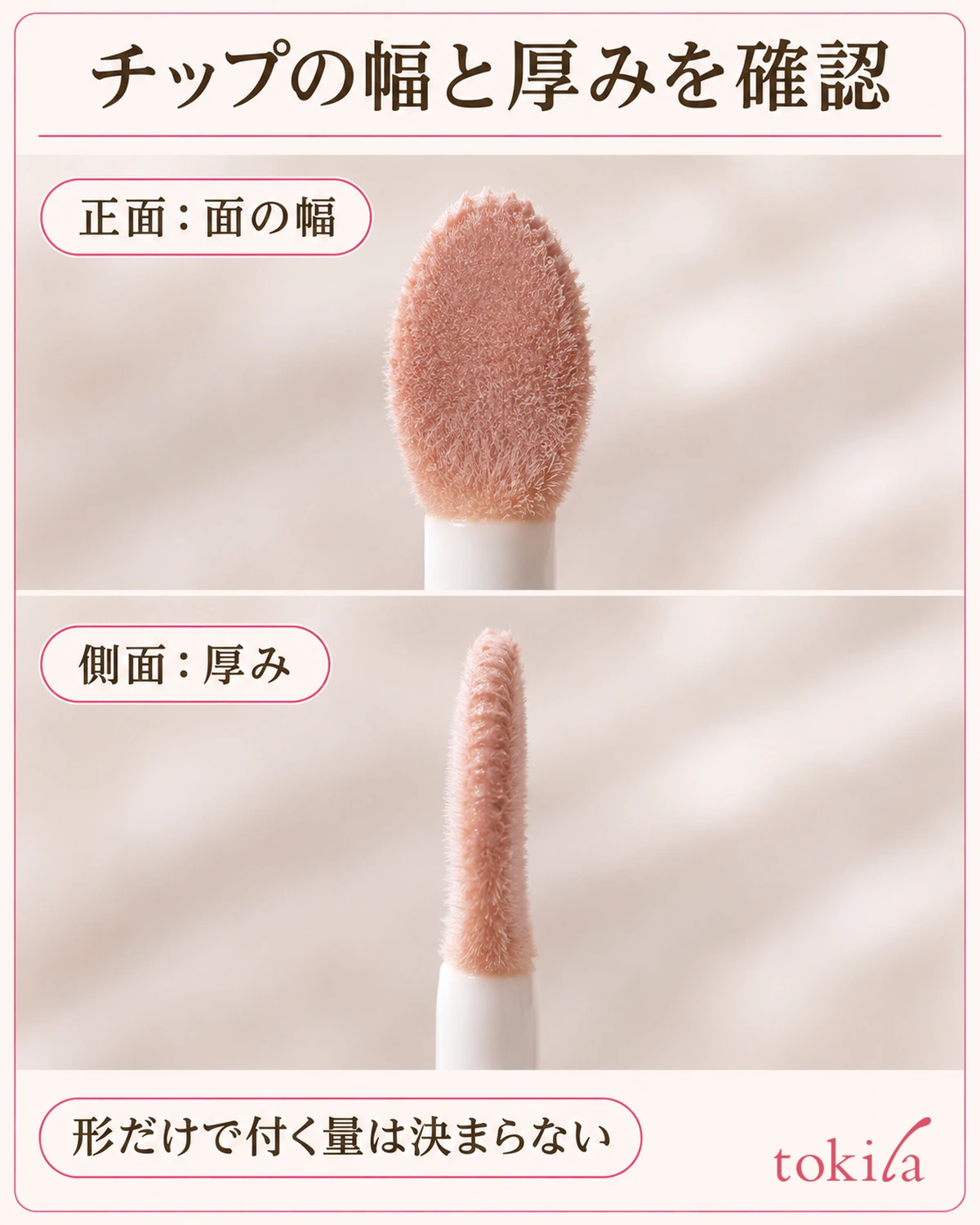
The supplementary photograph shows a flocked tip's flat face and side thickness at the same magnification. It helps you inspect the width of the part touching skin, which is difficult to judge from a whole-container photograph. A narrow tip does not guarantee a small amount, since shape alone cannot determine how much liquid it holds.
If a separate brush or other tool is instructed, check whether something you own is suitable. If using it away from home, consider carrying the tools needed for blending. Rather than ranking finger use as bad or supplied-applicator-only use as better, choose a method that fits where you apply makeup.
Removal is also a pre-purchase condition. Check whether you need a remover suitable for the intended area and whether your current cleanser is compatible. Water resistance alone establishes neither soap-only removal nor a definite need for a strong dedicated remover. Read the removal instructions for anything you layer with it as well.
When comparing volume and price, do not invent an unstated number of uses. The amount and area used each time affect depletion. Look beyond container size as a value measure and consider whether your budget covers necessary tools and removers. If opening, closing, or storage instructions apply, check whether you can follow them where you plan to keep it.
Compare the same five items and keep one deciding reason
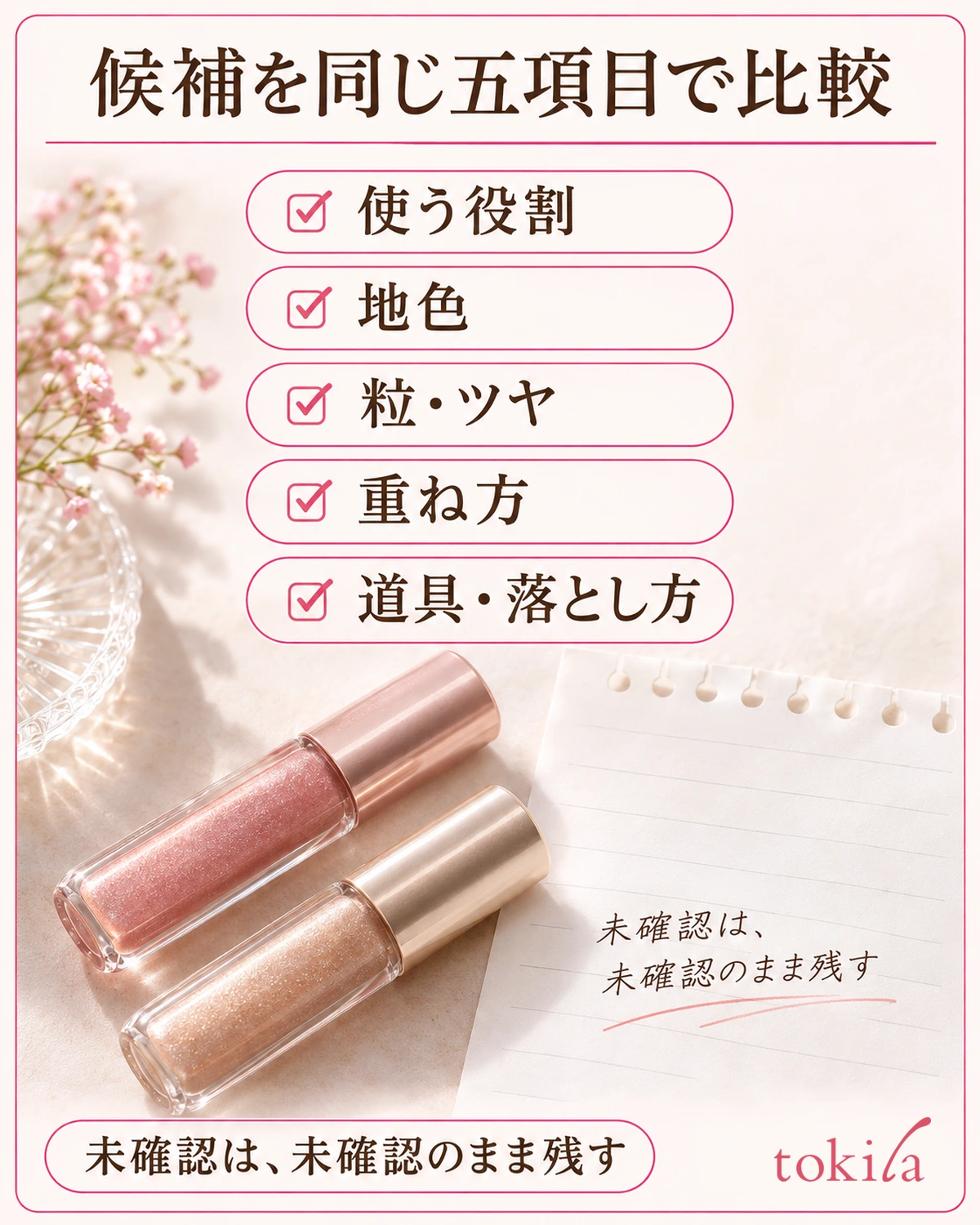
Finally, list "intended role," "base color," "particles and sheen," "layering," and "tools and removal" in the same order. If you have compared only sparkle for option A and only price for option B, ask both the same questions. You need not rank everything numerically; separating knowns from unknowns already helps organize the choice.
For example, if you want added light over your usual powder, permitted layering and the look of particles can decide the choice. If you want color from one product, the thinly spread base color and finishing tools may matter most. Return to your original use rather than treating one product as right for everyone.
If you already have a liquid and struggle only with the amount, before replacing it, consult how to dispense liquid eyeshadow to distinguish liquid on the tip from the amount transferred to the eyelid. Separating a new purchase from reviewing your current technique helps identify whether you lack a product or a method.
If buying, briefly record your reason. Your own words are enough, such as "The layering method suits my existing color, and I can enjoy the particles more than the base color." If feel or color is decisive but untested, you can postpone today. Leave unknowns as things to check next rather than filling them with expectations.
When starting use, reread the purchased product's instructions and do not mix in another candidate's method. If redness, itching, irritation, or other abnormalities occur, stop using it and follow the precautions. Match permitted areas to your own steps and check the finish each time so you can enjoy the color you chose.