When you wear a white top, the color or outline of the innerwear underneath can bother you. You thought white would hide white, yet the line shows at the neckline or shoulder. Or you picked beige, and on the clothes you actually own it still stands out. When that happens, don't decide by color name alone; try again with the pieces layered on as you really wear them.
This article walks through choosing, from what you already own, an innerwear piece to wear under white clothes. First decide whether you want it to be hard to notice or want to enjoy a layered look that shows, then check color, boundary and step separately. The same color does not suit every skin tone or every fabric.
1. Look separately at the color that shows through and the step that stands out

First, put on the white top you want to wear today and the innerwear you usually wear. In front of the mirror, stand in your usual posture with your arms down, rather than pulling your shoulders back and stretching the clothes. Pick one spot that bothers you: the whole chest area, only the neckline, or the shoulders.
If a patch of color shows under the clothes, observe the difference between the color of the innerwear and the skin around it. Even with white innerwear, the border with your skin can show through white clothes. Don't assume that white under white will hide everything; check how the outline looks as well.
If it is a thin line or a raised ridge that bothers you, look at steps such as seams, lace and folded-over fabric. Even when the patch of color blends in, a thick edge can stand out. If you change only the color in that situation, an edge of the same shape may remain. Treat color and thickness as separate things to check.
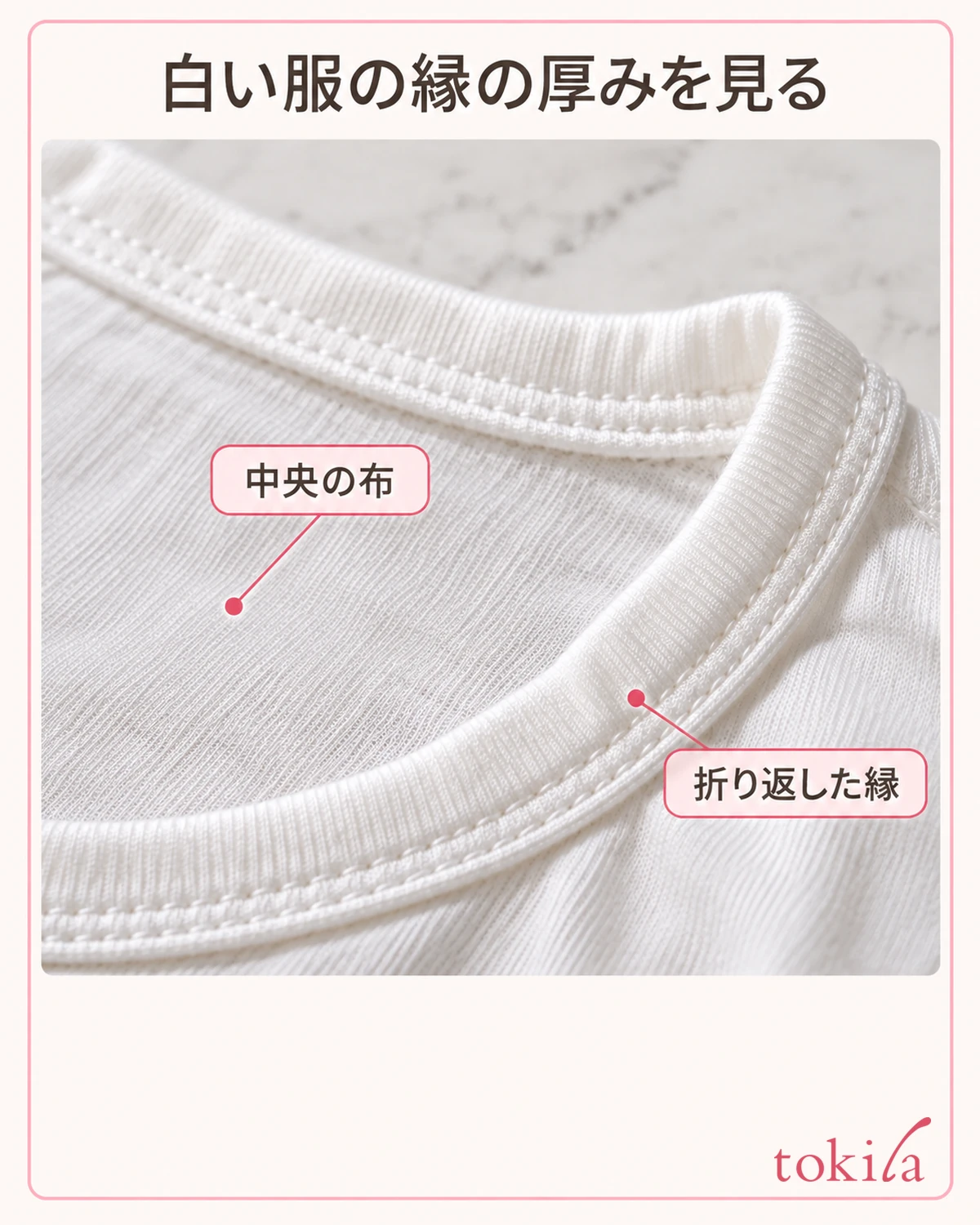
Sometimes it isn't showing through at all; the innerwear is coming out directly from the neckline of the top. Near the mirror, check whether you are seeing it through the white fabric or whether it sticks out beyond the collar. A part that sticks out directly is something to fix by reviewing the shape of the neckline and how you wear it, before you look for a color that shows through less.
On a day when you want a layered look that shows, you don't have to count the visible outline of the innerwear as a failure. On the other hand, on a day when you want it to be hard to notice, look first at the patch of color and then at the line of the edge. Even with the same clothes, the color and shape you choose change with the finish you are aiming for.
While you check, there is no need to wet the clothes or stretch the fabric hard. Start from the dry, everyday state. Keep this separate from care for color transfer or shrinkage, and don't try to change how the clothes show through by altering the clothes or the innerwear.
2. Compare two colors you own under the same top
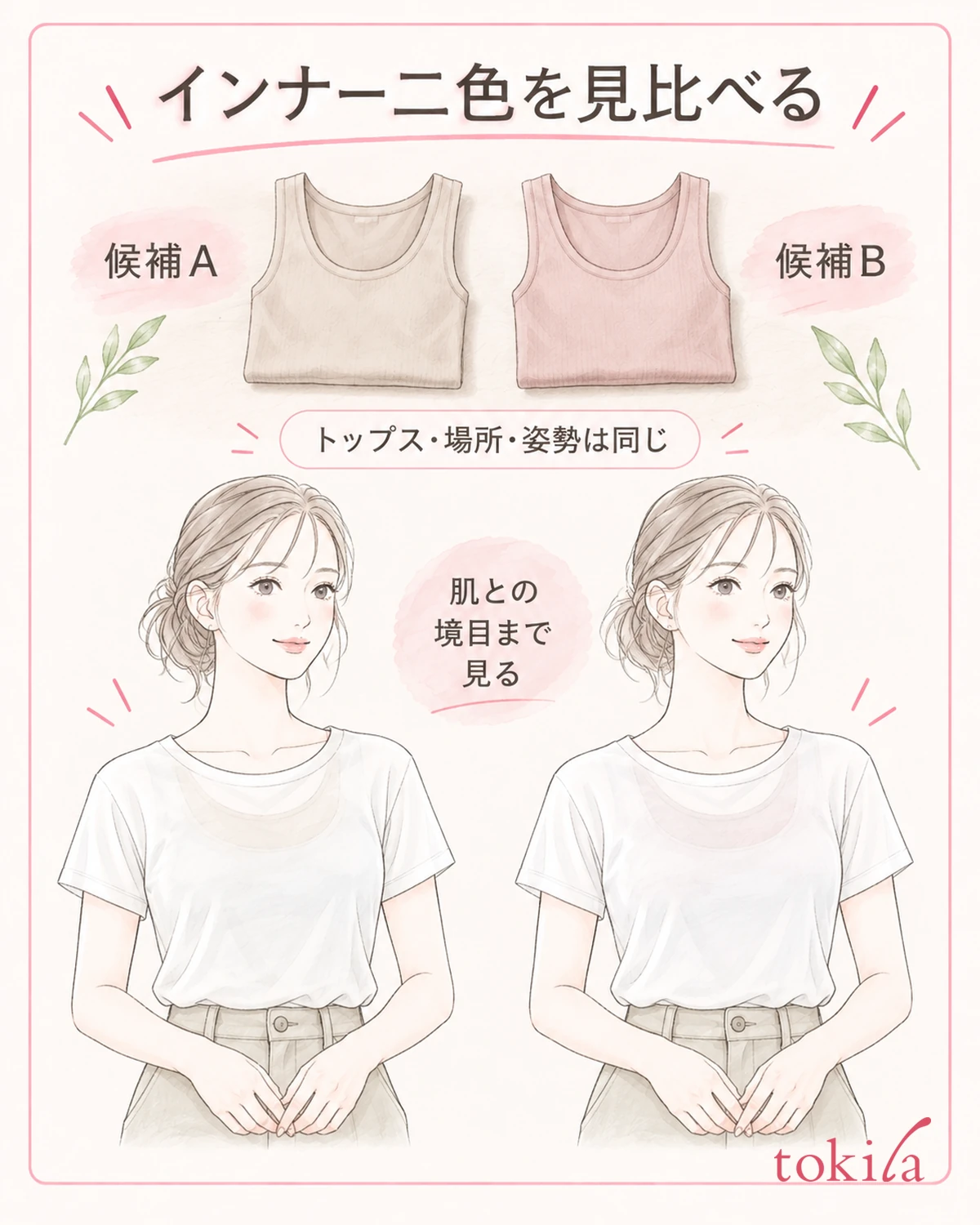
Start with two candidates: the innerwear you are wearing now and one in a different color. If you have them, a beige or pink close to your own skin can also be candidates. But even with the same color name, the brightness and the redness differ. Don't decide which is better by the name alone.
When you compare, choose two pieces that are as close as possible in shape and thickness, and use the same white top. A thin white camisole and a thick dark tank top differ in more than color at the same time. If it is hard to tell the reason for a difference, note the difference in shape as well.
Put on the first piece and look at the spot that bothers you in the mirror. Then change only the innerwear, stand in the same position and look at the same spot. If you go back and forth between a spot by the window and the back of the room, or between a bright mirror and a dark one, differences in light get mixed in too. First compare them one after another in a single place.
When you look at a candidate, look not only at the center of the innerwear but also at the edges of the neckline and shoulders where it changes to skin. Even if you like the color of the patch, the surrounding outline can look strong. If you are choosing for being hard to notice, look at both the center and the edge of the fabric, and keep the one that looks calmer under today's top.
If black or white is among the candidates you own, you may layer those and look as well. But don't assume that a dark color always hides it, or that a light color is never noticeable. Since the difference from your skin and how the white fabric lets things show through are both involved, it is important not to decide from a color swatch on a screen alone.
Also check the visible area. Whether only a small piece shows at the neck or the innerwear color shows widely across the upper body changes the impression of the whole outfit. If you want it to show, check not only how pretty the color is but also whether the visible range matches your intention. On a day when you don't want it to stand out, check the boundary with your skin first, rather than forcing the area to be small.
If you own only one color, there is no need to rush out and buy another just to compare. First check whether it is the patch of color or the line of the edge that bothers you. If you later get a chance to try another color, bring the same top along, and you won't have to compare against the last impression from memory alone.
3. Check the boundaries at the neckline, shoulders and hem
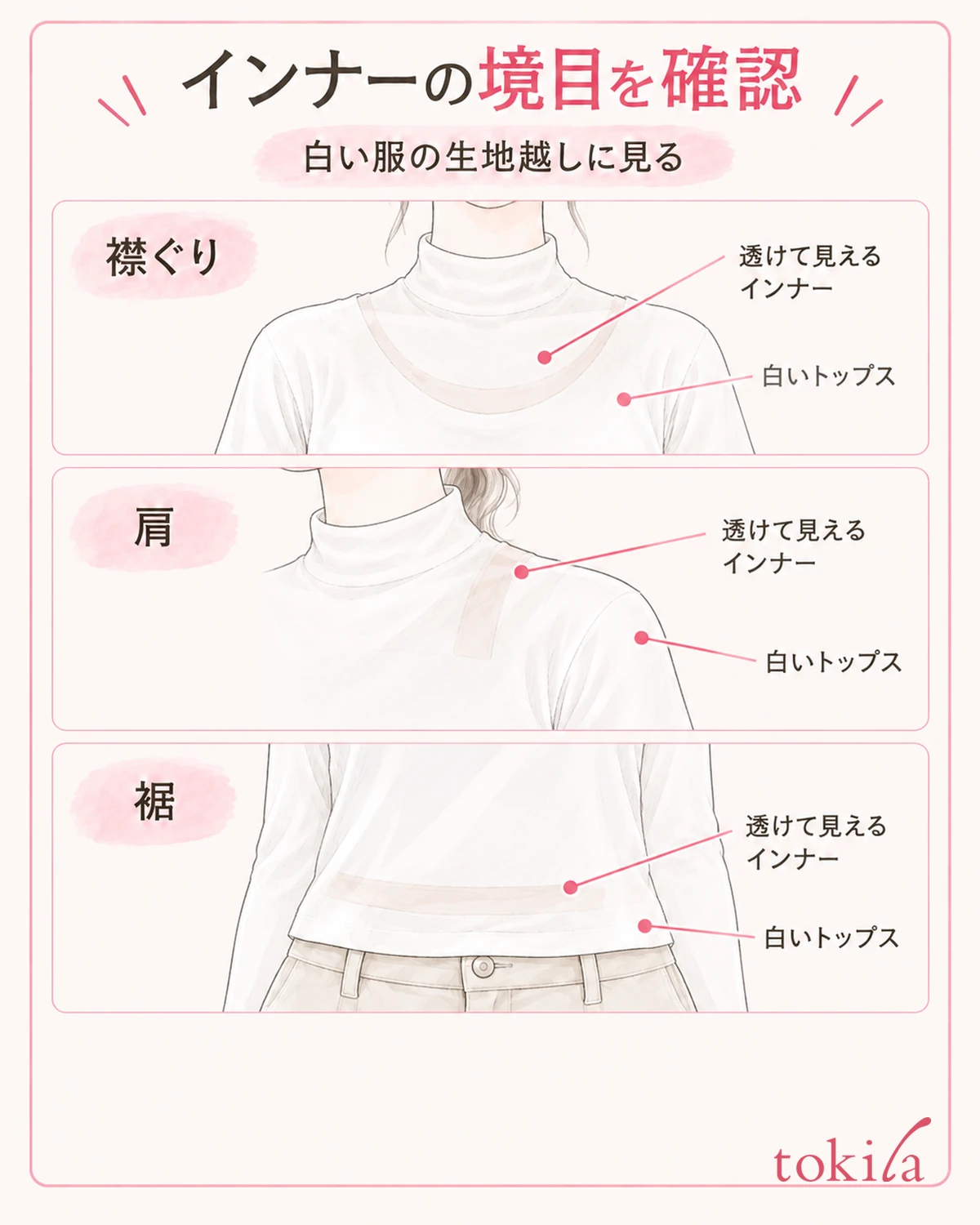
Once you have narrowed it to one color, look at the boundaries in the order neckline, shoulders, hem. Rather than choosing from the color near your face alone, check how far the shape of the innerwear shows within the white clothes. Even with a top that has sleeves, the boundary at the shoulders or underarms may show when you move.
At the neckline, see where the opening of the white top and the opening of the innerwear overlap. If it comes out directly at the neckline when you want it to be inconspicuous, swap in another neckline shape from what you own and compare. Don't keep hiding it by pulling the strap down by force or folding the fabric at the neck inward.
At the shoulders, look at the width and position of the straps, not only their color. Two thin straps showing and a wide piece of innerwear showing as one surface give different impressions. Rather than one being right, choose according to whether you want to keep the visible lines down or show it as layering.
At the hem, check the line where the innerwear ends partway and the places where layers overlap and become thick. If the top is tucked into your bottoms, look at it tucked in for real. Don't pull the hem hard only in front of the mirror; also look at where the fabric settles after everyday movements such as standing and sitting.
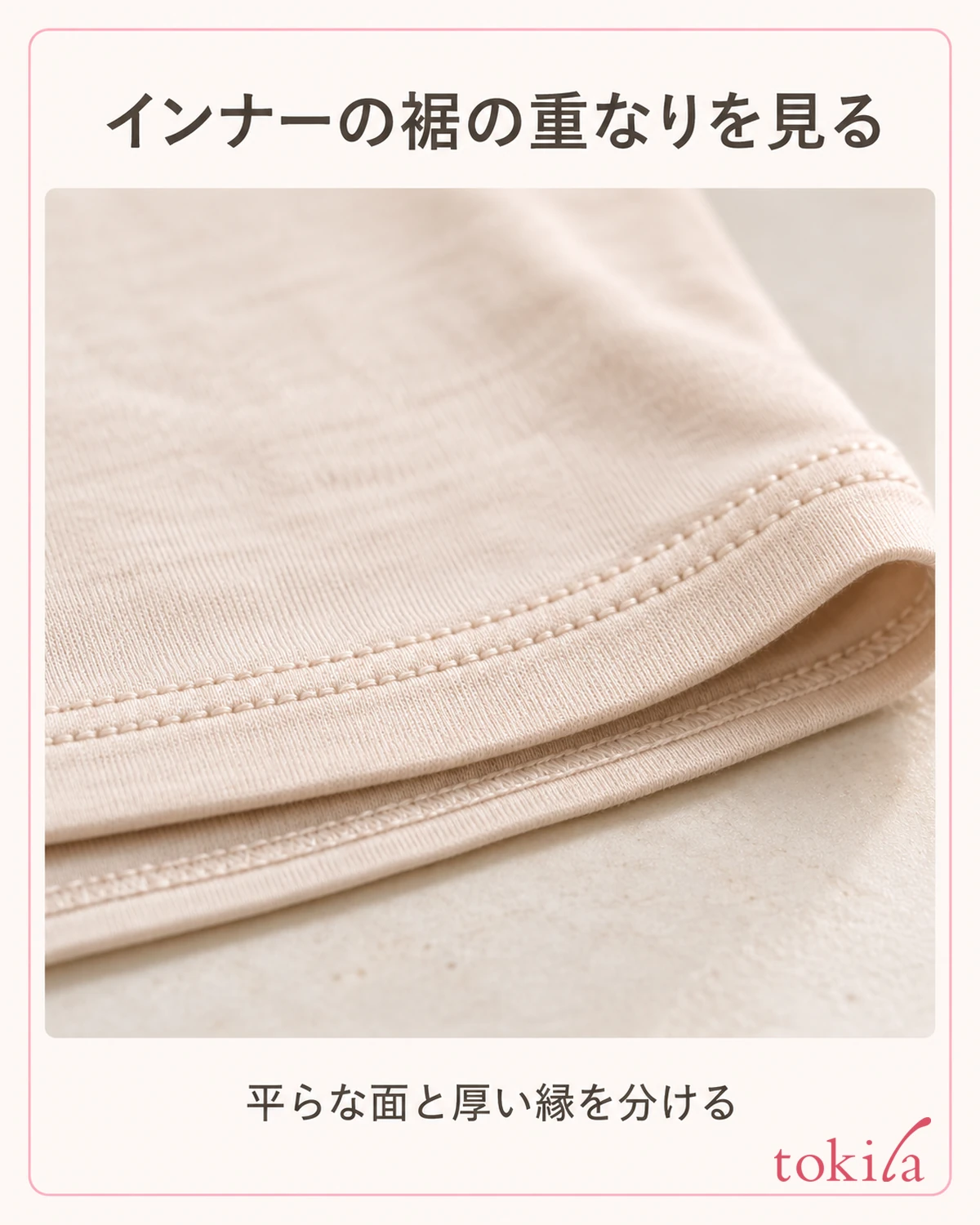
If a line stays in the same position even after you change the color, the thickness or decoration of the edge may be the cause. If you own a shape with fewer steps or decorations, try just one piece of it. Don't alter anything, such as cutting seams or removing lace; compare them with their original construction intact.
4. Change the mirror distance and the light, and check after you move
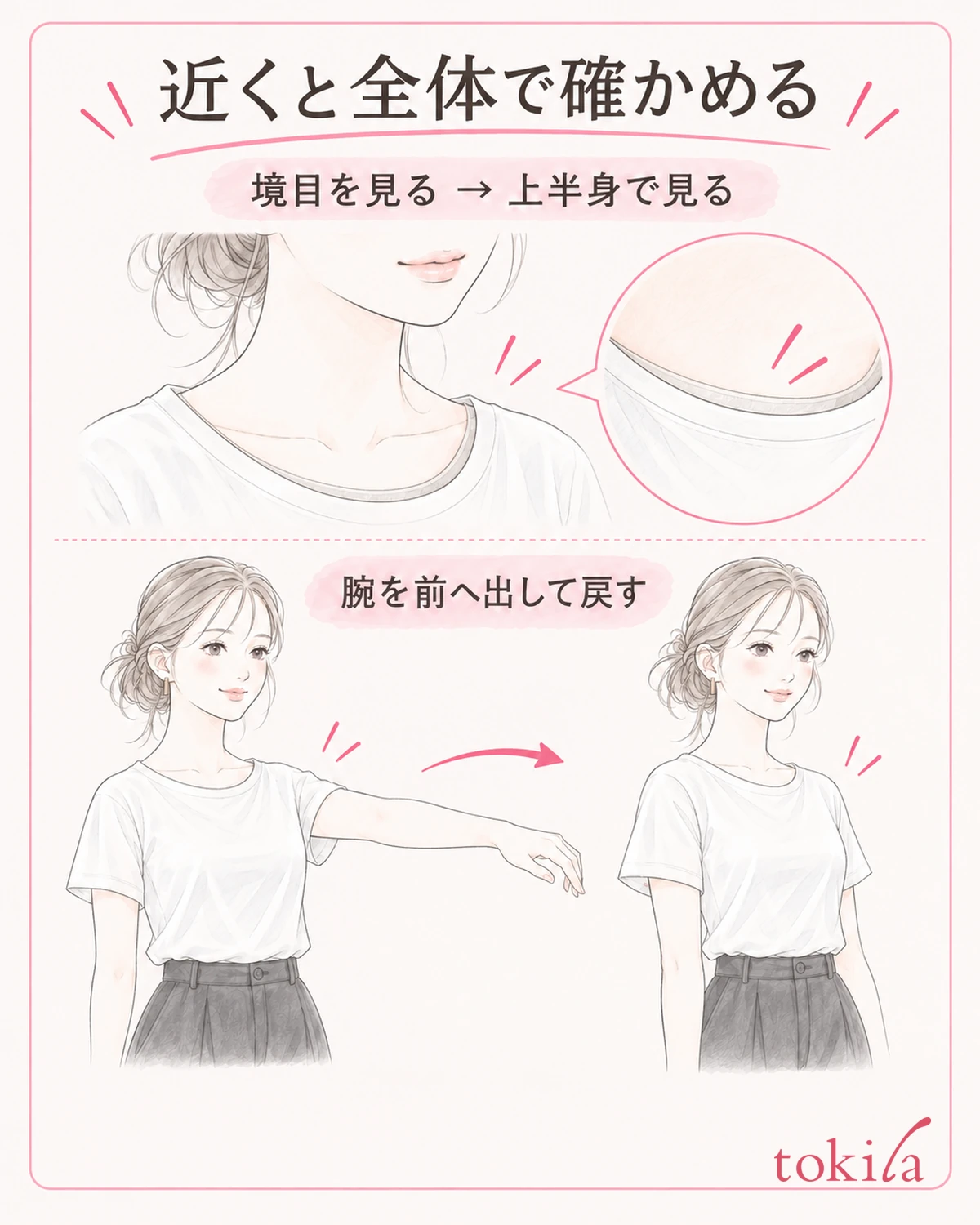
Once you have checked the line that bothers you up close, step back from the mirror until your upper body fits. If you keep looking only at the outline, your eyes may gather on a small difference that you don't notice in the whole outfit. Look again at the whole, from your face to the hem, as if you were facing someone.
After checking from the front, turn slightly to the side, and reach your arms forward and bring them back. See how the boundaries at the shoulders and underarms look when the clothes are pulled. You don't need to arch your body or pull the fabric taut to change posture. Movement within your usual range is enough.
Once you have decided on candidates indoors, if possible check once more in a different brightness, such as by a window. Rather than viewing only the first piece indoors and only the second by the window, compare the candidates under the same conditions first, then look at your chosen combination in another place. You don't need direct sunlight shining on you from the front.
If you take photos, take them in the same place and at the same distance, and remember the impression in the mirror too. A smartphone may adjust brightness and color automatically, so don't treat a photo alone as a guarantee that nothing shows through. You don't need to shoot it to show anyone else; it can serve as a note for reproducing it yourself.
Before you buy more white clothes, it is easier to judge if you can check them together with the innerwear you plan to wear. Follow the store's rules about trying on, and if you can't try the innerwear directly, don't push to check on the spot; stop at checking the differences in color, shape and fabric.
Even if it isn't noticeable under one light, it won't necessarily look the same in every light you meet when you are out. On a day when you still feel strongly uneasy, you could change the combination of clothes, such as switching to a top you own that shows through less or adding a layer on top. Don't leave the solution to color alone.
5. If you are unsure, change the color, the shape and the top one at a time
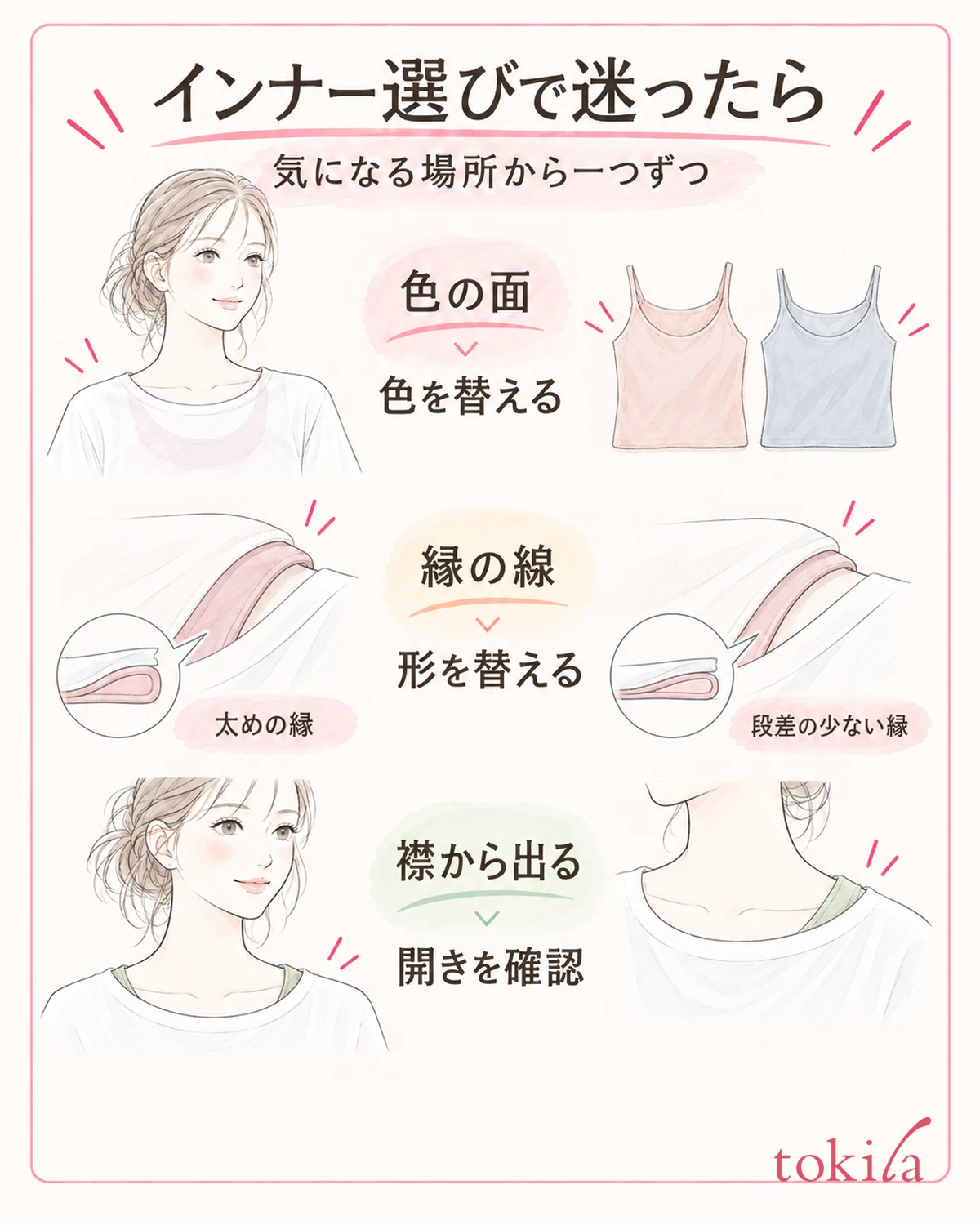
If you still can't decide in the end, go back to the point that bothers you and sort it into one of "the patch of color shows," "the line of the edge stands out" or "it comes out directly from the neckline." Rather than calling all of it show-through, this makes it easier to choose the next piece to change. Don't keep changing several pieces of clothes and innerwear at the same time.
If the patch of color bothers you, first switch to another color of a similar shape. If the line of the edge bothers you, keep the color close and try a shape with fewer steps and less decoration. If it comes out of the neckline, look at the opening and the position of the shoulders. If you can't match the conditions with what you own, it is enough to jot down what you changed at the same time.
If you still feel uneasy, before you layer on more and more innerwear, consider changing the white top instead. Even in the same white, a different fabric, thickness or knit changes how it looks. Together with A Way to Compare Clothes of the Same Color, check the pieces you own side by side in person.
Record a combination you like together with the names and features of the clothes, such as "this innerwear for this white shirt" or "the line at the neckline shows, so I'll treat it as a layered look." That makes it easier to reproduce on another day than remembering only the color name. After washing, straighten out any twists or folds and put it on again in its usual state.
Whether you want it hard to notice or want a color scheme that shows, you can choose it after confirming that you feel at ease wearing it. Just because it is a white garment, you don't have to unify everything to one color. If you also want to review the color coordination of the whole outfit, use Basics of Color Combinations as a reference, and try it separately from checking the innerwear.