When replacing a powder foundation, the compact’s color and words like “silky” alone can make it hard to narrow your options. First decide whether it is for your morning base or also for daytime touch-ups, then compare shade, finish, and conditions for using water in that order.
Here we explain how to compare pressed powder foundations sold in compacts and similar containers before buying. This is separate from dealing with powder that will not pick up or correcting a thick application; check the conditions needed for your intended use.
Decide whether it is for your morning base or also for touch-ups
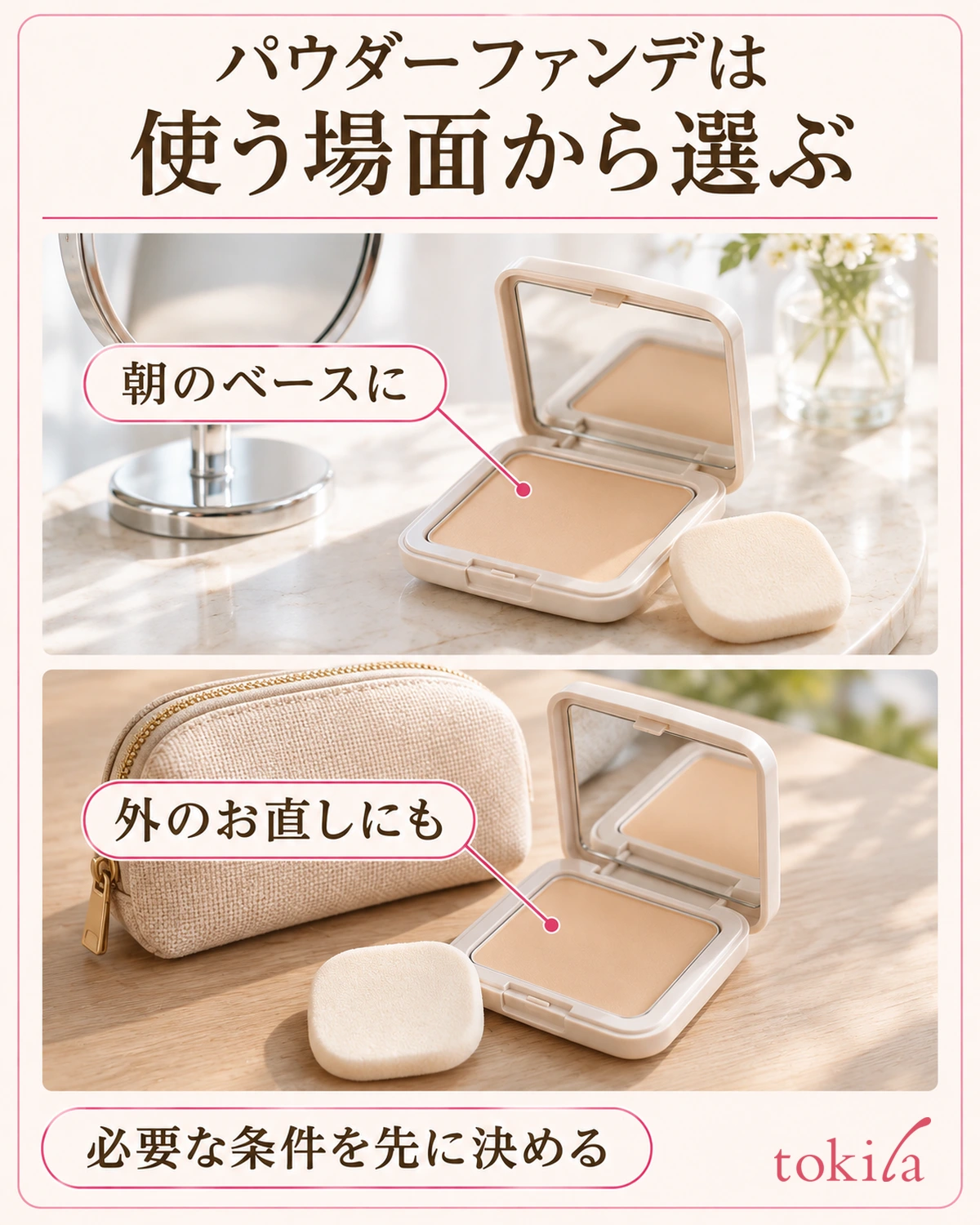
Start by writing down one situation in which you want to use it. The points to check vary depending on whether you will use it after primer in the morning or also carry it for touching up specific areas. If your current product causes a problem, be specific about where and when, such as “my whole cheek looks heavily covered” or “the compact is too large to carry.”
Powder foundation has a different name and role from face powder applied as a finishing layer. Both can come pressed in a compact, so read the product name and directions rather than choosing by appearance. If you want to use it over liquid foundation, do not assume that all pressed foundations support the same layering method.
For a morning base, check whether it can follow your current sunscreen and primer. Compare products described as not requiring primer separately from those used with primer. Fewer steps are not the only right answer; what matters is being able to combine it with your usual routine.
If touch-ups are your main aim, include the conditions for using it outside. Check whether you can carry a mirror and applicator together, handle it without returning a dirty applicator directly to the powder, and open and close it steadily. A compact format does not mean it can simply be layered over every kind of makeup breakdown.
Setting about two priorities before looking helps you avoid chasing every feature. Pair a situation with a finish, such as “a natural-looking cheek in the morning” or “being able to use a mirror outside,” to keep your reasons for comparing shades and compacts clear.
Compare how the face meets the neck rather than shade numbers
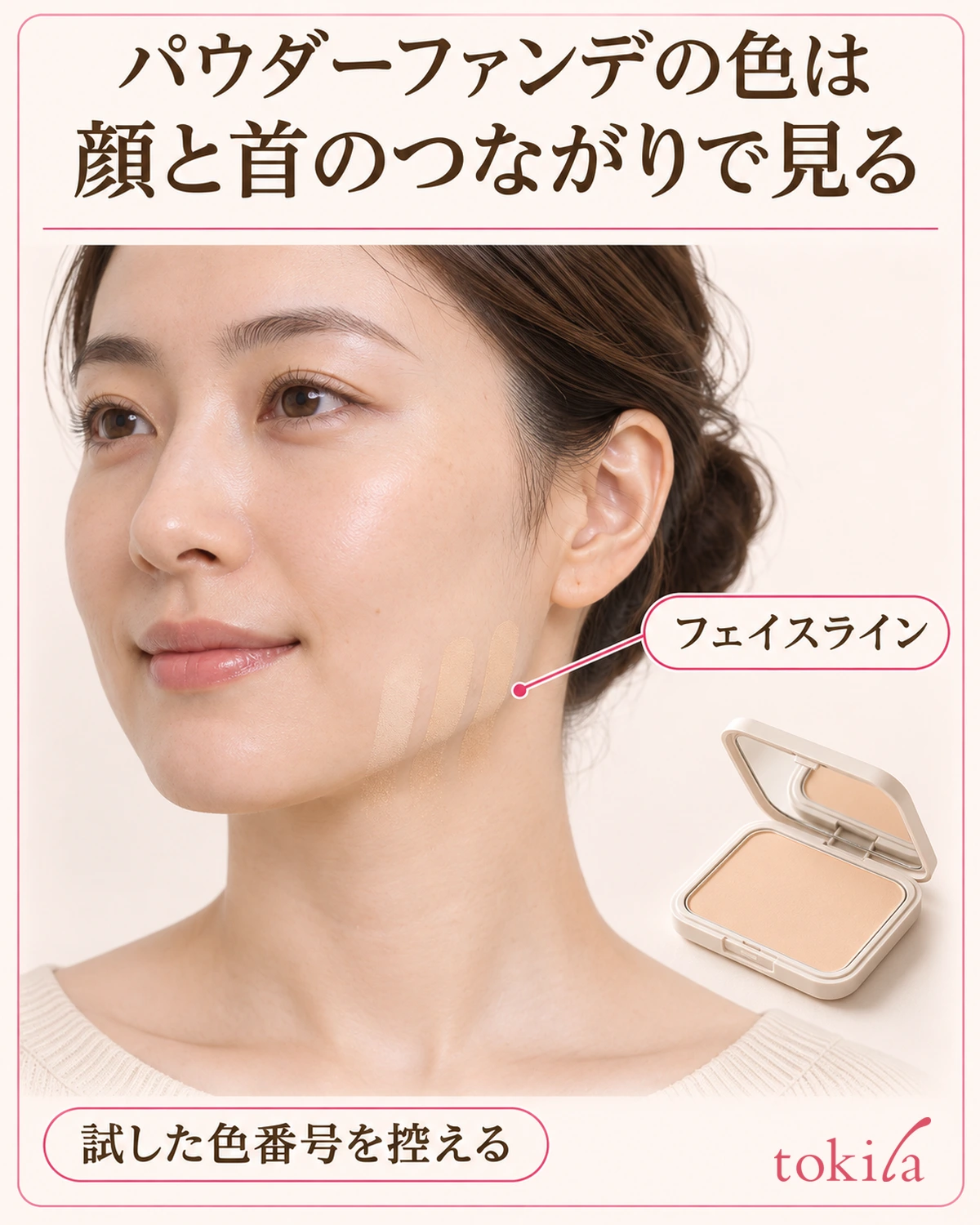
Do not transfer your current shade number straight to another range. Even the same “standard shade” description or similar numbers can represent different brightness and undertones. Use swatches as a starting point, and do not treat beige on a screen as a confirmed match on your face.
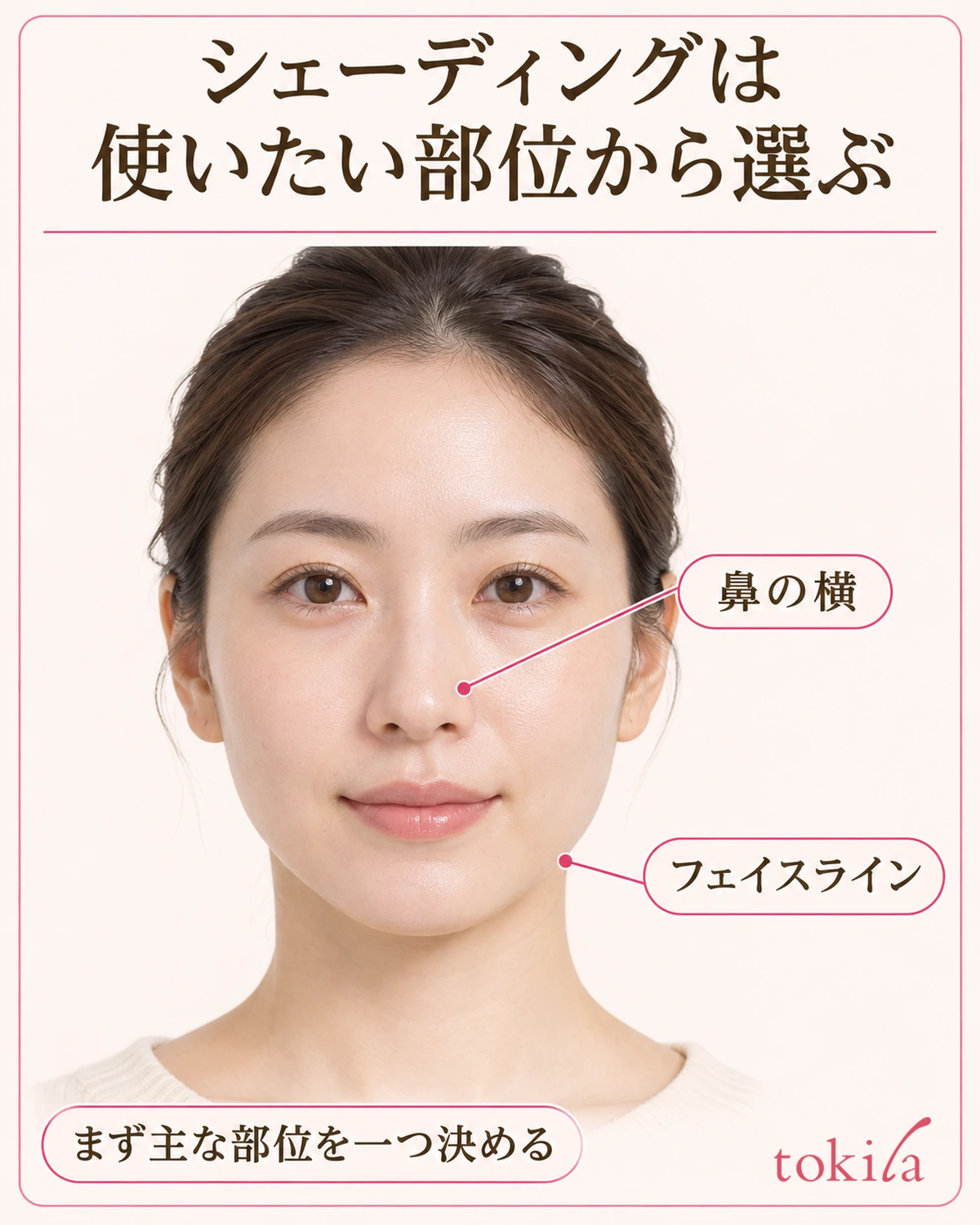
If you can test it, follow the store’s guidance and check candidates along the jawline near the boundary between face and neck. When comparing two or three shades, use the same lighting and keep track of the application position and shade number. Distinguish choosing a shade to cover a particularly red cheek area from choosing one for the whole face.
The back of your hand can help you check how the powder picks up and feels, but that shade may not blend with your face and neck. If you could not test a hand-selected candidate on your face, record that as unconfirmed. Before moving several shades lighter for brightness, check whether it creates an obvious boundary with your neck.
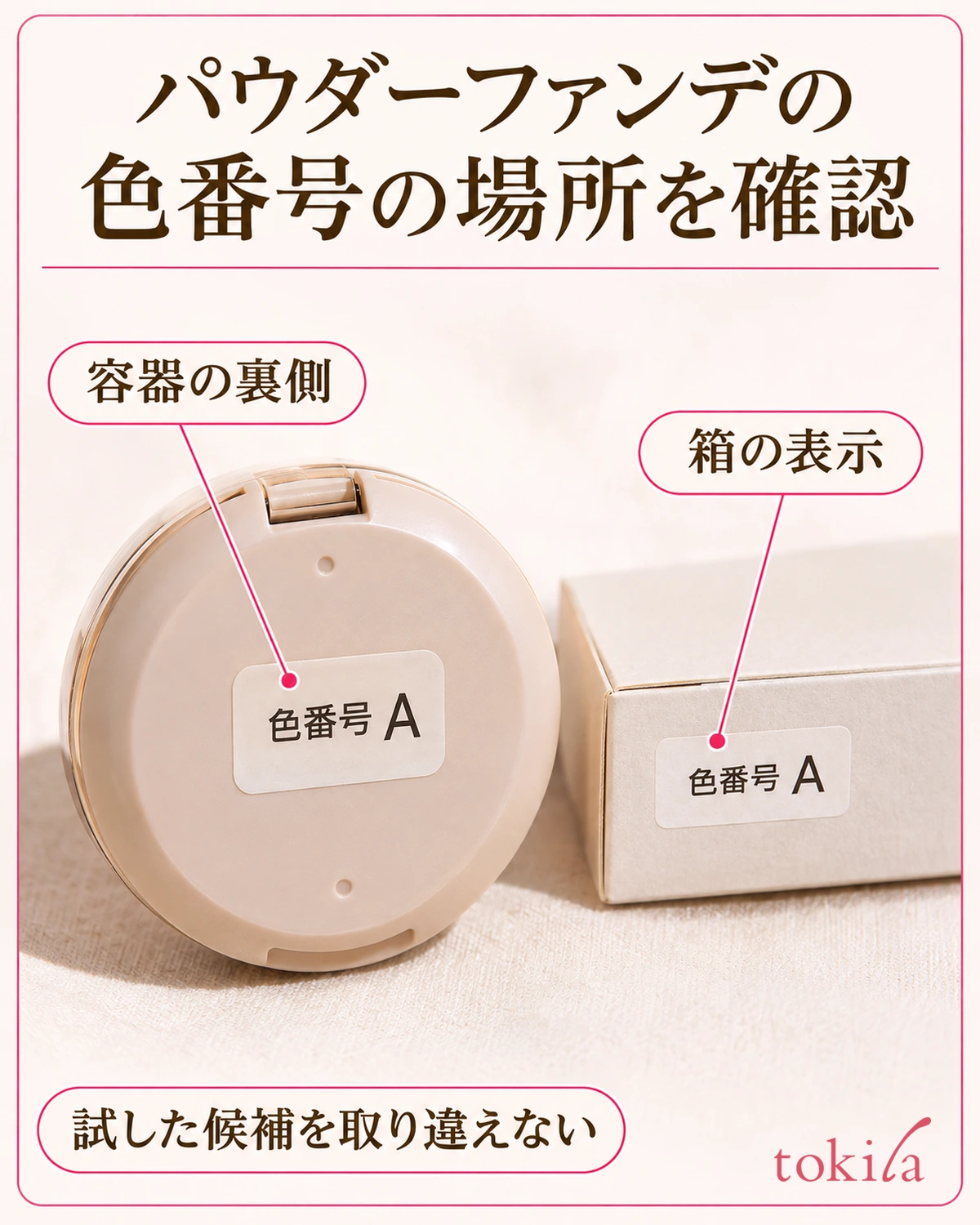
The supplementary photo places the shade label on the back of the compact beside the one on the box. These are places to check to avoid mixing up tested candidates later, rather than a way to judge skin suitability from the photo. At purchase or before replenishing, also check that the refill inside matches its box.
A shade may look different at home and in store. Make a brief note of the testing location, lighting, and candidate number, and where possible inspect the boundary in other natural brightness. Application thickness also affects appearance, so do not attribute the difference between one thickly layered shade and one thinly applied shade to color alone.
Treat shine and coverage as separate items
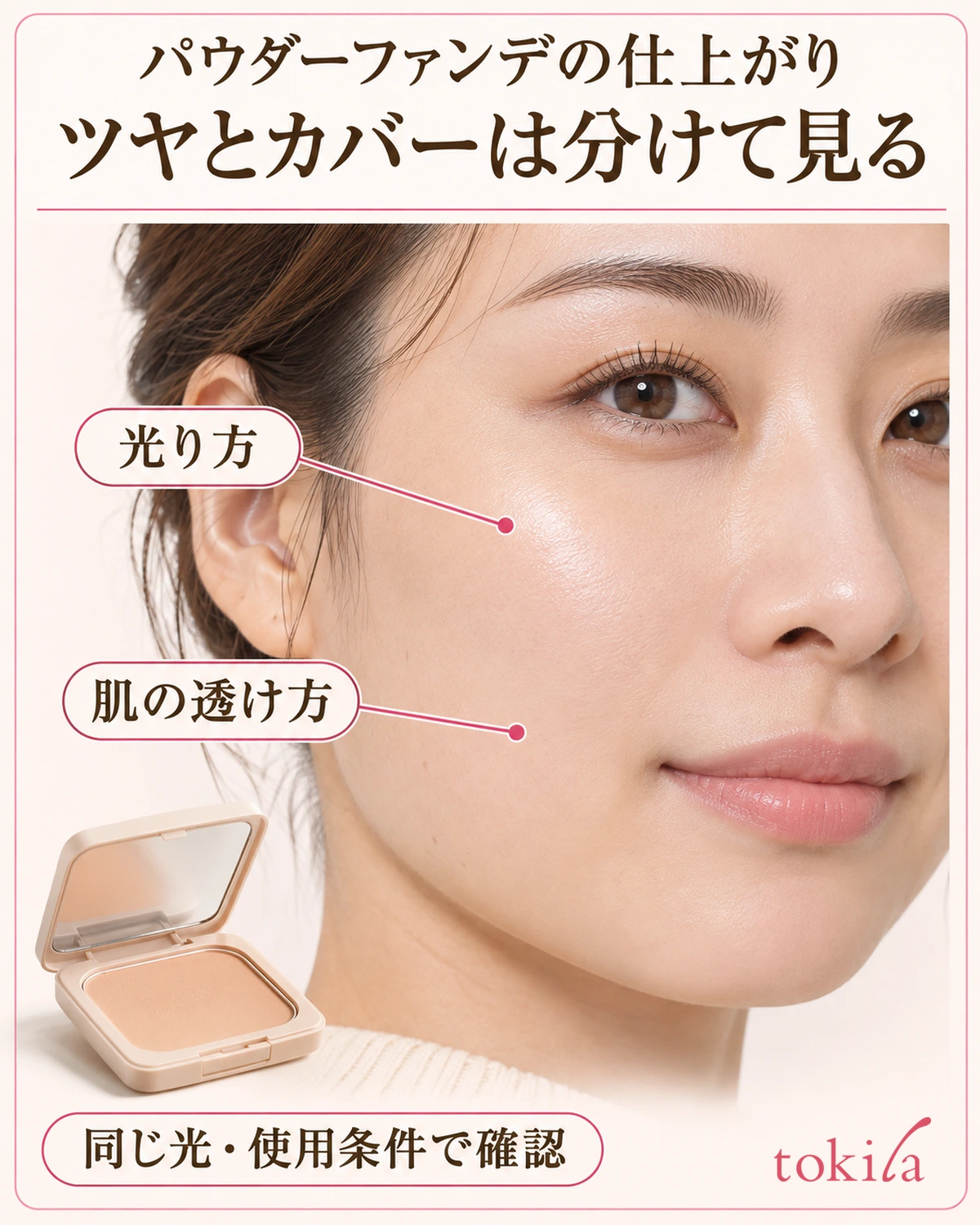
Instead of describing your preferred finish simply as “beautiful,” separate how it reflects light from how much skin color shows through. Wanting a matte look or soft shine on the cheeks is a different question from how much uneven color you want to cover. Powder format does not necessarily mean no glow.
If testers are available, observe using the specified applicator and method. Appearance changes with light direction, so compare candidates from the same position. Do not conclude that a product has better light reflection from a comparison in which only one photo was made brighter.
Include application amount and number of layers when assessing coverage. If candidate A was layered repeatedly and candidate B lightly applied once, do not attribute the difference solely to the products. Conversely, there is no need to force products with different supplied applicators or suggested amounts into an identical method. Note the testing conditions too.
Do not decide from skin type alone that all powders are unsuitable for dryness or that any powder suits oily skin. A brief trial shows application and feel at that moment. It does not establish evening wear, prolonged dryness, or skin compatibility, so distinguish the times you have not checked.
When shopping online, read descriptions of feel and finish to narrow candidates with your preferred light reflection. Do not take the uniform skin in product imagery as a guarantee for your own skin. If shade and texture are decisive but unconfirmed, waiting for a chance to test or consult someone is also an option.
Check wet or dry use and the specified applicator
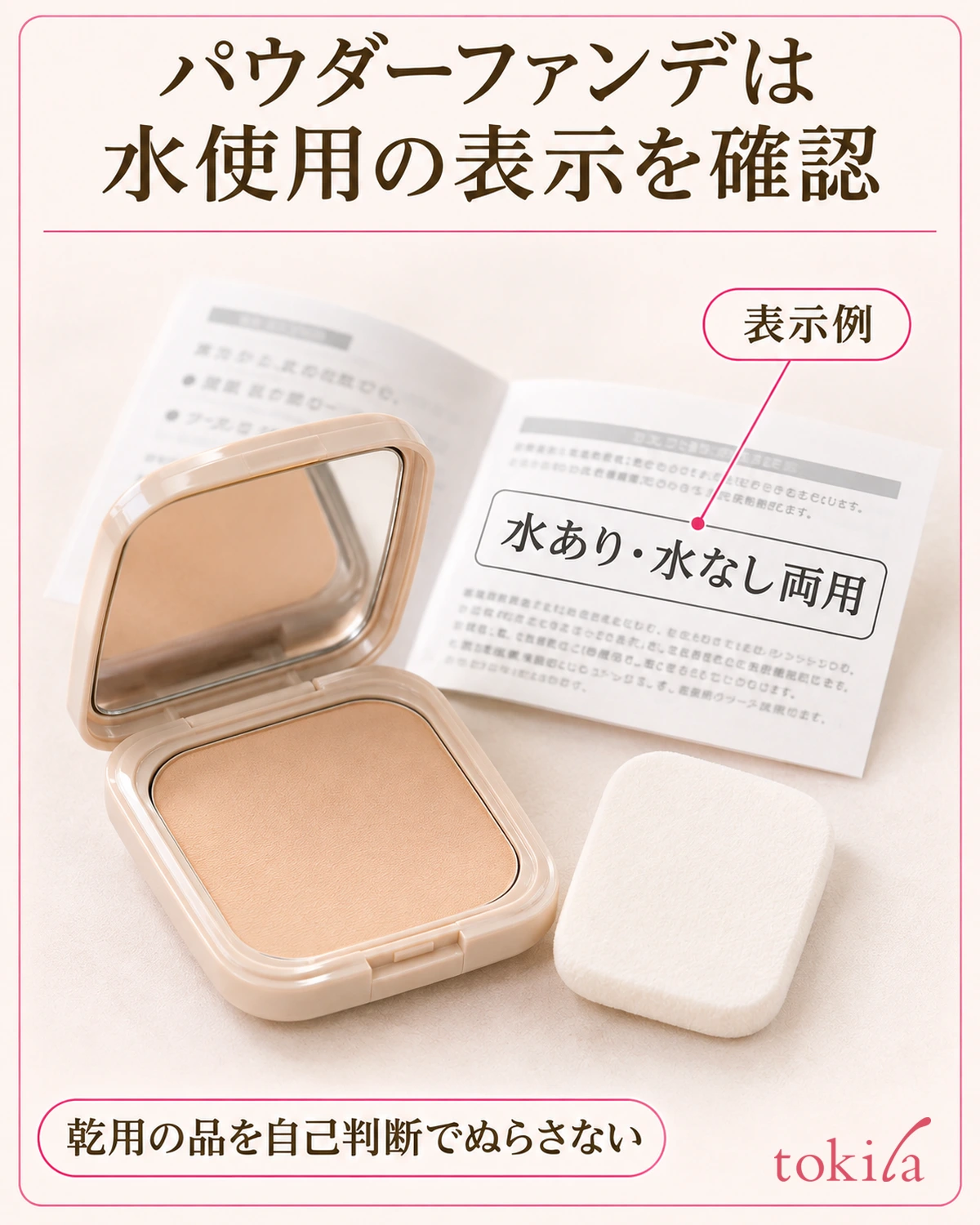
Some powder foundations can be used with a water-dampened sponge, while others require dry tools. Do not infer wet-use compatibility from pressed powder form; read each candidate’s directions. If it says wet and dry use, check that product’s instructions for dampening the sponge and choosing its side.
Even a product suitable for water use does not mean water should be poured directly onto the compact’s powder. If instructed to use a damp sponge, add water and squeeze it as directed. Do not carry the moisture amount or sponge-side rules learned from another product straight over to a new candidate.
If you usually prefer a brush, look for guidance supporting brush application. Sponge-use guidance cannot simply be converted into a number of brush strokes. Checking whether you need to buy a tool or can start with the supplied one helps you plan your preparations.
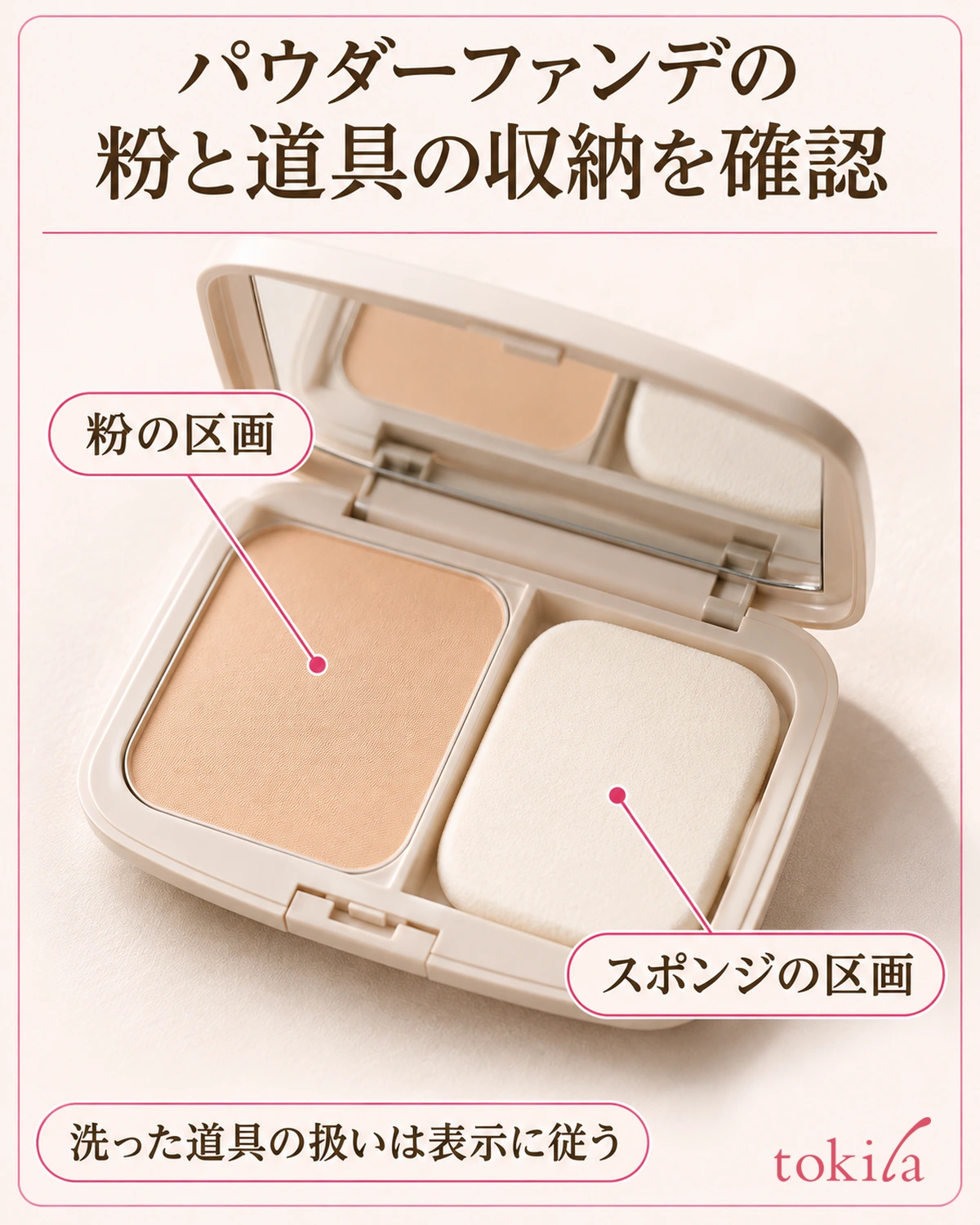
The supplementary photo closely shows the powder compartment and sponge compartment inside the compact. It is not a decorative arrangement of powder and tools, but a way to see what touches where in storage. Follow the compact’s and tool’s instructions about storing a damp tool and drying it after washing.
For brush movements after purchase, see Applying powder foundation with a brush. Here, instead of prescribing one universal application method, include compatibility between your desired tool and the product among your pre-purchase conditions.
Compare refills, cases, and removal before deciding
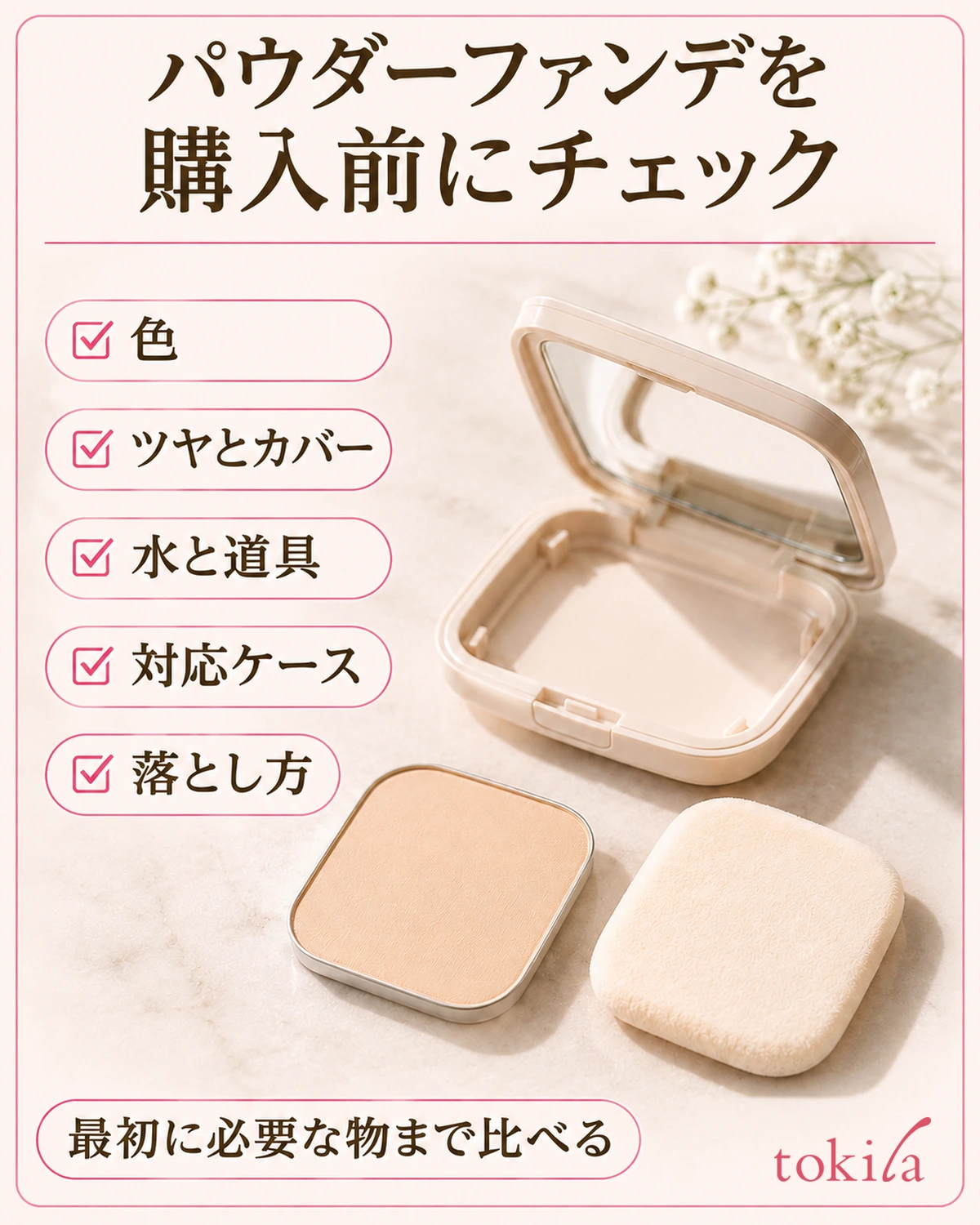
Finally, list each candidate’s shade, light reflection, area you want to cover, water use and applicators, and items needed at purchase. If you were comparing only A’s shade with B’s slim case, ask both the same questions. Separate whether the necessary items are covered from what is still unknown.
For products sold as refills, check whether you own a compatible case. Similar shapes do not guarantee that another range’s case will fit. Rather than comparing a refill-only price with a case-included price, separate the total needed to start from the cost of replacing the contents next time.
Whether a sponge is supplied also varies. If you can inspect the mirror, divider, and applicator storage, check ease of opening in your usual grip. Your existing case could be an older model; noting its compatibility name helps avoid buying the wrong item.
Check removal requirements for the foundation together with the primer and sunscreen used beneath it. Powder format does not guarantee removal with facial cleanser alone. Do not simply add SPF and PA values, and keep sunscreen use separate from judging the foundation’s finish.
A brief reason is enough, such as “it blends naturally from face to neck and works with the supplied dry sponge.” If only thickness bothers you after starting, review pickup amount and application area before immediately replacing it. If redness, irritation, or other abnormalities occur, stop rather than trying to get used to it, and follow the product’s precautions.