It's your usual lipstick, but once you put on your outfit, only your lips seem to stand out. You liked it before you changed, but once the color of the collar is added, you start to hesitate. When that happens, before wiping off the lipstick right away, try checking it together with the clothing that appears near your face. You can also keep the lip color you love and change the clothes you pair it with.
This article introduces steps for choosing a combination of today's outfit and the lip color you have. The goal isn't to match the colors perfectly; decide whether you want your lips to blend in or to be the star. Consider your color-matching preferences separately from the worry that you've applied too much.
1. Wearing the clothes, look at the collar and your lips in the same light
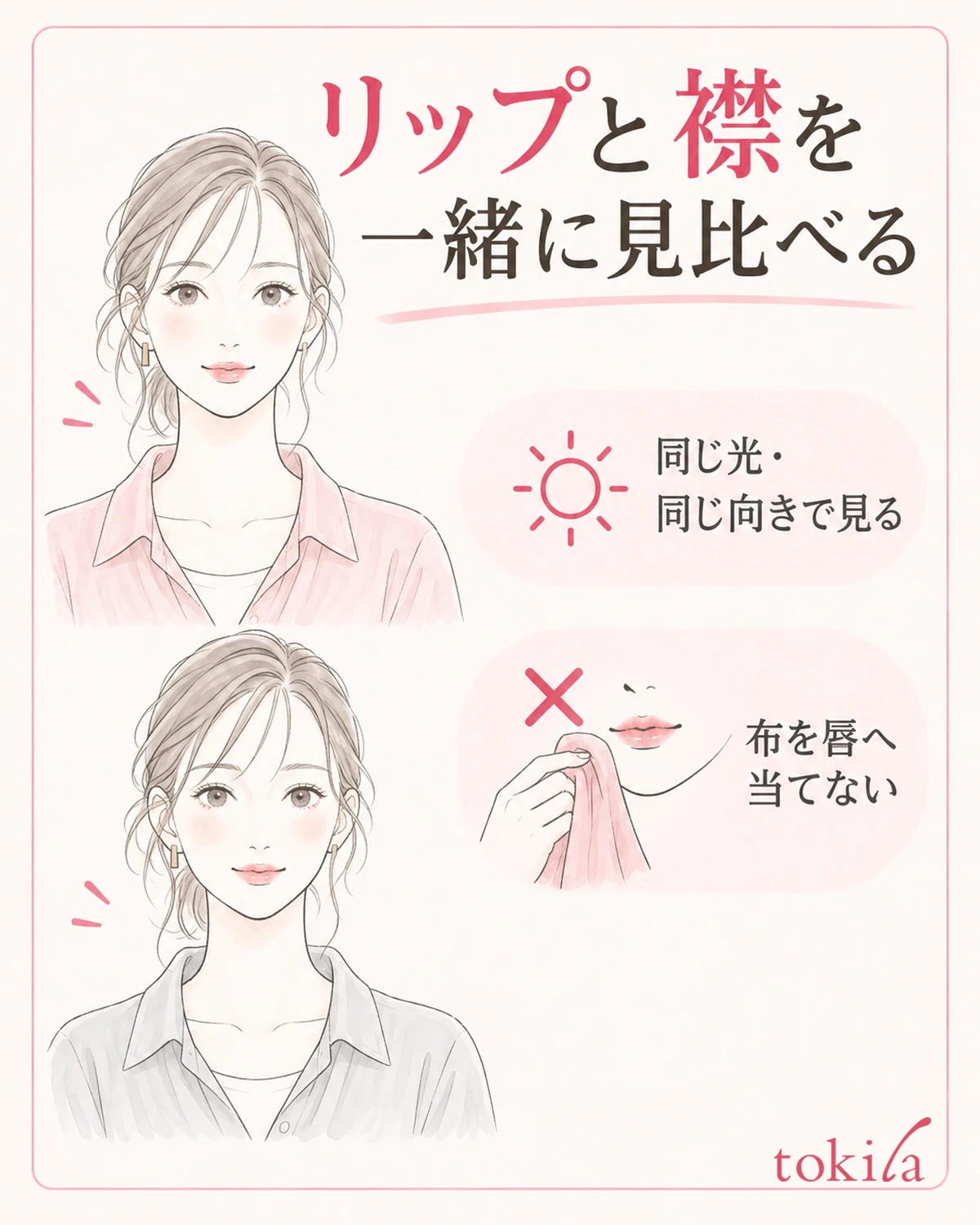
First, put on the top you are wearing today and style your hair the way you usually do. Use a mirror that shows both your face and the collar, and face forward naturally. With a mirror that magnifies only your lips, it is hard to judge the relationship with the color of the collar and the area visible, so after checking details, return to your whole face.
While you swap candidate outfits, keep the place you stand, the lighting and the direction of your face the same. If you compare one outfit by a window and another in a dark hallway, you've changed both the clothes and the light at the same time. If you also want to check in a different light, look at both candidates in turn in the same place.
Put what bothers you into concrete words, such as "only the red of my lips is strong," "the blue of the collar and the orange of my lips feel far apart," or "my lips look dark against a white collar." Pick which of the color tone, brightness or how much it stands out differs from what you like, decide what you want to fix, and then act.
Look at the lip color after you have finished the application method and finishing steps specified for the product you have. If there are instructions to wait without touching after applying, give those priority. Don't set the same waiting time for every lipstick, and don't make a point of always blotting on paper to check the color.
You don't need to press fabric against your lips to compare colors. If you compare without changing clothes, hold the garment in front of your shoulder, taking care not to touch your lips or made-up skin. Treat that stage as choosing candidates, and once you've decided, actually put the clothes on and check, including the opening of the collar and its shadow.
If the color in a photo differs from the color in the mirror, go back to the real thing. The impression of color changes with the camera's automatic correction and with the screen display, so it is important not to decide something doesn't suit you from a photo alone. Start from your own preference, formed by looking under the same conditions.
2. Decide first whether to keep the clothes or keep the lip color
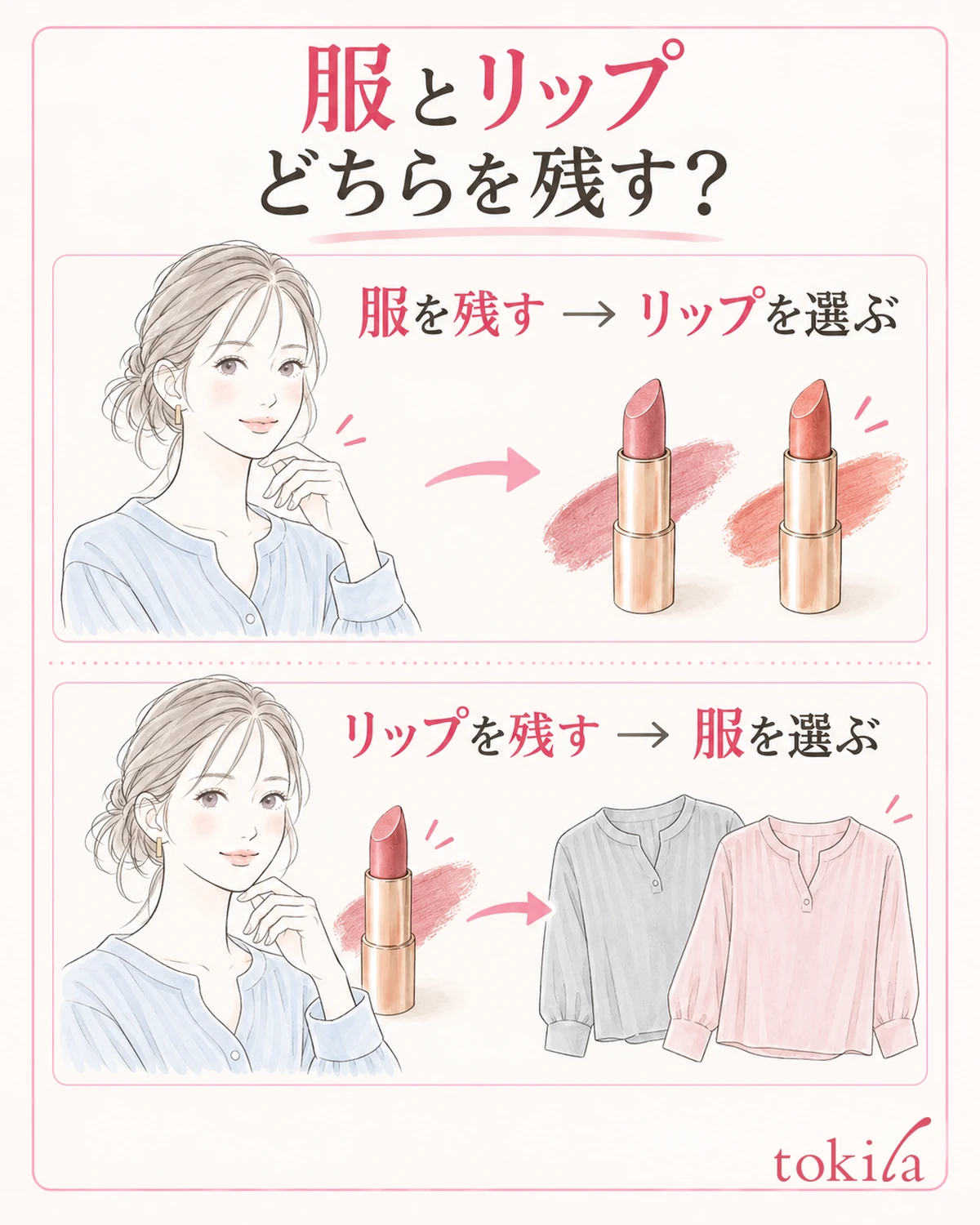
If you keep changing both the clothes and the lipstick, it becomes hard to tell what you liked. If there is something that is hard to change today, such as a uniform or clothes that suit your plans, fix it first. Decide what to wear, and narrow the lip colors you compare against its collar to about two from what you own.
On days when you want to use a favorite lip color, do the opposite: fix your lips and choose the top. You don't need to look for clothes in the same pink. Try one collar in a color tone close to the lip color and one in a different color such as white or gray, and compare which one gives the look of your lips that you like.
When you try two lip colors, finish them one at a time rather than comparing by putting different colors on the left and right lips. This is because with a different color on only one side of your face, it is hard to see the overall impression. When you switch, follow the instructions for the product you own for removing and reapplying, and don't continue the comparison on days when your lips feel irritated.
The shape and comfort that suit your plans are also important conditions. Even if you like the color, you don't need to choose clothes that are tight around the neck or whose collar bothers you when you move. Comparing among the outfits you can actually wear lets you judge as the figure you'll present when you go out. If there is only one candidate outfit, choose the lip color based on that outfit.
Next, decide whether you want your lips to blend into your outfit or be an accent. On days you want to blend in, look for what the colors have in common; on days you want to show off your lips, you can choose to keep a difference from the collar. Don't treat standing out against your clothes as a failure in itself; check whether it is the look you want today.
For example, one idea is to pair a deep red lip with a gray outfit and enjoy a look that draws the eye to your lips. Even with the same combination, on a day when you want to be understated you would make a different choice. Use it as an example comparison for putting one purpose in place, not as a rule that "this color is the only one for this outfit."
3. Compare tone, brightness and vividness rather than color names
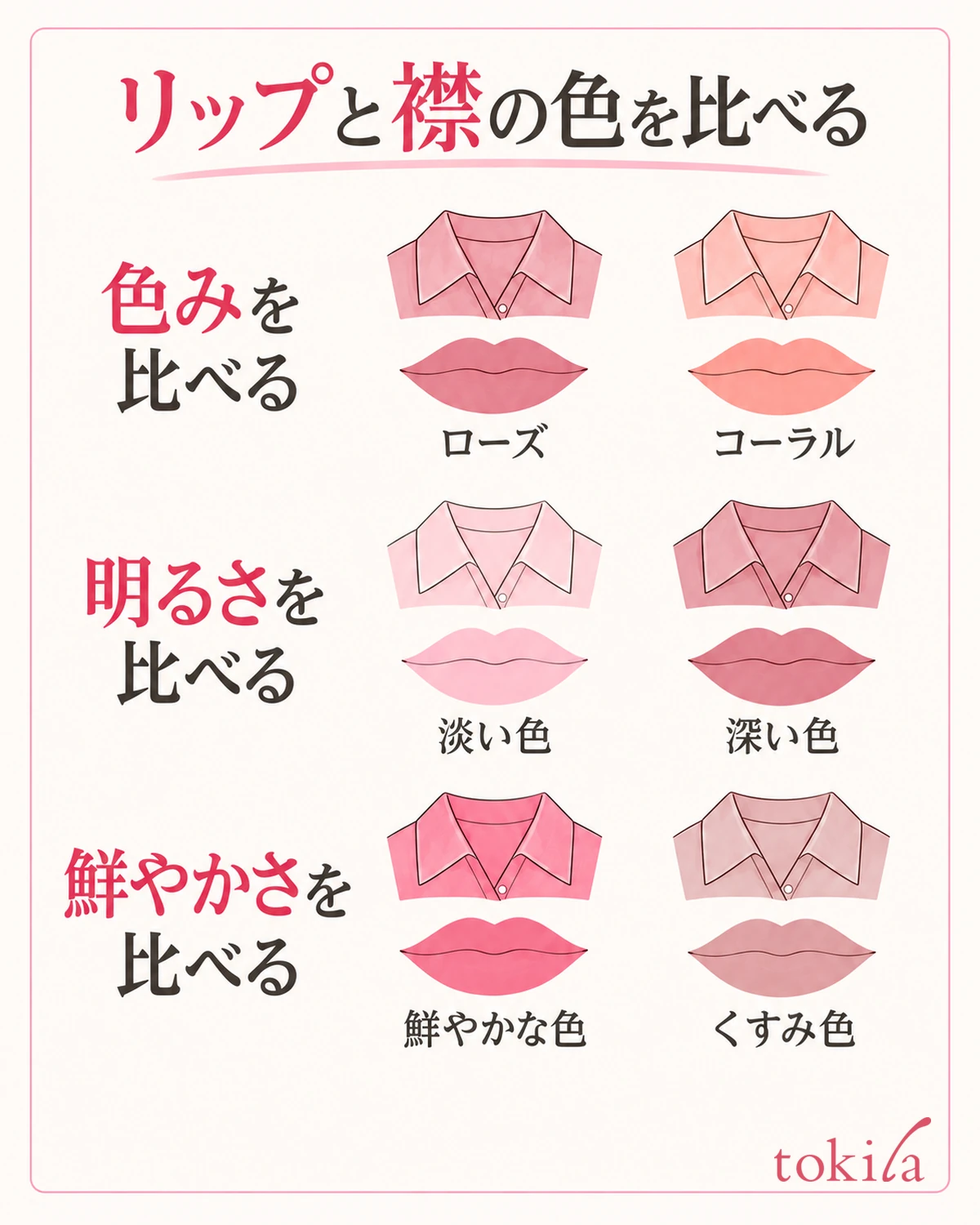
When both the clothes and the lip color are "pink" but it still feels off, step away from matching names. An orangey pink and a bluish pink, or a pale pink and a deep rose, each differ. First, check the colors you actually see, divided into tone, brightness and vividness.
Don't decide on a combination with the collar based only on the color in the container or a swatch on your hand. What you actually compare with the clothes you are wearing is the color as it shows when layered on your own lip color. Whether the finish is sheer or strongly pigmented also differs, so don't assume that applying two lip colors the same number of times makes the conditions equal.
If you want to blend in, you can start with candidates that share something between the collar and your lips. One way to start is to pair a muted rose collar with a lip color of a close tone. They don't need to be exactly the same color. Look for which common ground looks comfortable to you.
Even with a close tone, if the clothing is pale and the lip color is deep, a difference in brightness remains. Conversely, even with similar brightness, if only one is vivid it may feel more eye-catching. Rather than erasing every difference, go back to the purpose you decided on first, "blend in" or "show," and choose accordingly.
White, black and gray clothes do not always make any lipstick look subdued either. With a white collar and a deep lip color, the difference in brightness can be clear. Don't assume that because they are achromatic you need not think about it; look at your face and the collar together while wearing them and decide.
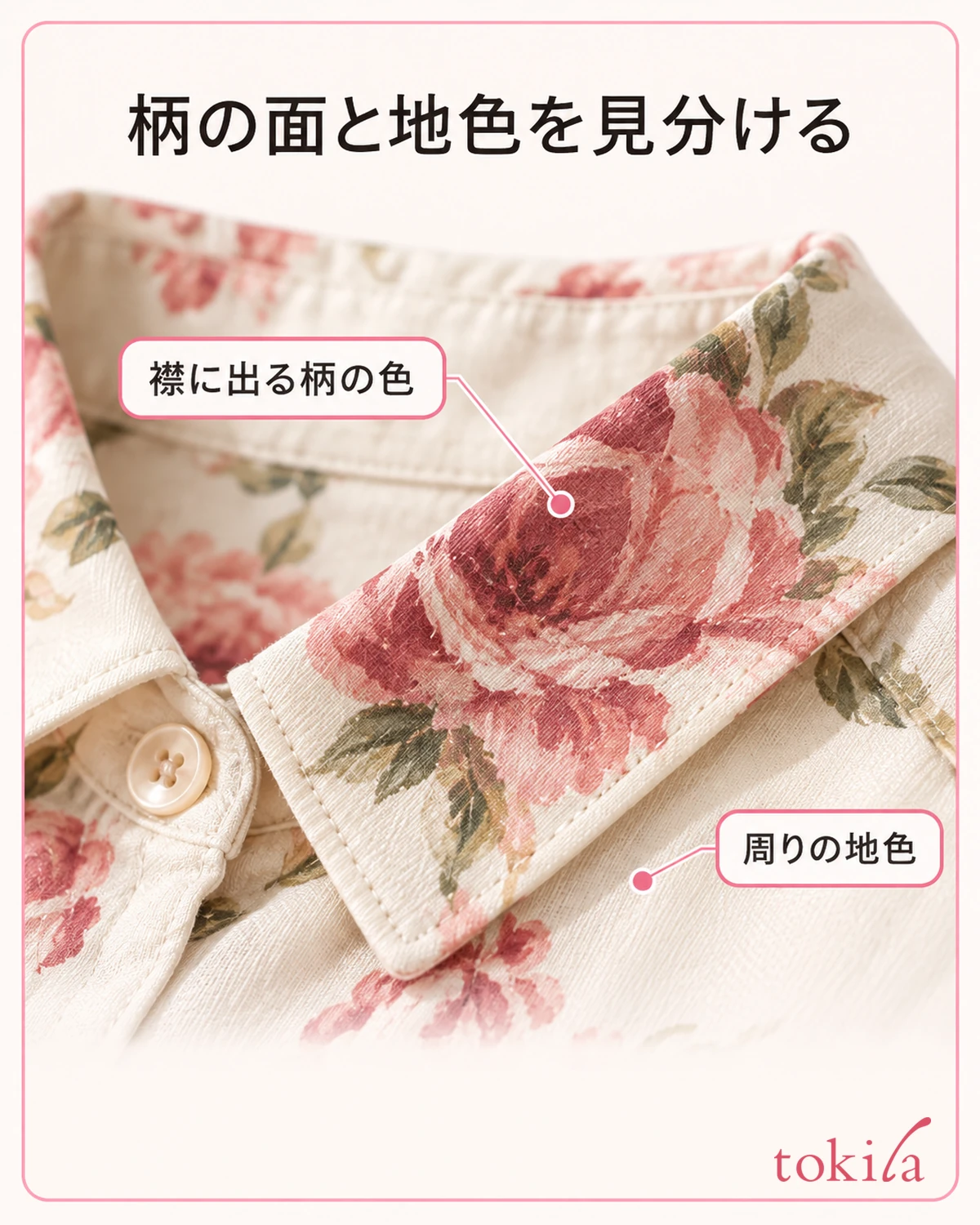
With patterned clothes, look first at the color that appears right next to your face. A color that shows broadly at the collar is an easier clue for comparison than a small color at the hem. One idea is to bring the lip color closer to one color of the pattern, but you don't have to repeat that color across all of your makeup.
If you're torn over color words, you can also use the basics of tone, brightness, vividness and color schemes. Don't limit the colors you can use by type classification alone; give priority to how it looks and your preference when you actually wear and apply it under the same light.
4. Look at the collar's area and shine, and narrow down what to change
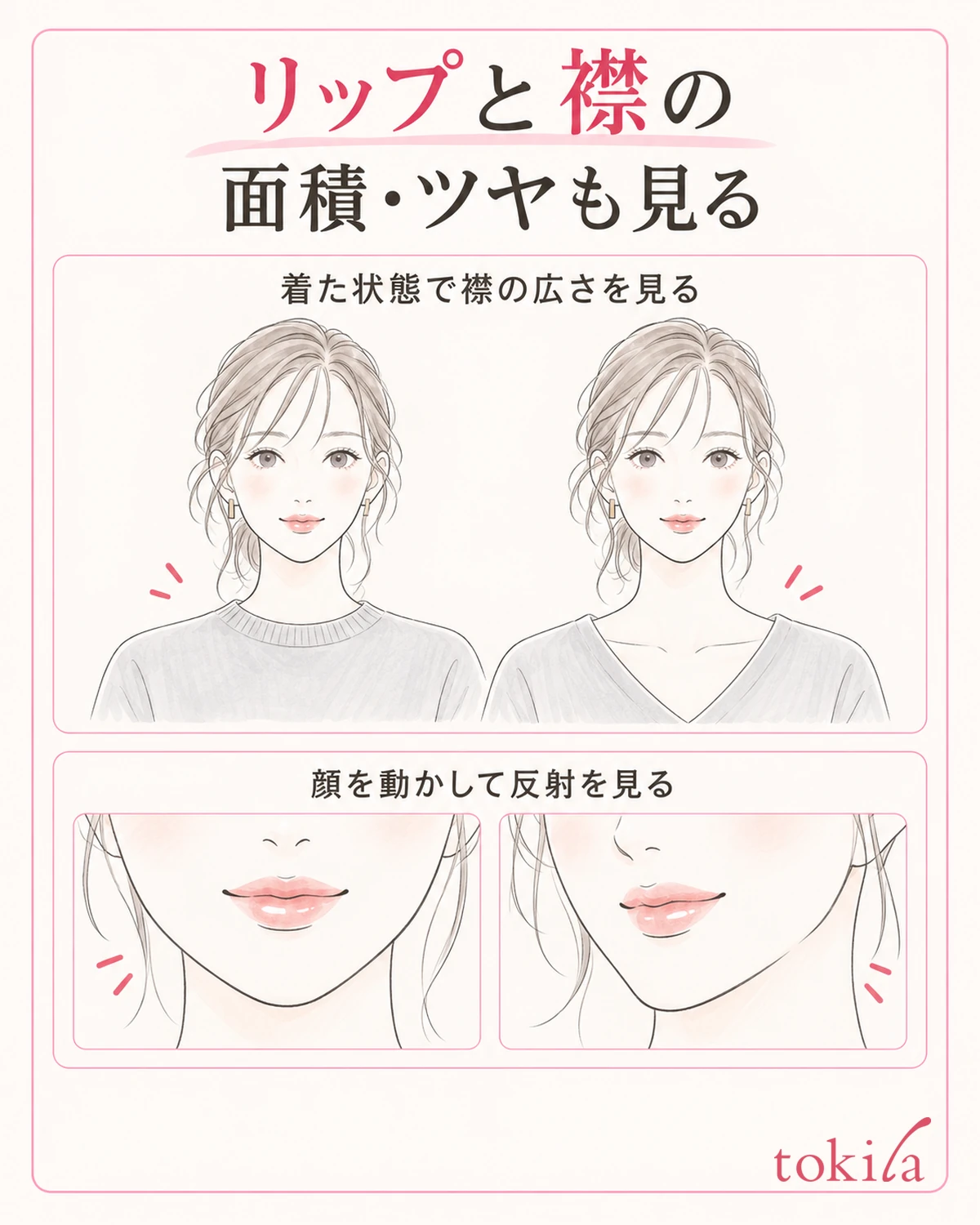
If you like the direction of the color but still feel unsettled, check the area that appears near your face. With a high collar, a deeply open collar or layered innerwear, the extent of the neckline visible between your face and the clothing differs. A small color swatch of the clothes laid on a desk cannot determine the impression when worn.
If it's a shirt you can wear open, try adjusting the neckline to the extent that suits your comfort and the occasion. If the garment underneath is visible, its color is added around your face too. Don't force the collar down, and don't treat two garments of different shapes as a comparison of color alone; look at them as candidates in which shape and area also change.
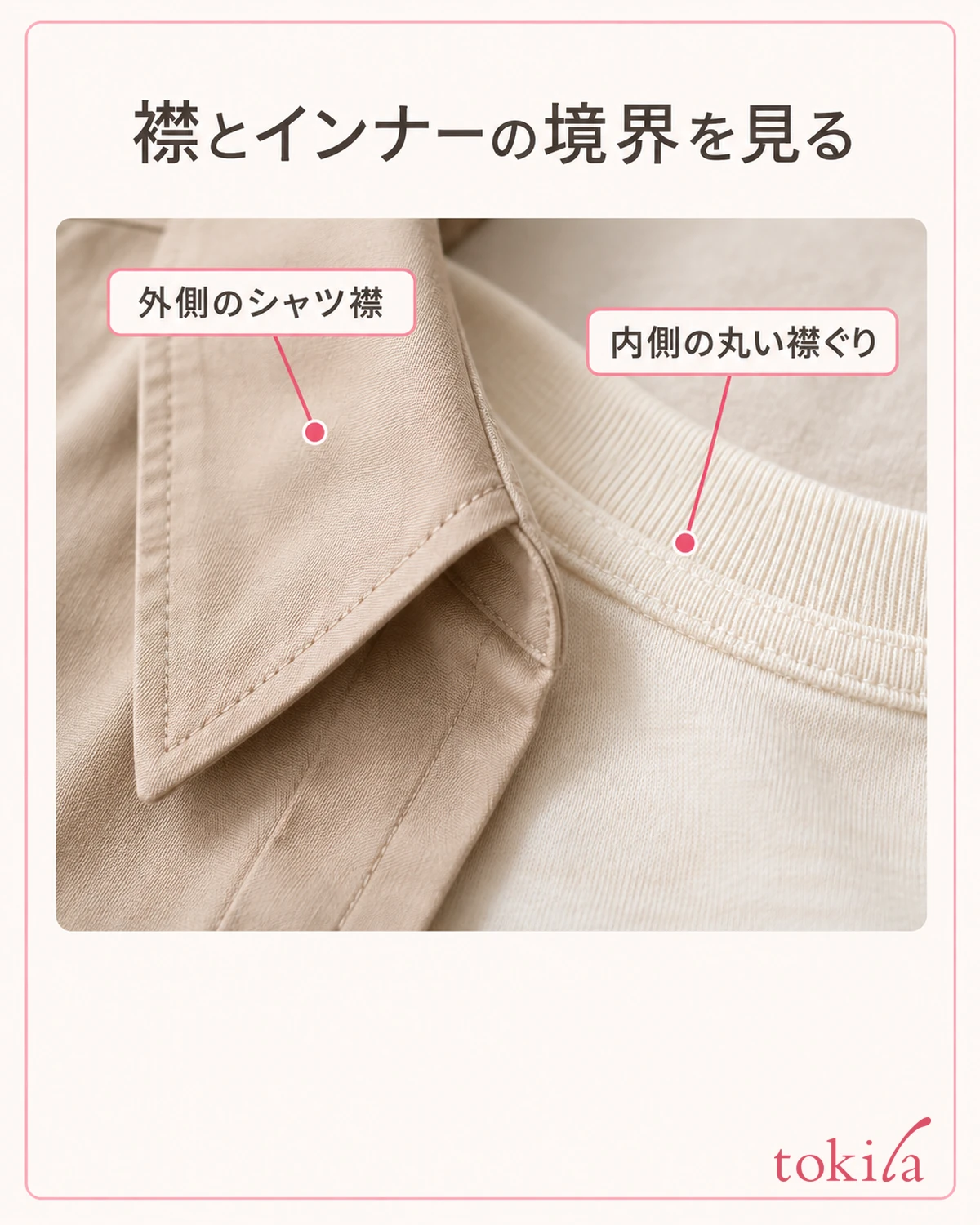
On days when shiny fabric and glossy lips both stand out, the difference in color may not be the only reason. Change the direction of your face slightly, and look at the moment of strong reflection and the state when you return to the front. Separate whether it shines only from the same angle every time, or whether you feel the color itself strongly.
Even if you want to tone down the shine, don't make it a step of layering powder or face cosmetics over the lipstick in your own way. Even when you choose another texture you own, check what methods are available with that product, such as layering it over the current color or removing it as specified and reapplying.
When you don't have time to change lipstick, you can also compare just one candidate among innerwear or outerwear that you can wear. Conversely, if the clothes are fixed, finish once you've decided that day's lip color. These are steps to widen your options, so you don't need to do every comparison each morning.
If you feel it is only the amount that is too much, pause the process of choosing a color scheme with your clothes for now and move on to steps for reviewing the intensity and finish of your lipstick. Making it lighter doesn't necessarily change the tone in another direction. After reapplying, return to the same collar and check.
If your cheeks and eyes also feel strong, choose again which to fix: the clothes, the lips or the other makeup. You don't need to remove every part at once to decide on the color scheme. First narrow down the candidates for clothes and lips, then adjust your whole face only as much as necessary.
5. Decide including how you look when talking and with your outer layer
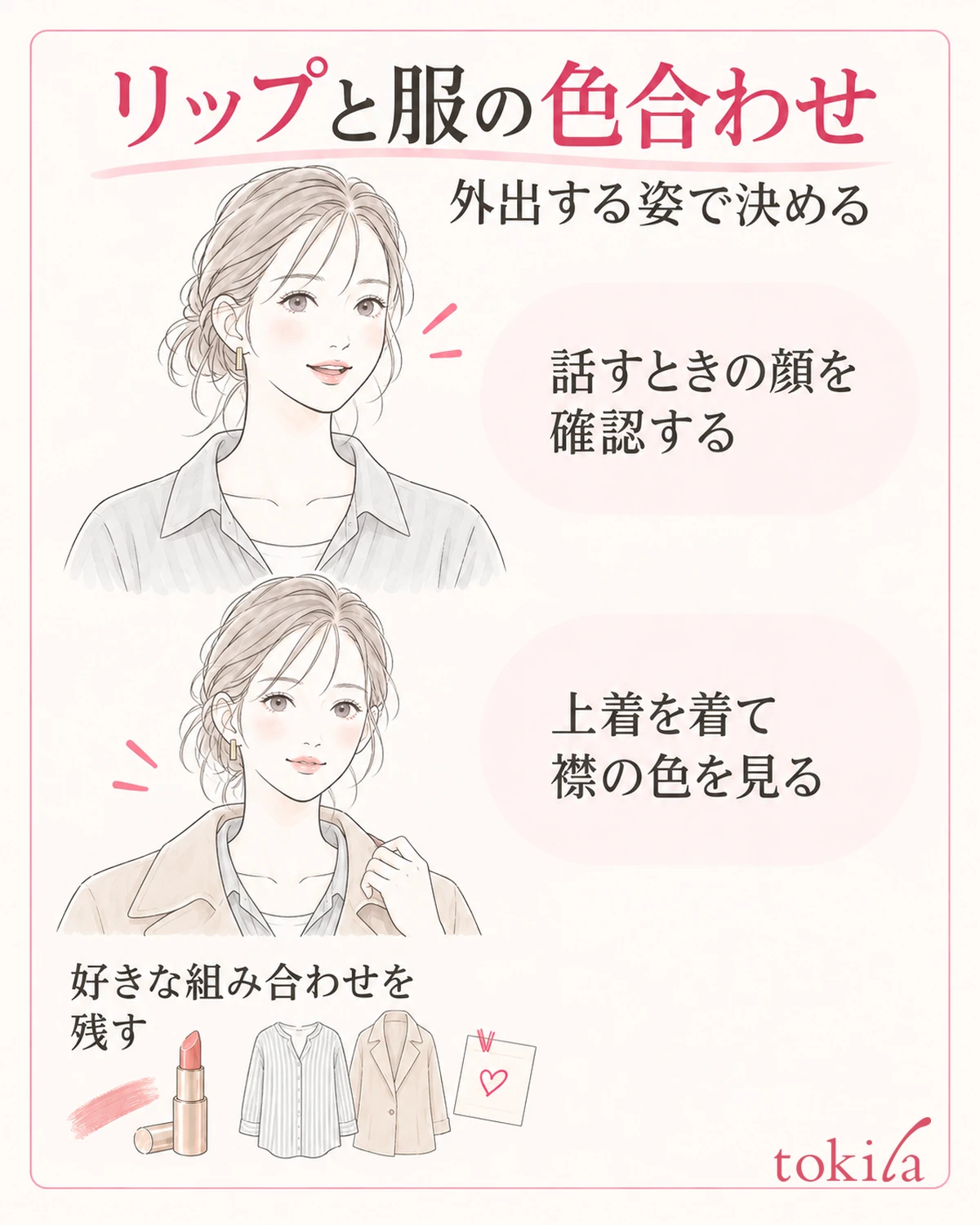
Once you've chosen candidates in a mirror nearby, step back to a distance where you can see your face and upper body. In addition to your mouth naturally closed, try moving your mouth lightly as if talking. Check the visible range of your lip color and its distance from the collar as you would in everyday life.
If you will wear a jacket or stole when you go out, add that last as well. The color of the top that was visible indoors may be hidden, and another color may come near your face. Even if you feel it no longer matches once you put on the jacket, before fixing your lipstick, review which color you are comparing against now.
If the impression differs between a bright place and indoor lighting, check in the setting where you will spend a long time today. The aim isn't to make it look exactly the same in both; choose a combination you like in each light. When you record it in a photo too, use it not as an accurate color sample but as an aid for remembering the pairing of clothes and lip color.
On days when you're short on time, it's fine to finish with the outfit you decided on and a lip color you're used to. You don't need to remove it again and again and strain your lips, or make buying something new a condition for being done. Remember one point that still feels off, and you can compare candidates again on a day when you have time.
If you liked it, briefly note the color and intent, such as "blue collar + muted rose" or "white collar + red as the star." Next time, put on the outfit before choosing the lip color, which helps you avoid deciding only from the colors in the case. Use today's preference without assuming it will always be the right combination on another day.
Look at it around your face while wearing the clothes, decide which side to keep and which to feature, and separate the nature of the color from the area and shine. By returning to your everyday appearance at the end, you can widen your options for combining the clothes and lip colors you already have, instead of continuing to fix only your lips.