You put on your watch, and only the strap color seems to float away from your cuff. When you can't decide whether to change the clothes or the watch, don't judge by color names alone; look at the cuff, the metal parts and how much shows from outside separately.
Here we introduce steps for checking the color balance around your wrist using the watch and clothes you already own. It does not choose colors that suit you from your skin tone, nor does it assume you will buy a new watch; the idea is to keep both the days you want to blend in and the days you want an accent.
1. Look at the strap, the dial and the metal parts separately
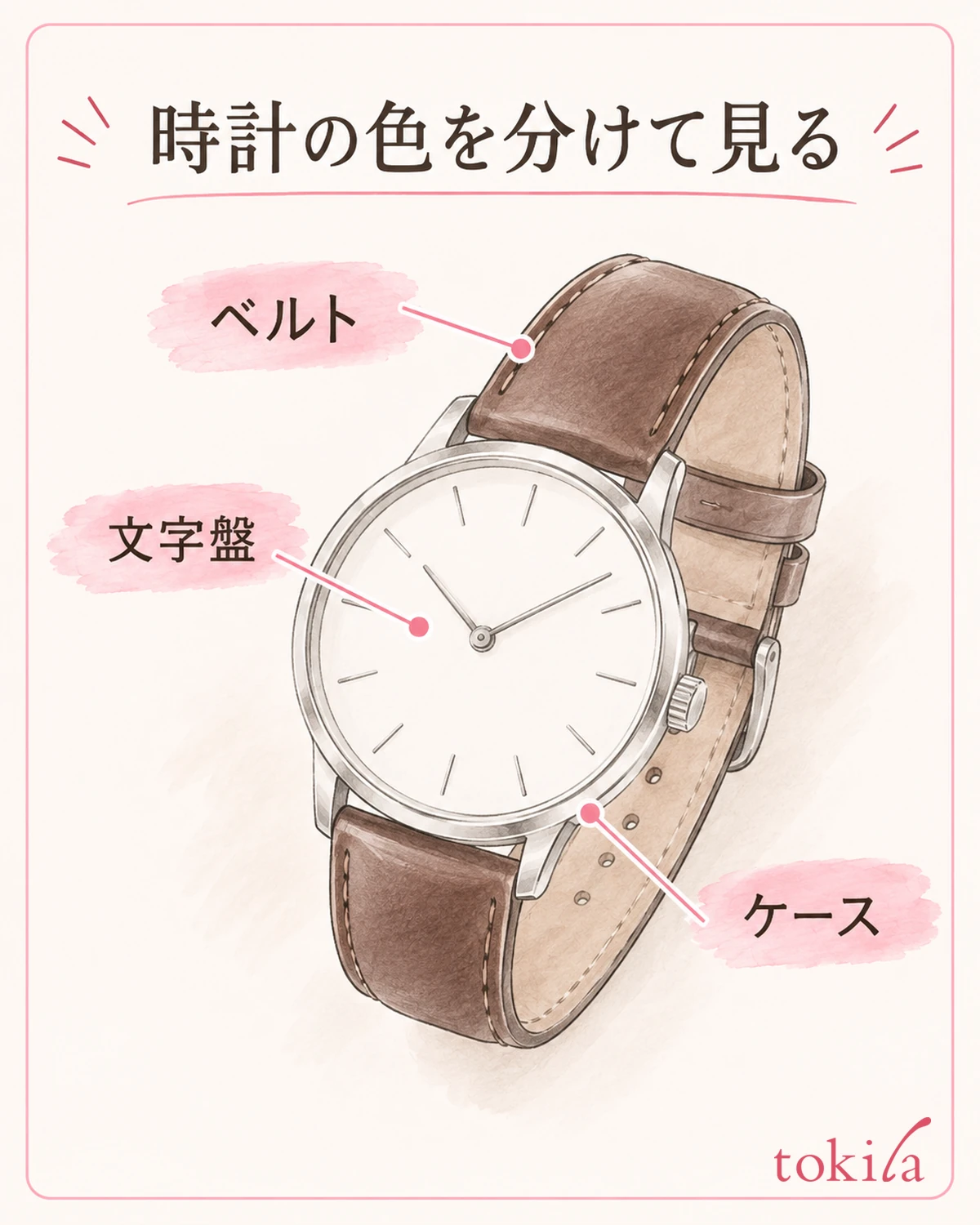
First, with your usual watch on, check which part bothers you. Pick one: the brown of the strap, the white of the dial, or the silver glint of the case. Before deciding the whole watch "doesn't go," making the visible part specific lets you narrow down what to change.
Even among leather-look straps, some have a smooth surface, some have fine embossing, and some show thread stitching. Even in the same brown, not only the brightness but also the shine and texture affect the impression. Rather than looking for nearby fabric by color name alone, look at the actual surface.
If the stitching is a light color, look at that thin line along with the cuff, not just the base color of the strap. With plain clothes, the line may feel like a small accent. Rather than painting the watch or removing the thread to match the stitching color, treat it as material for checking how it looks right now.
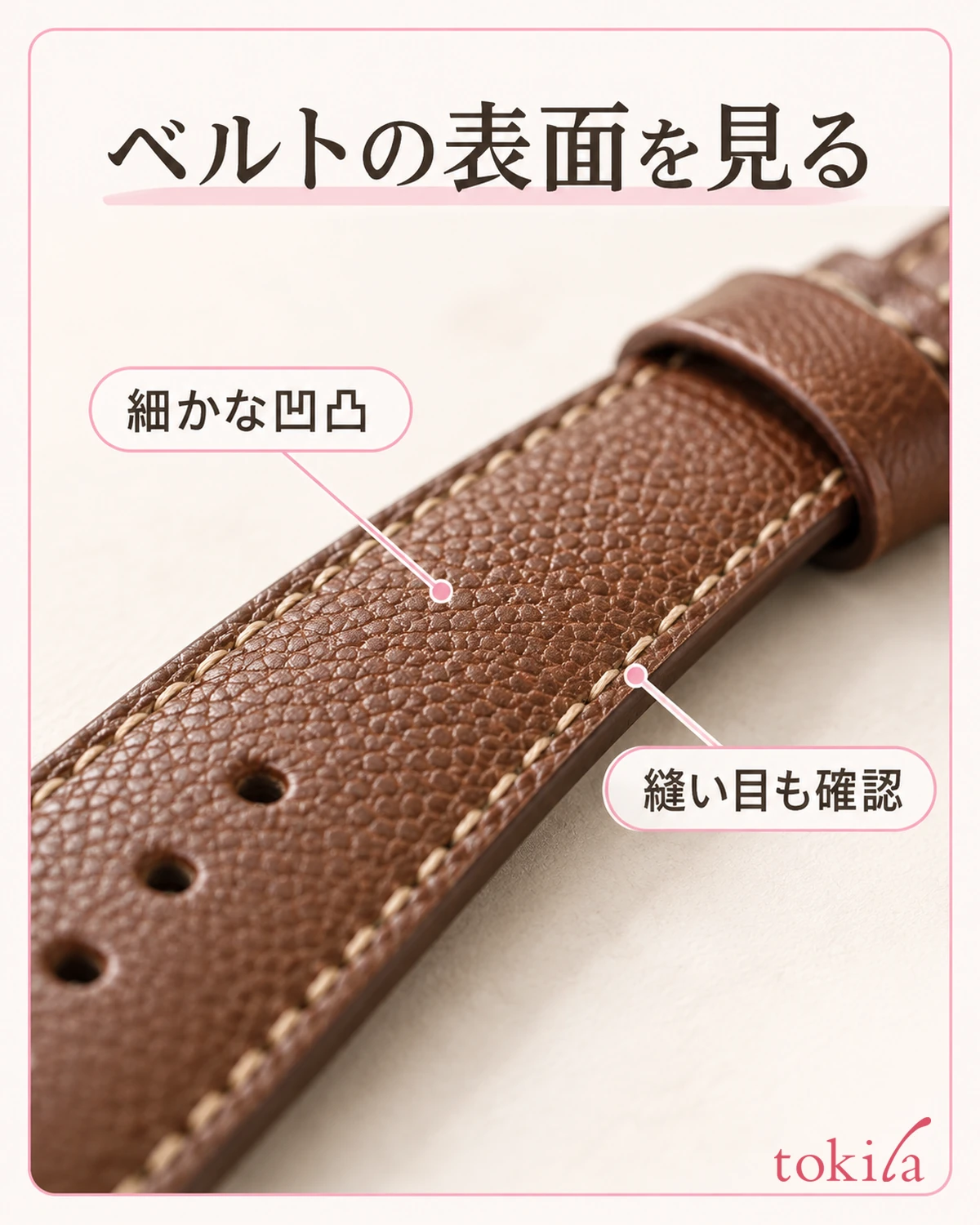
If the dial and strap are different colors, also check which one is closer to the cuff. The dial may stand out from the front, while the strap may look wide when you turn your arm slightly. Look at your arm lowered in your usual posture and resting on a desk, and choose the state that bothers you.
For example, with a watch that has a dark brown strap, a white dial and a silver case, separate "the brown feels distant from my clothes" from "the silver reflection feels strong." For the former, compare the sleeve color; for the latter, compare the metal parts or the shine of the surface; this makes the reason easier to sort out.
There is no rule that you must hide the watch completely under your sleeve. On days when you want to show a color you like, keep the option of toning down other accessories and making the watch the star. Blending in and not standing out do not have to be the same goal.
It is also important not to force a change in where you wear the watch or how tightly you fasten it for the sake of color balance. Instead of adjustments such as fastening it tightly to reduce how much shows, or loosening it and sliding it up your sleeve, check its relationship with your clothes with the usual way of wearing it.
2. With the same watch, compare the brightness of the cuff
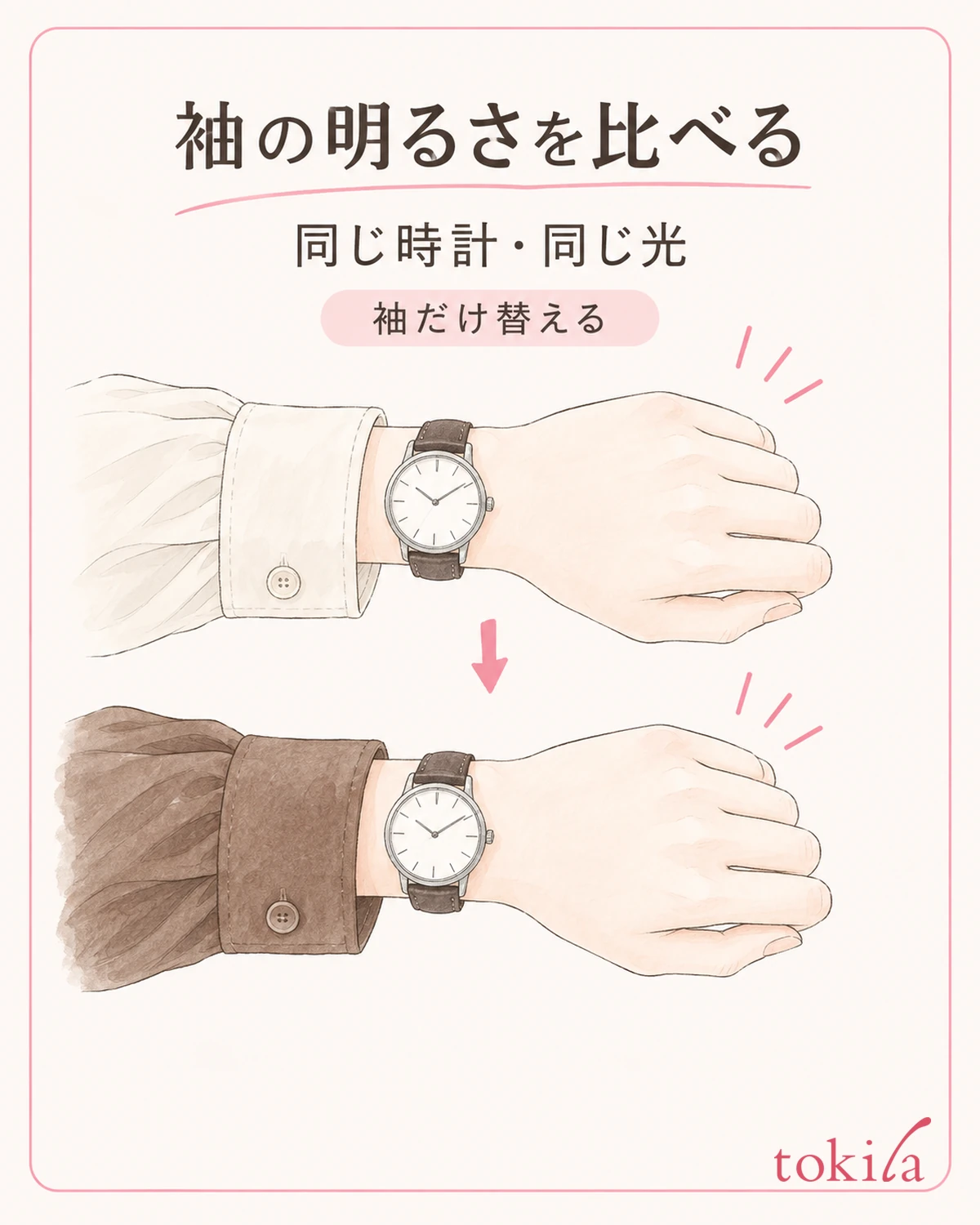
If you want to blend in, keep the watch fixed and choose two tops. At first, two with similar sleeve shapes but different brightness are easy to compare. Match the mirror, lighting and where you stand, put on one at a time, and look from the boundary between the sleeve and the strap.
With a dark brown strap, one example is to try an ecru sleeve and a dark brown-toned sleeve in turn. Check whether the outline of the strap feels clear against a light sleeve, or whether the colors feel connected against a dark one. Which to choose depends on the impression you want to give that day.
If you still feel unsettled even in clothes of a similar color, don't try to match the reddish or yellowish tones exactly; go back to the first outfit and compare. Keeping both the option of bringing colors closer and the option of enjoying a difference in brightness lets you choose without narrowing the clothes you own.
When comparing, match the direction you face as well, so that window light doesn't hit only one arm. If things suddenly look darker after changing clothes, first go back to where you were standing. Since this is a comparison to find a color balance you like, don't treat it as the result of measuring small color differences numerically, or as a test that gives everyone the same impression.
If one is a thin shirt and the other a thick knit, the material and the shape of the sleeve change along with the color. In that case, don't conclude "it matched because the color was dark"; take it as having liked that outfit as a whole. On a day when you have two pieces of a similar shape, you can compare the difference in brightness again.
If you have only one piece of clothing to compare, there is also a way to check the sleeve color that actually shows with a jacket on and off. However, check within the range of your normal movements, so that you don't rub the watch hard against the fabric or catch the metal parts on the sleeve.
If you want to sort out your color options, How to coordinate colors may also help. Moving toward similar colors is just one idea, not a rule that the watch and clothes must always be unified in one color.
3. Check the color and shine of the metal parts separately from the strap color
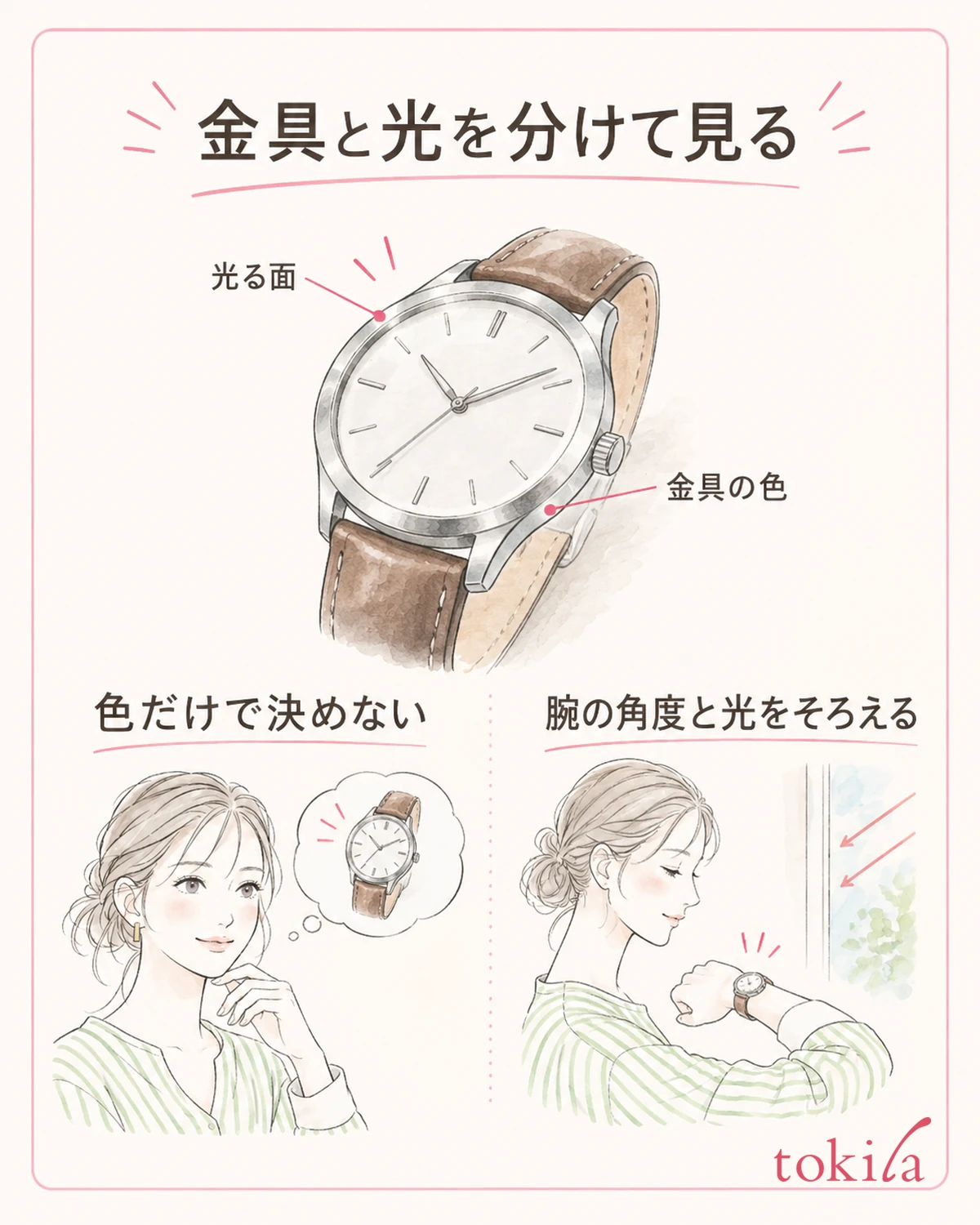
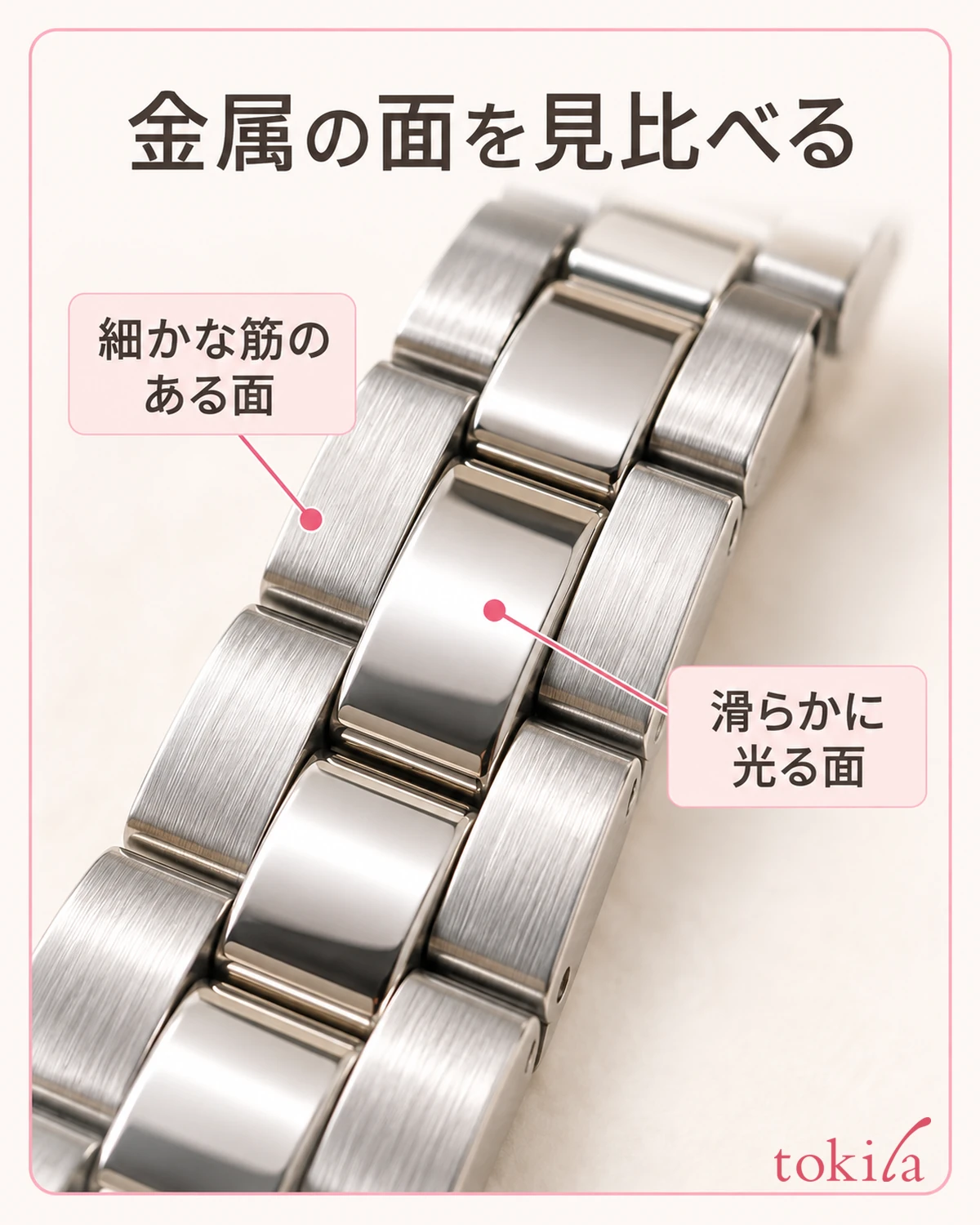
If something still bothers you even after bringing the strap color closer to your clothes, look at the metal parts such as the case and the buckle. The difference between colors such as silver and gold, and the difference in surface, such as a smooth face that reflects light versus a face with fine lines, are separate points to check.
When you change the angle of a watch lying on a desk slightly, a bright reflection may appear on a smooth metal surface. Don't judge that the color of the metal itself has changed from the reflecting part alone. While comparing two outfits, keep the angle of your arm and the light the same.
If you want to connect it with the metal parts of a ring or a bag, add just one accessory you own. Compare the idea of moving toward the same silver with the idea of leaving only the watch in a different color, and see which is closer to your taste. You don't need to change all the metal parts to the same color.
When you look closely at the metal parts, one watch may have both smooth surfaces and surfaces with fine lines side by side. Separating whether it is a difference in color or a reflection on the surface is a check to make before buying a replacement. You don't need to state the name or performance of the material from its appearance alone.
If you want to try mixing metal colors, you can also check How to combine gold and silver accessories. Rather than adding accessory after accessory, use the watch and one accessory to check whether you want to repeat a color.
Don't let the color comparison turn into modification, such as polishing the metal parts to reduce shine or dyeing the strap. Surface finishing and material care cannot be decided from appearance alone. Follow the handling instructions for what you own, and try color balance through combinations of clothes and accessories.
4. Check how much shows from the sleeve in your usual movements
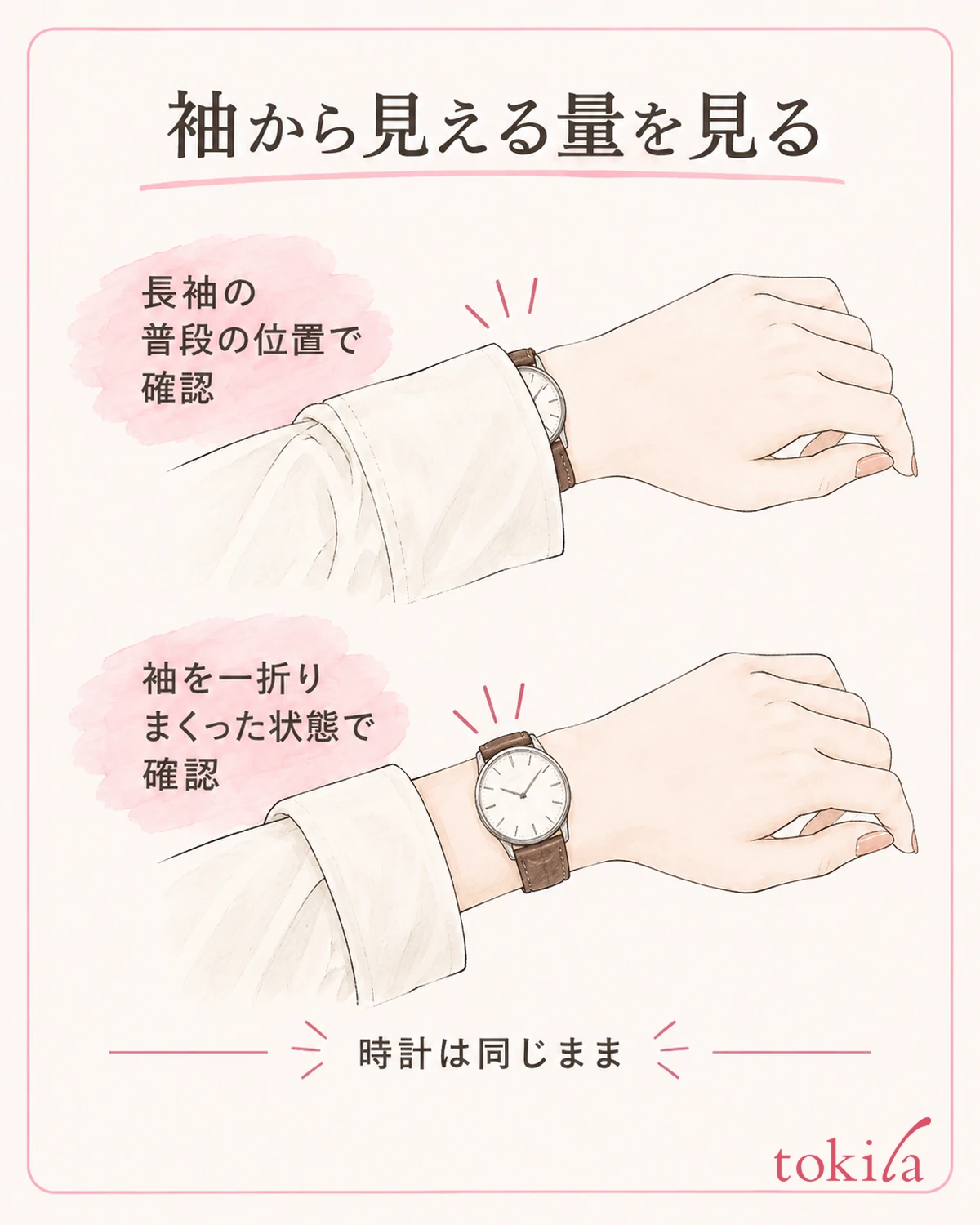
When the color feels strong, look not only at the strap color but also at how much shows from the sleeve. With your arm lowered, your elbow bent, or your hand resting on a desk, the range you can see changes as the cuff moves. Don't reach a conclusion from a single still image.
The amount of color that appears in an outfit differs between a long sleeve where only part of the watch is visible and a short sleeve where the whole strap is visible. Even with the same watch, it is fine to check the impression again on a day when you wear different clothes. Don't treat the same combination as the only right answer in every season.
If you roll up your sleeves, try it at a position that is natural for the garment's shape and that you can keep up normally. Don't tighten the cuff hard to show the color or tuck fabric into the watch. When you put the sleeve back down, also check that it doesn't catch on the metal parts.
For example, if you want to show only a little of a dark strap, compare two states: with the sleeve lowered naturally, and with your usual way of rolling it up. Under the same lighting, return your arm to the same position and choose the one where the amount of visible color is closer to your taste. It is not a comparison to be thought of as the result of replacing the strap.
If there are rules about cuffs or wearing a watch at work, for example, give priority to those conditions. It is important to judge by how you actually spend your day, rather than creating a temporary look for a photo. For clothes that catch, review how they are handled when worn before thinking about color balance.
If you get lost while looking only at your wrist, step back a little from the mirror and check including your upper body. Leave room to choose from the whole look, such as whether the strap color feels connected to your bag or shoes, and whether you can enjoy the watch as a single accent.
5. If you're unsure, go back one step and choose by how you look when you go out
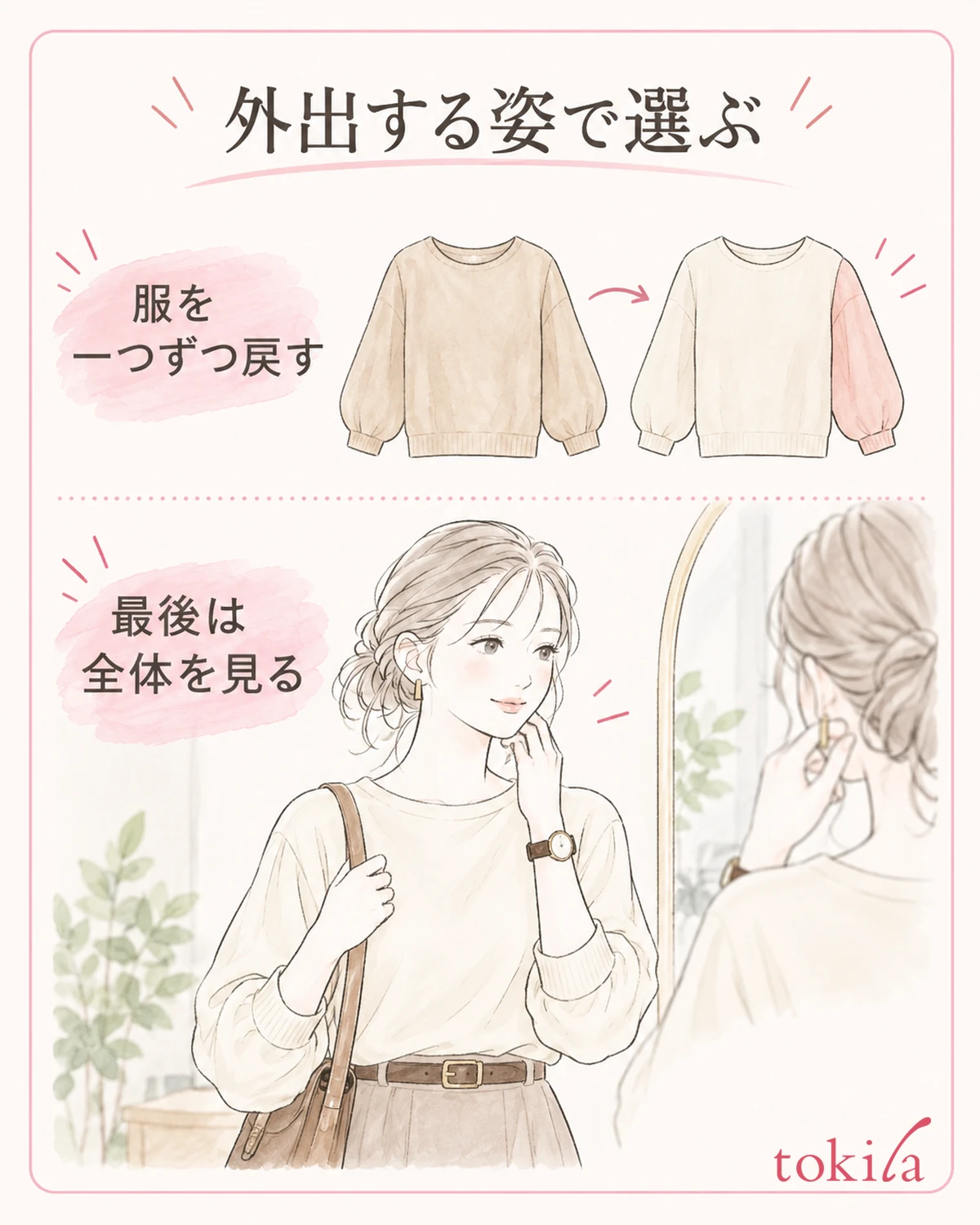
Finally, add the jacket and bag you wear when going out, and return to the look with your usual watch on. Check, in order, the boundary between the sleeve and the strap, the glint of the metal parts, and how much shows when you move your arm, and see whether the part that bothered you at first still bothers you now.
If you changed your clothes, ring and bag all at once, go back to the first outfit for now and change just one thing to compare. Separating whether it settled because of the sleeve brightness or because there were more colors close to your accessories makes it easier to remember combinations that you can use next time too.
If you keep photos, use them as notes on combinations. Because subtle colors look different depending on screen brightness and automatic correction, don't conclude about color differences from photos taken on different days alone. If you compare two, take them in the same place, with the same light and arm direction, and confirm with the real thing worn in the end.
If you still consider replacing the strap, check compatibility with the watch and the method of replacement before color. Not every type can be replaced by yourself, and a similar width does not necessarily mean it can be attached. Don't force off a part whose compatibility you don't know; consult the store where you bought it or similar, as needed.
When you ask others for their opinion, set the scope, such as which of the two outfits you like the look of the watch with. Even if opinions are divided, it does not mean the color of the watch is wrong. Go back to your own aim, whether to blend in or to make it a focal point, and choose.
For your notes for next time, rather than "a brown watch doesn't suit me," leave combinations and actions such as "with light sleeves, make the watch the focal point" or "with this jacket, wear just one ring." When the sleeve shape or the season changes, you can try again with the same watch.
If you are unsure about the color balance of your watch, separate the strap, the dial and the metal parts, and check the brightness of the sleeve and how much shows, one at a time. Keeping both the idea of bringing the colors closer and the idea of making the watch the star, choose by your usual way of wearing it and your preference that day.