You want to try placing toner-soaked cotton on your cheeks, but you are unsure whether your usual toner is suitable or how many minutes to leave it on. A cotton toner pack is a skincare method that places cotton soaked in moisturizing toner on the skin. Before using your usual application amount, check whether the product is suitable for a pack and whether it provides guidance on time and application areas.
This article covers preparation, placement, and care after removing a pack made with toner and cotton. Its use differs from a commercially available presoaked sheet mask or a wiping toner. Rather than leaving it on for a long time, the key is to start and finish under conditions suited to your products.
1. Check whether the toner can be used for a cotton pack
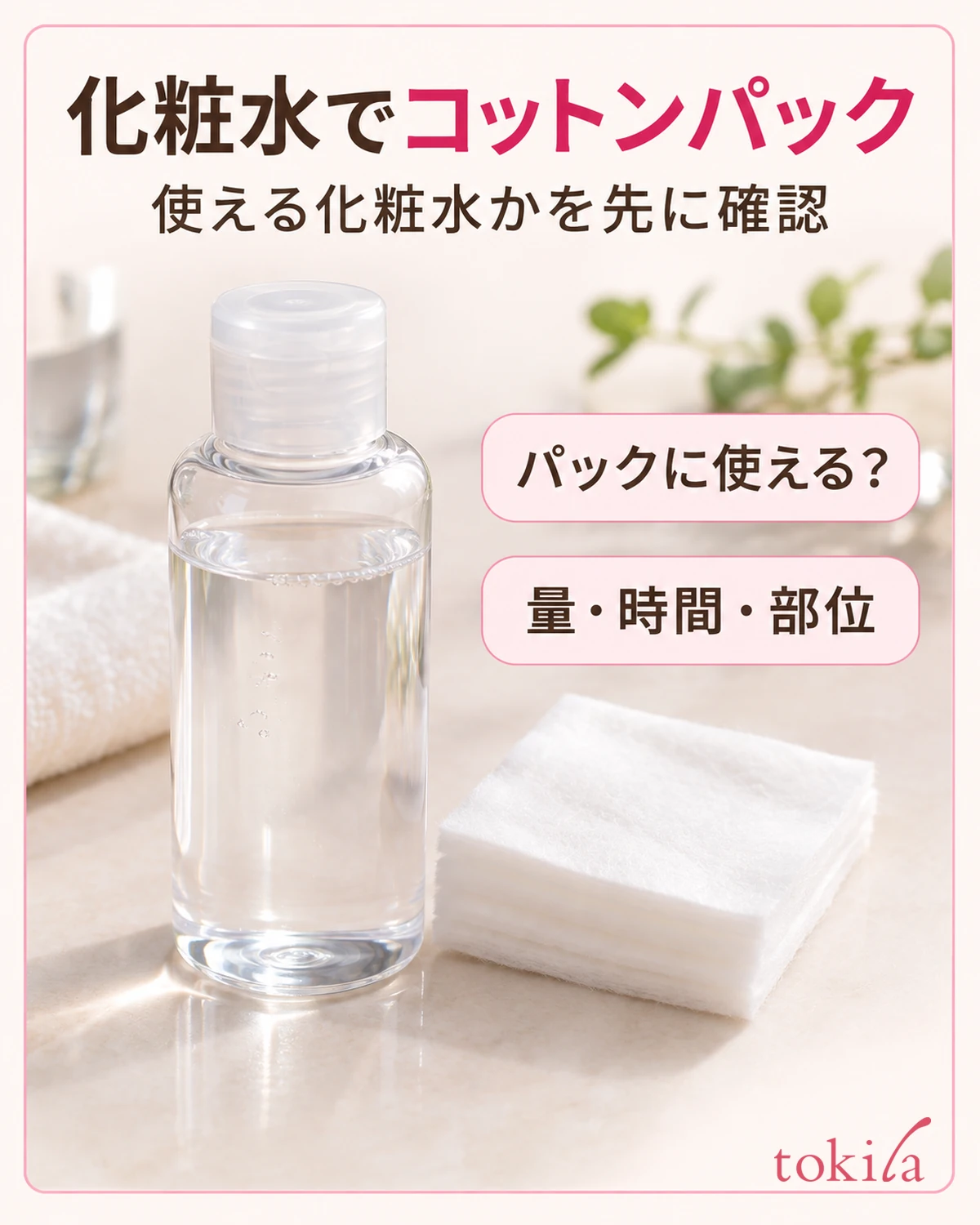
Start with the purpose and directions on the toner bottle and outer box. Directions to “apply with cotton” alone do not establish whether cotton may be left on the skin as a pack. Check together whether pack instructions are provided and, if so, the amount, time, and areas to avoid.
Lotions for wiping or exfoliating have different roles even when they look like moisturizing toners. Do not independently turn a product intended for wiping into something left on your cheeks for a long time. Amounts may also differ between application by hand and with cotton, so select the directions for the method you are using now.
You do not need to decide whether a toner is suitable for a pack based on its name, thickness, or price. Even if you normally use it without problems, separately check whether leaving it on the skin is covered by its directions. If you are unsure, stick to normal application that day and introduce packs after confirming the product's instructions.
The toner's directions are also the starting point for application order. Preparation differs for products used after cleansing and those used after emulsion or other products. There is no rule requiring you to repeat your entire usual toner application on a day when you add a pack. Organizing the order and amount for the toner you are using helps avoid unnecessary extra steps.
Avoid continuing to apply a pack in an attempt to improve skin with redness, wounds, stinging, or similar issues. If you notice an abnormal reaction during use, remove the cotton and stop using the product according to its precautions. If symptoms persist, consult a medical professional. A pack is not a treatment for skin abnormalities.
2. Soak the entire contact surface and choose how to separate the cotton
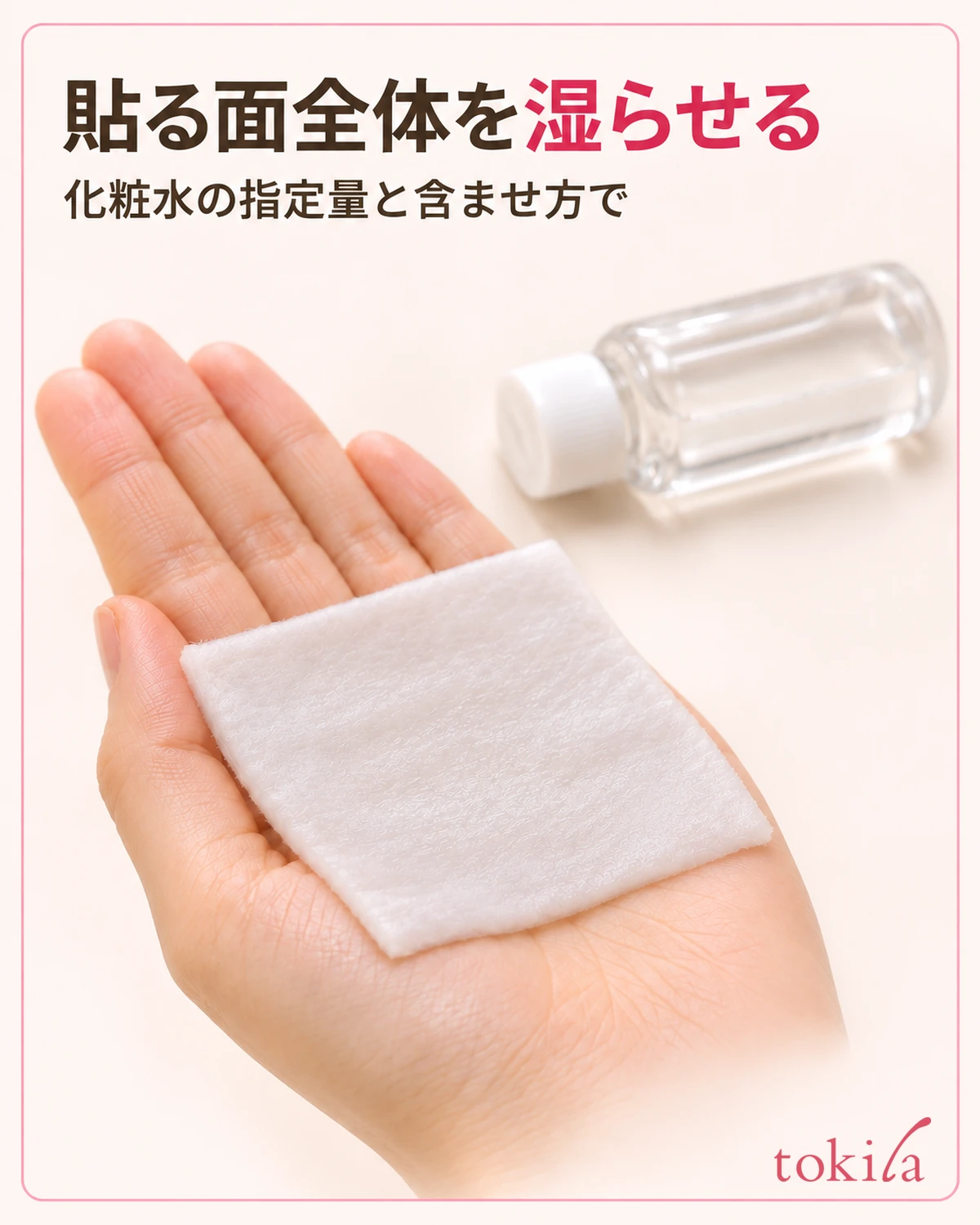
Wash your hands, take out only the cotton you need, and close the bag or box. If both the toner and cotton provide pack instructions, also check compatible shapes and amounts. Rather than simply dripping a small amount onto a large pad, prepare it as directed so the liquid reaches the surface that will touch your skin.
If only the center is wet and the edges are dry, do not press those dry edges against your skin. At the same time, you do not need to keep pouring until liquid runs off your hand. Consider the specified amount together with the size of each pad. If you only know the amount for normal application, check the instructions instead of inventing an amount for a pack.
If the cotton can be separated into thin layers, gently peel it from an edge along the layers of its thickness. This differs from tearing it sideways to increase its surface area. Avoid forcing apart cotton whose layer edges cannot be found or whose edges are sealed. Nor does every type need to be divided into the same number of layers.
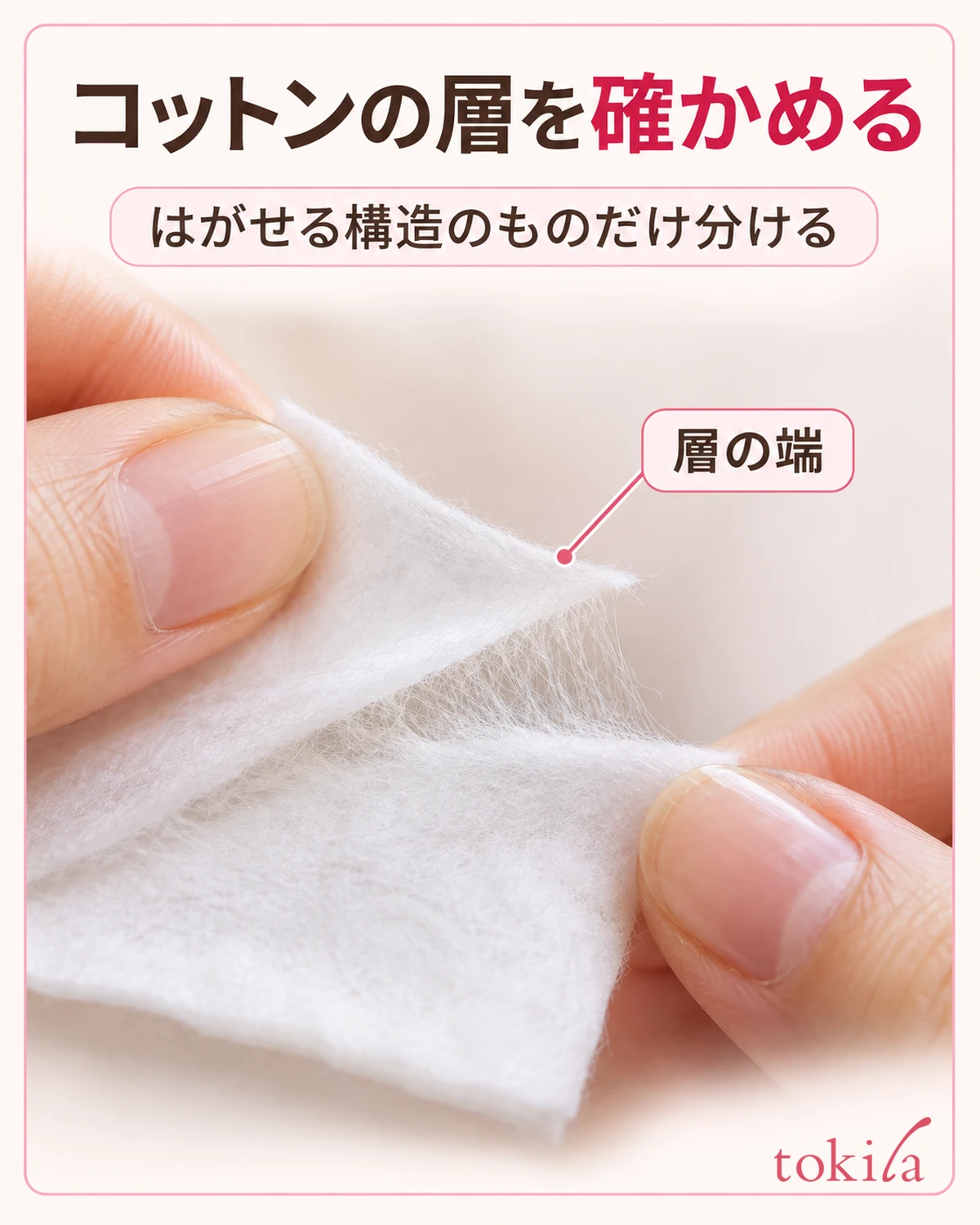
After lifting one separated layer, check for holes or large tears. Thinner is not always better; a useful guide is whether you can carry the damp surface while preserving its shape. If the layers are uneven, leaving thick and thin areas, adjust your grip before pulling hard on both ends. Do not force cotton that cannot hold its shape into the application step.
Some combinations provide directions to dampen the cotton with water first, but do not apply that step to every toner. Follow your products' instructions to decide whether to use toner alone or water as well. This is different from adding water to the remaining bottle or mixing in another serum to make a pack liquid.
3. Place it without wrinkles on permitted areas such as the cheeks
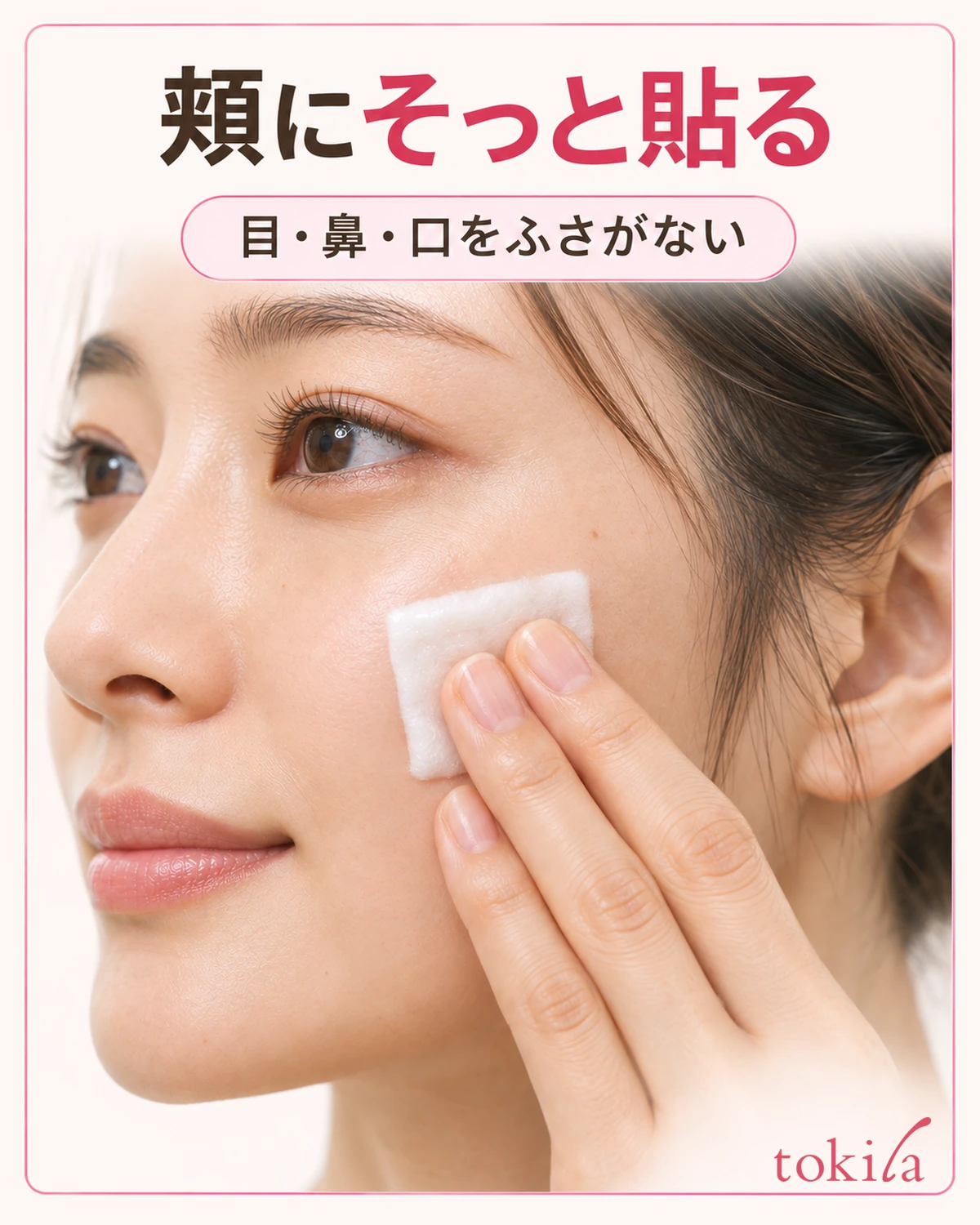
Looking in a mirror, gently place the damp surface on skin in an area covered by the directions. On the cheeks, center it on a flat area and adjust the size so the edges do not reach the lash line, lips, or nostril openings. The aim is not to cover your entire face in white cotton. There is no need to overlap pieces to cover every uncovered area.
Sliding cotton firmly over the skin becomes a wiping motion rather than a pack. If its position shifts, lift it by an edge, adjust where it should go, and place it again. Rather than holding it down with your fingers or pulling your cheeks to smooth wrinkles, find a position where the surface follows the skin naturally.
Before placing it on your face, also check whether a corner is folded inward. A folded section becomes double-layered and may cause the surrounding area to lift. Opening the corner and flattening it in your hands can reduce repeated rubbing to fix it on your skin. The key is to distinguish the cotton's shape from the contours of your skin.
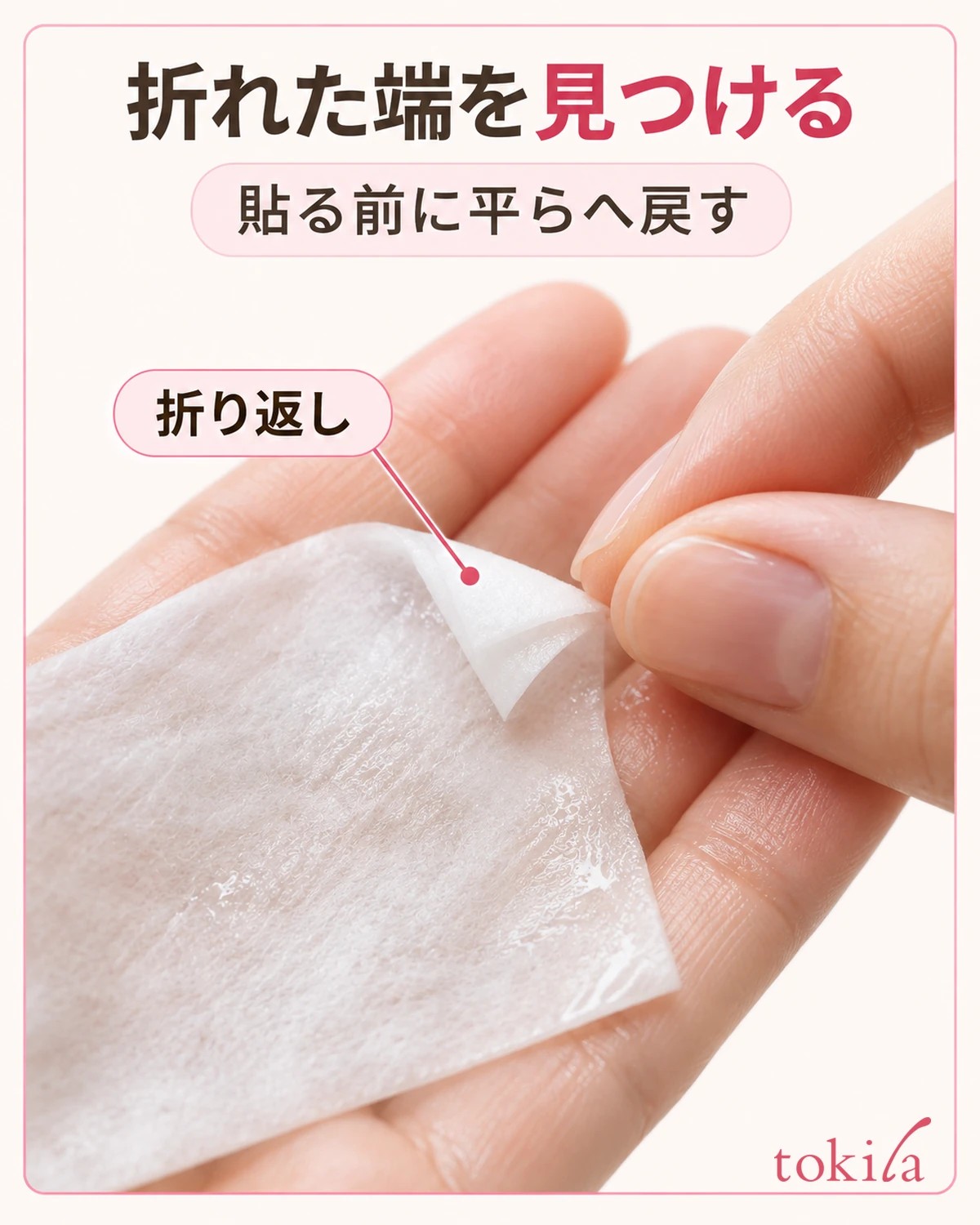
If it lifts after placement, check dry edges, folded corners, and how it lies over your facial curves, in that order. Adding liquid will not necessarily solve it. Instead of forcing down a piece large enough to reach the eyes, adapt it to the area and shape permitted for your products. Avoid adding new areas each time you correct a shift; decide on the contact surface and place it calmly.
Do not return a piece that has touched skin to the toner bottle opening or unused cotton. Replace it if you drop it or it becomes dirty. Separating your preparation tray from the place for used pieces helps prevent mix-ups even with wet hands.
4. Follow the specified time and remove it before it dries completely
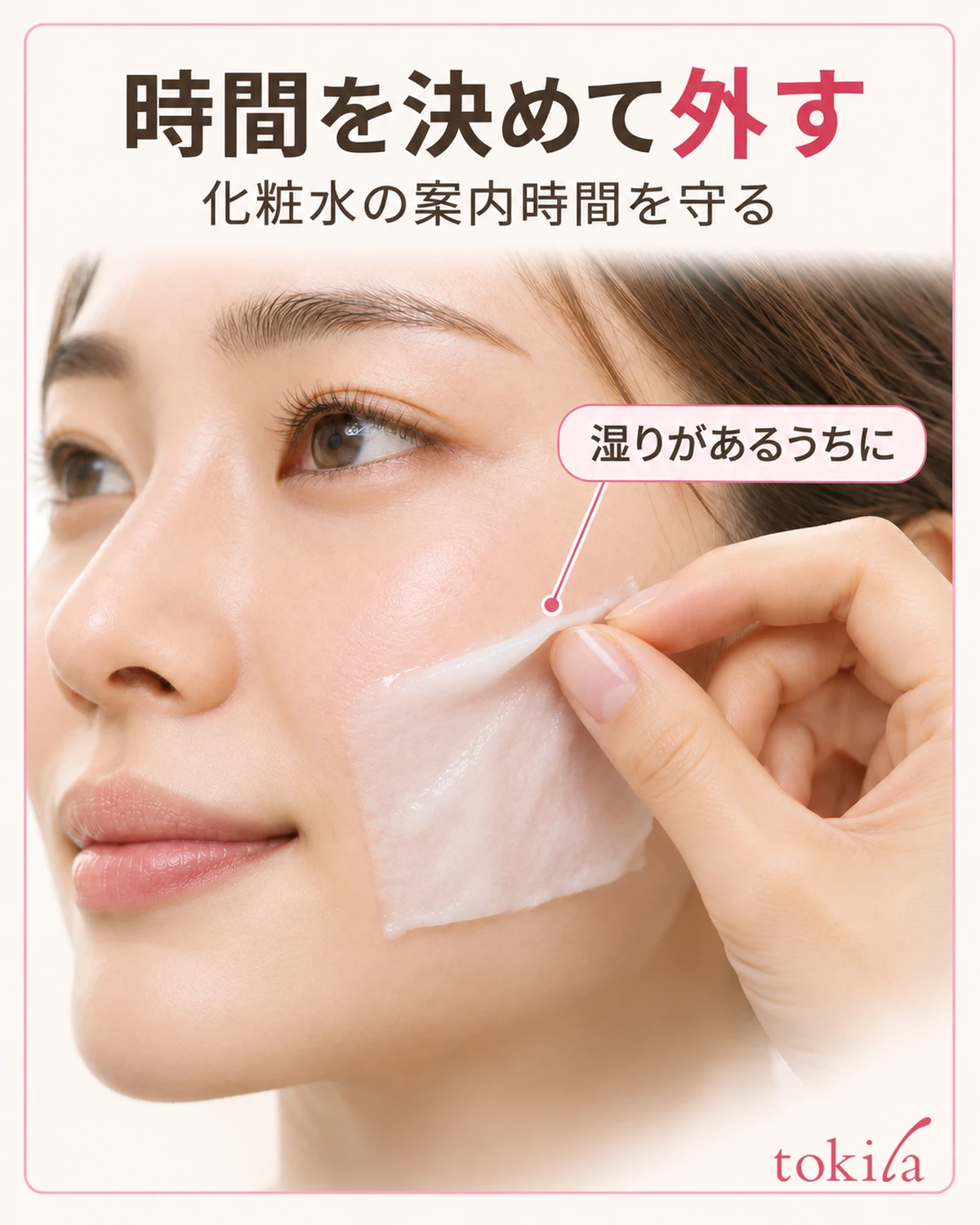
Once you start applying the cotton, follow the time given in the toner's pack instructions. Even if you see an example with a short duration, do not transfer that number to another product. Also avoid using a commercial sheet mask's duration for a cotton toner pack. Checking the duration before starting lets you remove it without uncertainty midway through.
If you use a timer, set it in advance and keep it nearby. Do not become distracted by housework or videos and leave the cotton on until it dries. Finish that session instead of extending the planned time by adding liquid or changing to sleeping with it on.
Even before the specified time is up, if the cotton begins to dry or your skin feels uncomfortable, do not press firmly to keep going. Stop using the product if an abnormal reaction occurs. If it dried quickly, next time check whether the amount, pad size, and preparation time followed the directions. Do not link drying speed alone to the toner's quality or its effects on skin.
To remove it, hold an edge and gently lift it away without pulling the skin. End its role as a pack here rather than immediately starting to wipe with the damp surface. If an edge sticks and is hard to move, do not peel it off forcefully; handle it gently according to the product's directions.
You do not need to repeatedly reapply cotton to the same area to check how it looks immediately afterward. It is also important not to treat the amount of liquid remaining in the cotton or its whiteness as proof of how much of an ingredient entered your skin. Instead of focusing on whether a photo temporarily looks brighter, reflect on whether you completed the planned steps without unnecessary force.
5. Organize how to handle remaining liquid and the skincare afterward
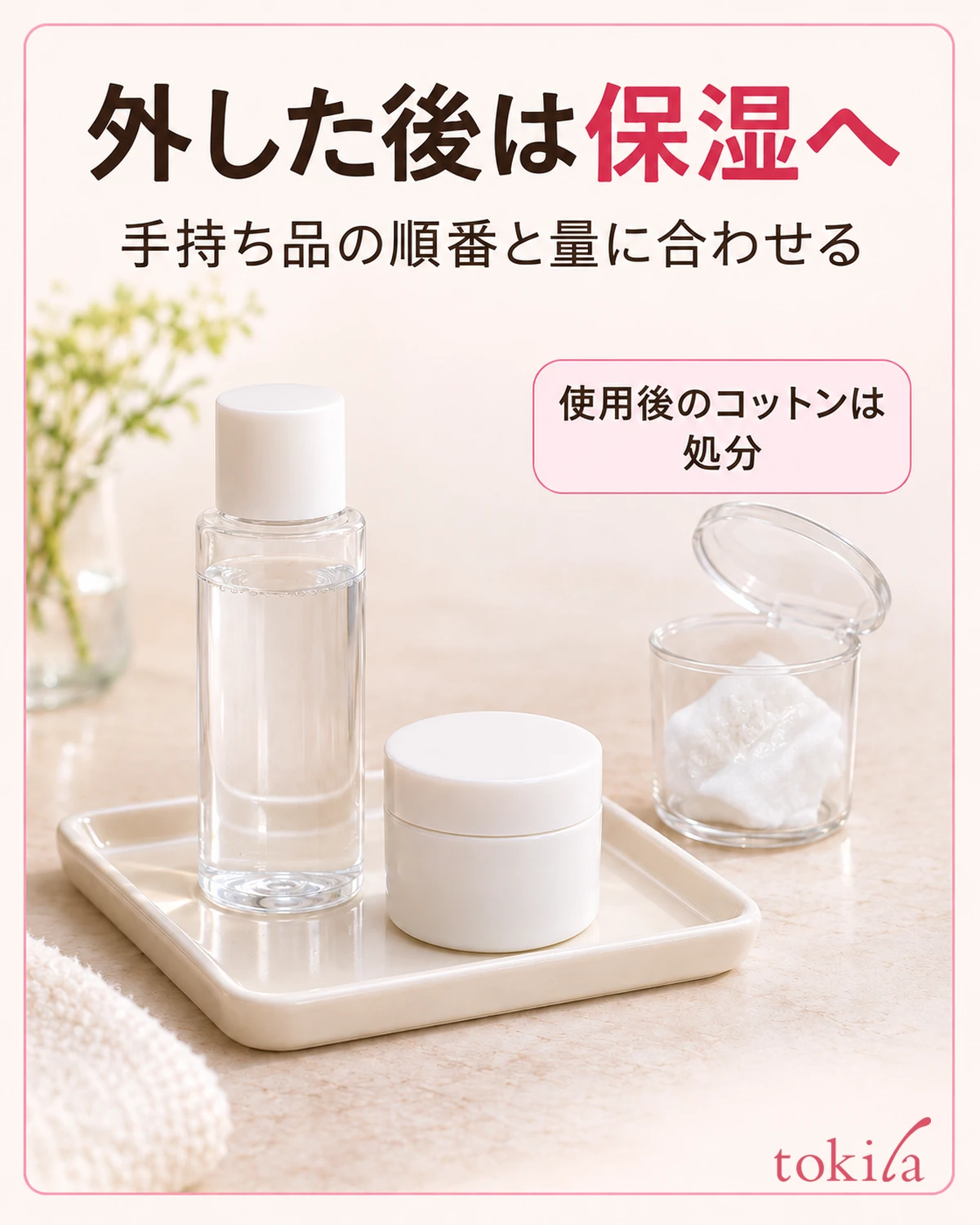
After removal, help the remaining liquid settle according to the toner's directions. If using your hands, gently place clean palms or finger pads against your skin and avoid prolonged vigorous rubbing. Do not squeeze used cotton onto your face for more liquid or return it to the container; discard used pieces.
Then continue with serum, emulsion, cream, or other products according to your skincare order. Do not assume that a pack makes all subsequent care unnecessary or requires adding every product. Some products are used before toner, so combine their directions rather than treating their order on the shelf as the application order.
If you use a pack in the morning, finish the pack and subsequent care before moving on to sunscreen or makeup. When you are in a hurry, you do not need to shorten the specified time and apply many pieces. If the toner also allows normal application, choose a method that suits the time available and save the pack for a session when you can take your time.
For next time, briefly note what actually caused uncertainty, such as “the edge was folded” or “it started drying during preparation.” Rather than changing the toner, cotton, and application area all at once, follow the product's directions and adjust one aspect of the shape or procedure to make reflection easier. If your skin has an abnormal reaction, prioritize stopping over continuing with adjustments.
If fibers bother you during normal application, see ways to address lint from toner cotton for how to hold it while moving it. A cotton toner pack involves choosing a suitable toner, dampening the surface, placing it on permitted areas, and removing it after a set time. Before adding it to your usual care, align this sequence with the directions for the toner you use.