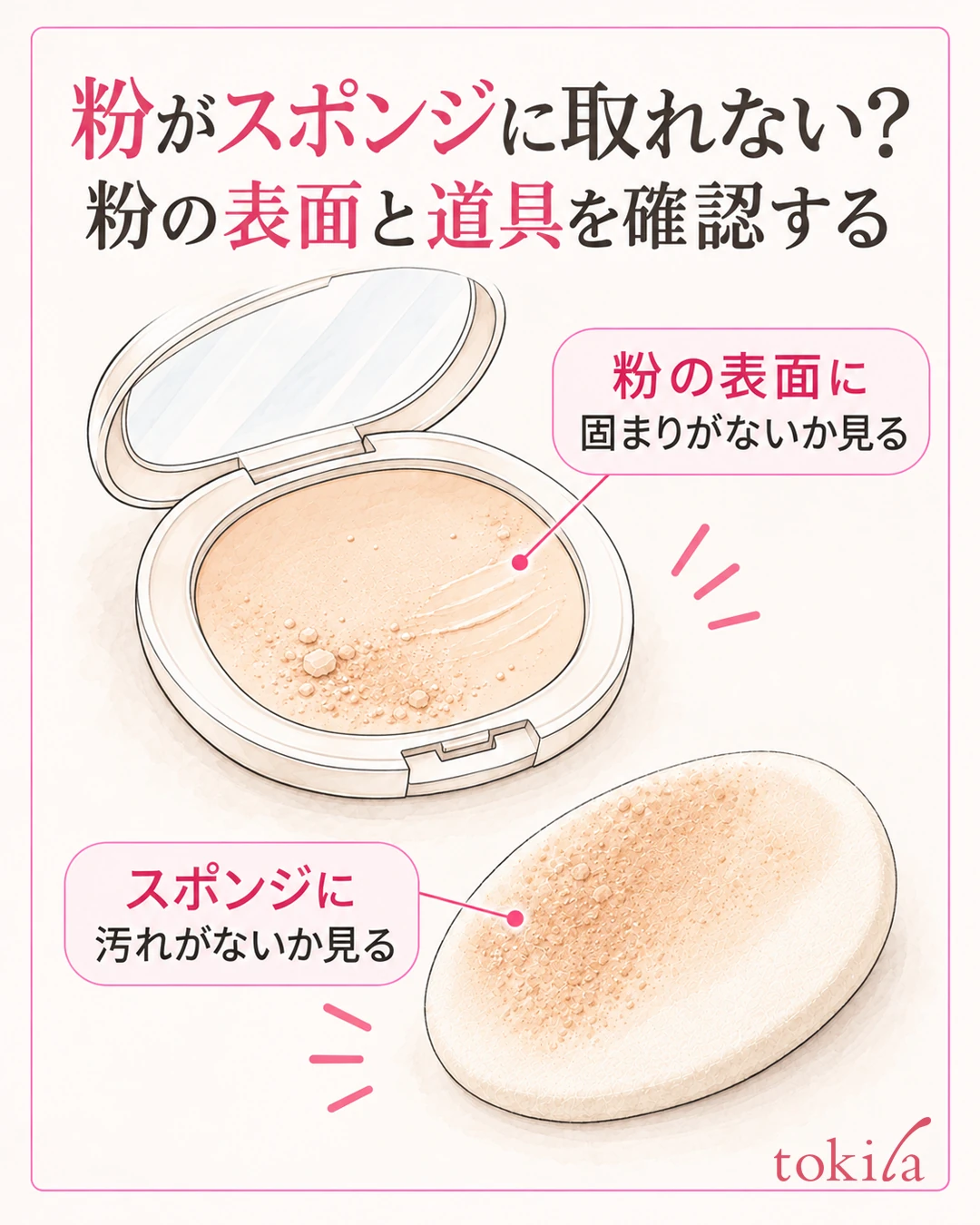
No matter how many times you swipe, your powder foundation won't transfer onto the sponge. When you press harder, streaks form on the surface and your skin turns patchy too. In that case, before picking up more product, check the surface of the compact and the sponge separately. A hardened surface, a soiled working side and the way you handle moisture each call for adjusting a different place.
This article explains, in five diagrams, what to check when a pressed-powder foundation is hard to pick up, and how to adjust before you keep using it. We won't assume that every bit of firmness from a brand-new compact is a defect; judge from the instructions on your own product. Think of it separately from cakiness once the product is on your skin.
1. Look separately at the powder surface, the sponge and the finish on your skin
First, open the compact in a bright place and look at the area you usually pick up from. Compared with before, has it developed fine granules, streak-like hardened patches or a smooth, glossy surface? Next, look at the working side of the sponge and check for clumps of color or shine. Don't keep rubbing the same spot back and forth just because the powder won't come off; stopping for a moment is the starting point.
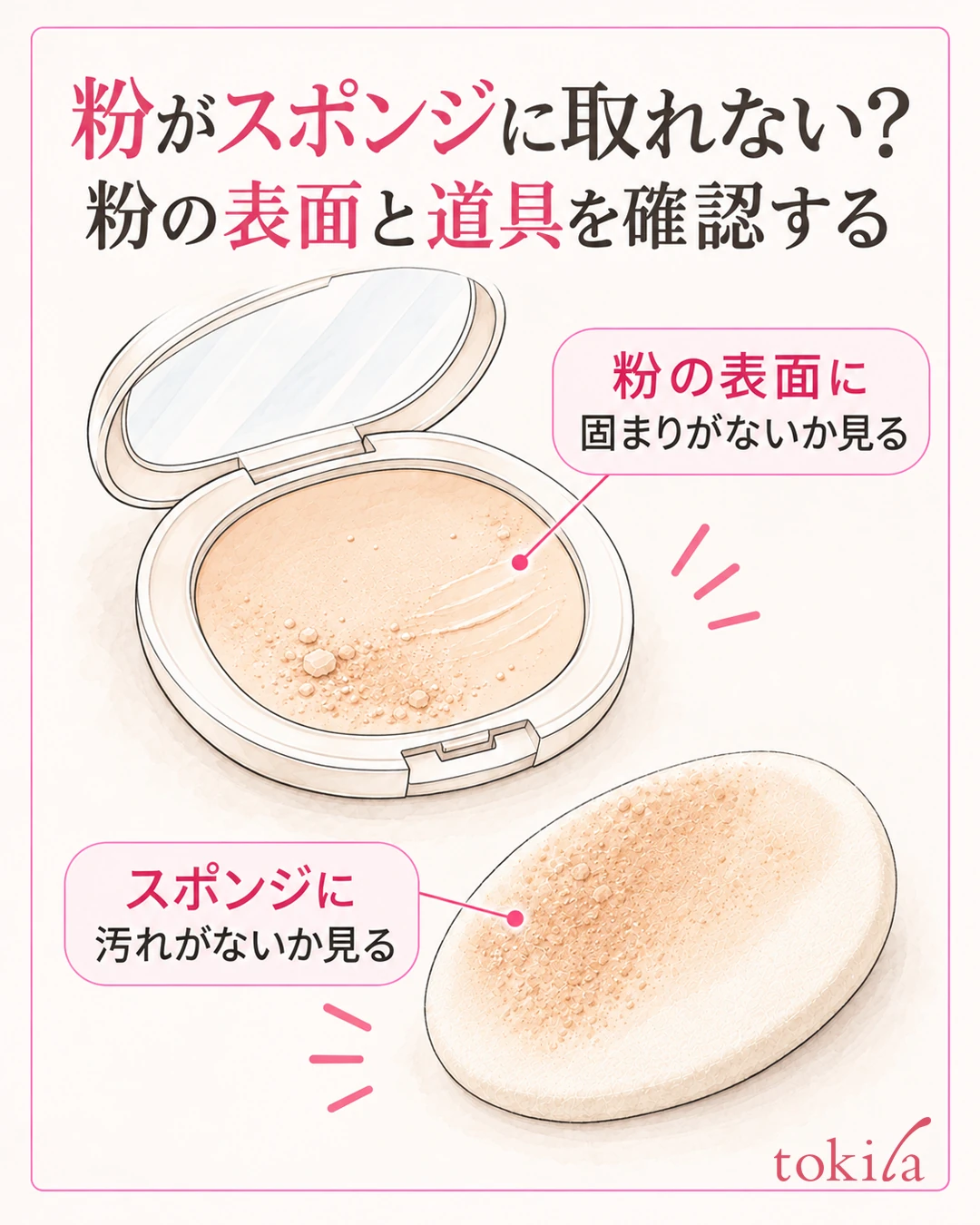
Oils and other residue on the sponge may transfer to the powder, and rubbing the same spot repeatedly can make the powder particles stick together. However, you can't pin down a single cause from appearance alone. Check the result (no color is picked up), changes in the surface and changes in the tool separately.
For example, if the powder comes off as usual but looks thin on your skin, the problem isn't only that it's hard to pick up. First check the finish the product describes and how much you apply and where. Conversely, if hardly any color transfers to a clean working side before it even touches your skin, you can focus on the powder surface and how you handle the tool. Done in this order, you won't need to keep layering on your cheeks to look for the cause.
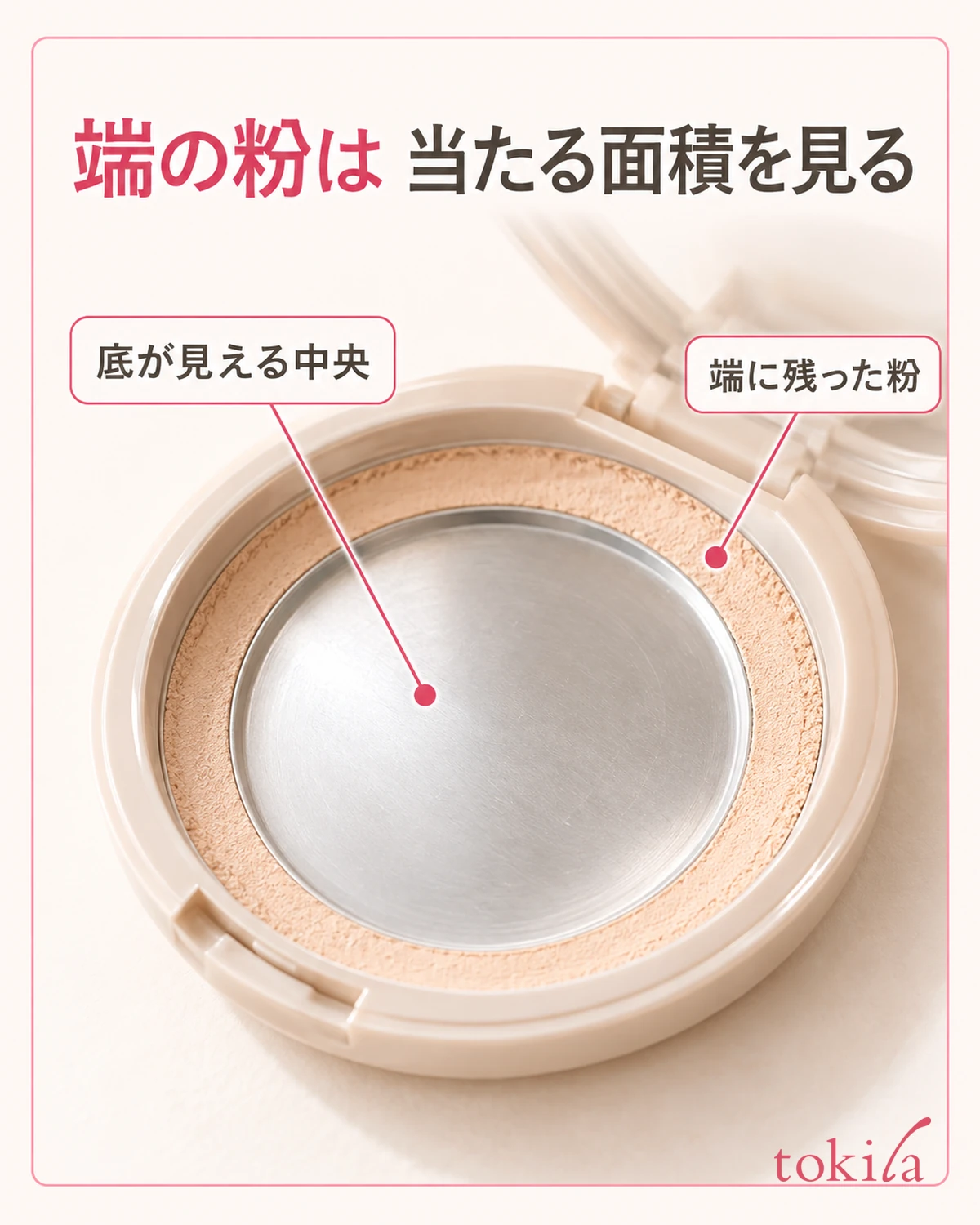
A compact where the bottom is visible and only powder at the edges remains is a different case from a hardened surface. If the sponge simply touches a smaller area, check whether you are still picking up the way you did from the center. There is no need to mix breaking up the powder and repacking it into this adjustment. Distinguish what is left from the surface condition, and avoid pressing hard on places that won't come off.
Containers and powder firmness differ between products, so don't judge a product defective just because it is harder than another. If there is an odd smell, unusual discoloration or foreign matter, stop using it rather than fixing the look and carrying on, and contact the manufacturer. This article covers difficulty picking up during normal use; it is not meant to determine whether a product has a quality defect.
2. Prepare a clean working side and a base that has settled in
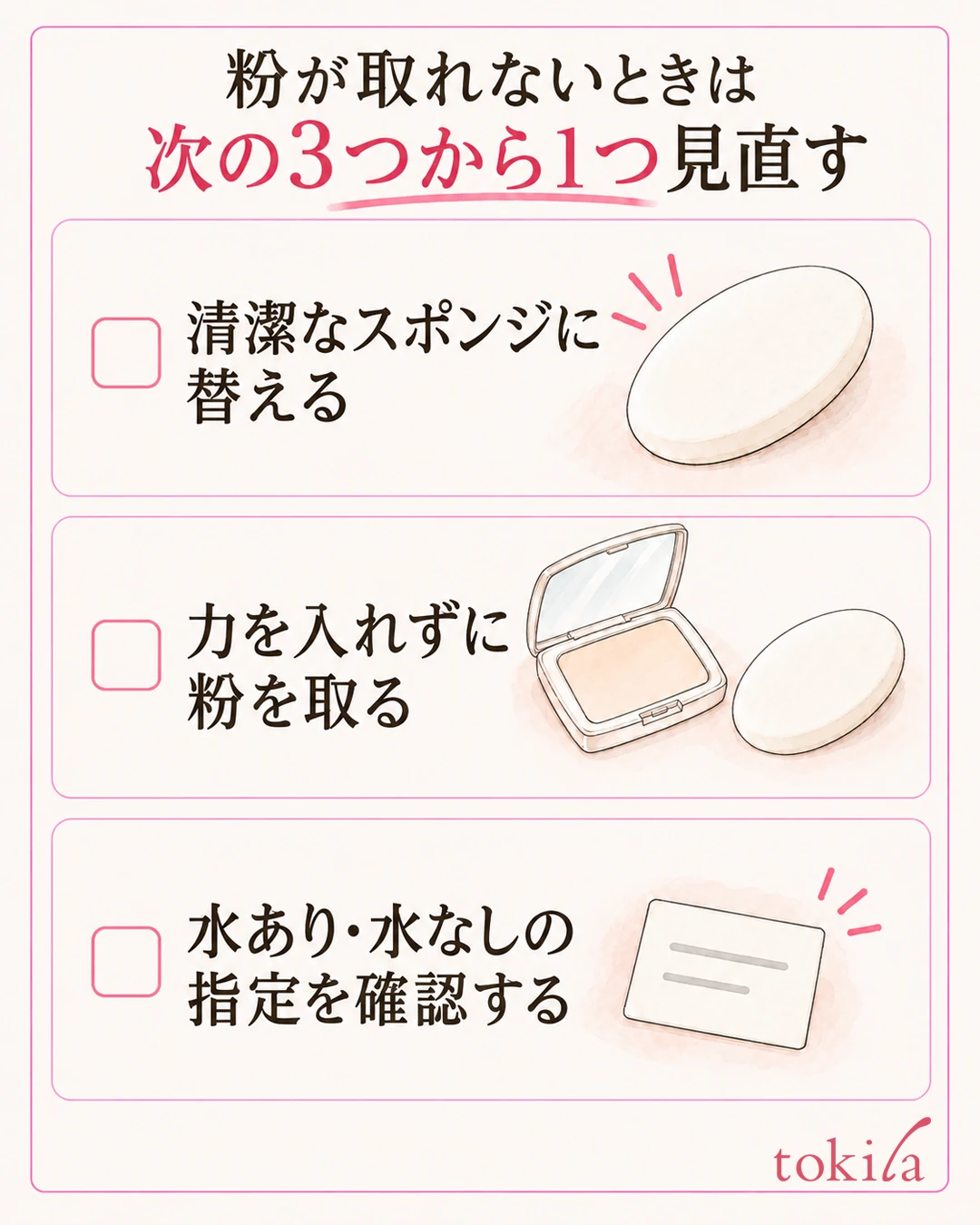
Next, check the sponge you pick up the powder with. If it has lots of clumps on the surface, no clean area left or looks shiny, hold off on putting it back into the compact as is. Decide whether a clean side can still be used, or whether washing or replacement that matches the product's instructions is needed. Getting your tools in order and then trying again makes it easier to judge than forcefully gathering powder that won't come off.
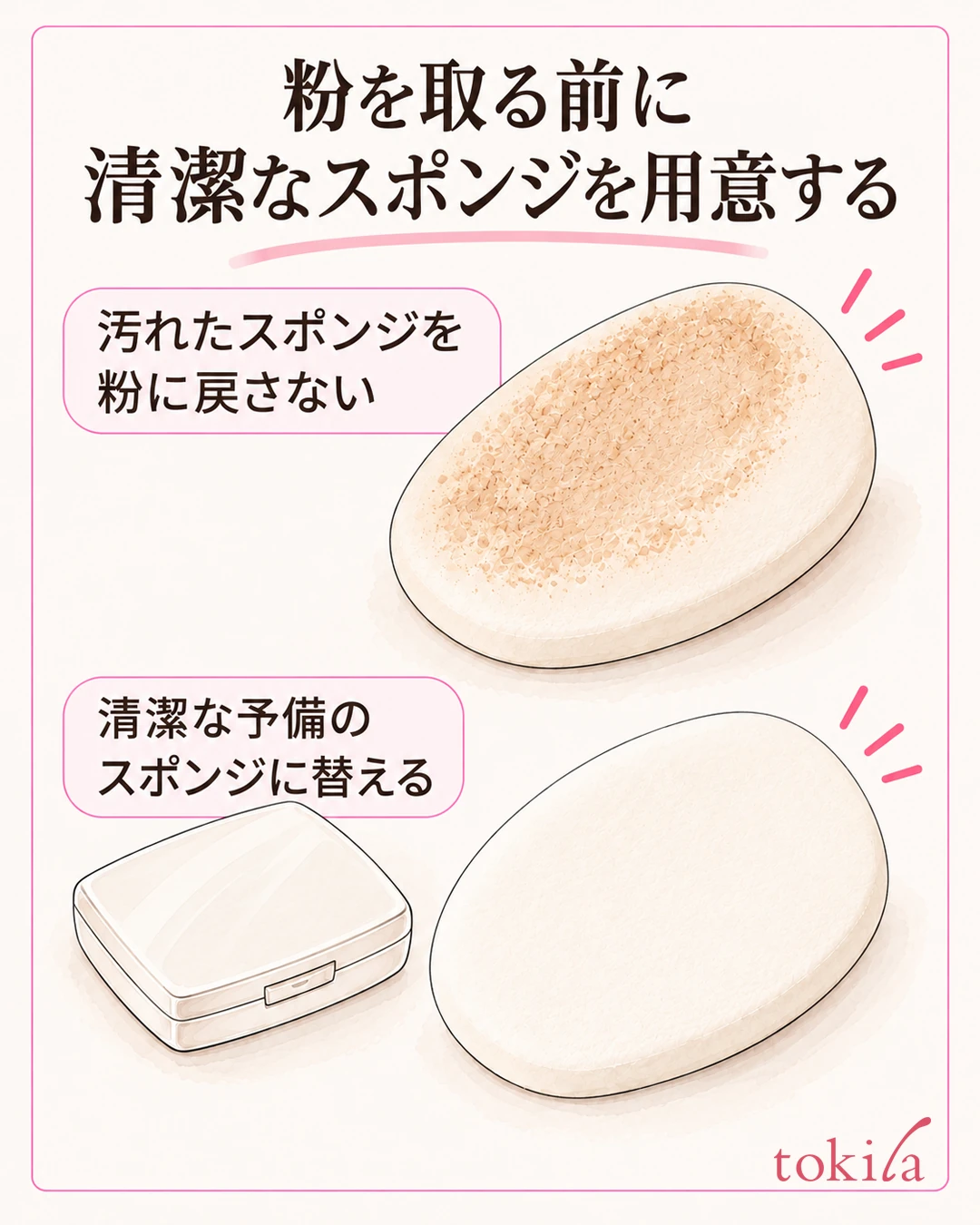
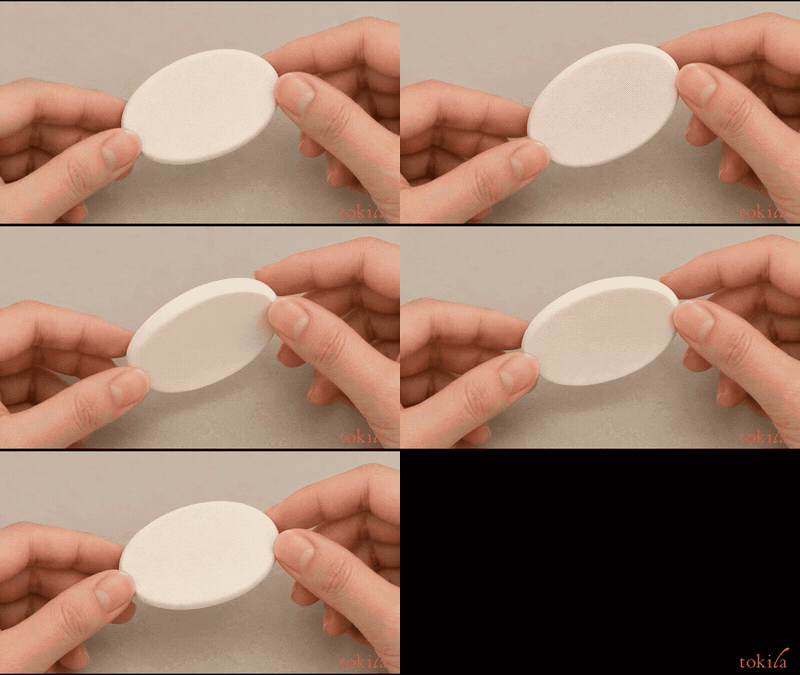
Flipping it from front to back doesn't always solve the problem. If both sides are soiled, don't treat one side as if it were new. When washing, check the instructions for the sponge and the cleaner, rinse well and dry it as directed. If you use the foundation dry, don't use a damp, just-washed sponge in place of a dry tool. If the morning is short on time, you can also keep a matching clean spare ready.
On the skin side, check whether you are picking up powder while sunscreen or primer is still sitting on the surface. This is to reduce the chance of excess cosmetics on the sponge going back into the powder. Rather than set a fixed waiting time, check the order of use for your products and how well things have actually settled in.
The adjustment is not simply to use less sunscreen. Follow the labeling for the amount and method each product needs, and review the stage at which you layer. If the base moves on both your forehead and cheeks, stop before adding foundation to cover it. If you can check how your skin is prepped and what remains on the sponge, you can avoid scraping at the powder surface alone.
If the sponge is torn, has lost its bounce or feels different on the skin, consider replacing it rather than trying to restore it by washing. For washing and drying methods by material, see also caring for makeup brushes and sponges. This article concentrates on preparing a clean working side and checking how you pick up the powder.
3. Confirm wet or dry use from the labeling, and don't wet it your own way
Before deciding "it won't pick up with a dry sponge, so I'll add water," read the labeling on the foundation and the sponge. Check whether the product can be used wet or is dry-only. Even among pressed powder foundations, the instructions differ. Also avoid carrying a liquid foundation's way of using a damp sponge straight over to your pressed powder.
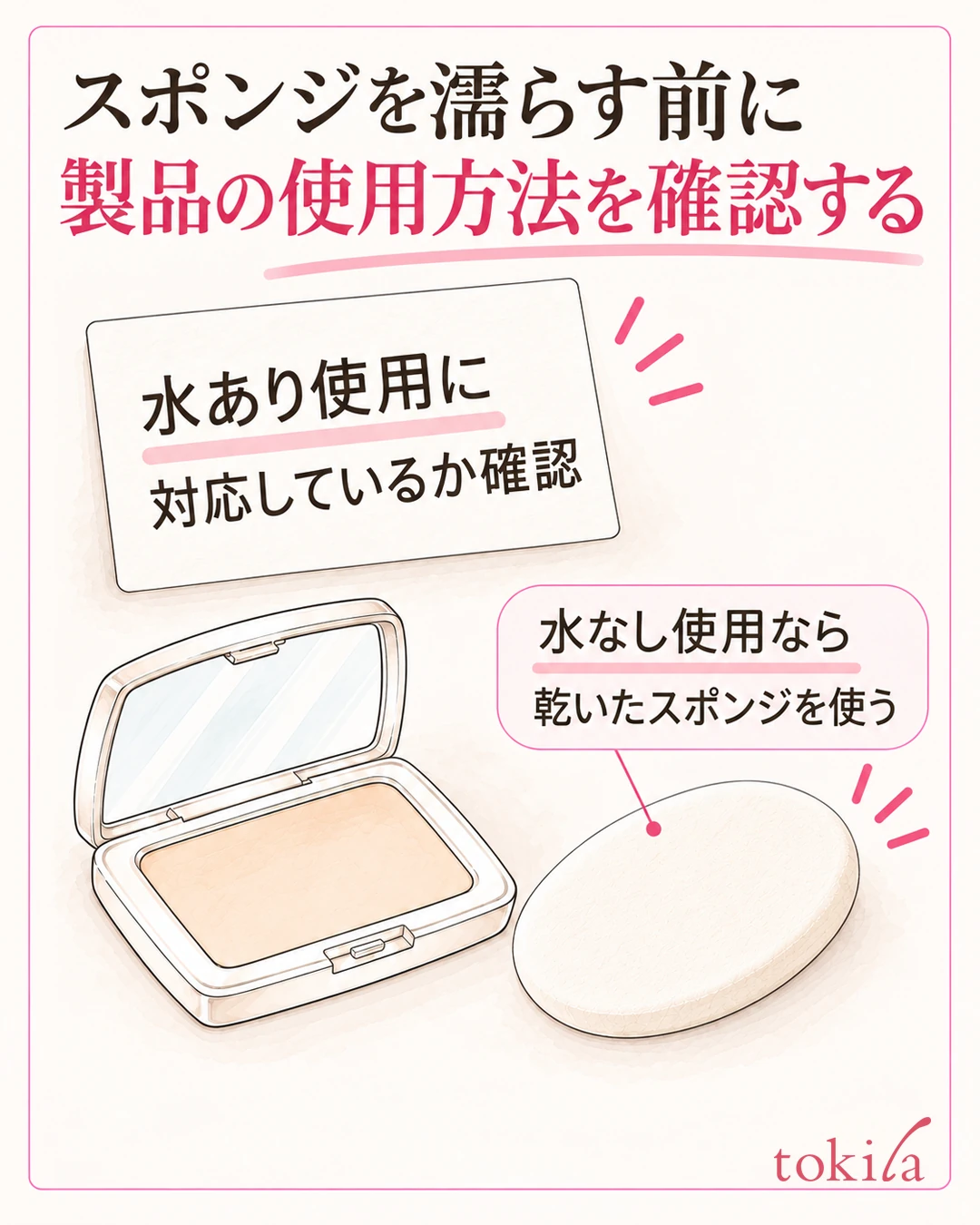
This is not advice to wet every powder. If you can't find a statement about water use, look at the box or the product's labeling, and contact the manufacturer if you still can't tell. There is no need to try pouring water directly onto the powder in the compact.
If the combination is approved for wet use, match how much water to soak in and how much to wring out to the product's instructions. If, after use, the whole powder is wet and looks darker, or there is moisture on the surface that won't dry, that is a clue to review how you handle water next time. Don't try to dry a wet surface by rubbing it over and over.
Even when you try wet and dry use with the same product, avoid mixing conditions, such as picking up a lot with force on one side and lightly on the other. First line up the tool and the way of picking up as described, and see at which stage the powder stops coming off. It is also important not to assume a universal effect, such as water always making it hold better or dry use always making it sheerer.
For a wet sponge after use, also check the care and storage instructions. Before putting it away damp in a closed case, confirm the steps for washing, draining and drying. Moisture while using it and dampness during storage are separate points to check. Treat this not only as fixing the powder's condition but also as removing, one by one, the conditions that would cause the same difficulty next time.
4. Pick up powder gently with the flat surface, and adjust hardened areas only after they are dry
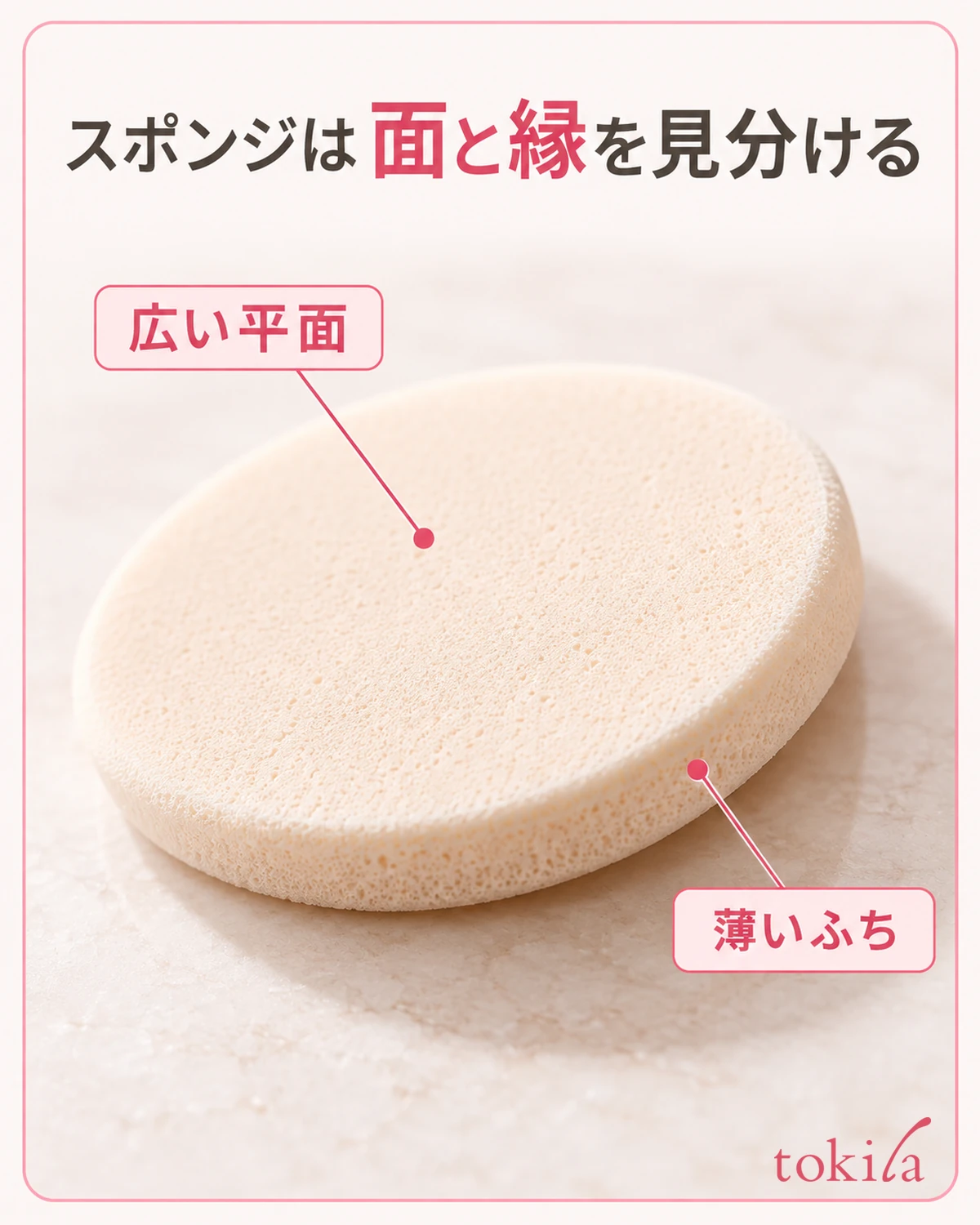
Once you have a clean sponge, pick up the powder following the product's instructions. Don't press one point with a fingertip or go back and forth over the same spot; touch the powder with the flat surface of the sponge. First check whether color transfers to the working side, and don't move on to forcing it off with strong pressure.
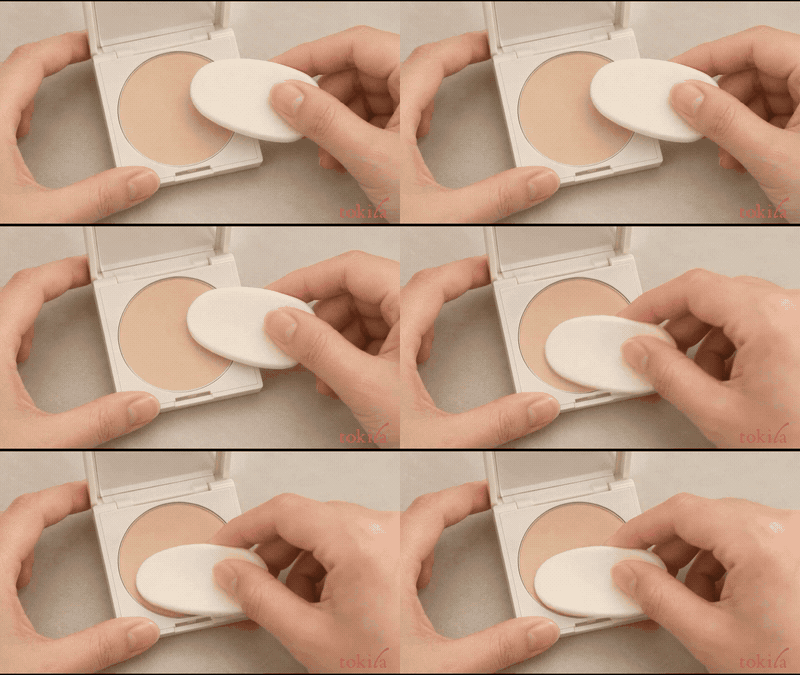
As a practical sequence, hold the container steadily, lightly bring the working side of the sponge to the powder, move it in one short direction and lift it away. If your finger pressure concentrates on one edge and the sponge dents deeply, don't push in; adjust how you hold it. Rather than fixing the same number of passes for everyone, checking once whether powder has transferred to the working side makes it easier to avoid overloading.
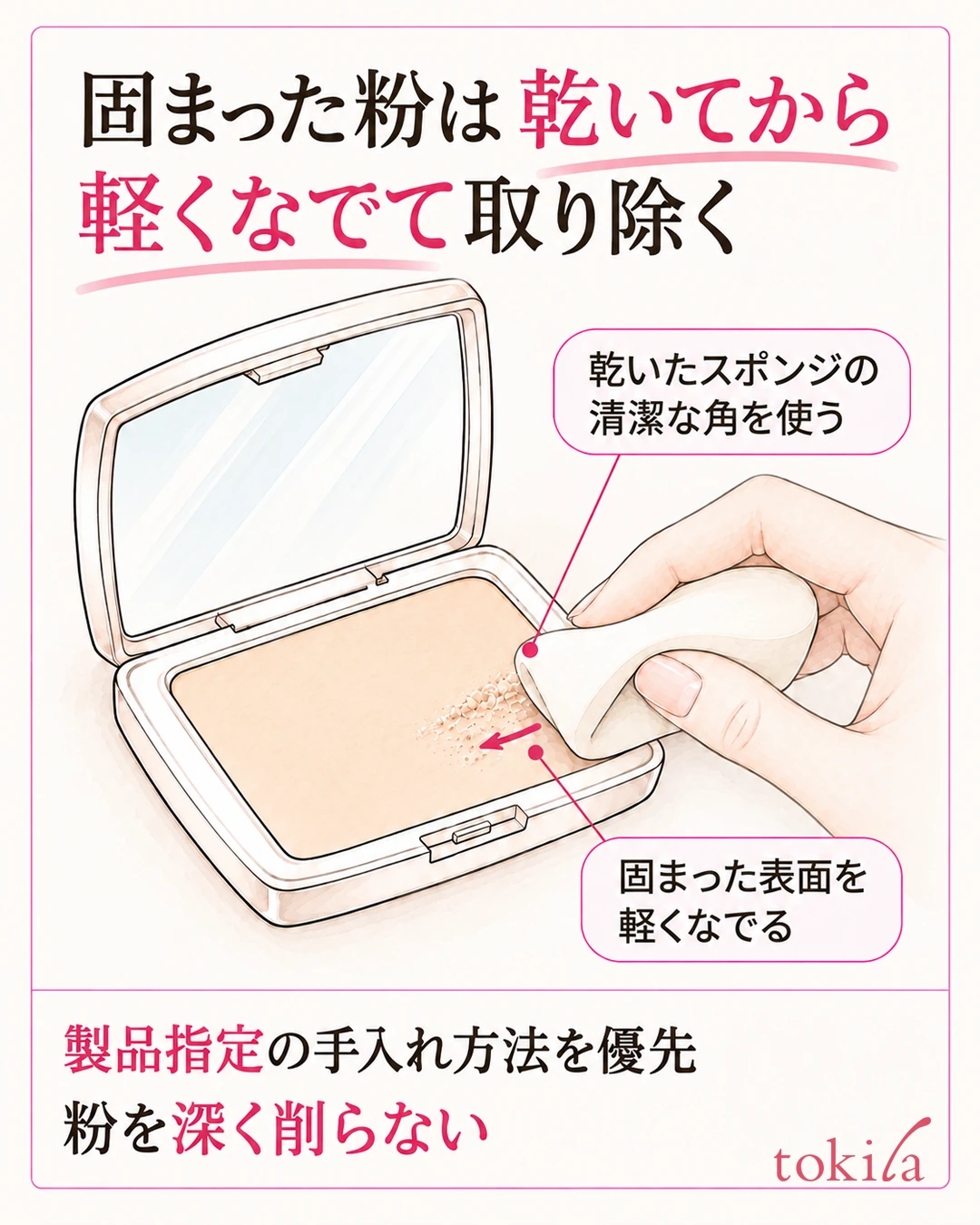
If the powder is wet, for example after wet use, the instruction is to do this only after it has dried completely. If your product has a different care method, follow that, and don't extend this to unknown products without question.
What you work on here is the surface of the hardened area. Don't turn it into digging deep, scraping with a hard tool or breaking up all the powder. Touch lightly, lift away, and check whether it has become easier to pick up. If it still won't come off, avoid repeating the same action and scraping a wide area; instead, consult the manufacturer and tell them how the powder has changed and which tools you used.
Don't make trying scraping methods the goal; your end point is whether you can return to the usual light way of picking up. Once a suitable amount sits on the clean working side, blend it thinly onto your skin the way the product directs. Even if you can pick up more right after adjusting the surface, don't keep up the earlier number of passes as is. Proceed while checking the color on the working side and the finish on your face.
5. Check ease of pickup and finish, and change just one thing next time
After adjusting, look at the compact, the sponge and your skin in turn. Did you pick up the powder without rubbing the surface hard? Did color transfer to the clean side? Did streaks or thickness increase on your cheeks? If you can check these three points, you are less likely to scrape too much by only watching the powder or to over-layer by only watching your face. Even if it picks up more easily, don't add more than needed to areas you want to cover.
After checking the working side's color and any local streaks in a nearby mirror, check your whole face and its connection to your neck from your usual distance. You don't need to keep adding product to erase every unevenness of bare skin. If the powder is back to picking up normally and the thickness right after application bothers you, what to fix next is the amount and the area. You can review it as a separate concern in tips for preventing thick powder foundation.
Make a short note of what you changed for next time. Operations you can reproduce yourself suit this, such as "switched to a clean spare," "picked up with the surface instead of pressing one point" and "checked the water-use label and how to wring it." If you switch to a new one, change the amount of water and also replace the primer, you won't know what was related to the difficulty. First change just one condition and look at the difference in the stage where you pick up powder.
If the same spot hardens every time, organize the product name, the sponge you use, whether you use water and whether you store the powder while wet, and then contact the manufacturer. Don't decide on guesswork alone, such as "my skin type is bad" or "the product is old"; telling them concretely at what stage it happens makes it easier to get advice. Even if it felt off from right after purchase, it is better to check it while keeping its condition than to consult after scraping deeply.
To review the overall flow of your morning base, go to the basics of applying foundation. When reconsidering powder that is hard to pick up, check in the order of a clean working side, moisture that suits the product and a light pickup, and adjust hardened areas only when necessary. The aim is not to pick up lots of powder, but to use the product you own without strain and stop at the finish you want.