You are working up a lather with facial cleanser in your hands, yet a few big bubbles form and vanish right away. You add water and it runs off; you add more cleanser and the same thing happens again. When that happens, review in order the condition of your hands, the amount you use, when you add water, and how your fingers move.
This article covers preparing a cleanser that you lather yourself in the palm of your hand. Foaming pump types that dispense foam, and gels or milks used without lathering, are treated separately. Rather than aiming only at bigger bubbles, it gets you to a state where you can move on to washing, following the directions for the product you own.
1. First check whether it is a lathering type, and read the directions
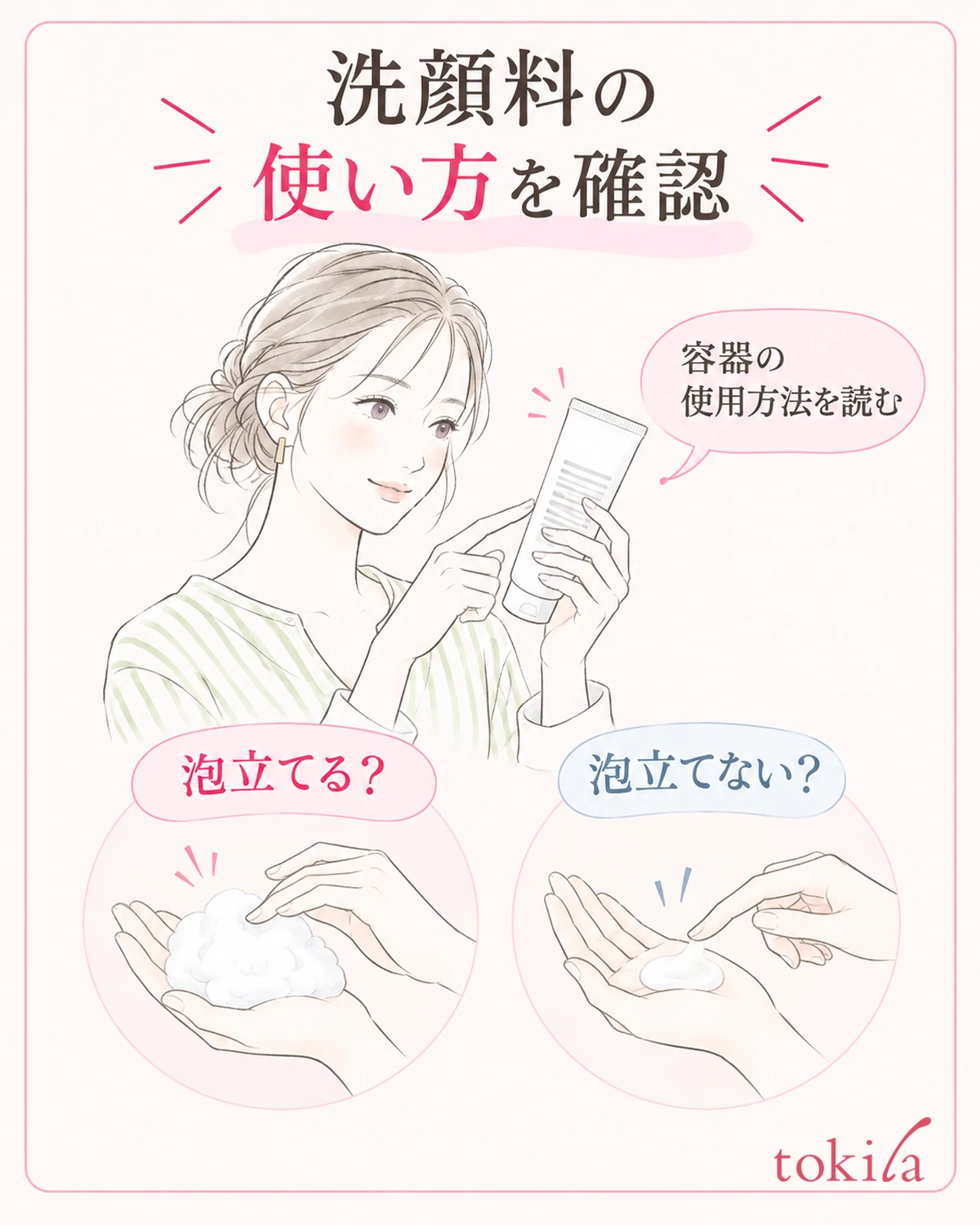
First read the directions on the container or outer box, and check whether it says to "lather before use." Even if the container is a tube, it does not always have to be lathered. Rather than classifying it by looks or feel, read through whether to wet your hands and face, and how much to take.
If you knead a type that is not meant to be lathered for a long time, the fact that no foam forms is not in itself a sign of failure. Conversely, avoid switching to spreading a cleanser that is meant to be lathered on your face undiluted just because it will not foam. Checking the type first reduces unnecessary additions and rewashing.
Even for the same cleanser, how you take it out differs for powder, bar soap and cream. Rather than remembering only "an appropriate amount," look at whether the guideline is given as a length, a grain size, an included measure, or something else. Do not carry over the amount you see in a photo of a different product to your own cleanser as it is.
Here, "the foam disappears" refers to the state in your hands before washing. Do not lump it together with foam decreasing after you work it into your face and immediately judge that you used too little. Separate out at which stage the trouble occurs, and see which it is closest to: "there is little foam from the start," "it runs like water partway through," or "it collapses when I move my hands."
If you use a net, check that both the cleanser and the net are meant to be used together. If the foam has already formed and only falls off when you take it out, review where you hold it by using how to collect foam from a cleansing net. Do not replace the hand movements in this article with pressing the net directly against your face.
Even after reading the directions once, when the product changes because you buy a new one or a refill, check whether the way to use it is the same as before. Even if the series name or the container color is similar, the amount to use and whether lathering is needed are not necessarily the same. Check the steps written on the container you are using today in a place where you can read them before wetting your hands.
2. Before lathering, rinse off dirt and leftover oil from your hands
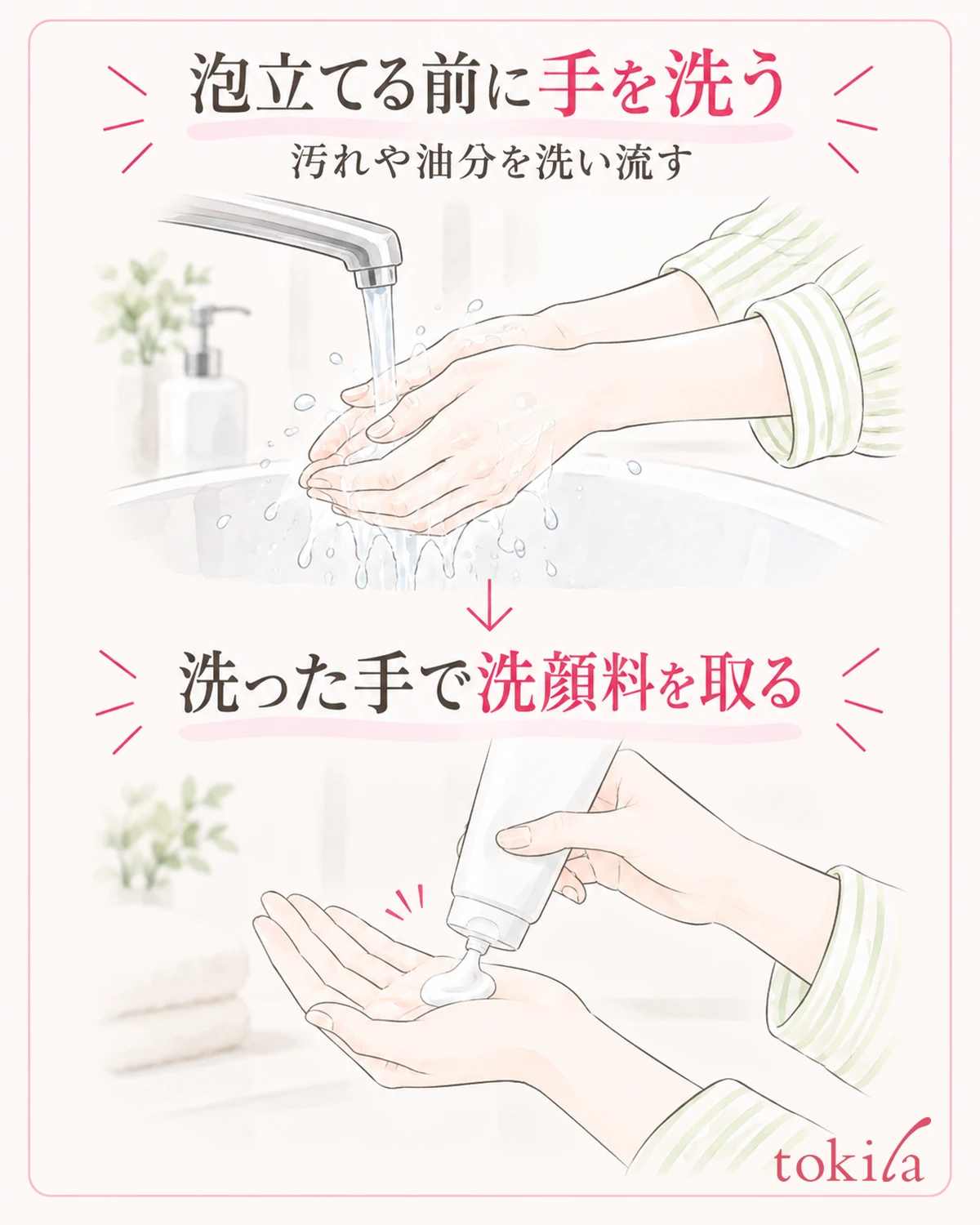
Before taking the cleanser, wash your hands so that no dirt or oil from makeup remover is left. If you have just cleansed, rinse only your face and also check that no liquid remains on your hands. Oil and dirt left on your hands are something to check when you review your lather.
Wash between your fingers and your fingertips as well as your palms, and rinse off the cleanser you used. Do not judge whether the lather is good or bad by mixing leftover foam from something else with the new cleanser. Once your hands are clean, move on to the way of wetting them that your cleanser specifies. There is no common rule that you must dry your hands completely after washing them.
Before you pick up the cleanser, decide where to put the container too. If you keep reaching for the lid or the bottle with wet hands, water and dirt transfer to your hands each time, and the starting conditions become unclear. Clear a stable place where you can set the container, and prepare so that you can close it after taking some out.
There is no need to wash your hands repeatedly with a strong detergent, or to strip them until they feel tight, on the grounds that hand cream might remain. Do not add steps that are hard on your skin for the sake of lather; start with ordinary hand washing and thorough rinsing. If your hands are sore or injured and hard to move, do not keep forcing the lathering either.
Follow the product's steps as to whether to wet your face first. Rather than trying to make lather on your face before your hands are ready, check the state in the palm of your hand and then use it. If you separate the step of cleaning your hands and preparing the place where you use it, you will not tie the reason for no lather only to the amount.
3. Start with the amount shown, and add water a little at a time while watching
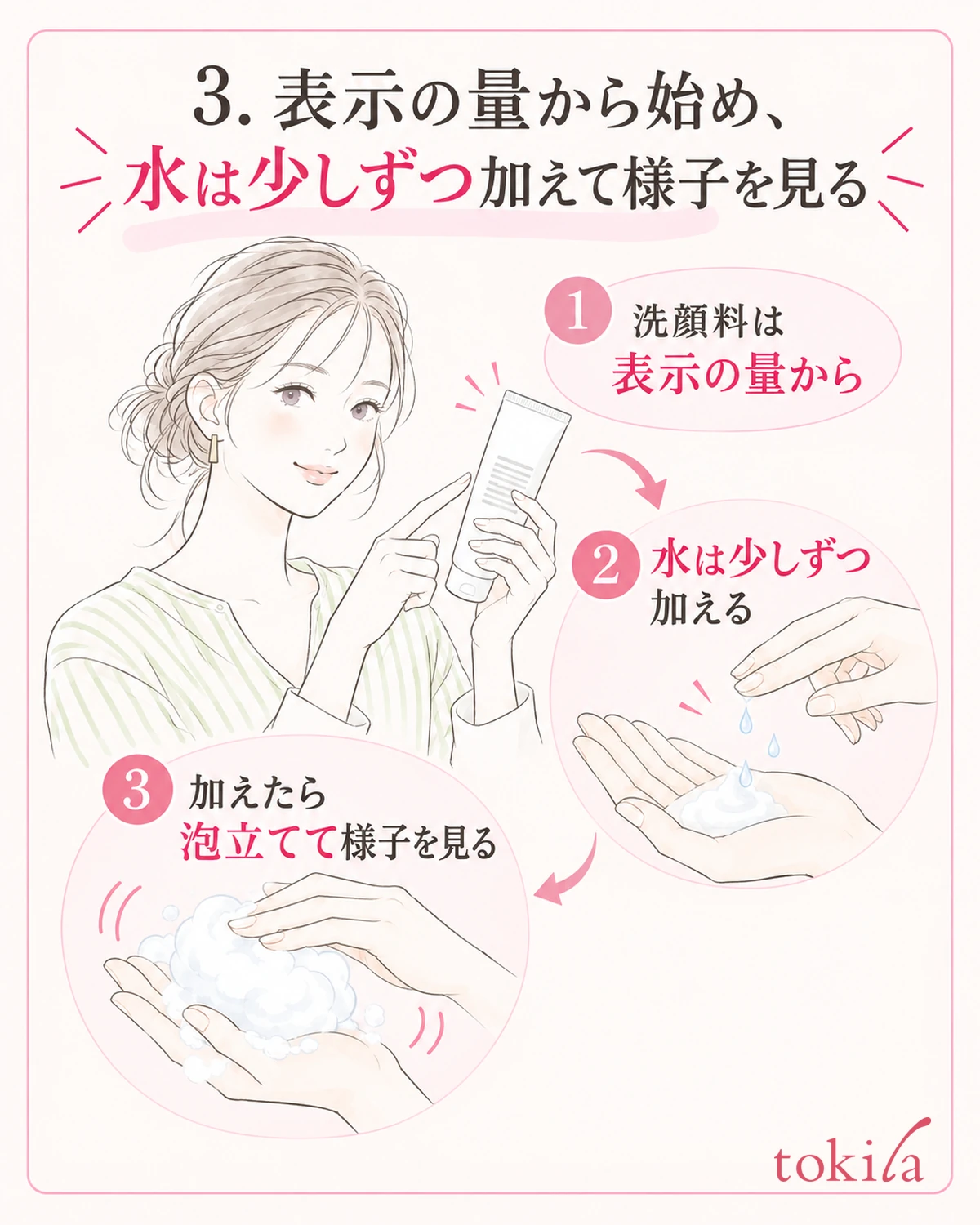
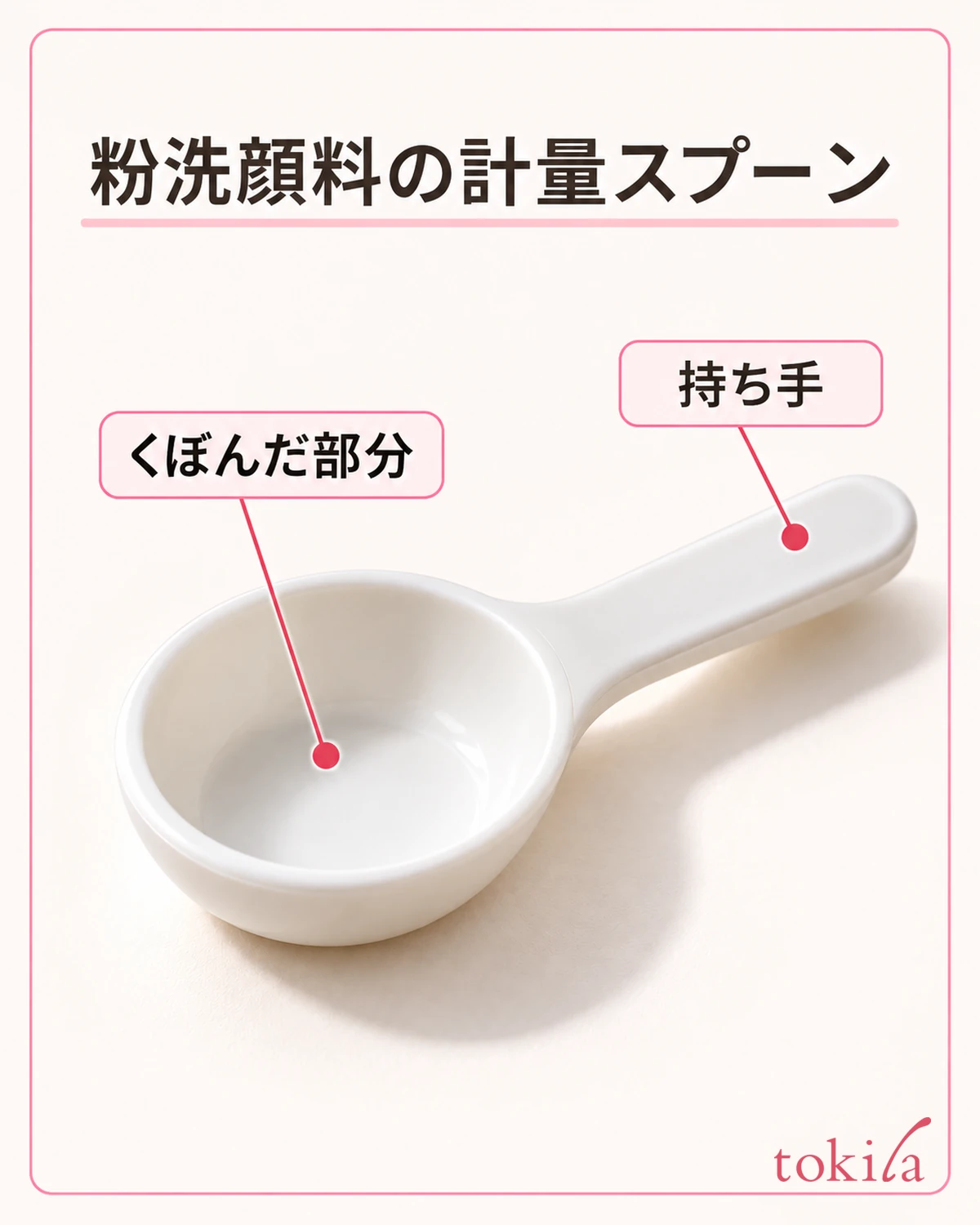
For the cleanser, first take the guideline amount shown. Rather than squeezing out a lot to lather quickly, or using extremely little to save it, first create the conditions as specified. If there is a set way to take bar soap or to measure powder, start from that procedure too.
For a product you lather while adding water or lukewarm water, do not pour a lot at once; add a little, move your hands, look at the state, and then add the next bit. If you keep your hands under running water from the start, the cleanser washes away and it also becomes hard to tell how much you added. Separate the stage of adding water from the stage of lathering.
If it feels heavy as you move your fingers and the cleanser stays in one clump without spreading, add a small amount of water as directed and work it in. Conversely, if it runs off your hands like water, stop adding any more water. Do not settle the cause from how it looks alone; use it as a guide for looking back at the water you added just before and the amount you started with.
Do not add cleanser and water alternately without limit to make up for what ran off. If you have strayed far from the specified way of using it and it has become too thin to hold in your hands, it is easier to understand the conditions if you rinse it off for now, tidy up your hands, and prepare again from the guideline amount. Avoid scooping up and reusing liquid or foam that fell into the sink.
The amount of water needed, the number of times you add it, and the firmness of the foam you get vary by product. Do not set a figure that applies to everything, such as "so many drops of water" or "done in so many seconds"; check by matching the directions with the changes in your hands. Foam that does not fall even when turned upside down is not a required pass condition for every cleanser.
When looking at differences in moisture, distinguish between the state right after wetting your hands, when a lot of water remains, and the act of adding a little from your fingertips. If a lot of water ran off your hands at the start, review the specified way of wetting them next time. If you shake your hands hard to fling off water after taking the cleanser, the cleanser falls off too, so get that sorted in the preparation before you take the amount.
4. Slightly cup your palm and work air in with your fingers
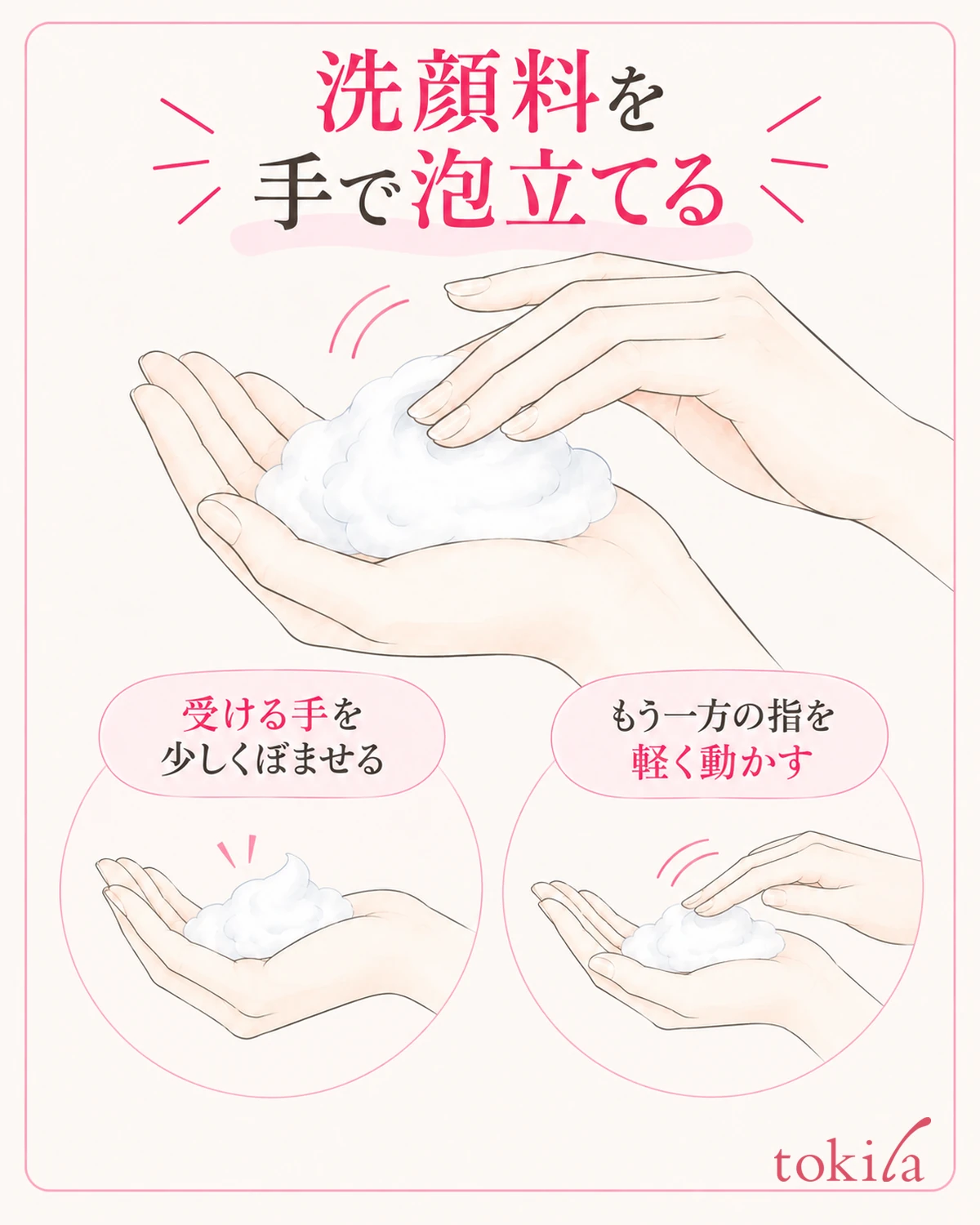
When lathering by hand, cup the palm that receives the cleanser slightly, like a shallow bowl. Relax the other hand and use your fingertips and the pads of your fingers to mix the cleanser and water. Check that you are not just pressing both hands hard together and pushing the liquid out.
Once the cleanser has spread through the receiving hand, move your fingers lightly to work air in. Rather than rubbing quickly with the upper hand pressed flat against it, think of leaving room between your hands for the foam to grow. Avoid scratching your palm with your nail tips, and if your nails touch, change the angle. Making a loud noise or going fast is not the goal.
Once foam begins to come, avoid changing both the water you add and your finger movement greatly at once. For example, after adding a little water, keep the same movement and see whether it becomes easier to run. Before pressing your hands harder because it collapses right away, also check whether the receiving hand has gone flat and is letting the foam fall out.
There is no need to pile the foam up like a peak for a photo. Take the foam you made in one hand and confirm that you can move on to the way of washing shown for the product. Even if the lather is different from what you like, you cannot conclude from that alone that it does not suit your skin, lacks cleansing power or is poor quality. Think of how it feels to use and how the foam looks as separate things.
If the hand movements are difficult and your cleanser is compatible with a net, you can also switch to using it as the tool directs. Do not mix cleansers together or add dish soap or the like just because you cannot make foam by hand. Even when you use a tool, take the foam out into your hands before using it on your face.
5. Rather than adding more foam, check that you are ready to wash and the conditions for next time
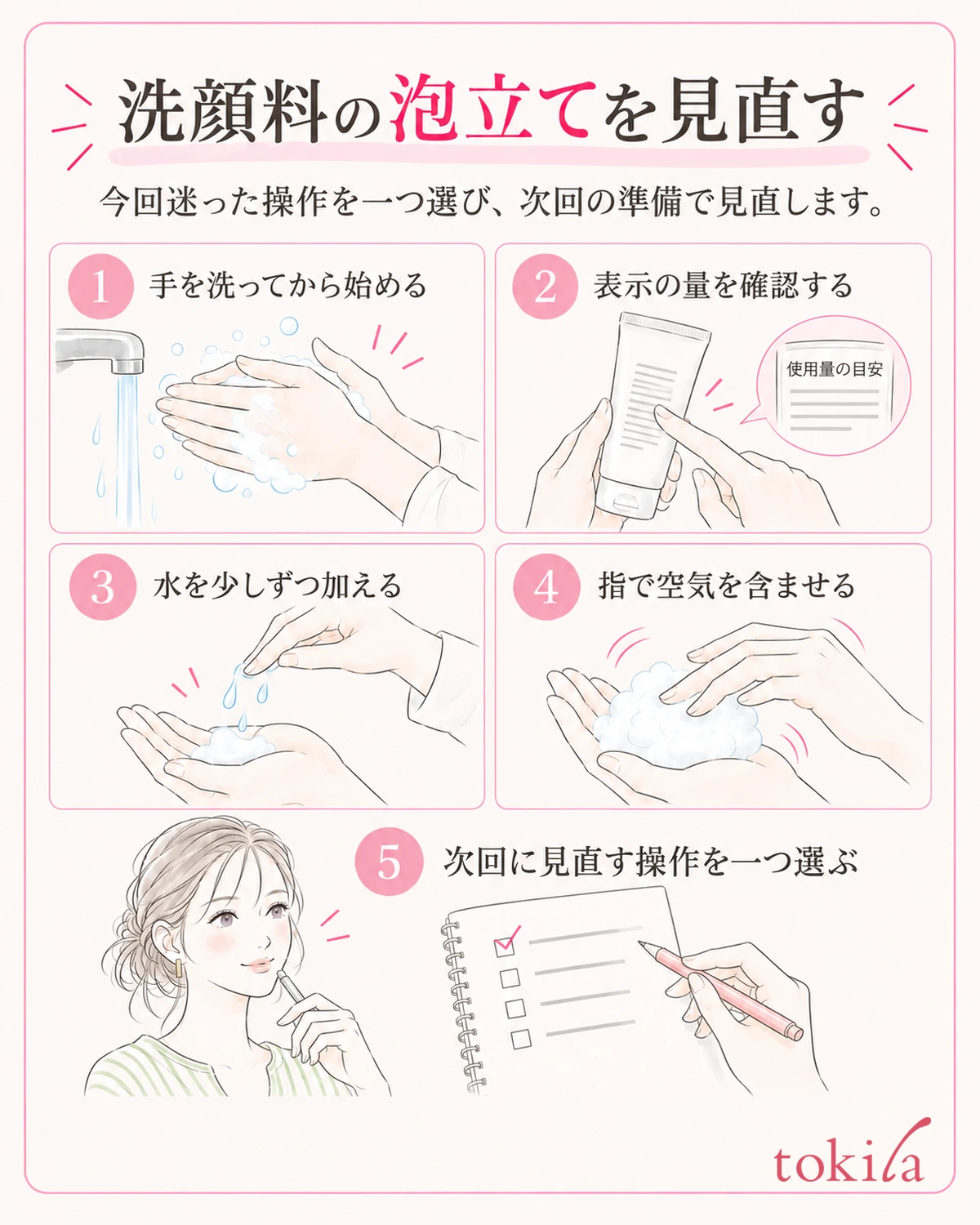
Once the foam is ready in your hands, move on to washing following the product's steps. Do not give priority only to keeping the foam for a long time, and avoid rubbing the same spot on your face over and over or lengthening the washing time. Wash without rubbing your hands and skin together hard, and take care that nothing gets into your eyes or mouth.
Even if the foam runs low partway through, do not immediately add more cleanser to your face; check how to use it. It is important not to lump together insufficient lathering before washing and changes during washing as a single cause. At the rinsing stage, do not stop just because the foam can no longer be seen; rinse thoroughly as directed so that no cleanser remains at the hairline or the chin.
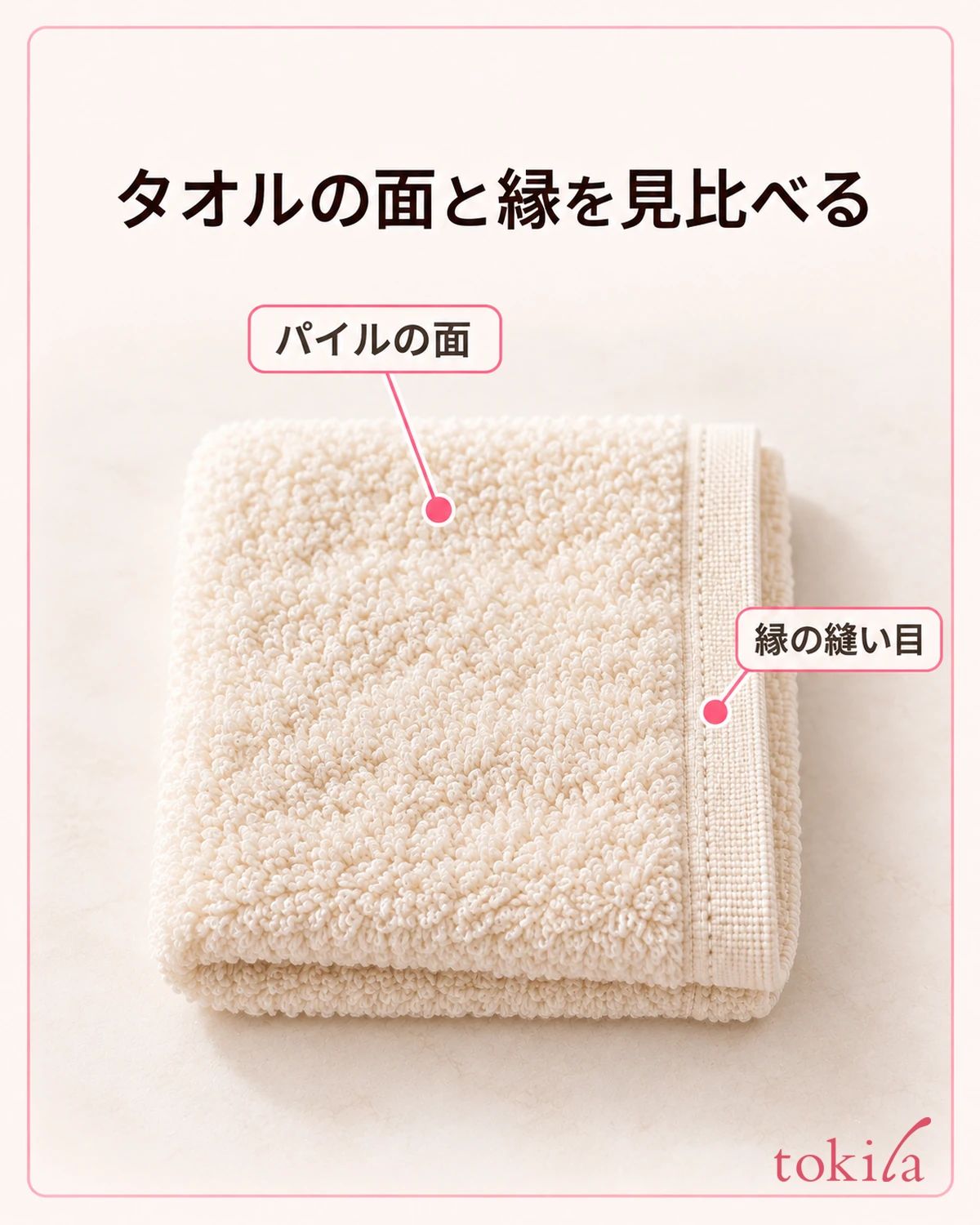
After washing, take the moisture off with a clean towel by pressing rather than rubbing. For the specific way to apply it, please also refer to how to use a towel after washing your face. Do not make re-lathering and washing again over and over the standard fix for when the foam disappears.
For next time, pick one point you were unsure about this time from "wash your hands and rinse off oil," "check the guideline amount first," "do not add water all at once," and "do not crush it between both hands." If you want to compare conditions with the same product, make it clear which action you changed, rather than changing the amount, the water and the tools all at once. Use your notes to look back on your own preparation.
If you notice an unusual smell or condition, damage to the container, or the like, do not keep lathering to find out; stop using it and check following the product's guidance. Also, if you feel irritation or any other abnormality while using it, do not put washing practice first. What matters is not competing over the size of the foam, but confirming the type you use, preparing your hands, the amount, the water and the movement in order, and finishing washing without strain.
Even if you got more foam than last time, do not use it as a reason to increase the amount or frequency of washing. Check whether you could connect everything from the start of use through rinsing as described for your product, and even whether you closed the container and put it away. Rather than comparing with photos of foam, make your goal for next time reducing by one the step where you stumbled.