You put a stole over your shoulders, but after a few steps one side slips off. Each time you fix it, the neckline gets tight or the hem length changes. Before pulling harder to stop it from falling, try sorting out which of three things is happening: it comes off the shoulders, it shifts to one side, or the overlap at the front opens.
This article reviews where to place the stole, how the fabric overlaps and how to use fasteners, for a rectangular stole worn with everyday clothes. It does not mean that any wrapping method will always keep a stole from falling. Choose a method that is comfortable for you, based on the thickness and length of the fabric, the collar of your clothes and the fasteners you already have.
1. Look at the direction it falls and narrow down to one thing to fix
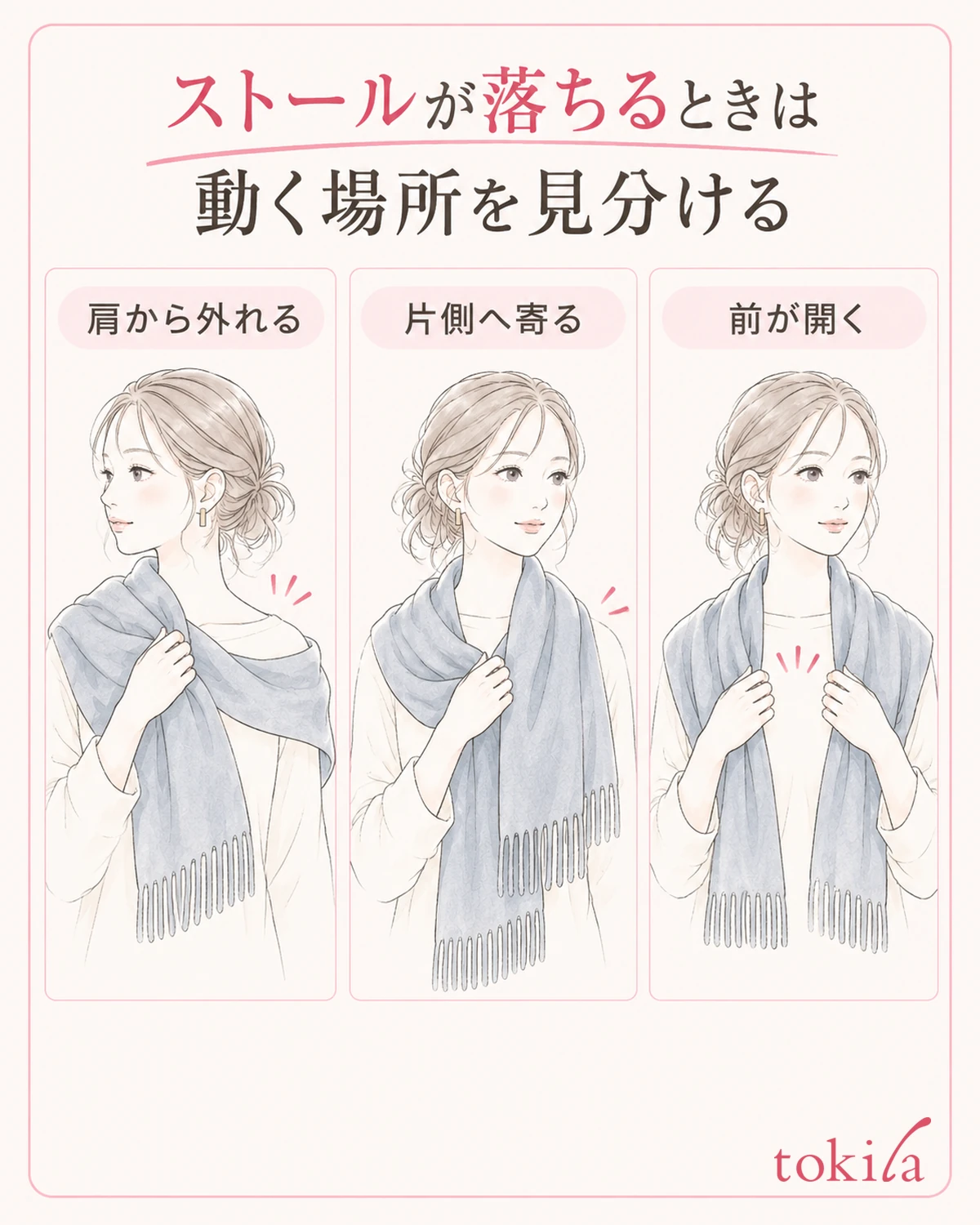
First, in front of a mirror indoors, put on the stole the way you usually do. Look not only from the front but also from the side and the back, and check how far the fabric reaches down your back and how much of it sits on your shoulders. See whether what you meant as a shawl is really just a narrowly folded piece of fabric resting on the tips of your shoulders.
If it slides back off both shoulders, check where it covers the shoulders and how long it hangs down your back. If only one hem gets longer, check the difference between the two sides at the start and whether a bag strap is pulling on it. If the front opens and falls toward your arms, review how much overlaps at the front and how you fasten it. Don't change everything at once; start with the movement that bothers you most.
Look at the clothes you are wearing today along with the stole. The way it settles changes with a high collar, a hood or a smooth shoulder surface. Don't decide from the material name alone that "this combination will always slip." With the stole actually on, check where the fabric gets pushed up or caught.
If you have a habit of carrying a bag on one shoulder, also check whether the strap is pulling on the fabric over the stole. Take the bag off, fix the position, and see what moves when you pick the bag up again; this helps you tell a wrapping problem apart from a bag problem. Don't make pressing the stole down with a heavy bag your way of holding it in place.
It helps to note briefly at the start something like "the right shoulder comes off" or "only the left hem gets longer," so you can see the difference after adjusting. After changing the width, check the position, and if it still falls, move on to how you fasten it. When you want to review the types and basics of wraps, the basics of stoles, mufflers and scarves may also help.
2. For a shawl style, adjust the back and the front overlap
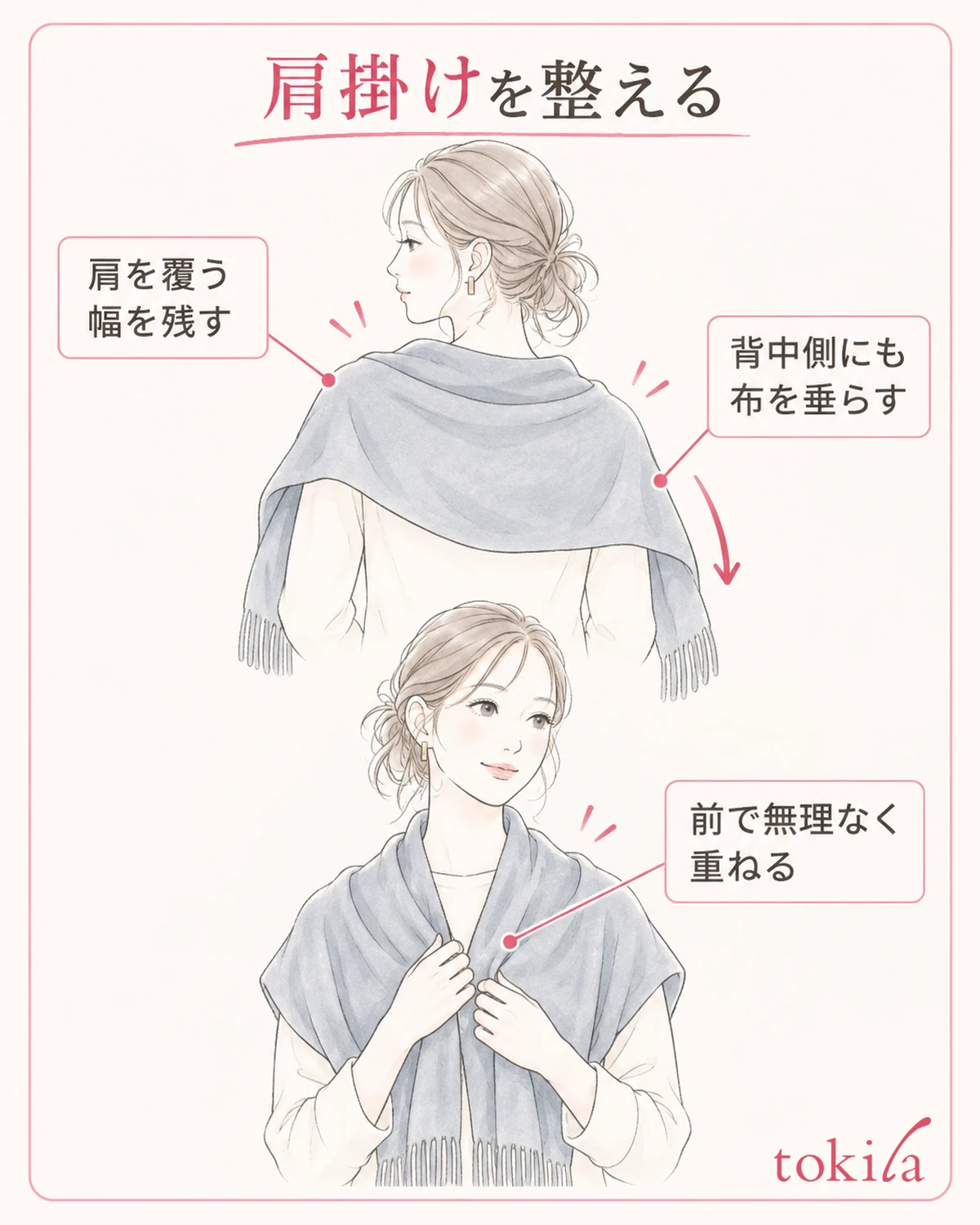
When you want to cover your shoulders, first take the stole off and spread it out. Place the center of a long edge at your back and bring both ends to the front. If the width is too wide, fold the side that rests on the shoulders inward to adjust. Folding it first into a narrow strip reduces the area that covers your shoulders, so fold it while leaving the range you want to wrap.
Look at the back in a mirror and check that the fabric also hangs down your back and rests on both shoulders. If you pull all the fabric at the back to the front, the shape changes from one that covers the shoulders. Conversely, if you let it drop too deep at the back, there is not enough length to overlap at the front, so move the front and back lengths a little at a time and look for the position your stole's length allows.
Check whether the front ends overlap comfortably at your chest. If they only meet when you hold them with your fingertips, or they come apart as soon as you move your arms, don't pull the hem hard to make it reach. Rather than forcing a short stole into the same shape as a long one, it is sometimes easier to wear it as a shawl with the front open, or to switch to a wrap around the neck.
When overlapping at the front, lay one end naturally over the other. Which one goes on top can follow your collar or your dominant hand. Once the overlap is set, shrug your shoulders and stretch your arms forward to check that nothing feels pulled tight. It is important not to give up ease of movement just to make the left and right look even.
When a thick fabric bulges a lot at the front, try making the folds a little wider before folding it many times over. When a thin fabric has trouble holding its shape, don't try to solve it only by keeping the width narrower; next check whether the fabric can take a fastener. For ironing or steaming to remove fold marks, follow the care label of your stole.
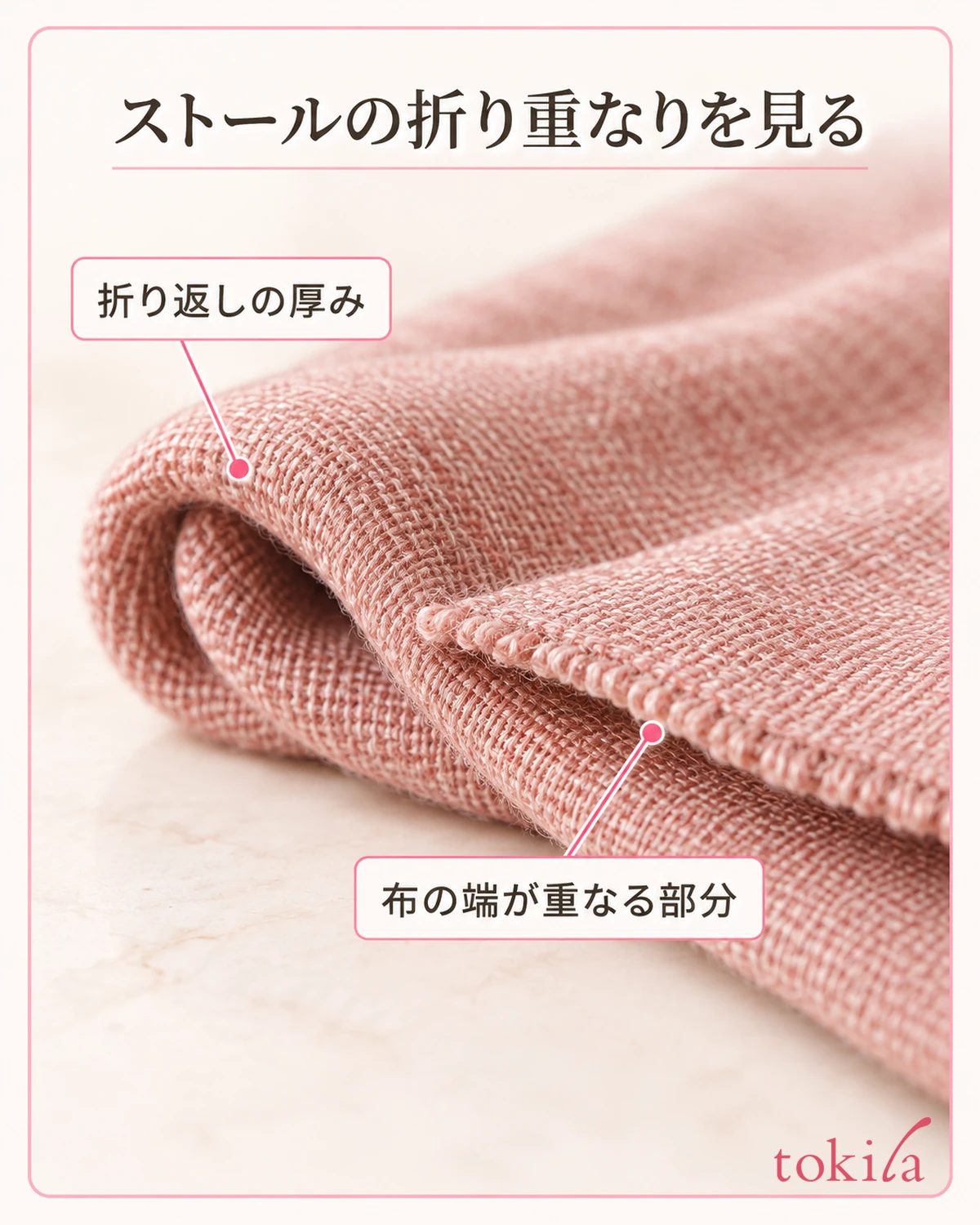
3. To wrap it around the neck, pass both ends through the loop and adjust
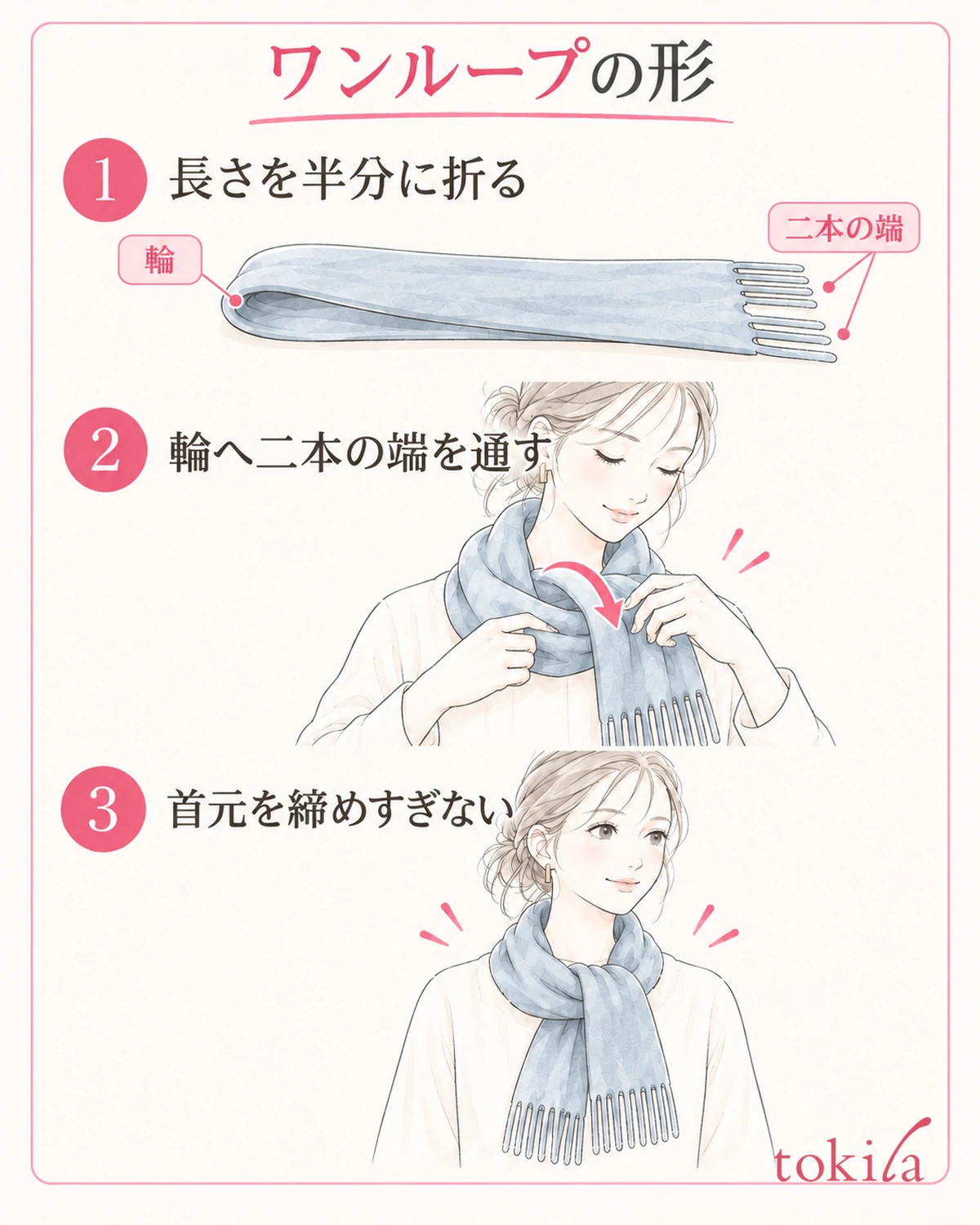
When you don't need to cover your whole shoulders and the ends hanging in front bother you by moving around, a one-loop style is also an option. Use a rectangular stole with some length to spare, and first arrange the width so that it is easy to hold. Next, fold the length in half so that one side is the folded loop and the other side is two ends.
Put the folded stole around your neck from behind, and bring the loop and the two ends out in front of your chest. Pass the two ends on the opposite side together through the loop. After checking that one end has not been left behind, pull the fabric lightly to shape it. Passing the ends through the loop is not the same as tightening your neck. Do not pull hard to fix it in place.
After passing them through, spread the fabric around your neck with your fingers and check that it is not uncomfortable when you turn your face left and right. If you adjust only by pulling the hem down, the loop tends to tighten, so loosen the fabric on the neck side first and then set the position. Also check that the fabric is not caught in the collar or zipper, and if it feels cramped, take it off and wrap it again.
A thick stole makes the loop large, and a short one leaves shorter ends after passing through. If it won't go through unless you push it in, the ends slip out of the loop right away, or the fabric touches your face, reconsider whether that style suits the stole you have. Rather than adding more turns, it is fine to go back to another style, such as a single loose turn.
To finish, check in a full-length mirror that the loop and hem sit calmly at the front. The two ends do not need to be exactly the same length, but avoid continuing to adjust by pulling only one side. Even with a one-loop style the position changes when you move, so don't skip checking your movements before going out, and give priority to not tightening the neck further while something still feels off.
4. For fasteners, check the thickness of the fabric and how the fastener works
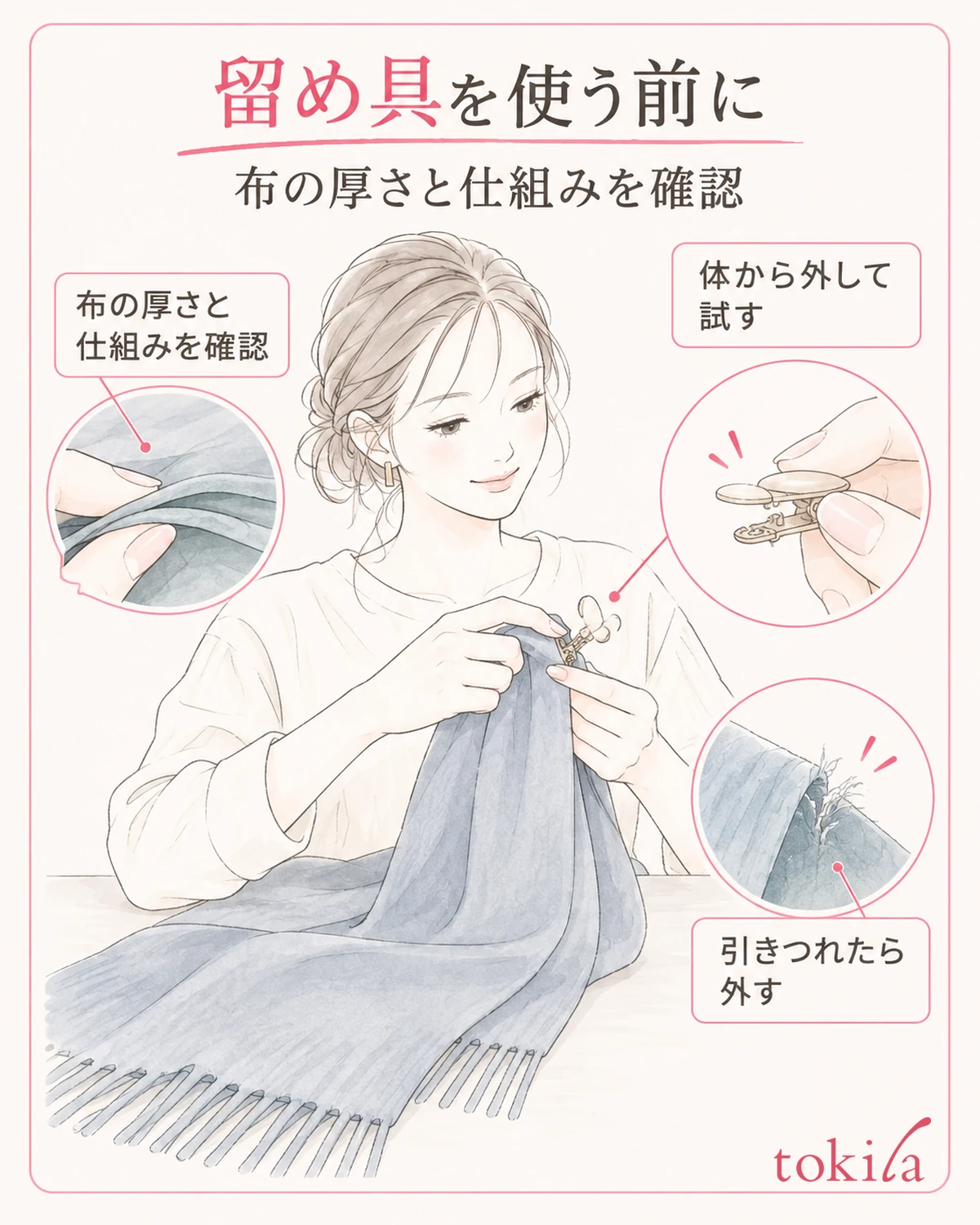
If you want to keep the front of a shawl from opening, you can also use a fastener made for stoles. However, clips that pinch the fabric, ones that pass the fabric through a ring and ones that use a pin are handled differently. Even if they look similar, don't use them with the same steps; check the instructions for the item you have to see what thickness of fabric goes where, and whether it is passed through or pinched.
At first, take the stole off your body and see whether you can handle the fastener comfortably on an inconspicuous edge. With the pinching type, don't cram in too much fabric, and check that the mouth closes properly. With the passing-through type, don't push it further if the fabric won't go in without pulling hard. A fastener for thick fabric won't necessarily hold thin fabric in the same way.
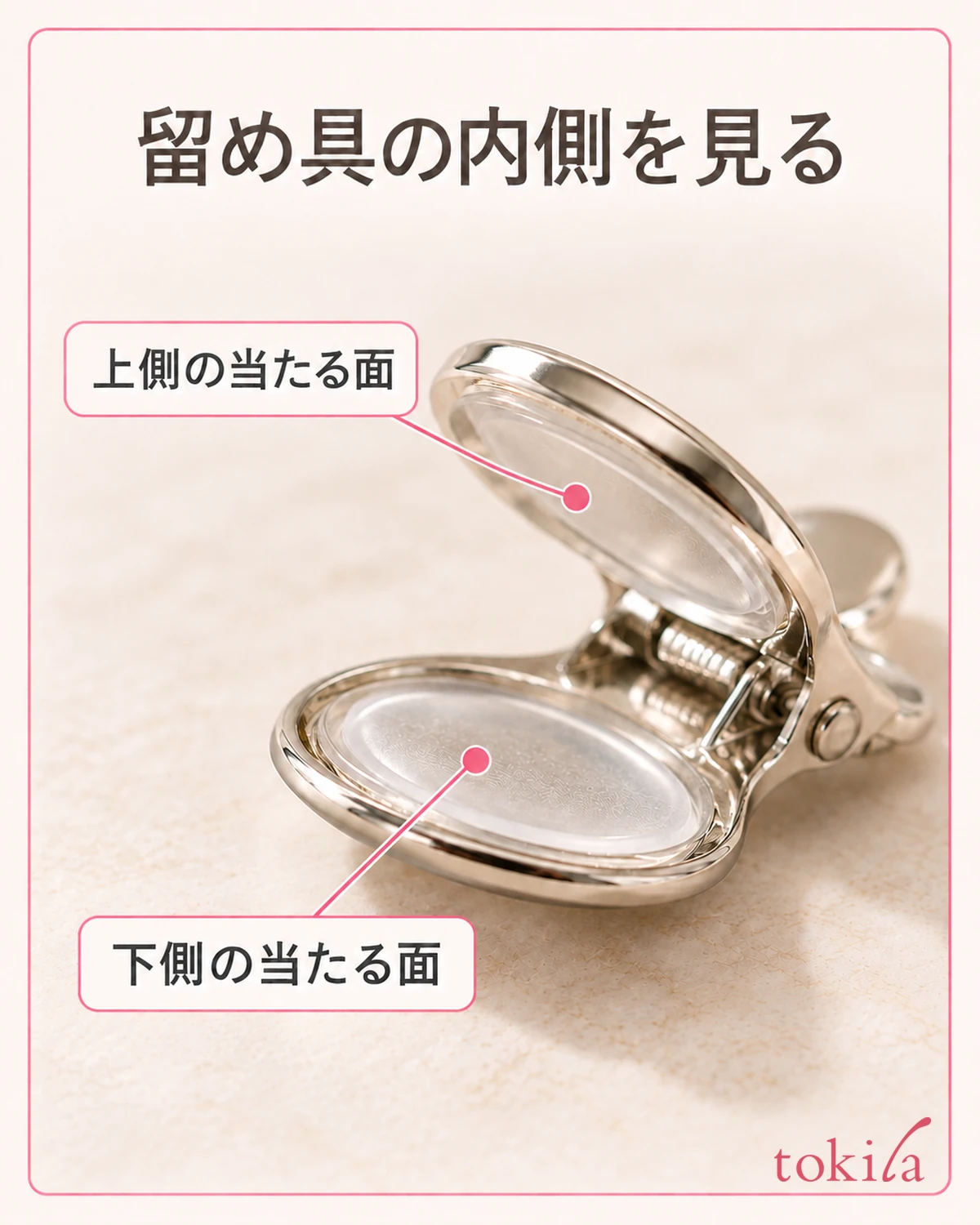
If threads get pulled, strong marks remain, or the corners of the fastener catch, take it off. With delicate weaves or decorated fabrics in particular, don't try it in a conspicuous spot without knowing whether it can be used. For ones with a pin, use them only on fabric that can accept the possibility of a hole, and also check that the pin tip is held securely in the structure.
Once you have confirmed it can be used, put the stole on your shoulders again and fasten it at a spot where it overlaps naturally at the front. Rather than pulling the fabric toward your neck and then fastening it, arrange the slack first. Fastening your clothes together with the stole should be done only if that fastener is meant for it, and choose a position that does not pull on the collar or pinch your skin.
When removing it, don't pull the fabric out; follow the specified order, such as opening or detaching the fastener. On a day when you have no tool suited to the fabric, you can also decide to change how you wrap it rather than substituting a stationery clip or adhesive. Before adding fasteners to fix the shape, check that the weight or any catching does not bother you.
When fixing it while out, don't pull only the hem while walking; stop, put your bag down and then adjust. If you strongly pull the same side every time the front opens, the length on the opposite side changes too. First hold both ends and loosen the neckline, check the positions of the left and right sides and the back, and then move only the places that need it.
5. Check the finish with walking, sitting and carrying a bag
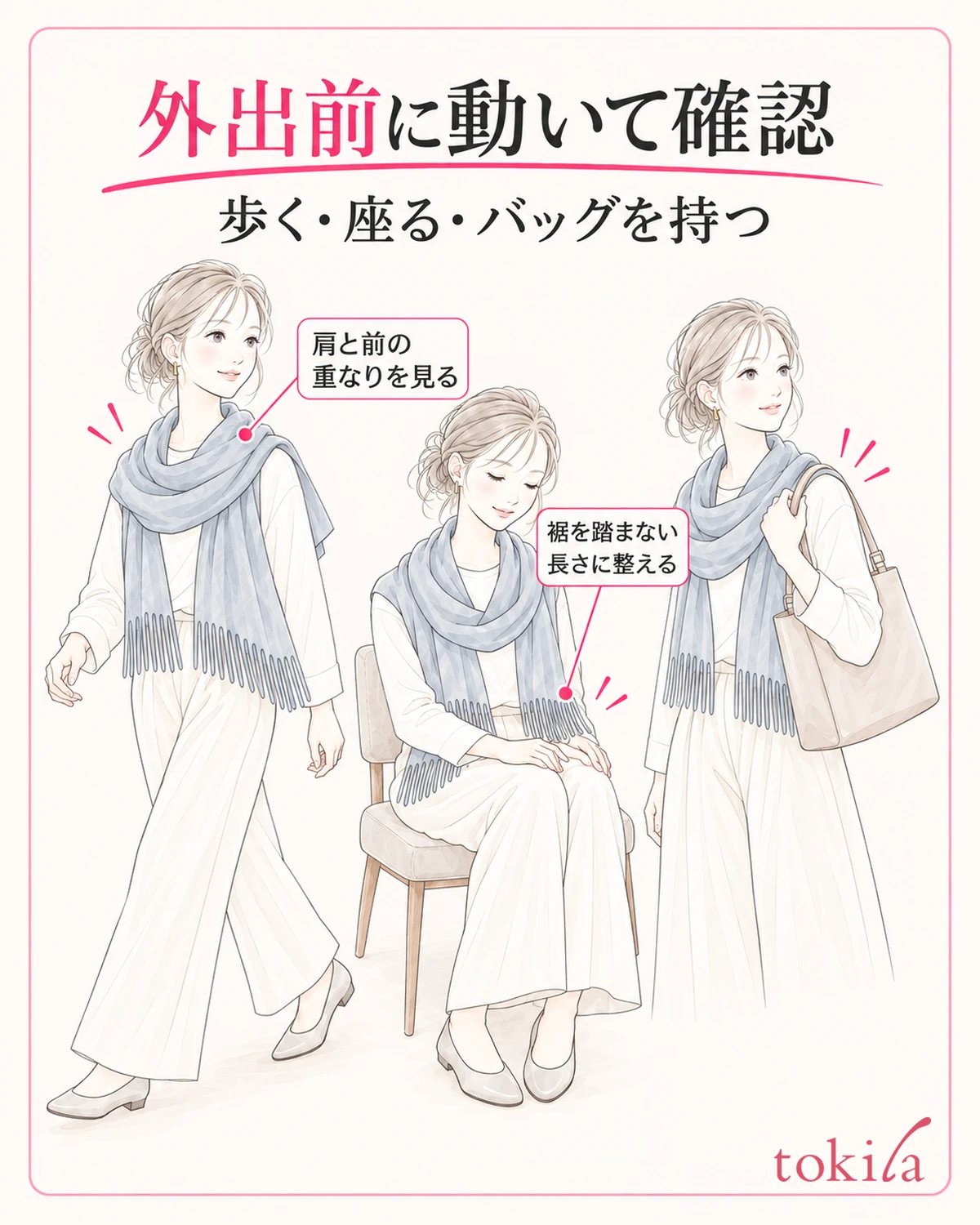
Once the shape is set, don't stop at standing still in front of the mirror; try your usual movements indoors. First walk a few steps, then stretch your arms forward, and sit in a chair. Check whether it came off the shoulders, whether only an end moved, or whether the front overlap came apart. This is not a check that guarantees it will never shift when you actually go out; it is to find the troublesome movements in advance.
Also put on your bag and jacket in your usual order. If the strap pulls on the stole, take the bag off, fix the fabric's position, and pick the bag up again. After putting on a jacket, check whether the fabric has crept into the collar or around the zipper. Do not try to fix a shawl in place by pinching the fabric tightly under the bag strap.
When you sit, check whether you are stepping on the hem or letting it hang over the chair legs. Before standing up, check the position of the hem, and if it is too long, change how you wrap it or the width of the folds. In situations where a long piece of fabric could get caught, such as near a bicycle or rotating machinery, decide to take the fabric off and put it away before worrying about how the outfit looks.
If it still falls, go back to the movement you noted at the start. If it comes off the shoulders, review the width resting on them and the front and back lengths; if the front opens, the overlap and the fastener; if an end moves, the way it is wrapped. Rather than changing everything at once, going in this order makes the differences easier to follow: widen it and move around, then change where it is fastened.
After taking it off, remove the fastener and check for pulled threads or stains. Follow the stole's care label for care, and if it is damp, do not stack it and put it away as is. For next time, make sure you can recall the form that worked well this time, such as "rest it widely on the shoulders" or "change the position of the front overlap."