You layered oil over hair milk, and while the ends came together, your whole head feels heavy. Or conversely, you cannot tell which to apply first, and both bottles are still sitting side by side at the sink. When that happens, do not decide the order by the names alone; first check the condition of the hair you will use them on and the explanation about using them together.
There are combinations in which oil follows milk, but it is not a procedure common to all products. Some milks are for dry hair, and oils also differ in handling between those for care and those for finishing. This article covers the checks before layering the two, how to divide the amounts, and what to review after drying.
1. Check from both labels when to use each and the order when used together

First, pick up the milk and the oil containers one at a time and read the directions for "rinse out or leave in," "wet hair or dry hair," and "before or after blow-drying." Containers that look alike do not necessarily have the same use. The starting point is to check the explanation for the product itself that you plan to use, and not to apply a procedure you learned from a different bottle.
If there is an explanation about using the same combination together, give priority to that order. If it says "work in the milk, then the oil," proceed by working in one at a time. This is different from squeezing both onto your hand and mixing them. Unless it is specified that they can be mixed, do not mix them just to skip a step.
If one is for after towel-drying and the other is for dry hair, they are candidates to use before and after drying instead of layering at the same stage. On the other hand, the fact that both can be used on dry hair does not confirm that they can be used together. Read whether the timing of use matches separately from whether there is guidance on combining the two.
If you cannot find an explanation, you can also choose to style with just the one whose directions you understand, rather than imagining an order and using both. Do not decide based only on claims such as that simply reversing the order will surely damage hair, or that the first oil completely repels the ingredients applied after it. Use the conditions you could confirm on your own products as the standard.
Do not decide that something is only for wet hair just because it looks like a lotion. The names milk and oil are no substitute for the label's timing of use. If the text on the container is hard to read, check it in a bright place before wetting your hair, and decide in advance which one to use at which stage today.
Even when you replace one of the two, do not proceed assuming it is the same combination as before; reread the directions on the new container. Even with similar names, the type of contents and the way to use them may change. Do not remember the order only by how they are lined up at the sink; match it to explanations you have confirmed.
2. Decide your goal for the finish and see whether you need both

Next, decide on one state you want to achieve today. Do you want to do care before drying, or add manageability and shine to dry ends? Rather than always treating milk and oil as a set, choosing what fits the place where you have trouble and the timing of use will reduce unnecessary layering.
First use just one product as directed, and look at the result after finishing the specified steps. For a product used before drying, do not judge it "not enough" from how it looks while the hair is still damp. After it dries, check how the ends hold together and how the roots move, and then consider whether you need the second.
If you already have the manageability you wanted, it is fine to finish without adding the second. If only the ends bother you, check whether the product can be used as a finisher and whether there are directions on the area to use it on, before adding the same amount all over. What you aim for also changes between days when you want the roots to look airy and days when you want a sleek look.
There is also no need to decide only by hair type, such as "fine hair means milk only" or "stiff hair means both." Look at the product's finish, the length and volume of your hair, and the effect of what you already applied together. Do not make using both every day your goal; choose the steps that fit the style of the day.
If you want to compare a day with two products against a day with one, keep the condition the same, either after shampooing or on dry hair in the morning. Do not compare different conditions and blame only one product. If you know at which stage it felt heavy, it becomes easier to review the amount and the area of application next time.
You can also think of nighttime care and morning styling separately. If you style in the morning without washing your hair, take into account that what you applied the night before may remain, and look at the current condition before using the same amount of both again. What matters is not only the time of day, but whether your hair is wet and what the previous step was.
3. For what goes on wet hair, squeeze out the water before working it in

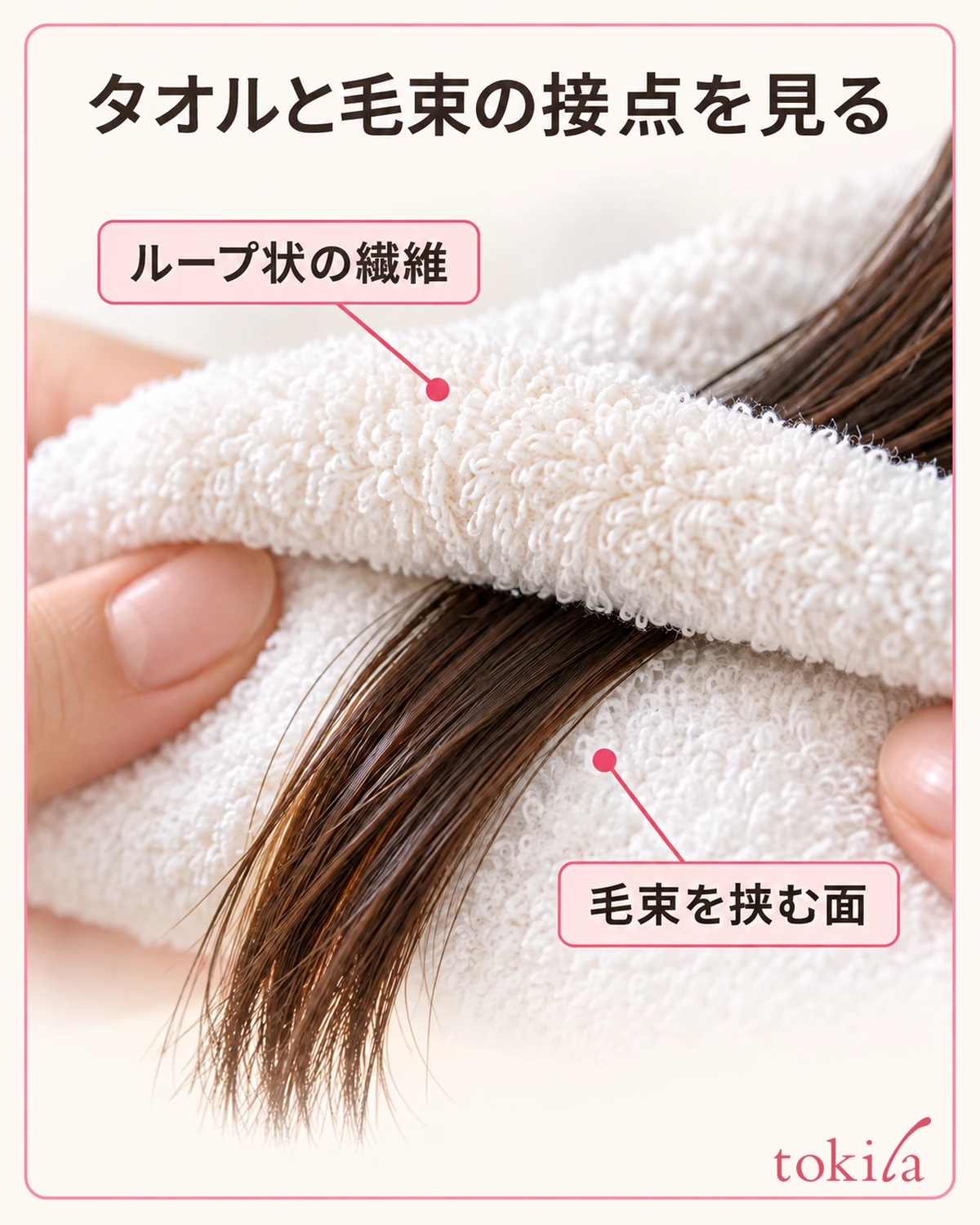
For a product whose directions say to use it after towel-drying, first remove the water dripping from your hair. Sandwich a section of hair in a clean towel and press gently. Do not try to dry it quickly by twisting your hair like a rag or rubbing it hard with the towel. Distinguish between a state where water drips and a state where some dampness remains.
Check the stated amount for use, take it on your hand, spread it over your palms and fingers, and then work it into the specified area. If it is meant for mid-lengths to ends, start from that area without placing the first amount on the crown. Do not extend the explanation for ends to care for the scalp.
Instead of just sliding your hand over the surface of the hair, look at the sides and the inside as well. If you divide the hair into sections without strain and work the product in by gently sandwiching it with your hands, it is easier to check whether you are touching the same place over and over. Do not treat places where you feel tangles by adding product and pulling through hard.
Even when the directions at this stage call for using both, keep each step separate. Work in one and then move on to the next; do not change it into a procedure of mixing the two in your hand and using them at once. If one is for dry hair, do not use it at this point; review whether you need it after drying.
After applying, dry according to the explanations for the products and devices you used. Even an oil that advertises heat protection does not mean you may keep applying high heat to the same spot. Here we get the order and the distribution in order, and the way of drying itself should follow the distance and mode of your own hair dryer.
When you use it on sections divided into left and right, also check that the whole amount is not concentrated on the first side. Rather than taking the stated amount again each time, confirm whether it is a guideline for the whole head and distribute it accordingly. If you finish one side and then dispense the same full amount for the other side, you will end up with more than planned.
4. Decide the amount of the second product from the label and the area of application

For the second product as well, first check the guideline amount on the container. The amount per pump differs from pump to pump, so there is no need to make the milk and the oil the same number of pumps. Also check that the guideline amount for a single product does not necessarily indicate the total amount when the two are used together.
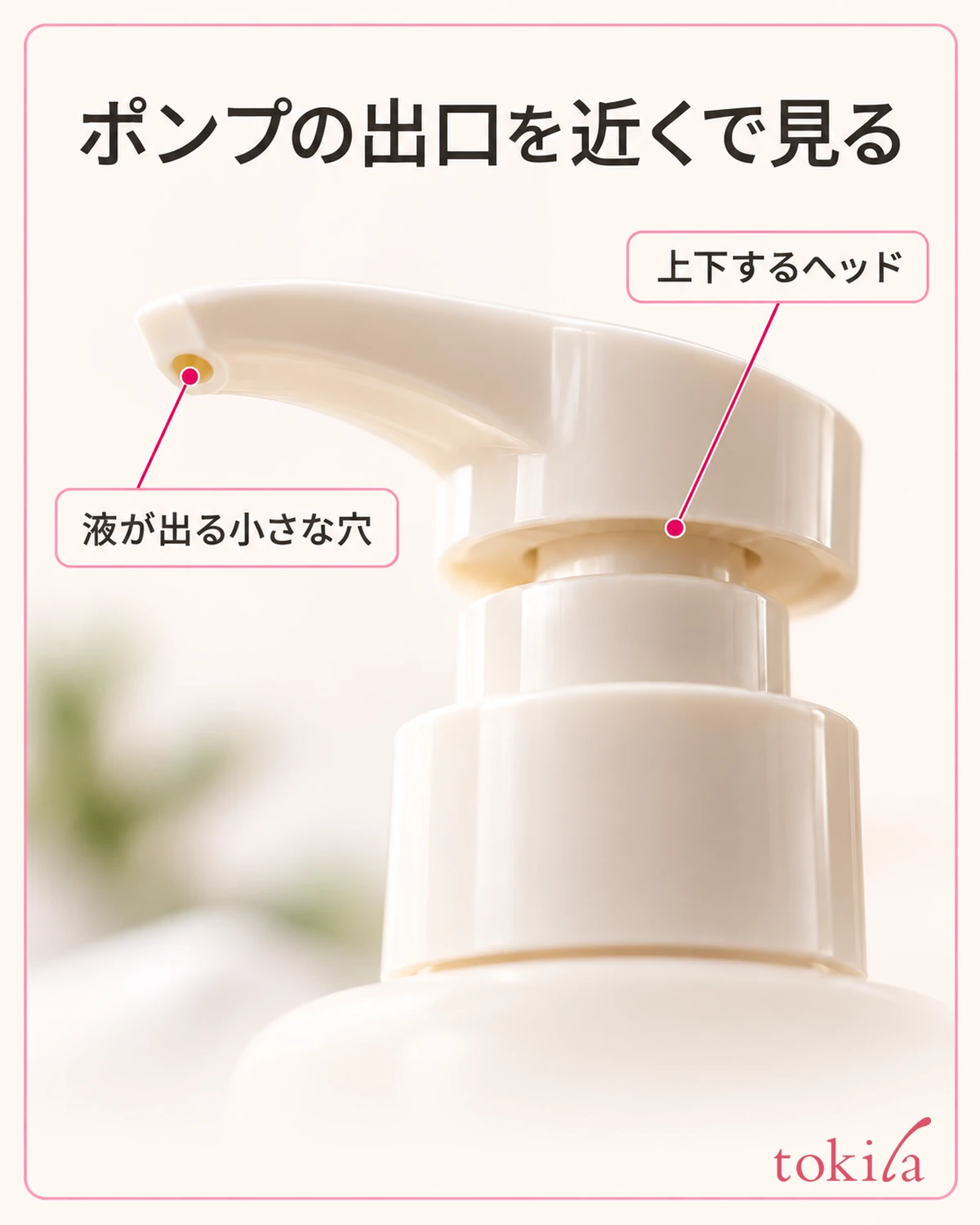
If an amount for combined use is stated, follow that explanation. For a product whose amount can be adjusted, divide it and work it into the necessary areas based on the guideline for your product and the length and volume of your hair. Do not fix it as "two products, so half each," or layer your usual one-product amount of both unconditionally.
For a product that can be used on the ends of dry hair, spread it on your hands, work it mainly into the ends where needed, and then take your hands away. Look at the clumping and movement of the left and right sections in a mirror, and check whether you are closer to the manageability you want before adding any. If you keep touching your hair, it becomes hard to tell where you applied it first.
There is no need to use up what is left on your hands on your bangs or roots. To avoid suddenly weighing down a conspicuous area, stay within the area you decided on first. Do not rub in a product that is not specified for use on skin as hand care; when you have finished, clean your hands in a way suited to the label.
On days you use a flat iron, check not only that your hair is dry but also whether the product can be used before ironing. Being usable before a hair dryer does not mean it is the same before a flat iron. Do not try to finish by raising the temperature while the conditions for the combination of the two and the heat tool are unknown.
Before adding more, also check the amount remaining in your palm. If you press a new pump each time you touch your hair, the total becomes unclear even if you intend to add a little at a time. Set the container down and look in the mirror, and move on only when you know where it is lacking and why you would add more.
5. Look at the heaviness after drying, and narrow down the amount and steps for next time

Finally, look at your whole head of hair from the front and the side. Check separately not only whether the ends hold together, but also whether the roots are flatter than necessary, whether your bangs are sticking to your forehead, and whether any dampness remains on the inside. Do not treat hair that is wet and clumped together as the same as hair that is heavy even after drying.
If your hair feels heavy after drying, do not add more milk or oil; check where you applied it. Also avoid trying to burn off the oil with heat. For the case where you have already applied too much, you can check partial adjustment and rewashing separately in how to review it when you have applied too much hair oil.
For next time, briefly note when you used them and what changed, such as "milk after towel-drying, oil on dry ends" or "it was light before I applied the second one." Treat the amount as a record for the same pump, and do not carry it over directly to a different product. Leaving an impression is different from a test that measures an effect.
Change just one thing next time: whether to use the second product, how to adjust the amount, or which area to apply it to. This makes it easier than changing everything at once to look back at which step brought you closer to what you want. Rather than continuing to search for the right order, find a flow that you can follow by the labels and that tidies what needs it.
When you want to sort out your hair care as a whole, please also refer to the roles of hair care products and how to choose them. Even on days you do not use both, you do not have to decide that your care was lacking. On days when one is enough, stop there; on days when you layer them, check the conditions of use and the amount before proceeding.