On days you want to use both sunscreen and insect repellent, do you wonder which to apply first? When you use it together with an insect repellent made for skin, the basic starting point is the guidance to apply sunscreen first and use the repellent after it has dried well. However, that does not mean the two are the same in where they can be used or in the conditions for reapplying.
Here, for products adults use on their own skin, I organize the order before going out, how to handle the area around the face and a recheck after sweating. Insect repellents for spaces or clothing, use on children and suitability for special skin conditions should not be fitted to this same procedure; please follow the labels on the products you have.
1. Confirm It Is a Skin-Use Repellent and Read the Two Labels Side by Side
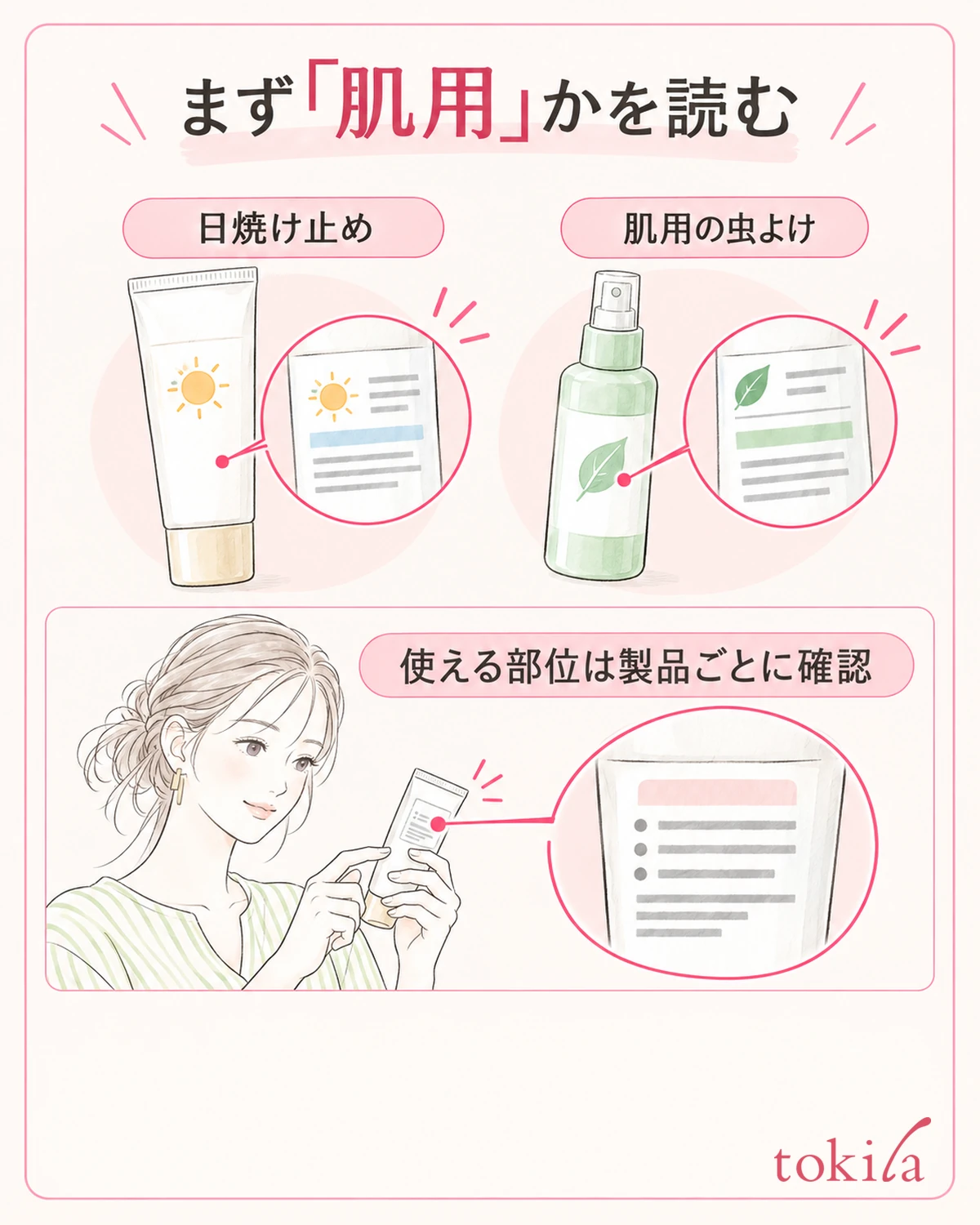
First, take out the sunscreen and the insect repellent, one bottle each. Check whether the repellent is meant to be applied to skin or used on clothing or in a space. You cannot decide that something can be used on your face or arms just from its appearance as a small spray bottle. Keep only the products you have confirmed to be for skin for this preparation.
Next, read the place of use, the amount, whether you need to shake it before use, reapplying and how to remove it after use, on each label. Even a sunscreen that can be used on both face and body does not necessarily mean the repellent can be used on the same places. Once you have learned how to use one, it is important not to skim past the other, assuming it is the same.
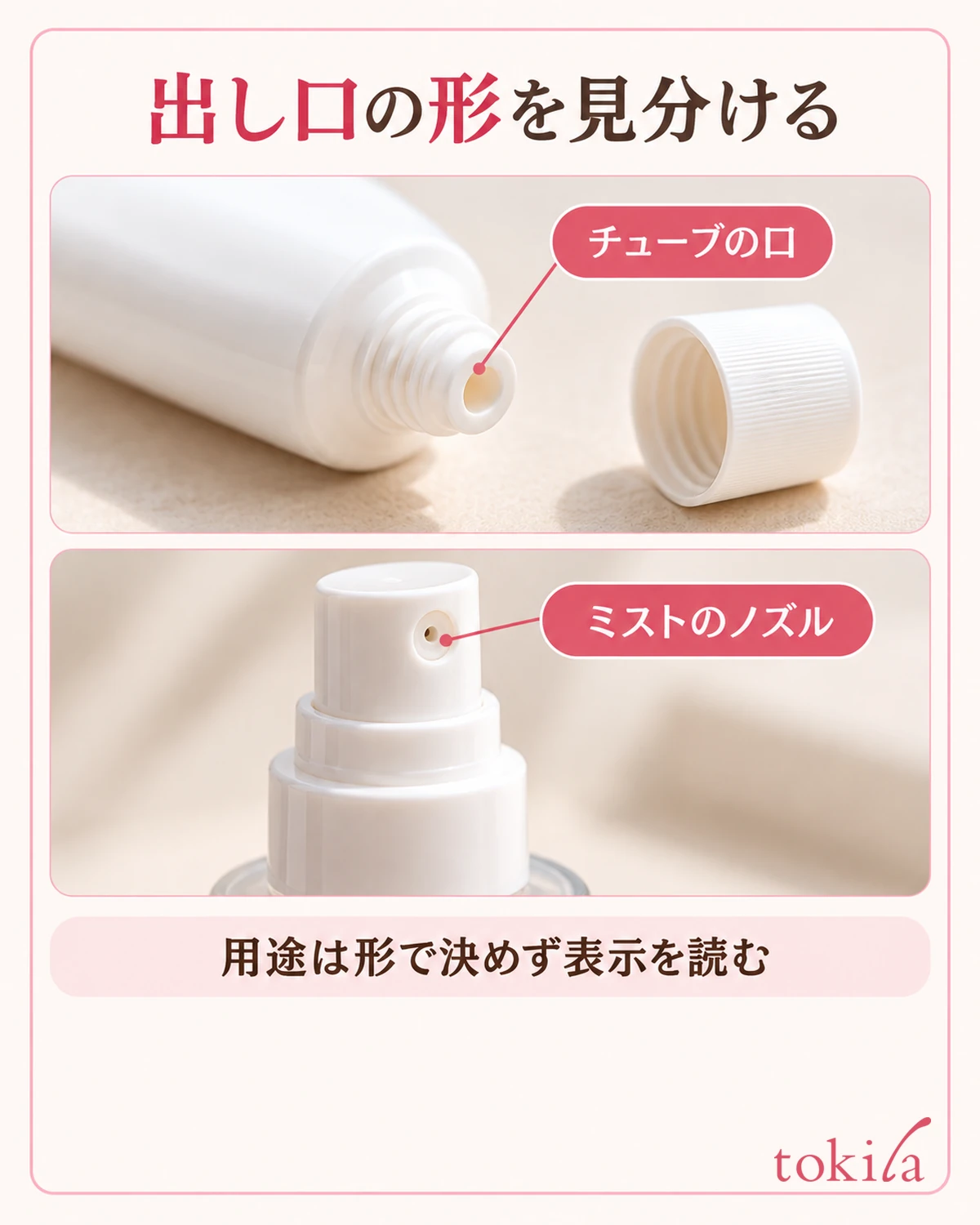
Look at the dispensing openings separately too. The motion of getting it onto your hand differs between one you squeeze out of a tube and one that sprays a mist from a nozzle. Also check on the products you have whether it works just by removing the cap or whether you need to release a lock. The bottles in the photo illustrate shapes, so do not use them to tell uses apart on the idea that the same shape means the same use.
If you are buying, a criterion for choosing is not only whether you can take it out with you, but whether you can read the explanation of where to use it. When choosing sunscreen and repellent separately, start by thinking of a way to place them so you can tell them apart without opening either bottle.
Also check the target insects and the conditions of the person using it on the repellent side. Do not choose it as something that keeps away every insect, or increase how often you use it based only on concentration or scent. Instead of making a rushed decision just before leaving over a label that is hard to read, check it first in a bright place, and the preparation goes more smoothly.
The order with makeup also differs by product, for example when a sunscreen doubles as a makeup base. You do not need to replace the whole order of the cosmetics you usually use with just this "sunscreen, then repellent" relationship. For each place of use, line up only what you need and think it through.
2. Apply Sunscreen First, and Use the Repellent After It Has Dried Well
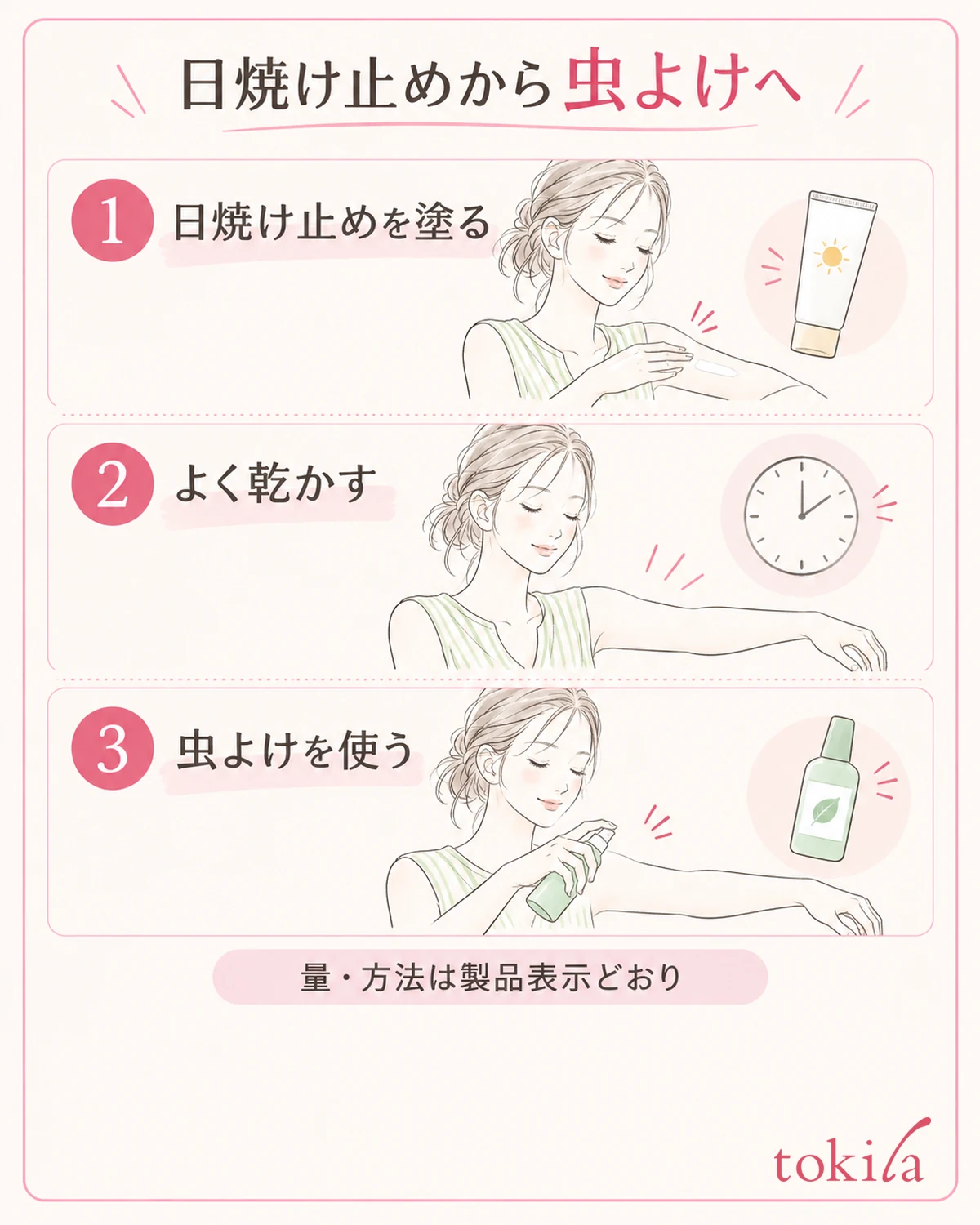
On places such as your arms and legs where you have confirmed both can be used, apply sunscreen first. Follow that sunscreen's guidance for how to prepare your skin and how much to use, and spread it evenly over the areas that will be exposed. Do not reduce the sunscreen because you will use repellent on top, and do not mix the two in your palm and apply them at once.
Once you have applied sunscreen, wait until it has dried well before moving on. I do not set a common "wait so many seconds" time here. Because the amount, the formulation and the environment differ, do not treat it as dry on the clock alone. Do not hurry to layer over liquid that has just been applied and can still move; first make a break at the point where you have finished the sunscreen's way of use.
After that, use the repellent in the specified amount and way. Follow the product label for the spraying distance and whether to spread it with your hand. Do not use it in ways such as holding it too close to the skin and putting out a lot on one spot, or spraying places the instructions do not mention; calmly check the range where it may be used.
If it is hard to do your whole body at once, there is also a way of dividing the places you use it, such as finishing your arms before moving on to your legs. If you stop partway, take care not to lose track of how far you have applied sunscreen and where you started using the repellent.
Even if you notice you got the order wrong, do not try to make up for it by increasing the amount. Check the products' guidance on combined use, and if you are unsure, confirm the way of use with the manufacturer before starting over. From how it looks after layering alone, you cannot judge whether the two are working sufficiently.
If white clumps appear when you rub, stop for the moment before adding more repellent. The steps for checking pilling of sunscreen and base makeup can also be used as a separate check, but do not consider it a method that always fixes the state after combined use, and give priority to the handling for each product.
3. Around the Face, Check Where You May Use It Before Spraying Directly
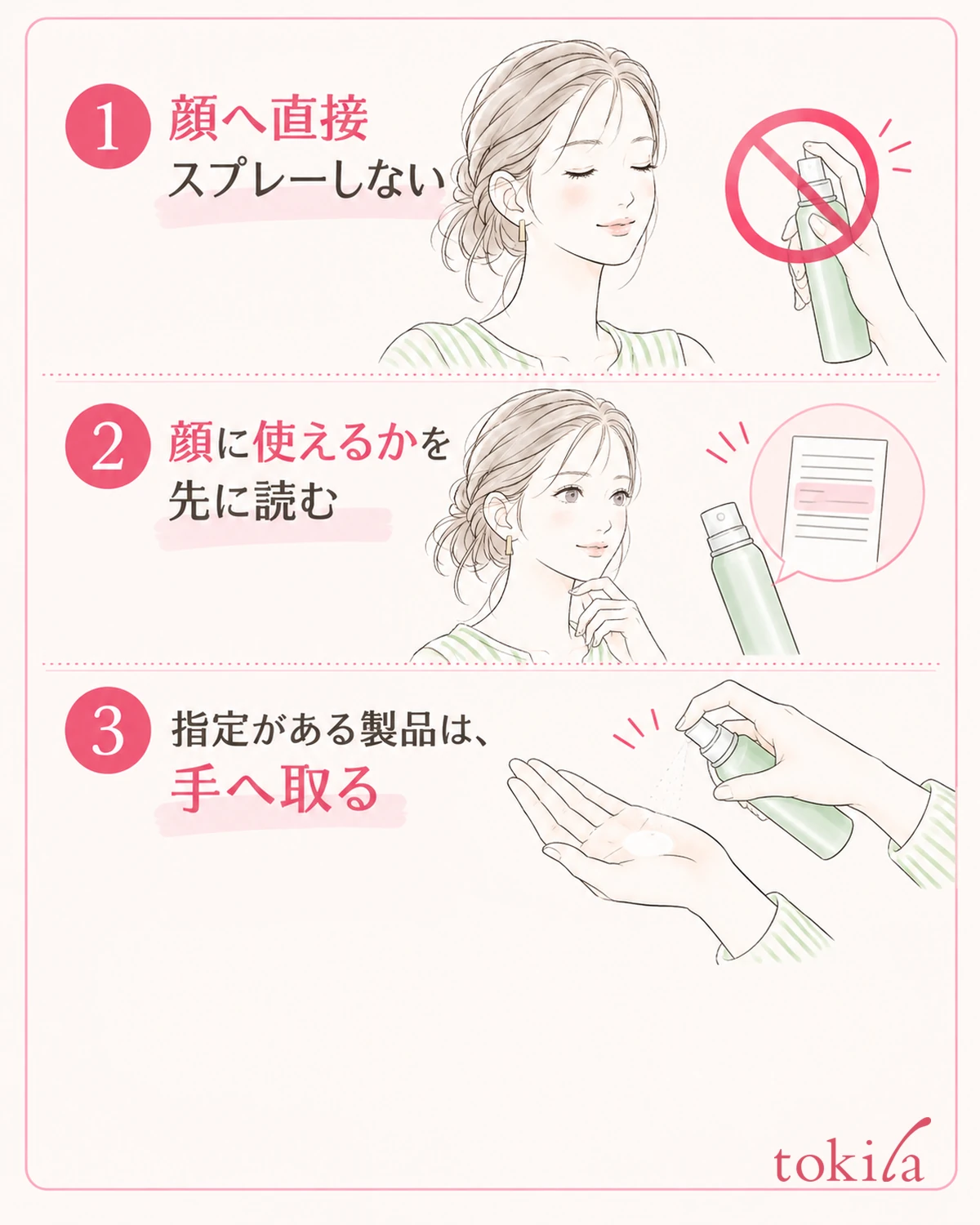
Do not turn a repellent meant for your arms toward your face in the same motion. First read whether it is a product that can be used on the face and neck, or whether there is an instruction to take it onto your hand and apply it. That an adult can use it is a separate matter from being able to apply it freely around the eyes and mouth. If it is specified not to be used on the face, do not use it even if you change to taking it onto your hand.
For one that is permitted on the face and specified to be taken into your palm first, follow that method. Do not spray directly on your face, and handle it so it does not get into your eyes, mouth or the like. The figure shows only up to the stage of taking it onto your hand. Check the detailed range of application on the label of the product you have, and do not treat the outline of the face in the figure as a map of where it can be used.
When you use a mist, pay attention to the wind direction and the people around you. Even if you point it at your own arm, the spray can drift toward your face or other people. Avoid inhaling it, and avoid continuing to spray in a closed, narrow place. For aerosols and others with cautions about open flames, follow those instructions too.
Even if your neck is hidden by hair or a collar, it can become exposed when you change clothes or put your hair up. Do not decide to treat the face and neck the same way; prepare while checking against the product's guidance on the parts where it can be used.
If you use it over makeup, do so only after confirming that it is compatible with makeup. It is important not to treat a mist that can be used for reapplying sunscreen and an insect repellent mist as the same kind of finishing product. If you cannot confirm how to use it, do not switch to a method of showering your whole face with mist.
If something unusual happens, such as it getting into your eyes or feeling irritation, stop using it and follow the product's first-aid and consultation guidance. Do not layer another cosmetic to hide the discomfort or try to remove it by rubbing. If symptoms continue, consult a medical institution.
4. After Sweat or a Towel, Reapply the Two Under Separate Conditions
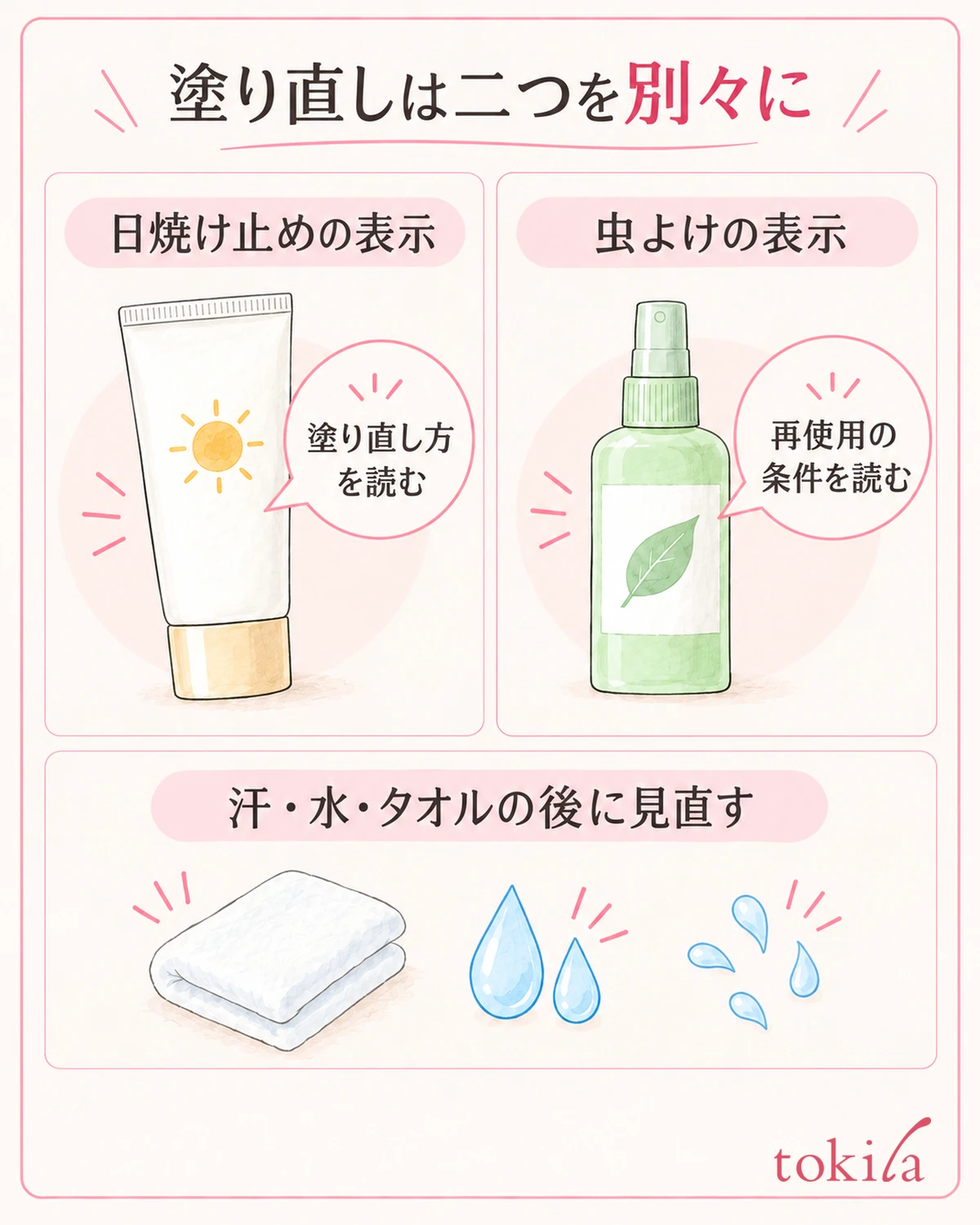
Even if you get the order right before going out, it does not follow that you will not need to recheck for the rest of the day. Your condition changes while you are out, as you sweat, touch water, wipe with a towel or your clothes rub. Do not use the repellent's duration of effect on the label as the time you do not need to reapply sunscreen.
At a break, first look at the state of sweat and moisture. Rather than rubbing back and forth hard with a towel, gently press to take off the moisture you need to, then move on to the reapplication method for the products you have. Whether it can be used on wet skin also differs by sunscreen, so do not assume it can be applied the same way while sweat remains.
For sunscreen, check on the label frequent reapplication and the handling after sweat or a towel. For repellent too, look separately at the conditions for reuse, such as after heavy sweating or wiping off. Do not manage both by the time you used only one; judge what state requires what for each of the two bottles.
When you need to reapply both on the same place, check again the order of combined use and drying. If you do not know how to handle skin where the previous layer remains, do not keep layering on top as it is; check the product's guidance. Do not make it a practice of automatically adding repellent every time you reapply sunscreen without looking at the conditions.
If your hands are dirty while you are out, you also need to prepare to clean them before touching your face right away to reapply. If you decide in advance even where you will use the bottles, where you will put your bags and the order in which you take out the towel, you can proceed without mixing up the two bottles.
Make your note before going out in a form that lets you trace the product names and how to use each, rather than "what time for both." If you go out without carrying the bottles, one idea is to keep photos of the labels that you can read through to reapplying and removal. On a day you switch to a different product, do not carry over the old note; check again from the label.
5. Match Your Clothes and Hat Too, and Make Preparations You Can Keep Up While Out
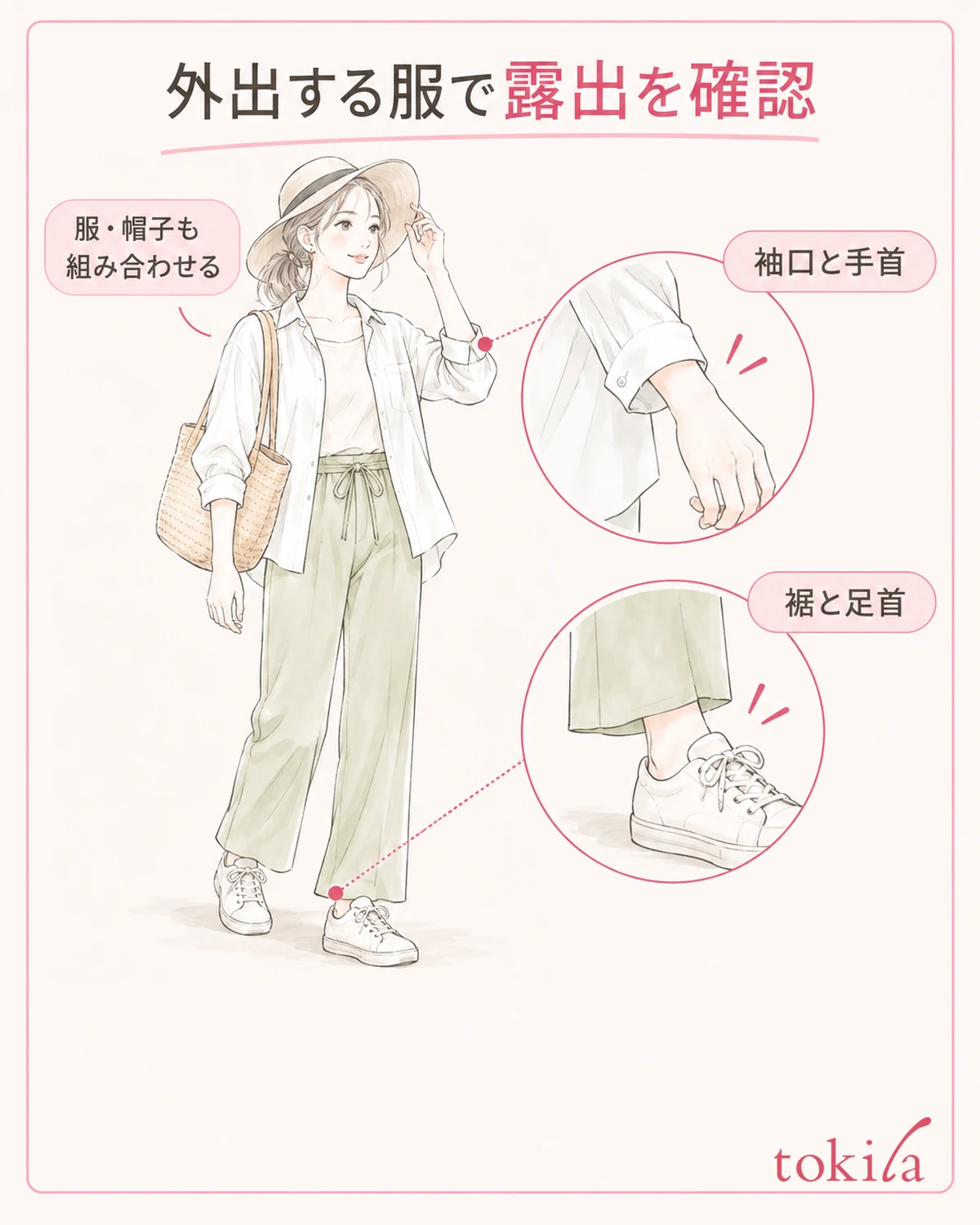
Finally, return to the clothes you will actually wear out. Use a parasol, a hat and long sleeves too, and do not try to finish all your UV protection with only what you apply. If you plan to go into grass, clothing that reduces exposed skin matters too. Choose the measures you need at your destination, and do not make adding more products the goal in itself.
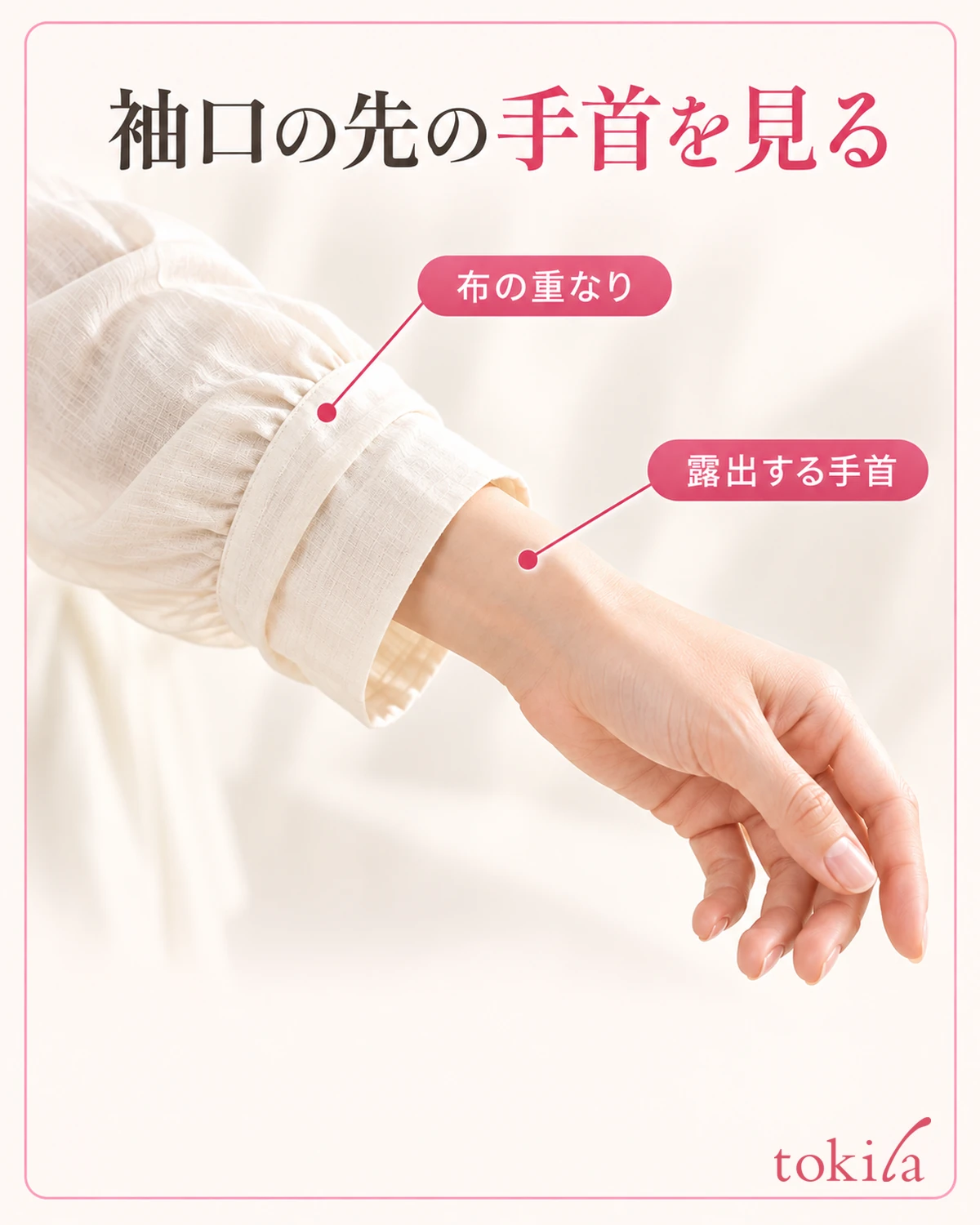
The visible range of your wrists can change between when your sleeves are down and when your arms are extended. Check the gap between socks and hems too, wearing the clothes. The photo is an aid for finding where the cuffs overlap and what is exposed. Do not use it as a judgment that you need not apply wherever clothing covers, or as proof that insects can be completely kept out.
Prepare the two bottles you carry so that their openings are closed and you can read how to use them. Do not mix them and decant into another container, and follow the instructions on carrying and high temperatures. If you think ahead about the order in which you will use them with a towel and a hat so that you can take out what you need even on a short break in a park, you can shorten the preparation while out.
Decide before you leave how you will remove them after you get home, too. Check on the labels of the products you have whether each sunscreen and repellent comes off with soap or needs cleansing. Do not take only the fact that the scent or stickiness has gone as a judgment that it came off. It is also important not to rub your skin hard to remove both together.
When you are unsure about combined use, return to this order: "read whether it is for skin and where it can be used," "apply sunscreen first and let it dry," and "use the repellent as specified." Judge reapplying after that by each product's own conditions. Do not stop at remembering one order; including today's clothes and breaks, put together preparations you can keep up.