You picked a colorful hair clip, but once it is in your hair the color is hard to make out. Or, the opposite: only a color far removed from your outfit stands out. In that case, before adding more color names, check how it looks against your hair and how much of it is actually visible. The color on a desk and the color seen from behind are not under the same conditions.
Here we sort out the order for matching the clothes you own, focusing on colored claw clips. You can choose either a day when the color blends in or a day when it becomes a small star. Rather than settling on one color that suits you or pulling your hair hard to show off the ornament, it is a way to think about the day's outfit from among tools you can fasten without strain.
1. Decide whether you want it to blend in or to show off the color
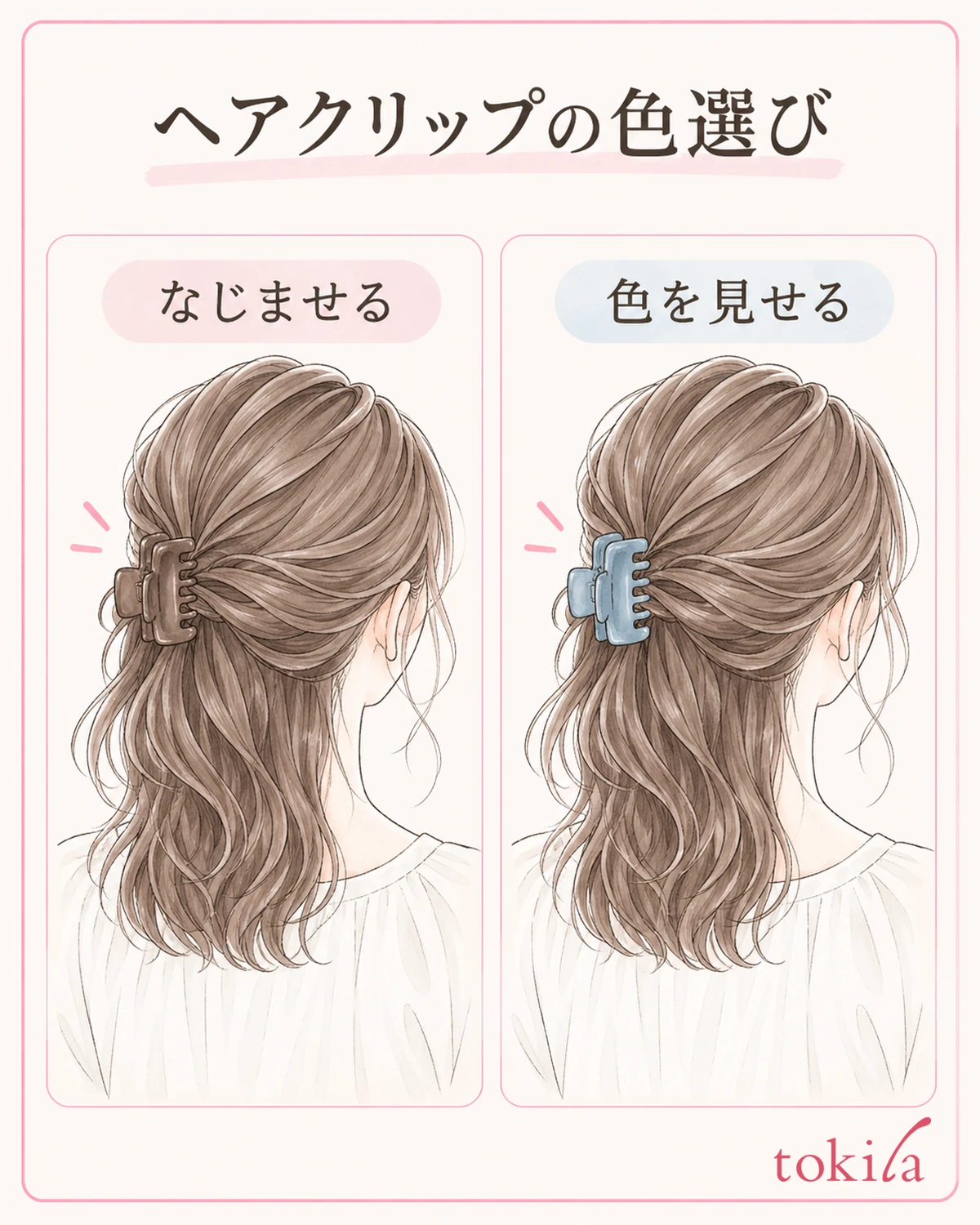
First, decide which you want to lean toward: "I want to use the clip without drawing attention to it" or "I want to add a favorite color to the view from behind." Neither is wrong. Rather than judging flashy or plain from the clip alone, lay out the top you will wear today and put into words what you want to add between your hair and clothes.
On days you want it to blend in, make candidates of those close in brightness to some part of your hair or clothes. You do not need to fix it by color name, such as only black because your hair is black, or only beige because your hair is light. Start by placing two of your own side by side in the same spot and separating the one whose outline stands out clearly from the one that seems to recede into the background.
On days you want to show the color, you can also choose one favorite color first and adjust the clothes to it. For example, if you want to use a blue clip, you do not need to match your top to the same blue. Compare the idea of pairing it with plain clothes to leave a small spot of color against the idea of linking it to a blue in a pattern, and choose the one closer to your taste.
Two candidates are enough to compare at first. If you keep many laid out on the desk while thinking, your eye tends to go to the number of colors rather than the occasion you will use them. Decide whether today you will blend in or show just one accent, and put the rest away for now. If you are unsure about color coordination overall, you can start from how to think about color schemes in clothes and sort out what will be the main feature.
If there is a dress code at work or wherever you are going, check that condition first. Even if the color is subdued, there are occasions where a large ornament or strong reflections can be bothersome. On a day off, on the other hand, you can enjoy keeping your clothes as usual and swapping only the clip for a favorite color. Choose while keeping both the occasion and your taste in mind.
Even when you feel it "doesn't suit you," do not jump straight to the conclusion of replacing it. Pick one thing that bothers you among the color itself, how much is visible, the gloss, and the combination with your clothes. Once the next check shows what to change, it also becomes easier to consider using the same clip with different clothes.
2. Using your hair as the background, check the visible surface and the outline
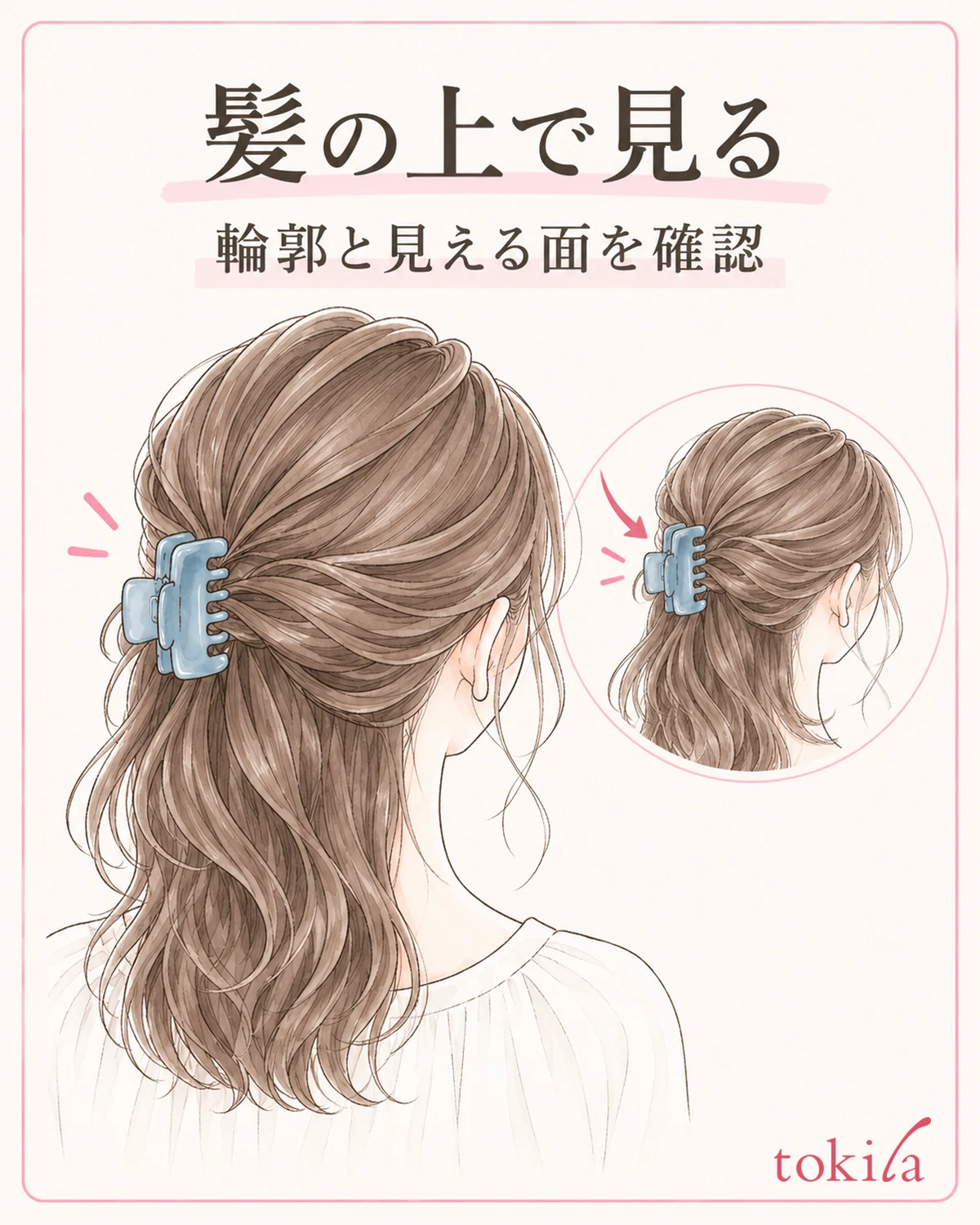
Bring a candidate near your hair and look at the color in the direction you would actually use it. If you hold it up by hand, do not push the open teeth into your hair; just check how it looks from the outside. If you compare by wearing it, do it in the usual way that you can fasten without strain, and avoid adding or removing too much of the section of hair you clip just to make the ornament look bigger.
How much is visible from the front changes depending on whether you clip it at the center of the back of your head or show it slightly at the side. Not seeing the color in the front mirror does not necessarily mean a failure. If you want to use it for the view from behind, look at the back with a hand mirror or similar; if you want it as an accent at the side, look at the side of your face. Do not keep twisting your neck far; set up a posture that is easy to check from.
For materials with translucent edges, also look at the difference between when it is on a bright desk and when it overlaps your hair. If the way light passes through differs between the edge and the thick part, check which one comes out on top of your hair. Do not make it a rule that translucency always looks light; use the actual outline against your own hair as the standard for choosing.
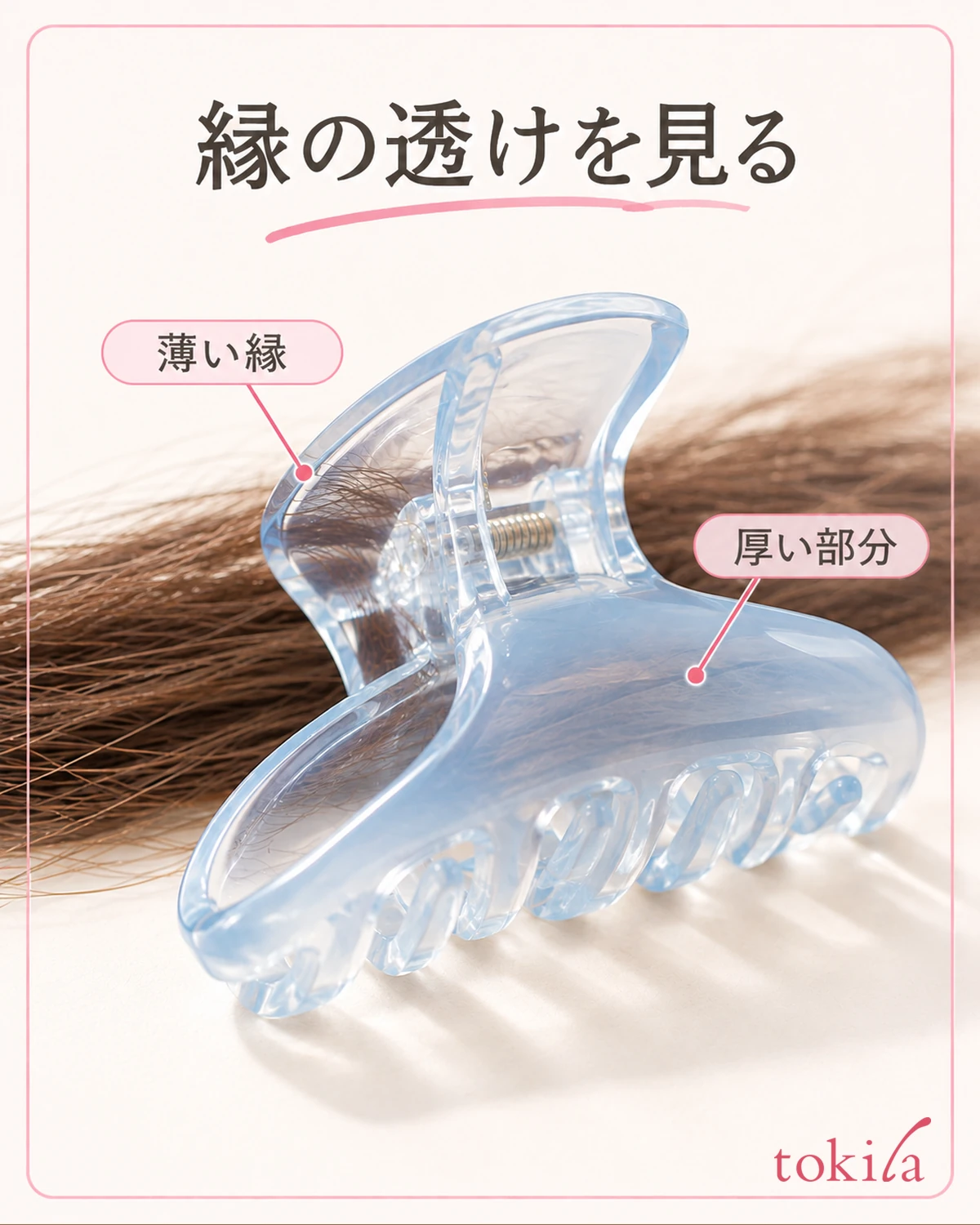
For shapes with a cutout in the center, look separately at the outer outline and the hair visible inside. Even if the clip's outer size is large, if the colored part is only a thin frame, it looks different from a solid surface. Rather than summing it up as "big, so flashy," look at both the part with color and the part where the background shows through.
If your hair covers the clip and only a little of the color shows, first see whether you like it that way. You do not need to pull your hair out to show the whole ornament. If the clasp sits poorly or it slips and shifts position, go back to checking the section of hair and the shape for a hair clip before the color scheme, and choose the color again from among the tools that stay stable.
If your hair color has lighter and darker parts, do not treat the whole head as a single color; look only at the area around where you will actually clip it. The light on the surface also changes with the direction of the hair, so keep the way you gather your hair the same while comparing colors. If you change the hairstyle every time, it becomes hard to tell whether the clip's color or the amount showing was what differed.
3. Link it to one color in the clothes, or leave it as a small separate color
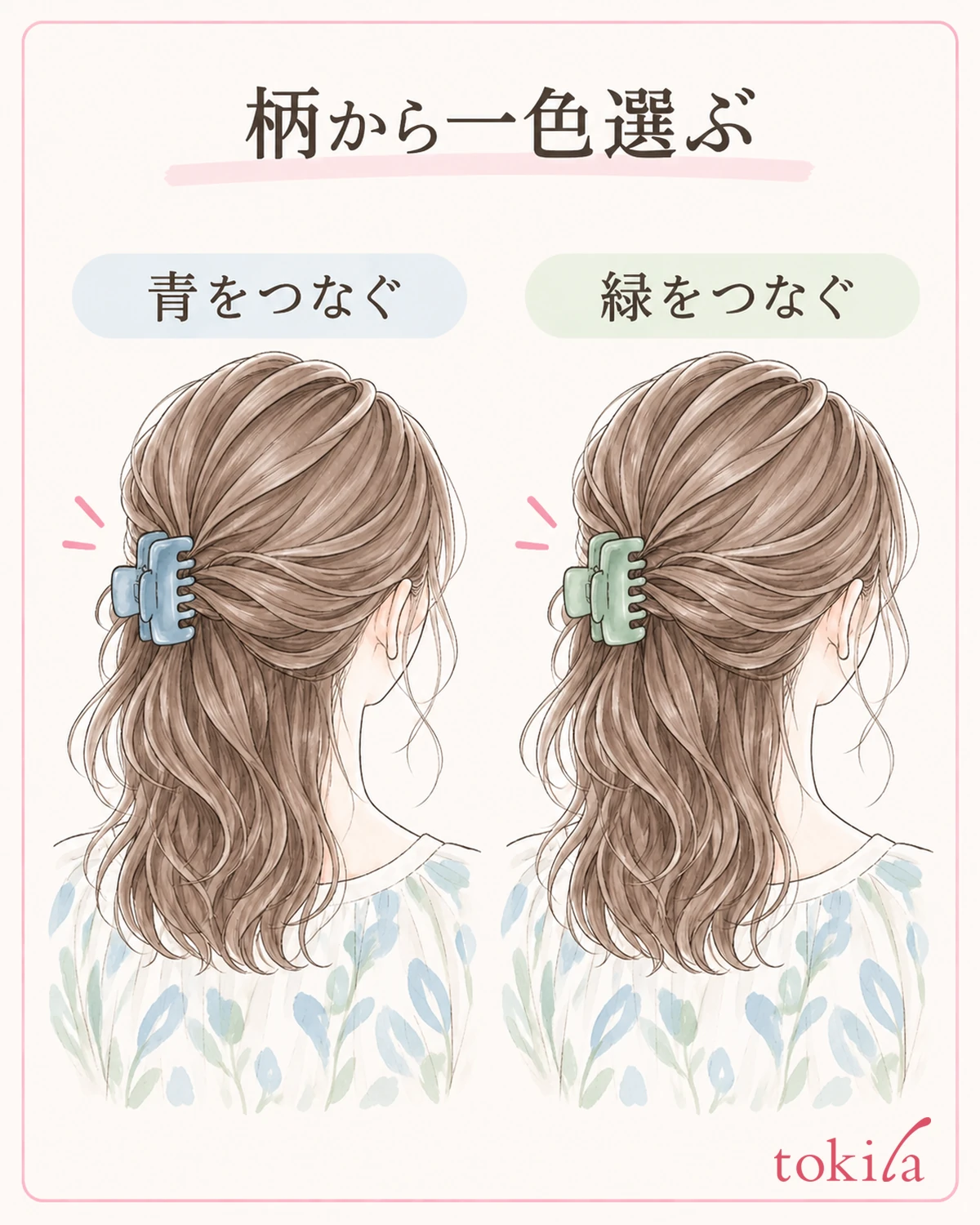
Next, look in the mirror together with the top you will wear. If you want to link it to the clothes, pick just one color from the collar, part of a pattern, a jacket, or the like. It does not have to be exactly the same color as the clothes. Before buying another clip to match a color name, decide which part of the clothes you already own you want to pair it with.
With patterned clothes, picking one small color from the pattern makes comparison easier. For example, if a white background has a pattern of blue and green, compare a blue clip and a green clip without changing the clothes. Rather than adding both at the same time, choose which color you want near your head today. You do not need to reproduce every color in the pattern.
On days you want to leave a different color, reduce the accessories other than the clip for the moment and look. One way is to start from a state where the color near your head is clear, such as adding a favorite blue to a plain white top. Rather than fixing the standing out itself, distinguish whether you want to keep that color or are bothered by competition with other accessories.
If you also use earrings or glasses, look at the colors and gloss gathered near your face together. Without matching everything to the same color, there is also the idea of adjusting by area, such as keeping the ear area small on days when the clip is the star. Before replacing all the accessories, removing just one and looking in the mirror makes it easier to see what was bothering you.
On days when you cannot decide on a top, try two outfits in turn with the same clip. The trick to comparing is to hold one side fixed rather than changing the clip and clothes at the same time. If you want to make use of the color you chose first, you can also try adjusting the area visible at the neckline or the color of the jacket instead of swapping the clip.
4. Compare gloss and translucency separately from color
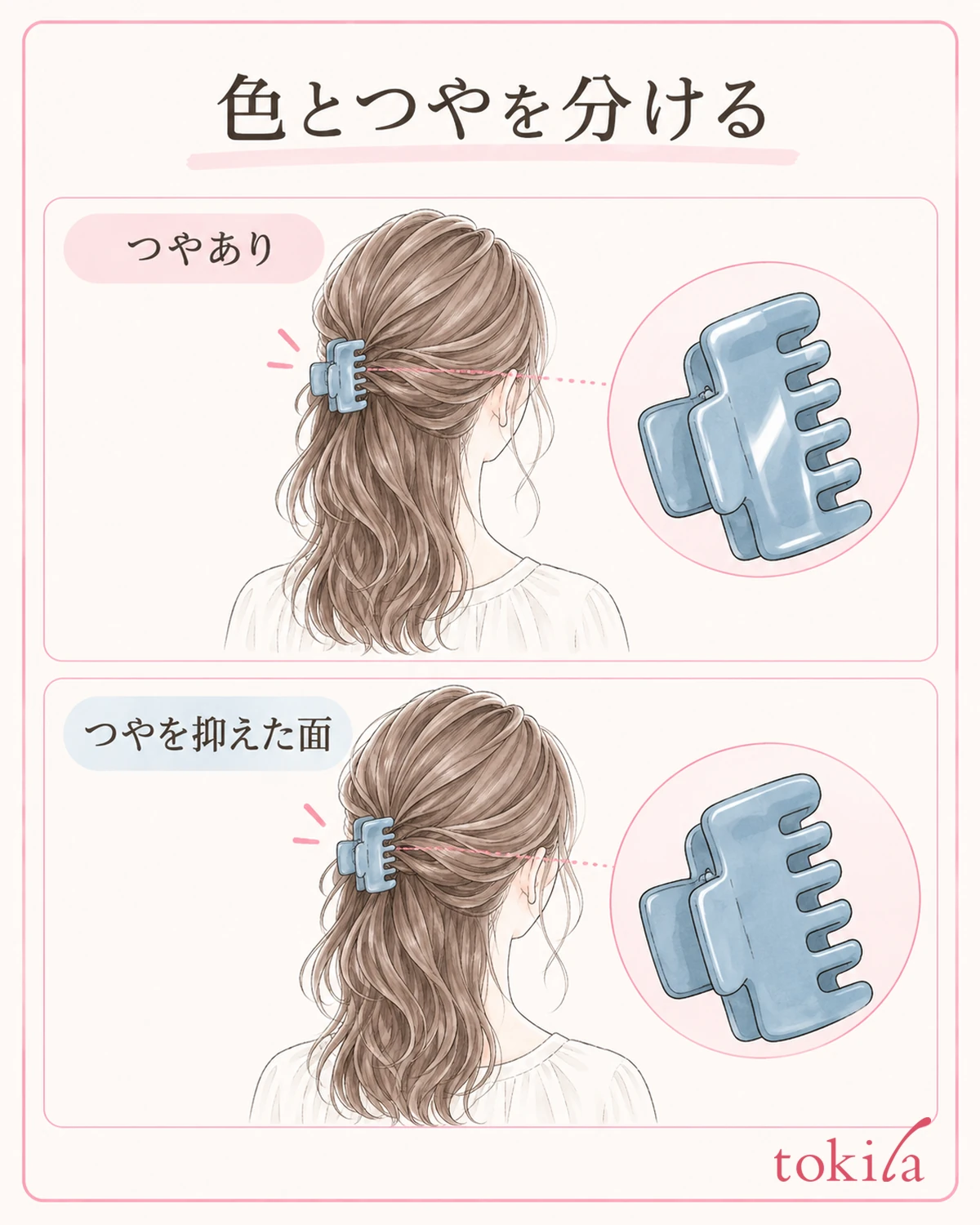
Even within the same family of colors, a glossy surface and a matte one catch the light differently. When you feel the color is strong, tell apart whether it is because the color is deep or because white reflections on the surface catch your eye. Do not judge the reflective part alone as a different paint color; turn it slightly and check.
When comparing, slowly change the direction of your face and body in the same place. Do not decide which is better from a photo in which window light hits only one of them; check whether you also like how it looks when the light moves. There is no need to fix the use as well, such as glossy always being more glamorous or matte always being suited to work. Think about it together with the material of the clothes and your preference for the day.
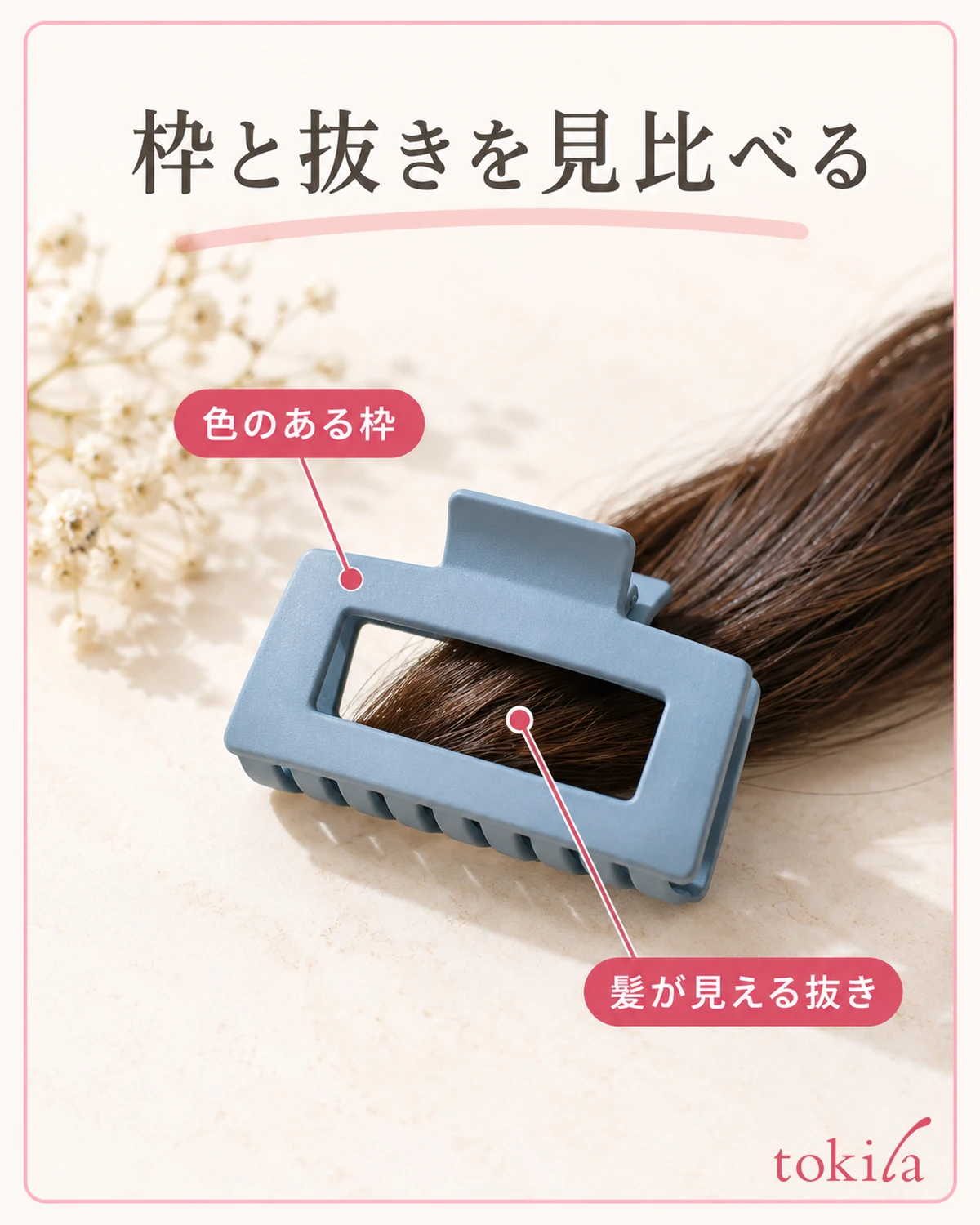
Also separate translucent materials from shapes with holes. With the former, the background shows through the colored material; with the latter, your hair shows through the part with no material. For clips with a cutout, observe the width of the frame closely; for translucent clips, observe the thick edges and overlapping parts, then return to what remains visible when you step back a little.
If the clothes are a glossy material, you can compare the idea of enjoying the clip's reflections layered on top with the idea of toning down the clip's gloss. There is also the choice of adding just one shiny accessory to a rough-textured outfit. Without making matching textures a requirement, find your preference when only the gloss is changed and the color combination stays the same.
Photos on a screen are a clue for thinking about candidates, but colors can look different depending on display settings and lighting. Do not conclude from a photo alone how it will look against your own hair. For tools you own, check the real thing; before buying more, check the material, finish, and dimensions separately, and do not expect the same look from the same color name alone.
5. Choose from the front, side, and back of the upper body, and keep the combination
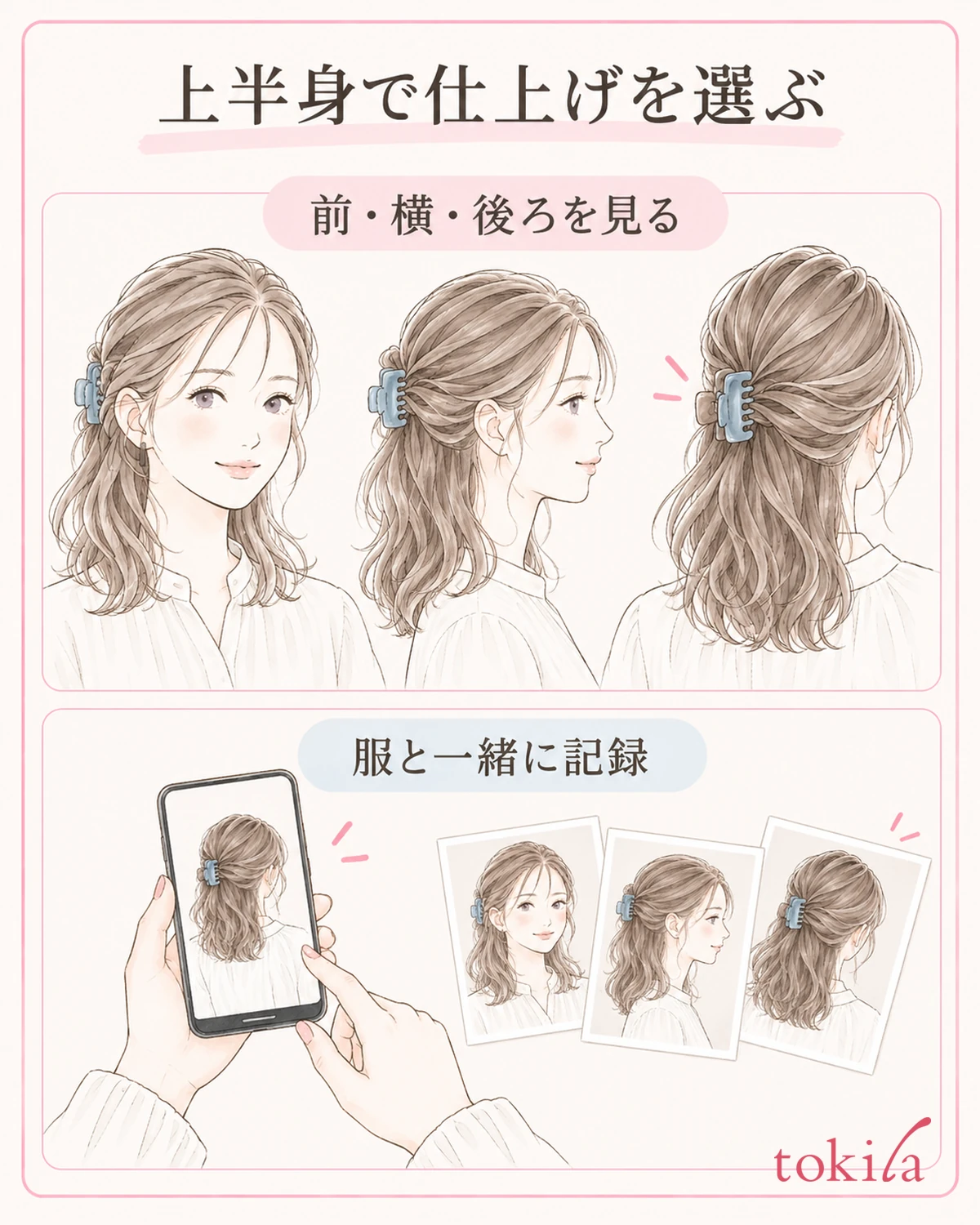
Finally, step back from checking with your face close to the clip and bring your whole upper body into the mirror. Check in turn the directions you want to show among the front, side, and back. Even if there is no color at the front, you can choose it if you like it as a point for the view from behind. The same area of color does not have to be visible from every direction.
On days you use a jacket or stole, look at the view with it on as well. If your collar bumps the clip or a hood pushes on it, it is not only a question of color matching. Do not force the tool upward; reconsider how you gather your hair and the tools you use. Do not put up with pain or a pulling sensation to put together an outfit.
If you are still unsure, narrow it down to a single point to decide, such as "today I'll keep the blue" or "I'll choose the one with less reflection." There is no need to extend this to judgments about your hair color or features; choosing it as a combination with today's clothes is enough. Even for a color you like, on days it will not stay in properly, use a different tool and keep the question of color separate from the question of hold.
For combinations you want to use again, one way is to keep a photo with the top and clip together. A record photo works as a comparison note if you take it in the same place without strong color correction. Do not treat the color in the photo as proof of the real thing, and add a brief note of what you liked, such as "the blue frame shows from behind" or "paired with a white collar."
Next time, try changing just one thing in that combination. Decide what to change: a different clip with the same clothes, or the same clip with a different collar color. Blending in and showing off color are both ways to enjoy the day. Check in the order of color on your hair, the visible surface, gloss, and the upper body, and keep widening the options for using the accessories you already own.