With a twist-up eyeliner, the lead snaps just as you try to draw a line. You push it out again and it chips again. When that happens, before pushing the lead out further or pressing harder, check the "length to extend" and the "retracting mechanism" of the product you have. Even a lead that looks short may already be at the length that product requires.
This article deals with pencil-type eyeliners that you twist to advance the lead without sharpening. The steps differ from sharpening a wooden pencil-type liner or caring for the brush tip of a liquid type. It is a review of how to avoid putting extra force on the lead, from before drawing to putting it away, by checking the length, retraction method and storage conditions that differ from product to product.
1.First check the length to extend and whether the lead can be retracted
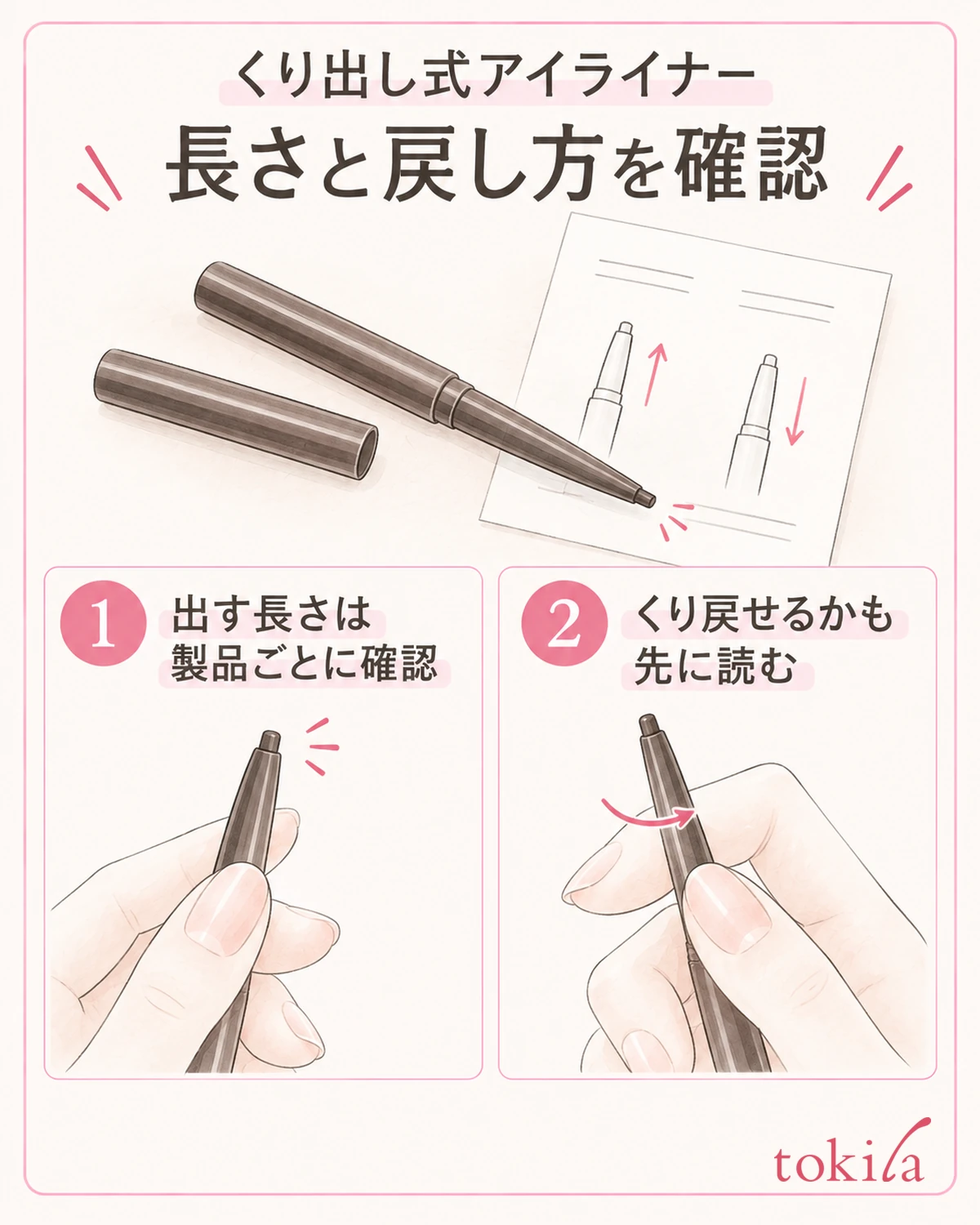
After removing the cap, first read the instructions on the body or outer box. Look for "about how many millimeters to extend" and "whether a lead that has been extended can be retracted" separately. Even among twist-up types, some products retract when turned the opposite way, while others do not retract once extended. Don't carry over how you handled a previous one just because it looks similar.
The length at which the lead extends is not the same for all products. For example, if the instructions specify a short length and you extend it longer because it is easier to see, force is more likely to fall on the part away from the container. Don't use the length in other people's photos or videos as a guide; follow the specification of the product you are using now.
For one described as "cannot be retracted," do not extend it long as a test and then check whether it goes back. If you have not extended it yet, prepare to extend only the amount you will use, bit by bit. If you have already extended it too far, do not make up for it by pushing it in with your finger, cutting the lead, or breaking it at the base to shorten it; check that product's instructions.
Even when you have it lined up with another product from a family member or friend, keep the explanations matched one product at a time. Even if the barrel thickness and lead color are the same, the retracting structure is not necessarily the same. Rather than remembering it only as "the black pencil," keep the name written on the container together with the outer box.
If the printing is small and hard to read, move to a bright desk and also look for the outer box or the instructions you kept. If you keep the product name and color number identifiable, you are less likely to mix up the instructions of a different series. What you want to check here is how to use the container, not a comparison of which lead is higher quality.
If it turns out to be a type you sharpen, do not go on to the extending steps below; check the tools that apply in how to sharpen makeup pencils. From the point where you separate the usage methods, handle the lead separately as well.
2.Away from your face, on a desk, extend only what you need
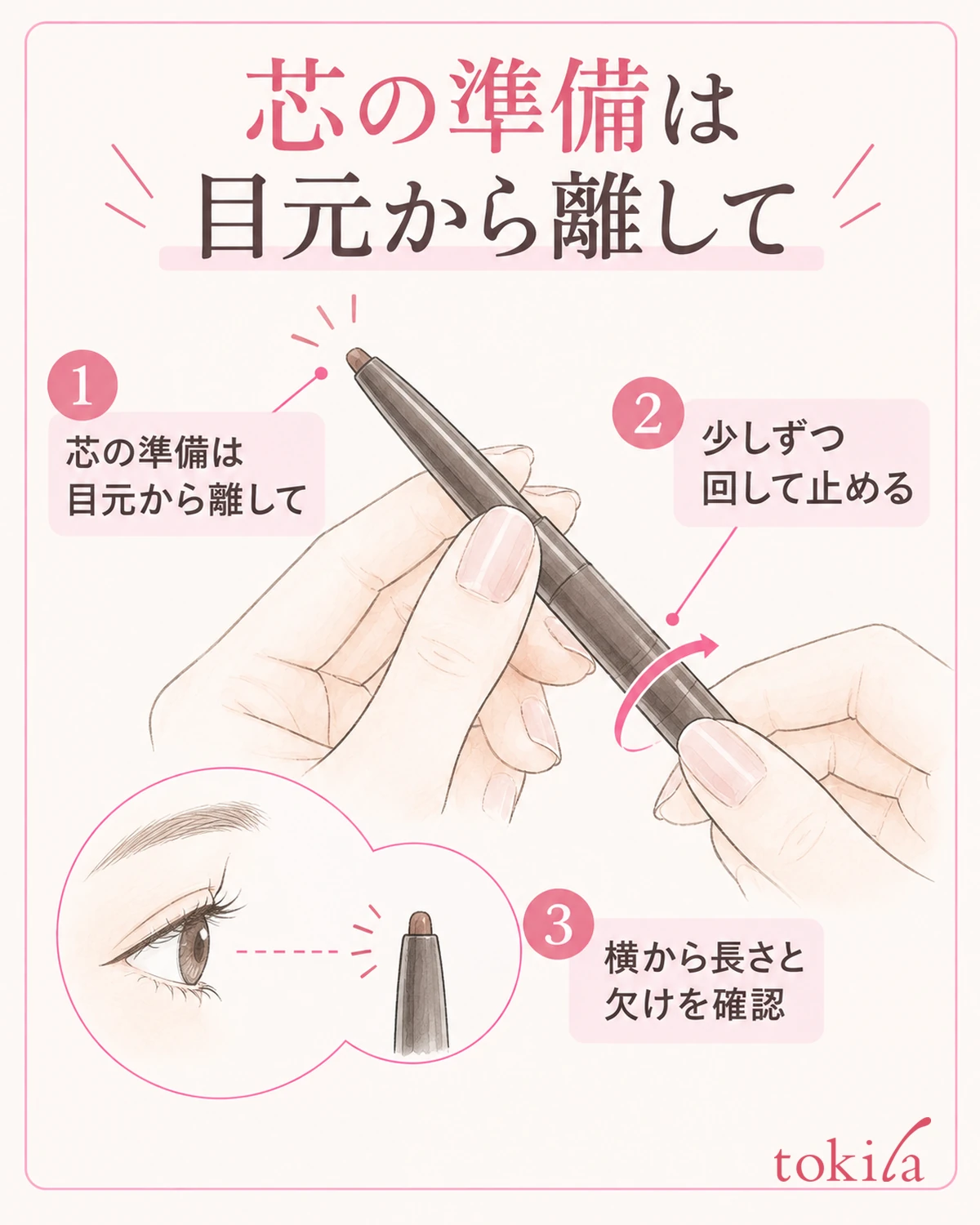
Adjusting the lead length is done before you bring it near your eyes. In a bright place where you are seated and can see your hands, match which part of the body to turn against the instructions. Don't mix up the part you pull the cap off with the rotating part and twist or pull forcibly.
Turn it little by little following the instructions, and stop while looking at the tip from the side. Don't keep turning because "a little more would be easier to draw with"; pause once at the specified range. The number of turns or clicks cannot be fixed for all products. Even for products that need an empty turn at first, match the operation described with the change at the tip.
To check the length, you do not need to press the tip with your finger or jab it into a tissue. Rather than touching the soft lead to check its shape, hold it away from your face and look for chips or wobbling. Do not pick up a fallen lead or chipped pieces and stuff them back into the container.
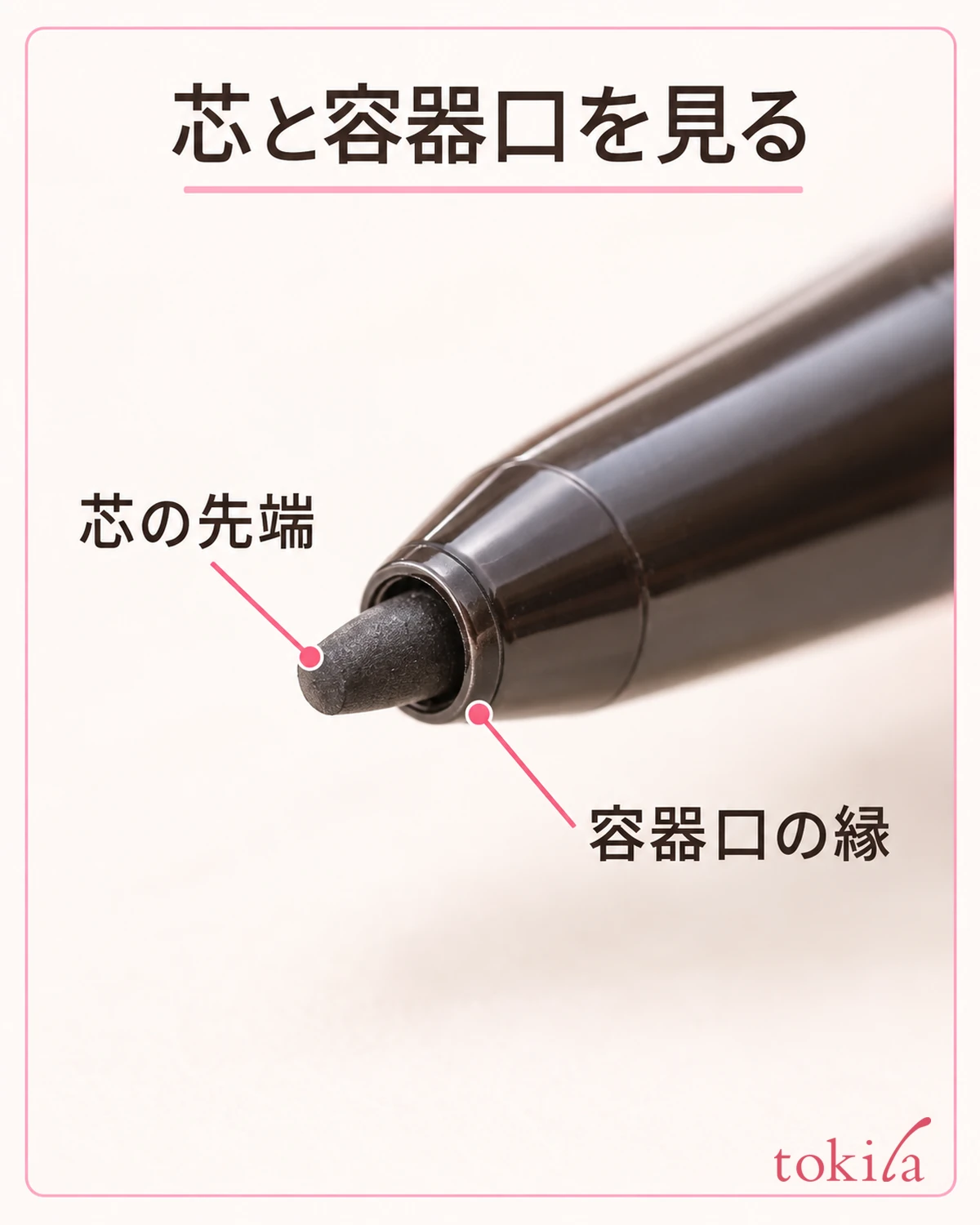
Even if the lead does not come out, turning it many times is not necessarily the answer. Note separately whether the rotating part feels resistant, or it turns but the tip does not change. Rather than guessing the remaining amount or the container's mechanism and taking it apart, check the usage instructions at the start and the conditions that show it is used up.
If you have extended a retractable product too far, follow that product's way of retracting. If it does not move when turned in reverse, do not add force and twist it again and again. Do not make a procedure of testing a lead whose retractability is unknown just to see whether it moves.
When the preparation is done, check the tip again. If a chip remains, it wobbles, or the container is cracked, do not bring it to your eyes as is, and hold off on using it. Not confusing extending the lead more than necessary with preparing a normal tip is the dividing line at this stage.
3.Support your hand where you can see, and do not press hard
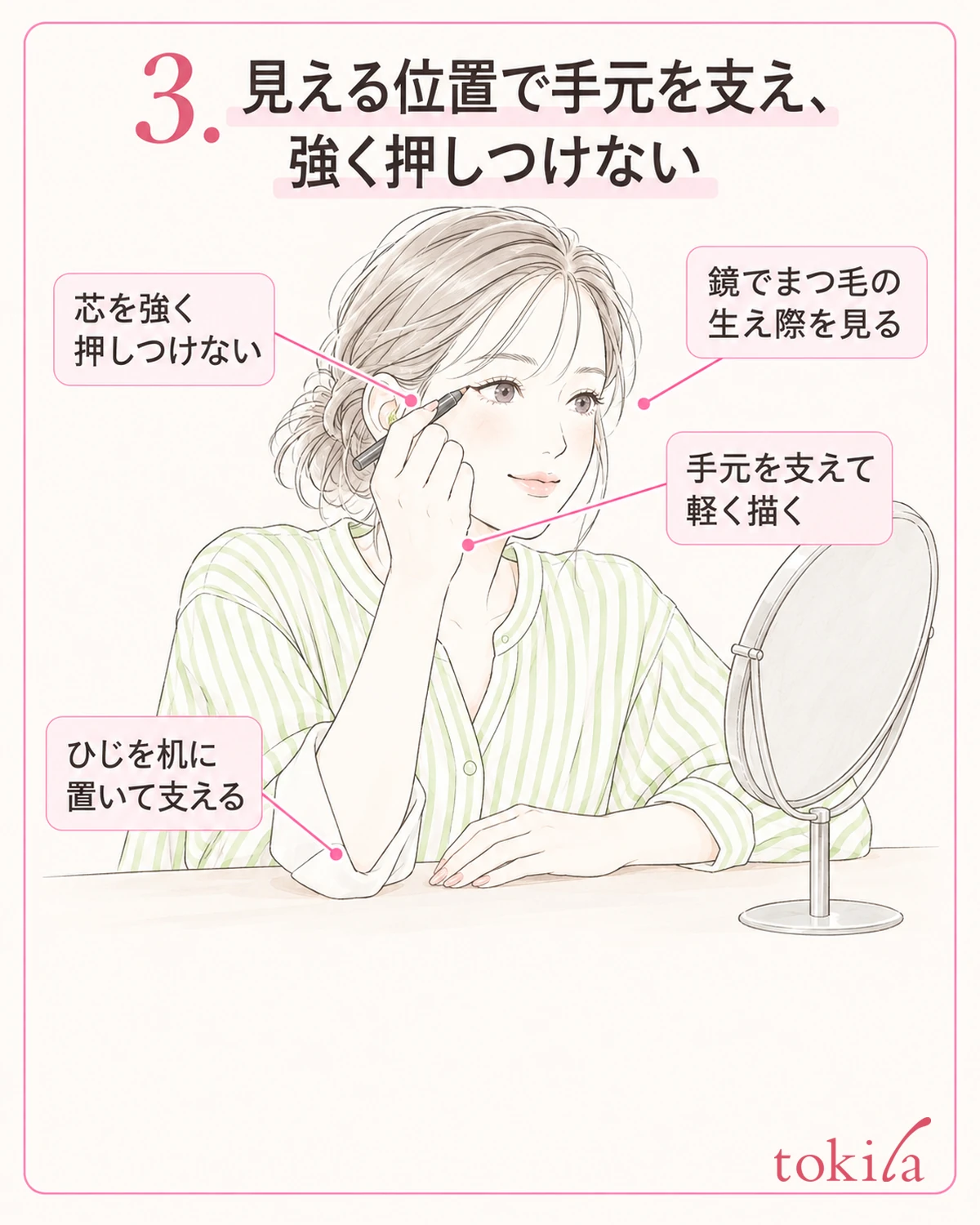
When you use the prepared lead, adjust the mirror and your face so that the lash line is visible. Rather than groping and pushing into a spot you can't see, change the angle of the mirror first. If you use a stand mirror, choose a position that steadies your hand, such as resting your elbow on the desk.
Following the instructions of the product you have, draw without using too much force. If your hand moves when you try to finish a long line in one go, you can try connecting short lines or dots. Do not stop wobble by pressing the lead against your eyelid to hold it in place or pushing it in until the rim of the container touches.
Even when the color doesn't come out easily, don't switch to strong force right away. Take it away from your eyes once and check whether the lead has slipped back into the container, whether the tip is chipped, and whether it is at the length indicated. Rather than explaining poor glide by the hardness of the lead alone, review how you are using it.
If you turn it to extend again near your eyes right after it breaks, it is easy to overlook chipped pieces and the tip. Move away from your eyes and check on the desk, and don't continue without knowing whether it is in a normal usable state. If your eye feels uncomfortable or painful, stop drawing, and do not try to remove a foreign object with the tip of the pencil.
If your main concern is hand movement or wobbly lines, you can also check how to steady your hand for eyeliner and connect short lines. Here, we prioritize conditions under which you can handle the lead without putting extra force on it, rather than making the line thicker to hide it.
4.Sort out the situations in which it broke, and stop using it if it keeps happening
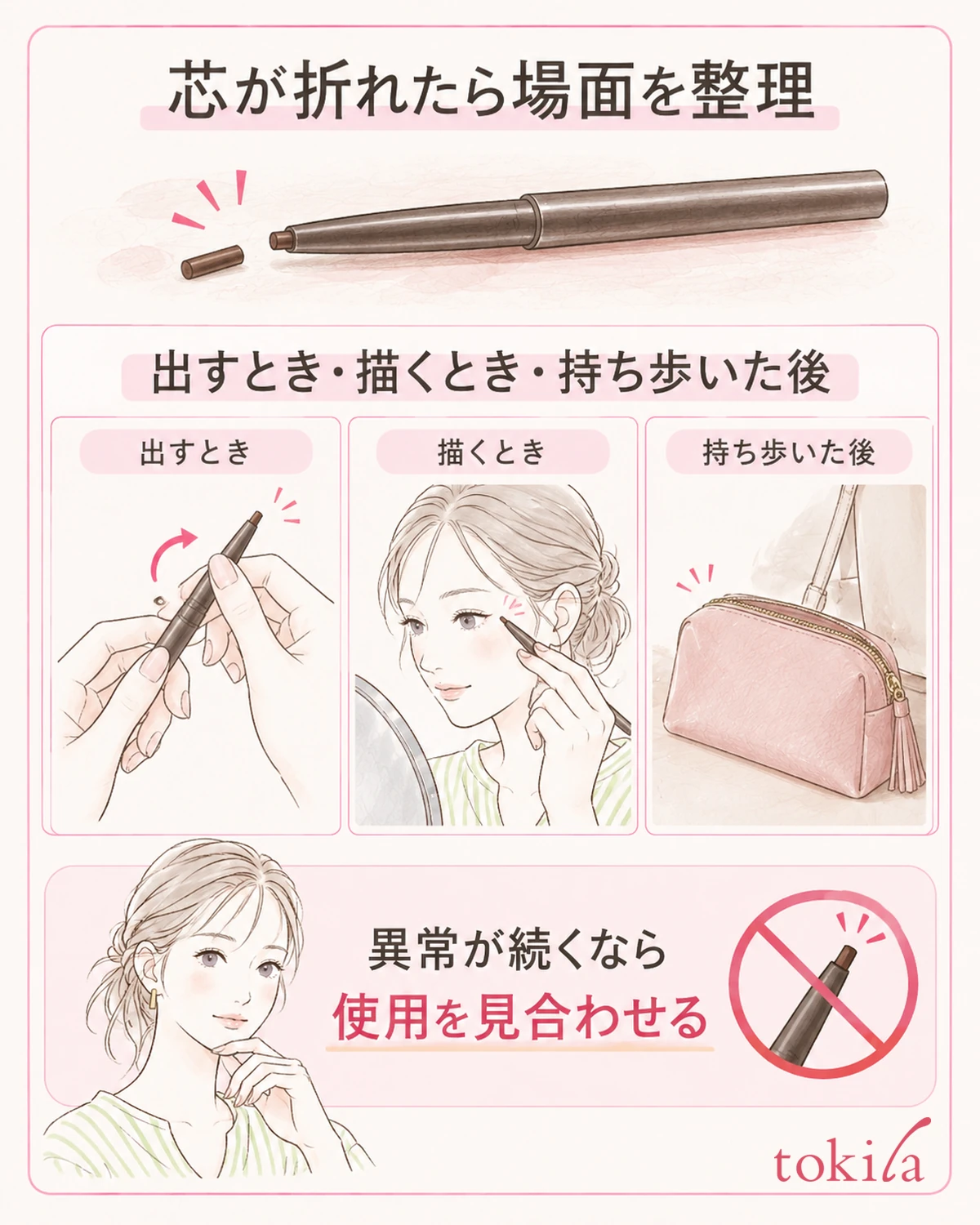
When it breaks, sort out where you noticed it: "when I extended it before use," "partway through drawing," or "when I took it out of the pouch." If it was chipped before you started drawing, don't blame only the force of your hand; also review storage and whether it was dropped. You do not need to determine from appearance alone what is happening inside the lead.
If it breaks partway through drawing, check the length extended and the force you press with. If it was extended longer than indicated, first check whether it is a type that can be retracted. If the length was within the specification but you were pressing hard, adjust the mirror and your hand support and review the force. Do not turn it into a process of breaking the lead over and over while searching for the right amount.
If it was already broken after being carried around, check how the cap closes, whether the lead was protected, and whether the body took a strong impact. Don't judge storage to have been fine just because it was in a pouch; also look at whether it was placed so that it bumped other tools or whether the cap was left open.
If you remember leaving it in a hot place, such as a hot car or near a heater, note that change too. However, do not make cooling it in a freezer or warming it with a hair dryer a repair procedure. For storage conditions, go back to the product's instructions, and do not test at your eyes something whose usable state you can't tell.
For products with refill leads or cartridges, also check whether it started breaking before or after replacement. Check in the instructions whether it is the matching holder and whether any operation is needed before replacement. Do not test compatibility by inserting a removed part into another barrel or pushing back a protruding lead.
If it keeps breaking even when handled as specified, the rotating part does not move, or the lead comes out, stop using it. Avoid taking it apart because some remains or joining the lead with glue. If you keep the product name and what happened, it also helps you organize the situation when choosing between replacing it and contacting the manufacturer.
5.Confirm how to retract it, close the cap, and store it away from impact
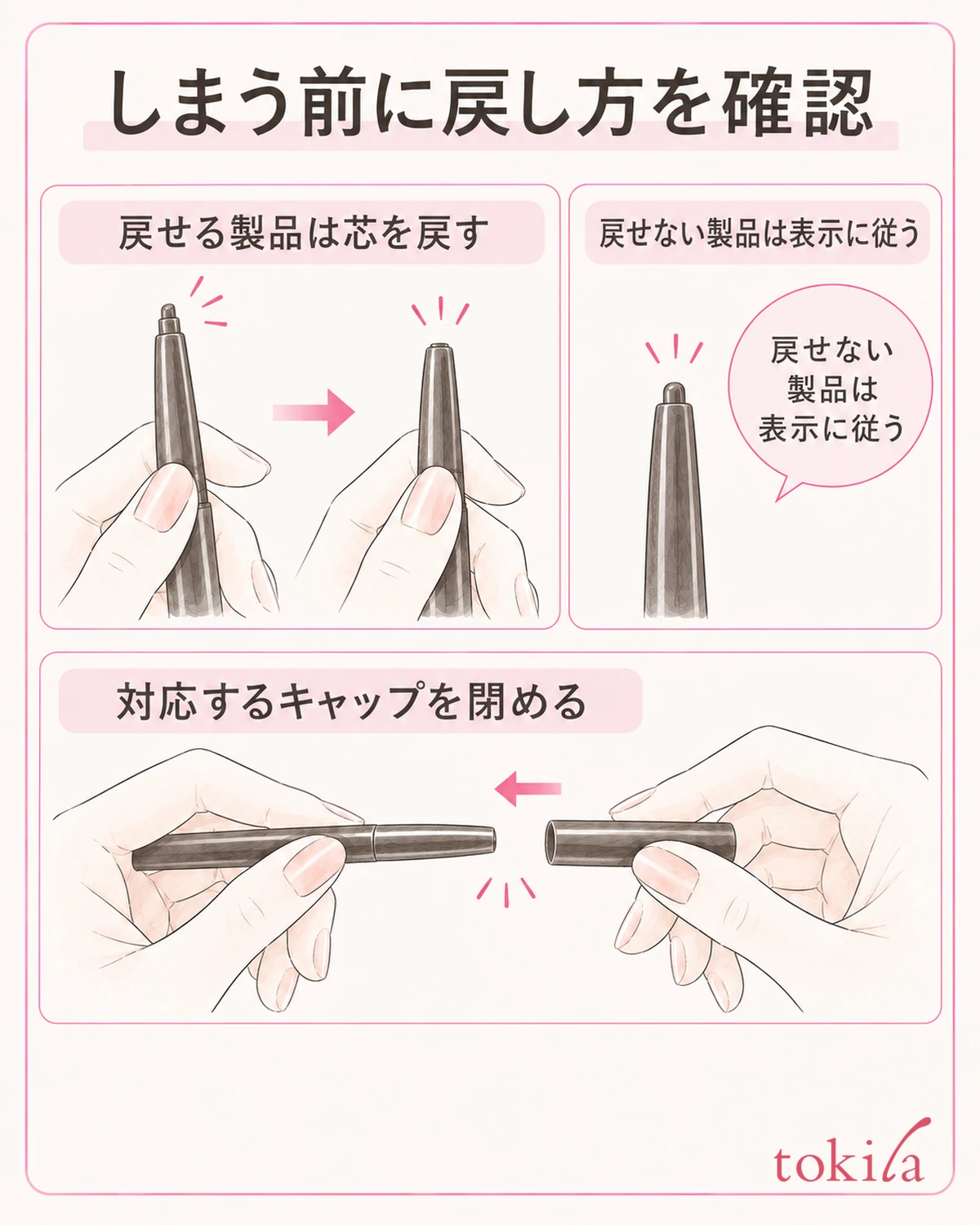
When you finish, for a product that can be retracted, wind the lead back according to the instructions and check with your eyes that it has gone back. Don't stop at "I think I turned it"; check that the tip is not left sticking out. For a product that cannot be retracted, do not force it back, and follow the instructions on storing it in the specified state.
Use the matching cap and close it in an orientation in which the tip does not hit the rim. If you feel resistance, such as the lead catching or the lid sitting up, stop before pushing it shut. Check whether the cap of another pencil, or a fragment left inside, is involved. Do not push and snap the lead to close it.
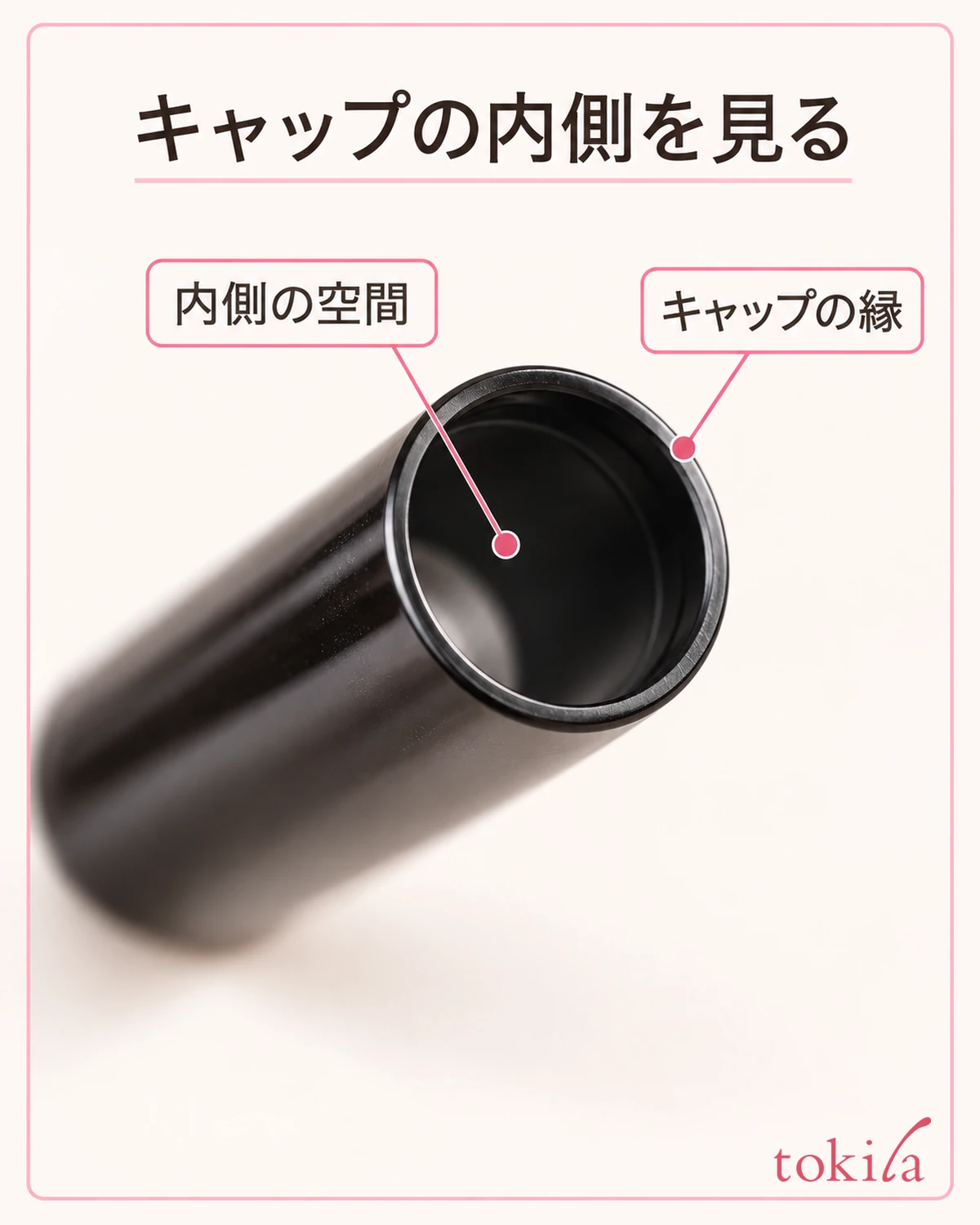
Leaving a product with a cap open can in some cases lead to the lead breaking from dryness. One idea is to set the order of closing it as soon as you finish drawing, before moving to the next tool. However, do not add water or oil as care just because it looks dry, and stay within the specified way of use.
Store it according to the cautions on the label, such as avoiding high temperatures and direct sunlight. Avoid the edge of a desk where things easily fall, and when carrying it, think about how to place it so it is less likely to take strong impacts from other tools. Don't standardize even whether the container goes horizontal or vertical; give priority to the storage conditions of the product you have.
When choosing one for carrying, don't treat being able to leave the lead extended as an advantage; check that it can be closed according to the instructions. If you easily lose the instructions when you are out, keep two points at hand: the product name and whether it can be retracted. A short memo is not a substitute for the instructions, so reread them when you buy a replacement.
Next time, keep one of the points you reviewed this time, such as "stop at the specified length," "support your hand before drawing," or "check that it has retracted before putting it away." Rather than pinning lead breakage on a single cause, if you know which to change among before use, while drawing, or when putting it away, you can stop and think before repeating the same operation.