You worked the wax in, and white streaks remain on the surface of your hair. The more you fix it by hand, the more fine specks you see. When that happens, before adding more wax to the same spot, check when and where the white showed up. Lumps right after application and powdery flakes after combing hardened hair call for checking different steps.
This article focuses on hair wax that you scoop up and use by hand, and sorts out checking the label, spreading it on your hands, distributing it through your hair, and deciding whether to redo it. It does not pin down ingredients or causes from the whiteness alone, and it treats cases where you also used other styling products, such as gel, separately. It is not about the color payoff of tinted wax, nor does it diagnose scalp symptoms.
1. Separate where the white appeared from when you noticed it

First set the container down and look in the mirror at your bangs, the sides, and the back. Check whether it is a white streak on the hair, dots left on the surface, or just a brightness caused by light. Before you move your hair, compare how it looks from the front and from the side, which makes it easier to decide where to look again.
Next, think back to when you noticed the white. If it was right after transferring the wax from your hands to your hair, check for lumps that stayed on your hands and the first section of hair you touched. If it began to show after the wax dried and set and you ran a brush through, reread the instructions about combing it again. Even if the white looks the same, the starting point is not to apply the same fix to every case.
Also recall what you used together, sorting it into wax, gel, spray, and oil. When several products are layered, it is hard to blame just one container. To test with a single product next time, jot down briefly the order you applied things and when the white appeared.
If you cannot tell whether it is coming from the scalp or from the styling product on the surface of the hair, do not decide it is dandruff or dryness from looks alone. If it comes with itching, redness, pain, or similar, stop using it instead of continuing to touch up, and follow the product's precautions. Treat styling your hair and responding to skin problems as separate matters.
When checking for reflections from the light, step back a little from your usual mirror and move your face and head comfortably. There is no need to rub your hair over and over or scrape off the white with a fingernail to check. Rather than keep touching it without knowing the cause, move on to checking what is in your hand and what the label says.
For example, if you see streaks only in the right bangs, think back to whether you touched the right side first. If fine specks appear on both sides after the wax has set, check the combing you did afterward. This distinction is not a test for determining the cause; it is for choosing the next place to check without piling on extra product.
2. Before touching your hair, spread the wax thinly on your hands

Before scooping any out, read how to use the container. Check whether it is for wet or dry hair, which area to use it on, and what the guideline amount is. Even products simply called wax differ in feel and instructions, with cream types, fiber-containing types, jelly types, and so on. Do not apply an amount you learned with a different product as is.
If the instructions say to spread it on your hands before use, make your hands clean, get them into the required state, and take the amount shown on the label as your baseline. For products where you can adjust the amount, start with a little and add more only if it is not enough. Even with the same hair length, the amount you need changes with the quantity and the area you want to finish, so avoid fixing a single scoop size for every product.
Lightly press your palms together and spread the wax thinly out to your fingertips and between your fingers. Also check that no thick lump remains in the center of your hand or collects at the base of your fingers. Opening your hands once before moving it to your hair helps you notice parts where it has not spread. The goal is not to keep rubbing hard for a long time.
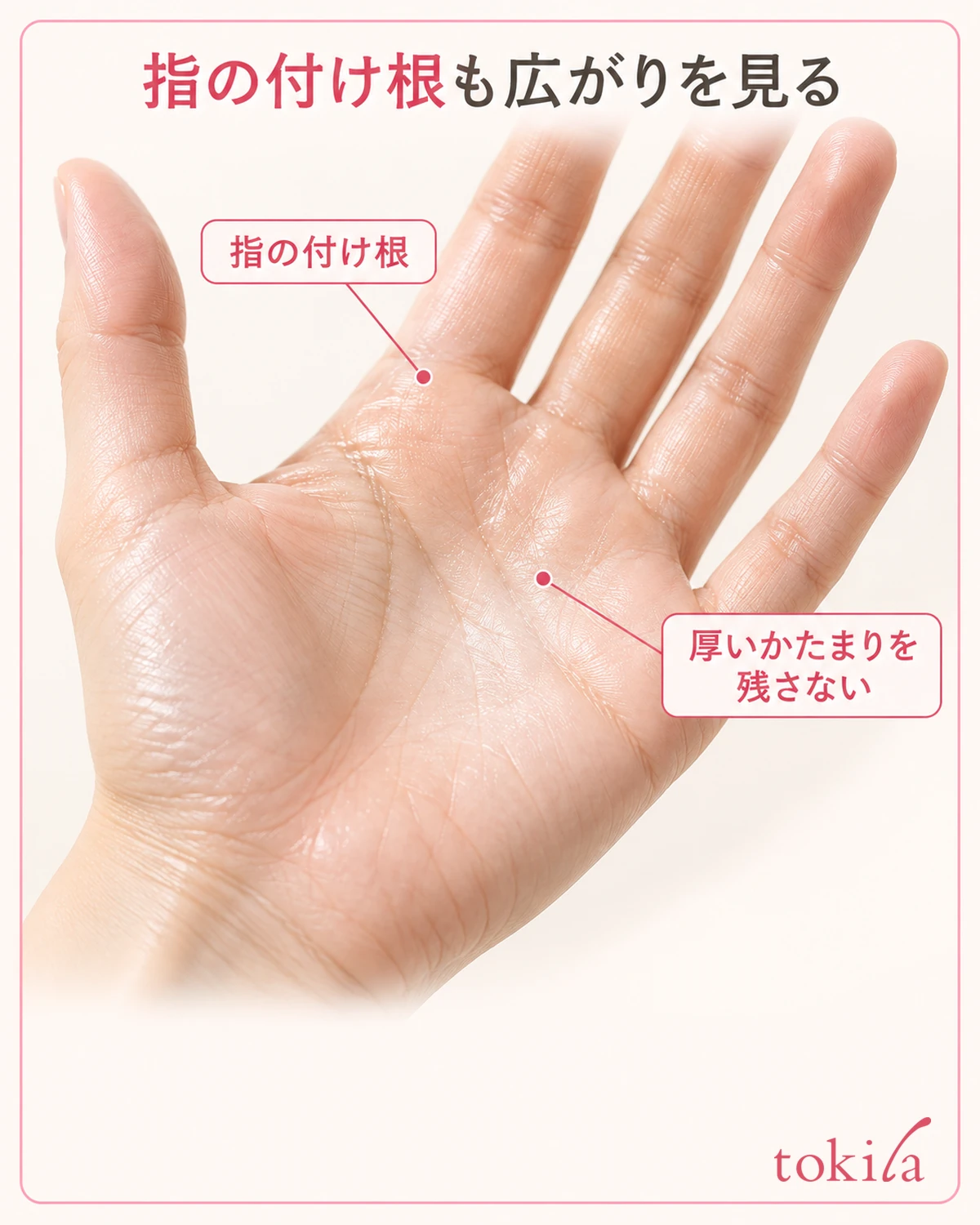
Some products instruct you to work them in until nearly transparent, but do not assume that every wax should be rubbed until it turns colorless. Do not heat it, or add water or oil, to change the product's original color or texture; choose a way of spreading that follows the label. If lumps will not break up and it is hard to handle, do not put it on your hair as is, and reconsider using it.
If you realize you took too much at once, it is also important not to use up the whole amount in your hand on your hair. Avoid putting it back into the container; deal with the leftover in a way that suits the label, then start over with the amount you need. Checking the amount and thickness on your hands makes the process easier to sort out than placing a thick layer on the first section and then spreading it over everything.
3. Do not concentrate it on the first section; divide it across the designated area

Once it is spread on your hands, check the area where you will use it in the mirror. Follow the description of the product you have: the ends of your hair for a product that creates movement in the ends, or the whole area including the inner layers for a product that you work through everything. Do not put the entire first amount only on your noticeable bangs, and do not press hair wax into the scalp.
Divide the specified area into several parts and distribute the wax without gripping the same section over and over. Take your hand away once and look in the mirror at the sides and the inner layers you have not yet touched. If you take more from the container each time you apply, the total increases even though you meant to use only a little at a time. Check what remains in your hand before moving on to the next area.
If a white lump has transferred to the surface, do not layer new wax on top of it; check whether any thick part remains on your hands. Also tell apart whether it is still at a stage where you can work it in, or whether it is already a product that holds in place. Do not try to make it invisible by force, such as pulling hard, scraping with a fingernail, or running a brush through again and again.
For a product meant for dry hair, do not judge the result while it is applied to a wet section; first get the hair into the specified state. Conversely, do not swap in a procedure that applies a product meant for towel-dried hair to dry hair. If you change the moisture in your hair and the amount of wax at the same time, it becomes hard to look back and tell which step did not suit.
After working it through all your hair, stop your hands at the place where you get the texture and cohesion you want. You do not have to use up the remaining wax in your hand on your bangs or roots. If the whiteness does not bother you when you view it from a distance from the mirror and the shape is what you need, finish there without styling further.
When you divide the area to apply to, also check the opposite side and the back so that you do not finish only the side visible in the mirror. Instead of making a rule to add the same amount to the left and right, distinguish the areas already covered from those you have not yet touched. Do not keep going back to areas that are already shaped; take your hand away and take time to look at the whole.
4. After it sets, check the instructions on combing it again

If it did not bother you right after applying but something like white powder showed up after some time, look back at what you did in between. Check the step just before you noticed it, such as running a brush or comb through, changing the shape with your fingers many times, or layering another styling product. Do not decide on the ingredient or the mechanism of the change from the look of the powder alone.
Some hardening styling products come with an instruction to avoid combing, noting that white powder may come off if you run a brush through after it dries. Follow such precautions according to that product. Do not lump everything together as "you can't comb any wax," and read the labels of any gel or spray you used together separately as well.
Some products can be restyled with water, but do not extend that operation to every wax. Only when restyling is explained, handle it within that scope. Do not assume that adding water or oil will always make the white disappear, and avoid mixing products that are used differently or pulling hardened sections of hair apart forcefully.
If the white spreads, your hair snags, or it does not improve no matter how many times you touch it, stop making partial adjustments. Check how to wash the product out, and if you have time to wash and dry your hair, choose to restyle from scratch. Removing the styling product from all of your hair is different from temporarily changing the shape of the surface.
Even when you wash it out again, do not suddenly switch to a method of repeating strong cleansing many times. Follow the labels of your usual shampoo and styling product, and allow time for rinsing and drying. If the heaviness of oil also bothers you, you can also check how to divide the areas where it was applied in how to fix hair oil that you applied too much of.
5. Review the condition of the container, and record the amount and steps for next time

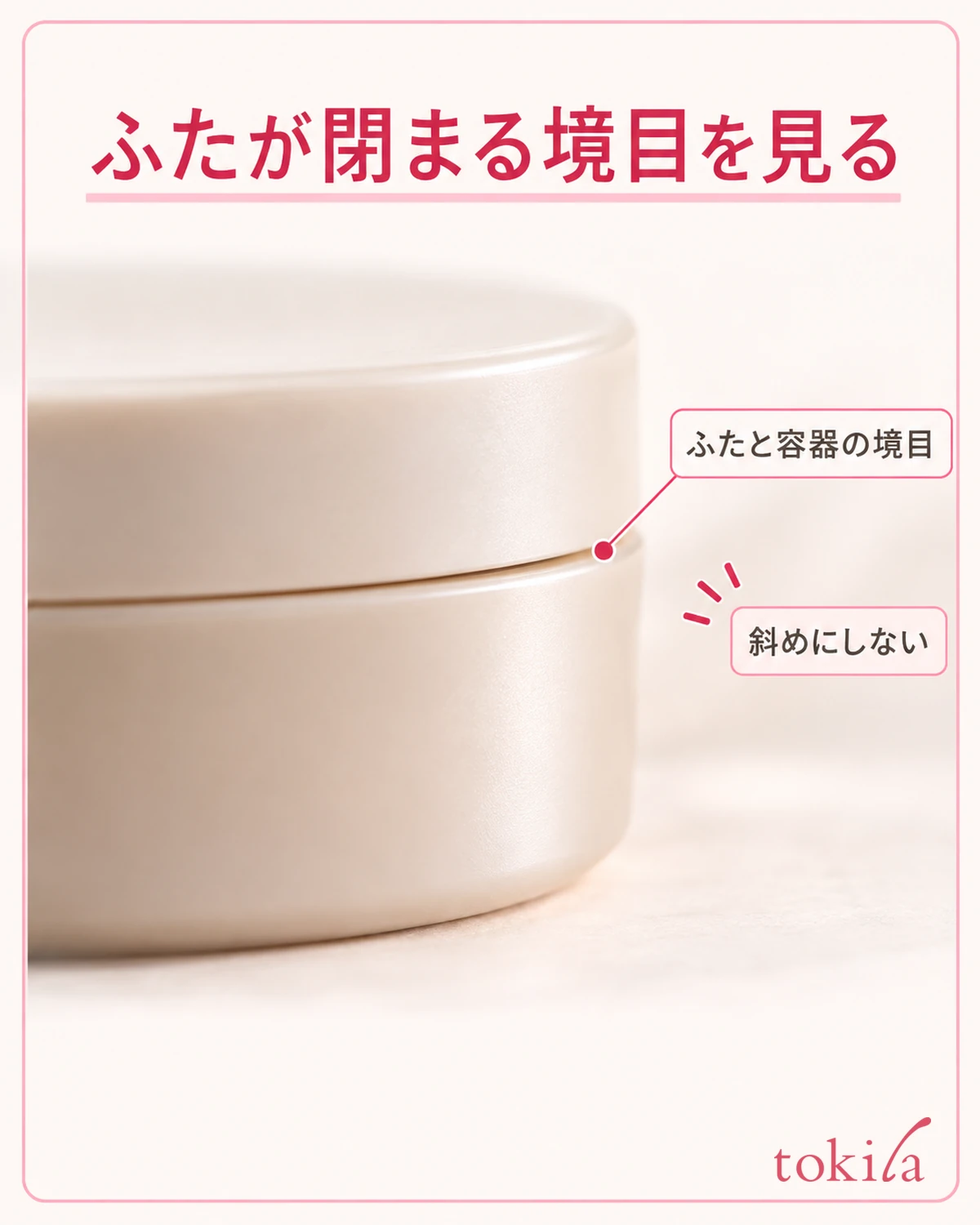
Before you use it next time, check the contents of the container as well as how you spread it on your hands. Separate out any changes you notice, such as contents that are extremely hard compared with before, a color or smell different from usual, or a lid that was not closed properly. You do not need to conclude that the contents have gone bad solely because it shows up white in your hair.
Do not try to restore contents that have dried out and hardened by adding water or oil yourself or by applying heat. If the contents are different from the original state and hard to use, hold off on using them and check the product's handling instructions. When closing the lid or container, do not force deposits around the opening back inside; handle them in a way that suits the instructions.
After use, close the lid firmly and choose a storage place that suits the container's precautions. Instead of casually making the bathroom, a windowsill, or the area near a heater its regular spot, check the conditions written about temperature, humidity, and direct sunlight. We do not promise that fixing storage and the amount in your hand all at once will always solve the problem.
For your review, record the place and the time as a pair, such as "white streaks right after first applying to the bangs" or "fine specks visible after running a comb through once it set." Next time, choose just one step to review among the amount you take in your hand, how you distribute it through your hair, and what you do after it sets. You do not need to deliberately reproduce improper use for the sake of comparison.
On a day when you change where you use it, a day when you add another styling product, or after a haircut, check the label and the finish again instead of unconditionally repeating the same amount as before. It is enough to note the product name and the date yourself. Rather than inventing detailed numbers, record in a clear form which step gave you trouble.
If you want to separate the roles of styling products and care products, you can also check the roles of hair care products and how to choose them. For white wax, before adding more to cover it up, review in order what is in your hand, the area where you apply it, and how you handle it after it sets.