You want to reapply your stick sunscreen, but it reaches your cheeks and not the sides of your nose. It is clear, so you cannot tell how far you have applied it. In that case, before going back and forth over the same spot with force, check how you are holding it, the surface that touches your skin, and the area you are covering.
This article sorts out what to check before and after reapplying a solid stick-type product, for example when you are out. How far to extend the stick, where it can be used, and whether it can be used over makeup all vary by product. It is a procedure for building a way of using it that follows the label, not for judging the amount that blocks UV from glossiness or photos.
1. Before applying, read the usable areas, how far to extend the stick and the conditions for layering
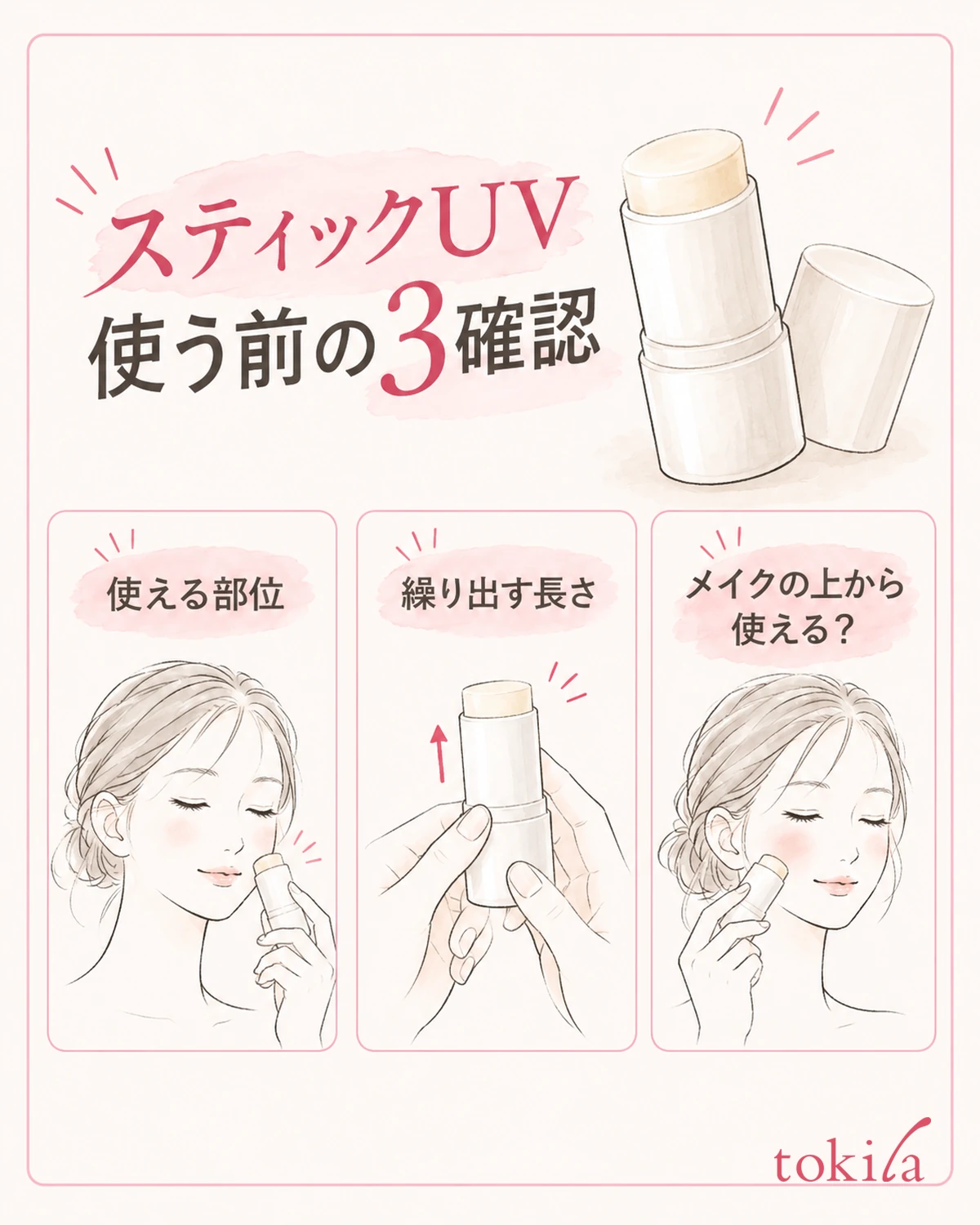
First, put the container, the outer box and any enclosed instructions within reach. What to check is where on the face or body it can be used, how far to extend it, and how to spread it. Even among stick types, the instructions are not always the same. Do not use the length you used with another product before as the guide this time.
If you want to reapply over makeup, also read whether that way of using it is described. Not every sunscreen can be swiped back and forth directly over foundation. If you are not sure of the order of application, check the instructions first, and do not start using it your own way on areas where you have layered makeup.
Adjust the length you extend the stick within the range stated for your product. Do not extend it too far on the idea that a longer stick lets you apply more at once. If the contents tilt when you hold the container, or the rotating part will not move, do not push or pull it; check the precautions for use.
Look at how to remove it at this stage, too. Think separately about whether it comes off with soap, whether you need makeup remover, and what you will use to remove it together with any makeup layered on top. If you check before you carry it, it is easier to decide what to prepare, so you do not realize only after using it that it does not match the cleanser you have.
If you save the instructions on your smartphone, record the product name together with how to use it. This is so that you do not take a single short sentence out of context and apply it to another stick. Even if you have thrown away the outer box, check instructions that match the label on the container and the product at hand before you handle it.
Even if the containers look similar, their uses differ, such as for the face, the body or specific spots. When you take it out with you, check the contents and the intended use so you do not confuse it with a stick for the lips or with colored cosmetics. Also avoid using it in a way that loses the instructions, such as decanting it into another container.
2. Manage sweat and moisture, and check the stick's surface and your skin
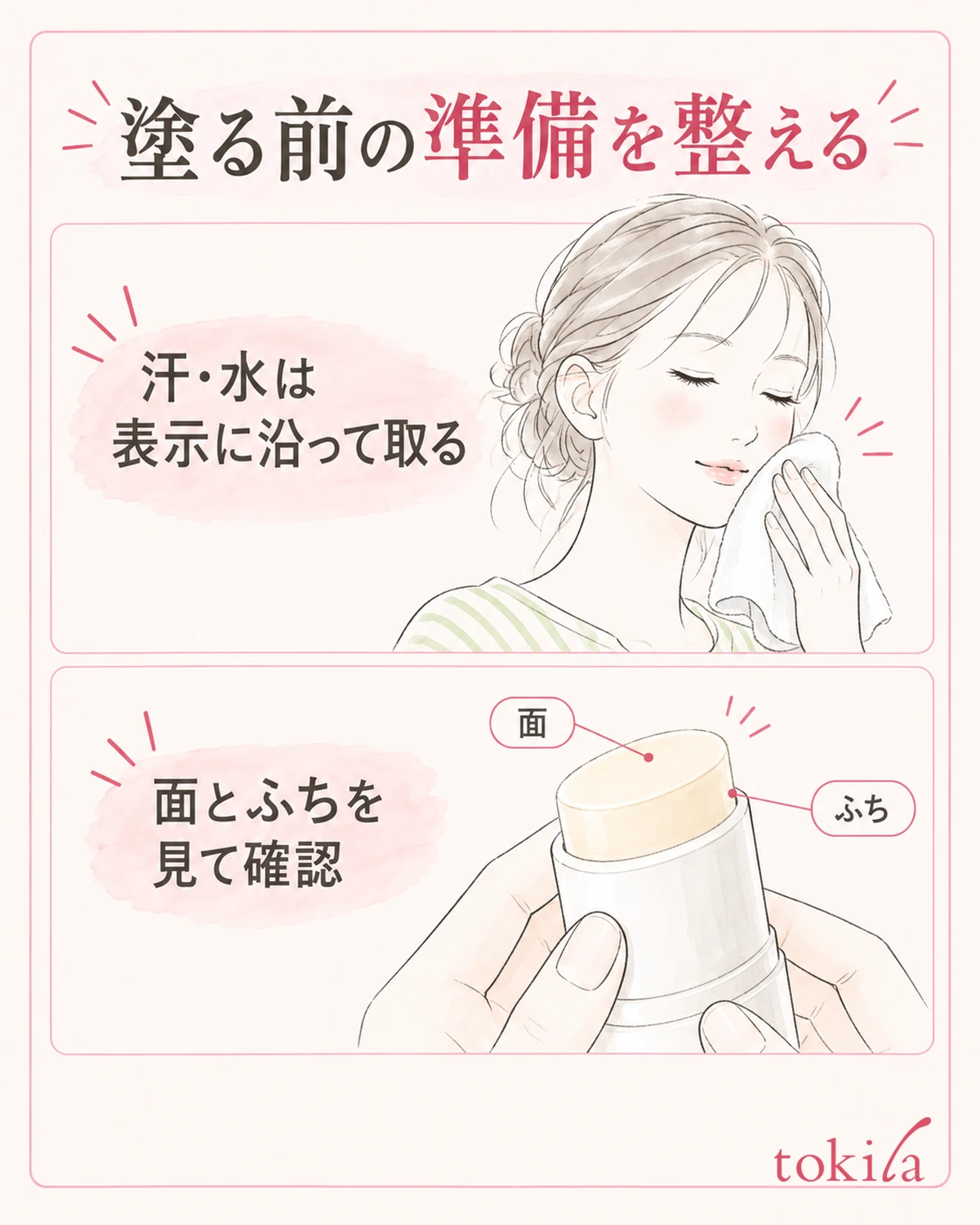
Before reapplying, look at your skin in a mirror. For products that instruct you to wipe off sweat or water that remains, remove the moisture with a clean, soft towel or the like, without rubbing or pulling at your skin. It is important not to judge from the stick's convenience alone whether you may glide it over wet skin.
Next, take off the cap and check whether hair, dust or large bits of debris are on the surface that touches your skin. Tilting the container slightly under good light lets you check the flat surface and the edge separately. Follow the product's care instructions for cleaning the surface, and do not scrape it with a nail, rinse it with water or add any other liquid.
If you see chips or large cracks on the surface, the contents wobble while you use it, or it catches on your skin, do not keep pushing it to apply. Before you add more force, check the condition of the product, and if you do not know how to use it, stop and decide to ask for advice.
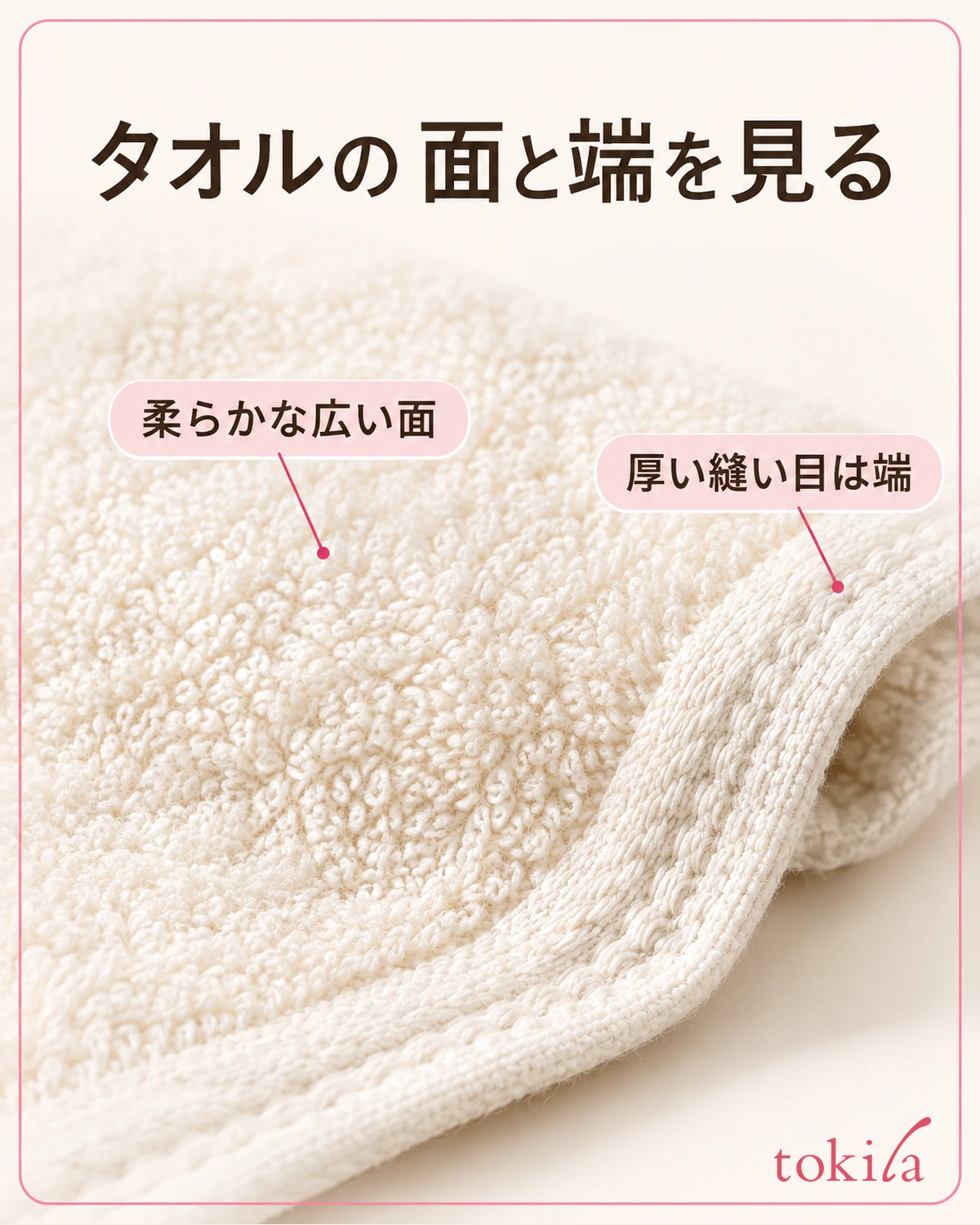
For the towel, choose a clean, soft side that touches your skin. Hold it so that you can blot moisture with a broad surface, rather than wiping repeatedly with a thick seam or hard decoration. Checking the feel of the cloth in your hand and rubbing to remove sunscreen are separate things.
Do not try to fill in areas with redness, irritation or other abnormalities by applying more times as if they were hard to cover. Stop using it in line with the precautions for use and check what response is needed. Do not decide the cause from how your skin looks alone; first think about whether it is in a condition where you can keep applying.
3. For broad areas, divide the area you press the surface onto into small sections
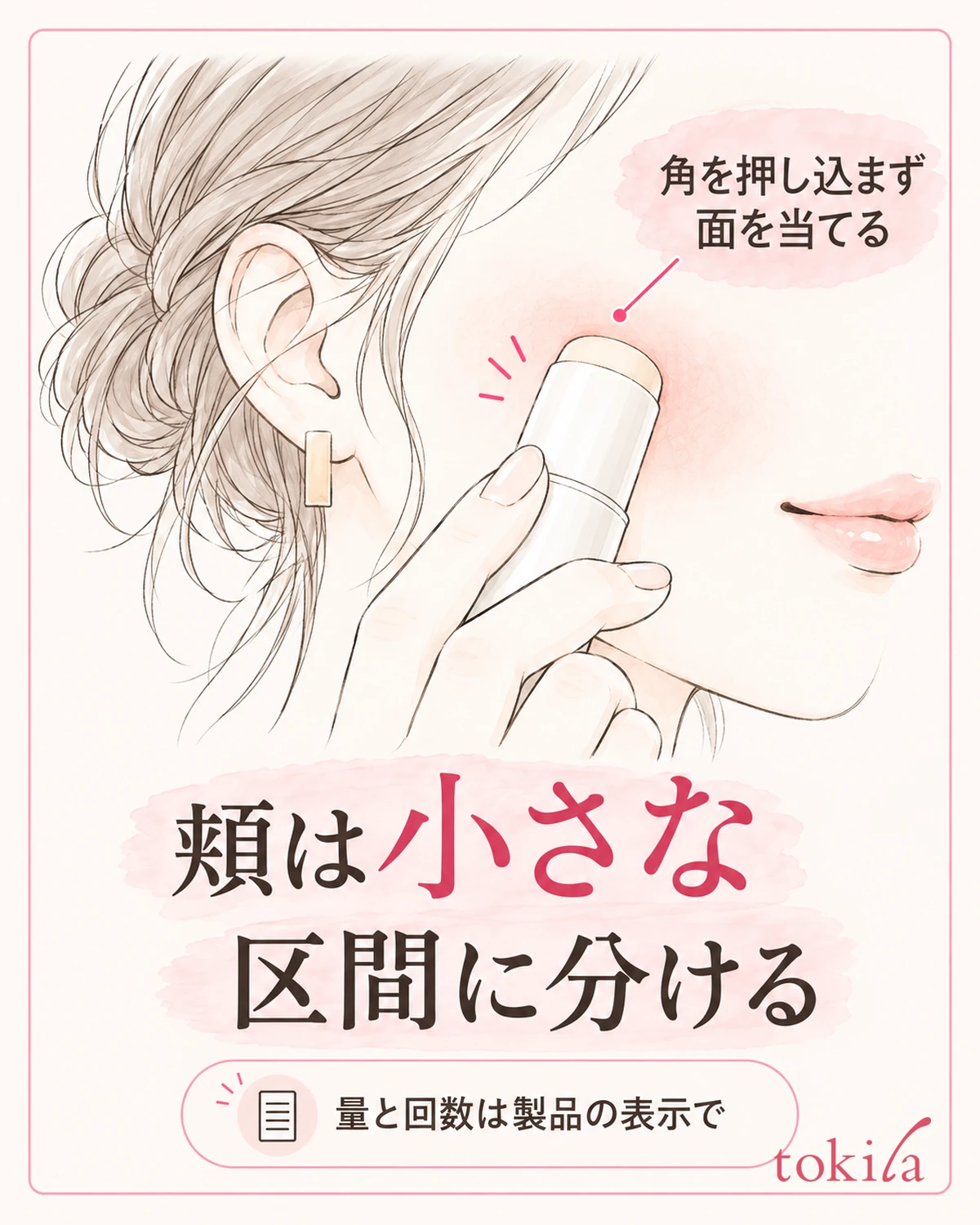
When you are ready, divide the places to apply into small sections such as the cheeks and forehead. Within the areas where it can be used, start from a place where the stick's surface sits against your skin without strain, and apply as the label says. Rather than pressing only a corner and drawing a line, check in the mirror the surface that is touching your skin.
When you readjust your grip on the container, lift it off your skin first. Do not keep pulling hard when your hand slips, or keep pushing in the same direction after reaching the edge; look at the next place to apply and set it down again. Taking a moment to fix your grip also makes it easier to keep track of which sections you have done.
Use the product's instructions as the standard for how much to apply and how many times to move it; do not fix a number of passes that applies to every stick. Do not judge that a single light pass is enough, or that you have applied the necessary amount once it looks glossy. Also keep in mind that with a clear finish, the boundary of where you applied is hard to see.
After doing one section, check the boundary before moving to the next place. Look at whether you have repeated only the center of your cheeks and left the jawline or the area near your ears untouched. However, do not extend the range to places the product says not to use it on, such as the eyes or the mucous membranes of the mouth.
Even with a product that can be used over makeup, do not try to smooth out areas where foundation has gathered by pressing on them repeatedly. If the base has shifted, separate the step of adding sunscreen from the step of fixing your makeup for now. For adjusting powder or color, also refer to the order for touching up makeup, and handle only the places you need to.
On days when it is hard to remember the order you applied in, checking from the same section in the same order each time helps keep things organized. However, remembering the order is not proof that you used a sufficient amount. Check for missed spots, and check the amount and method the product recommends, once each.
4. For places the surface does not fit, such as beside the nose, switch to the specified method
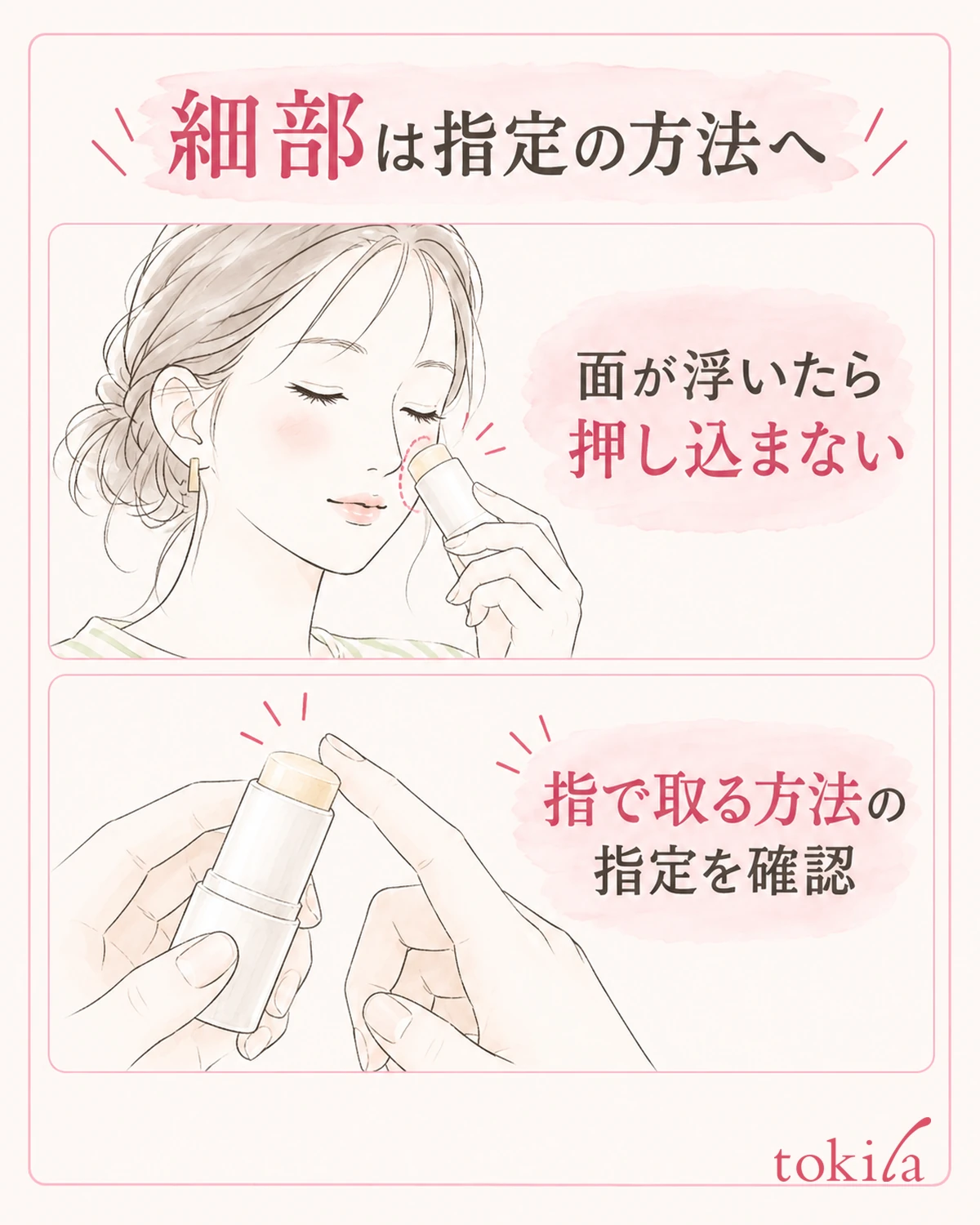
When it reaches your cheeks but not the sides of your nose, do not push in a corner of the container. On fine contours, the stick's surface may lift and touch only the surrounding area. Rather than keep moving the large surface in the same way, reread the instructions to see whether there is a method for applying to fine areas.
For a product that specifies taking some stick with your finger by stroking it and blending it in, use that method with a clean finger. Do not automatically extend that to a product whose instructions do not describe taking it with a finger. Also check the guidance on amount, and do not decide that the faint feel on your finger is enough.
When you move to fine areas, too, work within the range where applying is allowed. Do not mistake the phrase "around the eyes" for an instruction to apply it to the lash line or inside the eyes. Follow the product's cautions and handle only the range you can use without bringing it in too close.
Before using your finger, wash your hands and check that no other cosmetics or dirt remain. If you add a tool, limit yourself to methods you have confirmed can be used with the product at hand. It is important not to substitute a cotton swab or brush on the assumption that it is always suitable.
After applying to fine areas, move the mirror slightly away and check how it connects from your cheeks to around your nose. Differences in whiteness or sheen cannot tell you the level of protection, but they can be a clue to places you have not yet touched. After looking at the finish, go back to the label to check the range and amount you need.
Even if you find a place the surface does not fit, there is no need to shave the stick down to make it thinner. Rather than forcing the container against it at an angle, use the specified method for fine areas or limit yourself to the areas where it can be used. Do not assume that a shape that is easy to apply can be pushed into every contour.
5. Look back over the areas you applied, and get ready for storage and the next reapplication
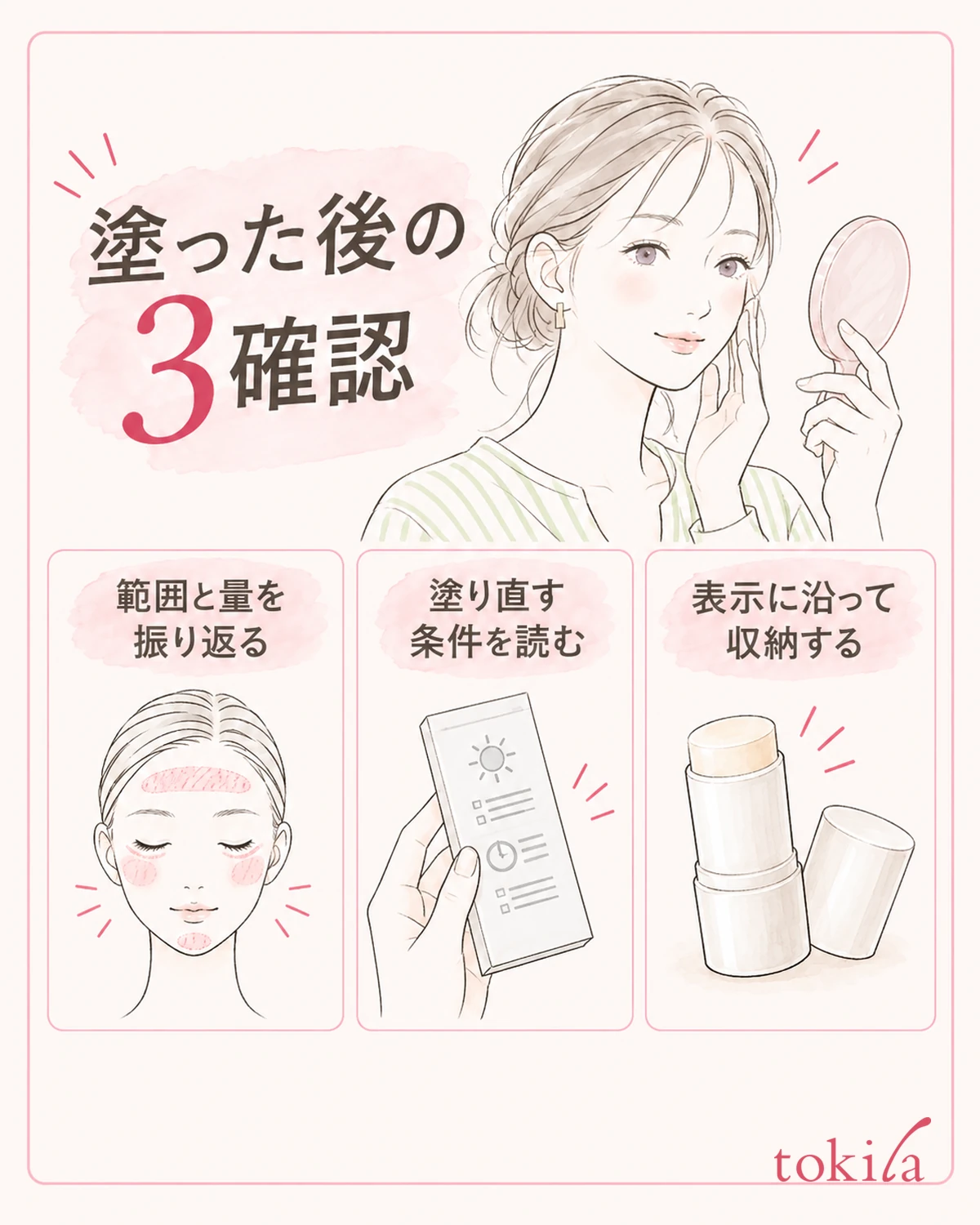
Finally, look over your whole face and the parts of your body where you applied it, and go back over where you covered, in order. Check up to the edge of the usable area, not only the center of your cheeks that is easy to see in the mirror. Even if it looks even, keep whether you used the amount stated on the label as a separate point to check.
Base the conditions that call for reapplication, such as after sweating or after wiping with a towel, on the instructions at hand. Do not assume that applying it in the morning is enough for the whole day; look back on what you do while you are out. If your skin is wet, go back to the preparation needed before you apply again.
For products that instruct you to wind the contents back down after use, do so while watching how it relates to the mouth of the container and the cap. Do not close it by pressing the contents against the inside of the cap, or push in contents that will not go back with your finger. If you do not know how to close it, do not force it into storage; check the product's instructions.
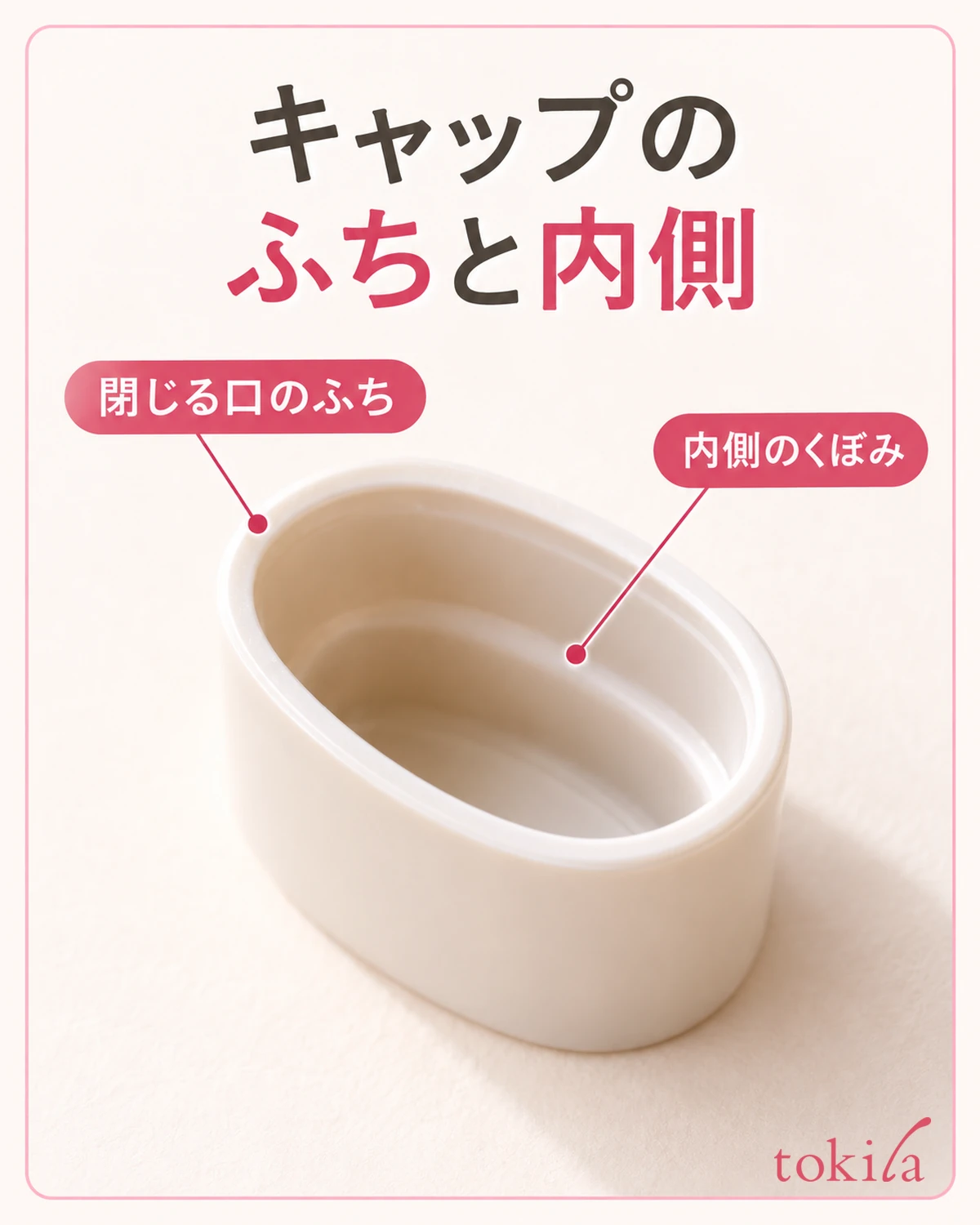
For the cap, look at the rim of the mouth and the inside, and check that no large debris is on the part that closes. Tidy it up according to the care label, and after closing it, follow the precautions for storage. Before leaving it somewhere like inside a car or in direct sunlight, also read the conditions on temperature and where to keep it.
A note for next time can be one specific thing, such as "the surface lifted at the nose, so read the method for fine areas" or "bring a cloth to blot sweat." Connect the place where you found it hard to apply with what to prepare next. Make the most of the stick's shape, and reapply with the amount, the area and each product's conditions in line.
Also adjust how you spend time in the sun. Do not assume sunscreen alone can fully block UV; combine it with a hat, a parasol, and shade. If preparing to reapply is difficult, consider choosing where you move and ways to avoid the sun as options, too.