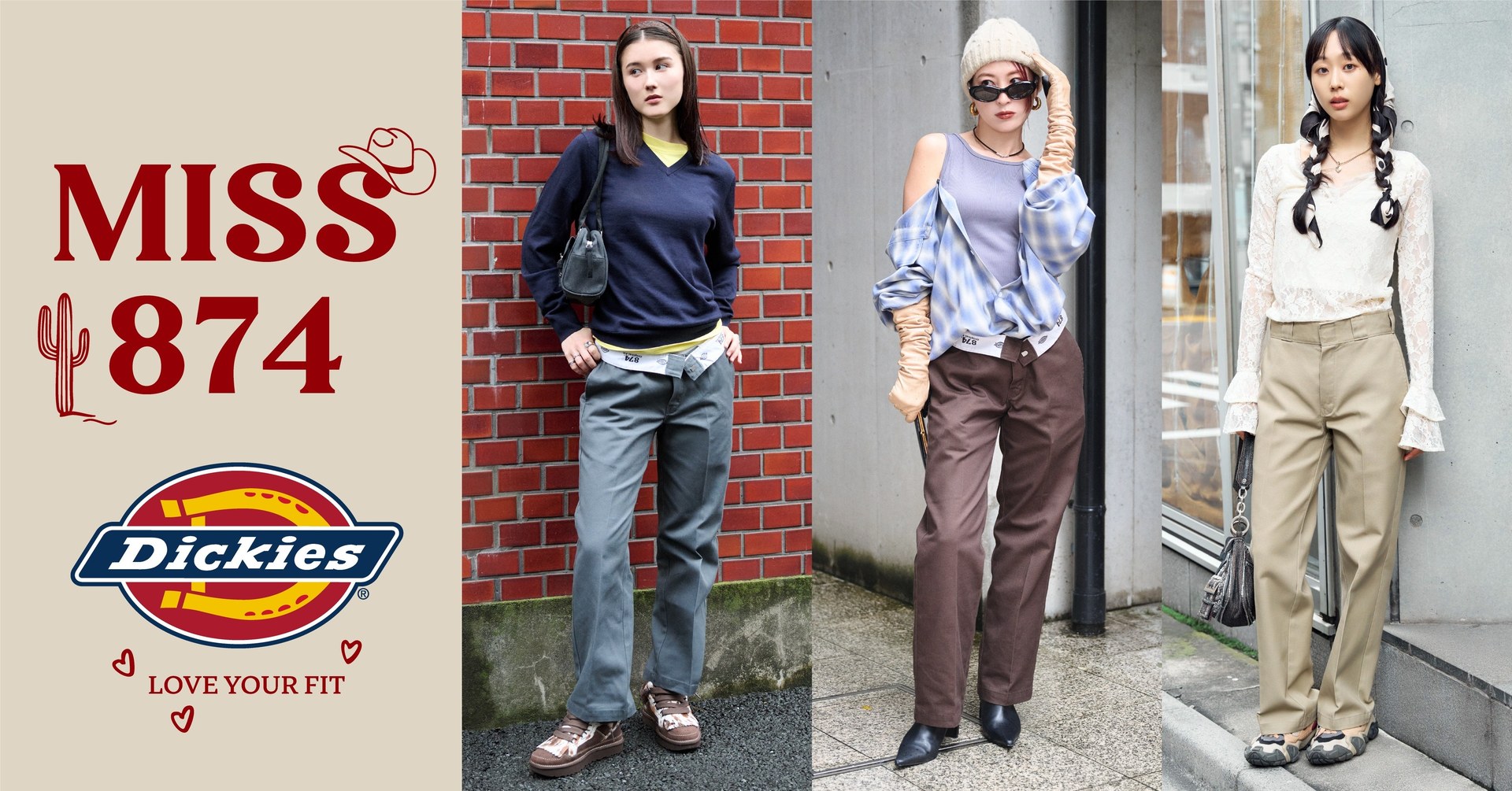
Folded your trouser hems and one leg looks thicker, only the area by the side seam bulges, or the fold comes undone when you walk? Before folding it over once more, take a look all the way around the hem. If you check the fold width and number of folds, the thickness of the fabric, and the length when worn separately, it becomes easier to find what to undo.
Here I explain a simple roll-up in which the hem is folded outward. It is not a method that involves cutting or sewing, but a way to try out a shape to suit the clothes and shoes you wear that day. Hems with zippers, elastic, decorations, or fixed cuffs may not be handled in the same way. Look at how your trousers are made and start with ones that fold easily.
1. Look at the inside of the hem and the seams to see whether it can be folded
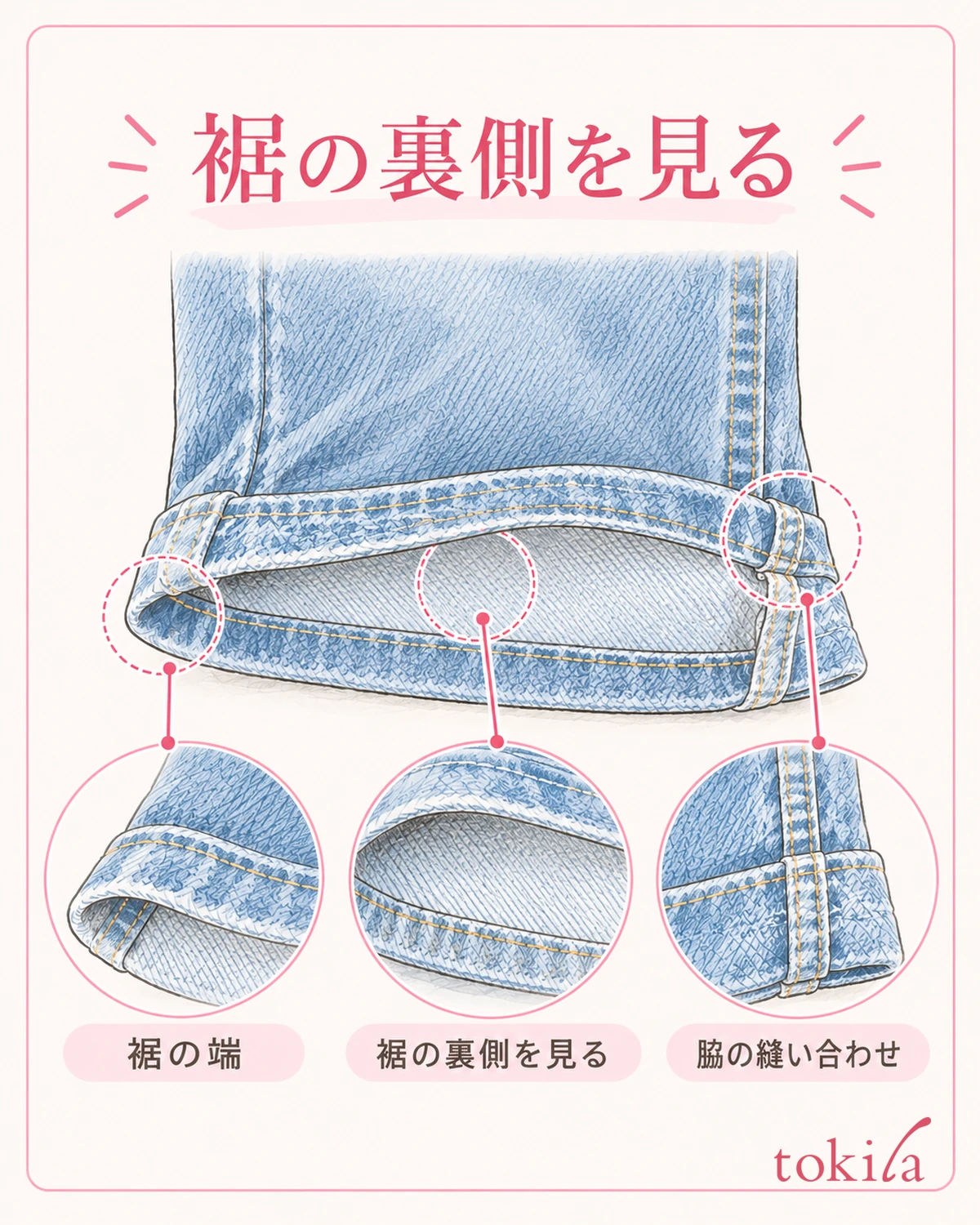
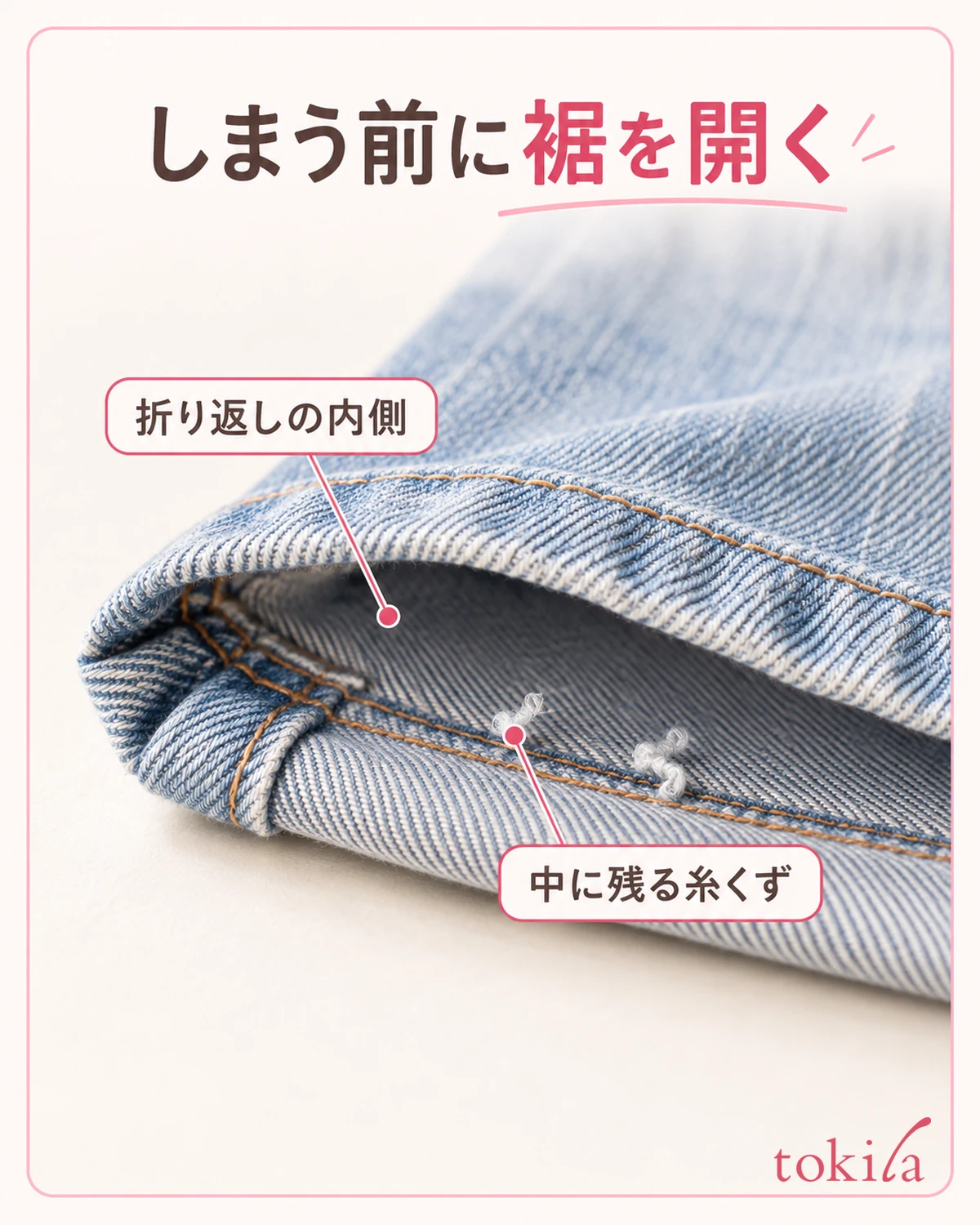
First take the trousers off, lay them on a flat surface, and look at the outside and inside of the hem. Check how thick the sewn-in edge is, whether fabric overlaps at the seams on both sides, and whether there is a separate lining. What you want to see is not only the color, but how many layers of fabric will stack up when folded.
Lay the left and right hems facing the same direction and trace the inner and outer seams. If one hem is twisted and overlapping, the heights will look different even before you fold. Do not pull the fabric hard to change its shape; first return it to a direction where it lies naturally. There is no need to force the differences in the original sewing to match.
If the hem has a slit, buttons, a zipper, or a drawstring, check where they are too. Methods such as rolling a fastener up along with the fabric, pulling a drawstring in, or removing a fixed decoration should be considered separately from this basic fold. Do not take parts apart or unpick stitching in order to fold.
The inside may differ from the outside in color or texture. Turn it back a little and check whether the inside is close to the outer fabric, or whether a lighter side or the seam allowance stands out. Do not treat the color in a photo as the right answer; judge by the side that actually shows on your own fabric.
With trousers whose lining moves separately from the outer fabric, you may roll the lining up with it even if you meant to turn only the outside. Look at how the two fabrics connect at the hem opening. A hem that is originally stitched in two layers should be treated as a finished construction, so do not try to remake its crease.
If the surface is damaged, the seams are fraying, or it pulls tight when you try to fold, do not pull that spot any further. Rolling up does not create the same shape on every fabric. Keep the option of wearing them unfolded, and try the next width.
2. Fold one leg just once and match the width front to back
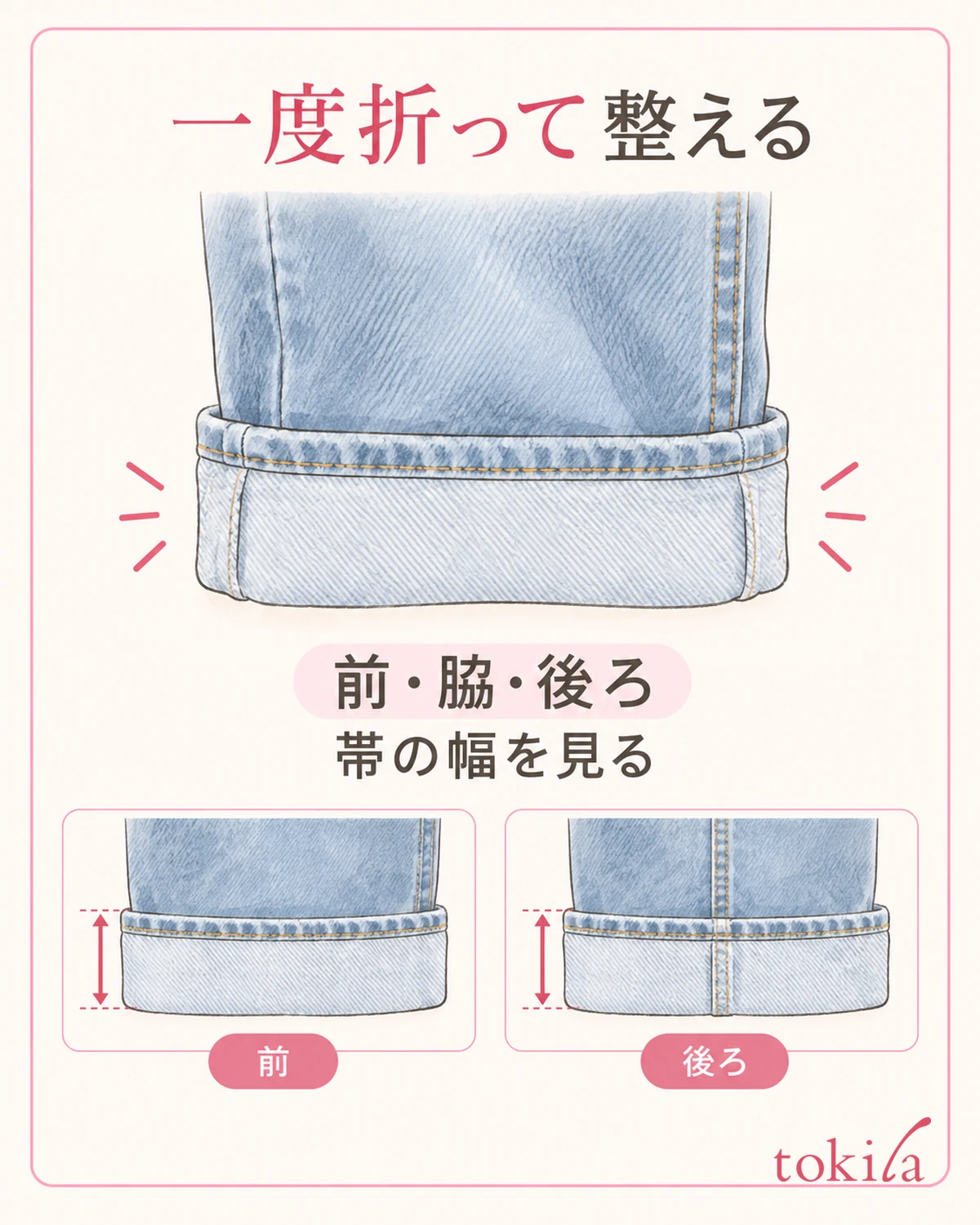
At first, fold the edge of the hem outward just once on one leg only. Rather than rolling it many times right away, start by making a single band all the way around that shows the inside; this lets you check the change in thickness and length. There is no centimeter measurement that is right for all trousers. First choose a width you can form comfortably by hand.
Put your thumb inside the hem and the other fingers on the outside, and turn the fabric a little at a time while holding it as if sandwiching it. Rather than lifting only one side and tightening around the ankle, move from place to place, front, side, and back, to shape the full circle. Check the back, which is hard to see when you bend forward while wearing them, with the trousers off.
Look at the space between the top edge of the folded band and the fold below it. If the front is narrow but the back is thick, or the area at the seam is slanted, open that section once and fold it again. Do not match it by only pulling the top edge up; check that the edge of the hem itself is turned over to the same width.
Where there is a side seam, the fabric may overlap and look thick. Press lightly with the pad of your finger and look closely at the place where the seam allowance is folded in. Do not pull to thin out only that spot; check that it connects with the width of the band at the front and back. Fixing it by ironing is not added here.
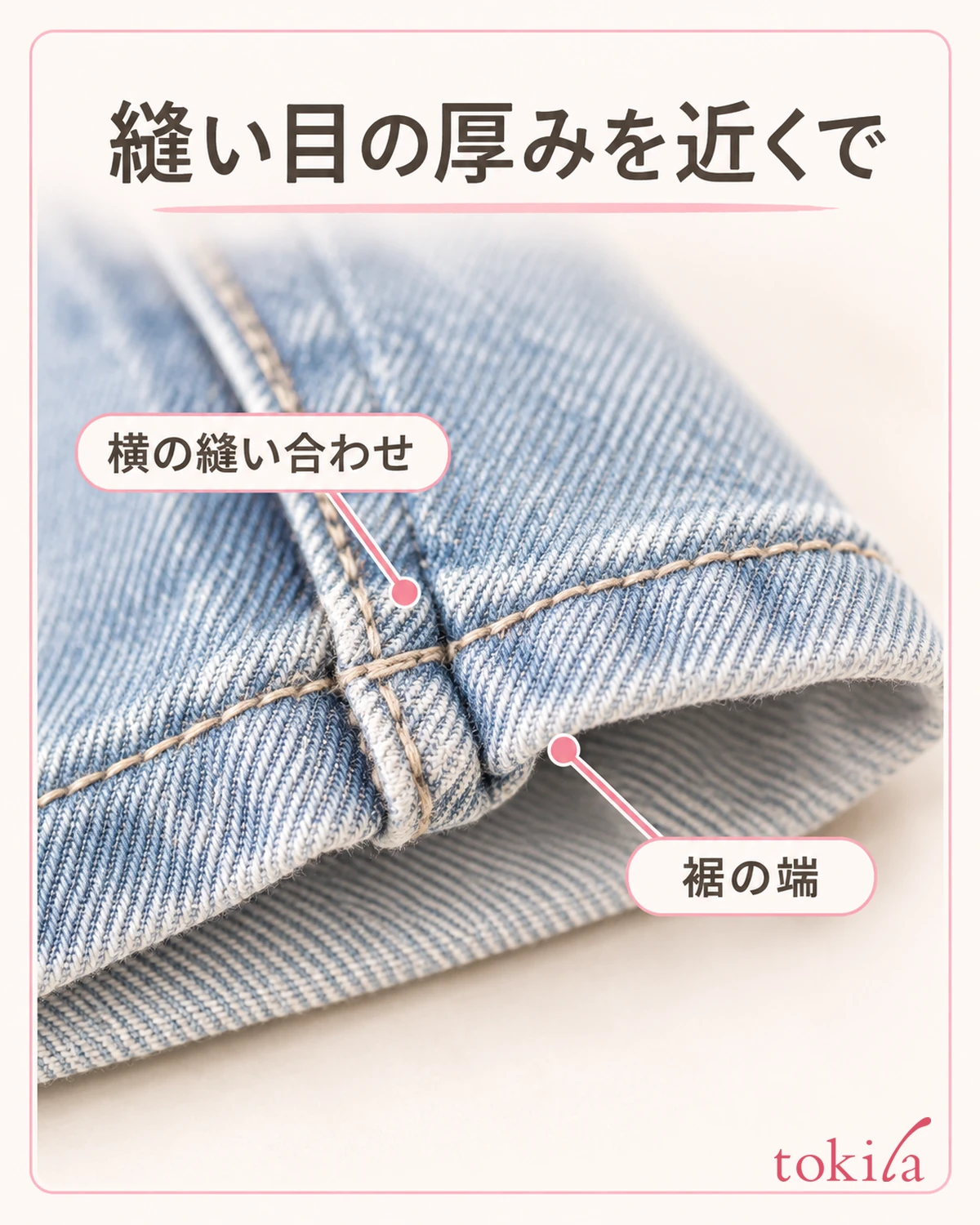
Also check whether the shape all the way around holds when you let go. If it all comes undone right away, or the folded fabric lifts a lot, try a slightly different width or go back to an unfolded shape. Adding more folds does not always make it stable, so before increasing the number, remember how the current single fold looks.
If it is hard to compare widths, with the trousers off, hold a soft tape measure at the height of the band and look at the front and back in the same direction. The purpose is not to stretch the fabric to fit a number, but to confirm differences that are hard to see by eye. When you are done, remove the tool, put the trousers on, and decide at the actual length.
3. Match the other leg and compare both sides under the same conditions
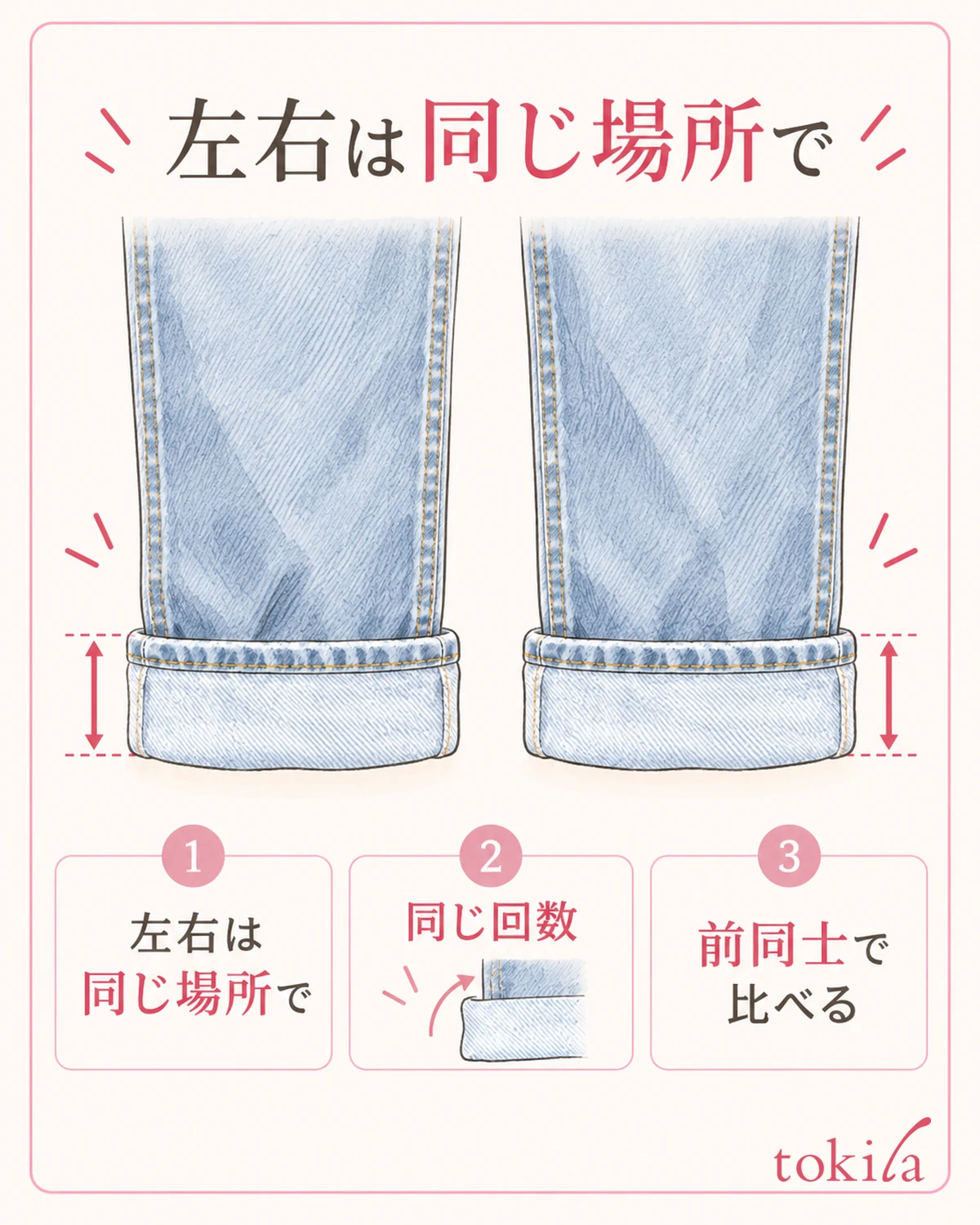
Once the shape of one leg is settled, fold the other with the same number of folds. Compare the width by the height of the band visible from the outside at the same place. Rather than comparing different places, such as the front on the right and the side seam on the left, check front against front, side against side, and back against back in turn, and the section to fix becomes clear.
When comparing them lying flat, stretch out both legs and smooth out any twists first. If you line them up by pulling only the bottom edge of the hem, the fabric above can be left slack. Move your eyes from around the knee down to the hem and check whether a large wrinkle has formed on only one side.
Next, put the trousers on and set the waist position as you usually do. If only one side of the hips sits lower, the height at your feet can look different even when the hem widths are the same. Before reaching for the hem, set the waist position and how your legs stand, then look in the mirror.
Use a mirror that shows down to your feet, and stand with both feet side by side without strain. Rather than a pose with one knee bent, compare left and right first in your usual standing posture. Because bodies are not perfectly symmetrical and trousers have their own shape, there is no need to roll up one leg a lot just to make the heights in the mirror exactly the same.
If the bands on both sides match but one leg still feels longer, review the length before folding as well. Before changing the number of folds on each side, open both once and check the original hem and the waist position. Separating what your clothes were actually off by is the shortcut to adjusting.
When checking with both legs overlapped, also look at them side by side, without crushing one fold under the other. If they match only when overlapped and the band looks slanted when worn, open that leg once and fold it again starting from the position of the side seam. Keep the conditions of checking the same, including the tilt of the mirror.
4. Put on your shoes and check the length after sitting and after walking
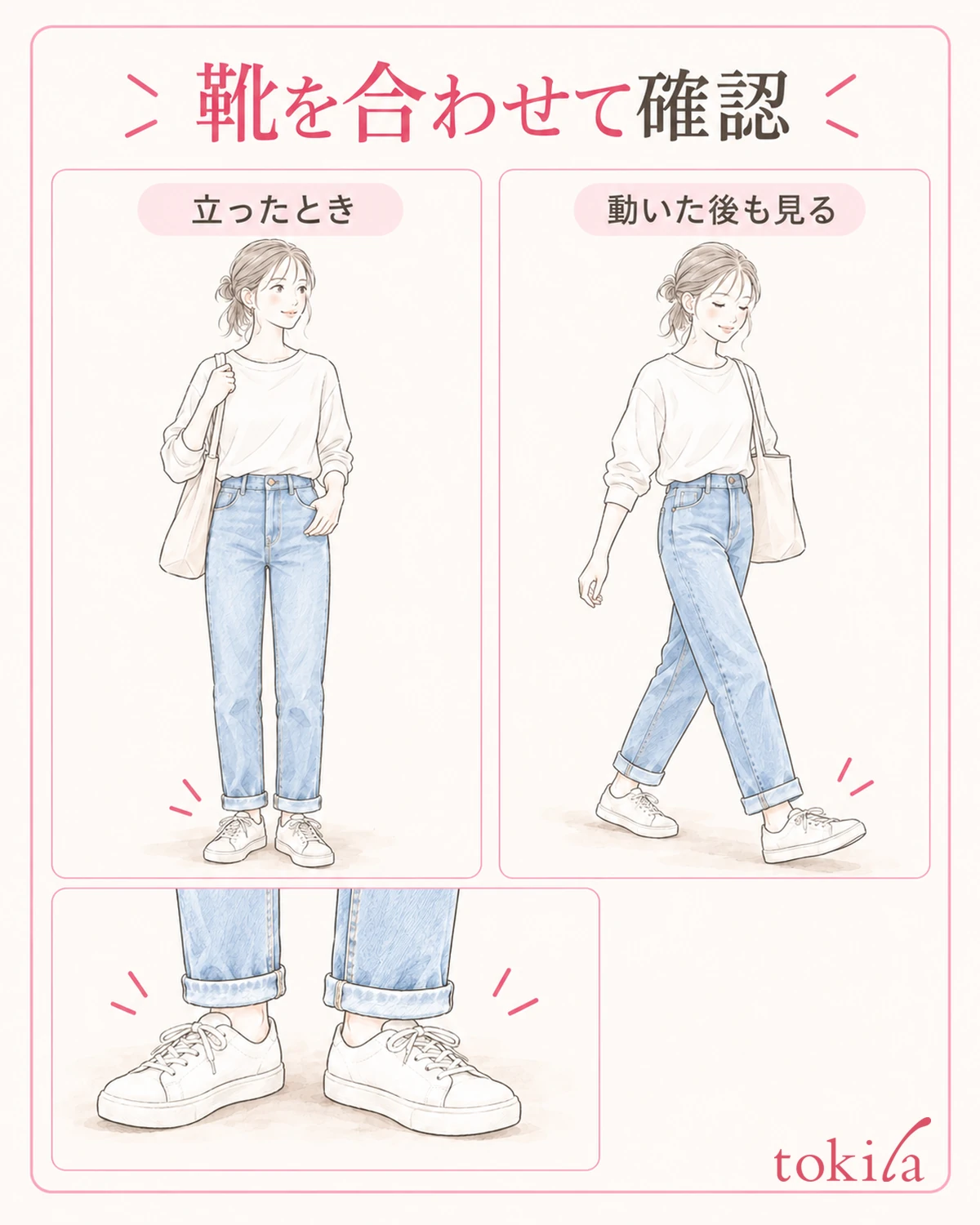
Do not decide by looking only at the hem; put on the shoes and socks you will wear that day and look at your whole outfit. Folding adds the inside of the trousers to your feet and changes how much sock shows. First, in the same shoes and the same standing position, compare the unfolded state with the once-folded state and choose the look you prefer.
If your feet feel heavy, try one of these: make the band a little narrower, reduce the number of folds, or go back to not folding. On days when you want to show the inside, you can compare a wider band, but look at both the shorter length and the larger area of fabric. Do not decide that "narrower always suits you better."
Check whether the hem bunches up heavily on top of your shoes, and whether the fabric at the heel is caught between the floor or the sole. It may look just right from the front while the fabric at the back hangs low. Do not judge only from a photo with your foot raised; check the back with both feet flat on the floor in the mirror.
Walk a little indoors, sit on a chair, then stand up and look at the hem again. When you sit, the amount of sock that shows changes, and after walking, part of the fold may come back. Do not assume it will stay fixed in the same position in every situation; check the shape after actual movement.
If the color of your socks bothers you, see also how to compare the colors of shoes, bottoms, and socks. If you decide the trouser length first and then compare colors, it is easier not to confuse the difference in color itself with the difference from the larger visible area.
On days you change shoes, the same width as before may not give the right length. If the instep height or the opening of the shoe changes, the place where the fabric touches also changes. Rather than settling the shorter length too early, look at your feet and then your whole outfit with today's combination, and you can judge without refolding the hem again and again.
5. If it bulges or comes undone, open it once before folding it over more
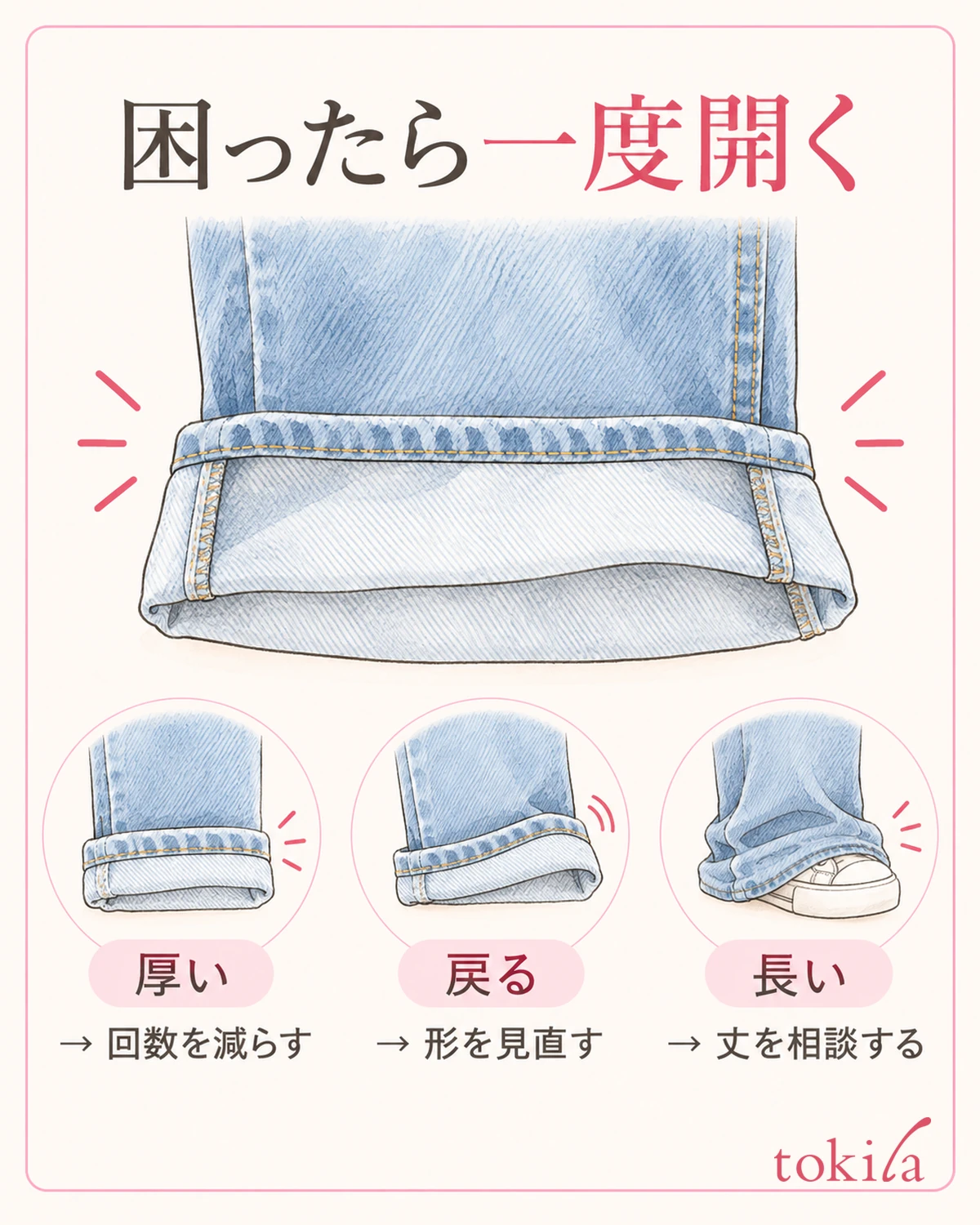
If only the side bulges a lot, check the seam allowance there and the number of overlapping layers of fabric. Rather than pressing only the side hard without changing the width at the front, open it once and try folding it again to the same width all the way around. If the thickness still bothers you, reduce the number of folds or choose to leave it unfolded.
If it comes undone no matter how many times you fix it, do not try to solve it only by rolling the folded part tighter. Check what is happening: whether the fabric is thin and hard to keep in shape, or the hem opening is narrow and the overlap pulls tight. Do not add a rubber band to hold it and squeeze your leg, or fix it with whatever glue is at hand.
If one fold is too long and stacking folds makes it thick, review the length of those trousers and the combination with today's shoes. If they are so long that they touch the floor every time, there is the option of asking about adjusting the length, apart from the temporary trick of folding. Before cutting, decide the waist position you will actually wear them at and the shoes you want to match, and check the finished length.
If you want the same shape next time, make a simple note of the number of folds, the band width, and the shoes you wore. When taking photos, keep both a shot of just your feet and a full-body shot, and avoid comparing only photos with one leg bent. The numbers are a record for reproducing your own clothes, not the right answer for other fabrics or other trousers.
After taking them off, open the fold, check that nothing has gotten into the inside or the seams, and care for them according to the garment label. The next time you wear them, do not just trace the previous crease; check the length with that day's shoes again. You can decide in this order: look at the inside, fold all the way around, compare both sides, and look after moving.