When you start using an all-in-one gel, you may wonder whether toner is needed first or what to do with your usual emulsion. Even when a product is labeled as serving several purposes, the amount, order of use, and steps before morning makeup are not necessarily the same. Start by building your routine around the instructions for that one product.
This article covers leave-on all-in-one gels used for moisturizing after cleansing. Do not substitute a regular moisturizing gel on the basis of its name alone. Check the areas of use, the functions it serves, and the amount for one application as you proceed.
1. Check the functions one product serves and its place after cleansing
First, read the container or outer box to see which functions, such as toner, emulsion, serum, or cream, it is described as providing. Rather than choosing solely by the number of functions listed, check where the product fits into your current routine to clear up uncertainty when starting.
If the directions say to use it alone after cleansing, follow that order as your starting point. Instead of beginning with all your usual toner and emulsion already layered on, lay out what you plan to use that day. Where use with other products is described, read any conditions about which goes first as well.
“All-in-one” does not mean that every use is universally replaced. Even if it has several moisturizing functions, do not assume it includes sun protection or makeup removal. Consider morning sunscreen and nighttime cleansing according to their required functions and labeling.
Treat rinse-off masks, wipe-off gels, and dedicated overnight masks separately from the everyday moisturizing routine covered here. Even if they have the same gel texture, the way you finish using them differs. Read which type you own before preparing to apply it to your face.
Also check whether it can be used both morning and night and whether it can be spread beyond the face. Being a facial product does not mean it can be applied along the lash line or to mucous membranes; follow any instructions about areas to avoid. Even for products suitable for the neck, check the application area and amount together rather than deciding to spread half the facial dose more thinly.
For the first use, keeping the outer box or instructions nearby lets you reread the amount or order partway through. When switching from another skincare product, prioritize a sequence that fits the current product's instructions over keeping the same number of steps as before.
2. Clean your hands and take one application according to the label
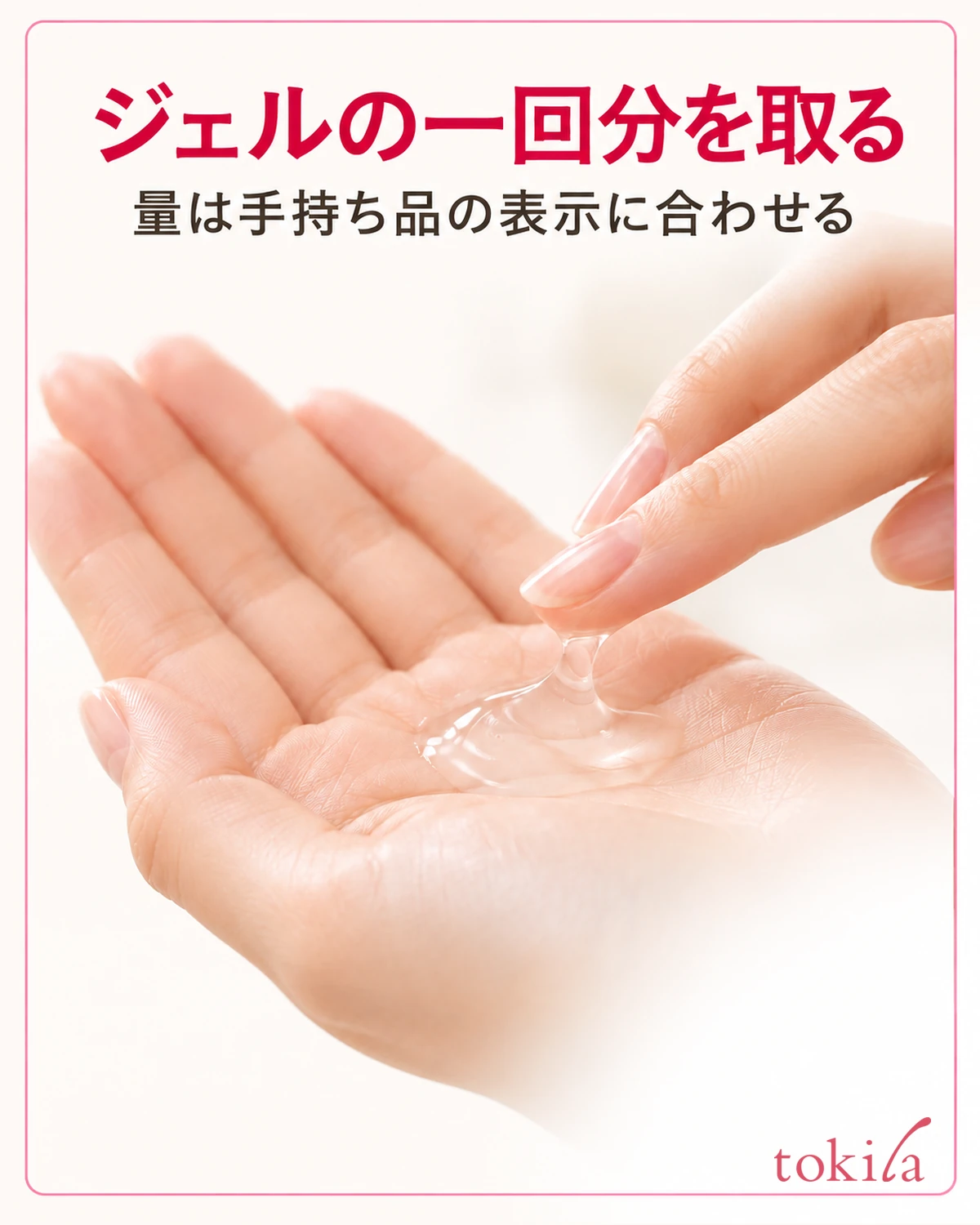
After cleansing, check for any cleanser left behind and gently press away facial moisture with a towel. Clean your hands before opening the container, too. If the product is specified for wet skin, prioritize that condition rather than carrying over the moisture conditions of another product.
Check your product's guidance for the amount per application. Products that specify pump counts are dispensed differently from those describing the size of a small amount. Rather than making everything one pump or using the mound of gel in a photograph as a measuring guide, start with the amount indicated for your own container.
For a jar, check whether to use your fingers or the supplied spatula. For a pump, position the receiving hand properly rather than placing the nozzle directly against your face. Receive the amount you need steadily before bringing it to your face. Also check the care and storage precautions for the container.
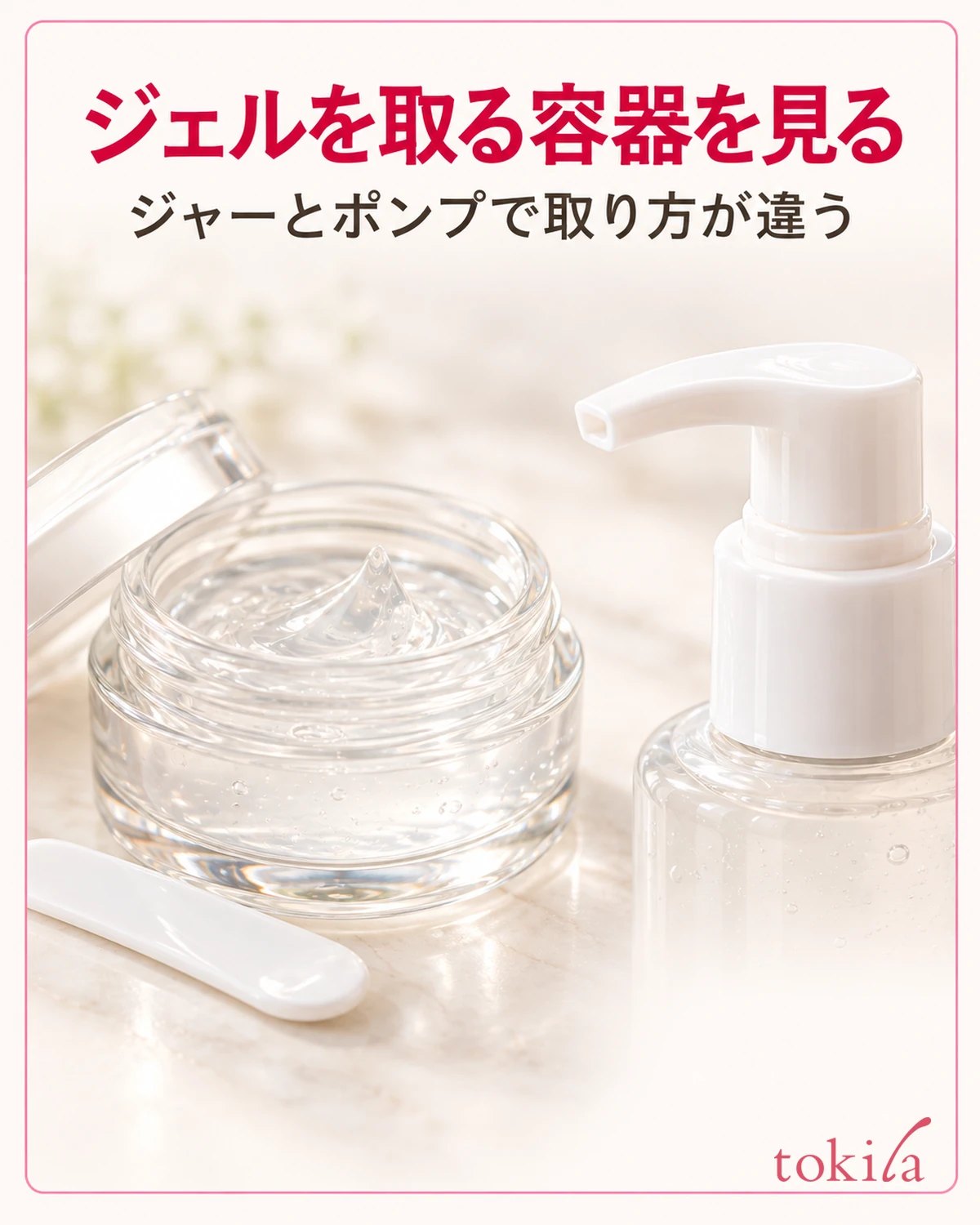
Even if too little seems difficult to spread, do not switch to stretching it out with more force. Compare the amount you initially took with the directions and decide whether more is needed. At the same time, do not equate a larger amount with more certain moisturization or aim to keep taking gel until thick clumps remain on your face.
Do not add steps such as returning dispensed gel to the container or mixing water or other cosmetics into it inside the container. Adjust the amount as a portion taken into your hand at the time of use. If the smell or condition is unusual, or the container is faulty, check the precautions before continuing to use it as is.
If the recommended amount differs between morning and night, check which amount applies now. Even if a special nighttime layering method is listed, it does not have to become your normal morning amount. Separating regular use from additional applications makes the decision easier.
3. Place it in separate spots on your face and spread gently without rubbing
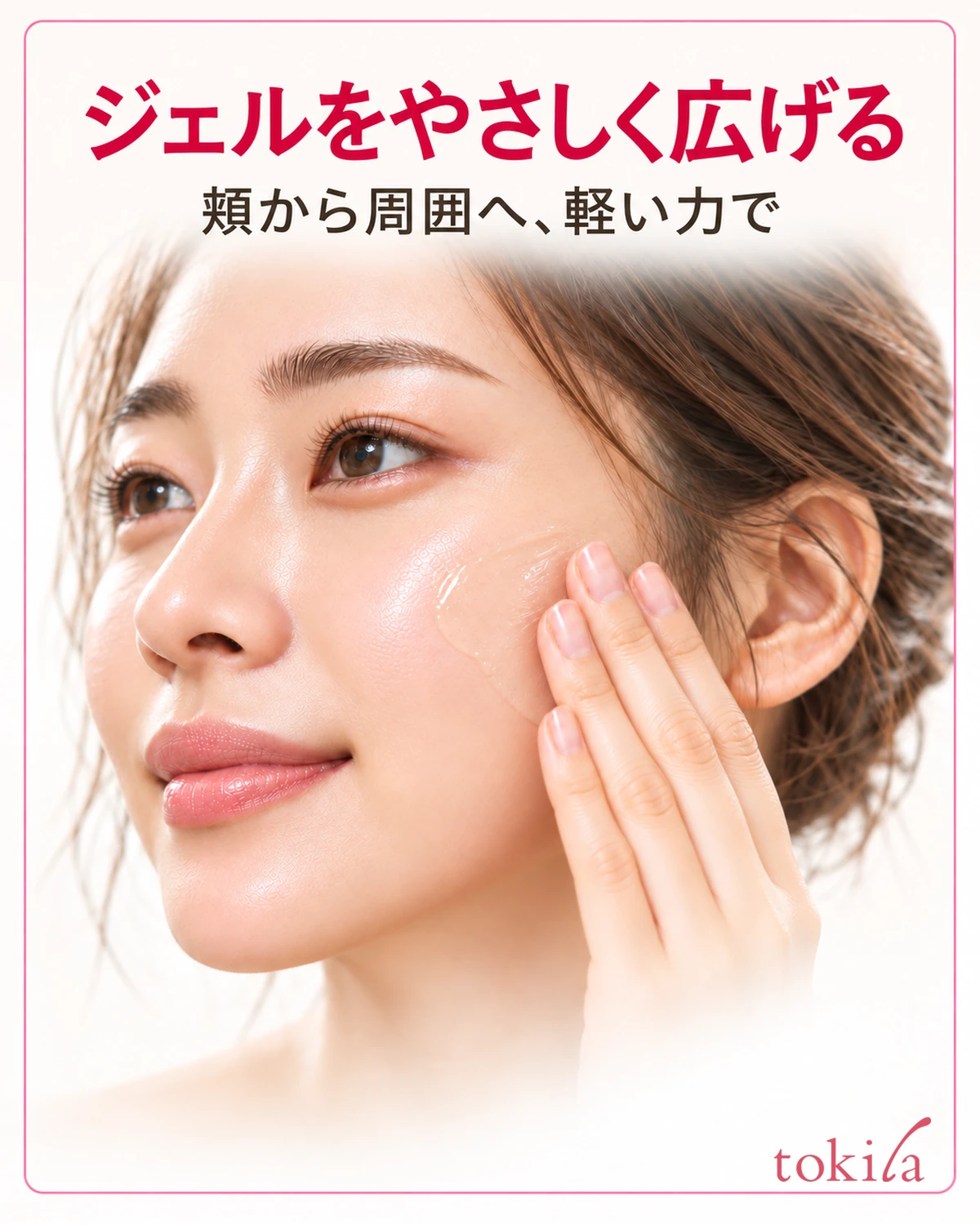
Place portions of the gel on your face according to the product's instructions. If specified for both cheeks, forehead, nose, and chin, check those positions before spreading lightly. Do not assume more dots are better; treat this as a way to divide one facial application.
Gently spread it from the broad areas of the cheeks toward the surrounding areas using the pads of your fingers. Avoid an angle that brings your nails against the skin or pressure that pulls the skin sideways, and do not repeatedly rub the same spot. Near the eyes, stay within the areas described in the product's instructions.
After spreading it over your cheeks, check the edges of your face, too. The hairline, area in front of the ears, and jawline can be obscured by your hair or hand position. Check the boundaries in a mirror for clumps left behind or areas missed within the intended application area. Do not finish by wiping gel into your hair.
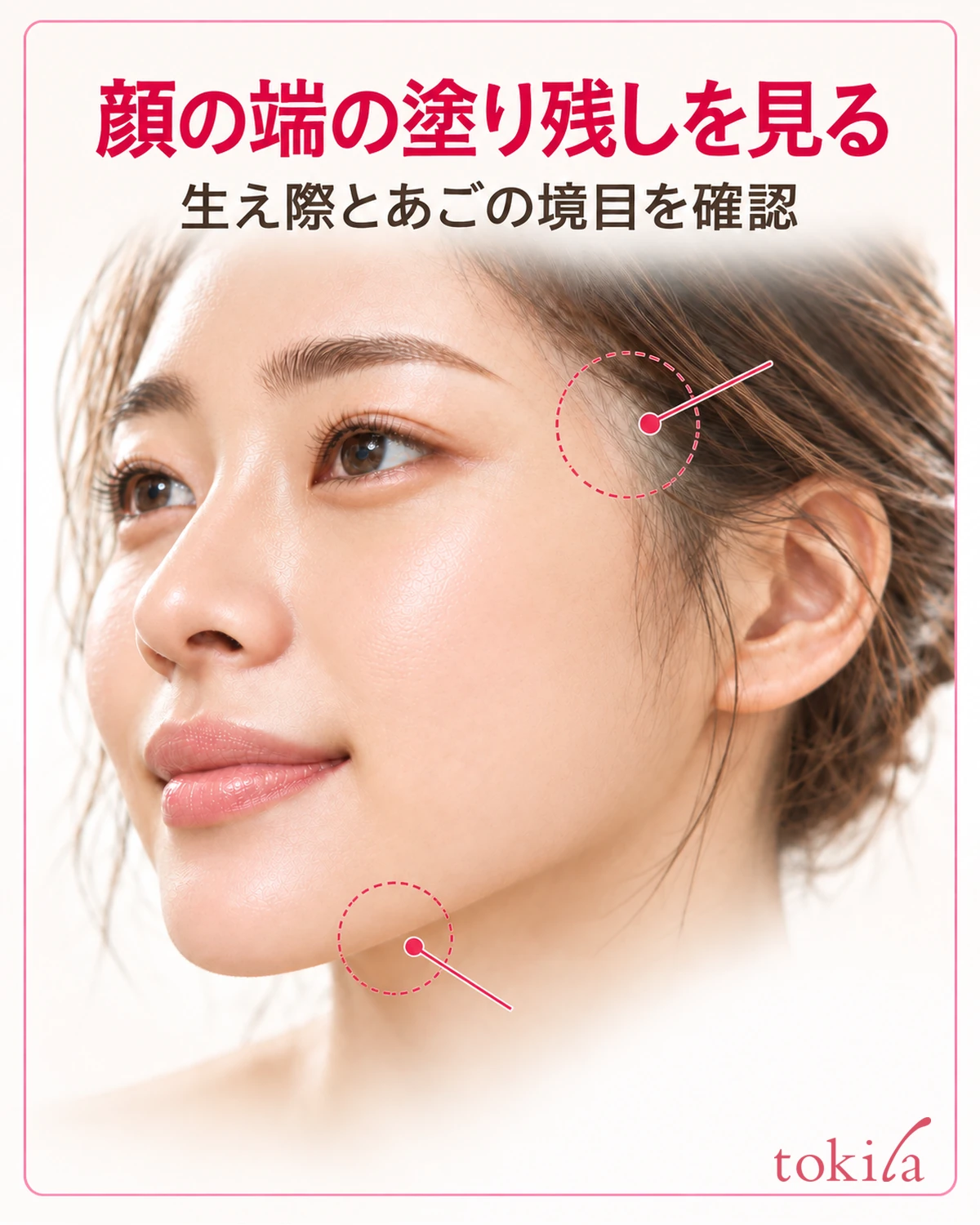
If the surface looks white, distinguish whether the product's directions describe that change. Do not wait for a change in whiteness seen in one specific product as a universal signal for every gel. Avoid judging from appearance alone that no whitening means failure or that becoming clear means a certain effect has occurred.
Even if particles appear on your face, do not assume they prove dead skin has been removed and keep rubbing. First reconsider the amount used, products layered underneath, and how often you touched the area. If it feels heavy, thearticle on reviewing the amount and layering of moisturizing gelmay also help. Images alone cannot diagnose your skin's condition or how cosmetics remain on it. If you have difficulty, respond according to the precautions for use.
If you feel unusual stinging or pain, stop using it rather than continuing to touch it while waiting for it to settle. Consult a professional if redness, swelling, or similar symptoms persist. It is important to keep adjustments to the initial amount and technique separate from responses to an abnormal reaction.
4. In the morning, check the surface before sunscreen and makeup
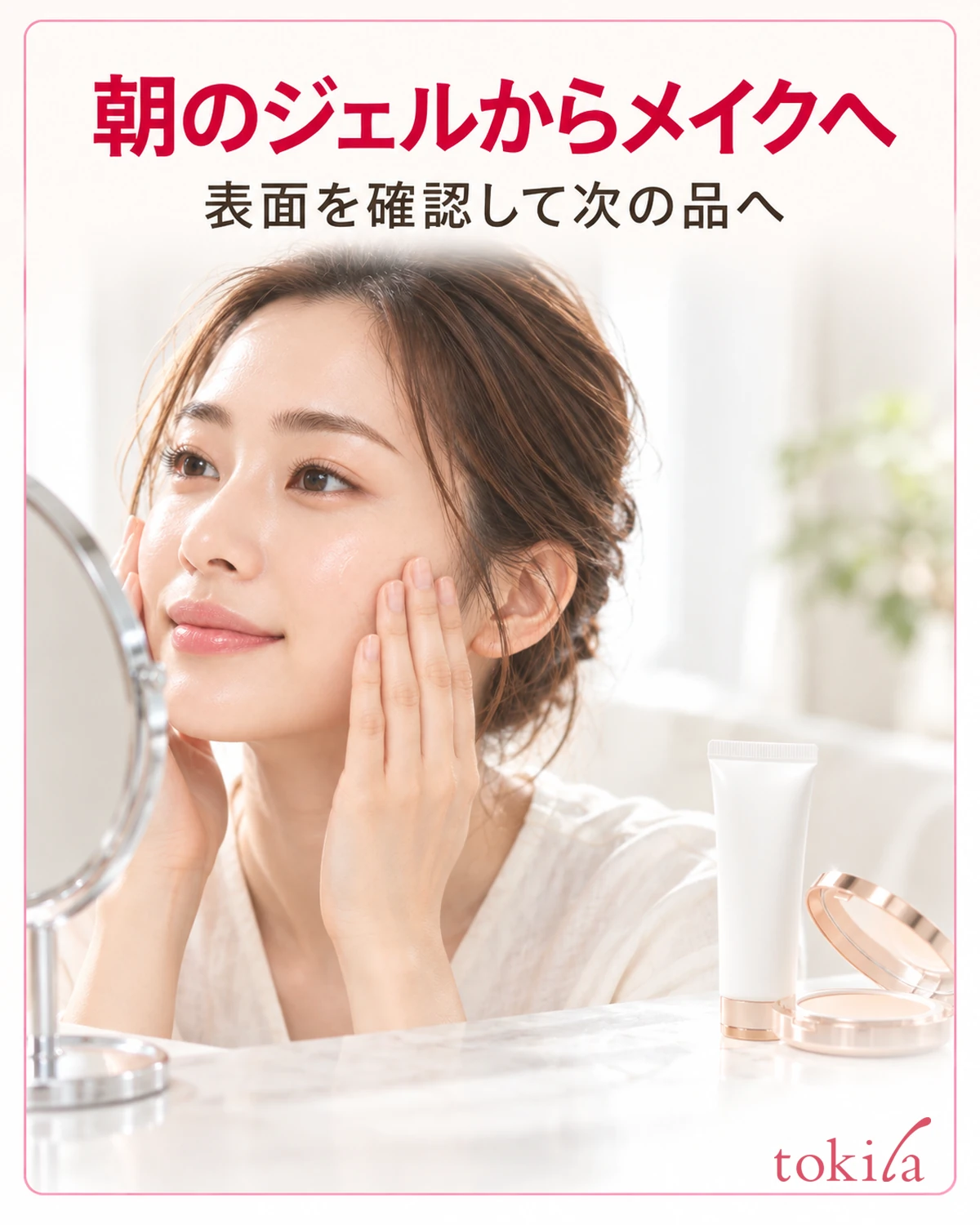
In the morning, once you have spread the gel, take your hands away and look at the skin surface before the next product. Check for large clumps or a thick buildup in just one area. Rather than applying a fixed number of seconds to everyone, consider the next step from the product's guidance and the current condition.
Choose sunscreen after checking the label to see whether the gel provides that function. Do not use multifunctional moisturizing claims as a substitute for sun protection; use the sunscreen you need in the order and amount specified for your products. Do not add a step of mixing it with gel in your hand and applying them together unless instructed.
Proceed with primer and foundation according to their respective directions, too. Even if the gel lists a primer function, assess the combination with your own makeup. Changing several things at once makes differences harder to identify, so a brief record of the products and order used can help your review.
If streaks or clumps appear where you apply foundation, pause layering on that area rather than trying to finish with more pressure. Check the gel amount, what remains on the surface, and the next touching motion in turn. Do not conclude from one combination that all gels are unsuitable for makeup.
Do not treat reducing the amount as the only solution; first compare it with the original usage guidance. Reducing the required amount of sunscreen at the same time changes a separate condition. Adjust the moisturizing steps and sun protection while preserving the directions for each.
Recording where you became uncertain before makeup with one word—amount, order, or spreading—can help you choose a condition to try next time. Reviewing one application today and how you touch it next time lets you organize your morning routine without making it unnecessarily complicated.
5. Finish your nighttime routine and review for next time

At night, complete normal use after cleansing before deciding whether additional layering is needed. If the product recommends another layer on areas where dryness is a concern, check where to add it. Treat a special thick application over the whole face as a separate method only when described for that product.
Even at night, whether rinsing is necessary depends on the type of product. Do not finish the leave-on moisturizing gel covered here in the same way as a different rinse-off mask. Nor should you assume that extending the time it stays on your face beyond the instructions increases its effects.
If you want to add another moisturizer, check the guidance for combined use and any overlapping functions. Distinguishing days when you finish with one product from days when you combine products helps you look back at how you used them. The number of functions does not determine the same amount or number of products for everyone.
After use, check the container opening and lid, close it as directed, and store it. Follow the supplied instructions for spatula care and placement, too. Before leaving it on the washstand, read any directions about avoiding direct sunlight or high temperatures and handling after opening.
The next day, look back at the amount and layering you used and the condition when you moved on to morning makeup. This record is a reminder of your own use, not a test proving effects. If something concerns you, do not change everything at once; start by checking one condition against the directions.
An all-in-one gel can be a starting point for organizing what you use and building your routine. Read your product's functions and amount, spread gently, and move on to the next action for morning or night. Even with a short routine, know where to check and adapt it into a method you can maintain.