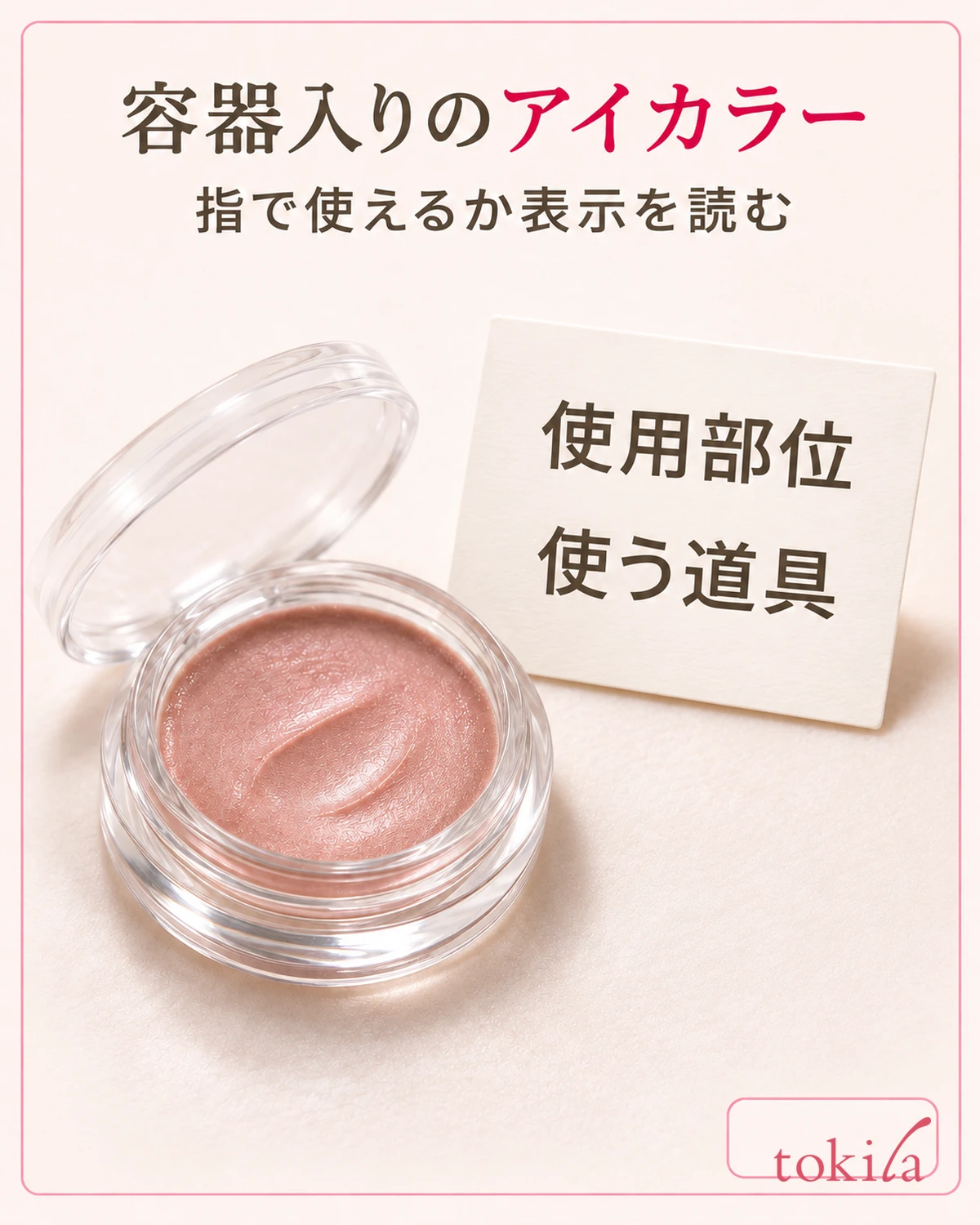
You may want to add a lip mask to your nighttime routine yet wonder how much to apply or whether to leave it on until morning. The first thing to establish is whether your product is designed to stay on your lips while you sleep, rather than how thickly to apply it. Read where to use it and how to finish, then plan to take it with clean fingers or its dedicated spatula and spread it over the surface of your lips.
This article covers nighttime moisturizing masks applied to the lips. Their use differs from facial sleeping masks, sheets removed after a set time, and scrubs containing particles. The photos explain the relationship between containers, tools, and lips; they do not demonstrate any particular product's application amount or moisturizing effect.
1. Choose a nighttime lip mask after reading how to finish using it
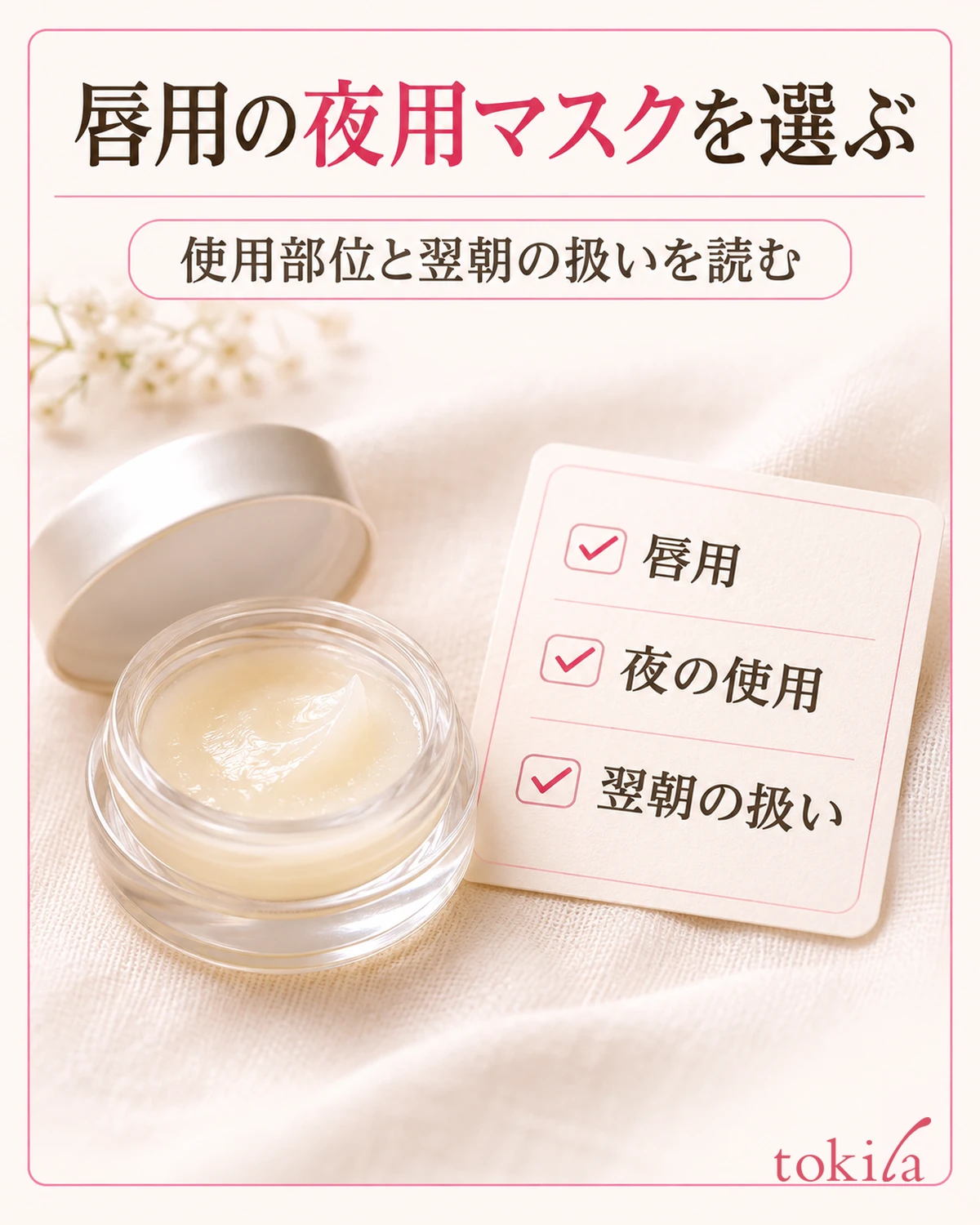
Check the box or container to confirm that the product is for lips and can be left on while sleeping. Do not assume it works on both face and lips just because it is called a mask; choose according to the intended area. Before extending a facial product onto your lips, also check whether its instructions allow lip use.
Next, read the application time, frequency, and next-morning handling as one continuous routine. Even nighttime products differ in how to finish: some are gently wiped off the next morning, while others lead into washing your face or other steps. The product's directions also determine whether to use it nightly or as needed. Reading through the final step helps you avoid uncertainty about residue in the morning.
Even among lip products, moisturizing balms and particle-based scrubs have different purposes and actions. Do not add scrubbing or peeling skin after applying a moisturizing mask. If your product contains particles, seeHow to Use a Lip Scrubfor guidance starting with how to finish, such as rinsing or wiping it off.
Along with your preferred scent and container, consider a way of taking out the product that you can comfortably keep up. Whether you can prepare the necessary tools, such as for a finger-friendly pot or a product with a dedicated spatula, also matters. Rather than comparing effectiveness by apparent thickness, choose a product whose precautions and storage instructions you can read.
If you own a daytime lip balm, compare its application time and finishing directions with those of the nighttime product instead of deciding how to separate them by their names alone. Follow directions on combined use when deciding whether to layer other moisturizers on a night you add the mask. Your current product may already suit nighttime care; increasing the number of products need not be a goal in itself.
2. Remove lipstick, then take the product with clean fingers or a dedicated spatula
Before nighttime use, remove that day's lipstick and lip topcoat using the appropriate method for each. Rather than covering remaining color with a thick moisturizing mask, check your lips after removing makeup before continuing. Avoid repeatedly rubbing stubborn areas hard; return to the removal instructions for the makeup you used.
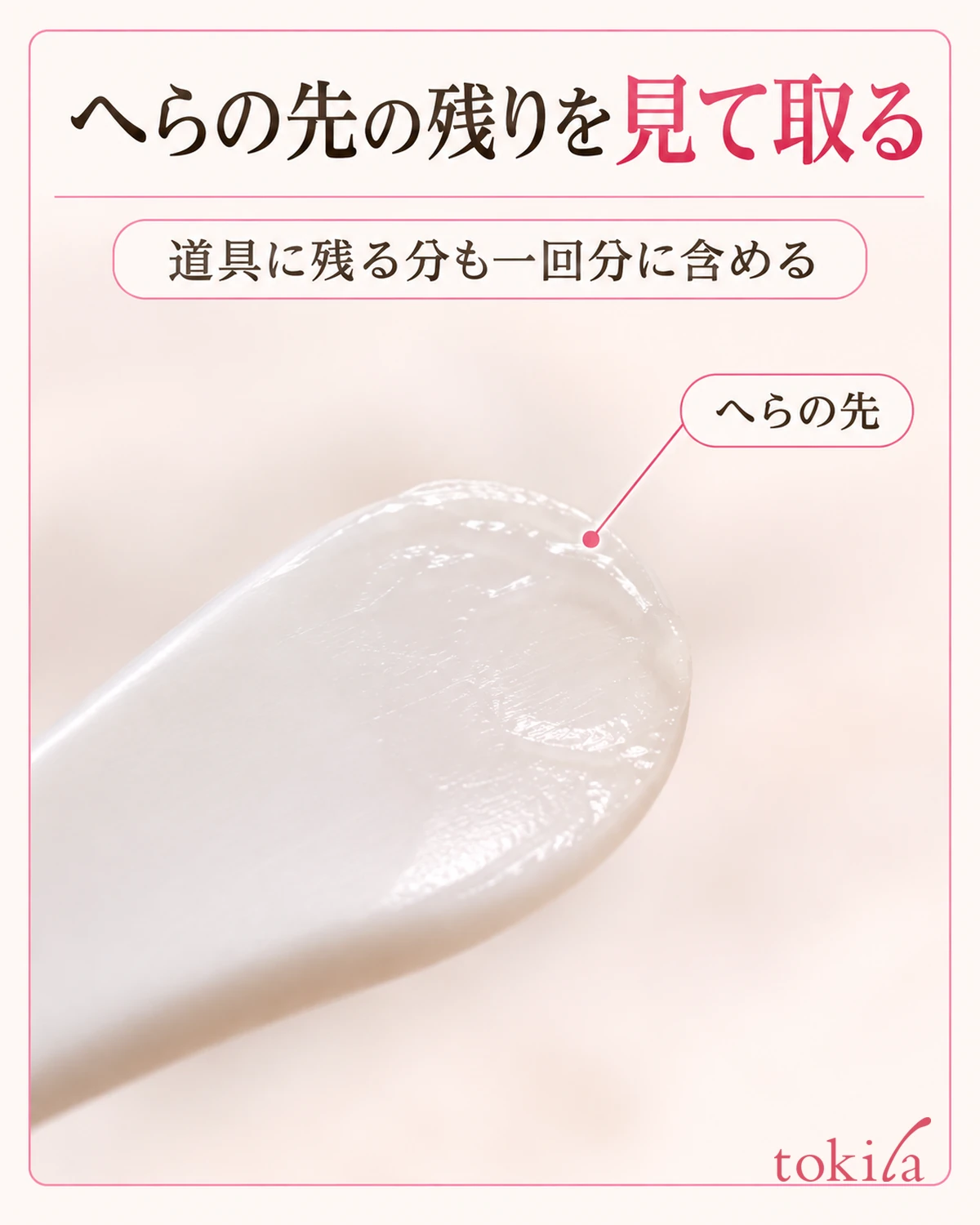
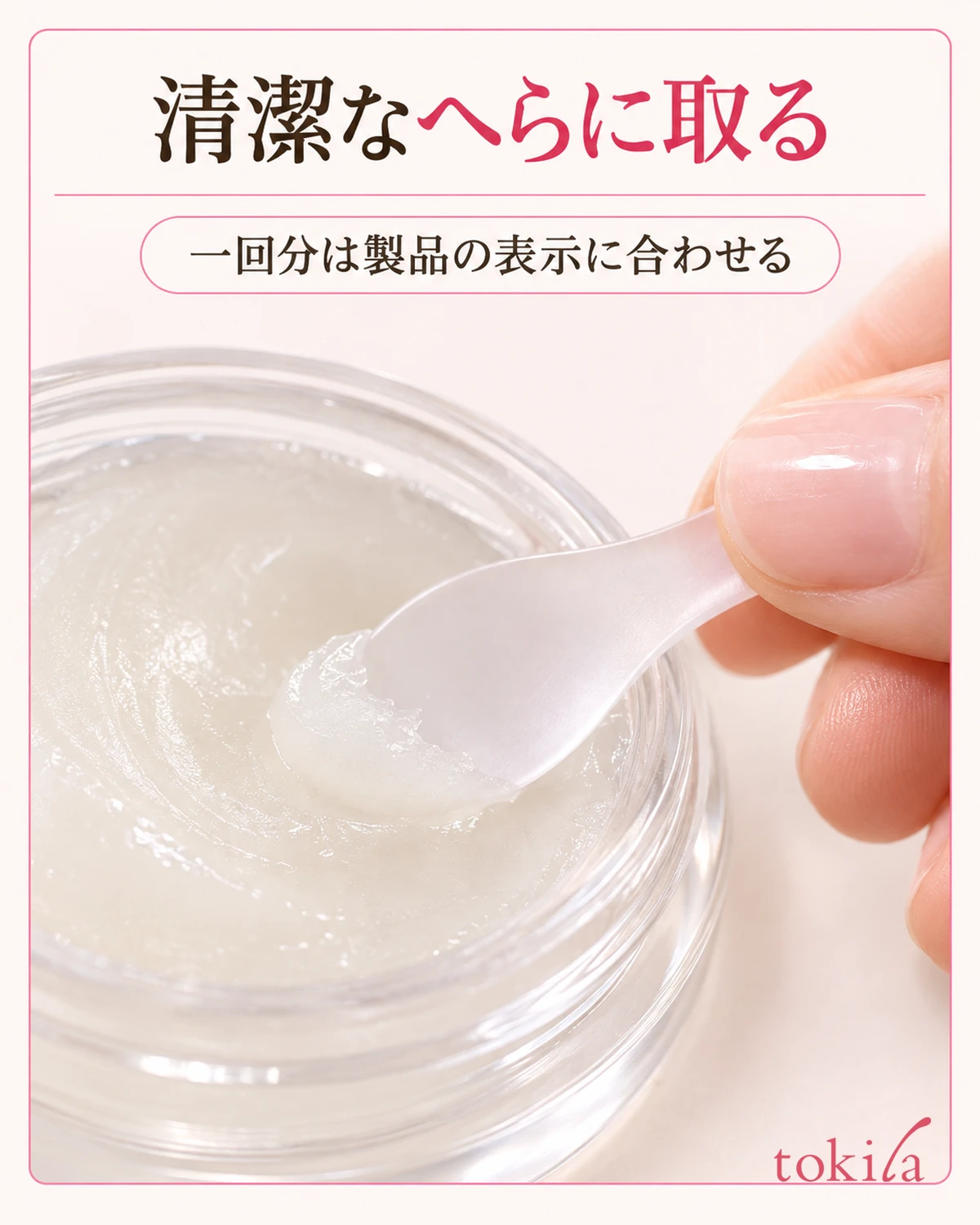
Clean your hands and, when using your fingers, dry them before taking the product. For products supplied with a dedicated spatula, follow its use and care instructions. Do not force a finger into a small container where your nail may hit; choose the method the product recommends. If residue from the previous use remains on the spatula tip, clean it first rather than adding fresh product over it.
Use the amount specified for one application as your guide. Rather than copying a mound in a photo or using the spatula's width as a measure, match the directions on your product to your tool. Once you have taken the recommended amount, check whether any also remains under the tip. Noticing both what you carry to your lips and what stays on the tool helps you assess the amount you already have before taking more.
Place the container somewhere stable and decide where to put the lid and tool beforehand. At a sink, choose a position where water will not enter the contents. Avoid scooping so much at once that you wonder whether to return the excess; for your first use, arrange enough light and a clear view of your hands to check the specified amount calmly.
3. Spread over the lip surface without pushing into your mouth
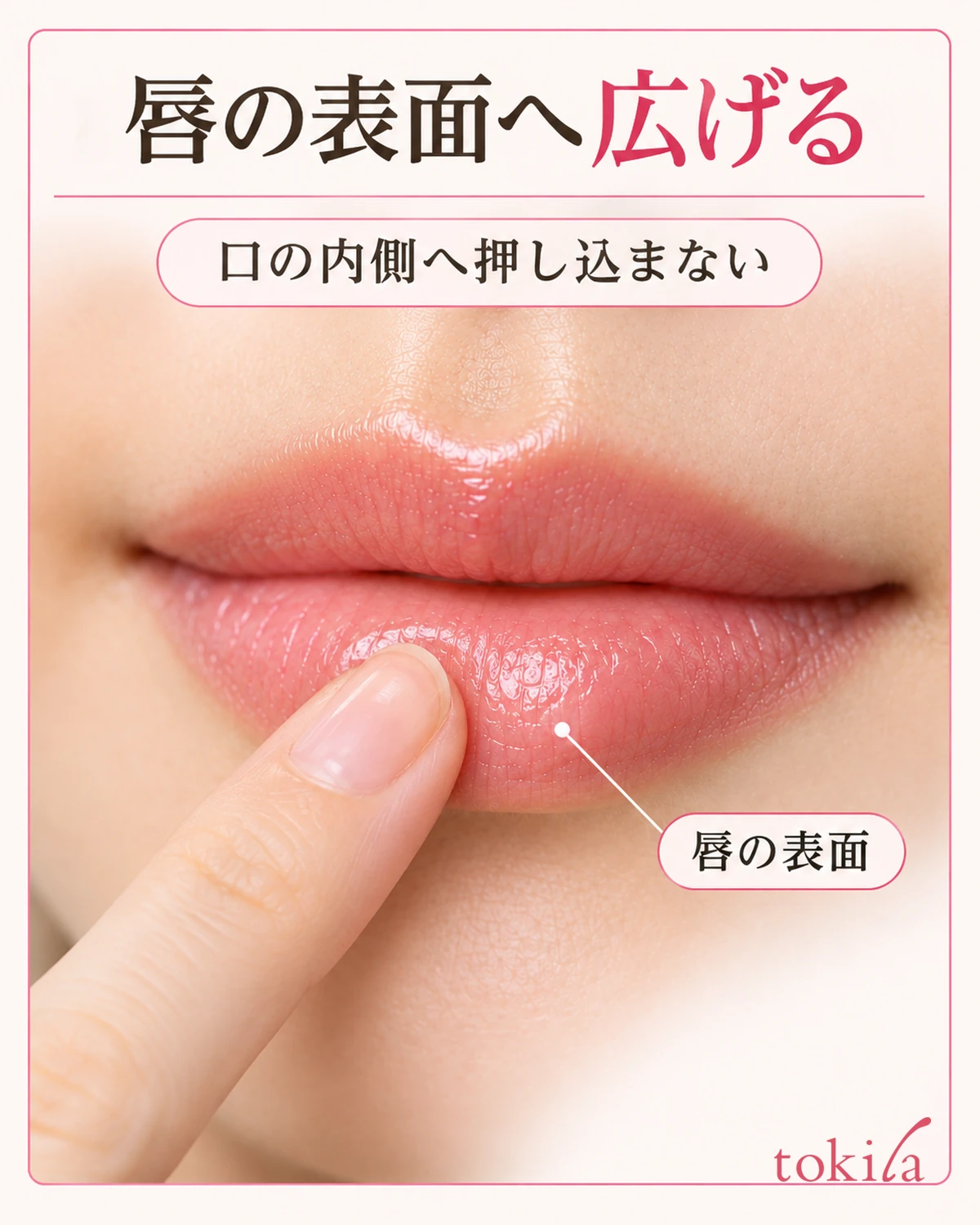
Looking in a mirror, place the product on the outer surface of your lips using your finger pad or the recommended tool. Keeping your mouth gently closed in a natural position helps distinguish the application surface from the inside of your mouth. Do not push a large lump into the opening; spread it over the surface while changing position a little at a time.
Check the area applied on your upper and lower lips separately. Rather than assuming rubbing your lips firmly together distributes it everywhere, look in the mirror at what remains at the edges and center. Taking the product with a dedicated spatula and applying it directly with that spatula are separate actions; use a tool designated for dispensing for that purpose.
As you approach the outline, check that you have not spread too much onto the surrounding skin. Large movements around the Cupid's bow and mouth corners can carry product inward. Instead of pressing your finger harder, adjust at an angle where you can see where the tip touches. Applying inside the mouth is not a requirement for complete coverage.
Even if dry skin bothers you, avoid pulling it off while spreading the balm. Do not add scraping with your nail or rubbing it off with the spatula edge. Follow the precautions if you have a wound, swelling, or similar issues, and stop using the product if you notice an abnormal reaction. Do not use a moisturizer as a substitute for identifying or treating the cause of irritated lips.
If your finger slides a great deal during application, check the amount already present and what remains on your finger before taking more. Instead of universally adding enough to make it slippery, pause to check where the specified application amount has spread across your lips. If the product gives guidance on layer thickness, finish within those directions.
4. Check the outline and remaining product to decide when to finish
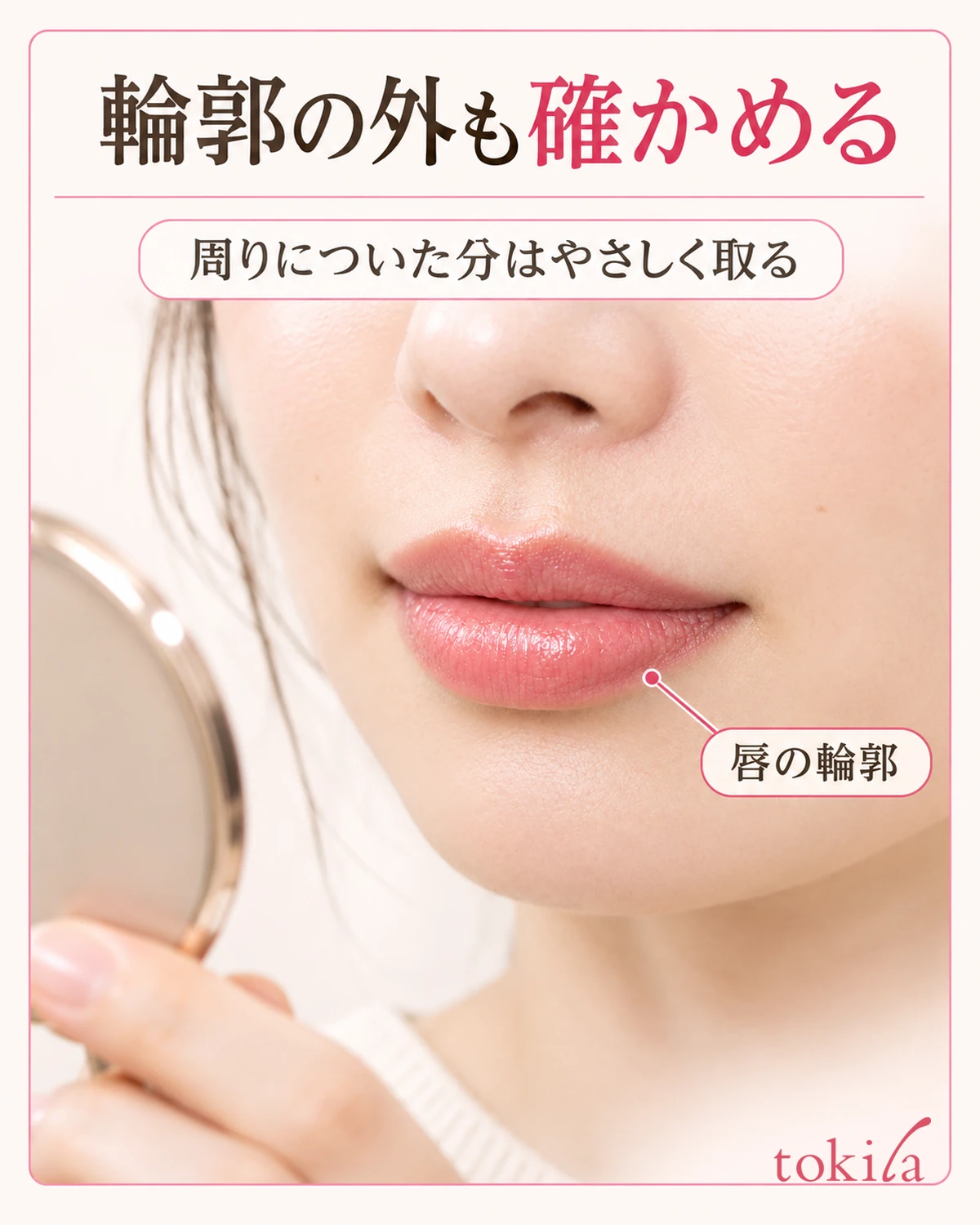
After applying, face the mirror straight on and look at your upper lip, lower lip, and mouth corners. Rather than judging thickness from one strongly reflective spot, turn your face slightly to check what remains on the surface. Shine also changes with lighting, so you need not keep adding product to match a photo's brightness.
Gently remove substantial excess on surrounding skin according to the product's directions. Do not extend the application area to compensate; maintain the distinction between the outside and inside of the lips. Once you decide application is complete, stop repeatedly touching it and mark an end to this part of your routine so you can put the tools away.
Even when applying immediately before bed, consider whether your pillow or hair will touch your mouth area. If transfer onto bedding concerns you, review application timing and moving hair aside before substantially reducing the recommended amount. Do not add steps outside the instructions, such as sealing it with plastic wrap or tape.
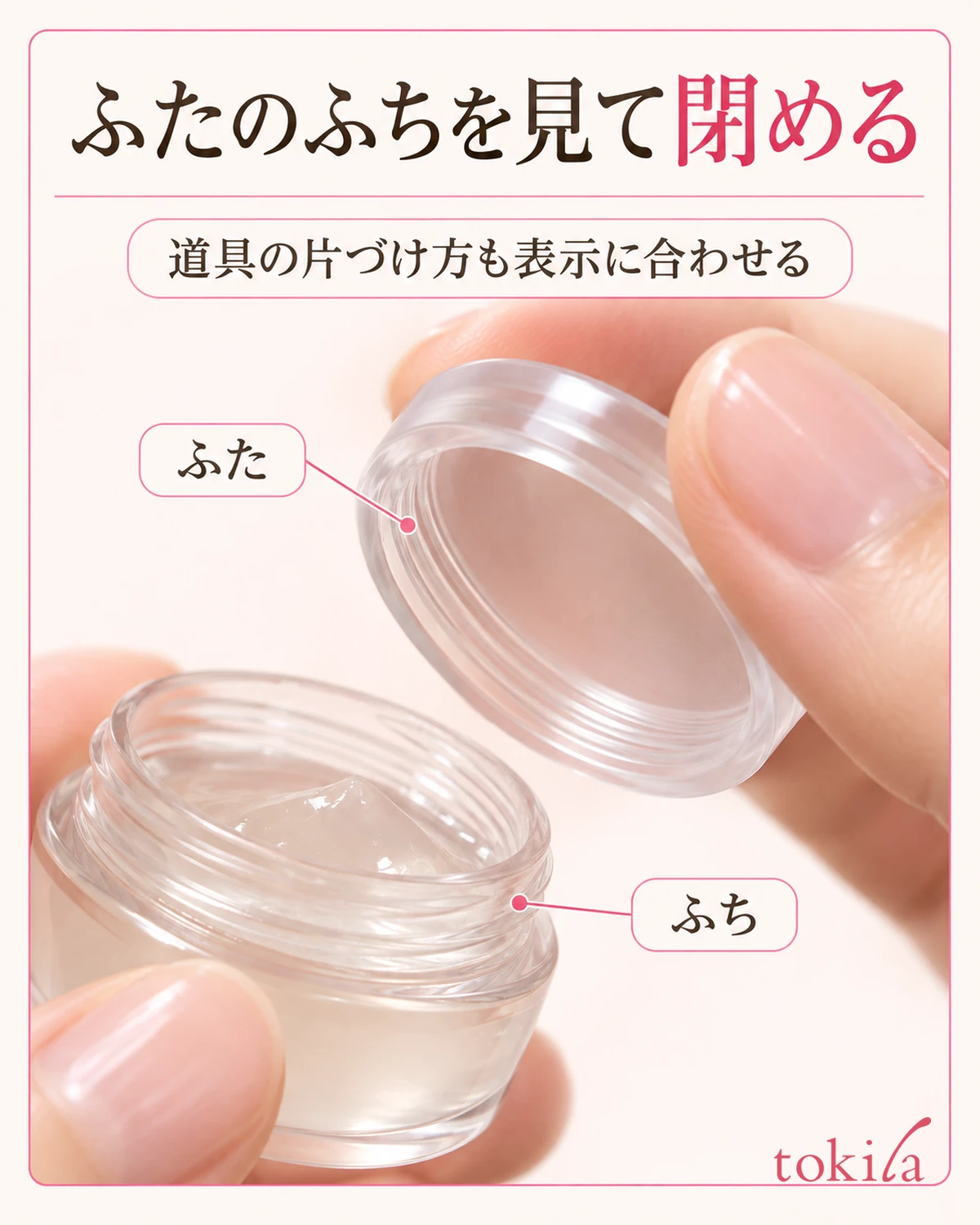
If contents have spread onto the container rim, tidy it according to the care instructions before closing. The presence of an inner lid and the spatula's storage location vary by product. Rather than looking for an inner lid that was never included or putting a wet spatula back into the contents, check the lid's correct position and how the tool should be dried.
Once closed, return the container to storage so it is ready next time. In a washroom, follow the storage directions regarding splashing water, temperature, and humidity. Do not add water or toner to change its softness; reread the precautions if its condition seems unusual.
5. Finish as directed the next morning, then move on to daytime care
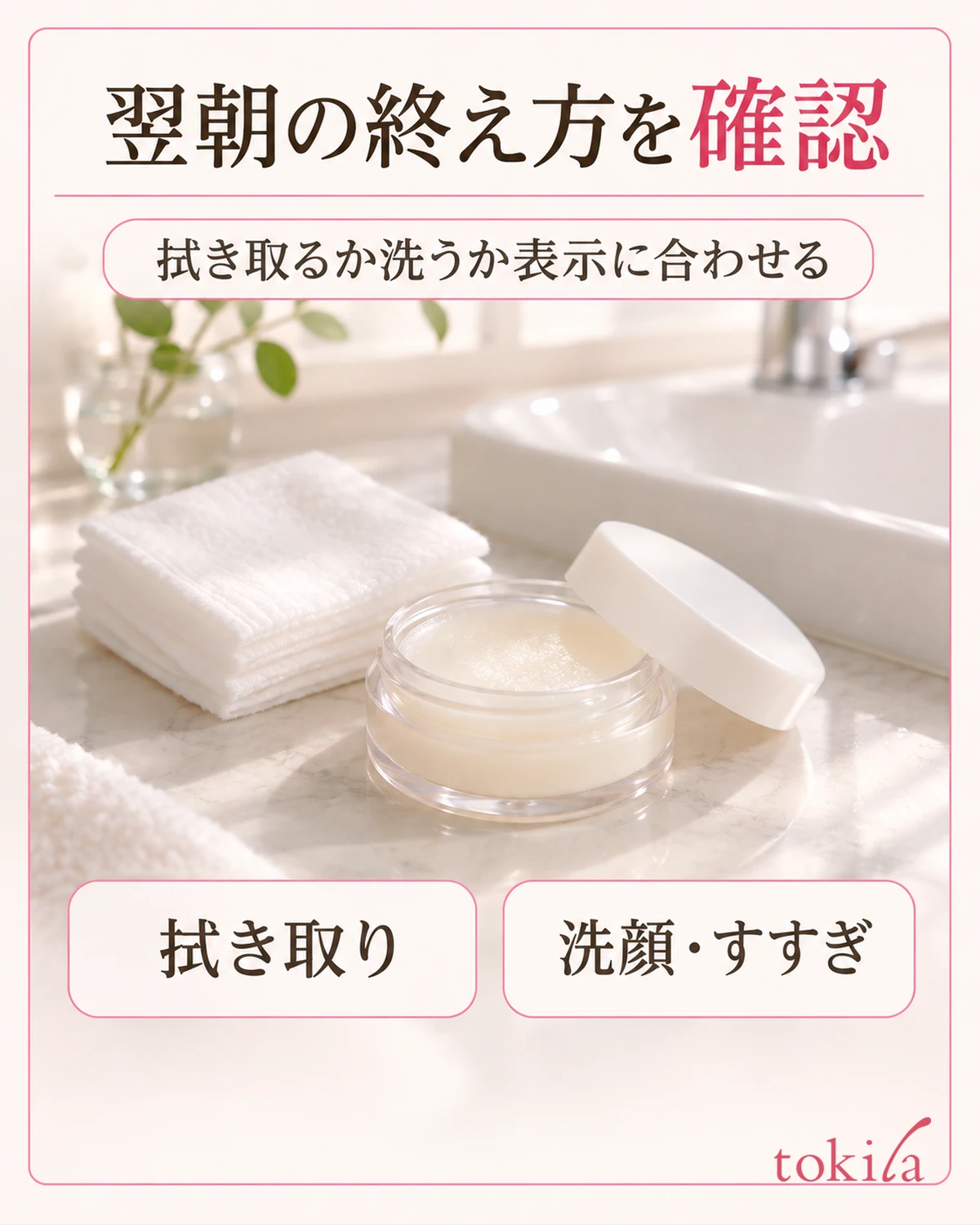
The next morning, follow the finishing directions you read at the start. If instructed to wipe gently, use the recommended item, such as a soft tissue or cotton pad. Follow any instructions to rinse or move on to face washing. You need not universally add both wiping and washing as mandatory steps.
Avoid repeatedly rubbing with a dry cloth to remove the remaining film. Even if some residue is stubborn, check the product's finishing method and application amount before applying more force. Do not try to rub off loose skin along with it; handle your lips gently according to their morning condition.
If applying lipstick afterward, consider the remaining nighttime mask separately from the order of your new lip care and lipstick. Permission to use a product at night does not automatically mean it also works as a lipstick primer or daytime product. Use products permitted for daytime according to their method; if switching moisturizers, follow the new product's directions.
Use how your lips feel the next morning as a clue for reviewing your next routine. If much product remains, recheck the recommended amount and reflect on products layered beforehand and the area applied. Do not judge effectiveness from one night's appearance and use that to increase the amount or frequency. If discomfort continues, stop use and consult a professional as needed.
Choosing a nighttime lip mask connects your evening preparation with morning cleanup, rather than ending at application. Check four things on your own product: the permitted area, the amount per use, the lip surface, and next-morning handling. This helps you plan a routine that fits your life. Enjoy your preferred container and feel while using it as directed.