A roll-on eye serum is applied by rolling the ball at the tip of the container over your skin. When using one for the first time, it can be hard to tell where the serum comes out and exactly where the ball should touch under your eye. First check how the container dispenses, then check where you can apply the serum and which direction to roll in before using it around your eyes.
This guide covers roll-on serums labeled for use around the eyes. Follow your product’s directions for where to apply it, how many passes to make, whether to squeeze the tube, and where it goes in your skincare routine.
1. Check the rollerball and the container
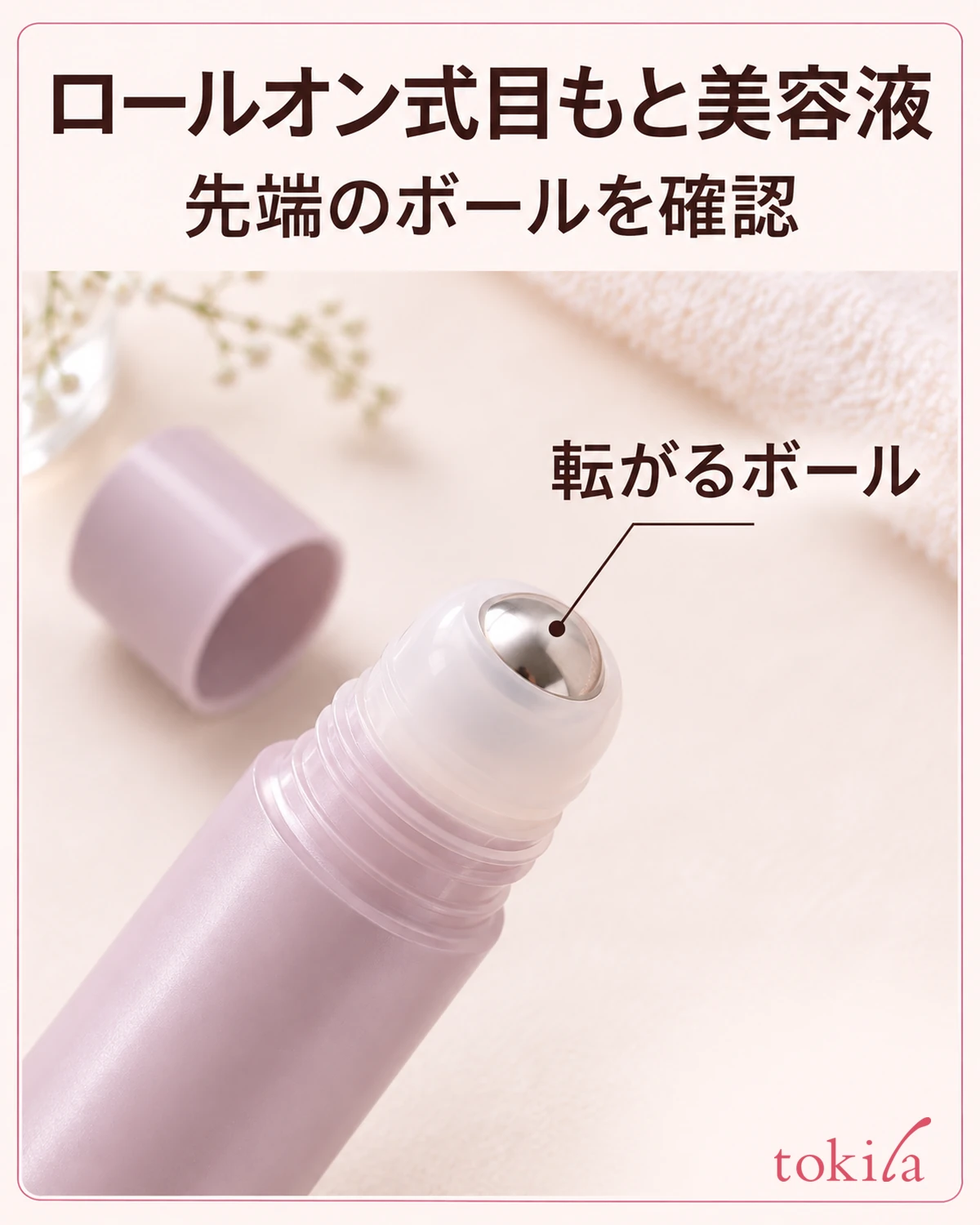
Remove the cap and you’ll see part of a ball sticking out of a round housing at the tip. As the ball turns against your skin, it transfers the serum on its surface. A rounded tip might instead be a nozzle that dispenses the liquid into your hand or a fixed spatula for spreading cream. If you can’t tell by looking, check whether the directions on the container or box tell you to roll it.
Even among products with a rollerball, some are used by holding a slim bottle, while others are used by squeezing a soft tube. If a button dispenses the serum, check where to press and how to unlock it first. When choosing a product, think about how easily you can follow the directions while looking in a mirror, rather than whether you can open the cap with one hand.
Before buying, check whether the directions cover the area where you want to use the product. The words “for the eye area” alone don’t tell you whether it can be used both under the eyes and on the upper eyelids. If you want something to use along the lash line, choose a separate product that specifically says where to apply it.
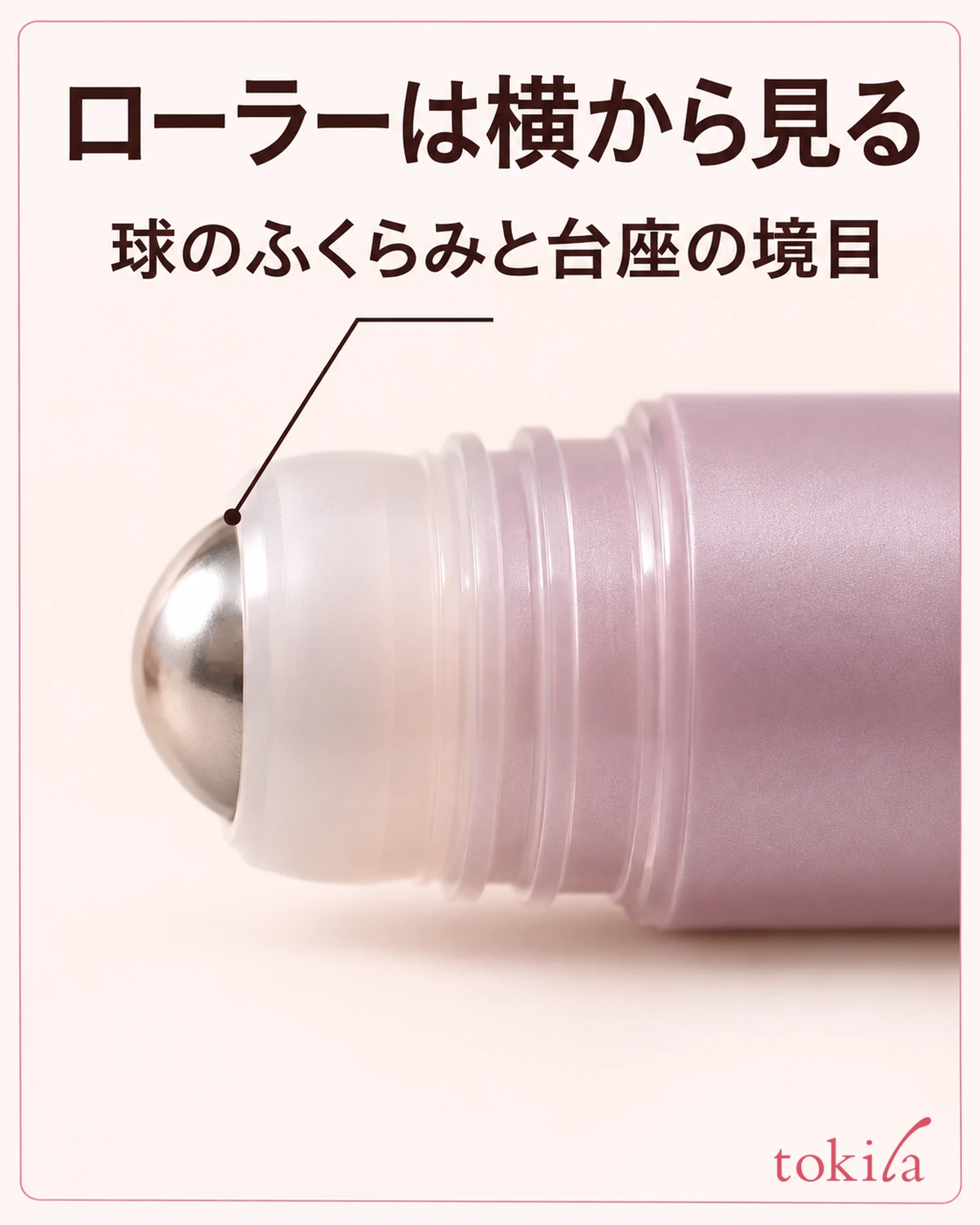
Before applying, look at the boundary between the ball and the stationary housing that holds it. This shows you what should touch your skin: the exposed side of the ball. Look at the uncapped tip from the side to see how far the rounded surface protrudes.
2. Check how the serum dispenses before bringing it near your eyes
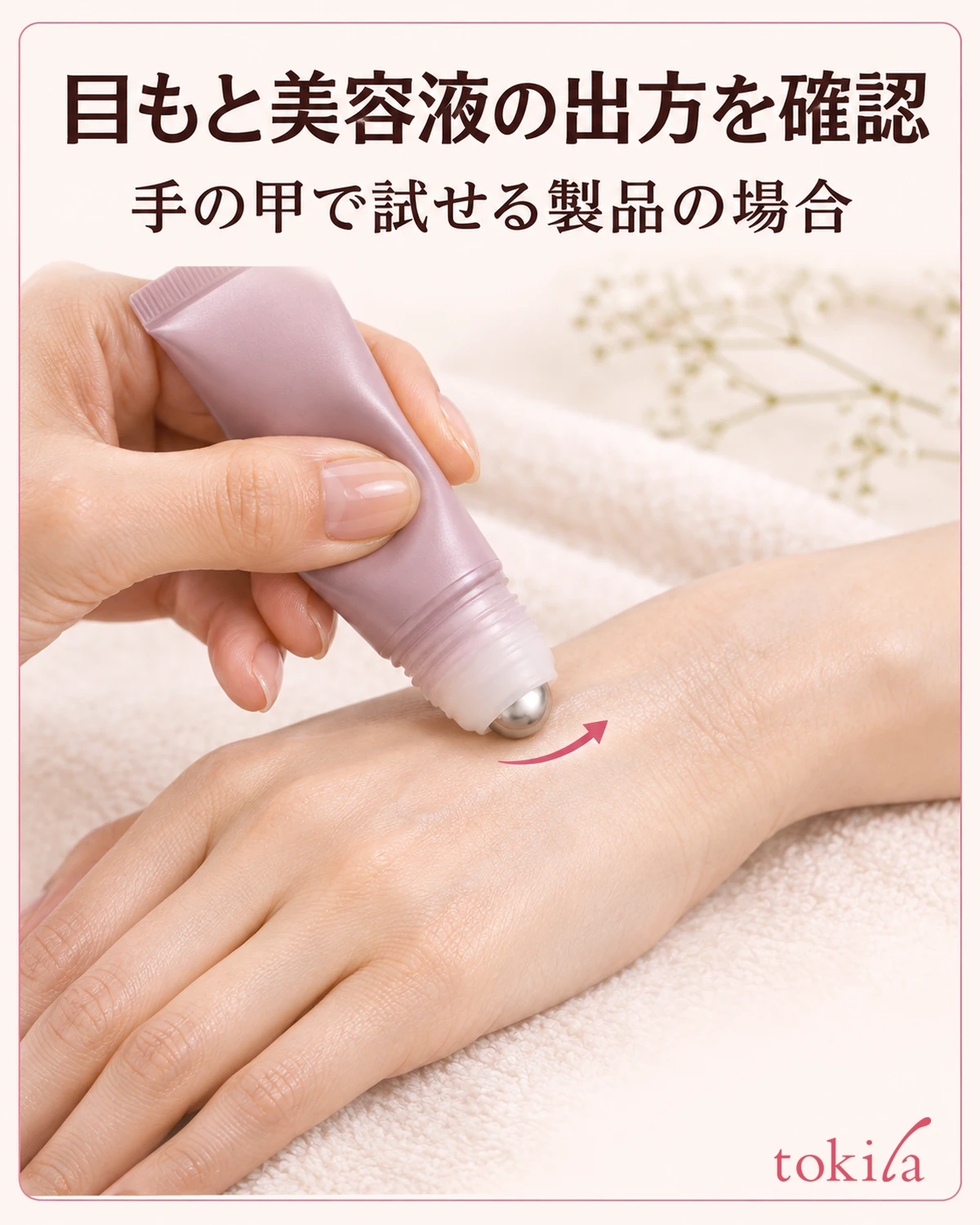
Just after you open it, you may be able to see the ball without being able to tell whether serum is coming out. If the directions tell you to squeeze the tube, read how to hold and squeeze it before bringing it to your face. If the directions say you can test it on the back of your hand, place the roller on clean skin there and roll it gently to check how the serum comes out. For a bottle or a button dispenser, follow the product’s instructions for getting started.
To see whether serum has come out, look at the short track left by the roller in angled light instead of waiting for a big visible drop. If the clear liquid is hard to see, tilt your hand in the bathroom light. If you keep squeezing while looking down into the tip, serum may come out away from your hand. Keep the container away from your face while you check.
If it seems that no serum is coming out, check for any first-use steps, then the orientation of the container, and finally how much serum is left. If the button has a lock, check that it shows the unlocked position. Even if a tube needs to be squeezed, check whether you’re supposed to roll with the ball in contact with your skin before squeezing harder. There’s no need to add liquid or remove the tip.
If a blob comes out while you’re checking, don’t transfer the whole amount under your eye. Follow the directions for dealing with excess liquid on the tip. The next time you need to squeeze, press more gently and see how the serum comes out as you start rolling.
3. Rest the rollerball on the skin under your eye and roll gently
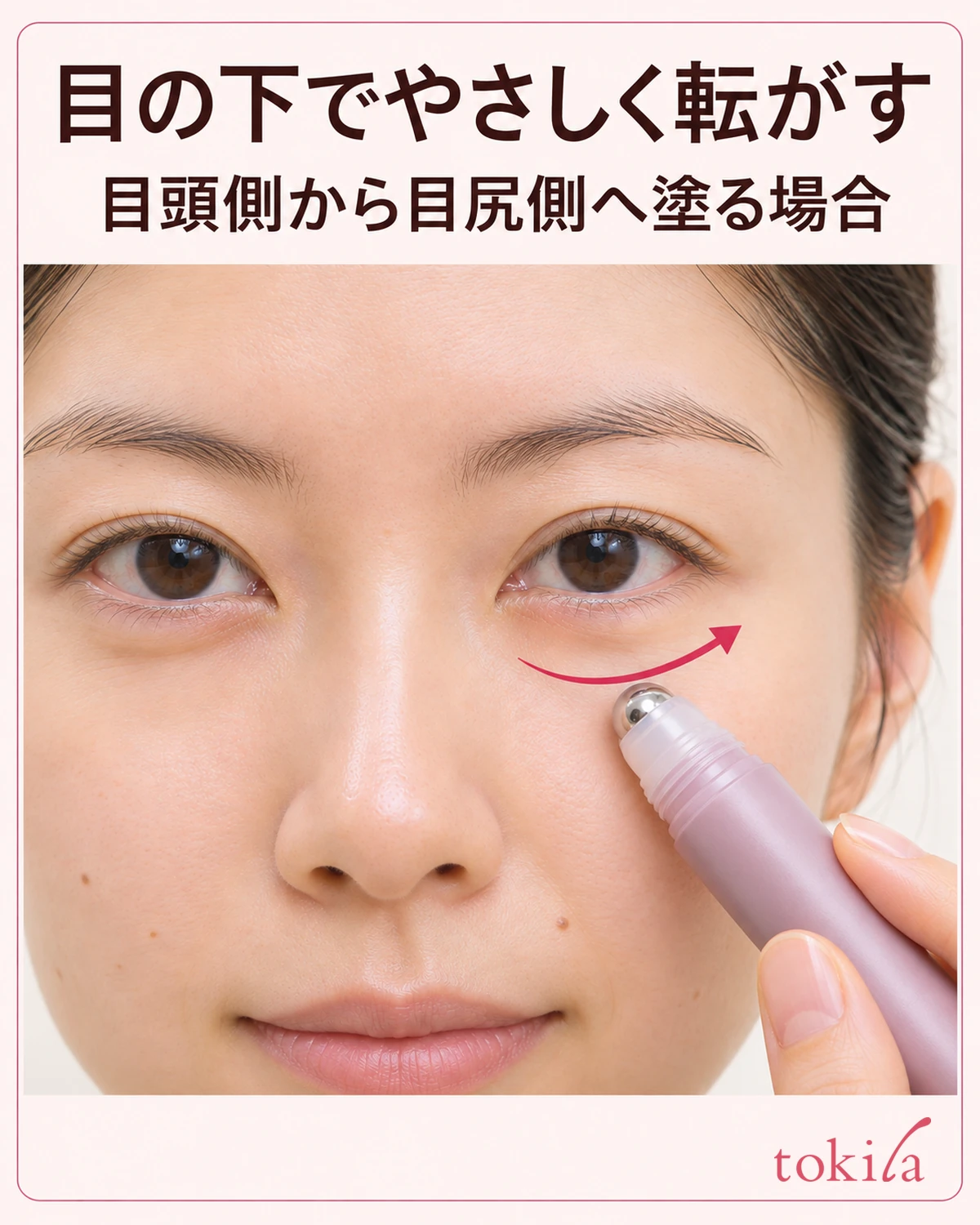
Place a mirror in front of you and find the area under the eye indicated in the directions. If they say to move from the inner to the outer corner, start on the skin near the inner corner and move slowly toward the outer corner, staying clear of the edge just below your lashes. If you lean too close to the mirror, the tip can be hard to see. Start at a distance where you can see both eyes and your hand.
Once the ball touches your skin, keep the contact light enough for it to turn without pressing the container into your skin. Following the under-eye contour as directed, rather than rolling in a straight line, lets you watch that the ball isn’t getting too close to the lash line. If the ball stops and only pulls your skin, lift it off and check how you’re holding it and whether the serum is coming out.
To change the angle partway through, lift the tip off your skin and adjust your grip. If you tend to lose sight of the tip on one side, turn your face slightly and find the point where the ball touches the skin before continuing. If the label specifies an angle for the container, follow it.
Check how many passes the product calls for. Some directions tell you to roll back and forth under the eye, while others tell you to move from the inner corner toward the outer corner. If the instructions call for one-way passes, lift the ball at the outer corner before returning to the starting point. If you’re having trouble in one spot, check that the ball turns away from your eye instead of rubbing the same spot repeatedly.
4. Check for pooled serum before moving on with your routine
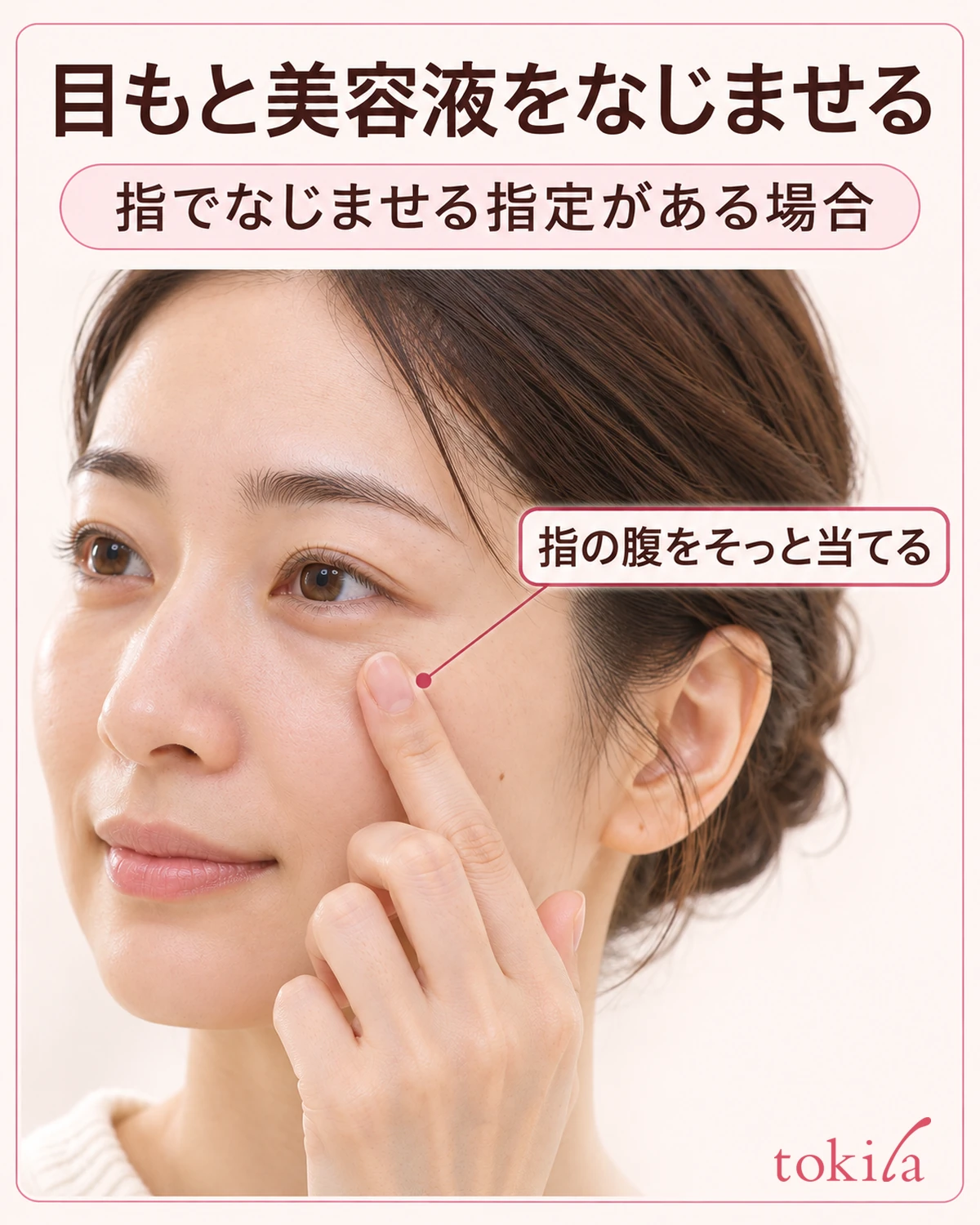
After applying, serum may collect where you lifted the roller. Look under both eyes in the mirror and check for spots where liquid might run. If the instructions say to blend with a finger, use the pad of a clean finger to gently spread the liquid within the area where it has collected. Use the permitted application area to decide whether to spread it beyond the outer corner.
If you’re using an emulsion or cream next, check the order in the serum’s instructions. Some products go on after toner or before products with a higher oil content. When adding the serum to your routine, decide what goes before and after it, then set out what you’ll use next. For guidance on how much eye cream to apply and where to apply it, see How to Use Eye Cream.
If you use the serum in the morning, check that no liquid is pooled under your eyes before applying makeup. Whether it can be used over makeup varies by product. If the directions say to use it on clean, bare skin, add it to your routine after cleansing instead of using it for touch-ups while you’re out. For the steps on days you use a sheet, see How to Use Under-Eye Sheet Masks.
5. Check the roller’s surface after use and put it away as directed
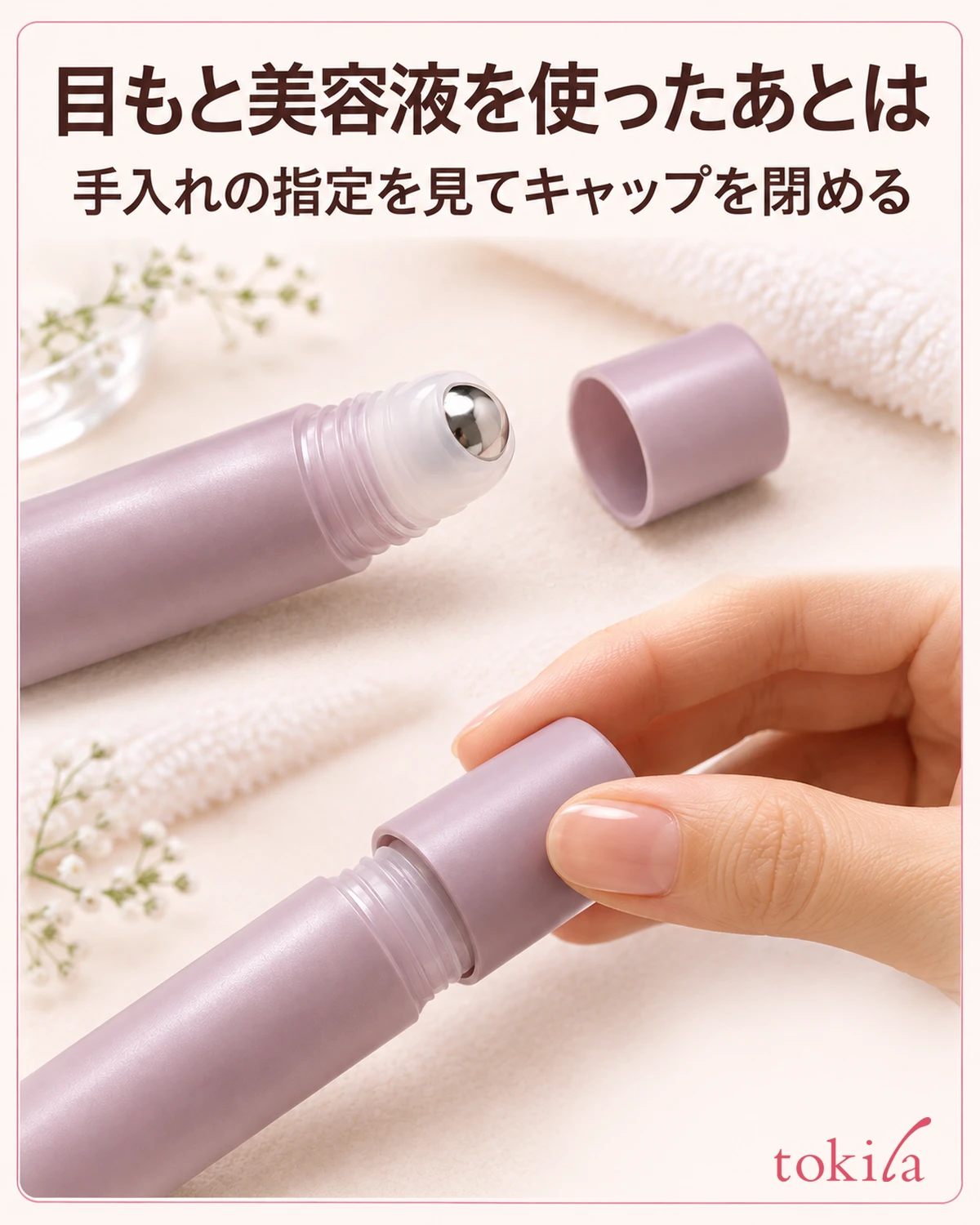
When you’re finished, look at the ball and the area around it in good light. If the instructions say to wipe off excess liquid, lightly touch the exposed part of the ball with the specified material, such as a clean, dry tissue. Pushing the tissue into the gap around the housing may leave fibers behind, so wipe just the surface.
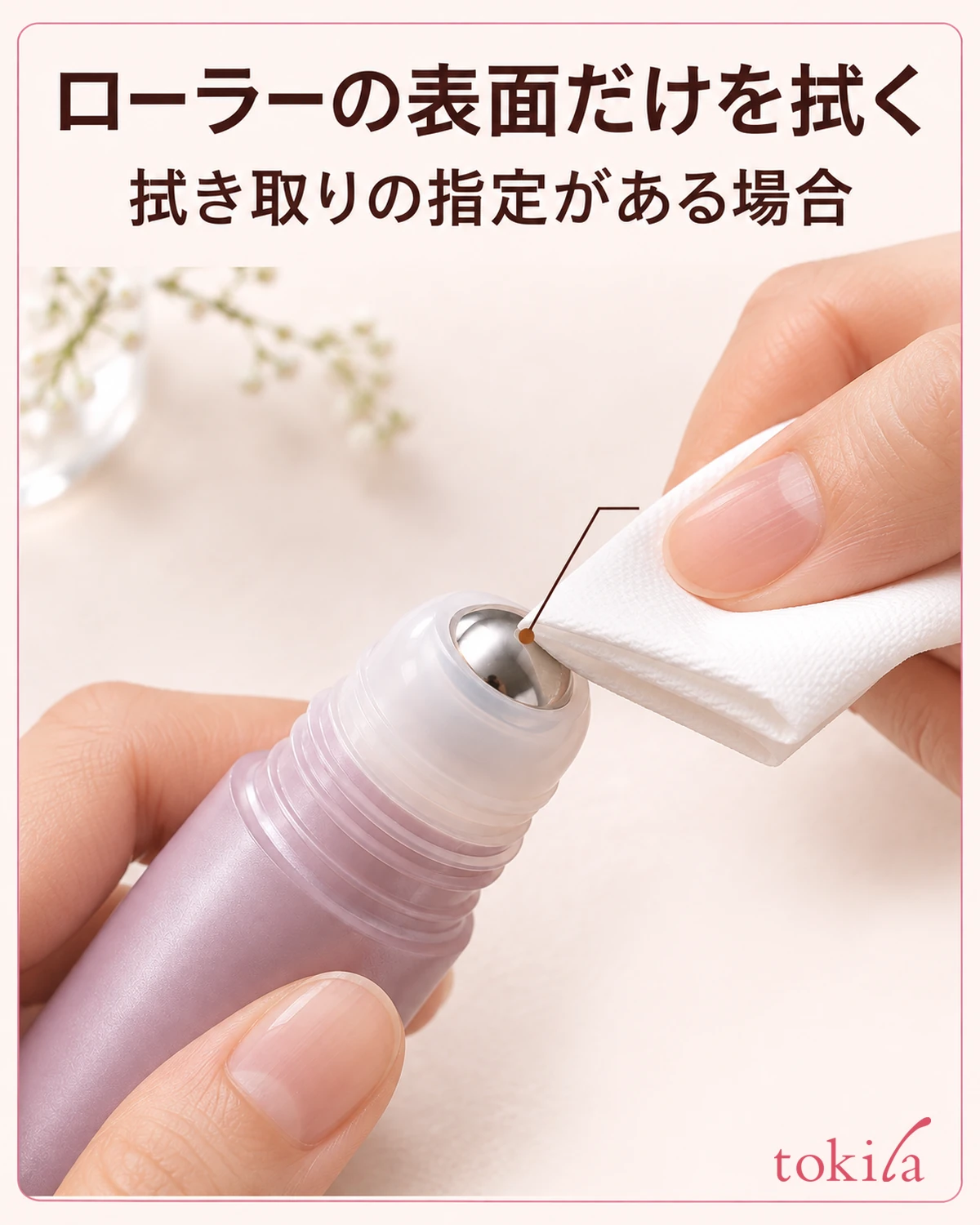
If a button dispenser needs to be locked after use, check the lock indicator before closing the cap. For a screw cap, realign it if it has caught at an angle instead of forcing it closed. Follow any directions about storage position or temperature.
If the ball is hard to turn next time, check for serum left on the tip and look at the condition of the cap before pressing the roller against your eye area. When you first start using it, find four things on the box: how to dispense it, where to apply it, how many passes to make, and how to care for it afterward. Then you’ll know where to look if you get stuck in front of the mirror.