You look in the mirror at midday and notice a powdery patch on your cheek that wasn't an issue in the morning. Even if you have a serum stick, its shape alone won't tell you whether you can touch it directly to your foundation or layer base makeup over it afterward. Start with your product's directions on when and how to use it.
This guide walks through using a serum stick designed for daytime use on one area of the cheek while wearing makeup. We'll distinguish between products that direct you to apply the stick itself and those that direct you to use a finger, then look at what to check in the mirror afterward.
1. Look for directions that allow use over makeup
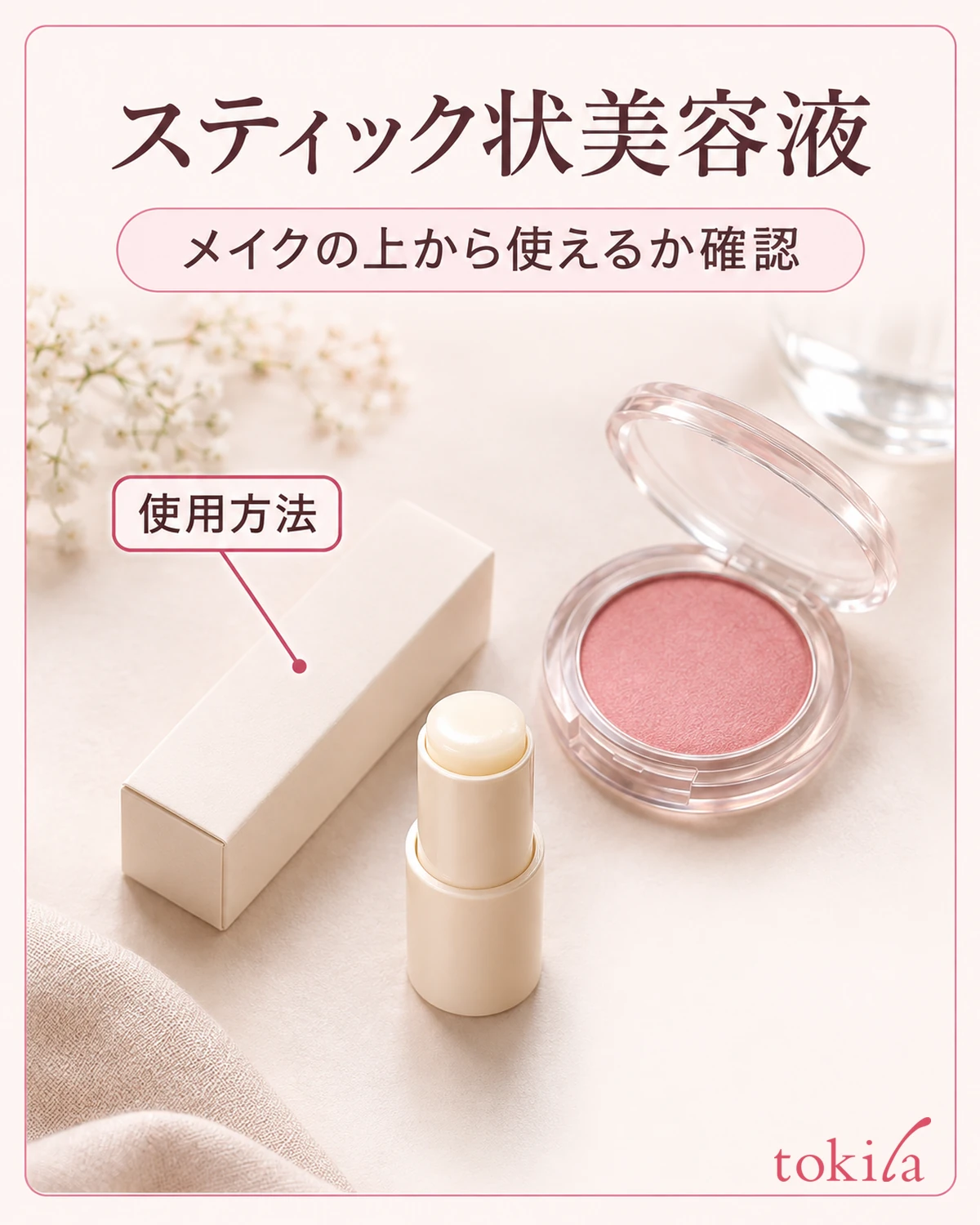
Read the directions on the carton or tube to see if the stick can be used over makeup. Some twist-up formulas are used during your skin care routine, such as after toner or serum, while others can be applied over foundation during the day. Rather than relying on a name like “daytime,” read the directions to see what should already be on your skin and how to apply the product.
Some products intended for both morning and daytime use give different directions for each. For instance, the same stick might be applied directly to the skin in the morning and with a finger over makeup. Before taking it with you, check the carton and remember the directions for daytime use so you know what to do when you're out.
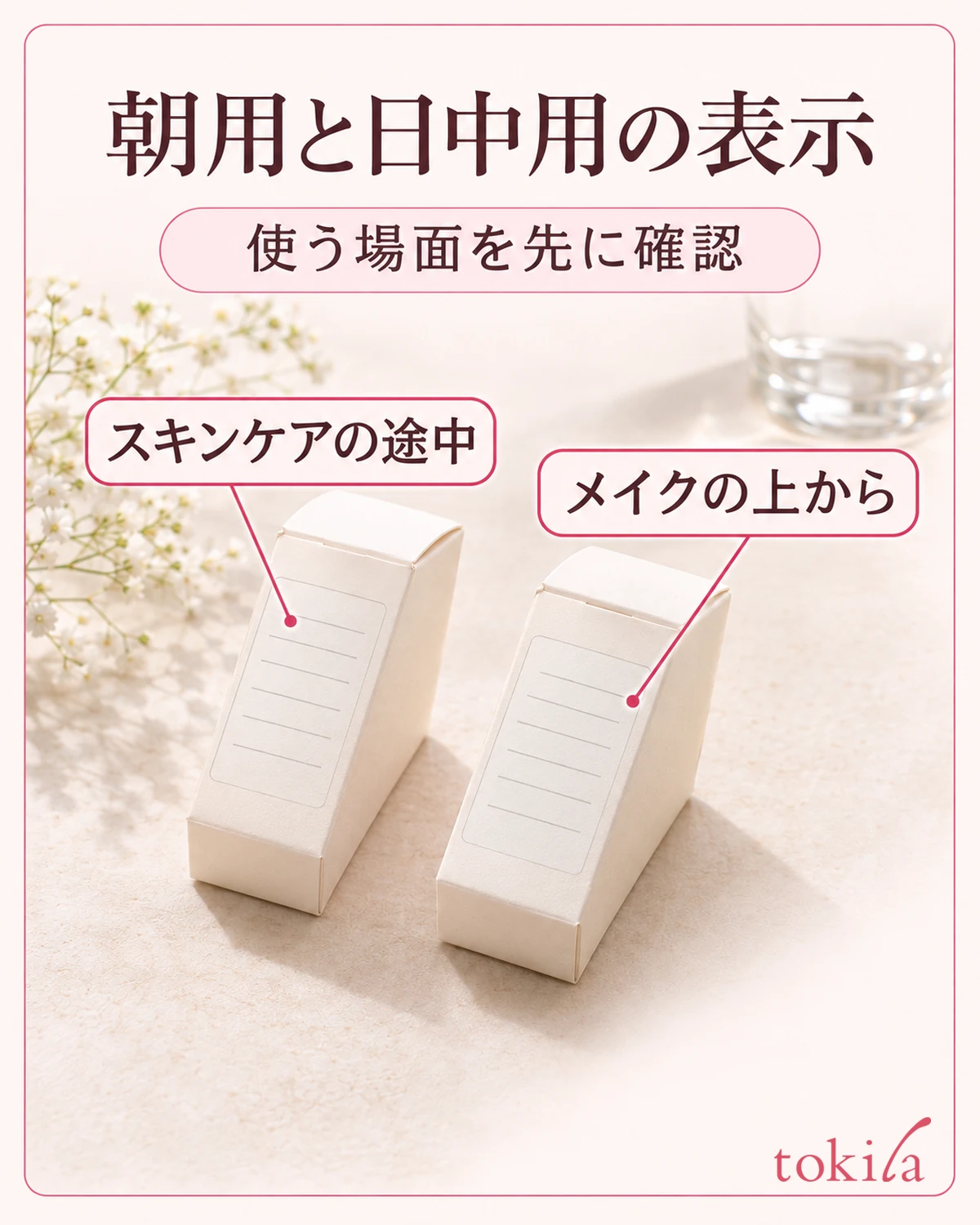
If you can only find morning directions, stick with those for now. When you want to touch up your cheek later in the day, start by choosing a method that suits the condition of your base makeup. If you're unsure whether you're seeing shine, shifting makeup, or a powdery patch, see the order for touching up makeup and how to tell those issues apart.
Before buying another stick, pick one area of your face and one time when you want to use it. This makes labels easier to compare. If you only want to touch up your cheeks midday, check first whether you can use the stick over makeup and whether you'll need a finger, before considering how it fits into your morning routine. If you'll only use it at the bathroom sink in the morning, check whether it goes between your usual toner and emulsion or at the end.
2. Follow the daytime directions for direct or finger application
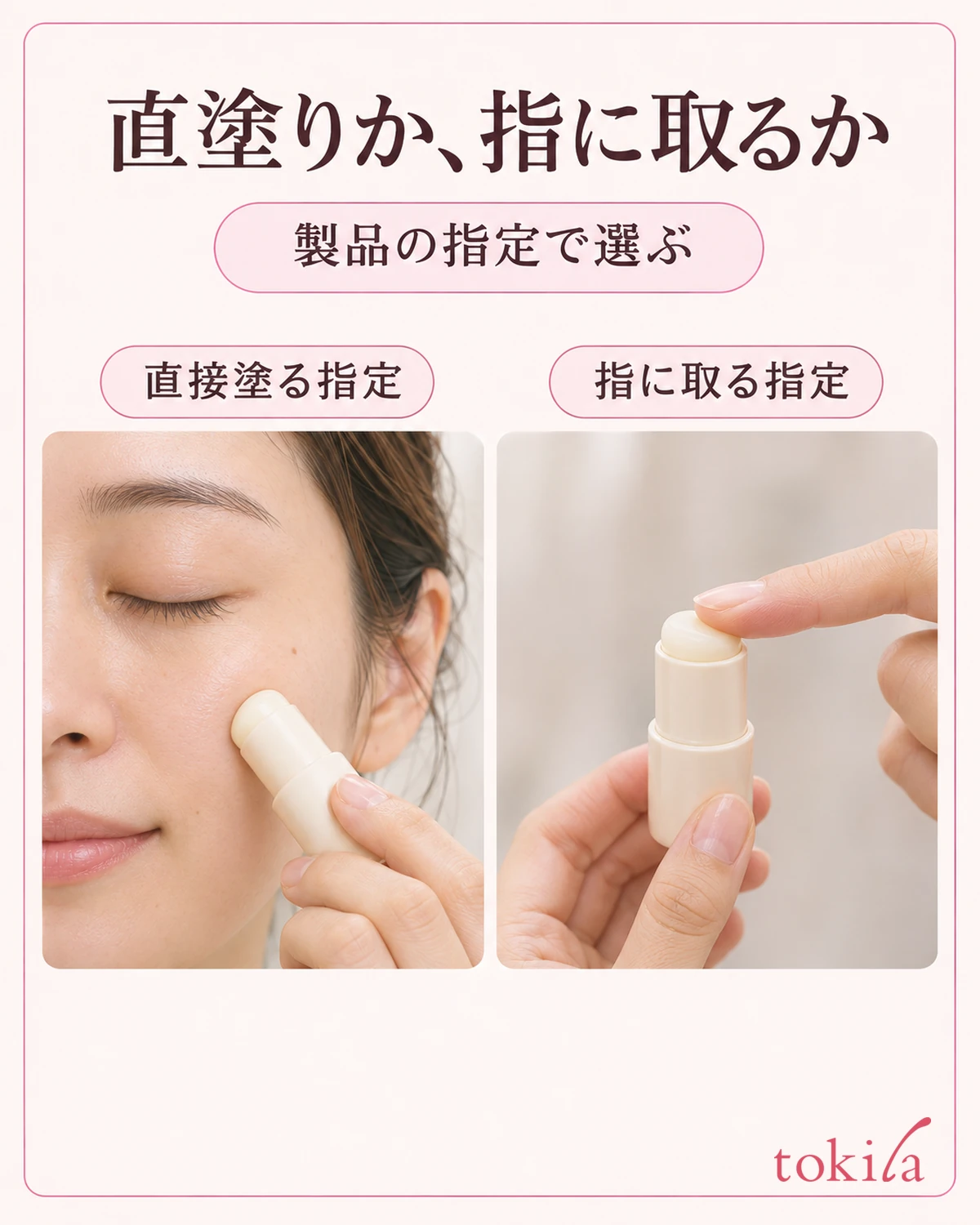
If the product says to apply it directly over foundation, extend the stick as directed and gently touch its surface to the spot. The farther you extend it, the less support it has from the tube, so follow the product's guidance on how much to expose. Before pressing an edge into your skin or going back and forth over the same spot, lift it away and look at your base makeup.
If the directions say to use a finger over makeup, lightly touch the surface with a clean fingertip pad and use what comes away. Only your finger goes to your face. If the stick feels firm, revisit the directions rather than scraping it with a nail or scooping out a large amount. Follow the label for how far to extend it and whether to blend with a finger after direct application.
If you're assuming direct application in the morning means the same thing at midday, go back to the sentence after “over makeup” on the carton. Some products are better applied with a finger; others are applied with the stick and then blended with a finger. Mixing up the two methods also makes it harder to tell which movement shifted your base.
For a touch-up on the go, check whether you have somewhere to set down a mirror and clean your fingers before taking off the cap. If the directions call for using a finger and you can't wash your hands, wait until you can get ready properly instead of putting the stick directly on your cheek. Some products call for using a finger after direct application, too.
3. Start with a thin layer on one powdery spot on the cheek
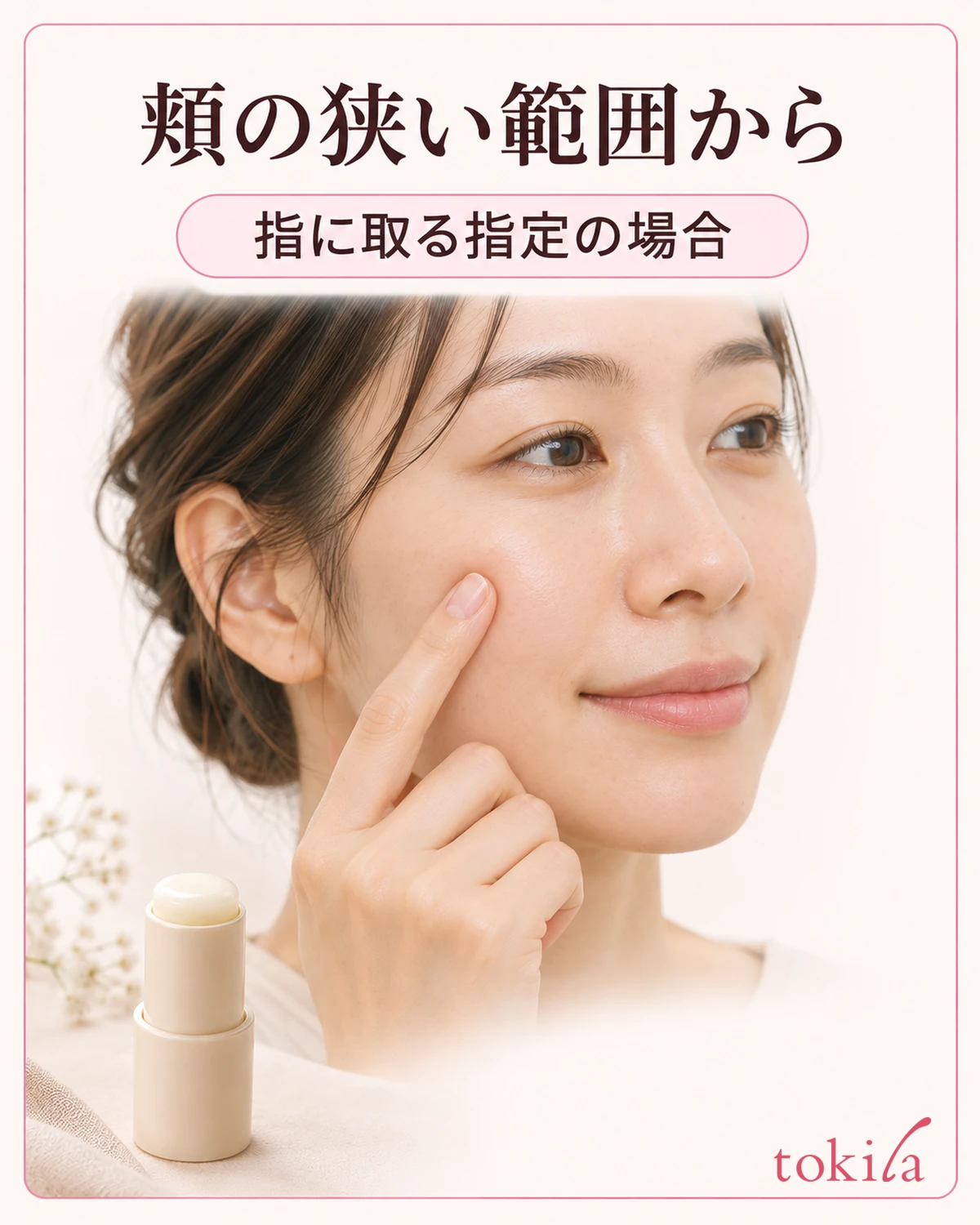
Look at your cheek straight on and at an angle to see how far the powdery area extends. You don't need to redo your entire cheek. If it's only a patch in the center, for example, start there and avoid extending into the surrounding base that looks even. Near the eyes or the edges of the lips, also check that the product can be used in that area.
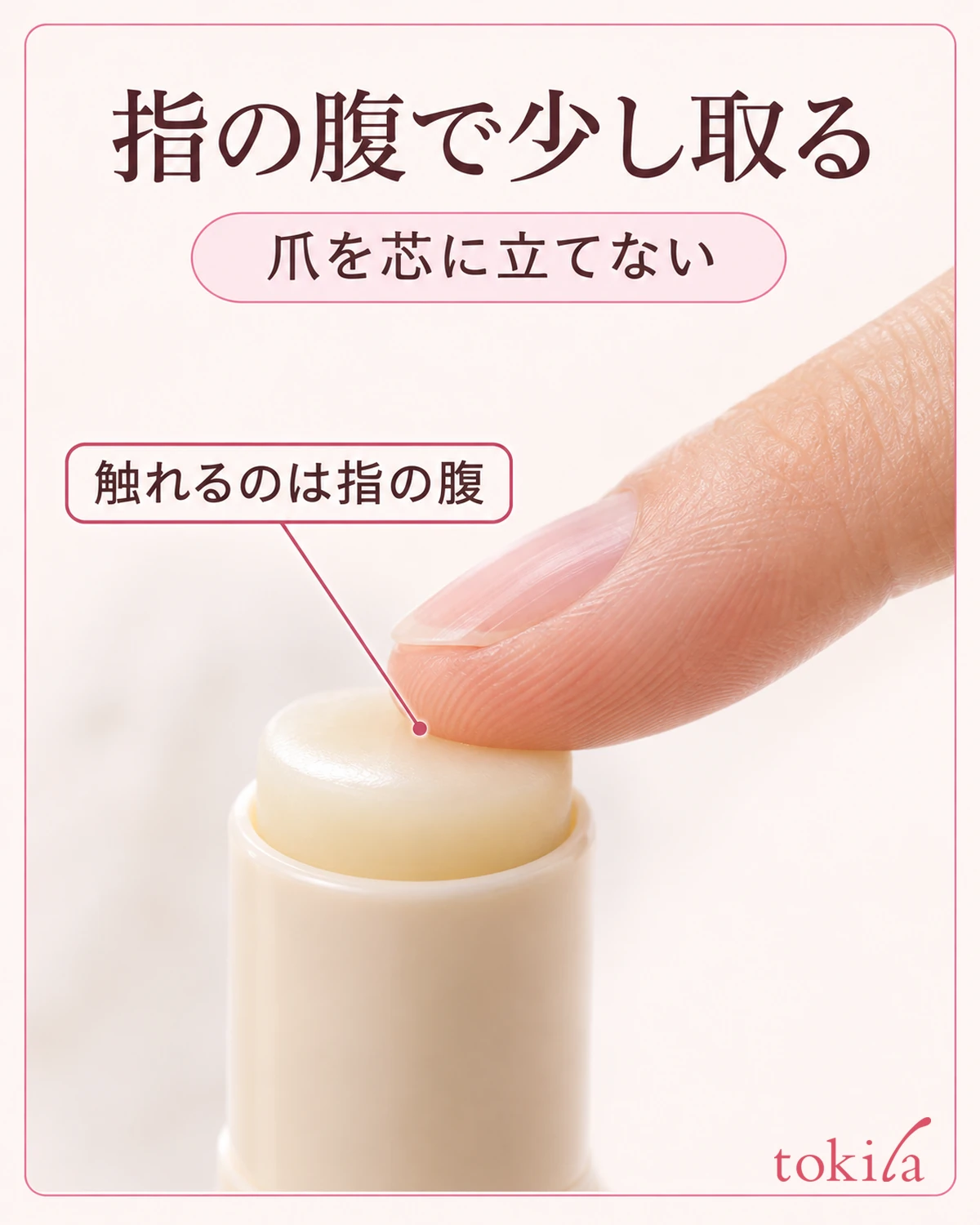
When applying with a finger, pick up a little with the pad. Keep the tip of your nail pointed up as you touch the stick without scraping its surface. Check that the product is on just part of your finger before bringing it to your skin. This also makes it easier to decide where to touch your cheek.
Place the pad of your finger on your cheek and blend lightly as directed. Dragging sideways may shift the surrounding base, so lift your finger before moving to the next spot. If the directions call for applying directly and then blending with a finger, lift the stick away first and limit your finger to the area near the original application.
Pull away and look in the mirror to tell whether you want more serum or whether the edge of the base already looks like it has shifted. If the patch looked powdery because the foundation was thick to begin with, continuing to layer on serum makes it harder to see where that patch ends. Compare the area you treated with the surrounding skin before deciding what to do next.
If a dry-looking spot is next to a streak where the base has lifted, treat them as separate spots. Identify the powdery area first. Leave the streak for a makeup touch-up instead of spreading it with serum. Try keeping the same viewing angle so you can see the edge when you look in the mirror again.
4. Check the edge of the application before touching up your base
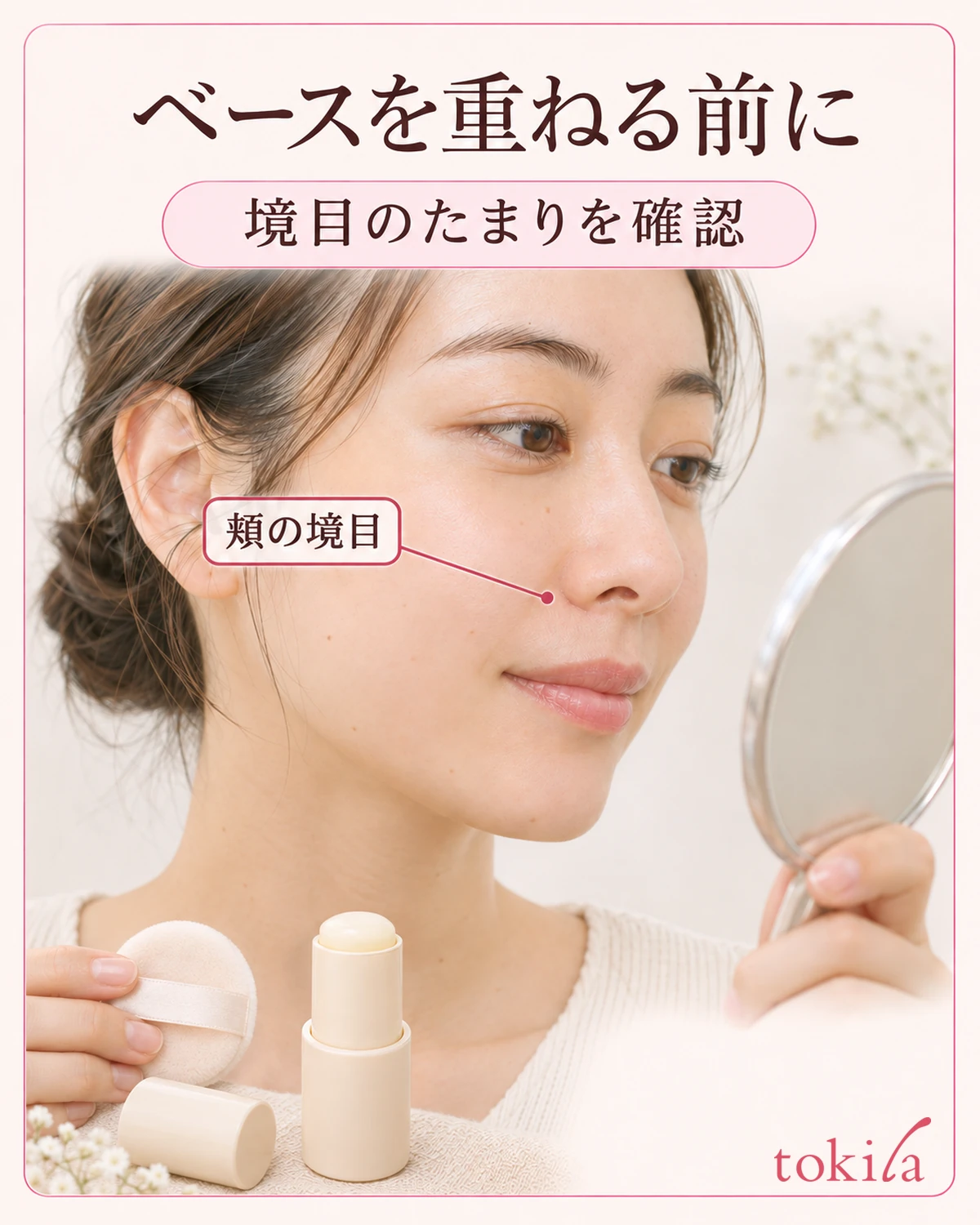
Once you've put the stick down, check both the center of the application and the edge where it meets the untouched area. If base makeup has gathered next to your nose or color from your puff appears to have collected at the edge of your cheek, inspect that spot before adding more powder. Turning your face slightly can make buildup easier to see than looking straight on.
If the directions say to apply powder or foundation after the serum, follow that order. Start on a small area, avoid dragging a puff across a wide stretch of skin, and stop at the edge to take a look. Where base makeup has gathered, touch up that area using a method that suits your product before layering. If it already looks blended with the surrounding area, you don't have to add base makeup everywhere.
On days when you're also reapplying sunscreen, check its directions separately, including the order for using it with makeup. If your foundation shifts, a serum stick alone can't take care of reapplying sunscreen. Even when consulting how to reapply stick sunscreen, start with the label on your own sunscreen.
Before touching up, also check whether you need your usual powder. For example, if base makeup has gathered only beside your nose, applying powder all the way to the outer cheek can create a difference in texture on an area that looked fine. Check the edge first and use the product directions to choose where to add powder. Then you'll know where to look next in the mirror.
5. Retract the stick before putting the cap back on
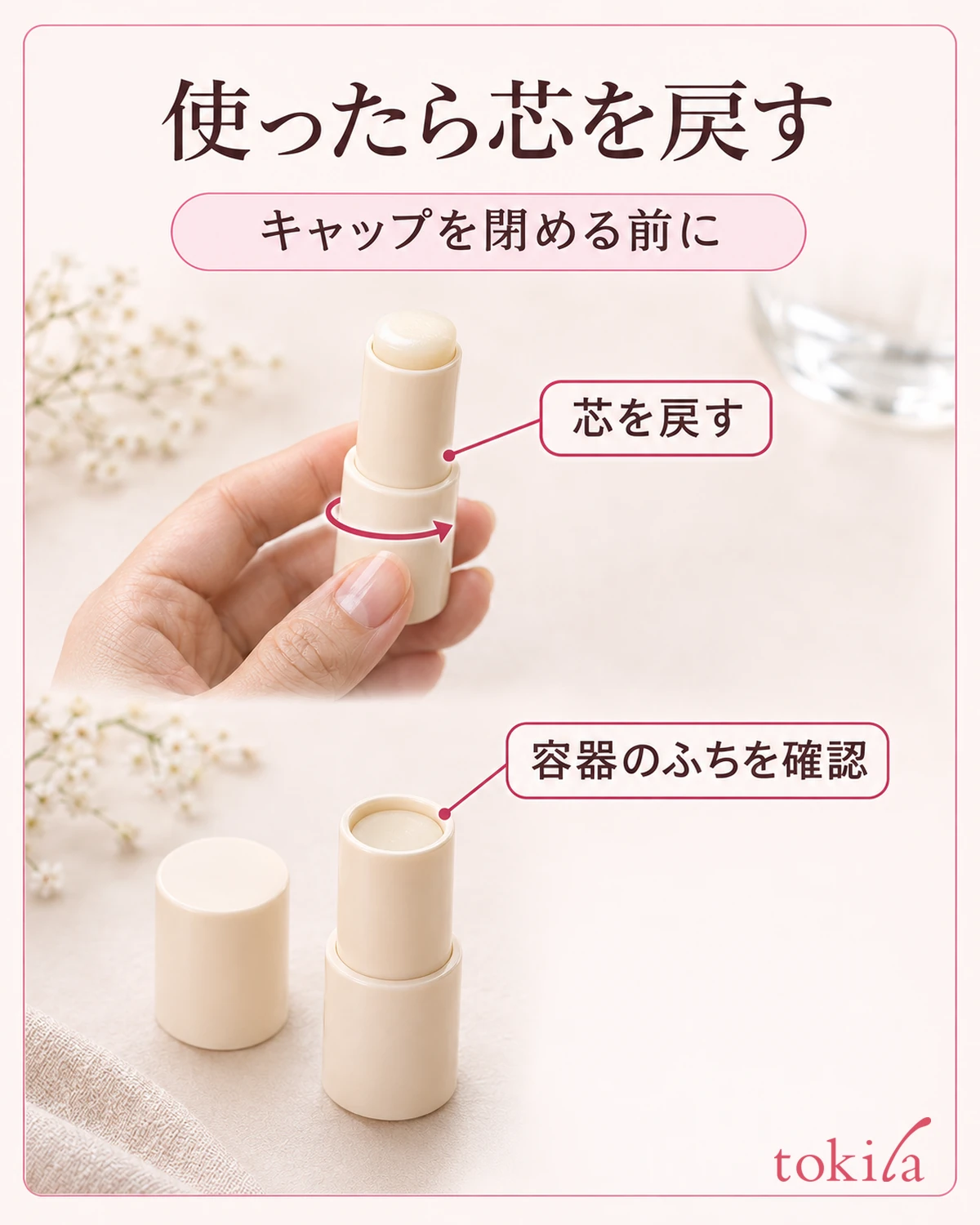
After use, inspect the tip of the stick and the rim of the tube before putting it away. If it retracts, wind it down far enough that it won't touch the inside of the cap. If foundation has transferred to the surface or rim, check for care instructions. Avoid scrubbing hard or rinsing the stick with water when you don't know how it should be cleaned.
If the stick is difficult to extend the next time or appears chipped, check the tube and storage instructions rather than forcing it to turn or pressing it into your skin. If your makeup shifts in the same spot every time you use it midday, first reconsider whether you covered too large an area or deviated from the directions.
Remember the sequence: check that you can use it over makeup, choose direct or finger application as directed, apply it to a small area, then check the edge. Let the condition of your cheeks that day guide where you apply it and what you layer on during a touch-up.