You wrapped a hair towel after your bath, but hair falls out from the side. While you tuck the ends back in, the cloth on top of your head comes loose too. When that happens, before twisting harder, check where the hair is coming out and the shape of the towel.
Hair towels come in flat cloths, bag or tube shapes, ones fastened with a loop or button, and more. Even under the same name, there is more than one way to use them. This article goes through, in order, the preparation before wrapping your hair, where to tuck it, and what to check after fastening. It is a review for handling your towel comfortably by following its instructions, not for racing to dry.
1. Spread out the towel and first check its shape and where it fastens
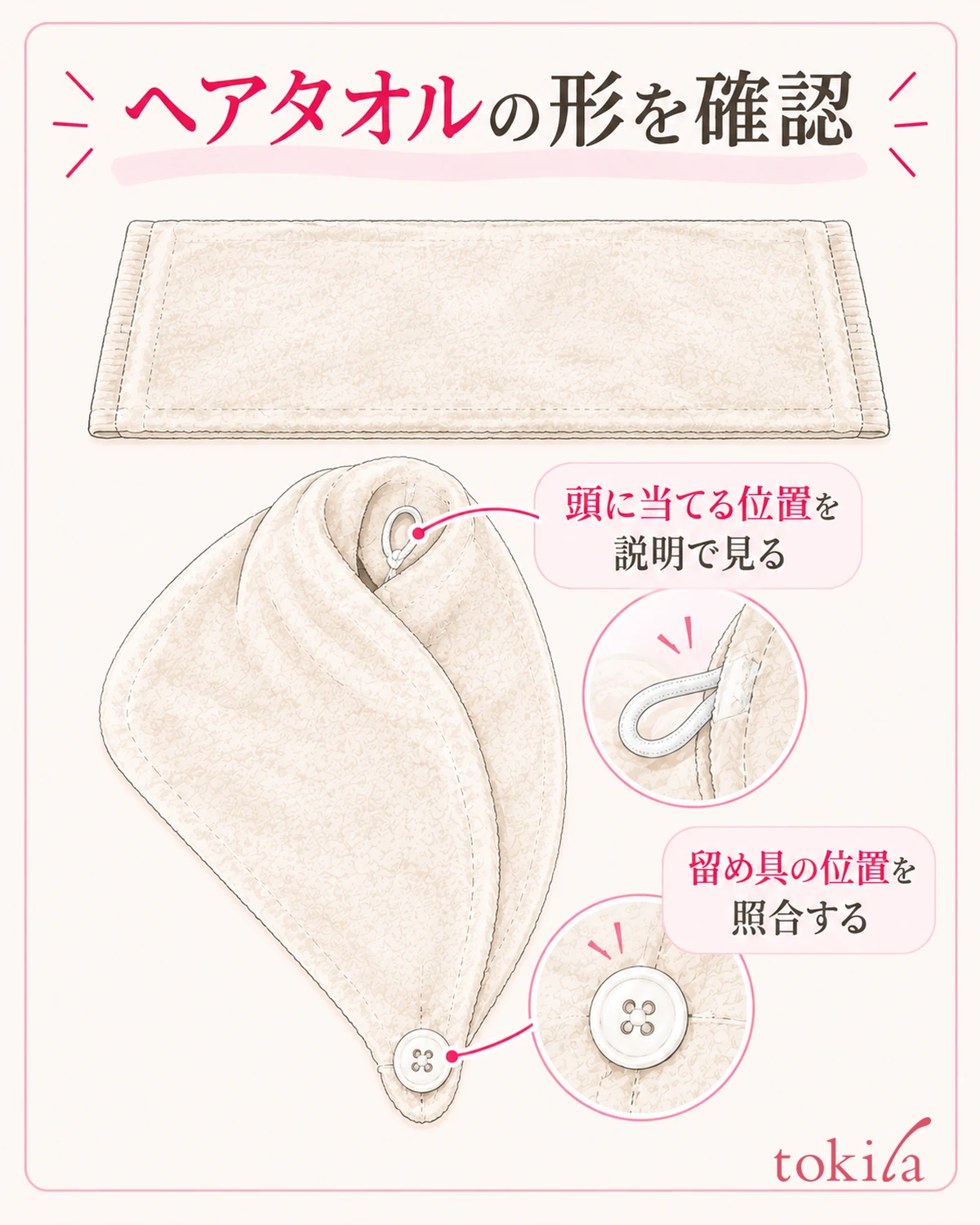
First, take the towel off your head and spread it out in a bright place. Tell whether it is a flat rectangle, a bag shape that narrows at one end, or a tube shape. If there are buttons, loops, pass-through holes or snaps, check the position of each. The starting point is not to confuse decorations you can see from the outside with the parts that actually hold the cloth.
Next, compare the place where the towel sits on your head, as shown in the included instructions, with the position of the fastener. Some types have the button at the front, and carrying over a wrapping direction you learned with another shape may not fit well. Do not decide that the wide side must always go to the back; hold it again according to the diagram for your towel. The same applies when there is a specified front and back.
Look not only at the length of the cloth but also at the width and depth of the part that can wrap your hair. If there is not enough room for your hair, do not try to stretch the fastener to make it reach. If the range of hair length and amount it is meant for is stated, check it, and leave room to consider a different size or shape if your hair does not fit.
If hair falls out from the same side every time, comparing the direction of the towel before fastening with a photo or diagram once makes it easier to trace the step where it shifted. If a part is torn or a seam is fraying, do not keep pulling to adjust the shape; hold off using it.
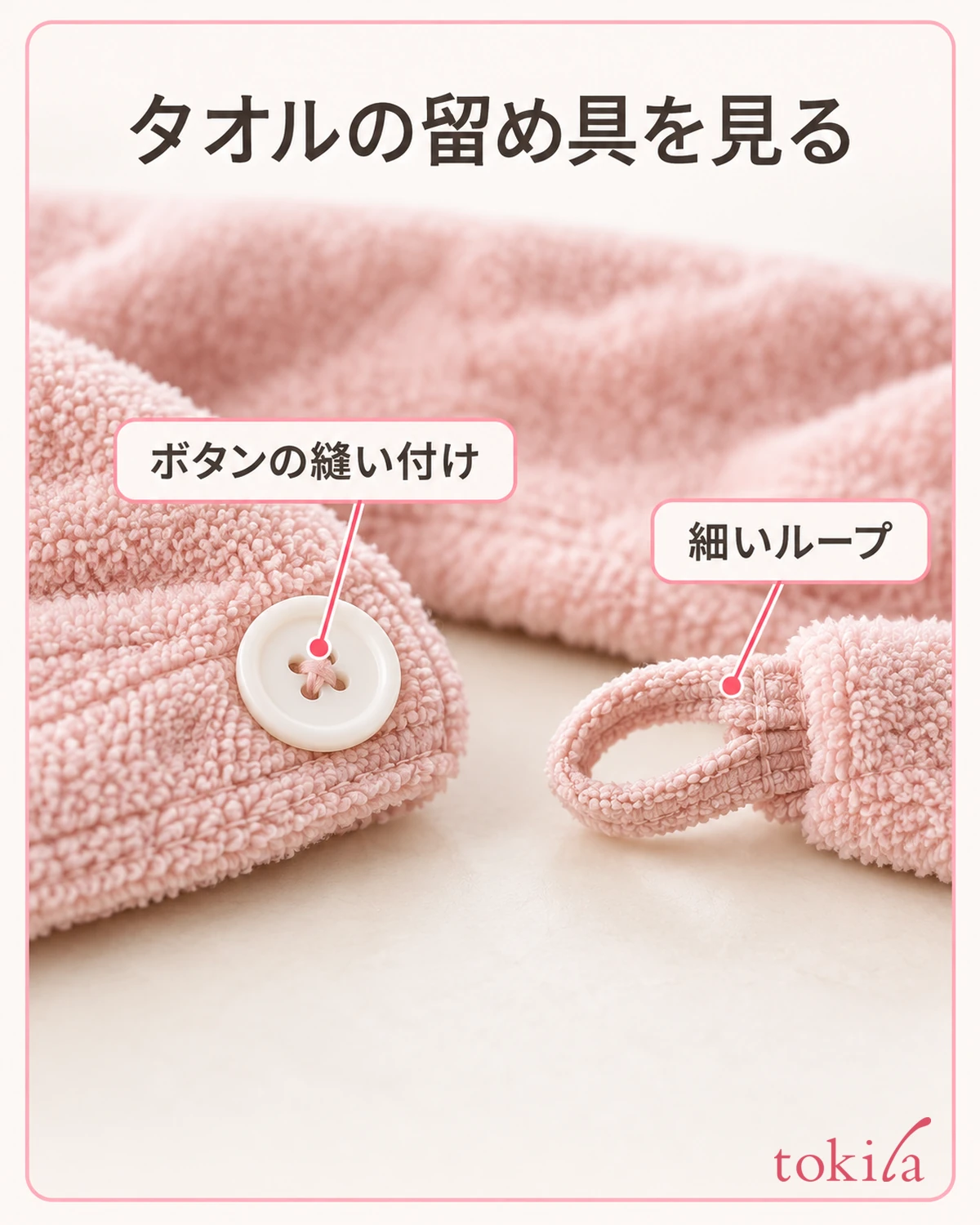
If you still cannot tell how the parts correspond even after reading the instruction sheet, check on a desk where each part fastens before trying it on top of your head. This is a check of where the cloth reaches naturally without applying force. Even for a similar shape, do not apply another towel's fastening method by guesswork; check that the product name and the included instructions match.
If you are using a borrowed towel or an old instruction sheet, do not judge that it is handled the same way just because the cloth looks alike. If you cannot confirm the product name or labels and the fastening position is unknown, do not force it into a turban; first check whether it can be used to press out moisture.
2. Before wrapping, arrange the moisture and the position of the hair
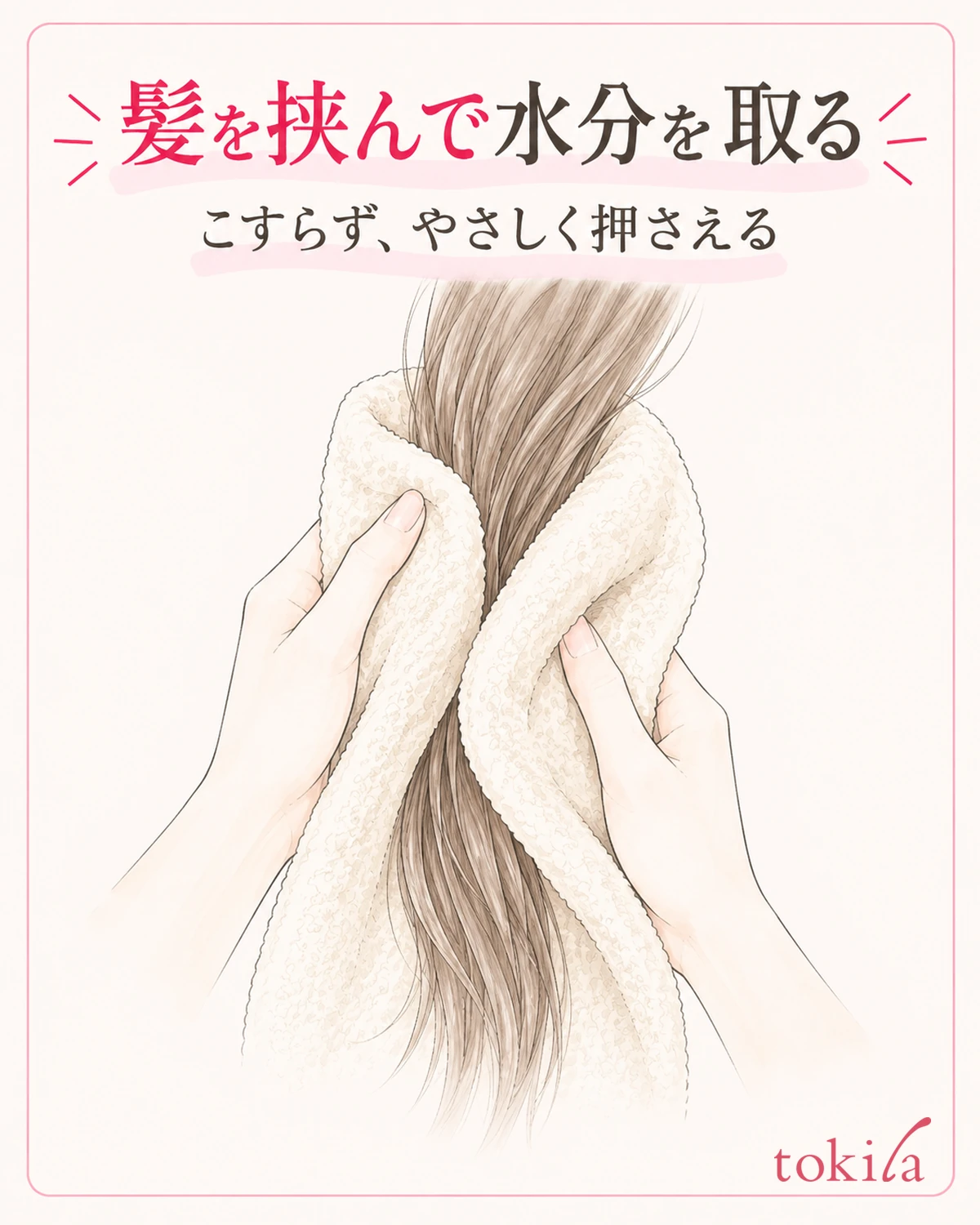
If water is still dripping from your hair, first sandwich your hair in a clean towel and gently press out the moisture. There is no need to rub strands together or wring your hair like a rag. Keeping the step of tucking your hair into the hair towel separate from the step of removing drips makes it easier to stay calm when you rewrap.
Also check whether your towel is meant for wet hair, or whether it is one that tells you to dampen the towel itself before use. The preparation differs by material, so a dry towel is not always the right answer. On the other hand, avoid adding water when it is not specified, or putting hair oil or the like directly on the towel.
When you change posture, do it within a range that is easy on your neck and lower back. If a step that has you bend forward is a strain, do not endure that posture and hold it; consider another way of using it or an easier shape. Do not suddenly lift only your face while your hair is being pulled.
Gently gather your hair to the place where it will be wrapped, and check that no strands at the back of your head or behind your ears are left behind on either side. With long hair, look all the way to where the ends go. It is also important not to pull everything together with the towel to fit it in when you feel tangles. To check how to remove moisture after shampooing, see also the basics of towel-drying after shampooing.
It also helps to arrange things before you start so that you can reach the mirror and the fastener. If you look for the instruction sheet while holding your hair with both hands, the strands you gathered come undone. Reading the instructions first and deciding where to put the towel for removing moisture and the towel for wrapping your hair before you begin reduces the hurried motion of retightening midway.
3. Tuck in the ends and side hair, then fasten by the specified steps
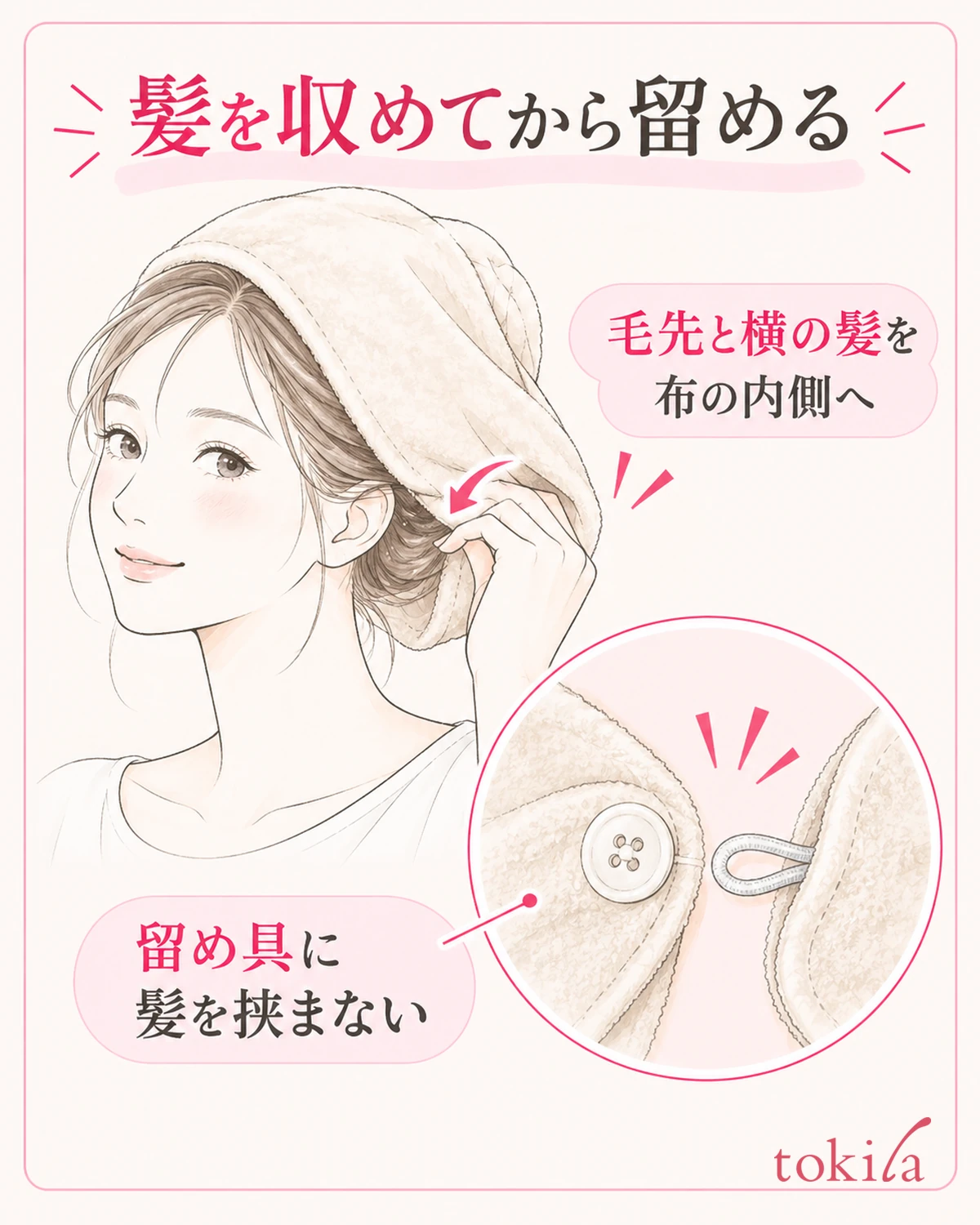
Once you have placed the towel in the specified position, do not twist it right away to fix it; first look at whether your hair is inside the cloth. Even if the front is covered, hair behind your ears may be left outside. While supporting the cloth with one hand, gently tuck in the strands that are sticking out with the other.
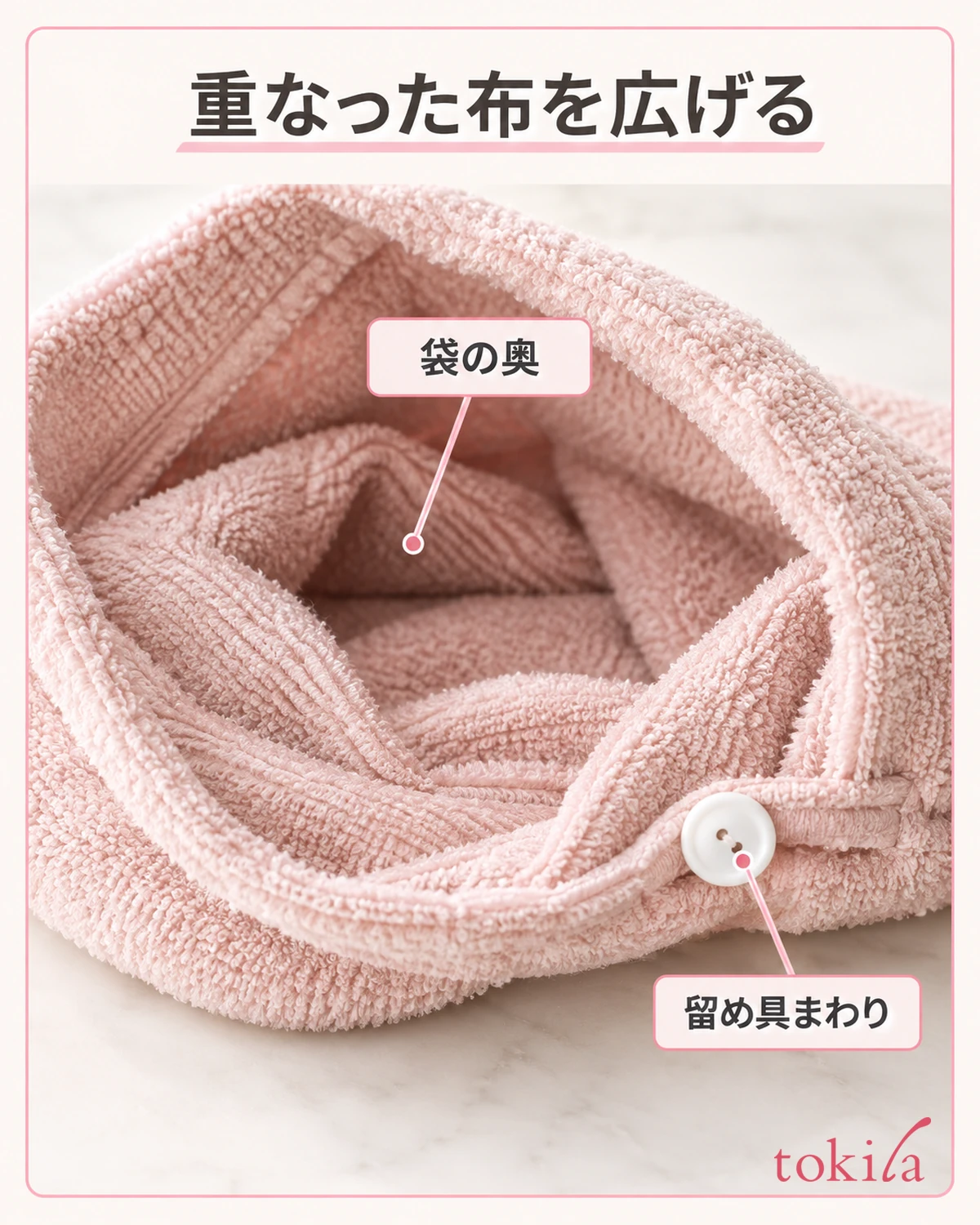
With a bag shape, check that there is room for the ends to go in; with a flat cloth, overlap the faces that wrap your hair as the instructions say. How to tuck in ends that are too long differs by product. Before adding your own motions, such as folding hard or pushing a stiff bundle in, return to the form your towel's instructions show.
With a type that has a twisting step, move the cloth with your hair in it in the specified direction. More twists do not necessarily make it less likely to come off. If the roots are pulled, your head feels squeezed, or it takes force to reach the fastener, undo it once and review the position. Do not bring the steps of another product into a form that is used without twisting.
Just before fastening, check that no hair is caught between the loop, button or snap. Hold the part where you can see it, and fasten it only after just the cloth and the fastener are touching. Do not press the part while hair is tangled in it, or pull hair out after it has fastened.
Look separately at the short hairs around your face and the long strands that fell from behind. There is no need to hide every last short hair by pulling the cloth on your forehead down hard. If long strands remain outside, rather than pulling at the edge of the cloth, check where they were left behind and go back to the wrapping step. Do not pull the cloth down to the point where it covers your eyes.
4. Look at where the hair sticks out, then undo it once and rewrap
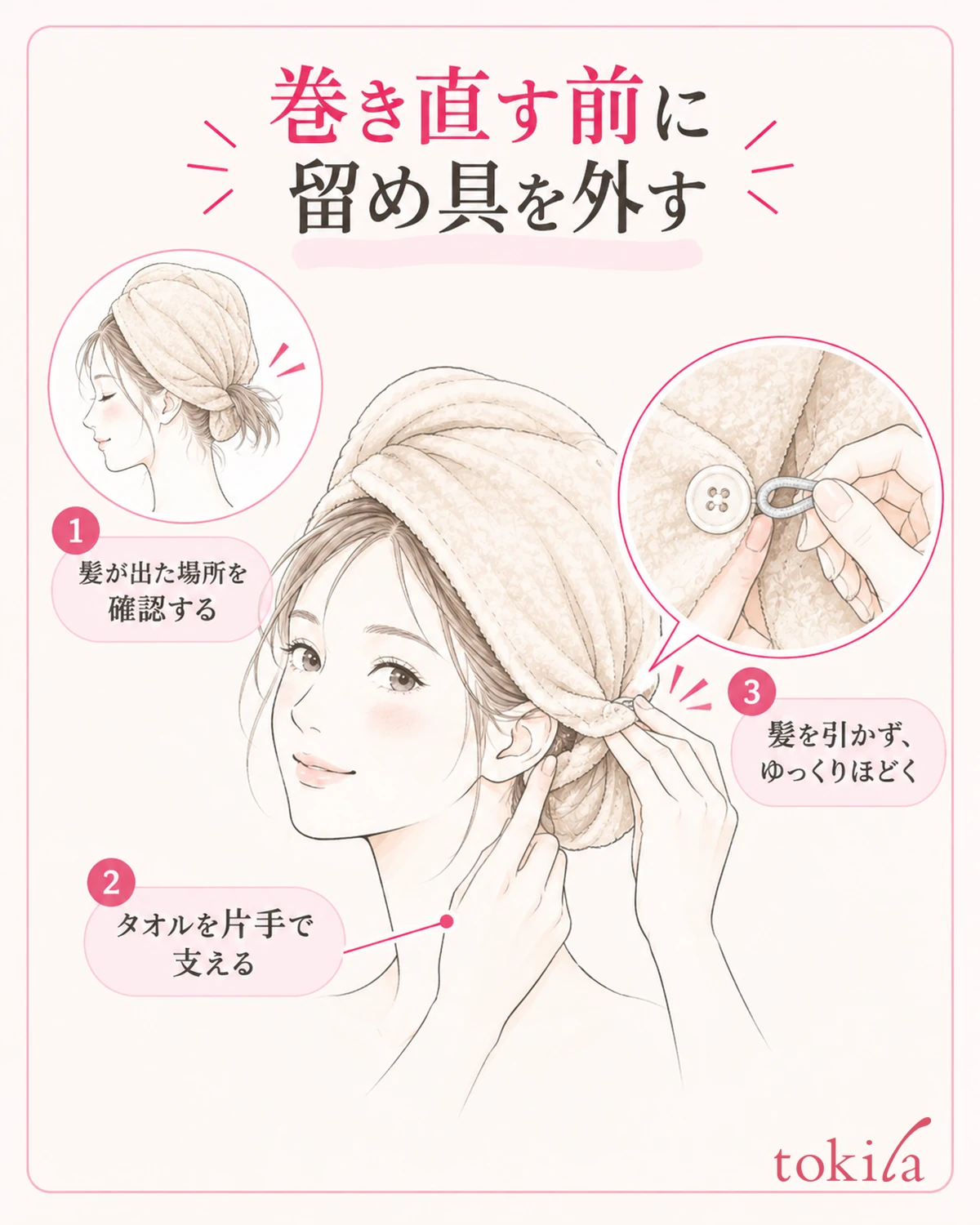
After fastening, look at the front and the sides in a mirror. Check separately whether only the ends are sticking out, whether hair falls in clumps from behind your ears, or whether the whole towel slips. Rather than trying to fix everything at once, remembering the first place where hair came out makes it easier to compare after you rewrap.
If hair falls from the side, review whether the cloth in that area was loose before you tucked your hair in. If the ends stick out, check where you wrap, the usable length, and the depth of the bag. However, in both cases, just pushing it in from the outside to hide it makes it harder to notice that hair is being pulled near the fastener.
To fix it, support the weight of the towel with one hand and undo the specified fastener with the other. Undo it slowly while watching that hair and cloth are not tangled, tuck in the strands that need it, and fasten again from the start. Do not keep adding hard twists with it still on your head, or retighten by pulling on the fastener.
If it does not stay in place after many tries with the same wrapping, also consider that the size or shape may not suit your hair length and amount. Before adding rubber bands or metal pins to fix it by force, you can switch to pressing out moisture with another clean towel, without adding uses the instructions do not mention. Do not keep using it while it hurts or pulls.
When checking the fastened state, there is no need to shake your head hard to test its durability. Slowly return to your usual posture and see whether your hair is pulled and whether the weight of the cloth leans to one side. If it is hard to see the back in the mirror, taking it off once and spreading the cloth out again makes tangles easier to find than searching by feel with your fingers for places you cannot see.
When the hair is tucked in after rewrapping, look again at the place where it originally came out. Check that you have not simply pushed it to another place, and that no hair is near the fastener. Even if it looks neat, if a pulling feeling remains, do not call that wrap finished; undo it and reconsider the position and size.
5. Decide how to dry after removing it, and how to prepare for next time
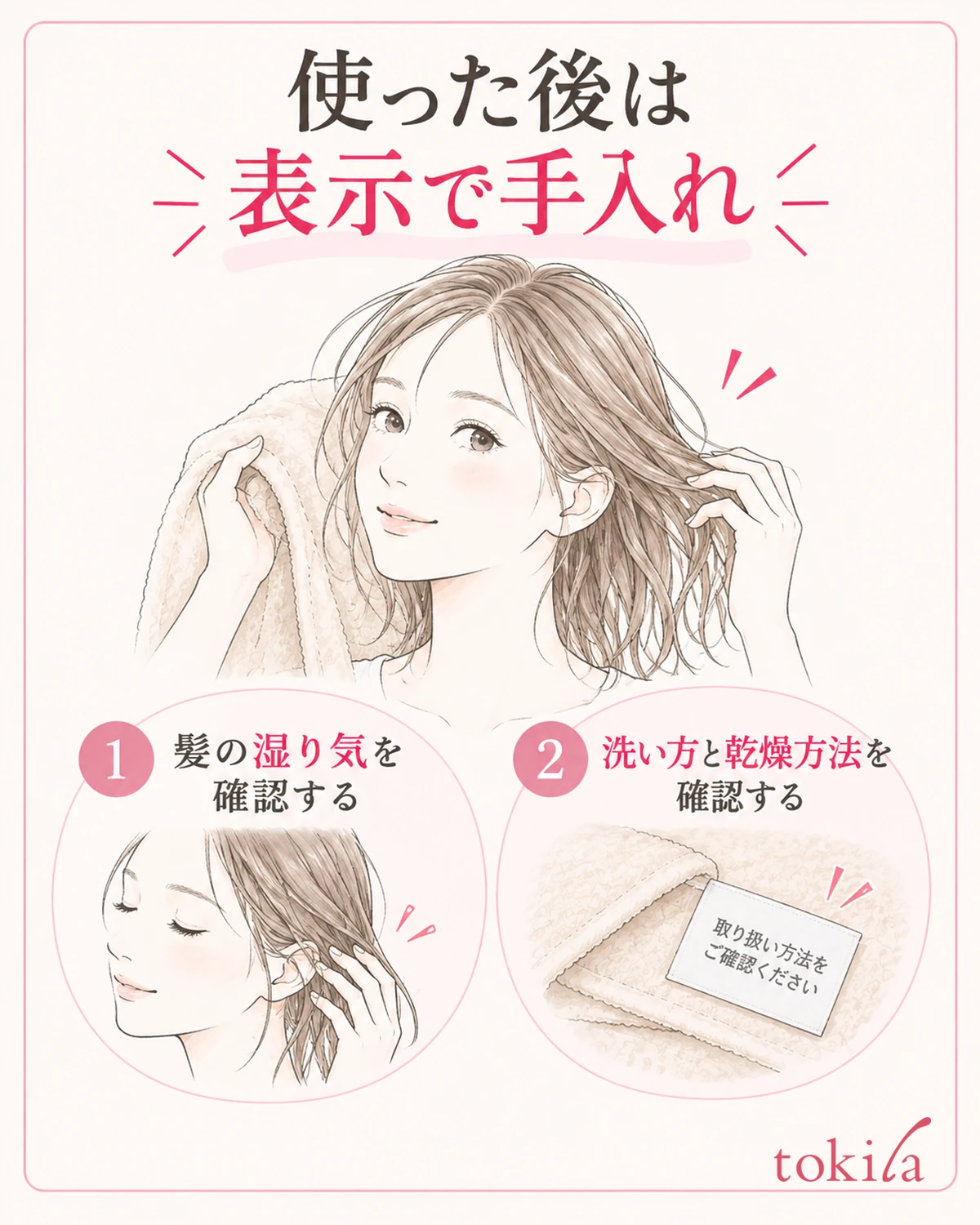
When you take the towel off, too, support the cloth before releasing the fastener, and undo it without pulling your hair. Having wrapped your hair and your hair being dry are separate things to check. Do not judge your hair dry by how the outside feels when dampness remains at the roots or inside.
Check your product's instructions for how long to keep the hair towel on. Do not extend it to uses such as "wrapping longer always dries faster" or "it's fine to sleep with it on." If you use a hair dryer, take the towel off and dry according to the device's instructions. If you also want to review how you apply heat, go on to care that reduces friction and heat on hair.
Care for the towel after use according to its care label and instructions. Whether it can go in a washing machine, a dryer, or with fabric softener differs by material, and is not the same even among hair towels. If it has a fastener, check the parts and seams too, and do not leave it rolled up small while damp until the next use.
For next time, it is enough to leave a short note of the product name, the position where you placed it, and the place where hair first stuck out. Make it clear what you changed, for example checking the direction this time and reviewing where you tuck in your hair next. Do not blame hair type alone for why it won't stay in; think of it as a combination of the towel's structure and how easy it is for you to handle.
After washing, also spread out the folded inner parts and the area around the fastener, and dry them in a way that suits the instructions. Even if the surface is dry, dampness may remain deep in the bag or in the overlaps. Before the next use, look at the condition of the cloth and parts and prepare a clean one. Even if you notice a change in absorbency, do not decide on your own to add bleach or high-heat drying that cannot be used.