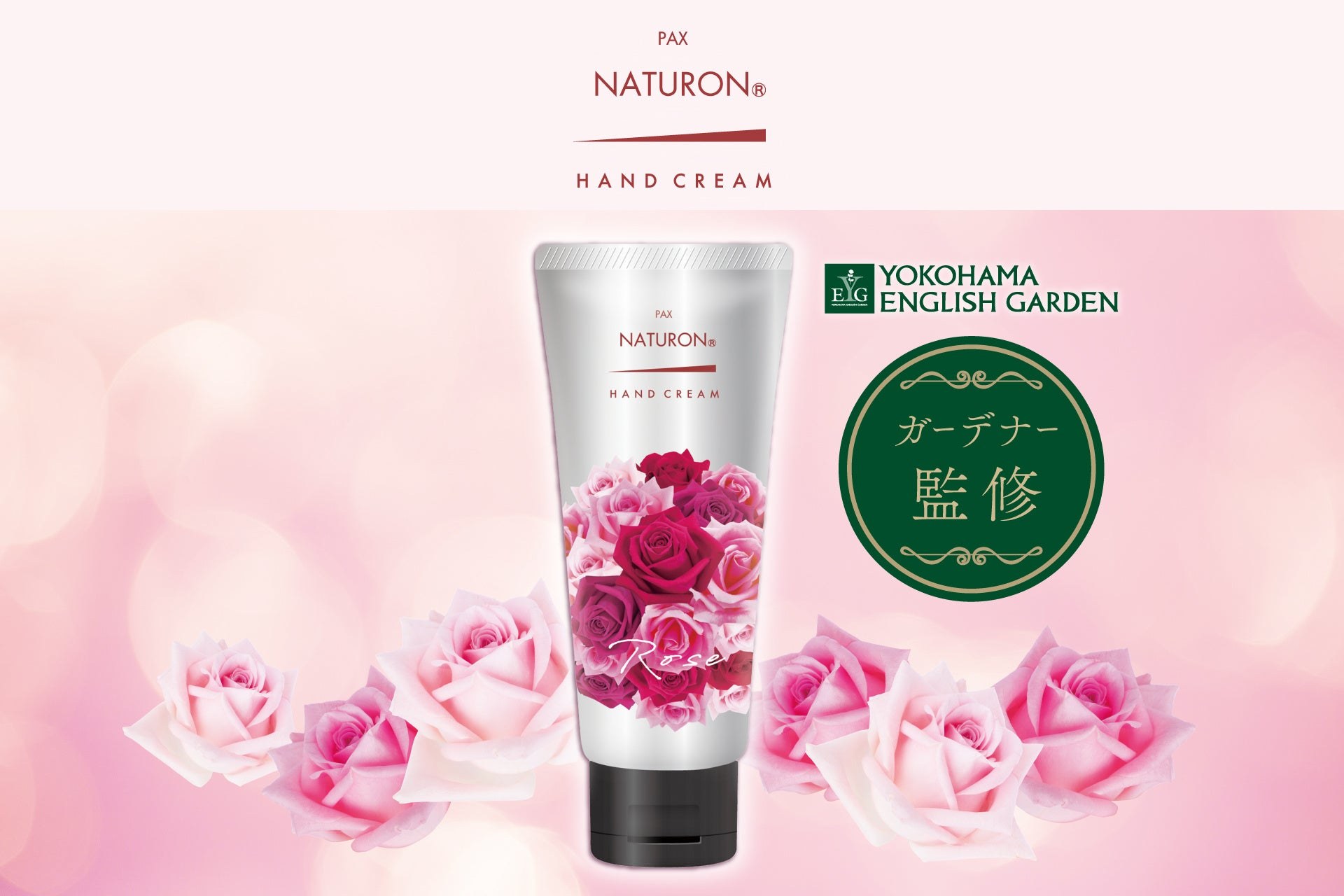
Wash your hands, squeeze out some hand cream, rub your hands together, and you are done. If that is your routine, the cream may cover the backs of your hands without reaching the sides of your fingers or the areas around your nails. Before using more, take another look at where you have spread it.
Here we consider everyday moisturizing after handwashing. After checking the amount and precautions for your product, we introduce one example of spreading it over the backs of your hands, fingers, and palms. This does not replace the instructions for any particular hand cream.
1. After handwashing, check your hands and the product label before use
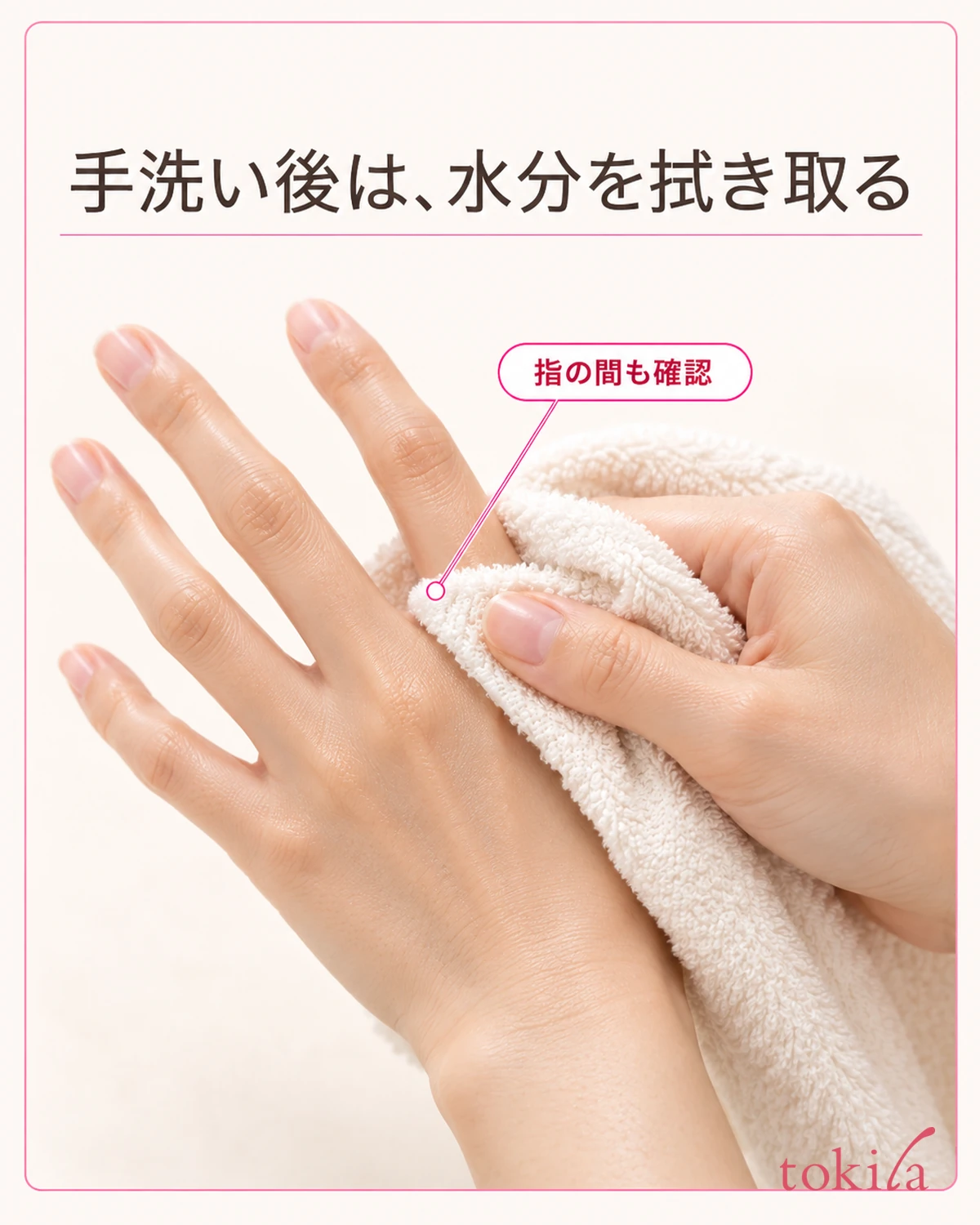
After washing your hands, wipe away moisture with a clean towel or similar item before preparing to use the cream. Check for remaining water droplets between your fingers as well as on your palms. If you wear rings, pay attention to moisture underneath them, too.
The container gives information such as the amount to use, suitable application areas, and situations in which to avoid use. Even among products called hand creams, the labeling to check differs for cosmetics, quasi-drugs, and medicines. Do not assume that the same amount as a family member’s product or one you used before is appropriate; read the instructions for the product you are using now.
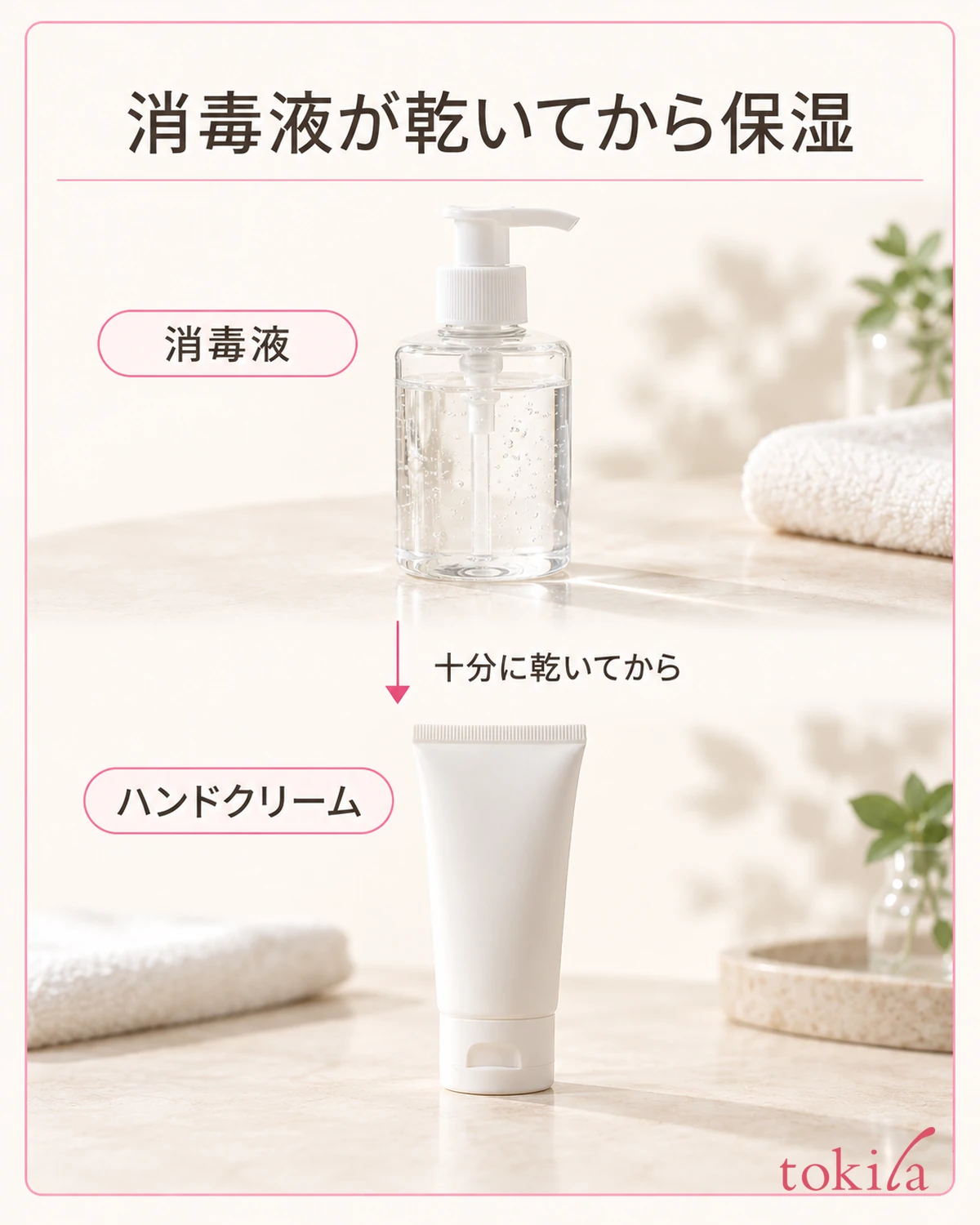
When you also use hand sanitizer, guidance recommends spreading the sanitizer over your entire hands first and letting it dry thoroughly before applying hand cream. Avoid mixing wet sanitizer and cream together on your hands, and follow the sanitizer’s directions, too.
You do not need to set aside a long time for each application. For example, after washing your hands away from home, a routine of taking out the container, drying your hands, and using the product as directed can make it easier to fit in. Rather than setting the same frequency for everyone, consider a habit of checking your hands and the label after using water or when dryness bothers you.
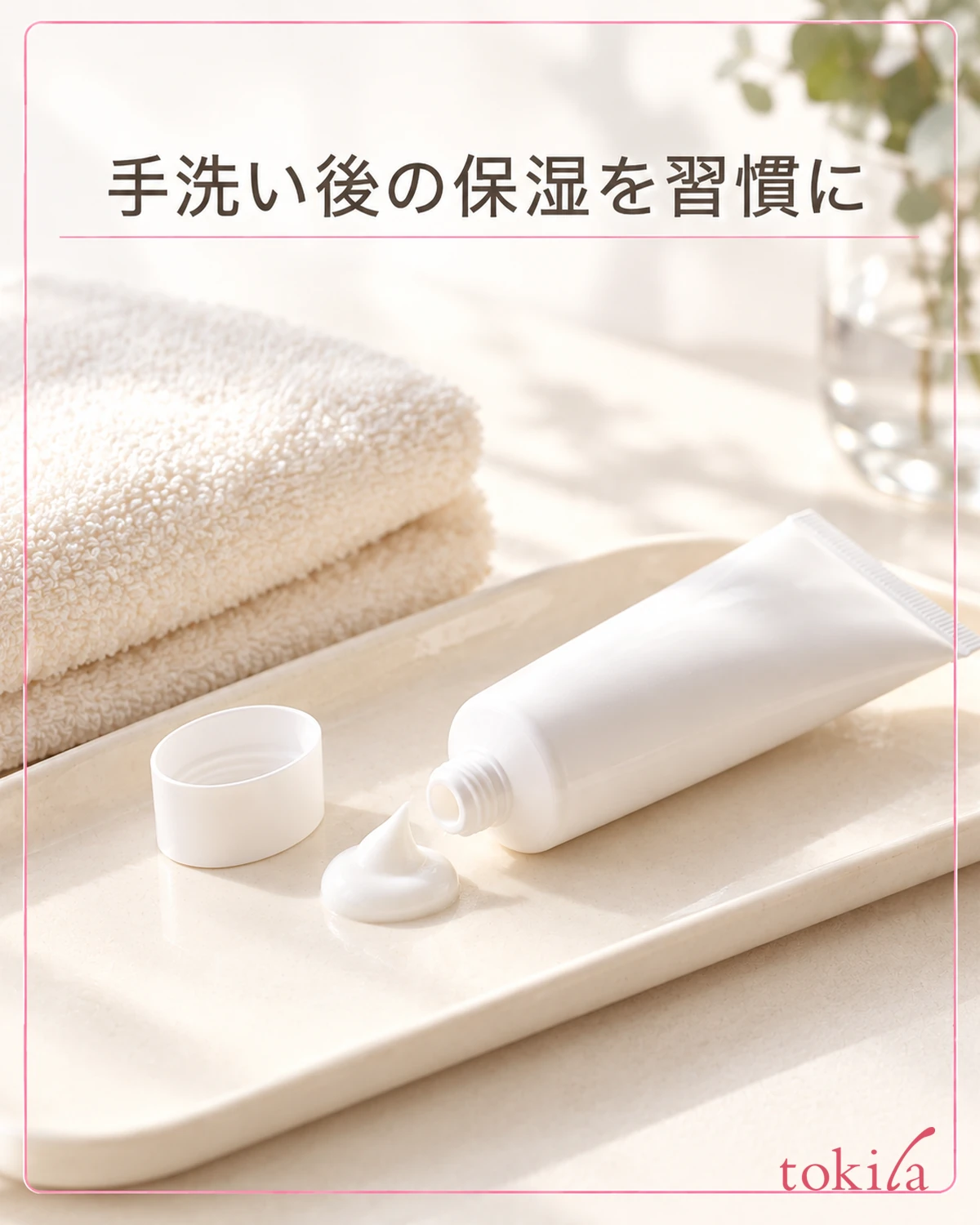
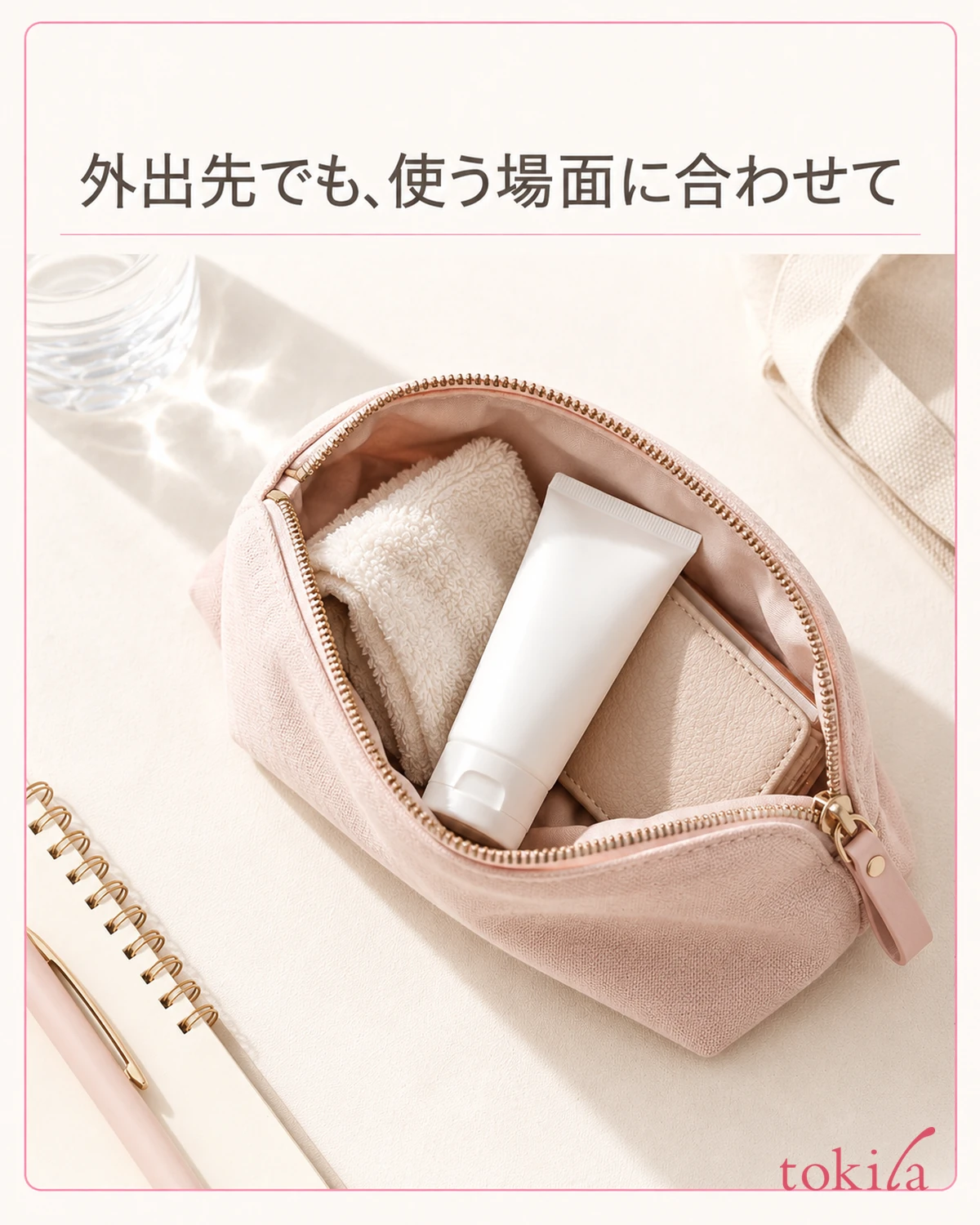
Think about a place you can reach after handwashing, such as near a towel in the washroom or in a pouch if you also use it away from home. Follow the product’s storage conditions while choosing a location where you can find the container when you need it. When looking for a portable product, consider the cap opening and closing and the container size, along with fragrance and where you will use it.
2. Take the amount indicated on the label and spread it over the backs of your hands
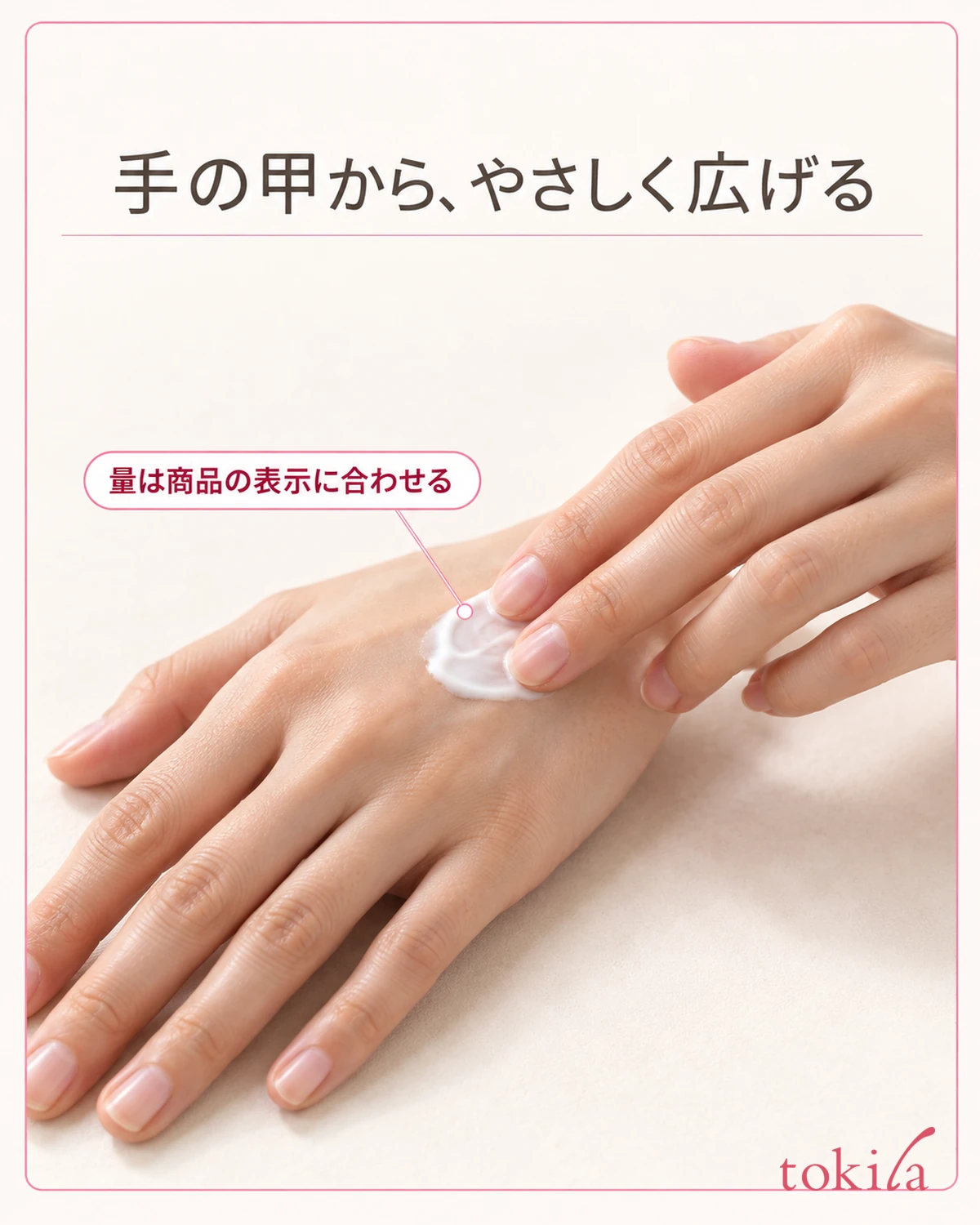
If the product specifies an amount, follow that guidance. You do not need to use the amount of cream shown in the photograph as your own single-use amount. Depending on the container opening and the cream’s consistency, even the same length of cream can represent a different amount.
If starting with the backs of your hands, gently spread the cream placed on one hand with the pads of the fingers of your other hand. Another approach is to lightly bring the backs of your hands together to share the cream, then use your finger pads to spread it throughout. Move from the backs of your hands toward your fingertips, checking for areas you have missed.
If some cream remains white, you may want to rub hard to make it disappear quickly. First check whether you have been touching only the same spot, then spread it to the surrounding area. Do not make stronger rubbing or prolonged rubbing your goal.
After applying cream to the back of one hand, check the other side in the same way. When moving your nondominant hand, resting your hands steadily on a table or similar surface can help you see where you want to spread the cream. Rather than strictly following one fixed direction, focus on spreading the labeled amount over the backs of your hands and fingertips.
If you tend to dispense too much, next time press the container in smaller stages and check the amount before using it. Squeezing a tube continuously all at once can make it difficult to stop while watching how much comes out. For a product with a specific amount indicated, use that as your reference.
Pay attention to your finger movements, too. If you usually stop after going back and forth over the center of your hand, next time include moving toward the fingertips in the same sequence. Before switching hands, open both hands once to check that you have not finished with just one side. If you immediately bring your palms together, you could start by deciding on one area to check today, such as the backs of your hands and the sides of your fingers.
3. Check the sides of your fingers, the spaces between them, and the areas around your nails
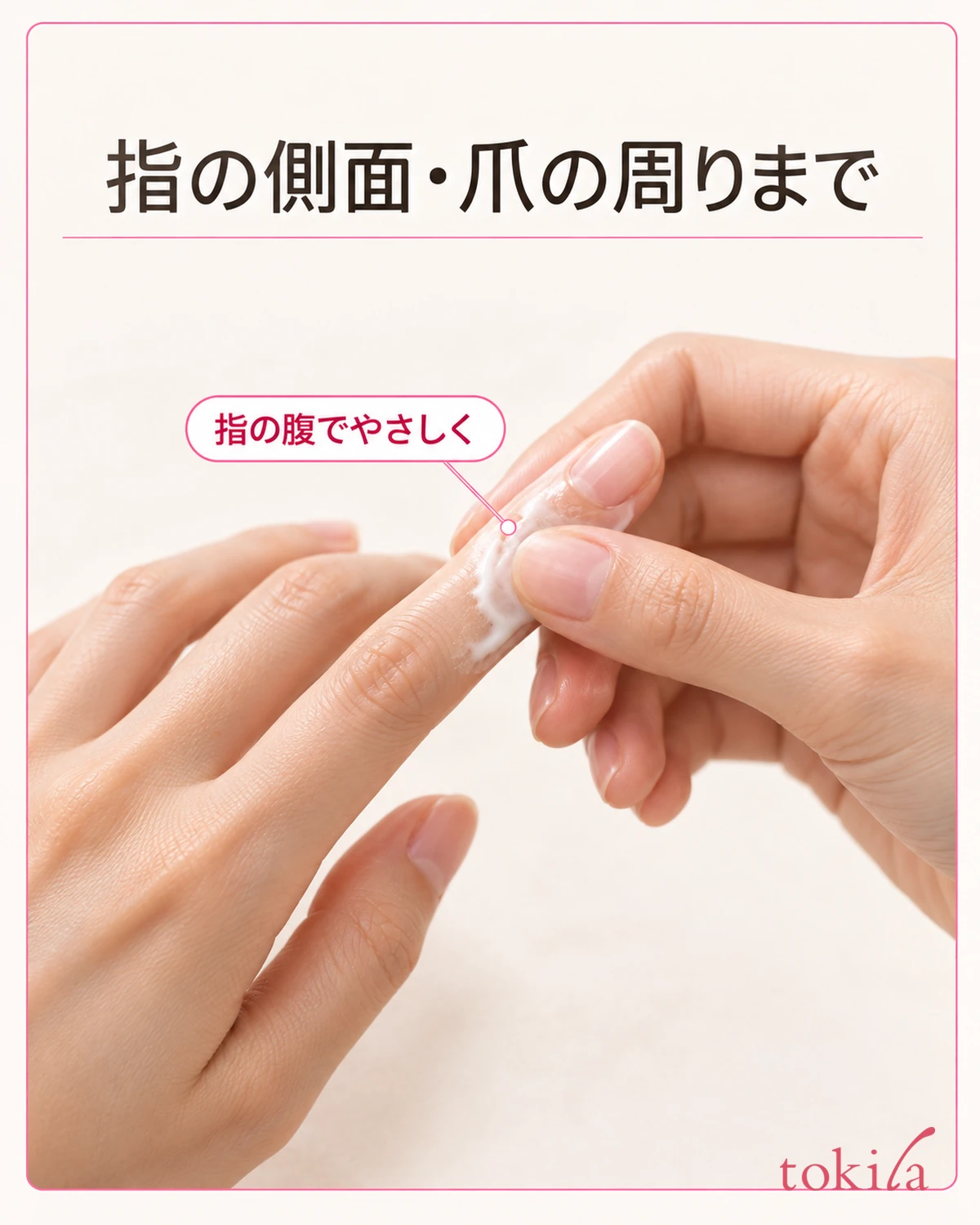
Next, look at each finger individually. Bend the finger slightly and gently work the cream from its base toward its tip using the pad of your opposite thumb, for example. Check that you have reached not only the front of the finger but also the sides that touch adjacent fingers.
Around the nails, lightly support the fingertip and spread the cream along the outside of the boundary between nail and skin. This is not a step for pushing cream under the nail or pushing back cuticles. Do not pull on catching skin; stay within areas you can comfortably touch.
One way to spread cream between your fingers is to lightly interlace them. Do not interlock them so forcefully that the joints bend backward; stay within your comfortable range of movement. Work cream over your palms as well, then open both hands and review the backs, fingertips, and sides in that order.
There are several possible orders of application. The back-of-hand-to-fingers sequence introduced here is one example to help you remember the areas to check. If your product gives different instructions, prioritize those, and do not rub your hands more than necessary just to follow a particular order.
Even when you think you have covered your fingertips, you may have left your thumbs untouched or spread cream only on the palm side. When covering more areas, look at one finger before moving to the next. Checking the fingers on one hand in order before switching to the other can make it easier to remember how far you have progressed than repeatedly moving between left and right.
Spreading cream around your nails does not need to involve adding a large fresh amount. Spread what you have already dispensed, and decide whether to add more based on the product’s guidance and the area covered. Do not aim to leave visible white cream around your nails as the finished result.
4. Use it with your next activities in mind
After applying cream, consider what you will do immediately afterward. If you hold slippery cooking utensils or dishes with cream on your hands, take care not to drop them. Think ahead about the amount and timing of application in relation to breaks between tasks.
Some hand creams offer fragrances to enjoy, but before cooking or preparing a meal, also consider whether the fragrance may transfer to food. A fragrance does not mean a product suits your skin, and natural origin does not mean everyone can use it. Check your fragrance preferences, the situation of use, and the condition of your hands during use separately.
If you also apply sunscreen to your hands, guidance generally recommends hand cream first and sunscreen afterward. However, if either product specifies an order, check its label. Do not replace this sequence with mixing the two on your hands and applying them together.
When choosing a product to use after handwashing, consider not only the size and fragrance but also whether you will carry it or keep it at home, and which activities you will use it after. If something bothers you as you continue using it, review the container’s precautions and the condition of your hands before continually adding more to adjust.
After washing your hands, check the current moisture on your hands and the label before applying, just as you did previously. Remembering the previous amount is useful, but what you do next differs after daytime handwashing, between household tasks, and before going out. Once you find a situation that suits you, one option is to connect it with a time you want to use it, such as after drying your hands when you get home or while getting ready for bed.
If redness, itching, or other abnormalities occur, do not keep using the product by modifying your moisturizing routine; stop using it according to its precautions. Also check the label to determine whether it can be used on areas with cuts or eczema. Consider routine moisturizing and responding to symptoms separately.