You want to try a cleansing balm, but wonder whether its solid texture in the jar and the act of scooping it out will suit you. Before choosing by ingredient names or container colors alone, picture how you will dispense it, work it into your makeup, and finish cleansing each evening.
Even products called balms may differ in how they dispense, how much you use, whether hands and skin must be dry, and whether a face wash follows. Here, we organize pre-purchase checks into texture, containers, cleansing steps, and makeup compatibility. Start by avoiding the assumption that one product’s instructions apply unchanged to another balm.
Consider the solid texture and the feel after dispensing separately
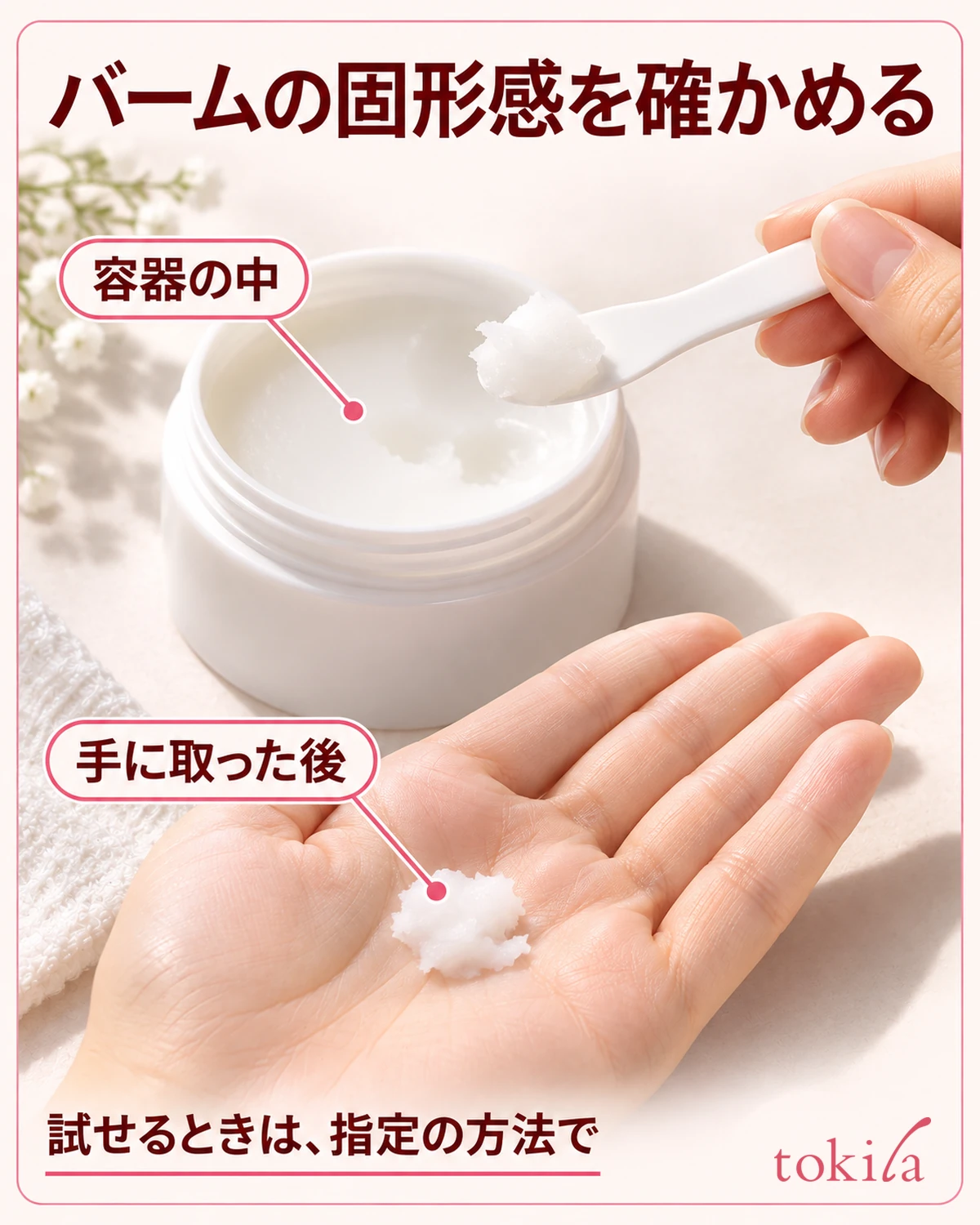
A balm is a makeup remover that is solid or semisolid inside its container. When choosing one, distinguish its appearance just after opening the lid from its feel after you take out a portion and work it in your hands. Looking firm in the container does not establish that it is hard to spread on your face or has stronger cleansing power.
If testing is available in-store, check one product at a time using the designated area and tools. First notice the pressure needed to scoop it out, then how it spreads when worked in your hands as instructed. A brief trial on your hand does not guarantee how it will feel on your face or whether it will suit your skin.
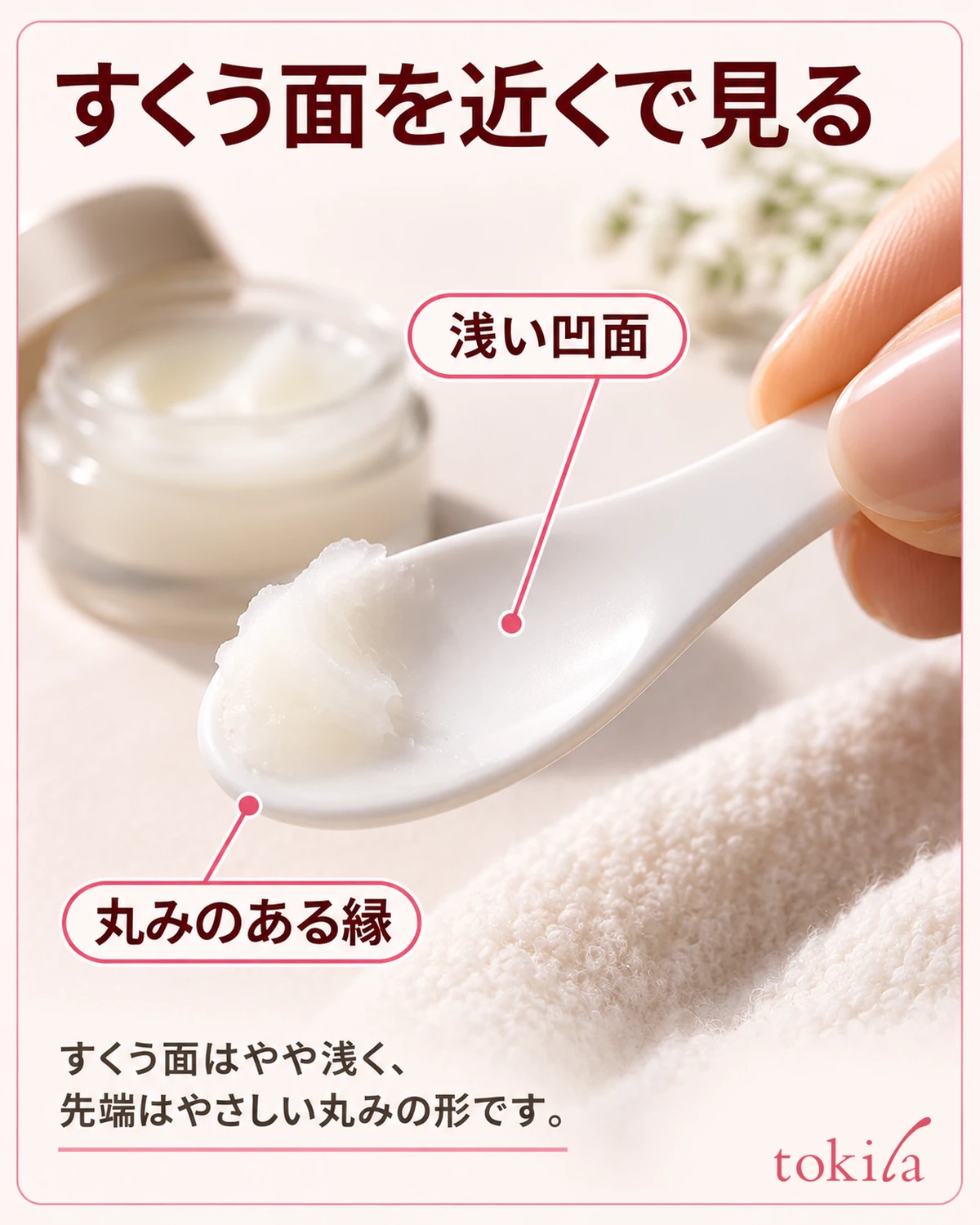
Look at the shape of the scooping tool, too. Seeing its rounded tip, shallow scooping surface, and handle length helps you picture the actual motion. The photo shows the shallow concave surface and edge close up, but the portion shown is not a universal guide to the amount per use.
Whether a product has a fragrance and whether it seems strong are also matters of preference. A fragrance-free label is not the same as detecting no smell at all, including the odor of ingredients. Rather than judging gentleness by color or fragrance, read both directions and precautions.
If a balm feels firmer than before after you start using it at home, that calls for a different check from comparing products before purchase. See what to review when a cleansing balm feels hard as well, and check its condition and storage instructions before heating the whole container or mixing in water.
If you cannot touch or test a product, you do not have to guess its texture from its appearance. Check whether a small size is available and whether the directions explain how to spread it in your hands. Compare options while leaving unconfirmed texture as unconfirmed.
Match scooping or shaving motions to where you will use it
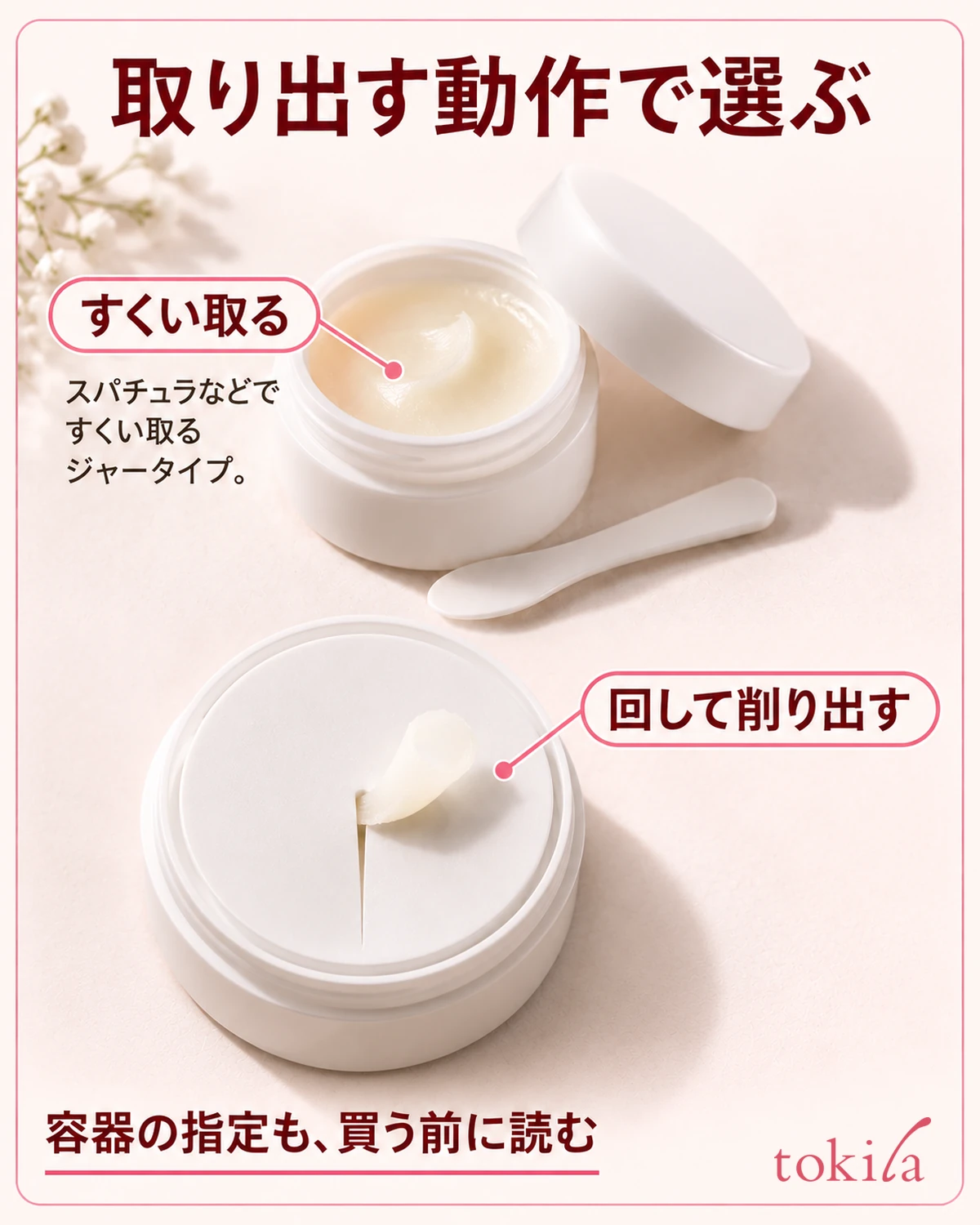
Scooping balm from a conventional jar and operating a container that shaves balm from its surface involve different steps before you have a portion ready. Instead of deciding that either is universally easier, check where it will sit, whether both hands will be free, and where you will put the tool.
For a jar, picture removing the lid, taking balm with the specified tool, transferring a portion to your hand, handling the tool, and closing the lid. Rather than assuming you will tilt the container in one hand to reach the contents, check whether you can set it on a dry, stable spot by the sink.
For a shaving dispenser, read which part turns, where to hold it steady, and how to take the dispensed balm. Turning direction, number of turns, and whether excess can be returned depend on the container. Do not memorize the same number of turns as one dose simply because two products use rotating mechanisms.
Check separately whether a tool is included and whether it can be stored on or in the container. An included spatula does not necessarily have a holder. If you will need to provide a place for it, consider how you will clean and store it after use.
When looking for a travel option, do not assume that every jar is leakproof or that a solid product can be stored anywhere. Read closing instructions, storage temperatures, and travel precautions. Transferring the contents to another small container is not permitted for every product.
Comparing cleanup as well as use turns a preference for a shape into concrete requirements. Keep the options that fit where you use them every day, then move on to comparing size and price.
Read requirements for moisture on hands and skin, and face washing after rinsing
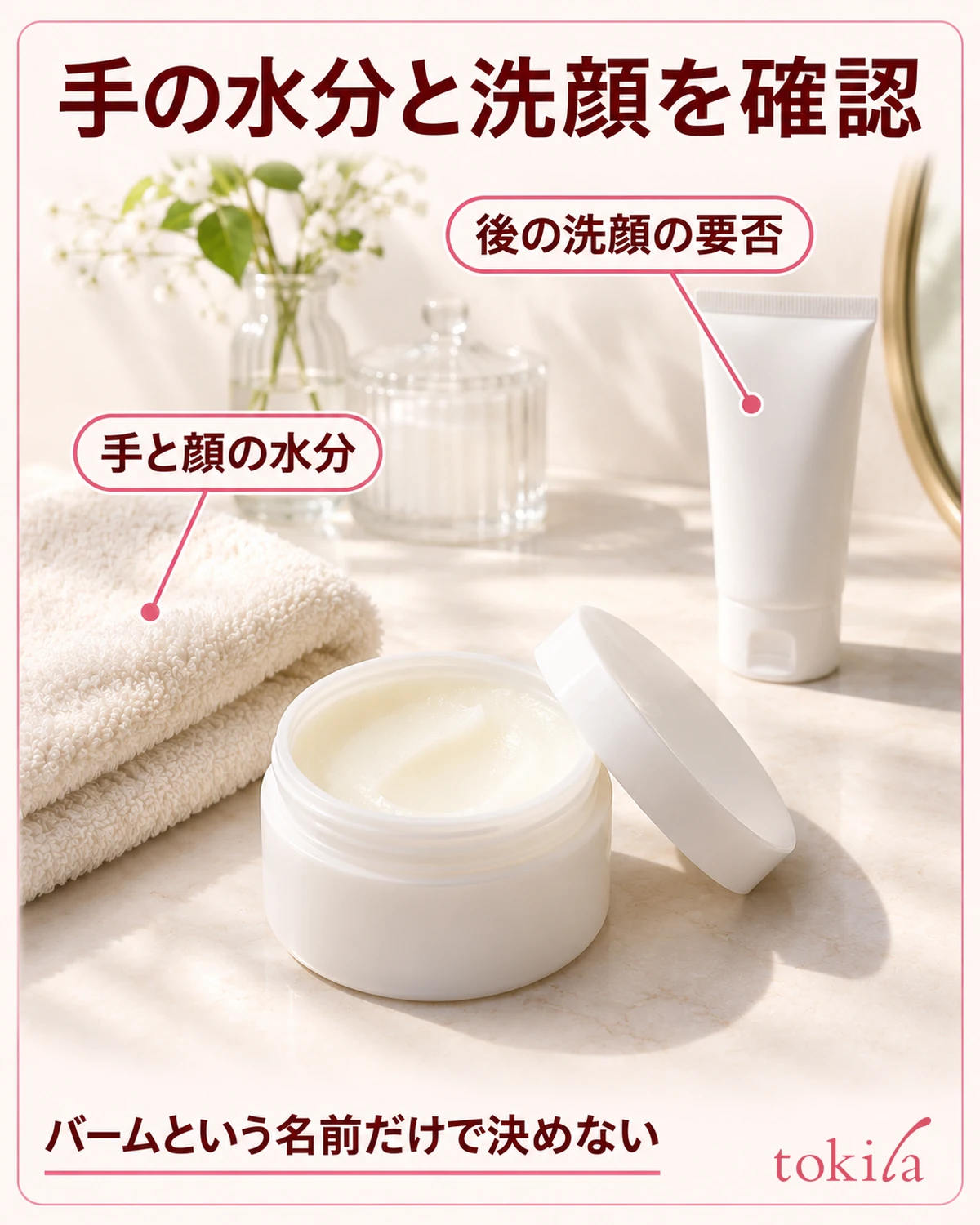
Before buying, check whether the product requires dry hands and a dry face or allows wet use. Do not infer moisture requirements from the balm format. If you want to use it after washing your hair, consider whether you can add a step to dry your hands and face.
Next, read whether you rinse after working it in and whether water must be added during that process. Rubbing for a long time until it turns white is not a universal step. Avoid transferring the method you use with your current cleansing oil unchanged to a new balm.
For an option labeled as requiring no double cleansing, check how it treats the step of using a face wash after makeup removal. Do not interpret this as permission to skip rinsing itself. If a face wash is required, include that extra step when picturing your evening routine.
Within that routine, also check where the used tool fits in the container. The supplemental photo is one example of a dedicated tool held inside a lid. It shows the holder and the space for the handle; even if a tool can be stored there, that does not mean it may be returned while wet.
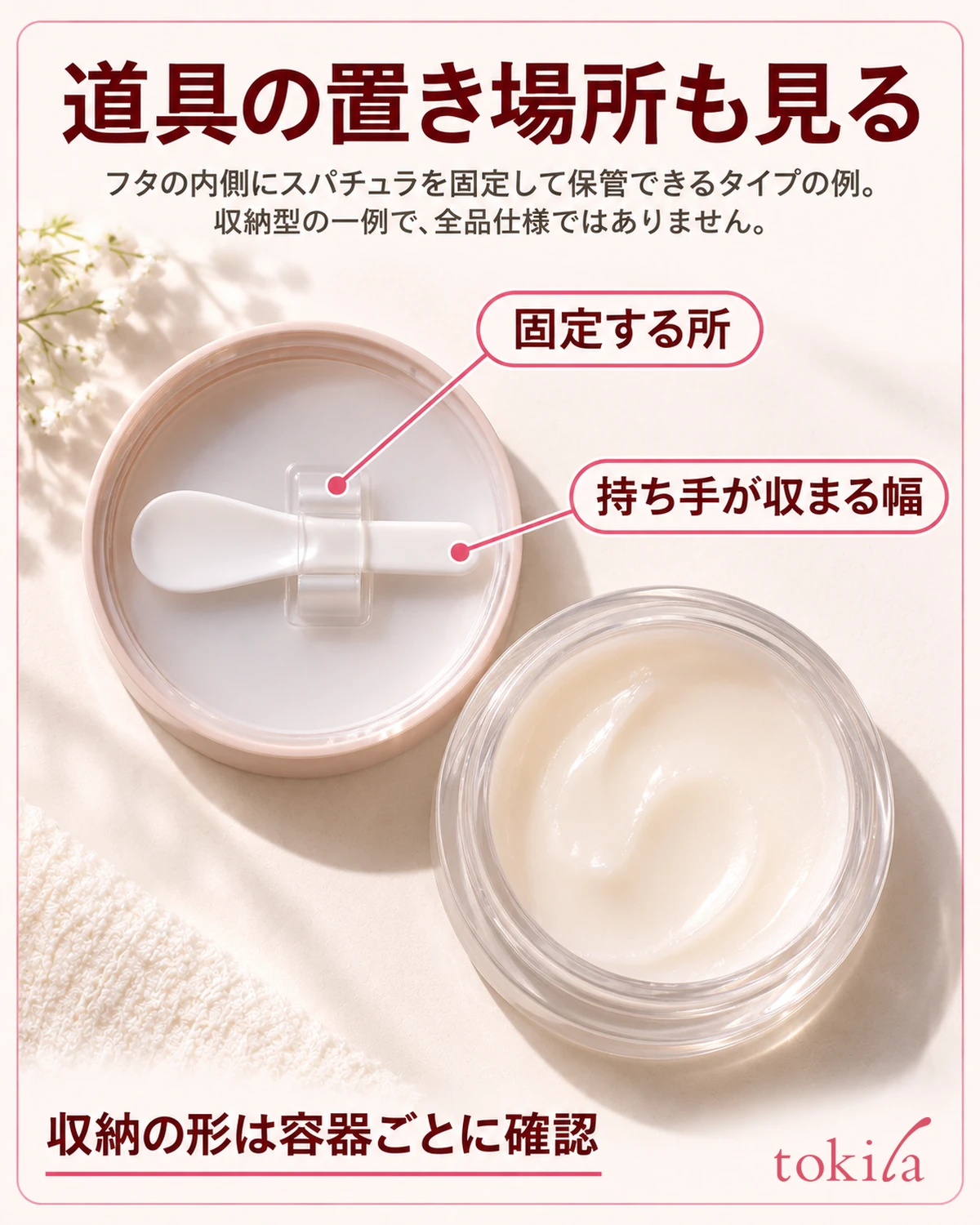
Distinguish conditions for using a product in the bathroom from conditions for storing it there. Check whether it can sit where water continually splashes and whether instructions say to avoid high temperatures. If it does not suit that setting, consider removing makeup at the sink before bathing.
In your comparison notes, list preparation of hands and face, rinsing, and subsequent face washing in order. Deciding whether you want fewer steps or want to keep your current face wash will narrow your requirements. You do not need to force every option into the same cleansing method to compare them.
Check compatibility with the makeup you normally remove
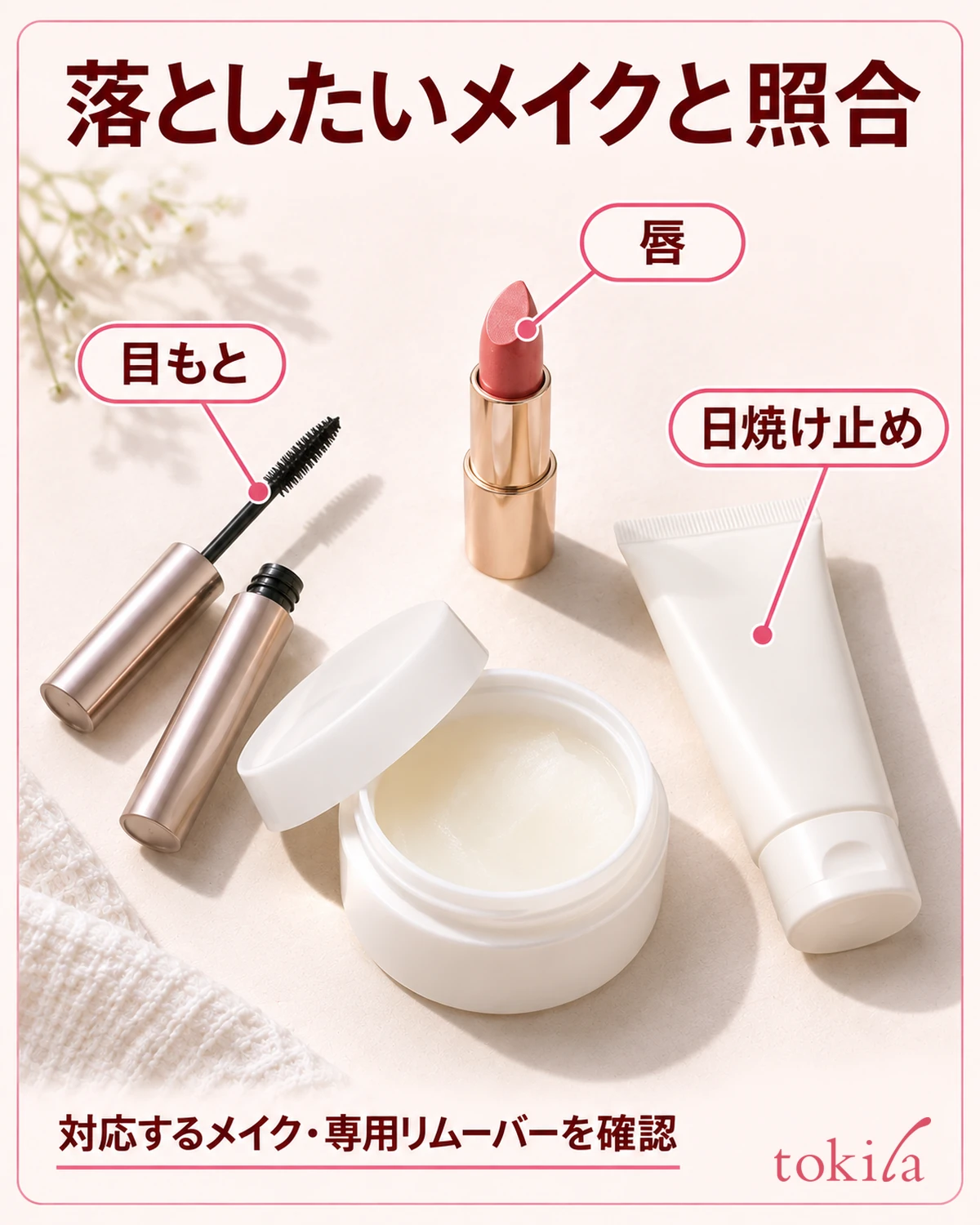
Even if texture and handling suit your preferences, compatibility with your makeup-removal needs is a separate check. Think of your usual foundation, sunscreen, mascara, and lipstick, and compare the instructions for both the remover and the products being removed.
For hard-to-remove eye and lip makeup in particular, check whether a dedicated remover is specified. The single word waterproof-compatible does not establish that all mascaras and lipsticks can be removed in the same way. If you will use a targeted remover first, include that step in your choice.
If you have eyelash extensions, do not decide compatibility based only on the balm format. Check both the cleanser’s conditions of use and guidance from your lash service. Even a compatibility statement may have conditions concerning adhesive or other factors, so read those without leaving them out.
Words about pore dirt or ingredient names are not a reason to invent methods such as rubbing harder or leaving the product on longer. Distinguish cleansing descriptions from expectations of changing the skin itself. Nor can you rank cleansing power by the whiteness or shine of balm in a photo.
If removal seems difficult after purchase, review one point at a time: whether you use the indicated amount, whether your makeup meets the conditions, and whether you follow the working-in and rinsing instructions. Before adding time or pressure, reconsidering the combination itself can help you decide what to do.
If redness, pain, irritation, or other abnormalities occur, do not keep using the product while experimenting with amounts or steps. Follow its precautions. Being able to test it on your hand, or having used a different balm before, does not guarantee that a new product suits you.
Compare the amount per use, tools, and size to narrow your options
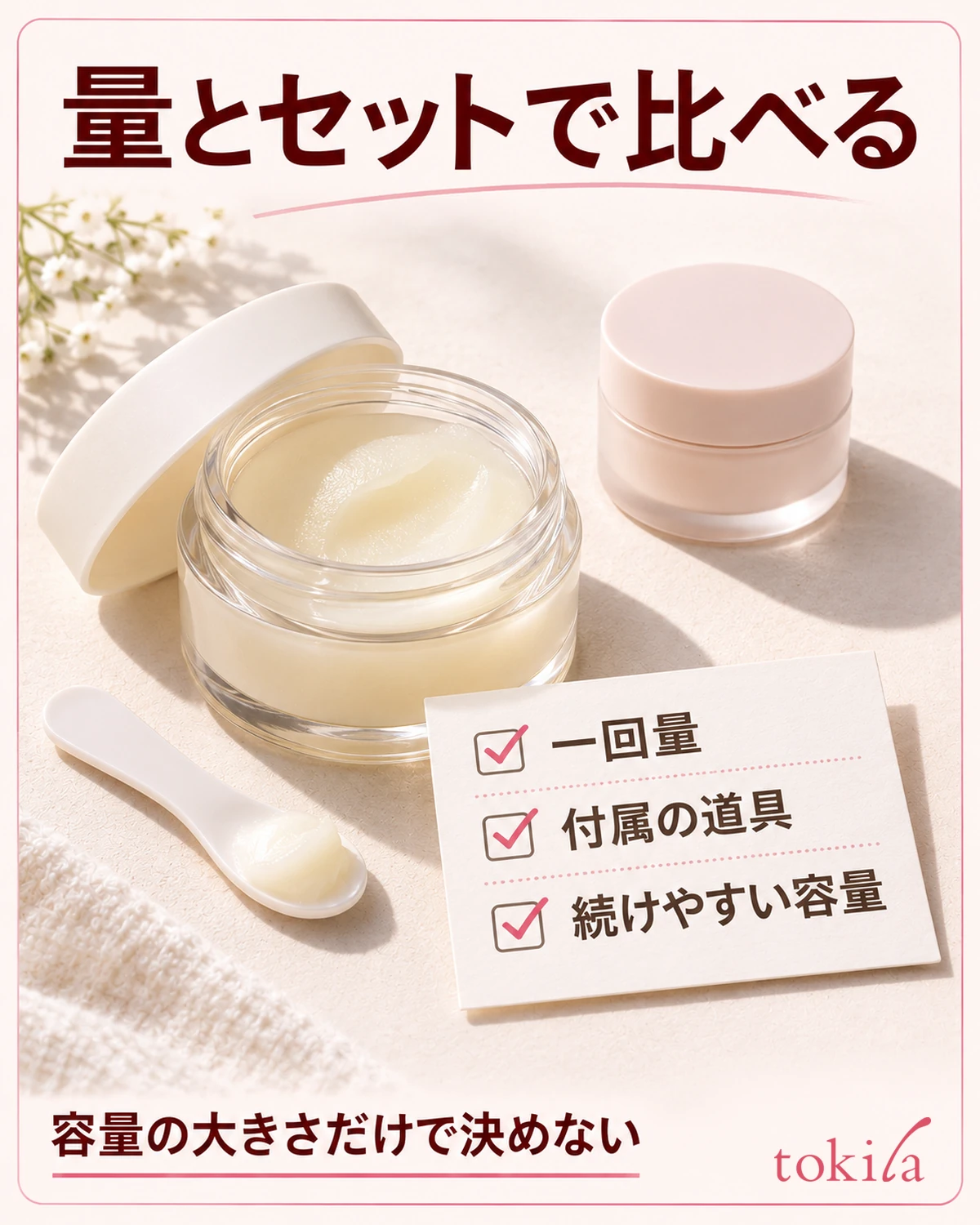
Finally, check the indicated amount per use as well as the net contents. If directions say one spatulaful, read which surface of the included tool to use and how to fill it. Do not compare options with different-sized tools using the word spatulaful alone.
When comparing purchase costs, include whether a tool comes with the product and whether you also need a dedicated remover or face wash. A larger size is not necessarily better value for you. Makeup frequency and the specified dose affect how long it lasts, so there is no need to declare a number of days from size alone.
For a first purchase, decide whether you want to check texture and handling with a small size or want a regular-use size whose conditions you have confirmed. Even with a small size, do not choose on the assumption that you will use less than directed to make it last. Consider both using the required amount consistently and storing it conveniently.
For a comparison chart, use five categories: solid texture and spreadability, dispensing motions, moisture requirements and face washing, makeup compatibility, and dose and size. Choose the one thing you most want to change now, then compare your preferences among options that meet that condition. This can make a shelf of differently colored containers less confusing.
Choosing a balm involves planning your evening makeup-removal time as well as looking for something that seems powerful. Picture everything from taking it in your hand to finishing cleansing and putting it away, and narrow down a product you can keep using.