Interested in emulsion foundation but unsure how it differs from powder or cushion foundation? Start by looking at the formula's form and application method, instead of choosing by the case alone. Even solid cream formulas in compacts differ in finish and usage requirements.
Work through these steps: check the contents, decide on a finish, narrow down shades, and read the usage requirements. Rather than ranking particular products, this guide explains what to compare before buying to find something that fits your makeup routine.
1. Check whether the formula is a solid cream, rather than judging by the case
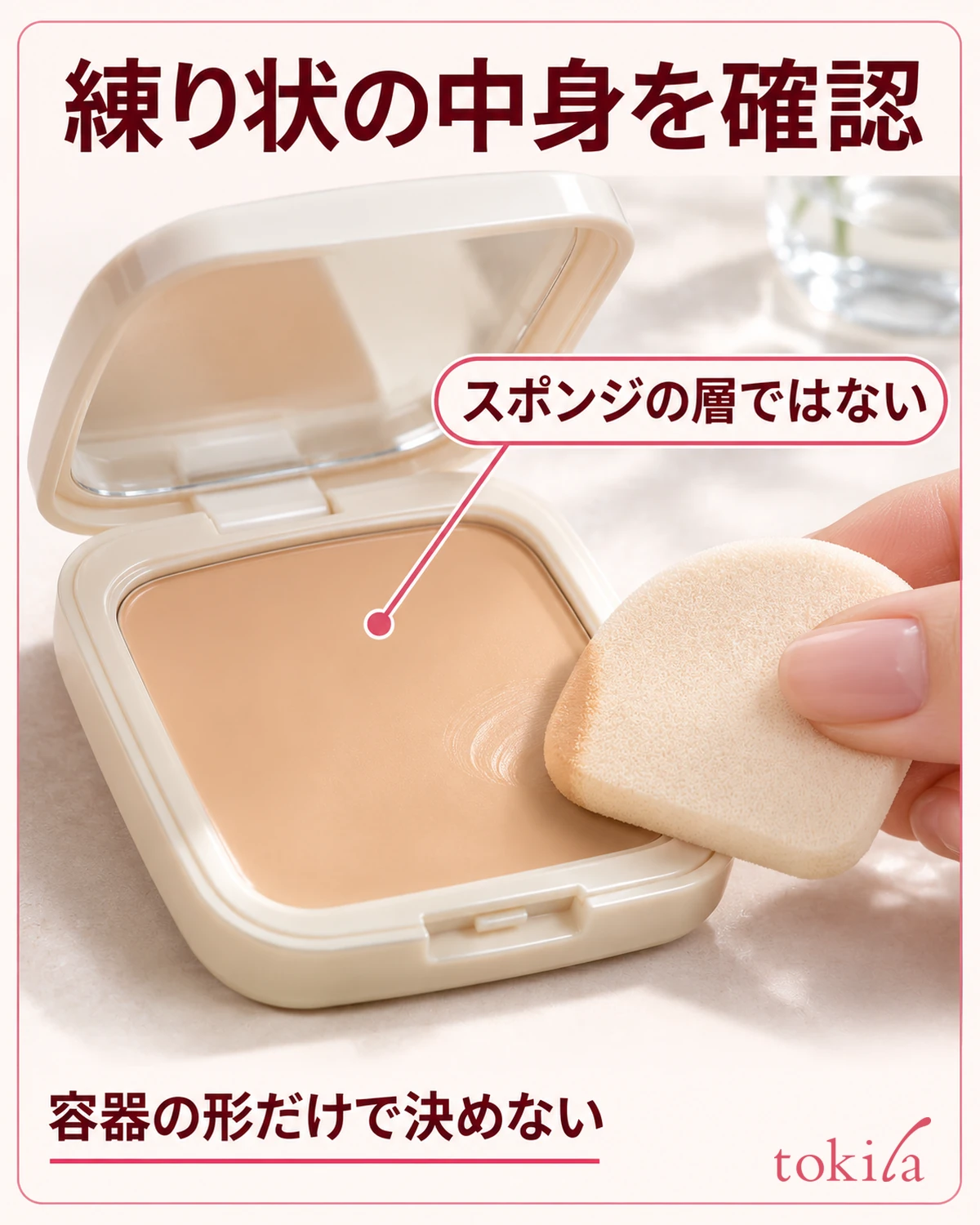
Emulsion foundation is a type of foundation with a creamy feel. Here, we cover what to check when choosing a solid cream type in a compact. A round case at the store does not mean it contains the same formula as a powder or cushion; read the product name and type description first.
Contents and pickup methods differ: powder may be pressed into a cake, while a cushion may transfer liquid from a saturated sponge layer to a puff. Some solid cream products instruct you to pick up the formula directly from its surface with a sponge. Do not infer the structure from the name alone; match the product's instructions with images of its contents.
Check whether it has a liquid-saturated sponge layer, cream placed directly in the container, or pressed powder. If an open-product photo is too small to tell, look at the application diagrams too. A similar case does not mean you can apply the same technique you use with your current cushion puff.
A case alone, a refill alone, and a set containing both require different things before you can start using them. Before placing an order, check the amount and set contents to make sure foundation is actually included. Even a matching shade number does not mean a refill fits a case from another series.
If you already own a case, check the series name on its bottom or outer packaging. Similar outlines will not work together if the clasp position or refill dimensions differ. Do not choose solely on a broad description such as “for round cases”; check the specified compatible case. If the set contents are unclear, confirm what is included before buying extras.
2. Decide on your desired finish and the area you want to cover
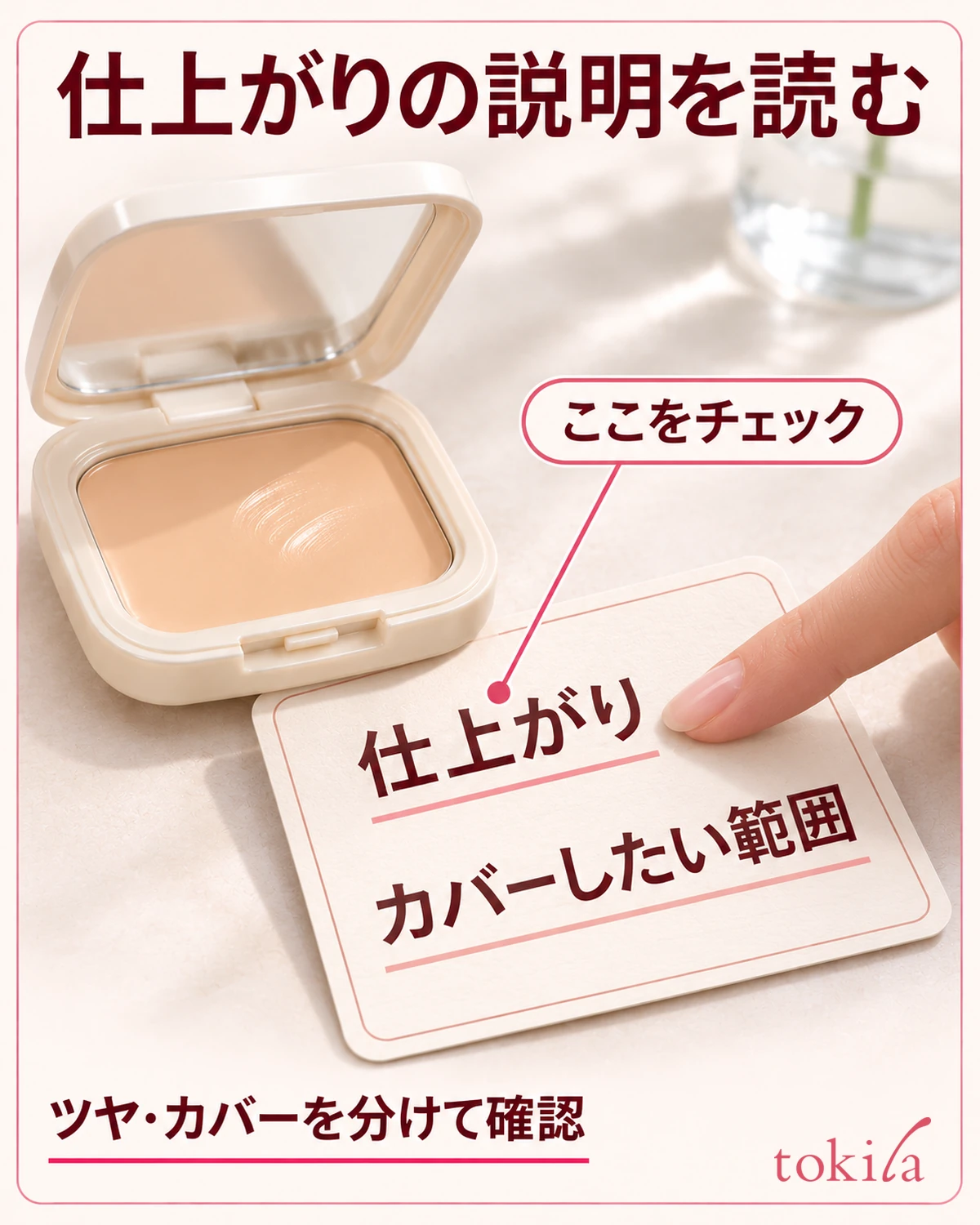
Before choosing, write down one thing you want to change in today's makeup. “Keep some glow on my cheeks,” “even out color across my face,” and “layer only on areas of concern” call for different words to look for in product descriptions. Do not assume every solid cream formula offers heavy coverage or the same glow.
Check each candidate's description for finishes such as dewy or semi-matte. The creamy contents' appearance is separate from how your skin looks after application. A shiny surface in the container does not prove that the same sheen will remain on your skin. Read the finish description together with the recommended application amount.
If you only want coverage on part of your cheeks, consider whether you need the same depth of coverage over your entire face. When you can try a candidate, look at that area and its edges to decide whether to layer more or keep the current thin application. Looking for stronger coverage and applying a lot at once are separate decisions.
When comparing, avoid using photos with different lighting to judge glow, or examples with different application amounts to judge coverage. If the conditions are unknown, treat an image as an impression of the finish, not a promise of the same result on your skin. Do not reinterpret it as an improvement in the skin itself.
If you want to keep two or more finish descriptions, specify where you want each one. For example, separate the area and concern: keeping sheen on the cheeks without adding thickness beside the nose. Before adding multiple products, consider what your current foundation already provides and use that to narrow the candidates.
3. Narrow down shades by checking the transition between cheek and neck

Do not assume a shade will match because its number equals your current foundation's. Numbering and brightness ranges differ by series. First separate brightness from undertone using the candidate's own swatches and descriptions. A small round swatch on a screen cannot confirm how it will match your skin after purchase.
If you can test in store, follow the hygiene rules and use the advised method to try a small amount around the cheek and jawline. Use a swatch on the back of your hand only as a clue for finding candidates; check the transition between face and neck to assess the facial match. Use clean tools, and do not extend a test onto areas where testing is not allowed.
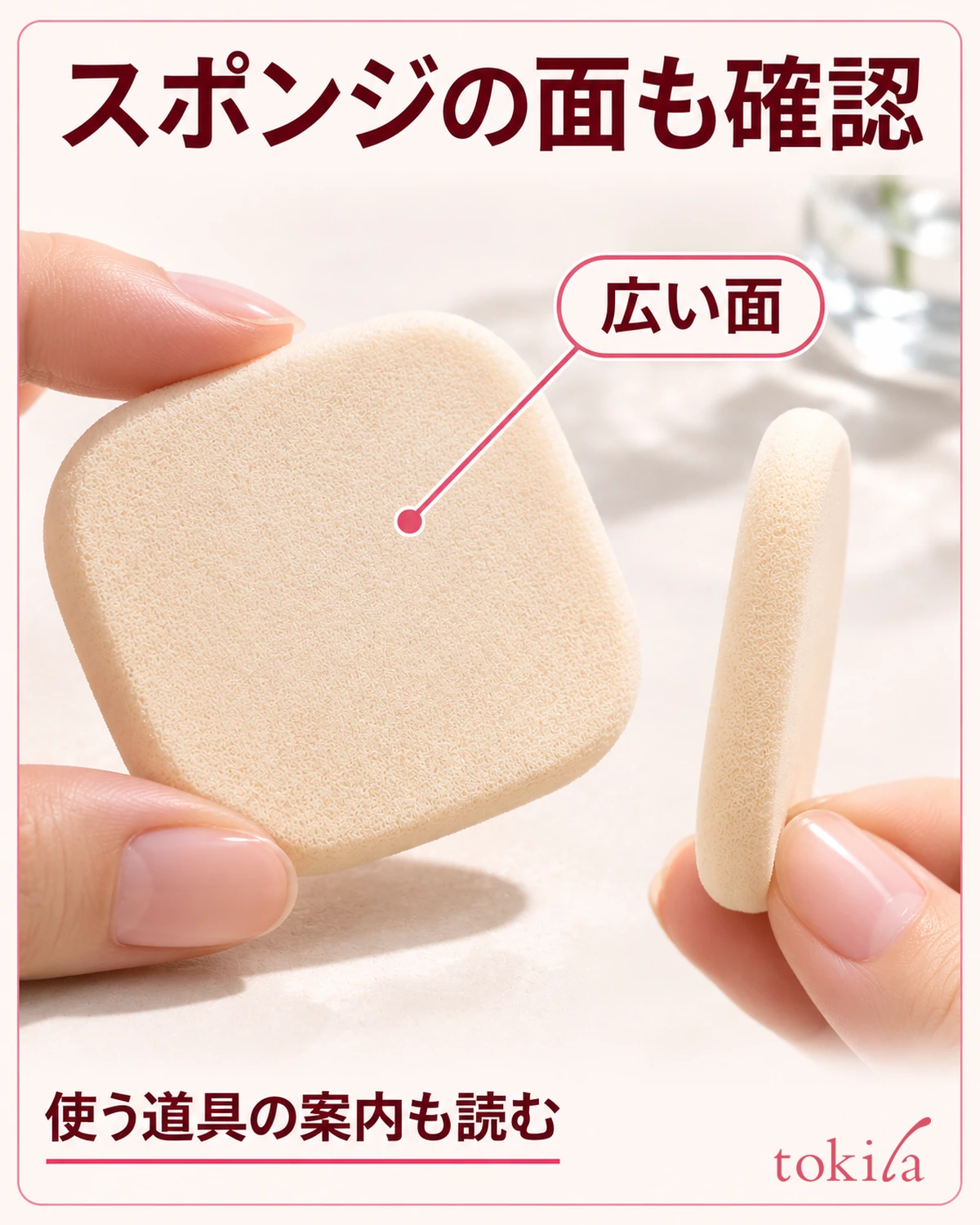
Check the sponge's broad contact surface and edges to make sure it is clean. If disposable testing tools are provided, use them as the store instructs. The photo shows the broad surface and thin edge, not a comparison of how easily sponges become dirty or how much coverage a product gives.
Look closely at the applied area in the mirror, then move the mirror back to see your whole face. Check whether the cheeks look noticeably white, the color changes abruptly at the neck, or the edges stand out. Keeping lighting and face angle as similar as possible helps separate differences in light from differences in color.
If you are choosing between two shades at a store, describe whether the issue is brightness or yellow/red undertones. Instead of stopping at “it doesn't seem right,” identify whether it looks white, red, or visibly different at the neck. This makes it easier to ask which shade to try next.
When buying online, note and compare your current product's exact series name and shade number with the candidate's full name. Screen settings and light change the appearance of colors, so do not treat product photos as precise physical swatches. Also check the shade-selection guidance and whether there is a way to try the product.
4. Read the requirements for primer, sponges, and water
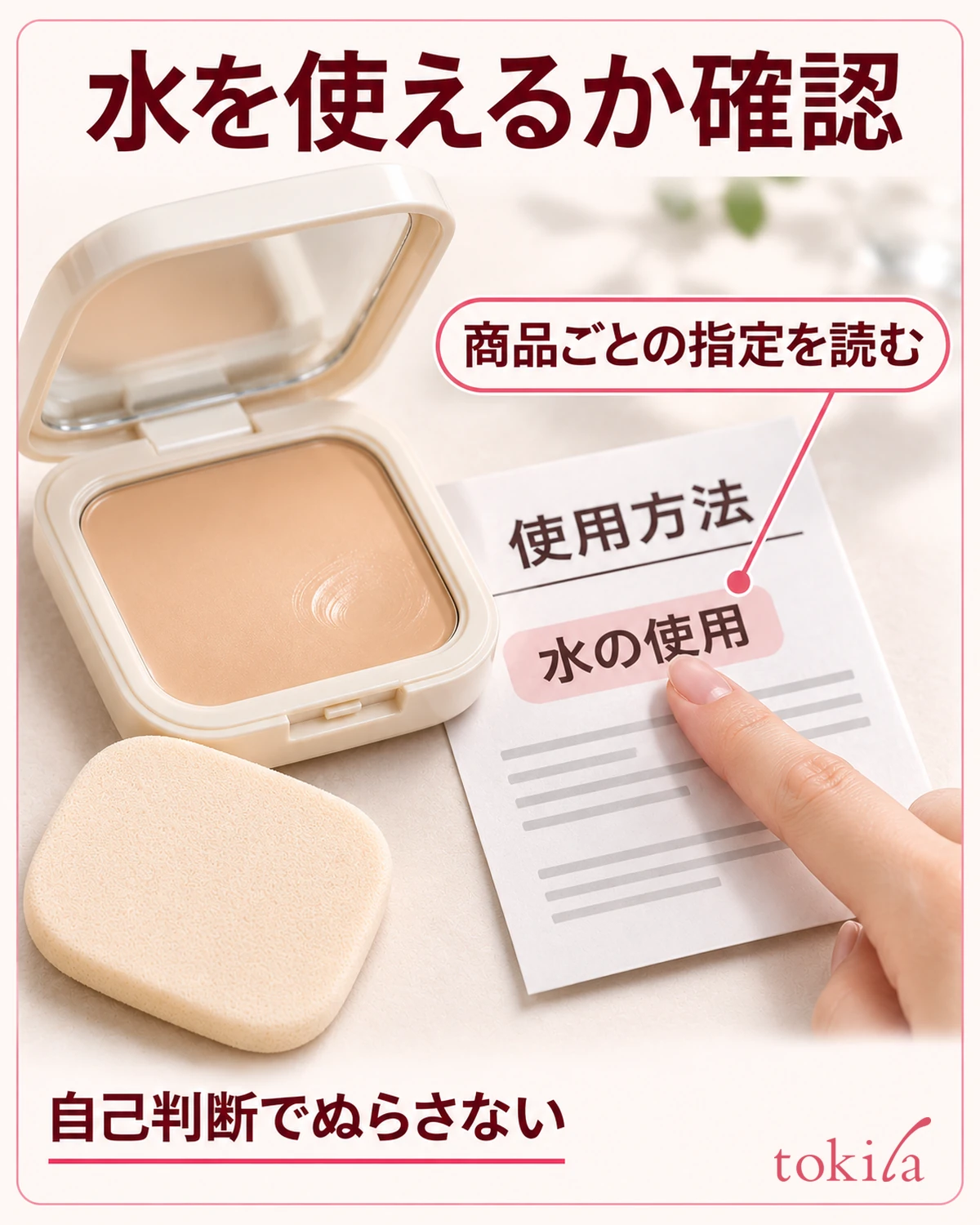
Once you have narrowed down the type and shade, check whether it fits your morning skincare and makeup flow. Read the product's instructions about whether primer is needed, where it belongs in the routine, and how to use finishing powder. Do not transfer another product's “no primer needed” claim merely because the compact looks similar.
If a sponge is included, start with the instructions intended for that tool. If you want to use a brush or fingers, first check whether that method is supported. Amounts picked up on a sponge differ by product, so use the product's recommendation rather than setting one universal surface area or number of passes.
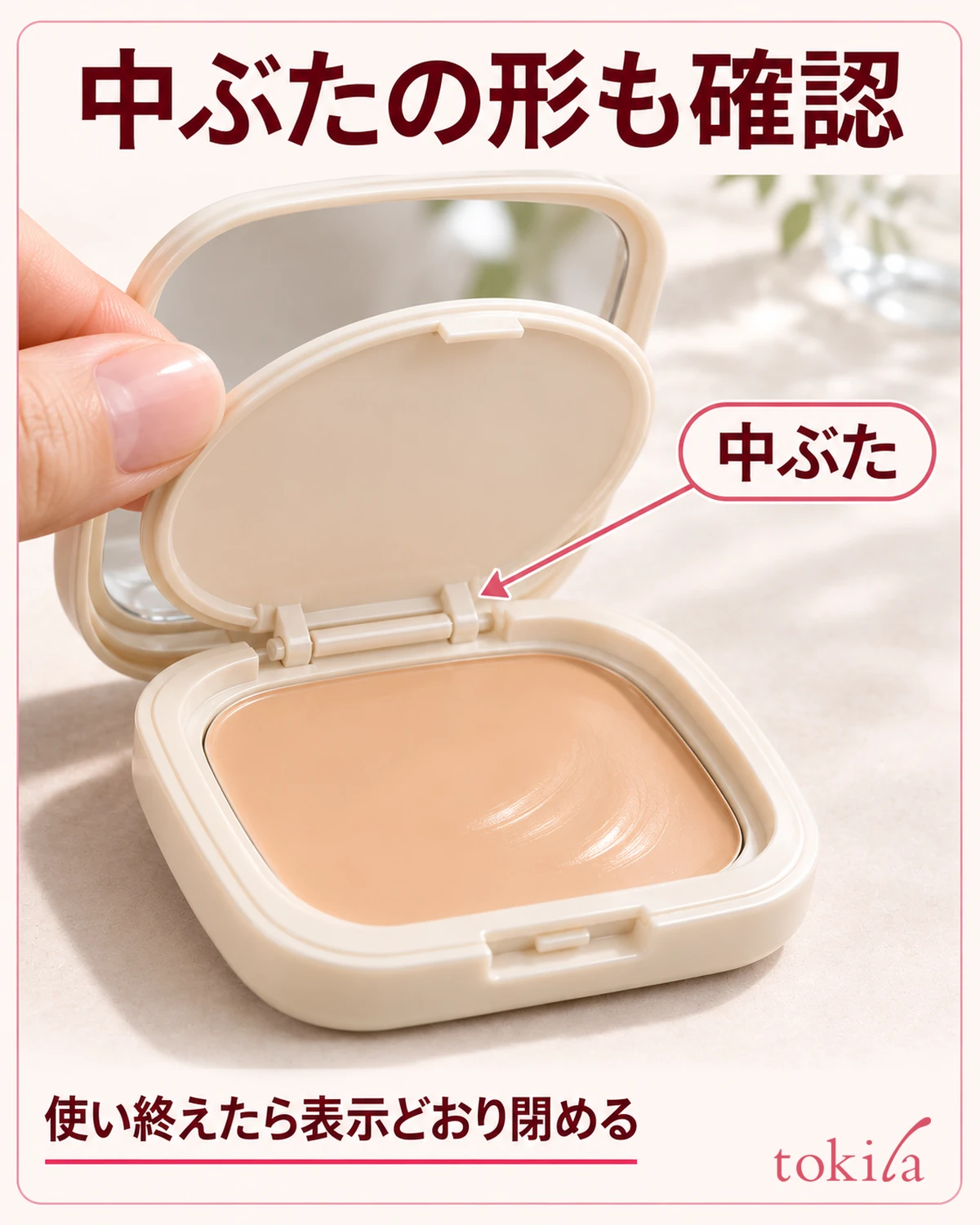
Whether to use water is a separate point to check. A damp-sponge method described elsewhere does not necessarily work with every solid cream foundation. Avoid wetting the sponge or foundation surface before confirming whether water is allowed. If you cannot find instructions, confirm the usage requirements before choosing.
For products with a lid or inner lid, check what needs to be closed after use. If the contents feel firm, do not add water or oil yourself to restore them; check the storage instructions. If skin abnormalities occur after you start using the product, stop and follow its caution label.
If you also want to use it for daytime touch-ups, check the layering instructions before buying. Do not assume morning application and layering after oil or sweat appears are the same operation. Whether the portable case has a place to return the sponge, and which replacement sponge it needs, also matter for the intended occasion.
5. If you are unsure, picture one morning use situation
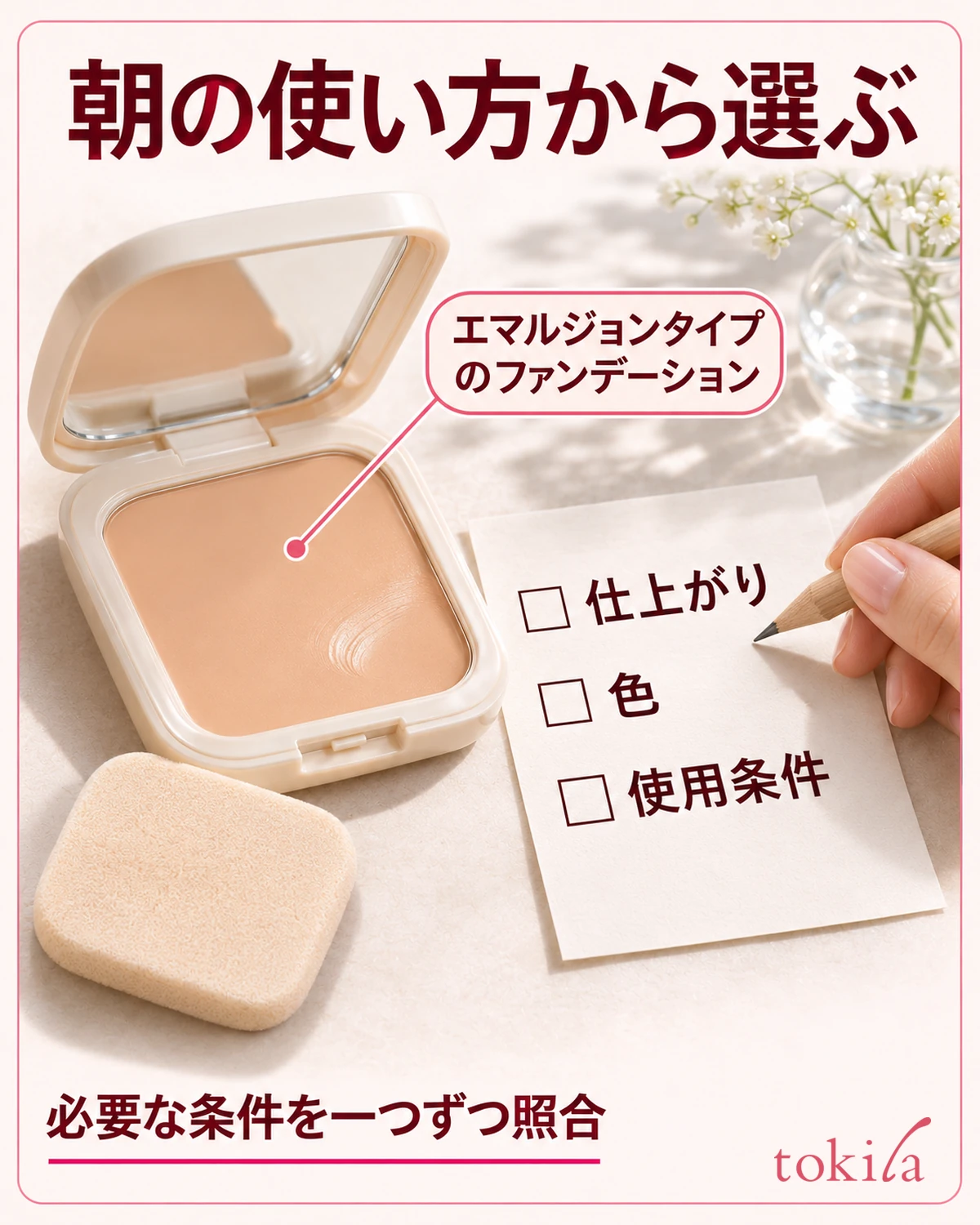
Finally, organize candidates by whether they fit your morning routine comfortably, instead of asking which foundation is best. Decide on one usual use, such as taking time to apply it at home or carrying it for partial touch-ups. Check case size and mirror availability against that situation.
For each candidate, note that it is a solid cream formula, your desired finish, the shade tried, and the primer and tool requirements. Learning about potential everyday difficulties alongside the appealing features makes choosing easier. Before closing the purchase page, recheck whether the case and sponge are included or it is a refill only.
If it applies too thickly after purchase, do not immediately conclude the shade is wrong. First revisit the recommended amount and pickup area. Before repeatedly adding more across the whole face, adjust the amount on the prominent area and check its edges. Keeping other primers and tools unchanged also helps you understand what you altered.
If the color difference at the neck still bothers you after adjusting the amount, separate thickness from shade selection. A thinner layer cannot make every shade match. Nor does the solid cream category guarantee feel or compatibility with your skin. Check the usage requirements as you choose an option you can comfortably keep using.
For more help organizing shade comparisons, see how to choose a foundation shade.