You may see an eyeshadow palette with a shade you love and still wonder whether you will use the other colors. Instead of comparing palettes only by shade count, distinguish the colors you use often, those that add depth, and those that add sparkle to narrow down options that suit your makeup.
Start by deciding when you will use it, examine color and texture separately, compare it with what you own, and check the application instructions. Focusing on multishade powder eyeshadows, this guide explains what to check before buying and how to narrow your options. You do not need to use every shade every time.
1. Choose one shade you want to use often before counting colors
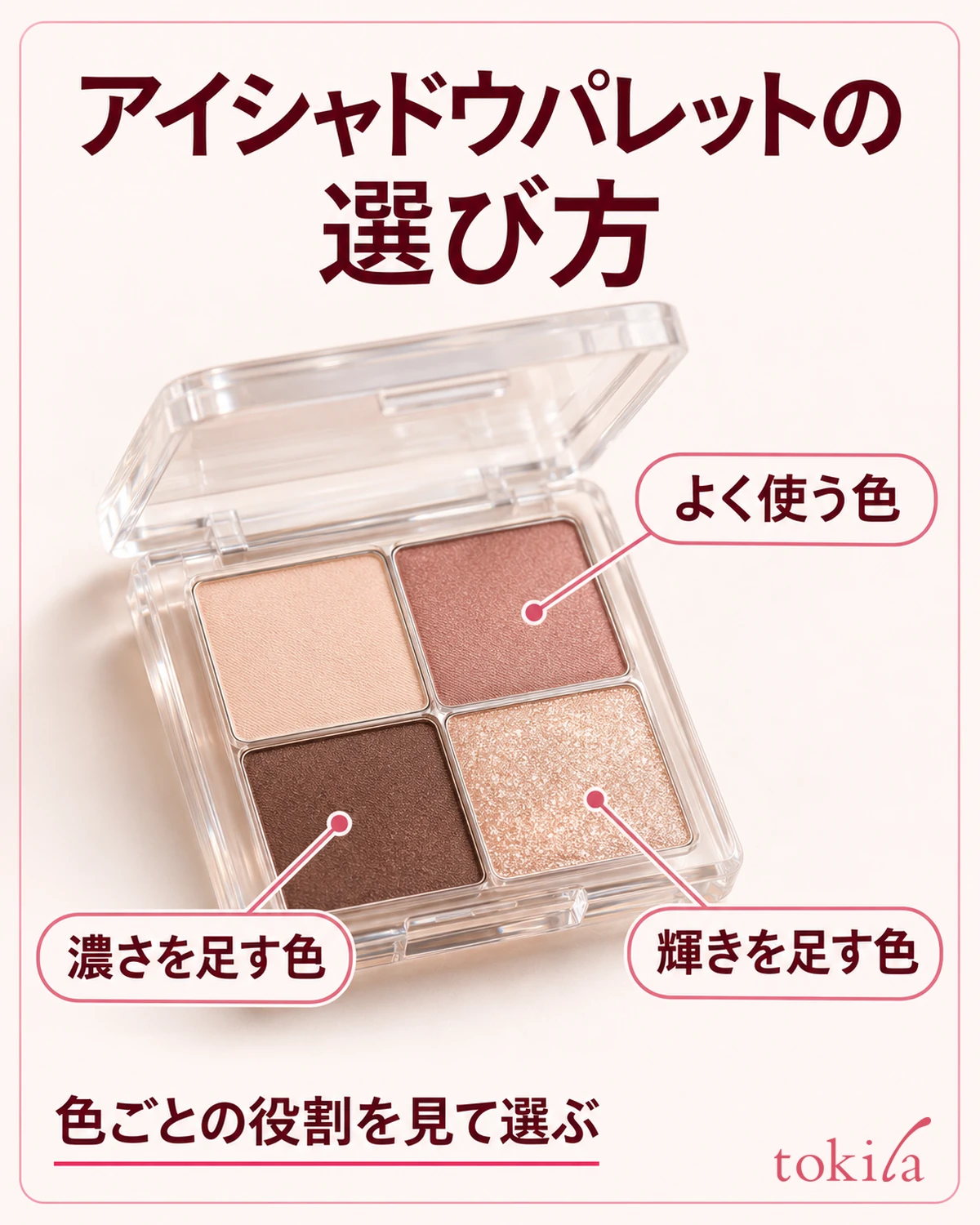
First consider whether you want it for weekday mornings or for enjoying color on days off. If your morning is short, start with one shade you would like to spread over your eyelids. Look beyond names such as beige, pink, and brown to the particular brightness and undertone you want within that group.
For example, if you usually use a medium brown, first check whether the palette includes a shade that fills that role. If a candidate emphasizes only light and dark shades, consider whether you will supply a transitional shade from your collection or use just two colors. Once you know the roles you need, more shades are not necessarily more convenient.
Conversely, if you want to add an accent to browns you already own, one new color can be a reason to choose a palette. Still, consider separately whether you need the whole palette for that one shade. If a similar color is available individually, compare whether you want a daily combination in one case or just the single shade you lack.
If your goal changes while browsing, separate shades you will use now from shades you want to try later. There is nothing wrong with having many colors you want to try, but choosing without assuming you must finish colors you cannot picture using reduces the burden afterward. Imagine one combination you want to use instead of deciding only by shade count or price per shade.
Your reason for choosing also changes depending on whether you want a glamorous look just for your next day off or a daily staple. If you want one palette for both, check whether your everyday shade and one shade to add on days off share the same case. Avoid choosing only by the number of unusual colors when you cannot find a shade you will use often.
2. Examine brightness and reflected light separately, even within brown shades
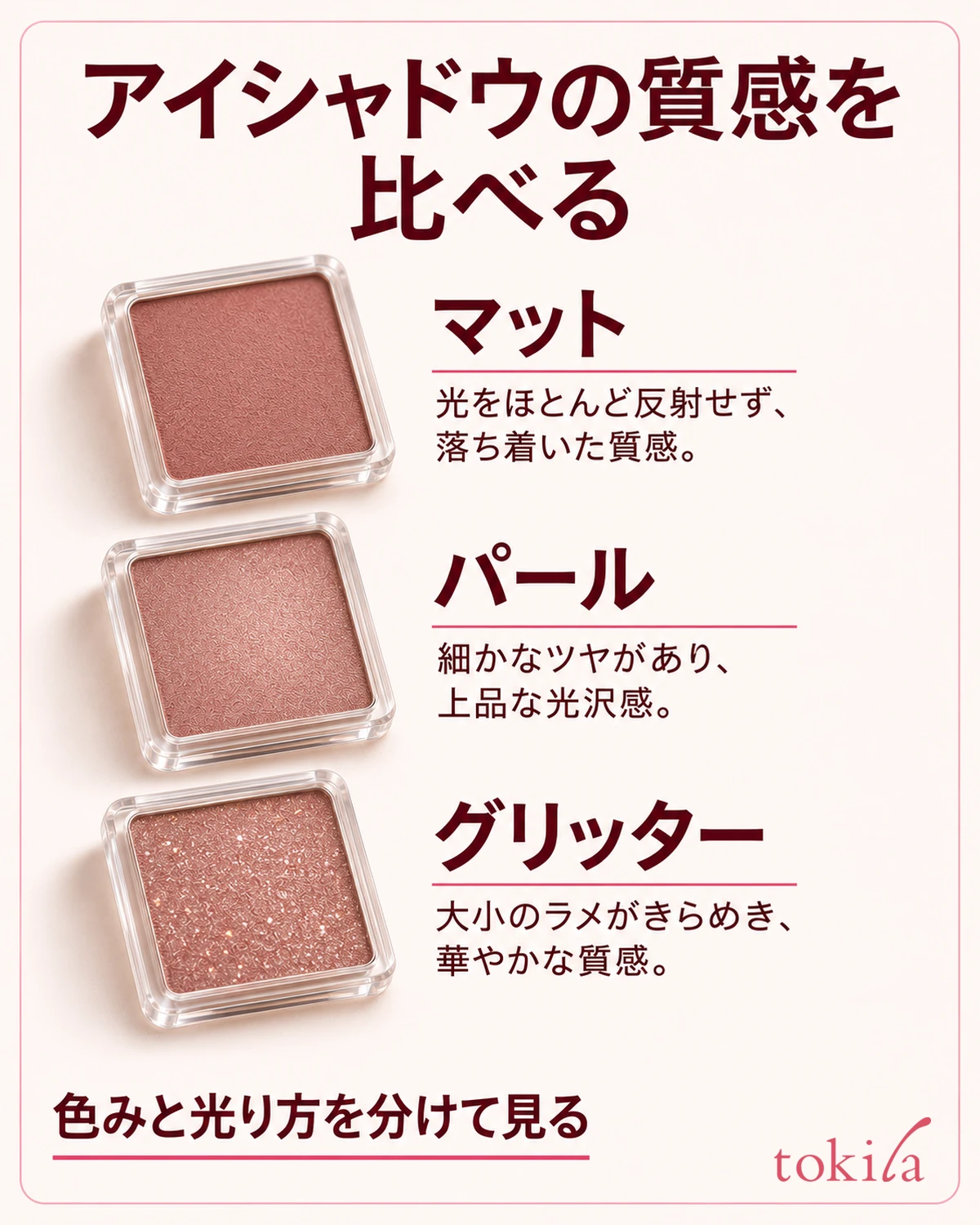
Colors that look similar in the case reflect light differently in matte, pearl, and glitter finishes. Consider separately whether you want to show the color itself, add a fine sheen, or enjoy sparkling particles. Texture names vary by product, so do not assume particle size or color payoff from a finish name alone.
If you often use it on days when you want less shine, check the finish of the shade that would anchor that look. Your options will depend on whether one matte shade is enough or you want both a light and a medium shade. If sparkle is the focus instead, deciding where to add it and how much of the other shades to layer can help you organize your choices.
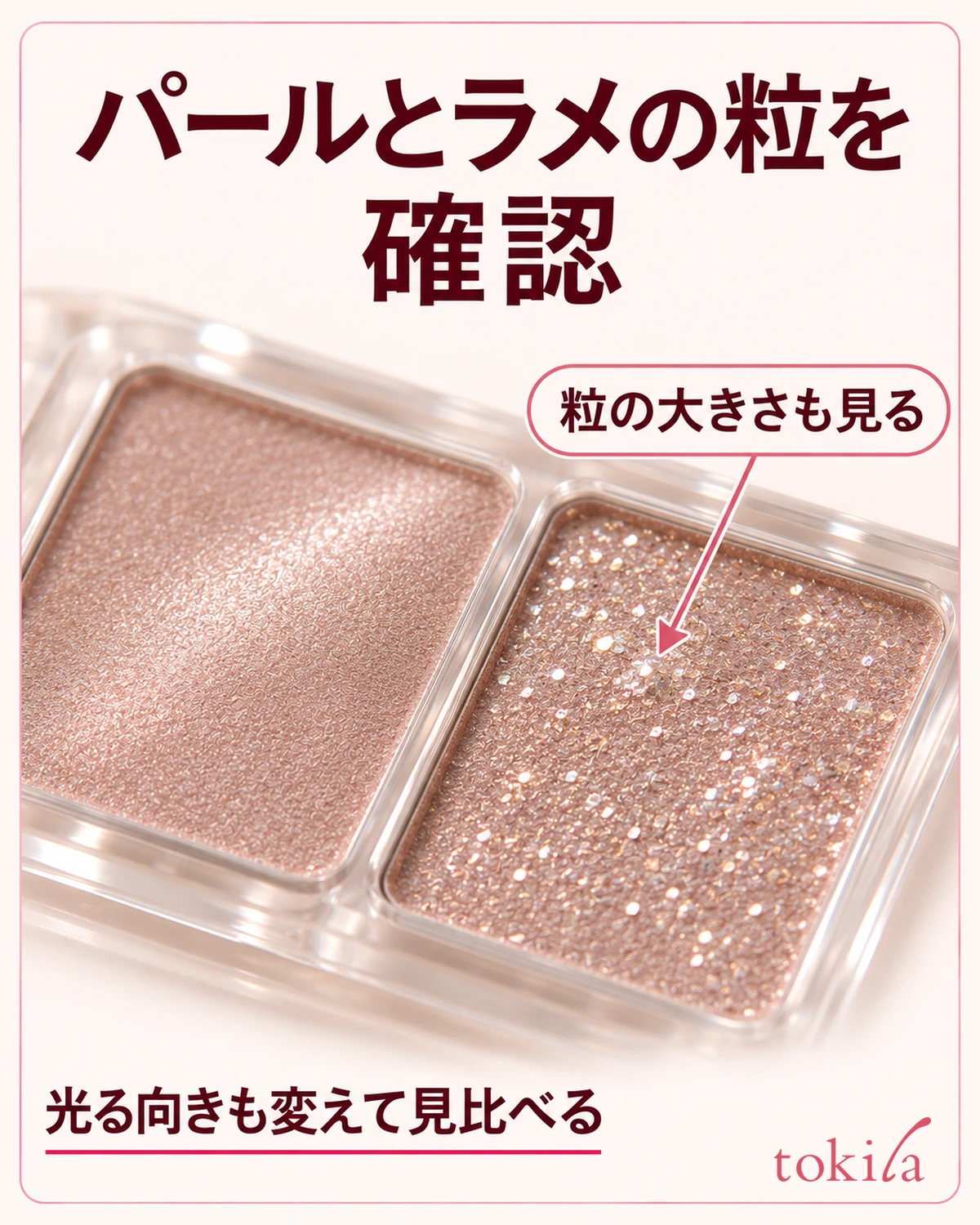
Sparkling particles may become more noticeable as your viewing angle changes. If testing is available in a store, follow its rules, use clean tools, and look both straight on and at a slight angle. Changing the lighting while comparing depth makes it harder to tell what caused the difference, so check under the same lighting first.
When choosing only from onscreen swatches, remember that screen brightness, lighting, and application amount change how colors appear. Color in the container, a swatch on skin, and a full makeup photo each serve different purposes. Do not conclude that a finish has no sparkle solely because a photograph does not capture it.
When comparing two candidates, first compare shades that serve the same role rather than distant colors such as pale beige and dark brown. This helps distinguish whether a shade stands out because of its color or the reflection of its particles. If you like a color but find its sparkle strong, another option is a palette with a similar hue in a different finish.
3. Compare with what you own and identify the role you want to add
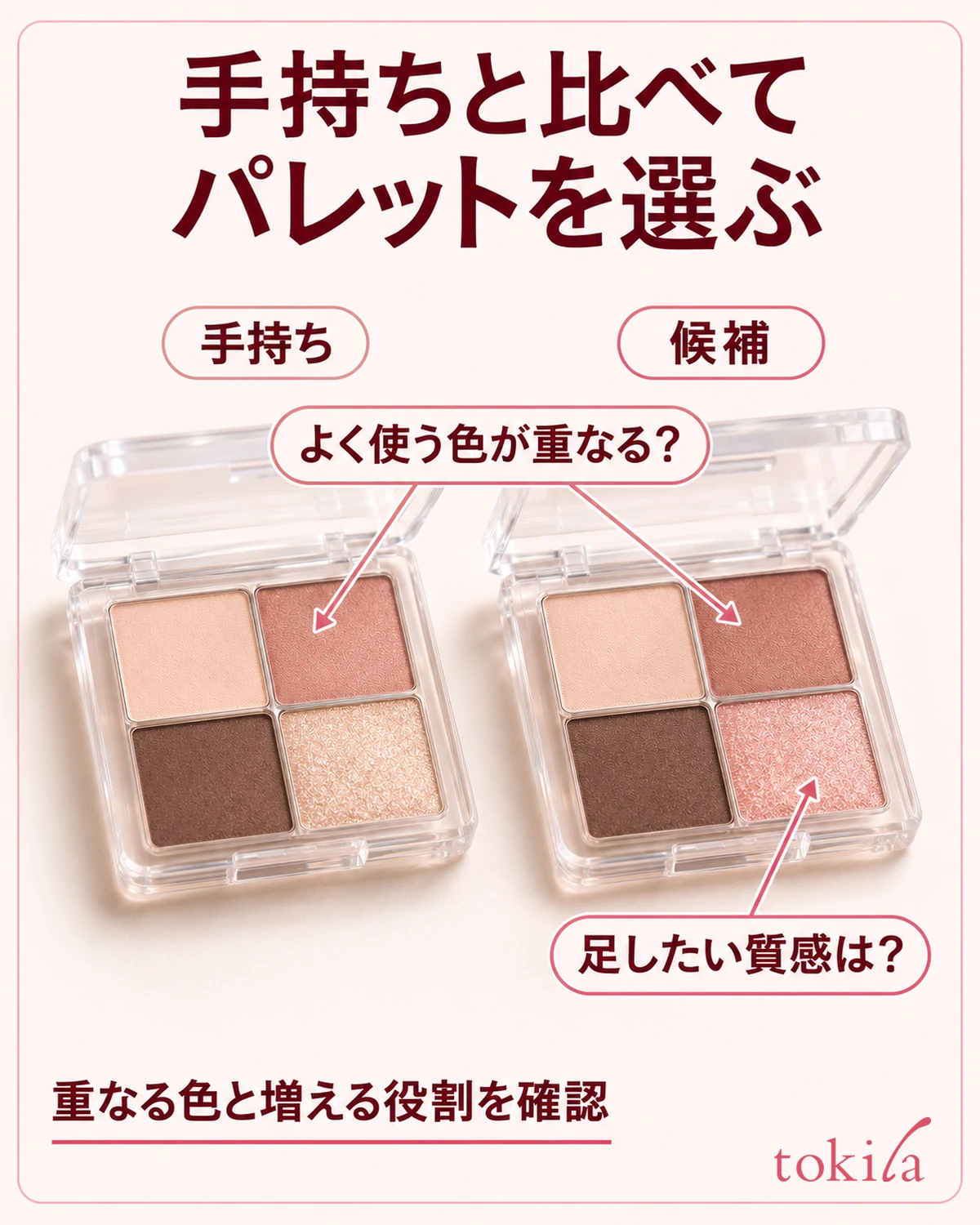
Before buying, open your current eyeshadows and look at shades that are well used and those you hardly touch. Usage depends not only on preference but also on how widely you apply a shade. Rather than assuming a depleted shade must suit you or a remaining shade is unnecessary, recall what you use each one for.
If your usual light beige resembles the light beige in a candidate palette, consider whether you want them together in one case or want to try a different finish. Overlap can be useful when creating a portable set. If all you lack is one sparkling shade, however, consider options beyond a large multicolor palette.
If you tend to have dark shades left over and a new candidate includes several more, name one situation where you would use them. Consider whether you want a small amount at the outer corner or a thin line, and check whether the instructions support that use. You do not need to apply dark color heavily across your eyelids just to use it up.
If two candidates remain, compare whether they include the frequently used shade you identified first and whether they add one thing your collection cannot do, instead of ranking every color. If you want to consider your overall makeup combination before buying more color, deciding which of the eyes, cheeks, or lips will be the focus can also help.
You can note shade names and finishes before leaving home without bringing your collection to the store. Rather than using only a screen photo as a color-matching ruler, record roles such as having light matte shades but few sparkling ones. This makes clear what you want to check in a candidate.
4. Do not infer application order from the layout alone
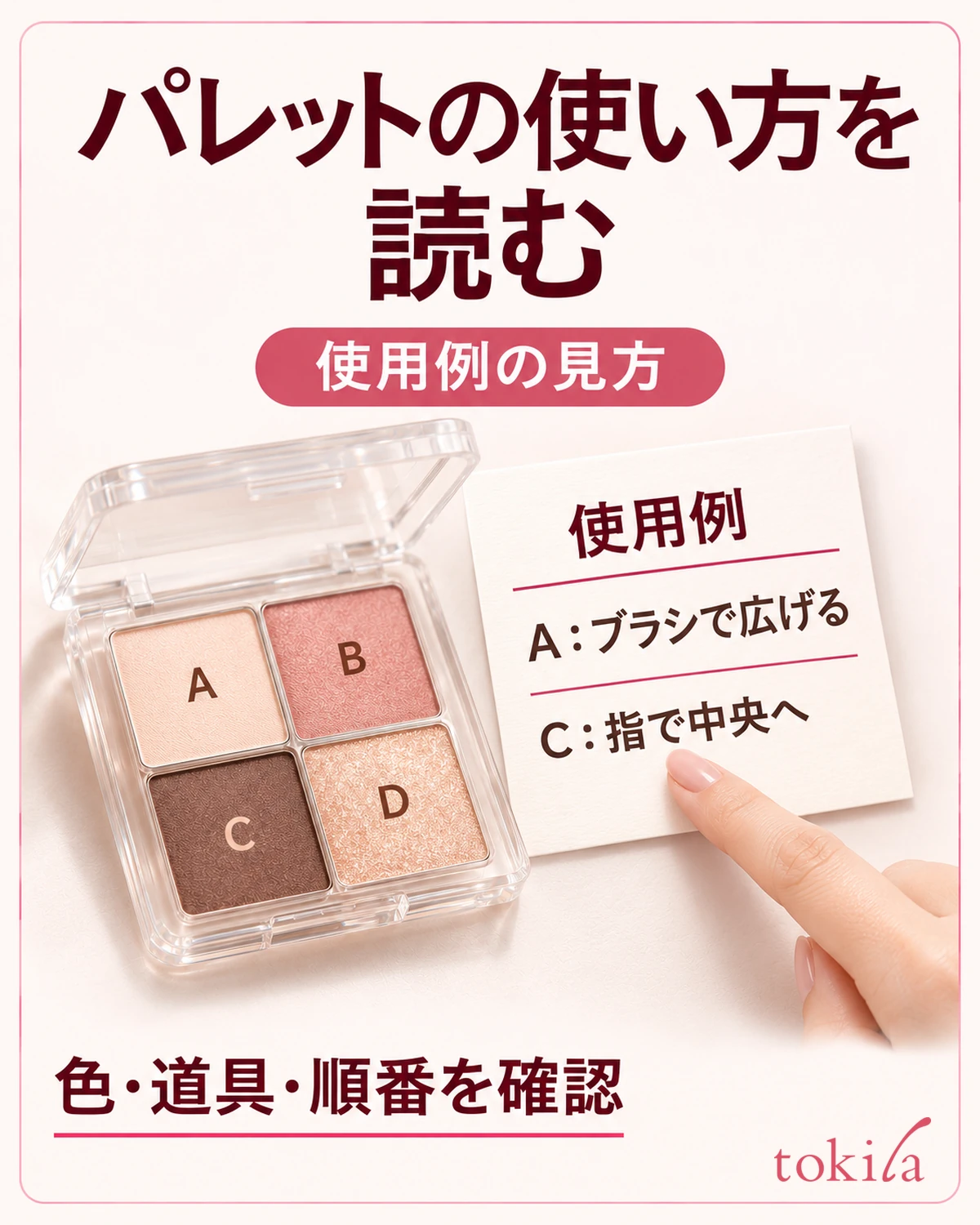
Even when four colors are arranged together, you do not necessarily apply them from upper left to lower right. Check the palette instructions for examples of which shade to apply, with which tool, and where. Some products offer looks using selected shades as well as all shades. If symbols are used, match them to the positions in that particular palette.
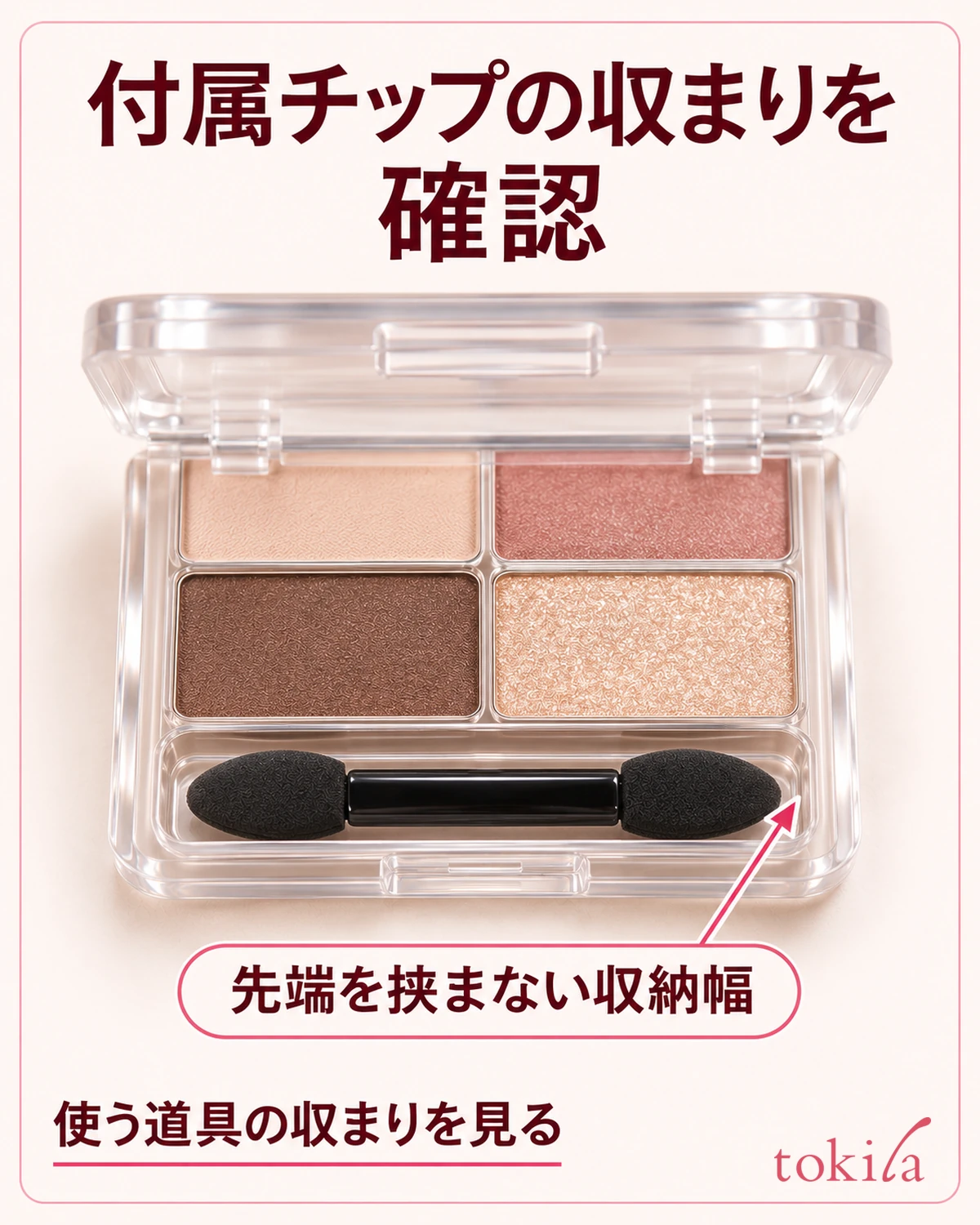
If you usually finish with brushes, also check whether any shades call for fingers or sponge applicators. A different tool from your usual one does not mean you cannot use it, but considering the effort of switching tools in the morning helps you picture using the palette. Check whether an applicator is included or you plan to use your own brushes.
If a palette combines textures, do not apply the same tool or pickup technique to every shade. If you want to use a damp brush, confirm individually that the shade supports wet use. A pressed powder or shiny surface is not evidence that water can be used.
If you plan to carry it, check whether your tools fit in the case and whether closing the lid traps bristles or sponge tips. If there is no tool compartment, carrying tools separately is another option. Evaluate case size separately from color quality, returning to whether it is for mornings at home or use while out.
If there are several application examples, check what is needed for the simplest-looking one. Reading whether it requires both fingers and a brush or can be started with the included applicator reveals convenience separate from color appeal. Avoid choosing on the assumption that you will improvise dampening or mixing without understanding the instructions.
5. When unsure, choose one combination to use first
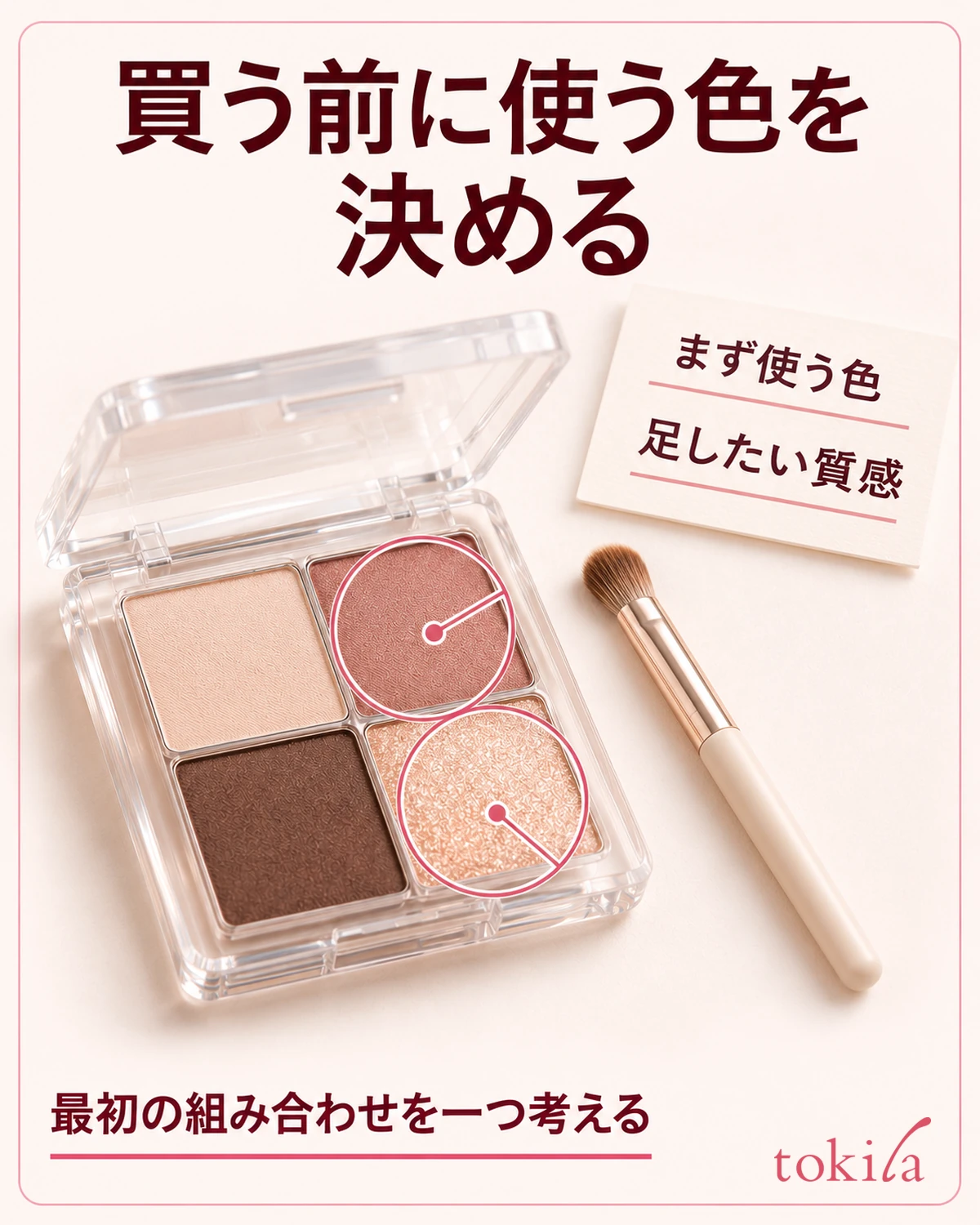
Finally, decide on one combination you would like to use on the day you buy the palette. A concrete plan such as pairing a medium shade with a light one or adding sparkle in one spot to an existing shade is enough. You need not decide how to use every color at once. If starting with two shades, checking placement and blending for two eyeshadow colors helps you imagine the application.
If you worry about a result that is too dark, plan to start with a little of your main shade rather than repeatedly layering a dark one. If you worry about too little impact, check whether the finish you want is included before adding more colors. Distinguishing added depth from added light avoids layering many shades for different purposes.
If your impression changes after purchase, adjust one thing at a time: the shades you use, the amount you pick up, or the area you layer. Do not immediately try using every color in another way. If your eyelids sting or redden, stop using the product rather than continuing cosmetic adjustments, and follow its cautions. It is also important not to try solving incompatibility with your skin only through tools or amounts.
When choosing feels difficult, return to four points: one shade you want to use often, the finish you want to add, differences from your collection, and the tools you will use. Imagining one set for your own occasions lets you choose for both enjoyment and ease of use without being drawn only to the number of colors.