When you see skincare labeled as containing niacinamide, you may wonder whether to choose a toner or serum. Even with the same ingredient name, the product category, purpose of inclusion, and place in a routine may differ. Before narrowing your choices by the ingredient name alone, read the different parts of the box or container label separately.
Choose in this order: check the product category, compare the ingredient's purpose with the product description, consider its formulation and when you will use it, then check how it fits your current routine. This article explains what to check before buying facial skincare. It does not recommend particular concentrations or products, or guarantee skin benefits from an ingredient name.
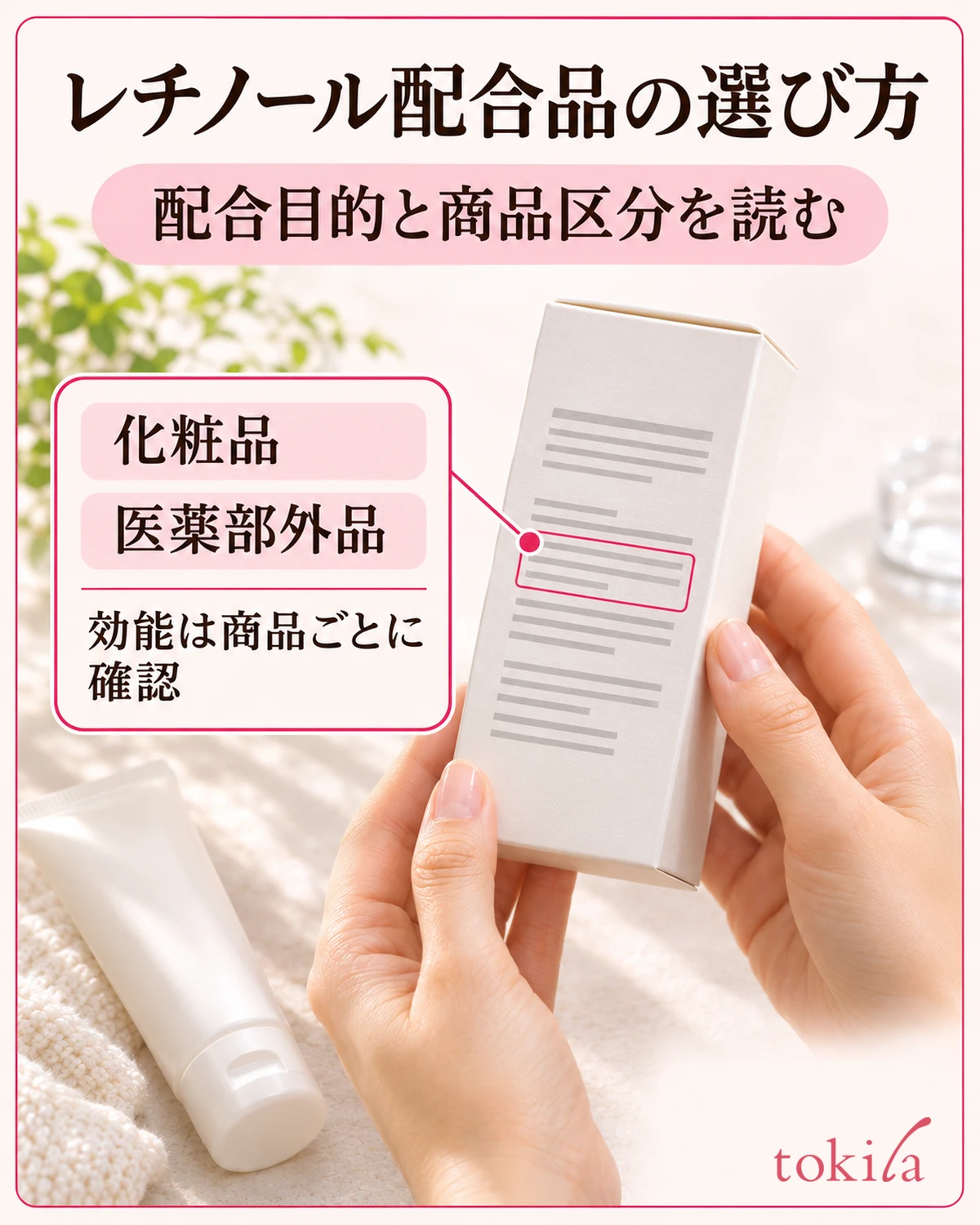
1. First, check whether it is a cosmetic or a quasi-drug
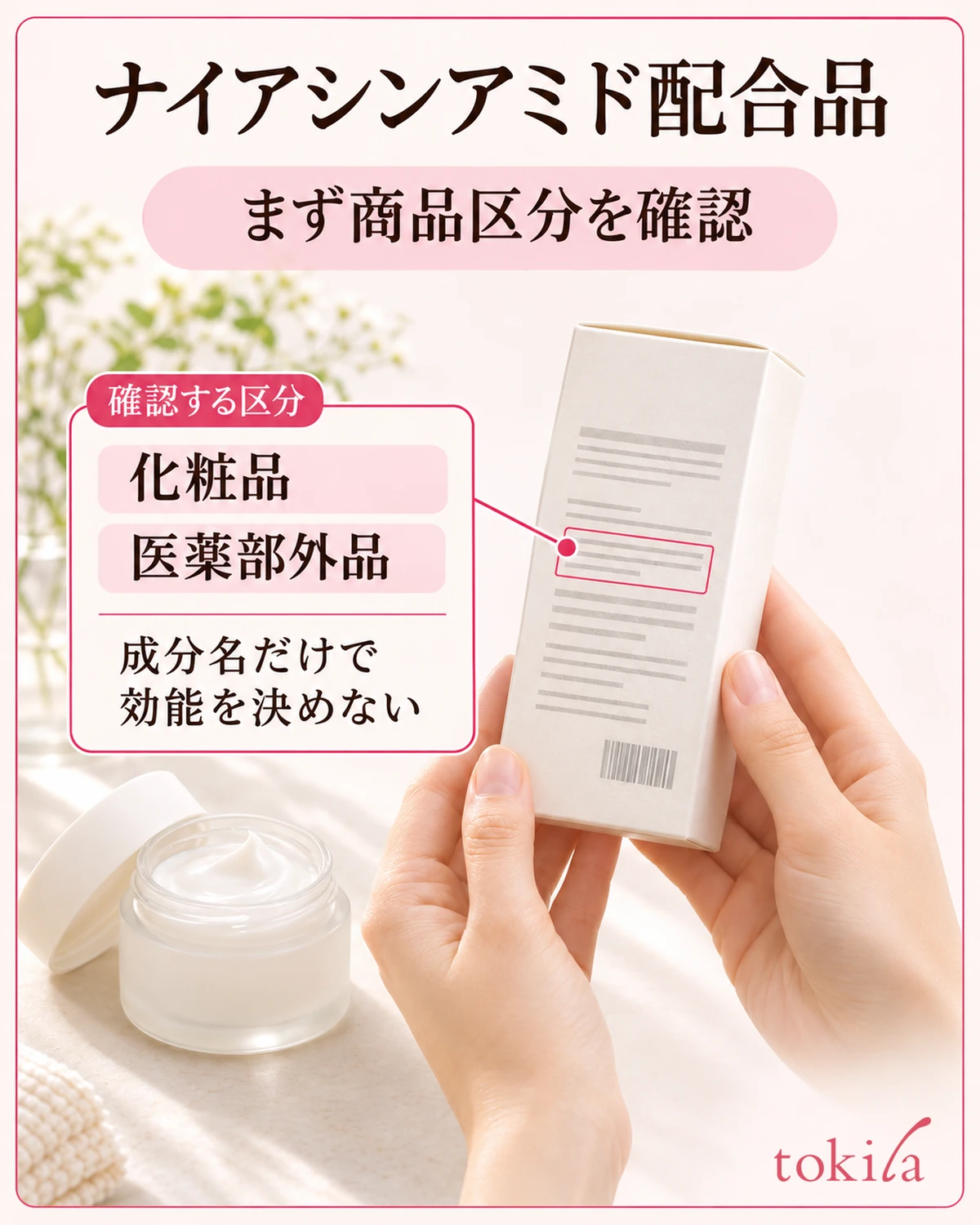
Read the back and sides of the package as well as the front. Check whether a category such as "medicated" or "quasi-drug" is stated and where the ingredient name appears. Finding the word niacinamide and establishing that a product has a particular approved benefit are separate matters.
In cosmetics, niacinamide is sometimes included for purposes such as moisturizing. Some quasi-drugs include it as an active ingredient. A shared name does not mean you can apply a cosmetic's description to a quasi-drug, or another quasi-drug's description to the product in your hand. Begin by checking the label of each product you are buying.
Even for quasi-drugs, do not single out an ingredient name and assume that all such products have the same benefits. Check the individual product description to see which benefits it claims. Avoid adding descriptions seen on other products, or general ingredient information, to the benefits of the particular bottle in front of you.
If a brief store description is insufficient, check the category on the box or in information for that same product before keeping it on your shortlist. When different sizes, refills, or similarly named products appear together, check that the description you read applies to the item you will buy. Matching package colors or series names do not establish identical labeling.
If you cannot find the category, do not rush to assume it is a cosmetic because nothing is written. Information may appear only on the outer box, so read all available packaging together. Checking that the retailer's abbreviated product name corresponds to the formal name on the box also helps avoid mixing up similar products.
2. Check the stated purpose beside the ingredient name
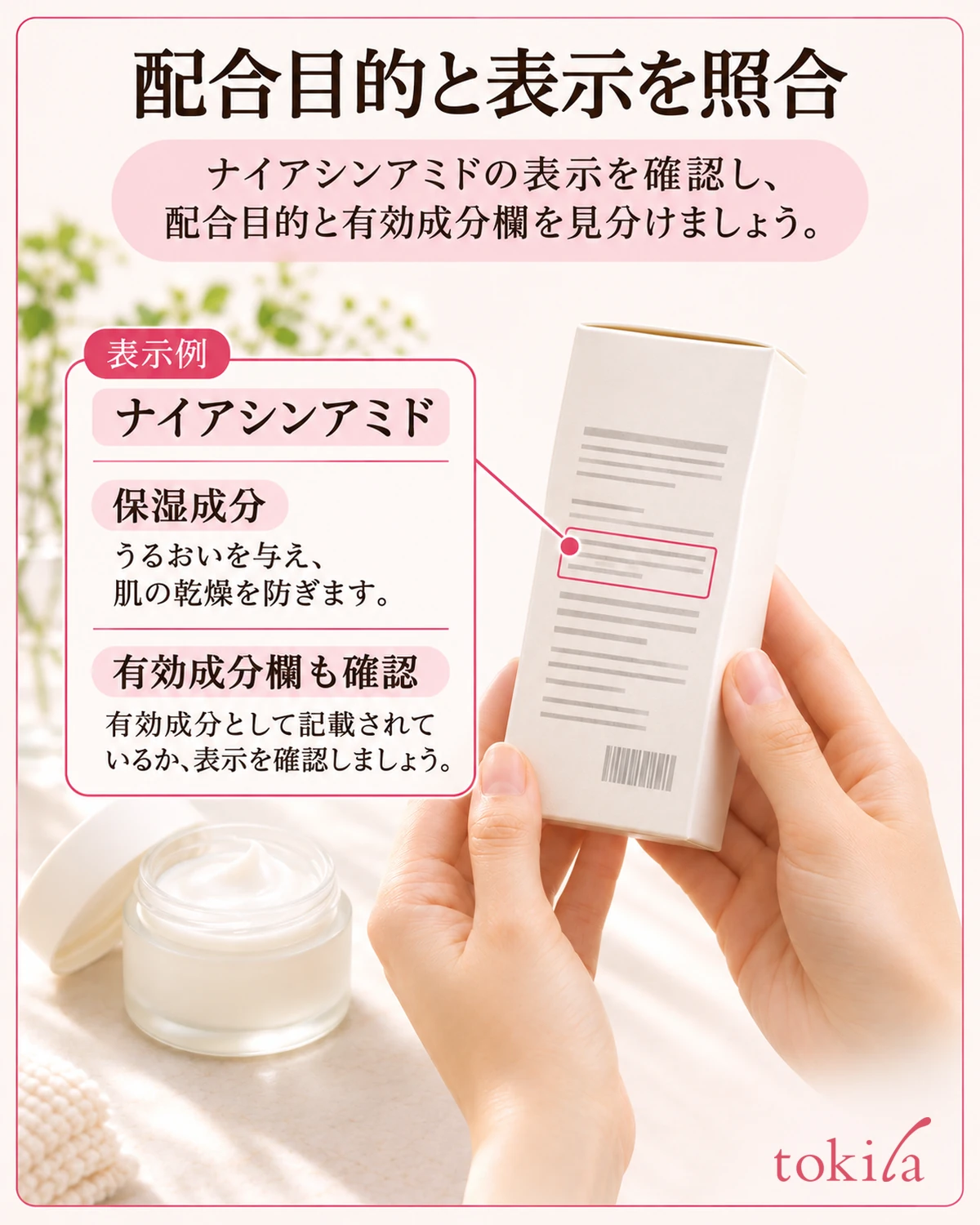
Next, read why niacinamide is included in the product. Descriptions such as "moisturizing ingredient" do not mean the same thing as an "active ingredient" section. Reading only a highlighted ingredient name and skipping nearby small notes or the product category can hide differences from the use you have in mind.
First, briefly describe what you want. Whether you want to replace one moisturizing product or find a quasi-drug labeled with a particular benefit changes where you should look. If you want moisturizing care, clarify whether you want to replace your toner, emulsion, or cream, rather than checking only for the ingredient name.
Avoid ranking how strongly products work on skin by the ingredient's position on a label or how prominently its name is displayed. Even when a concentration is given, that number alone does not determine suitability or product superiority. Nor must you judge products without a stated concentration as inferior. Compare the complete product description and directions together.
If ingredient information and finished-product descriptions become mixed up while comparing, pause and separate them. Make separate notes for "information about the ingredient" and "what the product states." In a comparison table, keep ingredient name, product category, purpose of inclusion, and routine position in separate columns, leaving unknowns unfilled rather than guessing.
Even if a candidate lists several ingredients, there is no need to choose by counting their names. If another ingredient catches your eye, check that it still serves your current purpose. Being able to say why you want that product provides a steadier comparison than collecting ingredient lists.
3. Consider whether you want a toner, emulsion, or cream
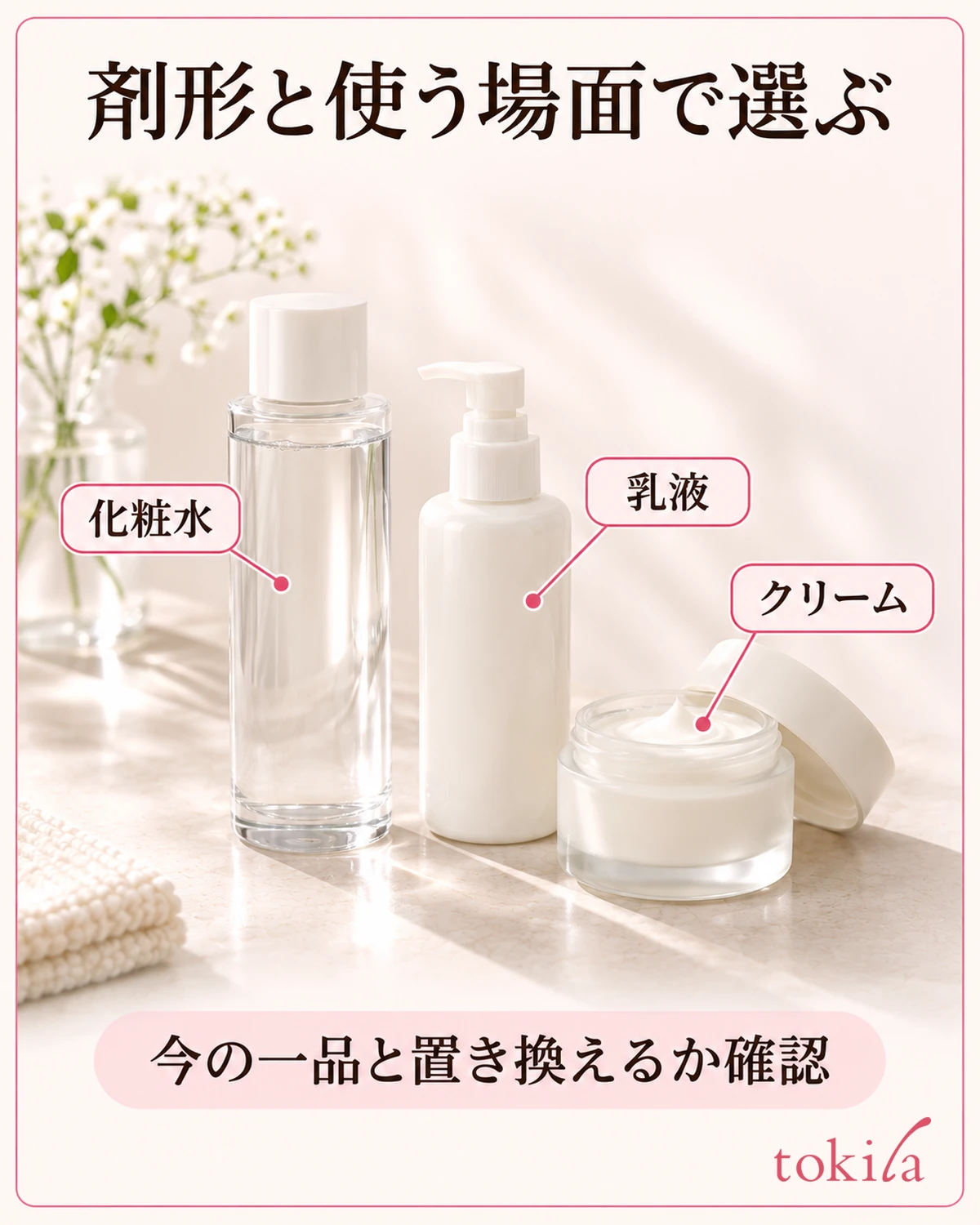
Even among products containing the same ingredient, liquid toners, emulsions, and creams have different places in a routine. First, decide which current product you want to replace. If you are finishing a toner, start with toners; if you want a cream for the last step, start with creams. This lets you compare without adding steps simply because of an ingredient.
Next, check practical preferences that matter for continued use, such as spreadability and stickiness after application. If store testing is available, follow the store's rules and try a small amount with clean tools. That sensation tells you about the immediate feel. One trial does not establish long-term effects or compatibility with your skin.
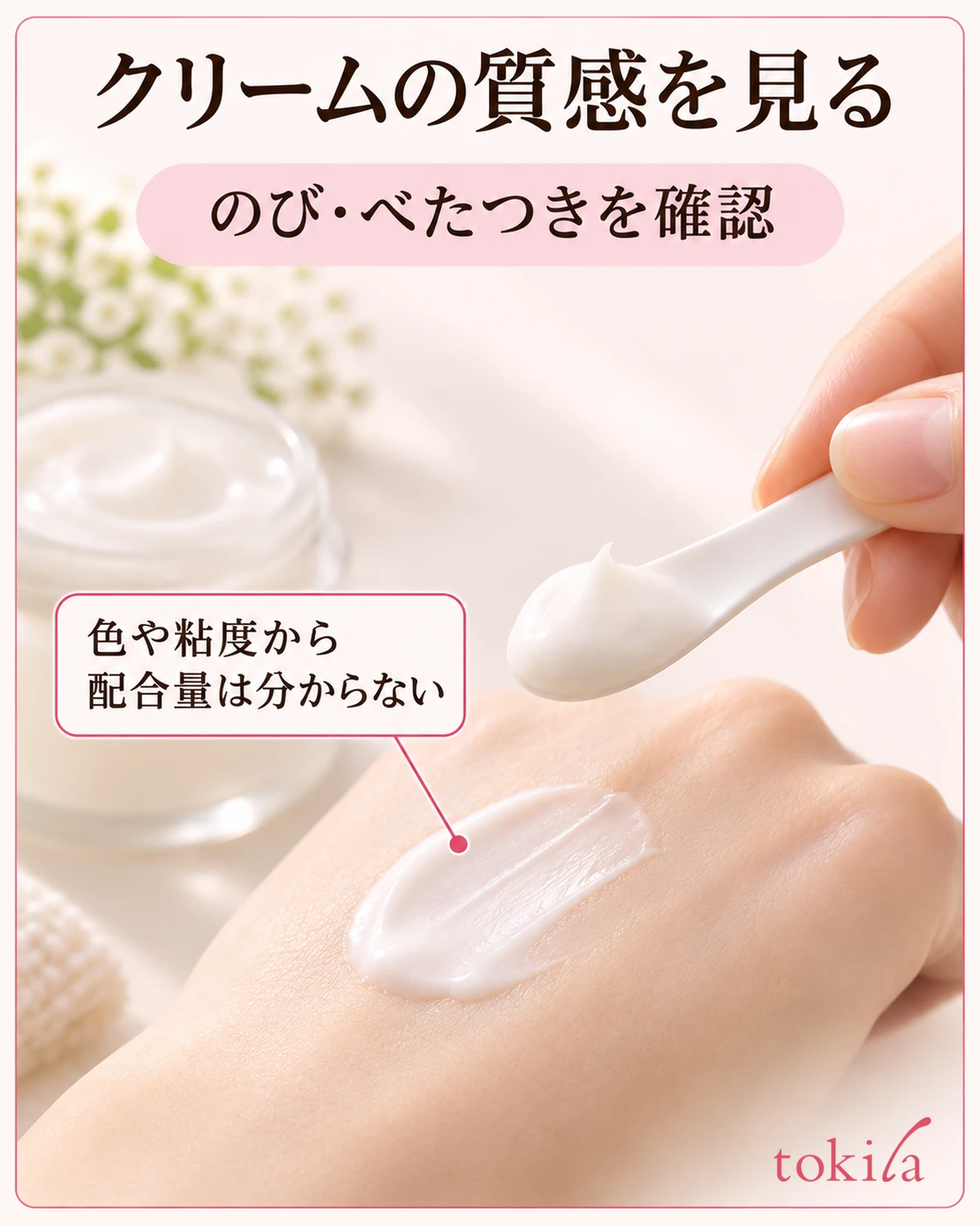
You cannot conclude that a rich-looking cream contains more of an ingredient or that a clear liquid contains less. Do not connect color, viscosity, fragrance, or container shape with concentration. When considering texture, focus on practical use, such as how easily it spreads or fits into your morning preparations.
For morning use, think through the sunscreen and makeup that follow. Do not choose on the assumption that you will use it in an unlisted way, such as mixing it with toner in another container because it feels heavy. Check whether it fills one step and whether the instructions say to continue using your emulsion or cream before deciding to add or replace it.
If you plan to use it only at night, check for nighttime directions. Do not classify every product as morning-only or night-only from an ingredient name; follow each product's guidance. Fragrance and opening and closing the container also affect everyday convenience. However, container convenience and the strength of an ingredient's action are separate assessments.
If a sample differs in size or container shape from the full-size product, do not assume the same number of pumps gives the same amount. Sample sachets and mini containers may carry their own directions. When considering the full-size product, assess accessibility in its usual storage place, but recheck the amount against its own label.
4. Check application order and amount on that product's label
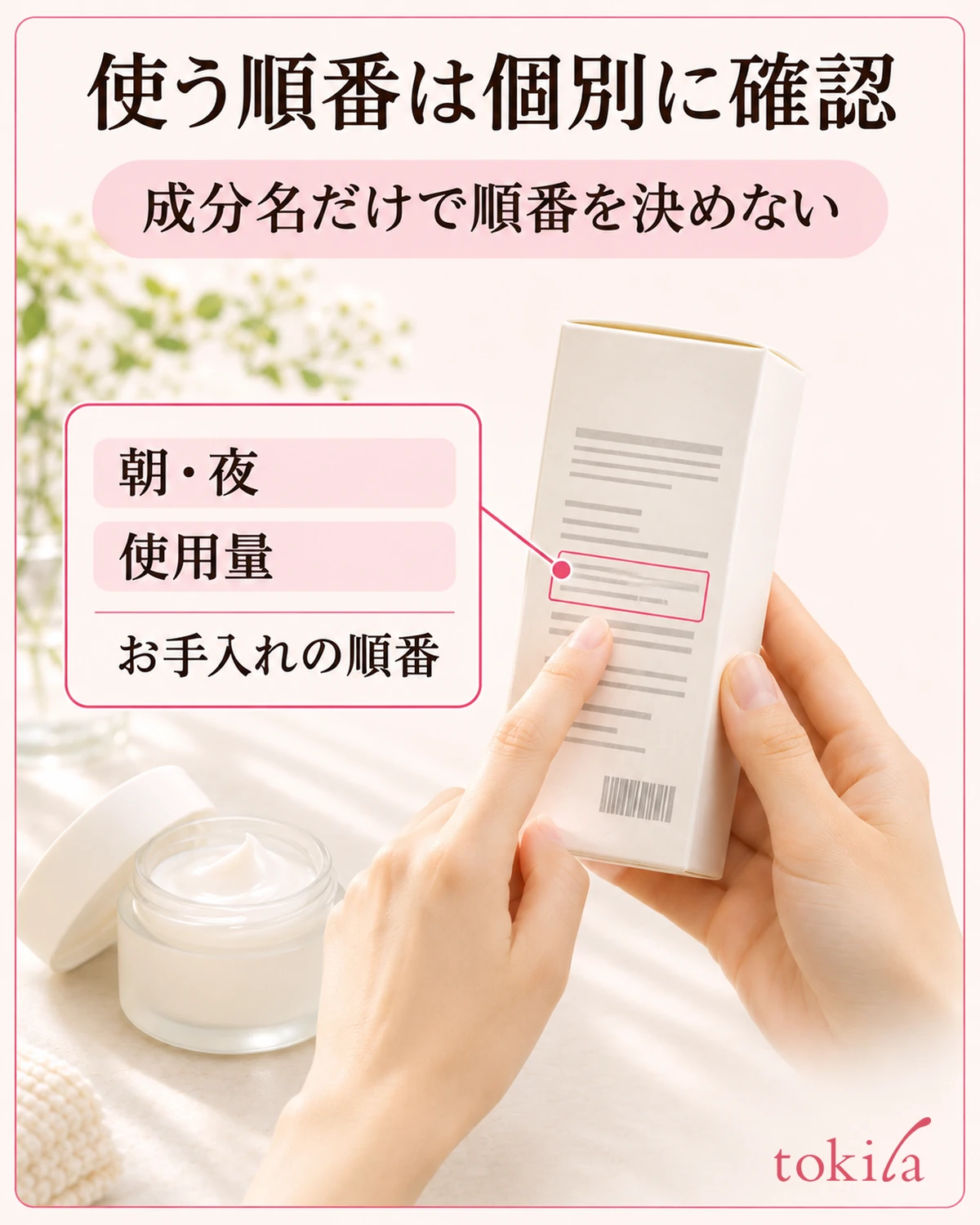
Before buying, check where it goes after cleansing, whether it is for morning or evening, and the suggested amount per application. Do not invent a universal order such as always applying niacinamide after toner. Do not treat a toner and emulsion with the same ingredient name as substitutes for the same step.
When reading directions, look beyond positions such as "after toner" and check which care follows. Check whether it is a one-step product or one combined with emulsion or cream. If you want to layer it with your existing serum, place their routine positions side by side to see whether the issue is ordering products within one step or adding another step altogether.
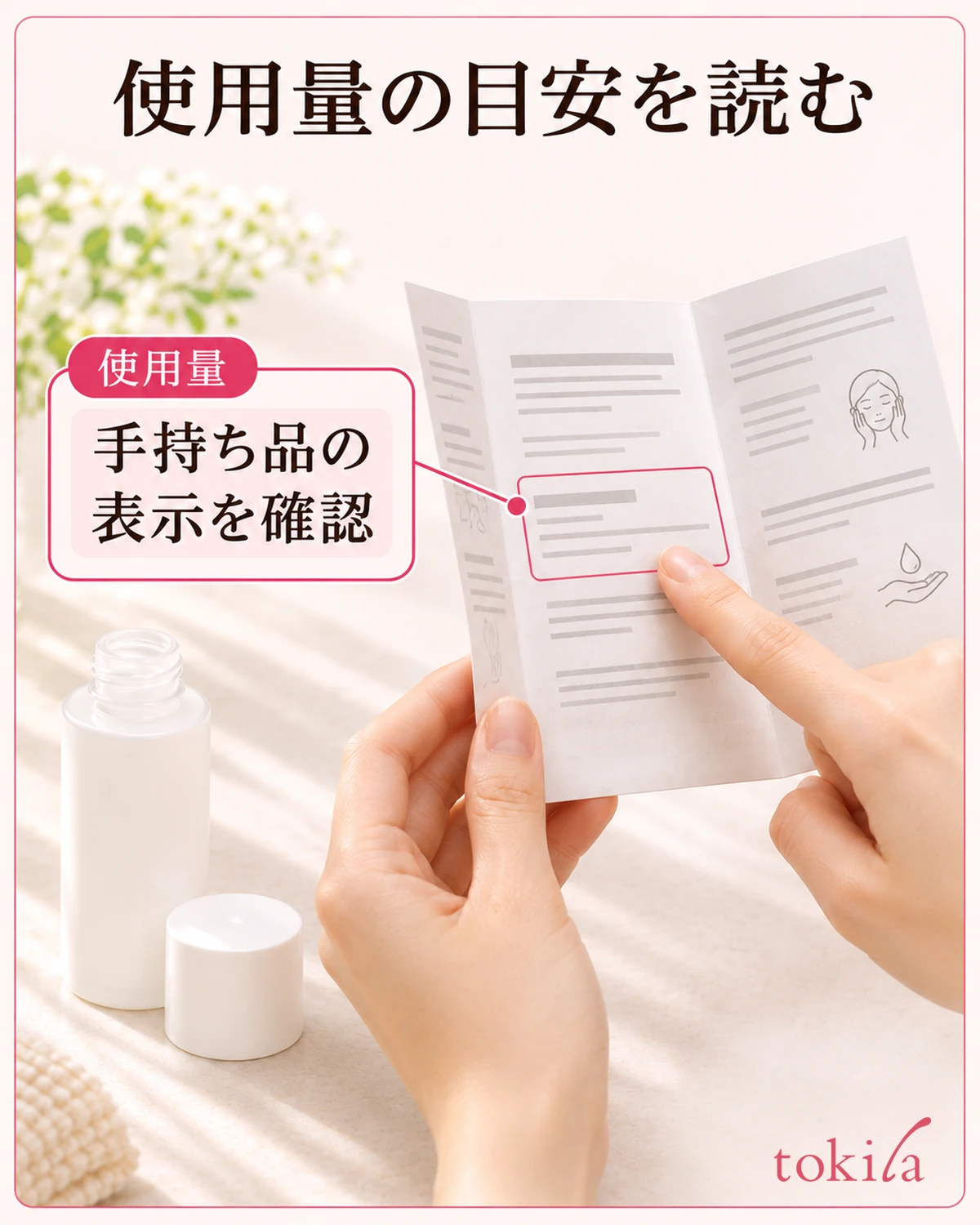
Follow the product's amount guide, whether expressed in pump counts, dispensing length, or a bead size. Do not automatically apply a drop count learned for another serum or a bead size used for another cream. If small print is difficult to read, free your hands and open the leaflet before use to locate what you need.
If you feel uncertain when starting, do not try to solve it by substantially diluting products yourself or mixing several together. Ask the product's contact service if you do not know how to handle the amount or frequency. If redness or irritation develops, stop using it rather than continuing with an adjusted amount, and follow the caution label.
If the layering order is unclear, check both products' guidance first and organize your questions. Do not assume that matching ingredients make combination impossible, or that different ingredients make every combination suitable. Whether compatibility is confirmed and whether you need to use the product are separate questions.
5. If unsure, narrow down replacements for one current product
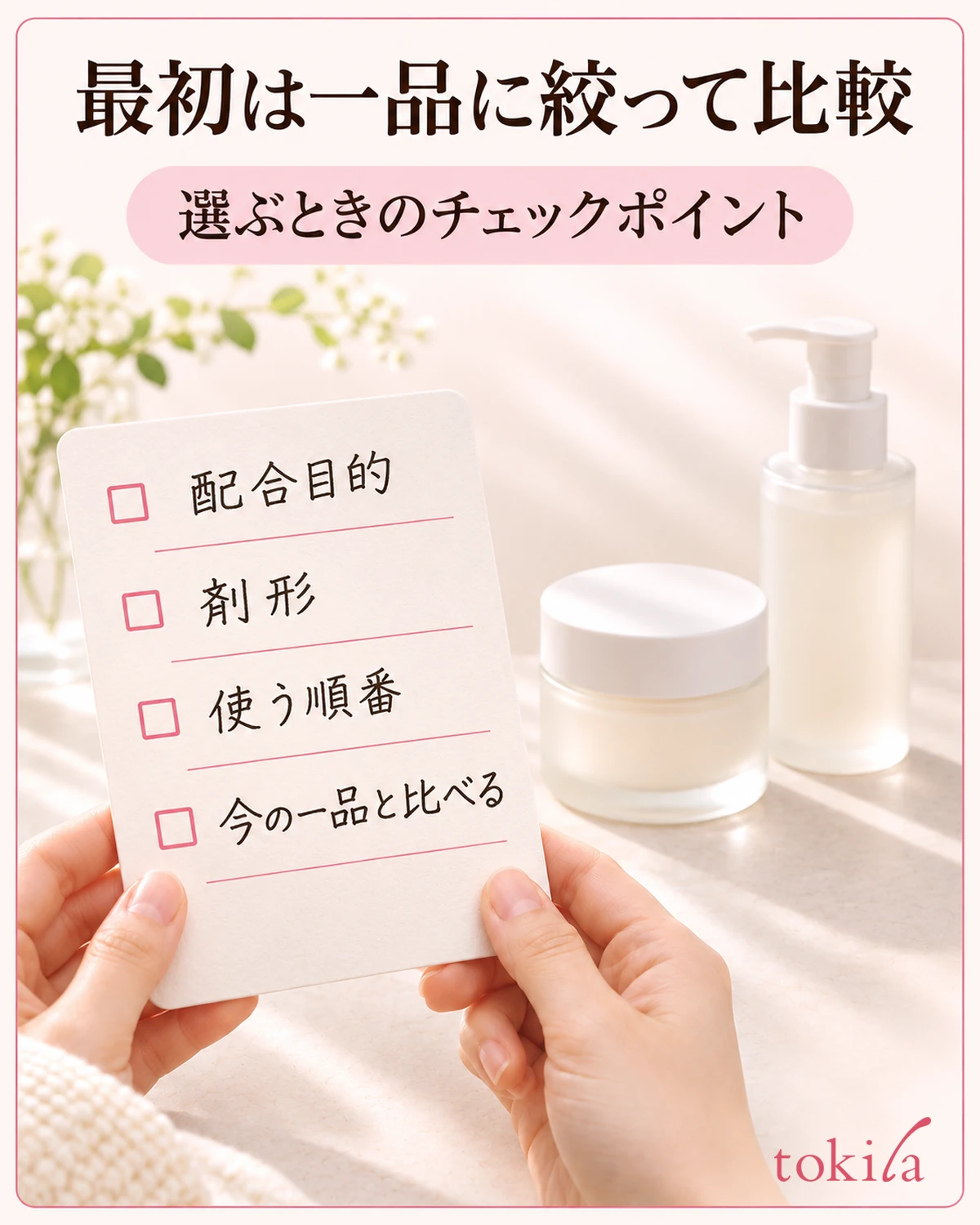
When candidates remain, return to four points: product category, ingredient purpose, formulation, and application order, rather than ingredient prominence. First, check that you are comparing them for the same purpose. Avoid ranking a moisturizing replacement and a candidate sought for another benefit by a single number.
If your current products contain the same ingredient, you do not need to add every product that includes it. Consider whether to continue your toner or emulsion or replace a finished product. If layering adds many steps, also review how to organize your routine before layering serums and arrange it into something you can maintain.
After buying, brief notes on the product name, start date, and morning or evening use can help with future choices. Rather than changing several products simultaneously, keep track of which one you replaced. These notes organize your use; they are not a trial proving an ingredient's effects. Avoid concluding that it worked or failed over a short period alone.
When unsure, aim for a product whose labeling matches your purpose and whose directions fit your routine, rather than choosing only because it contains a talked-about ingredient. Reading ingredient information separately from product descriptions keeps expectations grounded while letting you consider formulation and everyday convenience.