Interested in a retinol serum or cream but unsure how to choose? Look at its purpose and directions together instead of deciding by an ingredient name or number alone. Product category, time of use, and instructions for getting started vary by product.
Here we organize the checks to make before buying. This article does not rank particular products or promise changes to your skin. Read the conditions of use while considering where a product would fit into your current routine.
1. Read the purpose and product category, not just the ingredient name
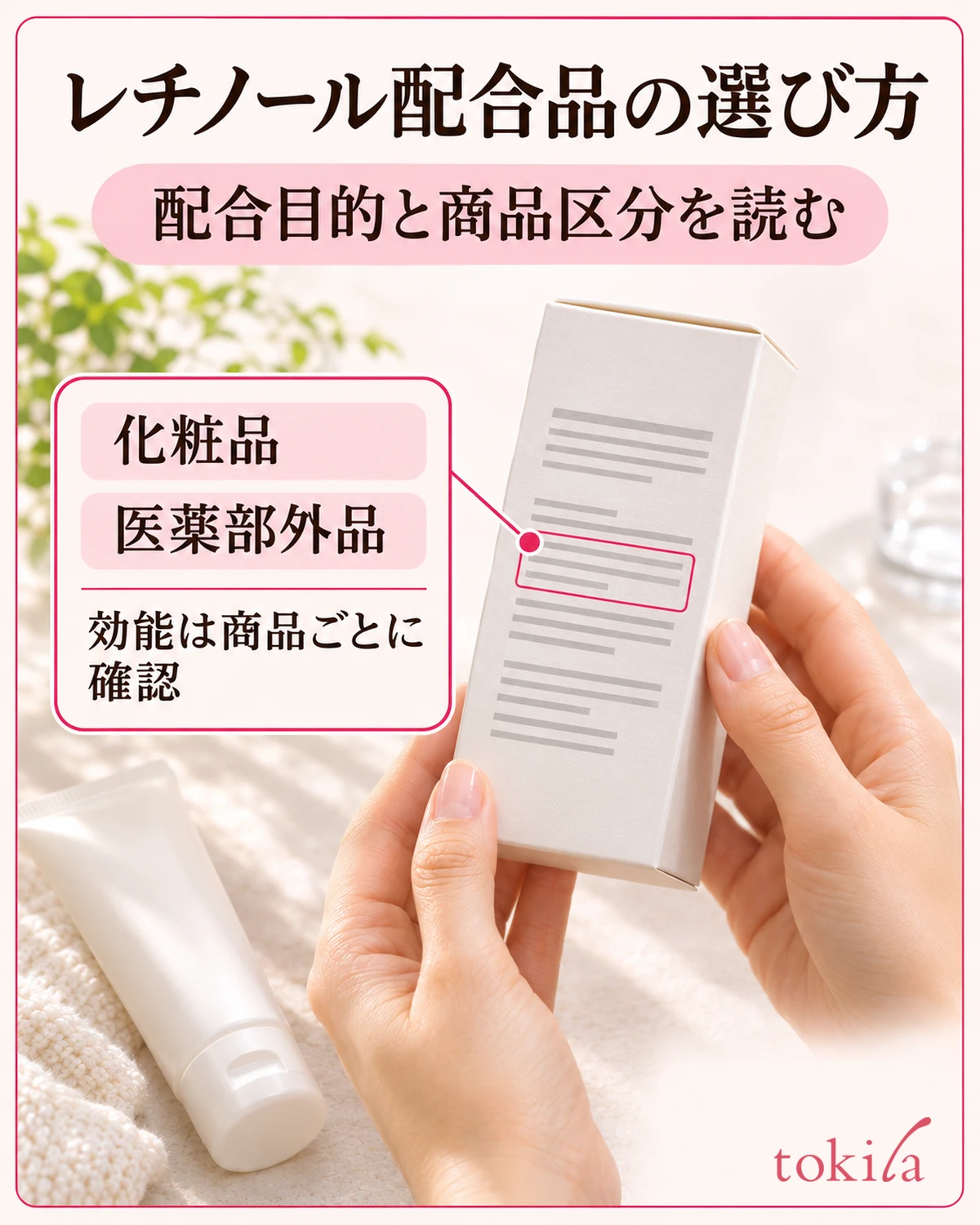
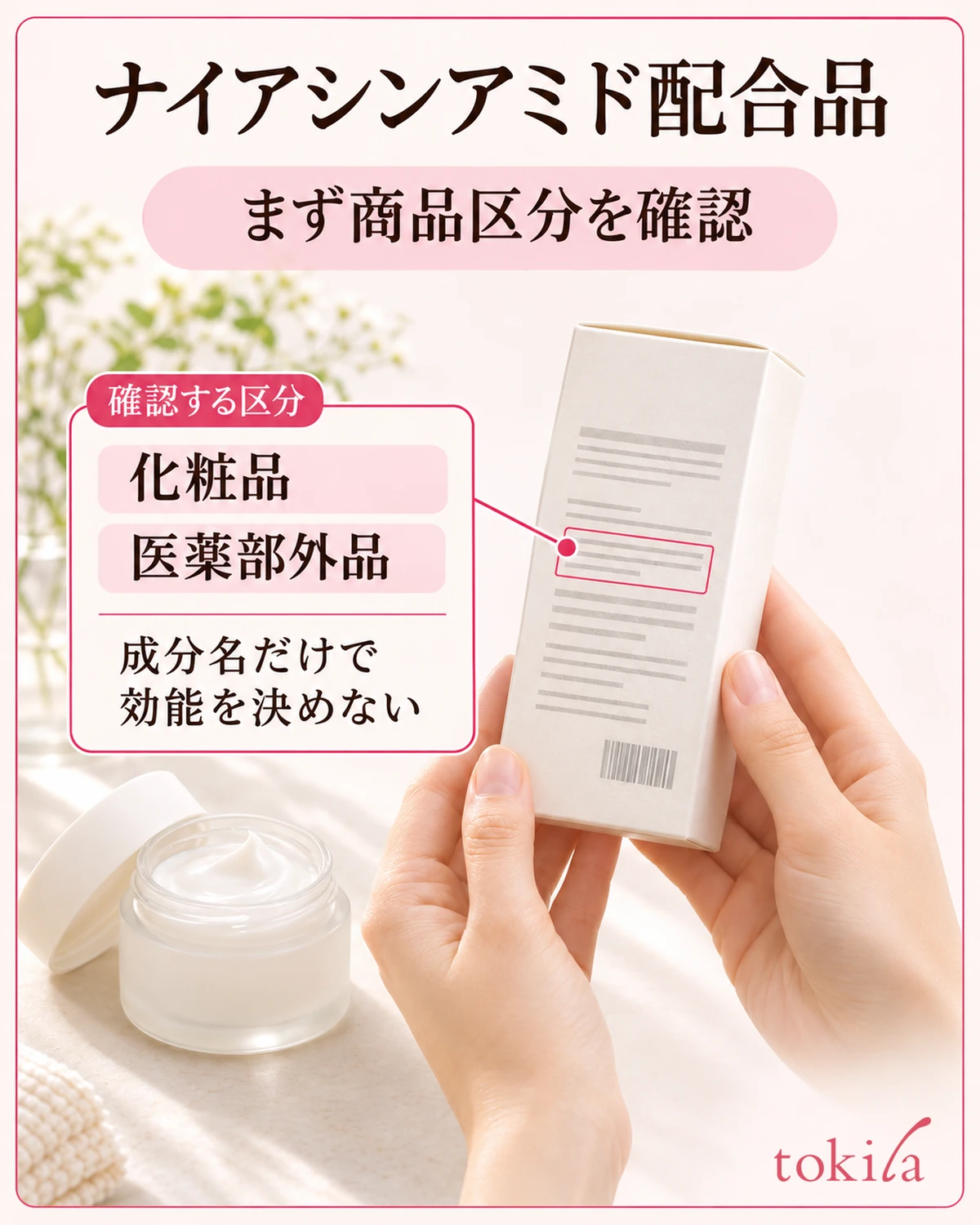
When you notice the word retinol, first check the product category. See whether it is a cosmetic or a quasi-drug, then read its purpose and stated benefits. The same ingredient name does not mean every product offers the same benefits. Start by reading the explanation for the whole product instead of isolating appealing words.
For example, if the ingredient is identified as a skin-conditioning ingredient, read that as its stated purpose. If it is described as an active ingredient, check the benefits and conditions stated for that product. Connect the fact that it contains an ingredient with your reason for choosing it. Do not extend this to mean one product can resolve every skin concern.
Other ingredient names or several numbers may appear near a prominent retinol claim. If you do not know what a number represents, do not assume it is the concentration of retinol in the finished product. Raw ingredient purity, the percentage of a blended raw material, and the amount in the product are different things. Do not rank products using numbers that describe different measures.
When noting a candidate, record its full product name, category, and purpose together. This prevents mixing up another item in the same range with a similar name or directions from before a reformulation. When shopping online, check that the information still refers to the same product after selecting a different size or type.
Even if an unfamiliar ingredient name resembles another, do not assume the directions are the same. Read ingredient explanations separately from instructions for the finished product, prioritizing the directions for the product you will buy. Understanding its purpose and where you can use it matters more than memorizing every unfamiliar term.
2. Check morning or evening use and its place in your routine
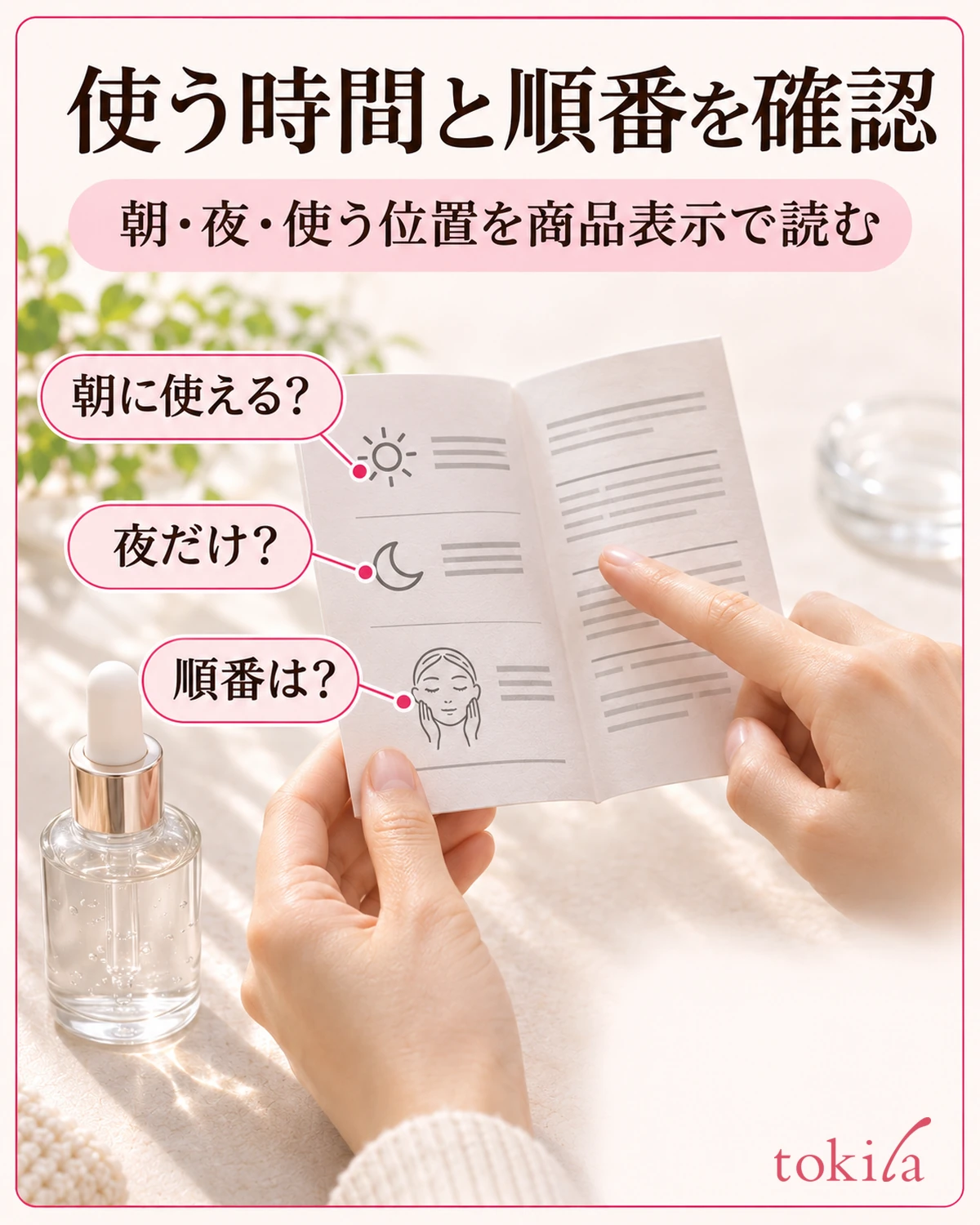
Next, check whether it suits the time you want to use it. Decide whether you intend to use it only at night or also in your morning routine, then read that product's morning and evening instructions. Judge each candidate on its own conditions rather than assuming all retinol products are night-only or can all be used identically morning and night.
Even when morning use is indicated, read the accompanying conditions, such as using sunscreen. Consider whether it fits your daytime plans and usual sun-protection routine. This does not mean one sunscreen application requires no further attention all day; follow the sunscreen's directions and reapplication guidance too.
Do not decide the order based only on whether the container looks like it holds a serum or cream. Check whether that product goes after toner, after emulsion, or at the end of your routine. Write down exactly which existing products it goes between to avoid confusion after buying. If it goes in the same place as a serum you already use, next check whether to layer or replace it.
If you want to use it around the eyes or mouth, check whether those areas are included in its directions. Do not compare a full-face serum with a cream for a specific area as though both cover the same area in the same amount. Avoid extending it to the eye margins or lips without knowing where it may be used.
Write separate morning and evening lines when recording the order. Specify what comes before it and which UV-protection product follows in the morning, and what care precedes it at night. If the candidate has no morning-use instructions, do not fill the gap by guessing; start by considering whether its evening-use conditions suit you.
3. Read the initial amount, frequency, and application area before choosing
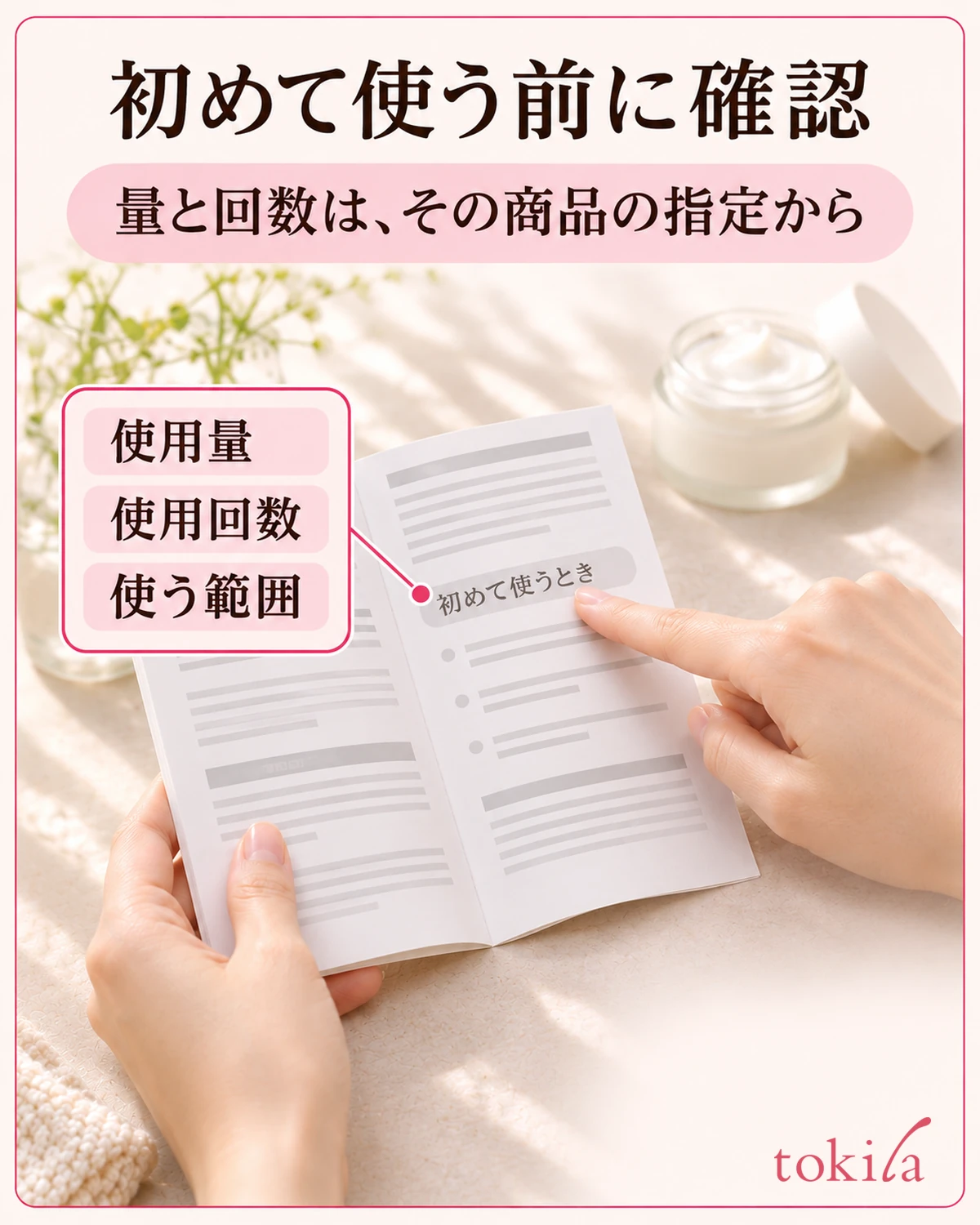
If this is your first retinol product, considering products with clear getting-started instructions makes preparation easier. Before buying, read whether to use it daily from the outset, start with intervals, or begin at night. Do not transfer one product's introductory schedule to another as a universal rule.
Check the recommended amount for each candidate too. Match pump counts or a stated dab size to whether the amount is for the whole face or a specific area. Do not assume less is always safe or more brings faster results. Rather than inventing your own directions where instructions are unclear, wait until you can confirm how to use it before choosing.
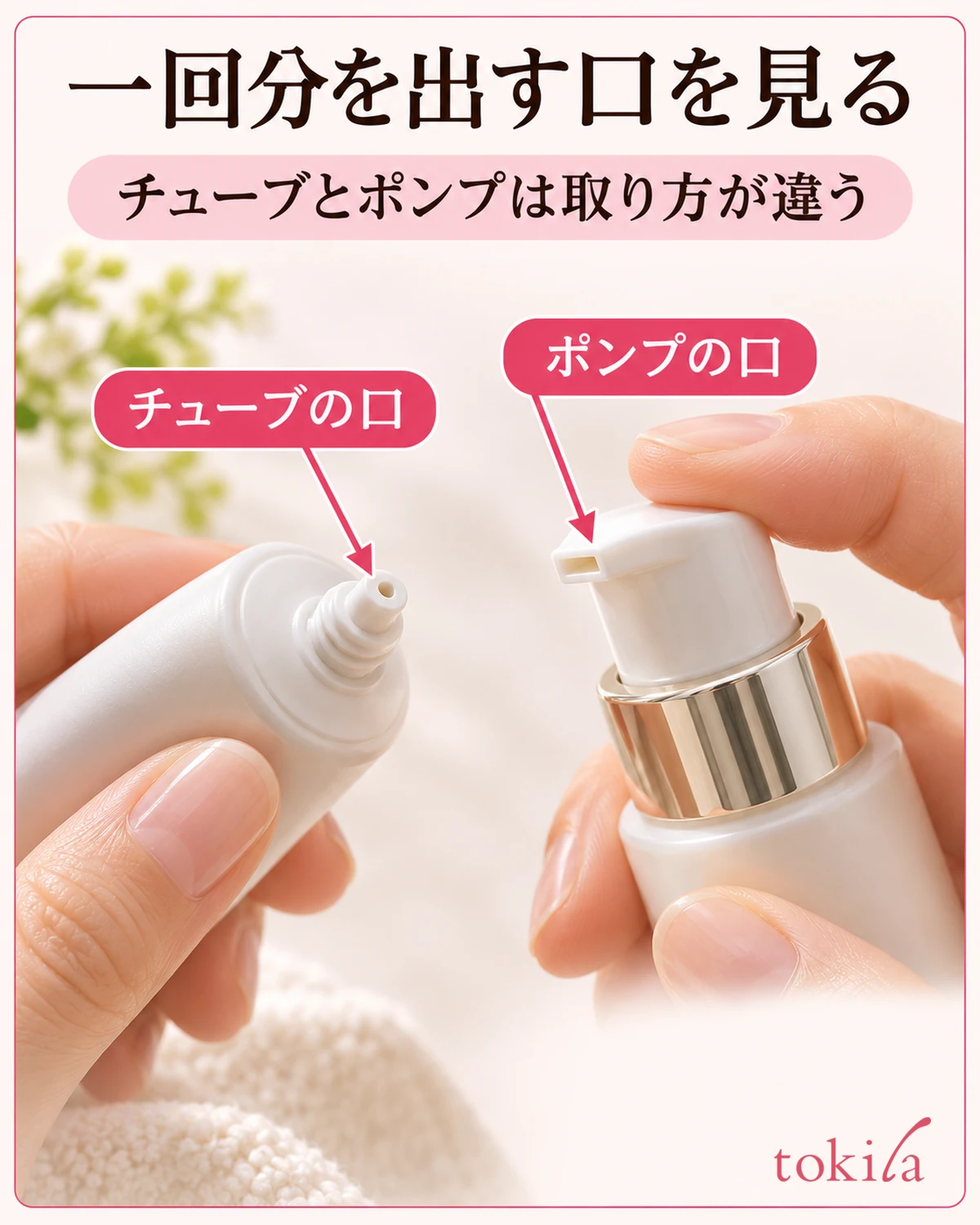
The dispensing opening helps you imagine handling a single application. Squeezing a narrow tube and pressing a pump involve different hand movements. In the photo, look at the opening and the pressing mechanism. Equal lengths dispensed do not establish equal amounts, and one press of every pump does not deliver the same amount.
If redness, itching, or another abnormality develops during use, do not continue on the assumption that it proves the product is working. Stop using it and follow its cautions. Consult a dermatologist or another appropriate specialist as needed. If you previously had trouble with similar products or the label lists circumstances in which to avoid use, check those conditions before buying.
A short note of the time of use, specified amount, application area, and next application is enough for an initial plan. Rather than planning to increase frequency to hurry results, consider whether you can begin according to the product's directions. If that schedule is difficult, you can reconsider other candidates too.
4. Check overlap with existing products and combination cautions
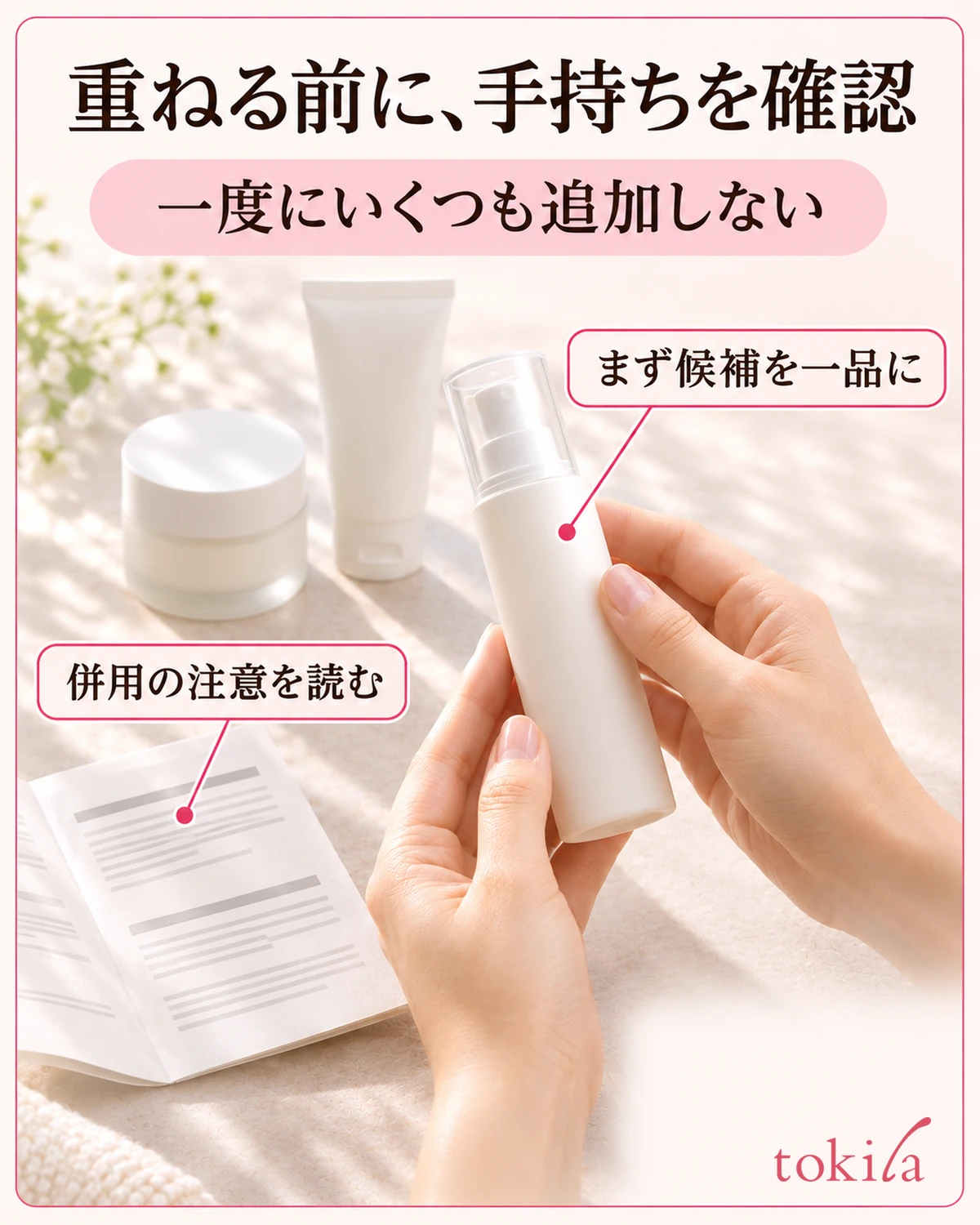
Before adding a product, check the full names and ingredient labels of the serums and creams you currently use. If you already use retinol skincare, separate the idea of adding another layer from replacing your current product. Write down the present combination before adding several products with similar purposes.
Some products carry cautions about combining them with scrubs or other items. Read the candidate's precautions alongside the directions for your existing products. Do not decide using a universal prohibited-ingredient chart or the assumption that anything from the same brand can be layered. Wait to add a combination with unresolved questions until you can confirm it.
If you replace your cleanser, serum, and cream all at once when starting something new, it becomes harder to identify what to reconsider when something feels difficult to use. Narrowing the purchase to one product and considering what it replaces helps organize your routine. This is not a method of testing skin benefits or guaranteeing safety.
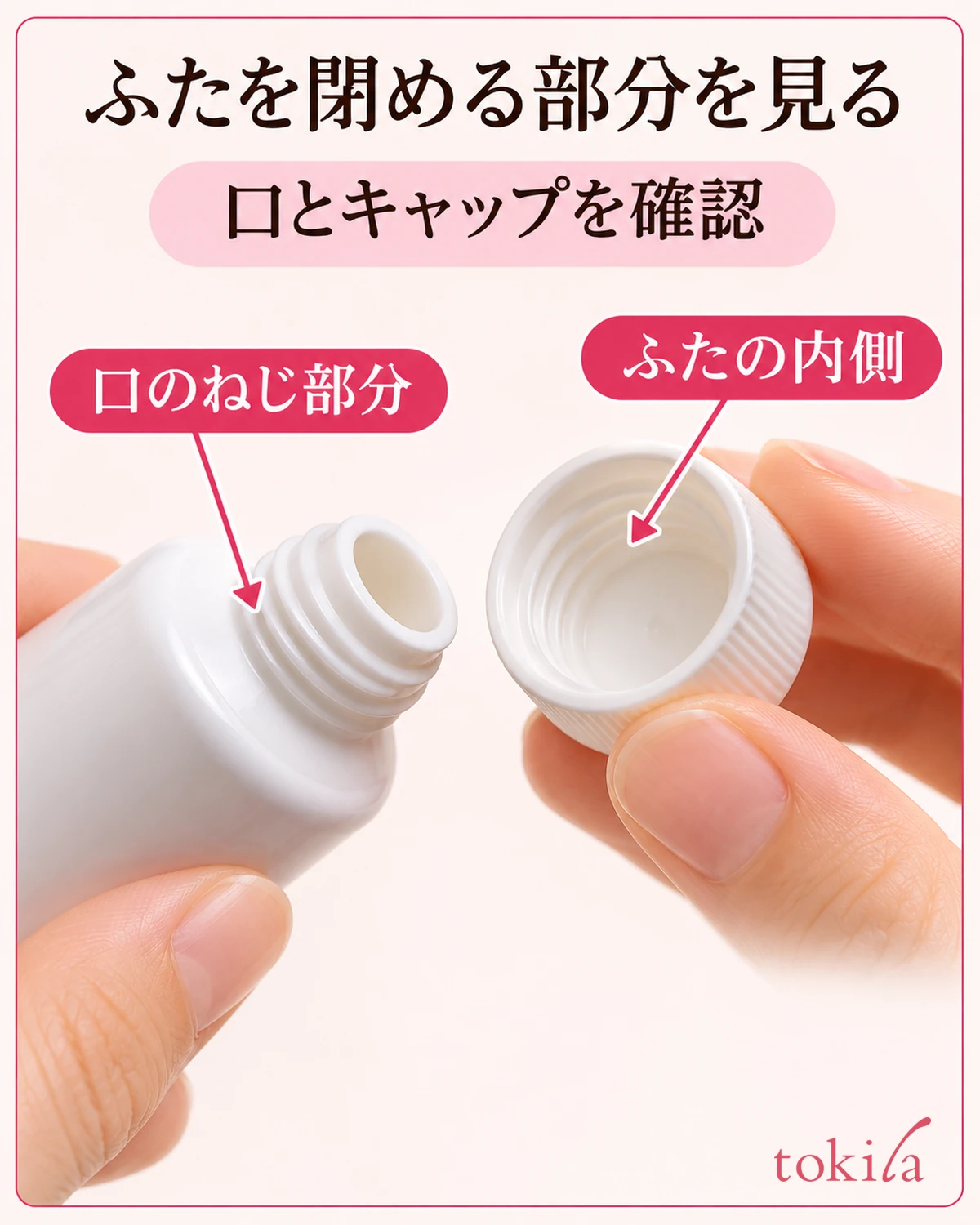
Also check how to close and store it after use. With a tube, the opening, inside of the cap, and threads show where it closes. Do not transfer the contents to a different container or mix them with another cream inside a container. Use the product with its own container and storage conditions.
When buying, decide where to keep the outer box or leaflet as well as reading the directions for after opening. If you save information on your phone, include the product name and date checked. This helps prevent referring to instructions for a similarly named product as though they were for yours.
5. If unsure, narrow it down to one product with a routine you can follow
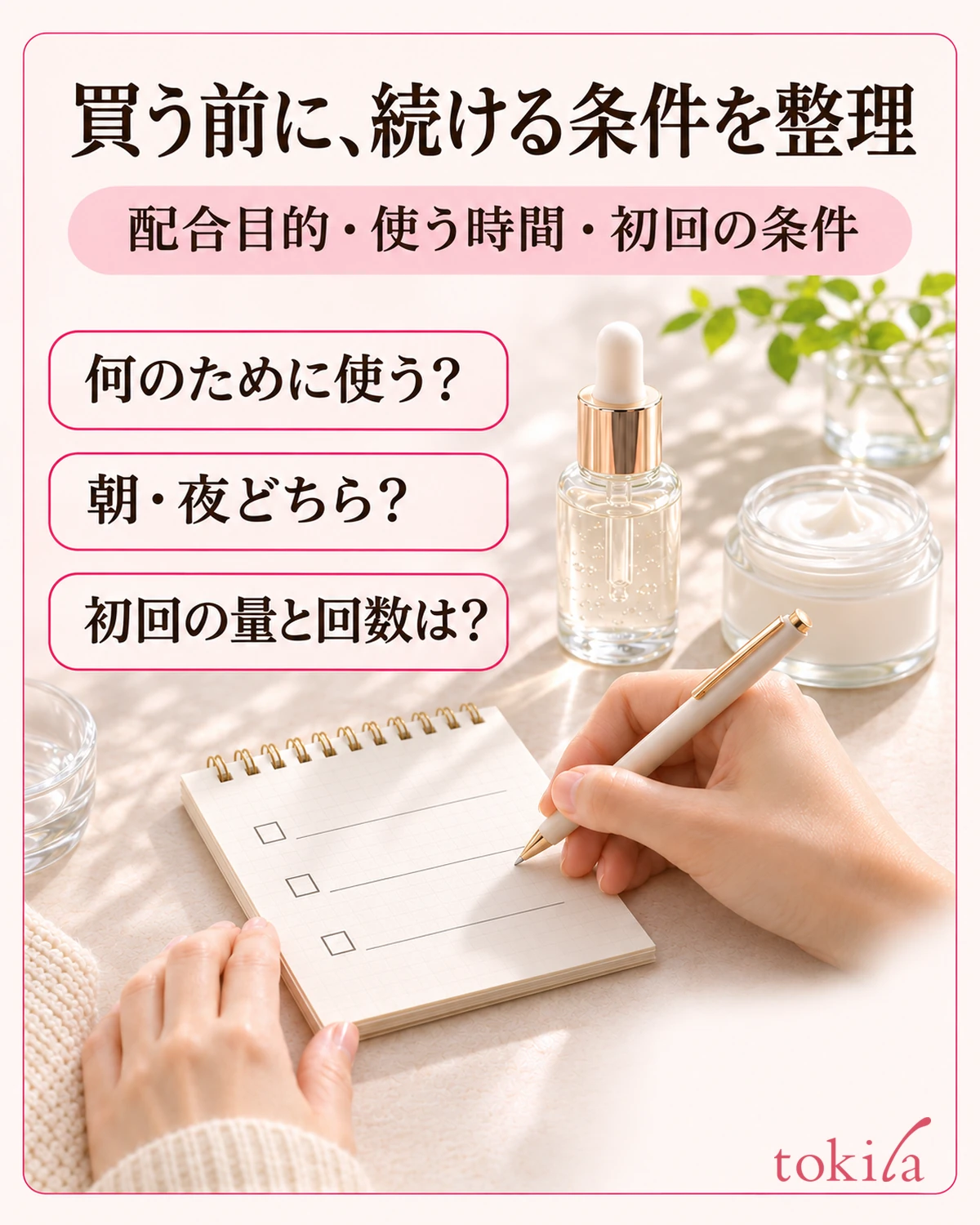
If two or more candidates remain, compare their purpose, time of use, order, and initial conditions side by side. Rather than ranking them by concentration or attention alone, identify which conditions you can follow in everyday life. Start from real situations, such as checking evening use if you do not want extra morning steps.
If you can try the texture, follow the location's hygiene rules and assess what you can observe there, such as spreadability and ease of handling the container. One trial's appearance or feel does not guarantee long-term changes or suitability for you. If skin testing is unavailable, do not open the product without permission; follow the offered procedure.
If you become unsure of the order after buying, confirm the full product name and return to that product's directions. Do not keep adding serums because of dryness or discomfort, or repeatedly adjusting amounts on your own. Distinguish the decision to stop when an abnormality occurs from adjusting the finish.
Finally, put your purpose into one sentence. Naming the situation and area, such as wanting to include it at night or use it locally, makes it easier to compare with candidate descriptions. Choose a product whose purpose and use conditions you can follow align, rather than relying on the name retinol alone.
If you are unsure where a serum belongs, also see how to determine a serum's place and order before layering.