Want to buy eyeliner but unsure whether to choose pencil or liquid, or black or brown? First decide on one kind of line you want, such as a defined outline or a blended edge. Then compare tip shape, color intensity, and removal method to narrow your options.
This article explains what to check on labels and tips before buying. No type is guaranteed to be easy to draw with or smudge-free for everyone. Separate what troubles you about your current liner from what you want to keep, and look for conditions that suit your hands and daily makeup.
First decide whether to keep the outline defined or blend it
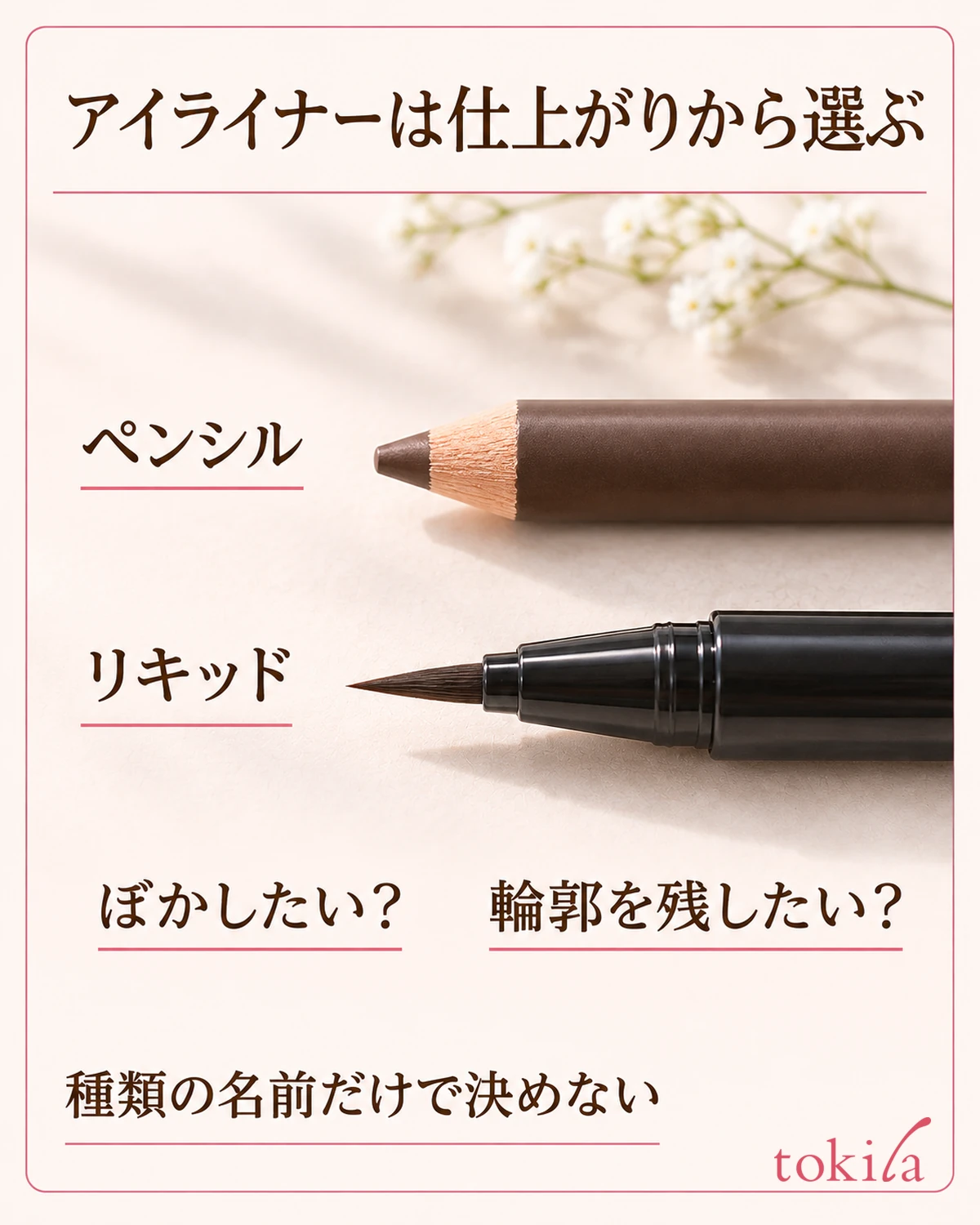
First consider whether you want a soft line that blends with eyeshadow or a defined line extending to the outer corner. Saying only that you want a natural look can leave both color and width undecided. Describing whether you want to blend the edge makes product descriptions easier to assess.
Pencils are an option when you want to blend, while liquid liners are an option for defined lines. However, some pencils draw intense lines, and some liquid liners have sheer colors. Rather than deciding the finish by type alone, check each option for blending and whether adjustment is possible before it dries.
The name gel does not necessarily mean a pot used with a brush. Some retractable leads are also called gel. Separate the name of the formula from the structure you hold to draw, and check whether you need another brush or can start using that single item.
If you like the color of your current liner, you could change only the tip next time. If it is easy to handle but the line looks too strong, compare color and sheerness before changing the entire container style. Start by separating what you want to change, rather than attributing every drawing difficulty to the type.
Also decide whether you will use it only to extend the outer corners in the morning or along the entire upper eyelid line. Narrowing the area makes it easier to consider whether you need a fine tip or room to blend. Eye-shape categories do not require assigning the same type to everyone. Think about whether you want the same outer-corner length each morning or prefer blending on different days. Choosing one use scenario helps you reconsider whether one liner needs to handle every technique.
Compare leads and brush tips with your usual grip in mind
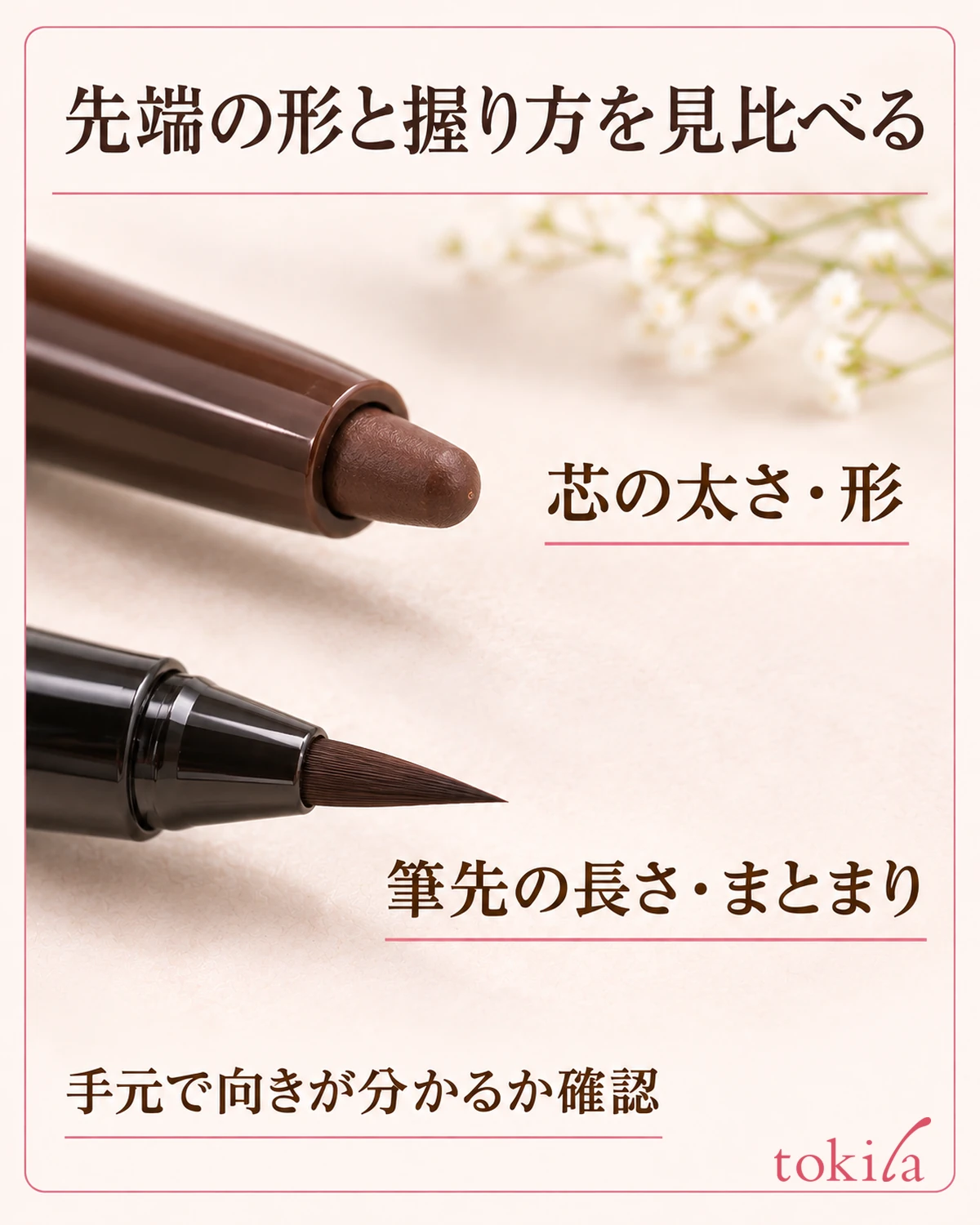
When choosing a pencil, check whether it needs sharpening or has a retractable lead. For sharpening types, check whether a compatible sharpener is needed; for retractable types, check whether the lead can be retracted. Even if you want fewer tools, reading maintenance requirements before buying helps avoid discovering missing items when you start.
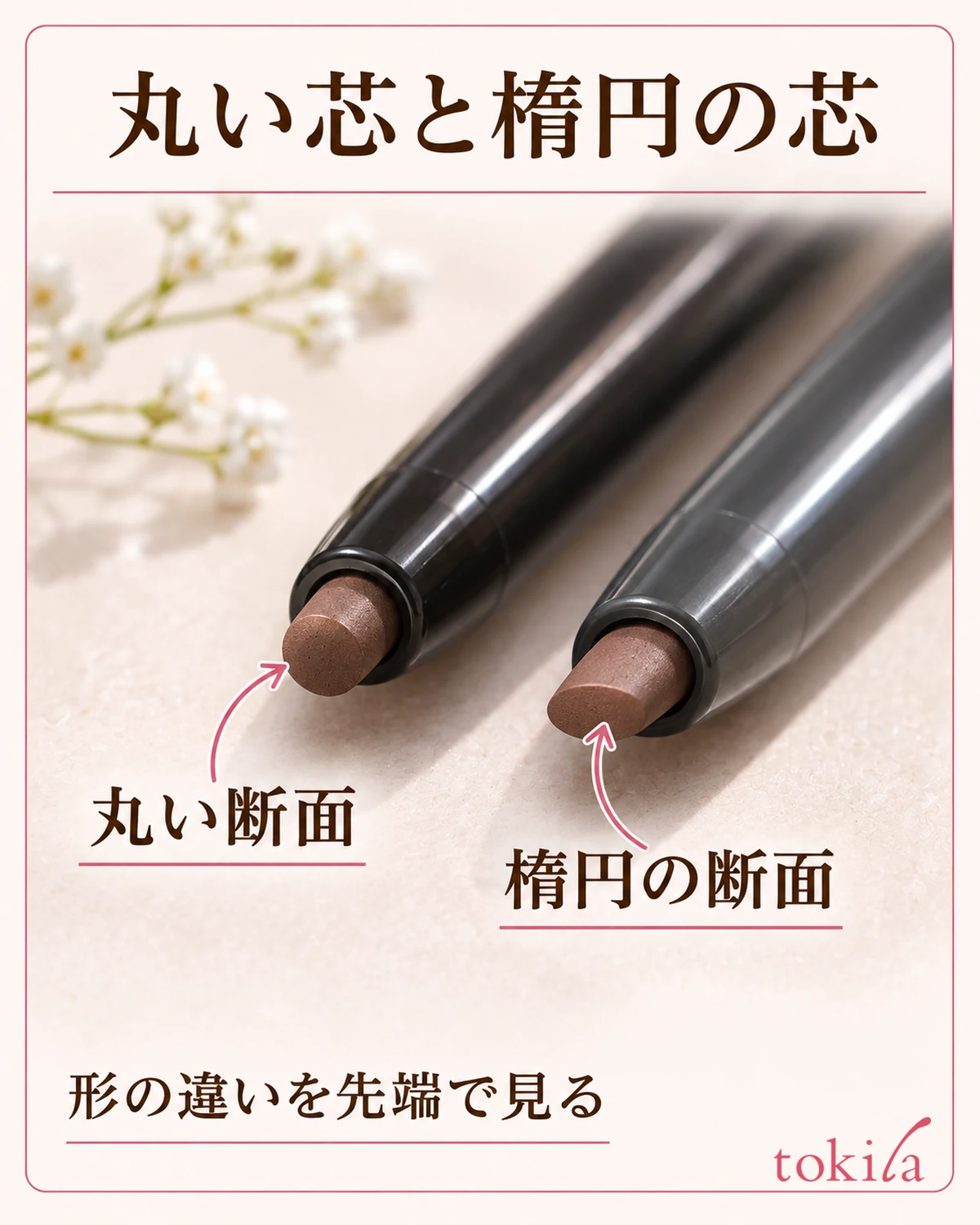
Look at the tip's cross-section as well as its thickness. Round and oval leads require different handling when changing which surface faces the skin. The supplementary photo enlarges their cross-sections from a diagonal overhead view. It is not a line-width test; it helps you distinguish a round surface from a broader one and imagine turning the liner in your hand.
For a liquid brush pen, assess brush length, how neatly the bristles gather, and barrel thickness separately. A fine-tip label does not mean everyone will draw the same fine line. Add to your criteria whether you can see the tip from your grip and judge its direction when drawing short sections.
If testing in a store is allowed, follow the store's hygiene instructions. Do not open unopened products yourself or apply shared testers directly around your eyes. Check where and how testing is permitted. Feel assessed on your hand alone cannot establish wear on the eyelids or whether irritation will occur.
If the tips leave you undecided, compare what you must do before using each option. Imagine the daily preparation: sharpening, extending only the specified length, or checking the brush. Considering handling you can maintain makes your purchase reason clearer than simply choosing the smallest thickness figure. Brush pens and bottles with a brush attached to the cap are also separate options. The latter adds setting down the bottle and managing liquid on the withdrawn brush. Consider available space by your mirror as well as the barrel thickness held in one hand to compare daily preparation.
Assess color families and sheerness separately
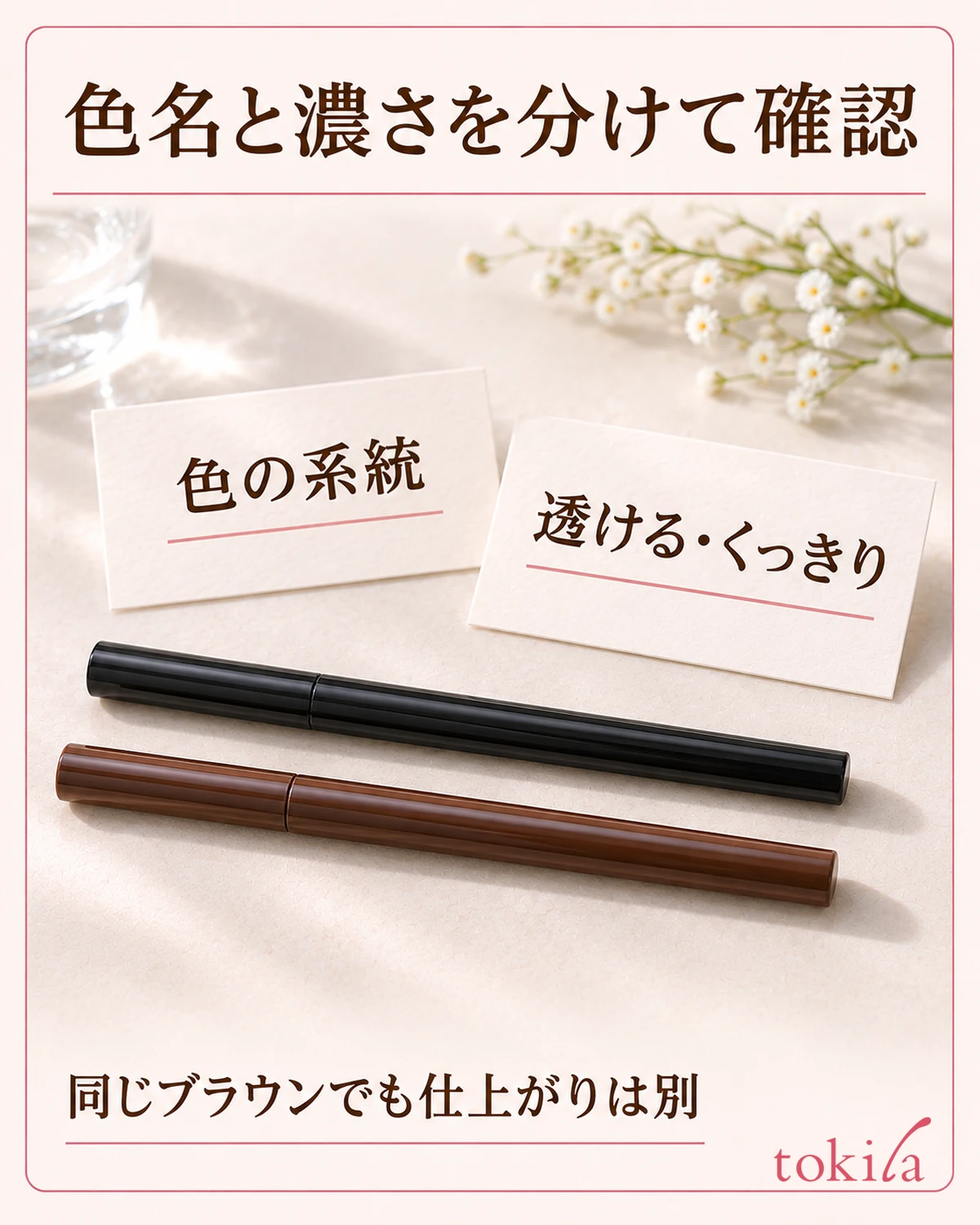
When deciding on color, separate families such as black, brown, and gray from whether the color is sheer or opaque. Even browns differ in redness and brightness, and layering a pale color does not necessarily produce the same finish as a dark brown. First decide which color direction you want to pair with your usual eyeshadow.
If lines look too strong, do not make switching to brown your only answer; review their current width and length too. Conversely, if a pale color is hard to see, check the intended finish before assuming a defect or insufficient liquid. Choosing an unsuitable color and a problem that develops during use are different issues.
When viewing colors online, avoid confusing the container color in product photos with the formula color. Screen brightness and shooting conditions also affect appearance, so read the color name and finish description together. Avoid deciding that a black barrel means black contents.
Keeping your existing eyeshadow in mind narrows your comparisons. If you usually use the same palette, imagine changing only your liner while keeping that shadow. Before buying both a new shadow and a new liner, decide on one line you want to add to your current makeup.
For options with glitter or pearl, consider whether you want visible reflective particles as well as the color. Check permitted eye-area use and precautions, rather than assuming unrestricted use on the inner eye area. Confirm that the intended location is supported before comparing color and sparkle preferences. If unsure between black and brown, revisit when you normally use liner before buying both. Is it a short outer-corner extension for work or a distinct line for weekends? Decide which will get more use, then consider choosing one first.
Check smudge resistance together with removal method
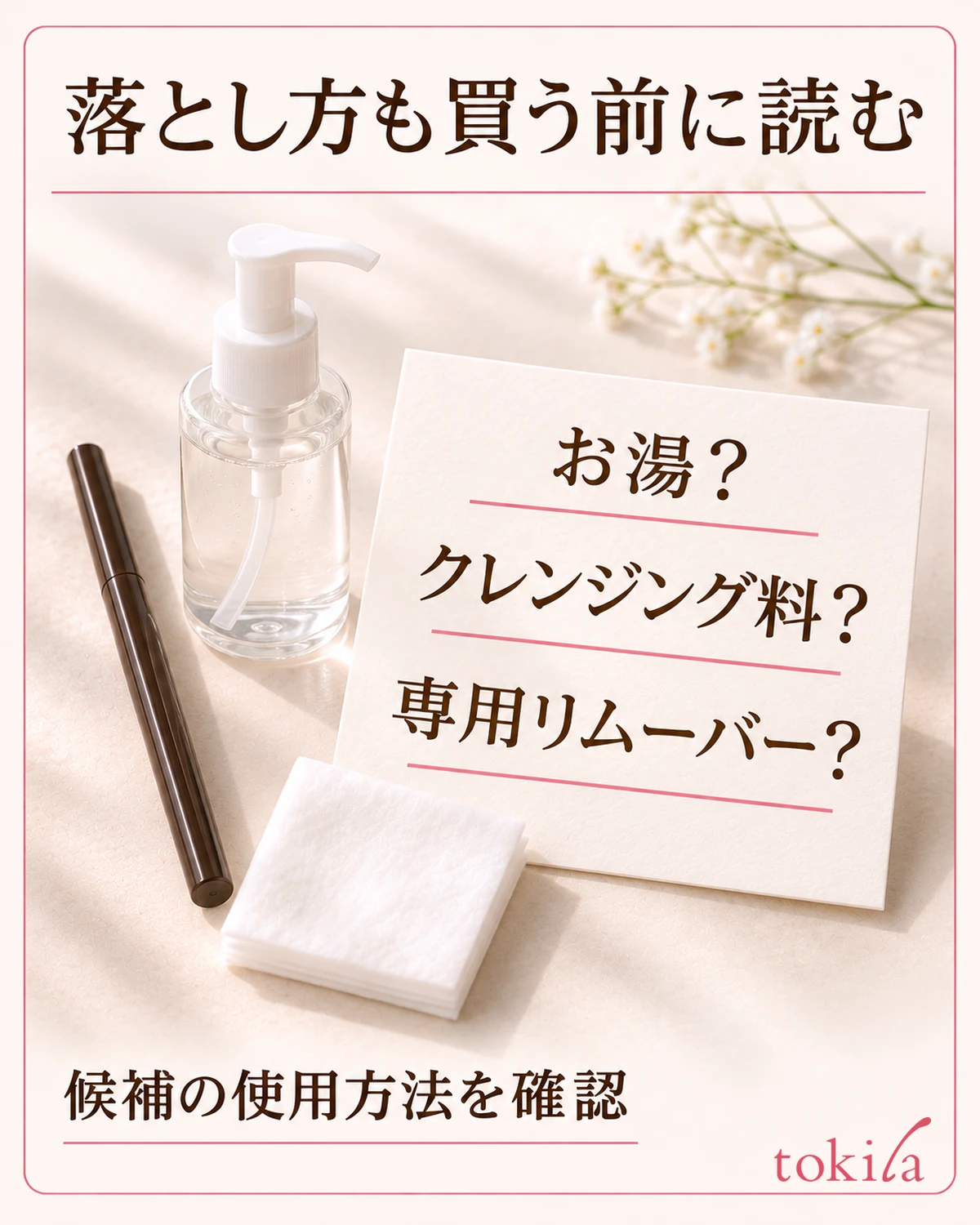
After reading resistance claims, read the same option's removal method. Some come off with warm water, some require cleanser, and some need a specified remover. Not all liquid liners wash off with warm water, and not all pencils use the same cleanser. Before buying, check whether it fits into tonight's makeup removal routine.
Do not read waterproof alone as a guarantee of equal resistance to sweat, sebum, and rubbing. Look for explanations relevant to situations that trouble you, and read test conditions and individual-difference notes too, if provided. Avoid ranking different products by wear-time figures alone.
If you do not know whether your existing remover works, narrow your options to those with clear removal requirements before buying. Do not plan to choose a resistant product and later rub hard to remove it. If an additional removal product is needed, include its cost and effort when comparing the two options.
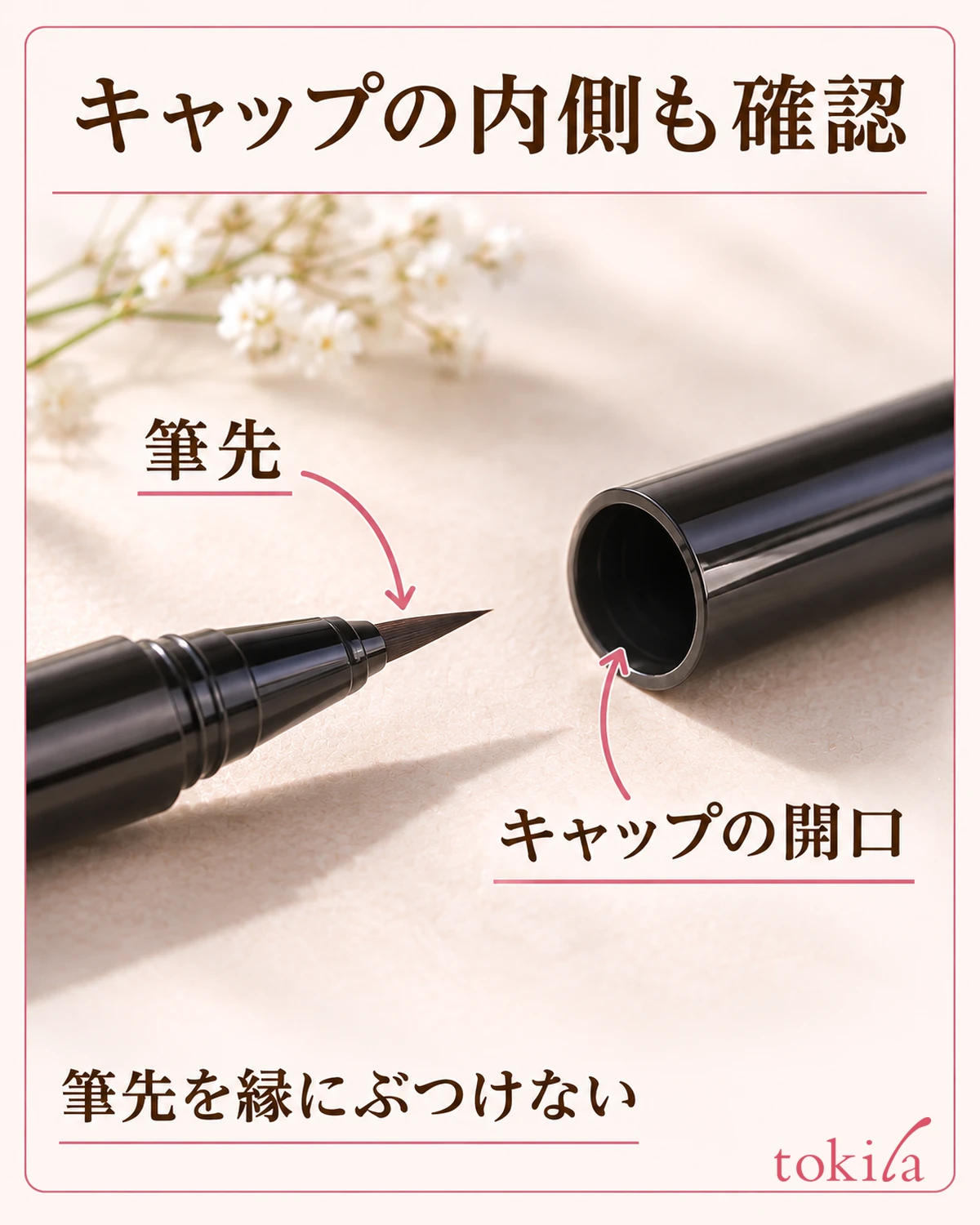
The supplementary photo shows a brush-pen tip separated from the cap opening. Separate from cleansing-power comparisons, this close-up helps you check the alignment for closing the cap without hitting its rim with the tip. Read closing and storage instructions when buying too; having a cap does not make every handling method acceptable. Before discarding the box, check whether removal and storage instructions remain on the barrel. Keep the instructions for the color and type you purchased available to reread, rather than relying on remembered general rules.
If the line becomes faint during use, before replacing it, see steps for reviewing skipping liquid eyeliner. Separating type selection from adjustments during use can help you avoid buying another liner repeatedly for the same reason.
Finally, choose one condition you want to change
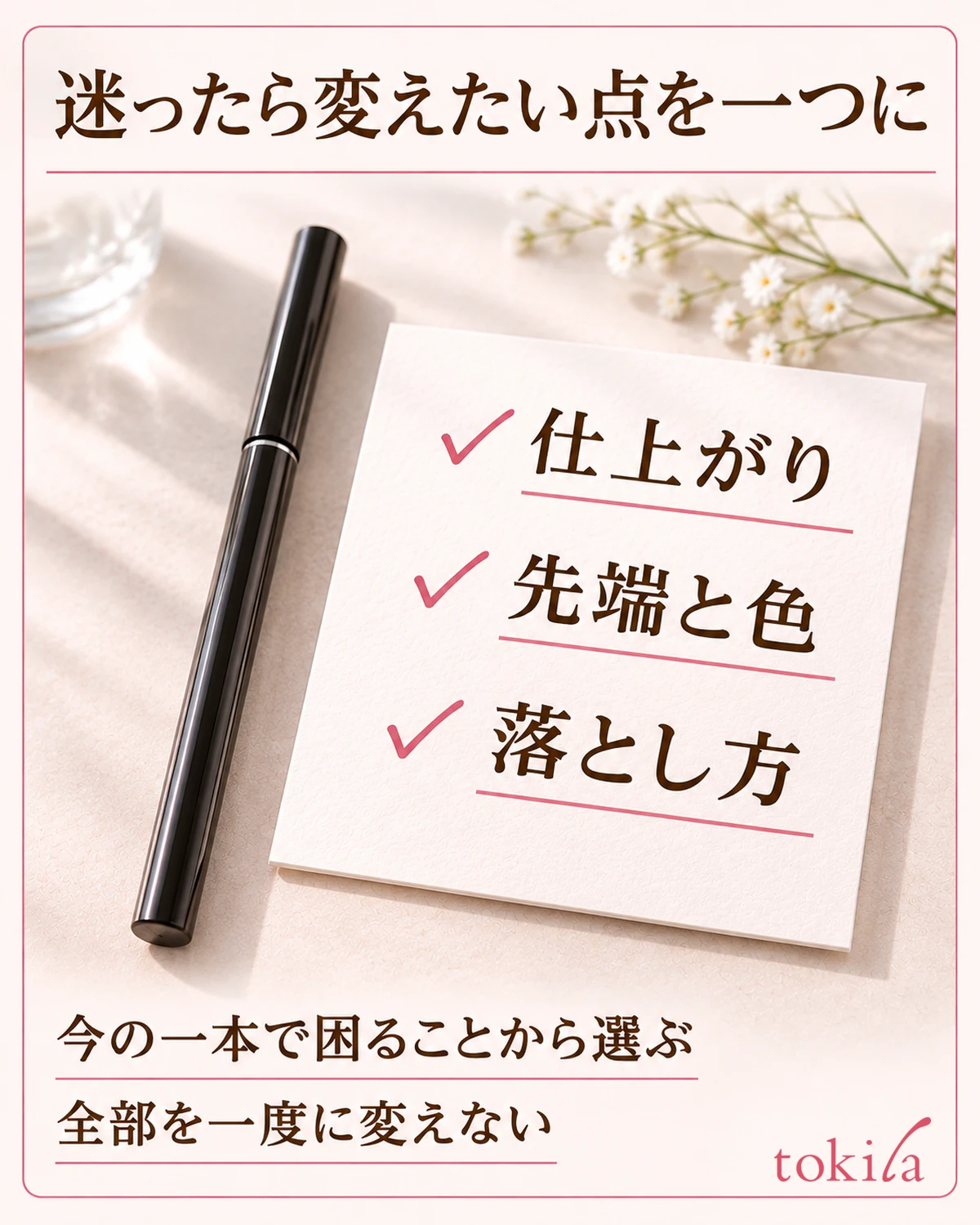
Once you have two candidates, compare finish, tip, color, and removal in the same order. Try stating your purchase reason in one sentence, such as choosing a brush pen for a defined outer corner or keeping your current brown while changing the lead shape. This clarifies what you want to change from your current liner more than asking which is popular.
When assessing price, include whether the item works alone or requires a sharpener or separate brush. Distinguish refill-only sales from those including the main body. Do not infer days of use solely from capacity or barrel length; how quickly it runs out varies with the area and frequency of use.
After buying, begin according to that product's directions. Do not extend the lead too far or add water to a dry brush on your own to imitate another type's use. If a retractable lead breaks easily, you can also review lead extension and pressure.
Avoid getting it in your eyes, avoid use on areas with abnormalities, and follow the product's precautions. Stop use if it does not suit your skin or irritation or other abnormalities develop. A seemingly easy tip or pale color does not guarantee safe use for everyone.
On days when you cannot decide, return to the conditions you want to keep from your current liner. Prioritizing the main difficulty instead of changing shape, color, and wear all at once makes the next comparison more specific. Choose a candidate whose finish preferences and daily handling you can both explain. Keeping a one-line note of your reason is another option for reviewing it after purchase. If you know you chose a blendable lead while keeping brown, you can decide whether to check color or technique when questions arise during use.