Facial moisturizers range from rich creams to formulas that spread with a fresh, watery feel. First decide whether you want to use one in the morning or at night, then compare texture, its place among your existing skincare products, and how easily you can dispense one application. This makes it easier to picture using it than choosing by how thick it looks alone.
This is a pre-purchase guide to moisturizing creams left on the face. We distinguish them from rinse-off cleansing creams and medicinal ointments used for treatment. Rather than ranking products by ingredient count or price, we explain what to look at when choosing one for everyday use.
Choose one setting: morning or night
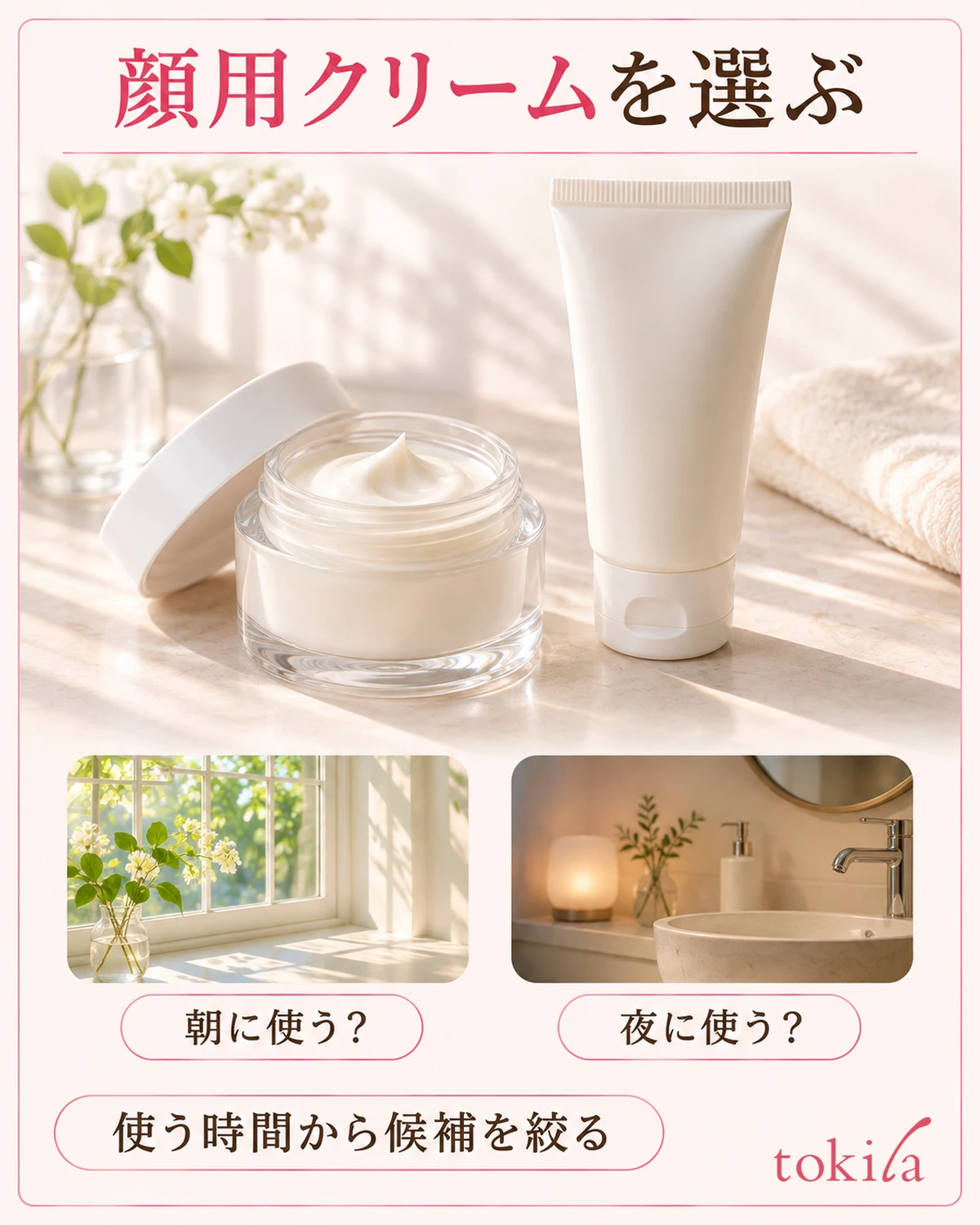
Start by briefly writing why you want to change your current cream. Being specific about the situation—using it before morning makeup, preferring a richer feel at night, or wanting easier dispensing—helps determine what to check in store. You do not have to try to solve everything with one product simply under the heading of dryness.
For morning use, think of the sunscreen or primer you apply afterward. Read the directions to see whether a candidate can be used in the morning or is for nighttime only before comparing. Even a daytime label does not itself establish UV protection. Applying an ordinary moisturizer does not mean you have also applied sunscreen.
For nighttime, decide whether you want to add it after an emulsion or replace your current cream. Assuming you must add something can leave you with more products serving similar roles. Compare the final product in your current routine with the candidate to see whether the texture or dispensing you want to change is actually different.
Also distinguish eye-area products from creams for the whole face. Check the permitted areas rather than assuming a small container is for targeted use or a large one for the whole body. When looking for a facial cream, comparing candidates intended for the same use makes the process easier.
If redness or itching persists, consider consulting a dermatologist rather than trying to manage it solely by finding a new cream. Here we are choosing everyday moisturizing cosmetics, not diagnosing skin conditions or choosing cosmetics to treat symptoms.
When shopping online, also check that the type and size currently sold match the description you are reading. Do not transfer impressions of an emulsion in the same range or a different cream type directly to your candidate. Leave untested textures unknown; you can first narrow the options by information you can check, such as when and how to use them.
Compare spreadability, weight, and scent separately
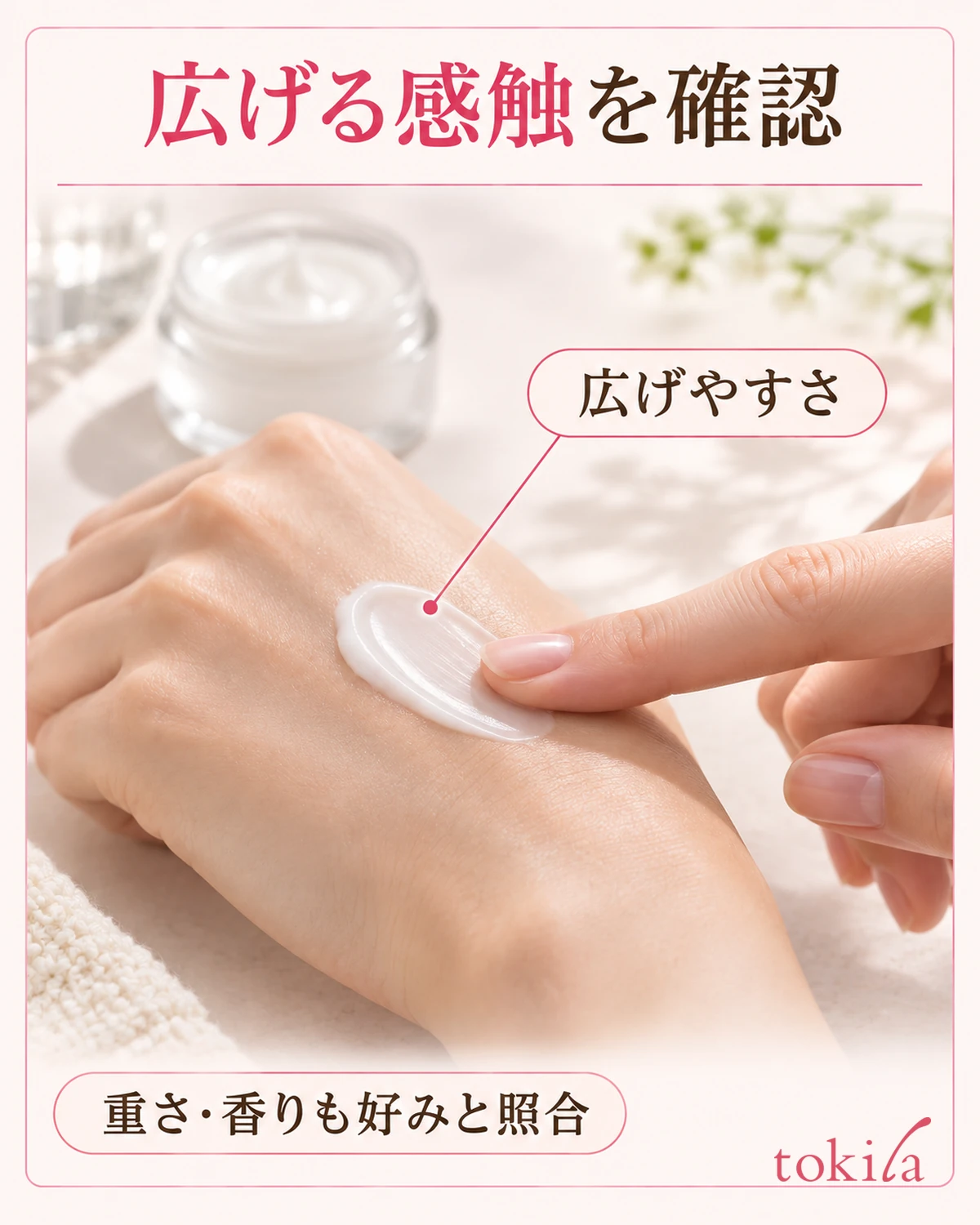
Words such as rich or light can help you find a texture you enjoy. They do not alone determine a ranking of moisturizing performance or suitability for your skin. Creams vary in formulation and finish even under the same name. Read your preferred texture and the product's stated role separately.
If testers are available, follow store instructions and try a small amount under clean conditions. Notice how easily it first spreads, then the weight or stickiness afterward, and finally the scent. This makes it easier to record what concerns you than simply deciding whether you like it all at once.
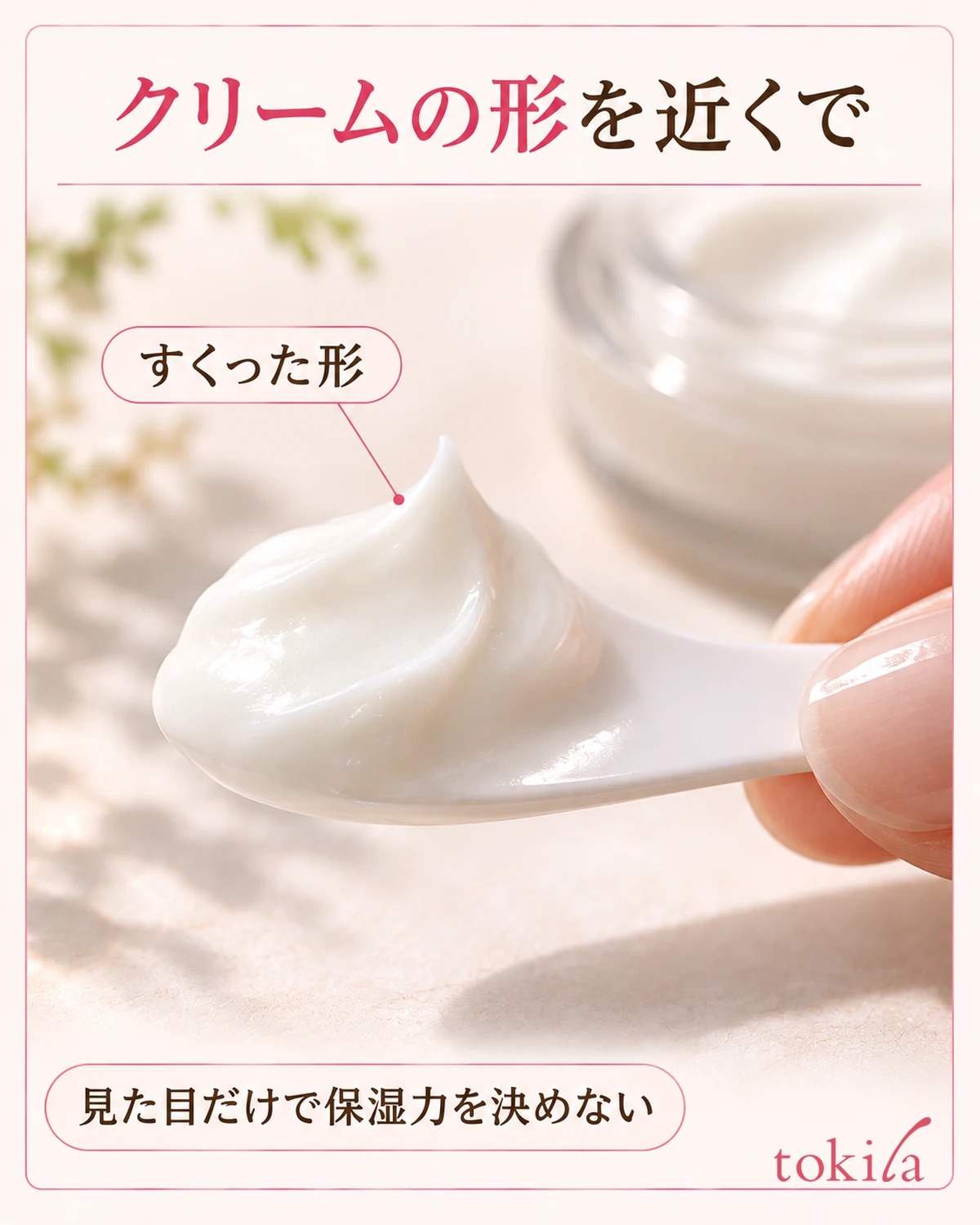
The supplementary photo shows folds and the surface shape of cream scooped onto a spatula. Its purpose is to show the shape when taken from the container. A white peak alone cannot measure moisture retention or the proportion of oils. Photos with translucency or shine are not evidence of effects on skin either.
When comparing two products, keep the amount and spreading area as similar as possible. If one is applied more thickly, the difference in quantity can appear to be a difference in weight. The back of your hand reveals the immediate texture there, not confirmed comfort on the face, the condition later, or a lower likelihood of irritation.
Whether you enjoy the scent also matters to daily use. Record intensity and persistence only to the extent you could try them, and do not infer guaranteed skin compatibility from a fragrance-free label alone. If scent is difficult to check in a store or online, you can leave that point unconfirmed.
Read the order and amount, then place it in your routine
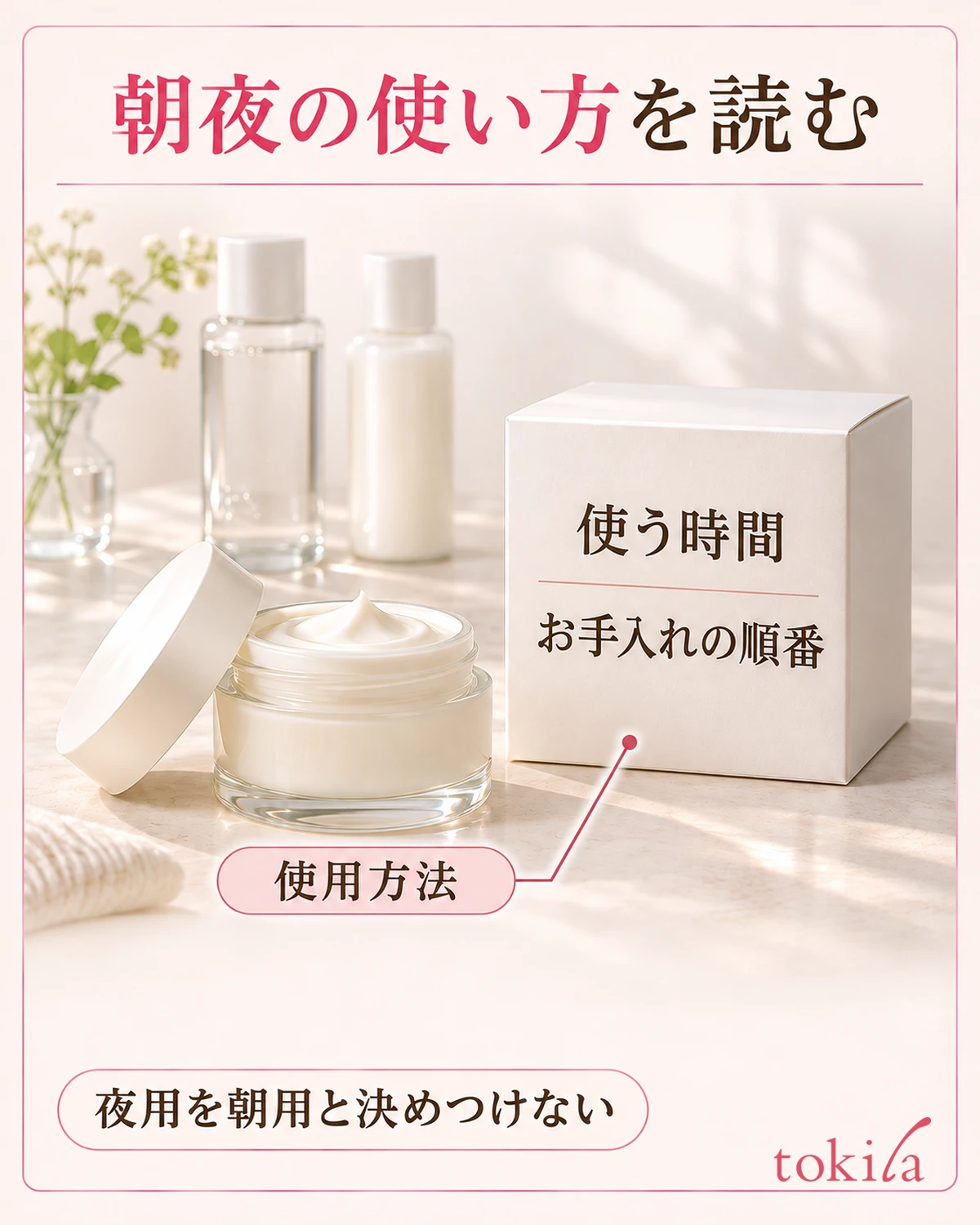
Once a candidate interests you, read its directions. See whether it goes after toner or emulsion and whether morning and evening instructions differ, then decide where it fits in your current routine. Do not impose one order on all creams; follow the directions for the one you buy.
If an application amount is described by a bead size or tool, read it as that product's guide. Even the same phrase, such as pearl-sized, does not mean the same weight across all creams. If you remember the amount for another product, check the new label before carrying it over.
In your routine notes, separate products you will keep from those you will replace. For example, when changing a night cream, you can decide to keep your current toner and emulsion. Introducing many new products at once makes it harder to identify which product or combination to reconsider when the feel changes.
Do not automatically halve the amount before morning makeup either. Follow any specified difference between morning and evening quantities; otherwise start with the labeled amount. Avoid reducing the required amount of sunscreen or primer to compensate for the cream's weight.
If you are looking for candidates because of a particular ingredient, you can also consult How to Choose Ceramide Moisturizers for how to read ingredient names and formulation purposes. Here we focus on the setting and texture of creams. The same ingredient name does not necessarily mean the same order or dispensing amount.
Imagine dispensing one application from the container
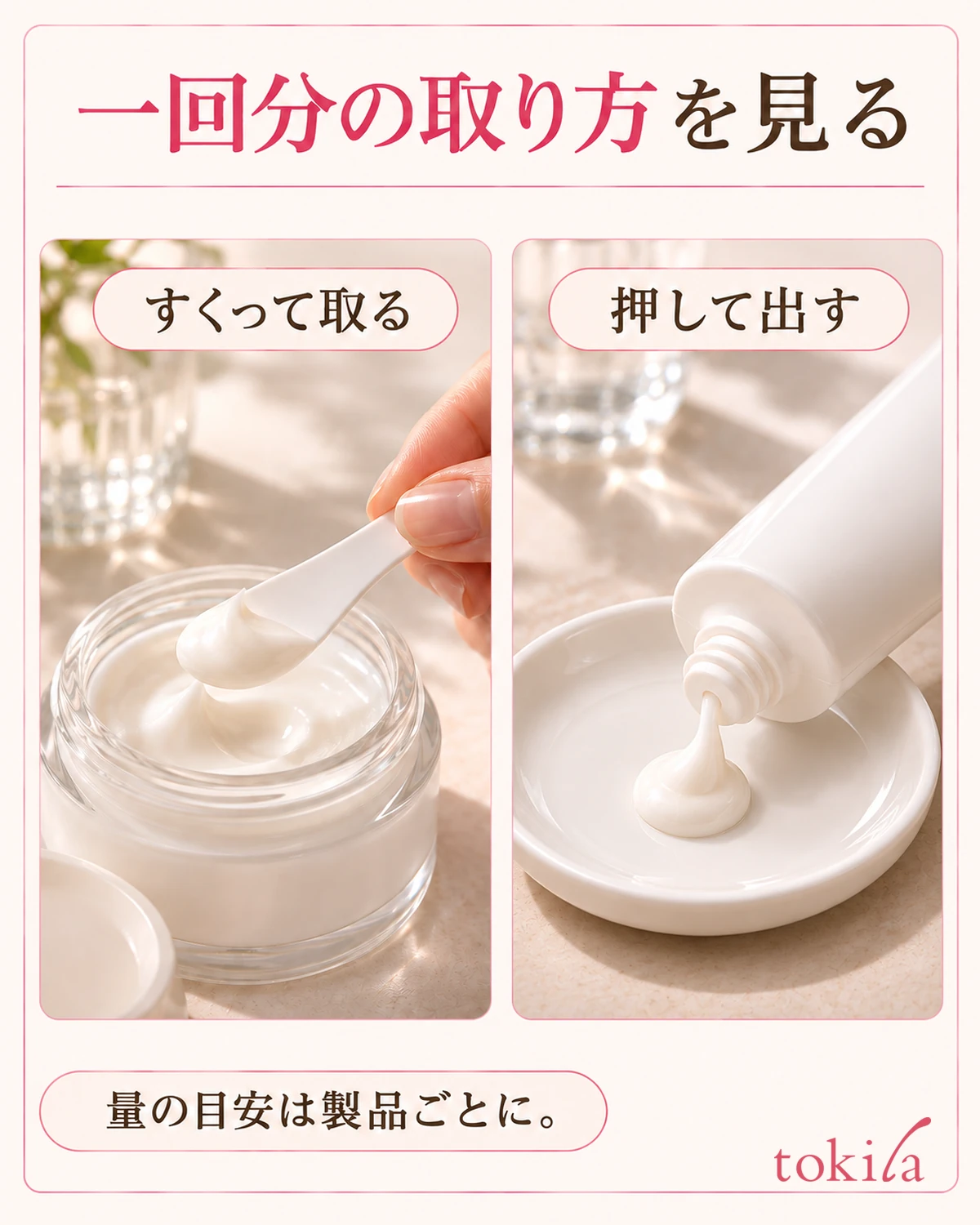
Containers such as jars and tubes affect how you take out cream each time. For a jar, check whether a spatula is specified and where you could put the tool. For a tube, look at how it opens and the dispensing opening. Container type alone need not rank moisturizing performance or cleanliness.
The supplementary photo shows the width of a tube's dispensing opening and the cap threads. It helps you imagine checking the opening and amount before squeezing firmly. Opening width alone does not determine one application; product firmness and squeezing pressure also change how it comes out.
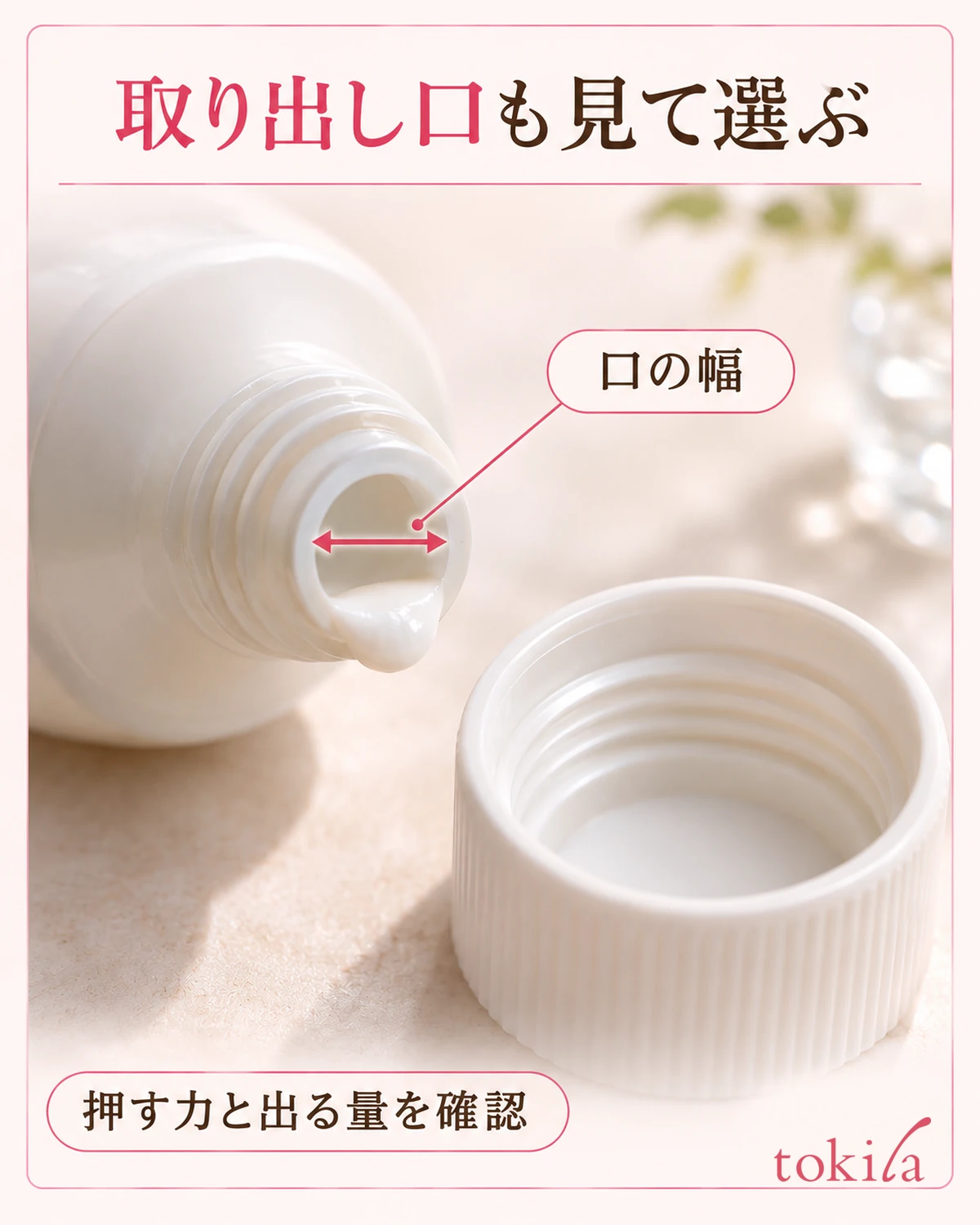
If you can try the container in store, follow the instructions and consider opening through closing it. Think about whether you could do the same at your sink, including a place for a small lid or separate storage for an included tool. Shape alone does not guarantee that it will not leak when carried.
When reading capacity and price, make sure you are comparing complete containers or replacements and refills on the same basis. If a matching container is needed separately, include its cost. More contents do not necessarily make a product easier to use, and there is no need to invent how many days a particular weight will last.
Even if you have an extra container at home, do not buy on the assumption that you will transfer the cream into it. Check the product's instructions on refills and container care. If you dispense too much after starting to use it, consult How to Handle Excess Face Cream and avoid returning the remainder to the original container.
The spatula amount or cream on a fingertip shown in the photos is not a universal application amount. Different hand sizes or scooping tools can make similar-looking peaks contain different amounts. Separate the comparison of dispensing ease from deciding how much to put on your face, and return to that product's guide after purchase.
Narrow it to two candidates and keep one condition to change
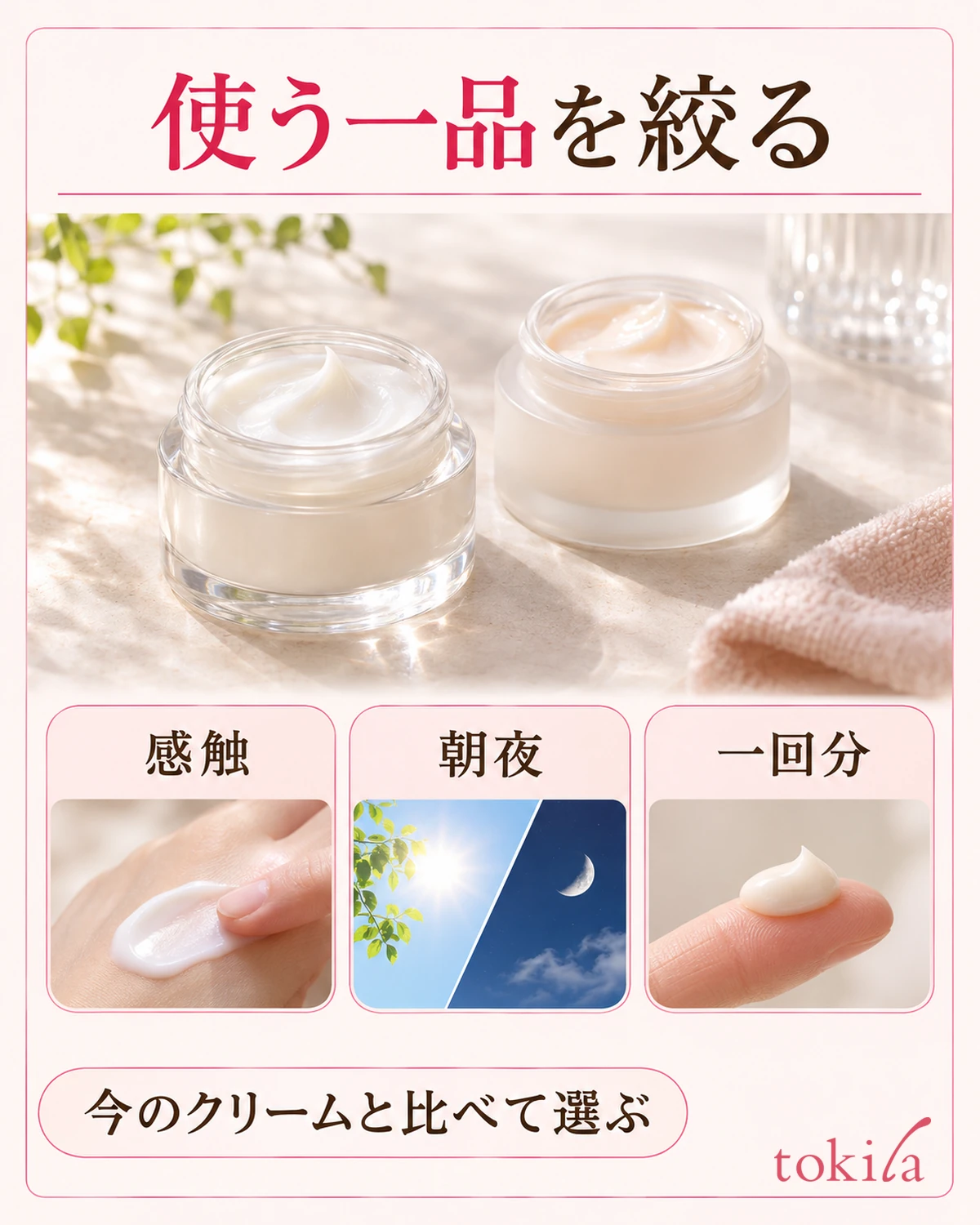
Finally, list the time of use, texture when spread, application order, dispensing method, and required container or tools. Record only known conditions, without filling untested points with guesses. Even if price or appearance catches your attention, returning to the setting you first chose helps you check your reason for choosing.
For example, if you want a morning cream and find your current one heavy, compare textures among candidates suitable for mornings. You need not change the container and scent as well. Being able to name one thing you want to change with the next product makes it easier to reflect after buying it.
After purchase, reread the directions and precautions before using it. If the spreading feel differs from your preference, also review the amount used and products layered with it. If redness, swelling, itching, irritation, or other abnormalities occur, distinguish that from preference, stop use, and consult a dermatologist as needed.
Do not rush to conclude from one texture experience that stickiness means incompatibility or lightness means it cannot moisturize; separate what you actually confirmed. At the same time, do not assume enduring abnormalities will make your skin get used to it. Choose with regard for both the conditions you need and the texture you enjoy.