At the mascara counter, seeing labels for formulas with and without fibers may make you want to choose the former for length and the latter for a natural look. However, fibers alone do not determine the entire finish. Consider thickness, how lashes group together, the brush, and combinations with primer as well.
Here, we focus on comparing products before buying, outlining how to read labels and five points for narrowing your choices. What would you like to change about your current mascara: the appearance of the tips, the intensity, or how you remove it at night? Deciding on one point first also makes it clearer what to ask at the counter.
Check the container label for fibers
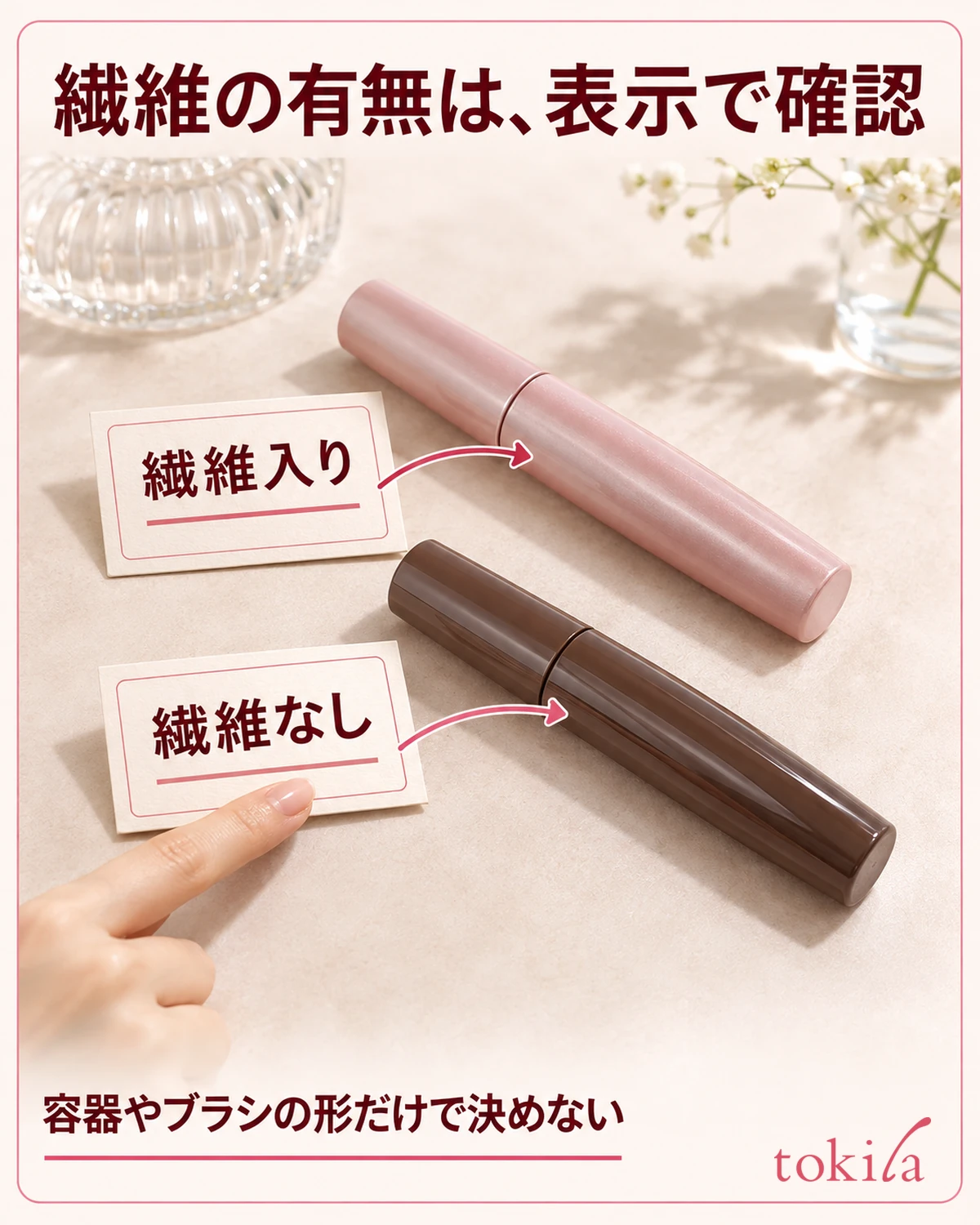
First, look for wording such as 'with fibers,' 'without fibers,' or 'fiber-free' on the product you are considering. Do not infer that a formula contains fibers because it is black, the tube is slim, or the brush has many bristles. Brush bristles and fibers added to the formula are different things.
Not every product that emphasizes length contains fibers. Conversely, some fiber-free products are designed to create thickness or grouped lashes. Read the prominent finish claims on the package separately from the information about fibers. If you cannot find one of these, ask at the counter rather than filling in the gap yourself.
Specifications may differ by version or shade even within the same range. Compare the exact product name and shade number of the tube in your hand. Do not rely solely on memories of a previous purchase; check the actual label when replacing it. Also avoid comparing photographs taken before a reformulation with the current container.
Do not conclude that a fiber-free product will definitely suit you or that a formula with fibers will always flake. Fiber content is one selection criterion, not a guarantee about irritation or comfort. If something concerned you with a previous product, explain its name and the circumstances specifically, and check the precautions as well.
When asking at the counter, identify the product: 'Does this black one contain fibers?' or 'Do the other shades in this range have the same specifications?' Pointing to the name and shade number, rather than giving only the tube color or range name, helps avoid confusion with another product.
Choose length, thickness, and lash grouping separately
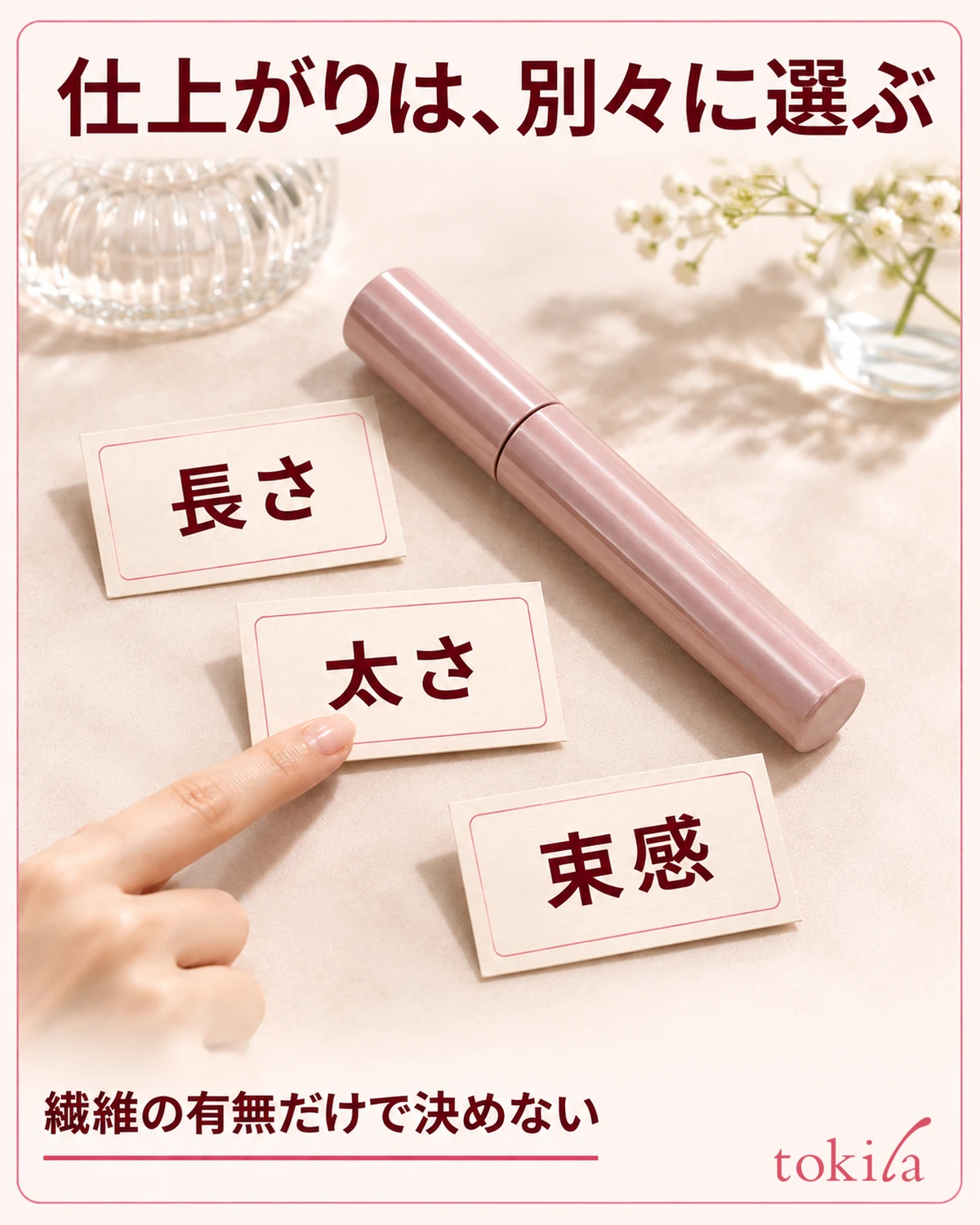
Next, describe the finish you want to add. Making lash tips look extended, intensifying the outline of each lash, and showing groups of several lashes are different wishes. Instead of searching only for a mascara that makes an impact, narrow your choices around the point you most want to change.
Even when choosing a formula with fibers, do not read the stated length or number of fibers as the length your own lashes will grow. The makeup finish created by mascara and growth of the hair itself are separate matters. When comparing numbers, read what was measured along with the conditions and notes.
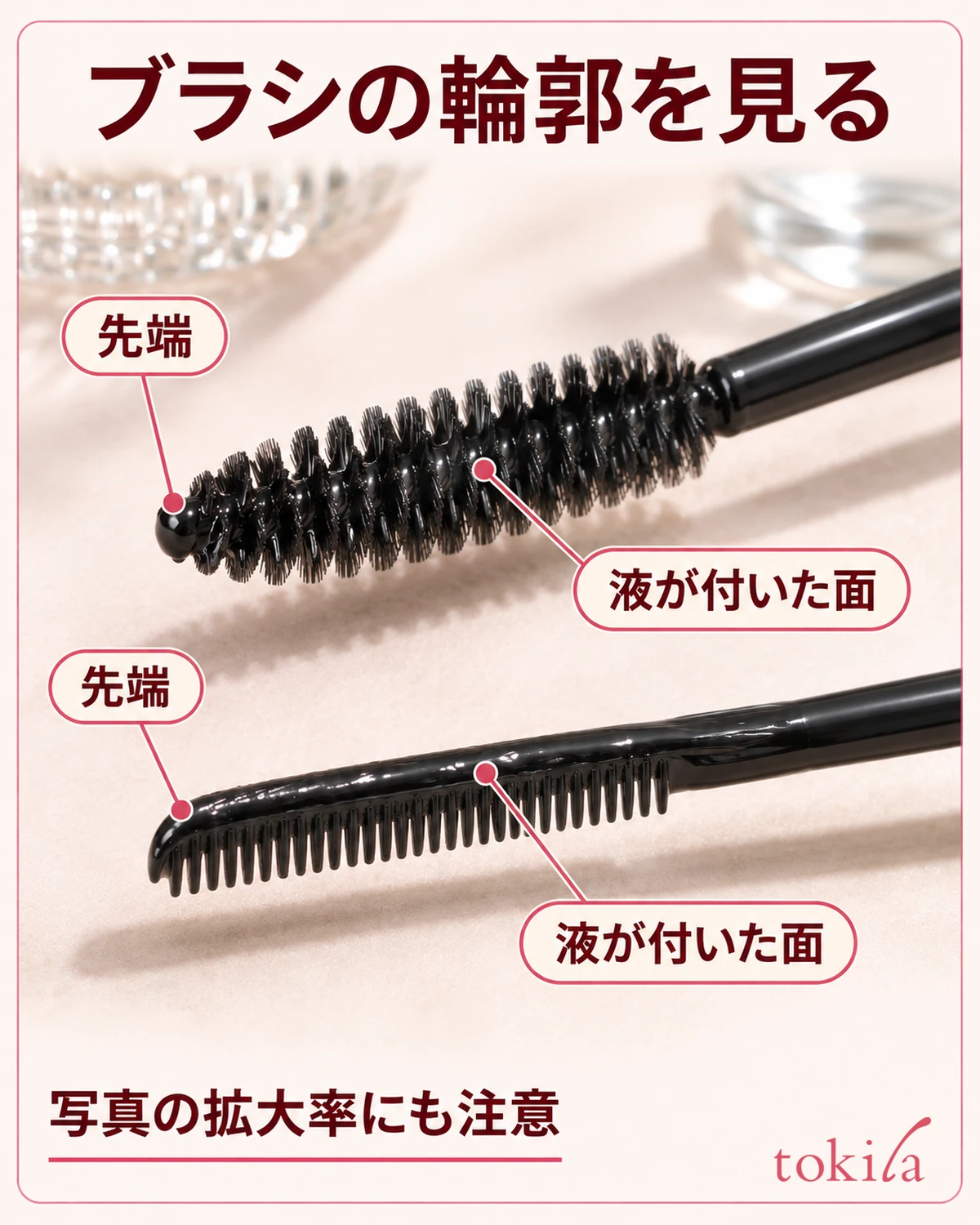
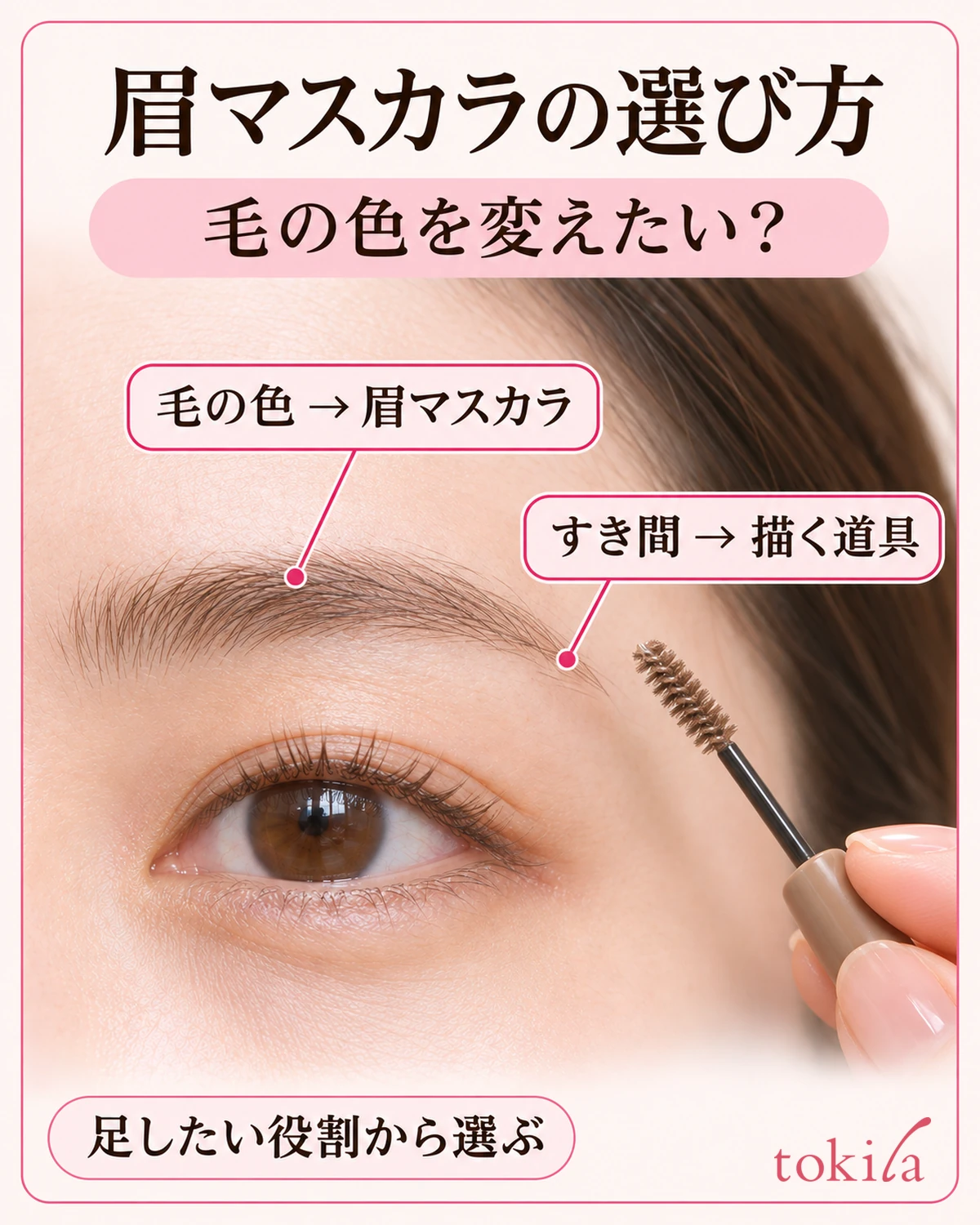
The supplementary photo shows separate brush tips and formula-coated areas close up. It is for examining the size and outline of the tips, not for determining fiber content or the actual finish from the photograph. When looking at brush photos for a purchase, avoid comparing thickness at different magnifications.
If finish photographs are provided, check whether they show the product worn alone or layered over primer. Conditions such as using a lash curler on only one side or shooting from different angles also affect appearance. Do not turn the impression from a photo into a general ranking of formulas with and without fibers.
If unsure, return to what you want to add to your usual mascara. If you want less intensity but change only the fiber content and choose a deep-black volumizing formula, it may not match your aim. Compare shade, finish description, and fiber content together, without changing too many conditions.
If the finish description includes several terms, you do not need to want all of them equally. If length comes first but you prefer subtle lash grouping, make those two points part of your question. When comparing products with different black intensities and brushes too, avoid attributing every difference to changing the fibers.
Check whether the brush reaches the lashes you want to coat
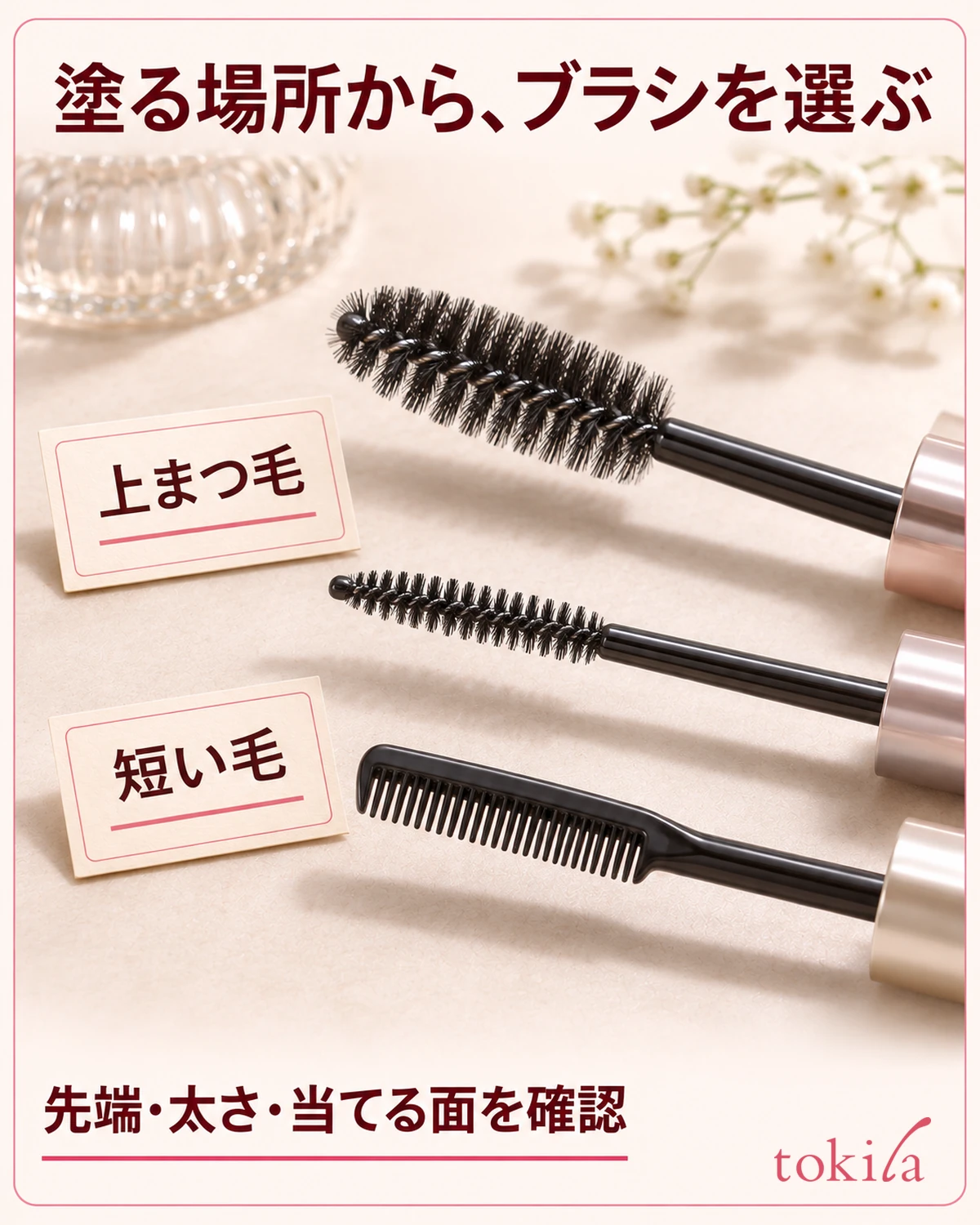
Decide whether you will use it across the upper lashes or also on shorter hairs such as lower or outer-corner lashes. Then examine brush thickness, tip, curve, and comb-tooth arrangement. Brushes are not all alike even among formulas with fibers, and a slim brush is not necessarily easier for everyone to use.
Before buying, compare the brush photograph with your own application movements. Think about whether you want to touch lashes with a broad surface or bring the tip into a narrow area; this clarifies which structures to examine. If a product specifies brush orientation or the side to use, include those instructions in your choice.
Even when shopping for lower lashes, do not narrow your choices solely to fiber-free products; check the intended area and brush handling too. The starting point is being able to touch visible lashes comfortably without thrusting the brush toward the eye. Do not open unopened products yourself at the counter; follow the guidance for displays and testers.
If testing is available, check the hygiene rules and permitted application areas. Do not assume that a shared tester may be used directly around your eyes. Separate what you can learn by looking from what requires trying it, and do not feel obliged to apply it around the eyes there and then.
If your current mascara forms lumps or clumps, you can also distinguish application issues before choosing a different fiber option. For controlling the formula amount and picking up more, see How to Apply Mascara Without Clumps. Rather than assuming replacement will definitely solve it, make the current inconvenience specific before comparing products.
When brush size is hard to judge online, its proportions relative to the tube or wand in the photo can also be a reference. However, an image without actual measurements cannot tell you dimensions in millimeters. Describing what is awkward about your current brush helps you decide whether to ask about the tip or the thickness.
Read about primer combinations and nighttime removal

Whether you want to finish with one product or use your existing primer or top coat is another purchase condition. Even if the mascara applied on top is fiber-free, the primer may contain fibers. If you want a combination that adds no fibers overall, check each product individually.
Read the layering order, drying steps, and conditions for compatible products. If a primer must dry before layering, follow that product's directions. Do not turn fibers into a universal rule that formulas with fibers must dry and fiber-free ones can be layered immediately. Using more products does not necessarily improve the finish.
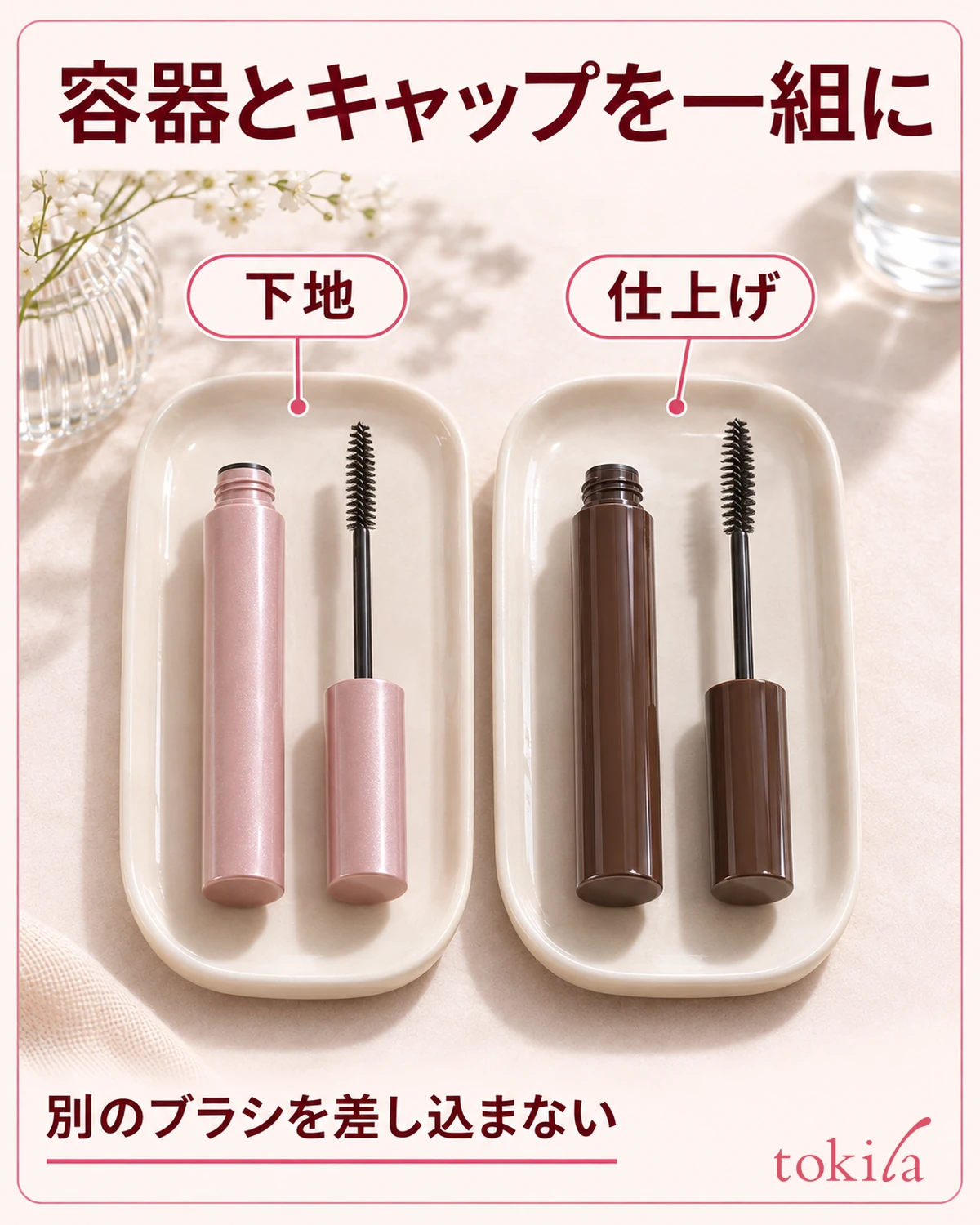
The supplementary photo places the primer and finishing mascara apart, with each tube paired with its own cap. This arrangement helps prevent mixing different formulas or confusing the products in use. It is not an example of inserting another brush into a tube to blend colors or textures.
Removal is not determined by fiber content. Check each candidate to see whether it needs only warm water, a facial cleanser as well, or makeup remover. If the stated conditions apply to wearing it alone, do not assume they also apply over primer or under a top coat.
Choosing a mascara with the nighttime products in mind makes the steps after purchase easier to imagine. Whether your usual makeup remover will work or a dedicated product must be added is another comparison point. Rather than planning to rub harder if removal is difficult, keep candidates whose stated removal steps you can prepare for.
If fewer removal steps are your priority, check whether the mascara can be worn alone as well as how it looks in the morning. If you want to keep your current primer, first investigate the conditions for that combination. Convenience depends on your routine, so a warm-water-removal label alone is not a universal reason for everyone to choose it.
Narrow it to one and record the conditions when you start

Finally, briefly list each candidate's fiber content, desired finish, brush and application area, layering products, and removal method. Avoid treating two products that differ in every respect as a comparison of fibers alone. Prioritize one wish and narrow the rest according to whether they fit your usual movements comfortably.
After purchase, follow the label and avoid layering many products from the outset in pursuit of a result. If it looks more intense than expected, review the shade, application area, and number of coats before immediately blaming fibers. Continuing to add more when you want to change the look of the tips may create a different finish.
If you experience redness, pain, irritation, or other abnormalities, do not continue using it while adjusting the amount or application; follow the precautions. You do not need to tolerate discomfort to test the merits of fibers around your own eyes. Separate an abnormal reaction from a difference in your preferred intensity.
For your next purchase, record specifically what you liked. Instead of only 'fiber-free was good,' note that the brush reached short lashes easily, it worked alone, or the evening steps suited your routine. These details become useful criteria when looking for another product.
Formulas with and without fibers are not categories in which one is superior. They are a starting point for checking label conditions and choosing both the finish and the movements involved. Decide on one thing you want to change about your current mascara, then start with descriptions of products that meet that wish.