When choosing a morning sheet mask, do you decide only by the promise of saving time on the package? Even among masks suitable for mornings, a toner substitute used after cleansing belongs at a different point in your routine from one designed to combine care beginning with cleansing. First deciding which part of your usual morning you want to replace makes it easier to narrow your options.
Here, we choose full-face morning sheet masks based on their relationship to cleansing, wear time, and the steps after removal. Foaming rinse-off masks and patches for only the eye area are used differently. Do not skip cleansing or treat a mask as sunscreen simply because it is called a morning mask; check each product's directions.
1. Check whether it follows cleansing or can replace it
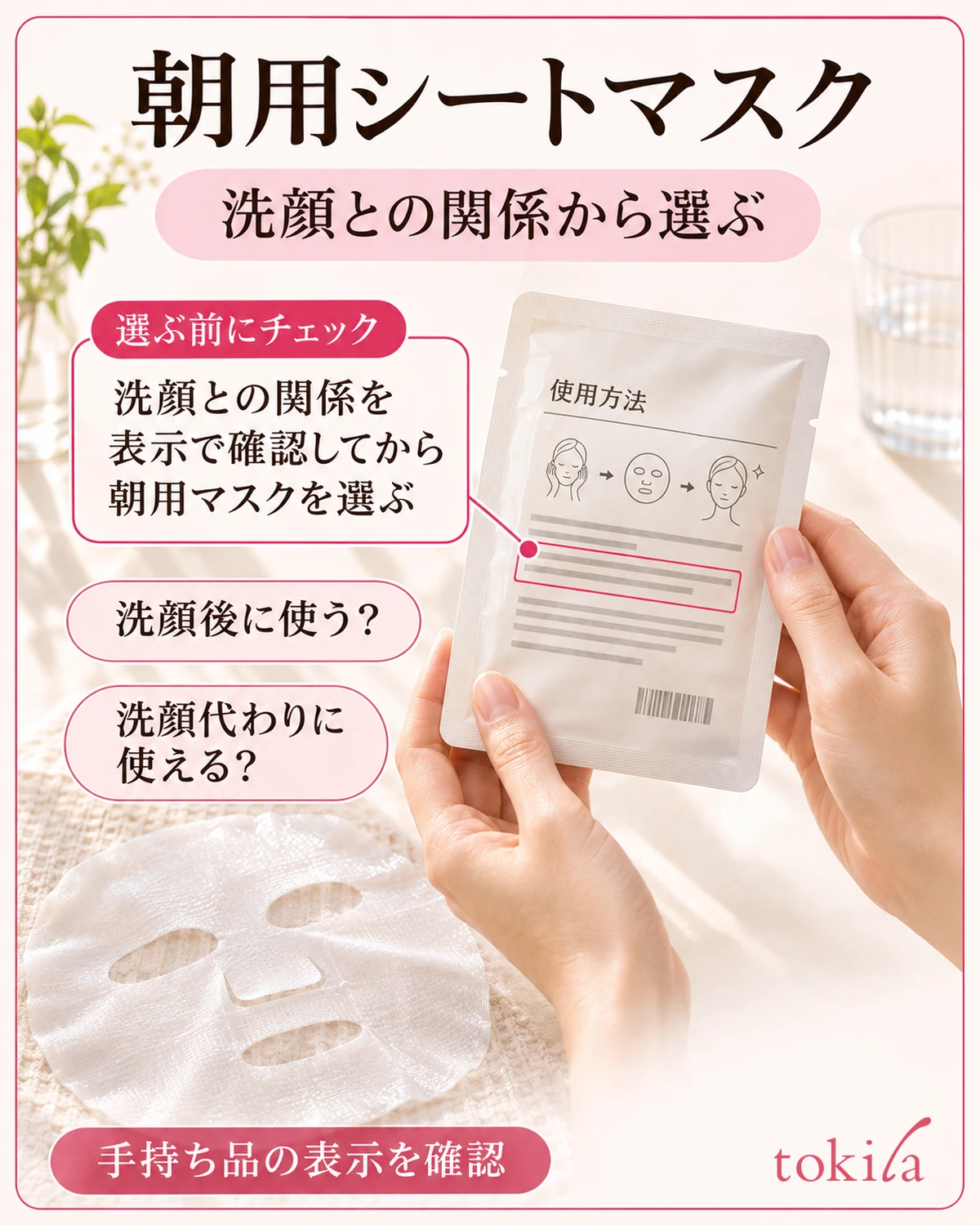
The first thing to read before buying is the directions on the back of the package. Instructions to use it on clean skin after washing assume that you will cleanse before applying the mask. Even a sheet that acts as toner does not necessarily replace washing your face. Read separately whether it replaces toner and whether it replaces cleansing.
Some morning masks, on the other hand, are intended for skin just after waking and are described as also providing cleansing through wiping. Choose them with their specified application and post-removal handling in mind. Do not apply the phrase “replaces cleansing” to another mask or assume that it also removes evening makeup.
If you want to keep washing your face in the morning, a toner-type mask used afterward can be an option. If you want to combine morning steps, compare exactly which tasks one sheet performs. Read the listed roles, such as cleansing, toner, and emulsion, in order and check whether they match the steps you want to omit.
If unsure, put your goal into one sentence: “I want a sheet to use after washing” or “I want to combine care starting with cleansing.” Deciding its role before browsing makes selection easier than expanding your options based only on moisturizing ingredient names or sheet counts. If you plan to keep your toner or emulsion, look for a product whose order of use with them you can also check.
For example, if you plan to replace only your post-cleansing toner with a mask, consider using it while continuing your current emulsion. If you want to combine steps in one sheet, do not assume you can omit steps absent from the package; read through to the end of the directions. Even morning products on the same shelf differ when you compare their listed roles and order of use.
2. Plan for wear time and the steps after removal
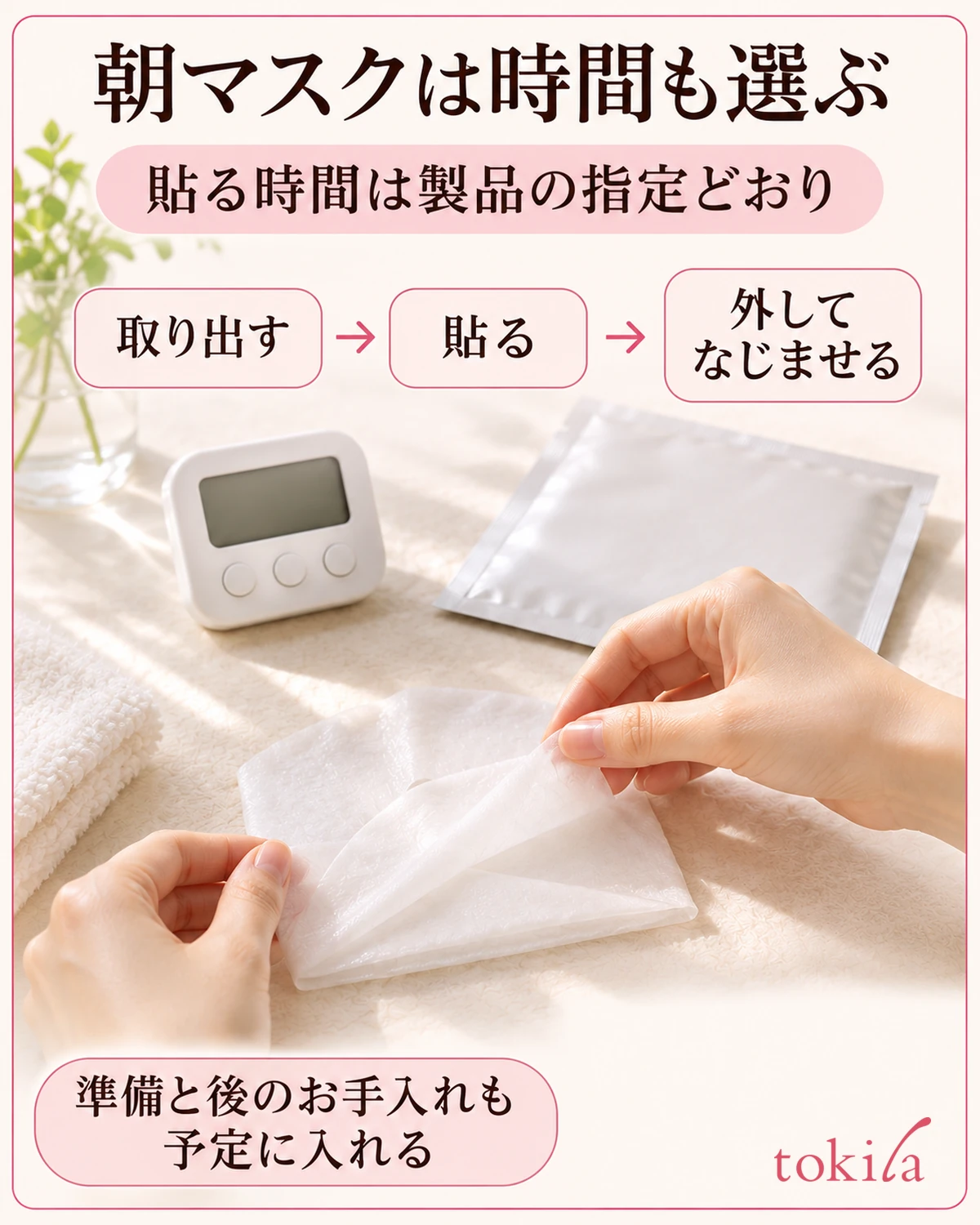
Next, check how long to leave it on your face. Some morning masks specify a short application, while some toner-type masks stay on for several minutes. Rather than treating a shorter number as stronger effectiveness, consider whether you can set aside that time every morning. Do not automatically apply the timing from a previous mask to a different product.
Your time before leaving also includes opening the package, unfolding the sheet, positioning it, removing it, and working in the liquid. A one-minute label does not guarantee that everything through makeup will be finished one minute after you reach the sink. If you do something else while wearing it, whether you can remember to check removal time is another consideration.
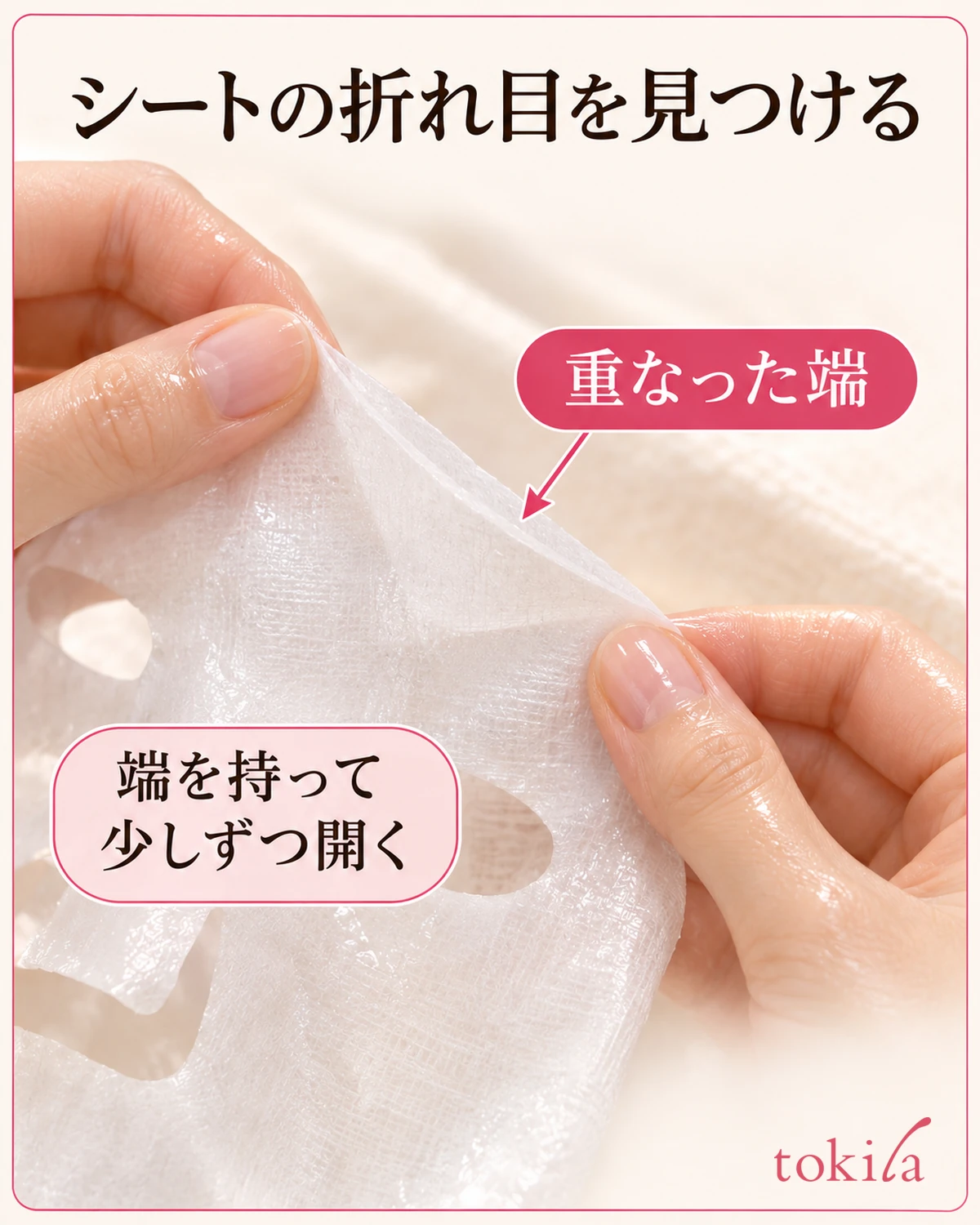
What to look at in the photo is the folded edge before the sheet opens into a single layer. When imagining daily dispensing, look beyond the package's appearance to whether you can identify the edge to hold and where to unfold it. Refer to the packaging diagram too; do not open store products without permission just to check.
Follow the selected product's specified time rather than assuming longer is better. On mornings when you cannot allow that time, you can choose your usual care instead of arbitrarily shortening application or layering two sheets to compensate. If you intend daily use, read the frequency guidance and distinguish it from products used occasionally.
3. Check the shape's fit and how sheets are dispensed
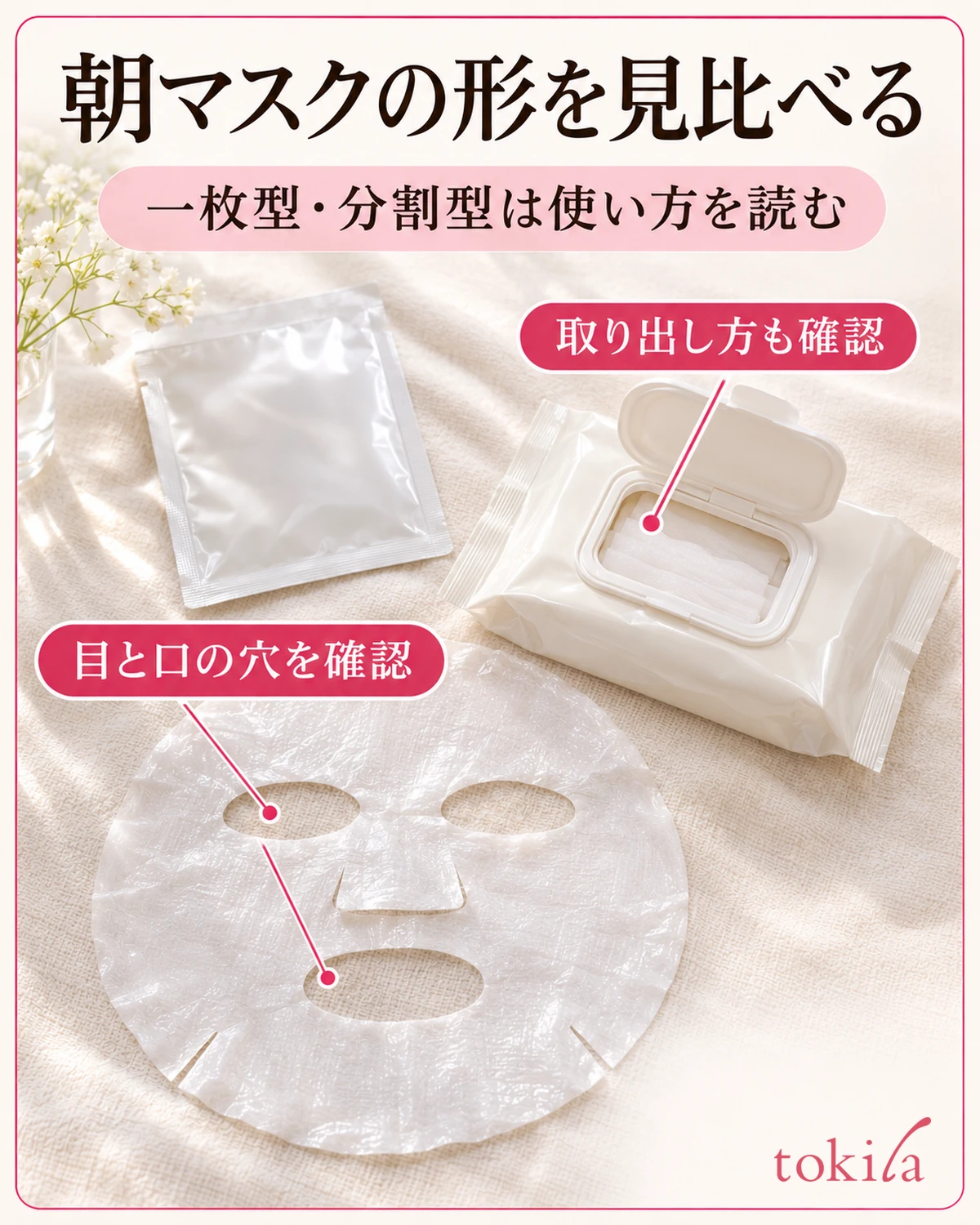
Look at the sheet shape in usage photos or package diagrams. Check how the eye and mouth holes, nose section, and cheek and chin slits serve as positioning guides. Rather than assuming fit from the apparent thickness or size alone, imagine positioning it in actual use.
A single sheet and a design split into upper and lower sections differ in where you hold them and the order of positioning. Options change depending on whether you prefer unfolding one sheet in the morning or adjusting two sections separately. Do not assume every product can be pulled hard merely because it looks soft. Even when stretching is specified, follow that product's method.
Compare individually wrapped products with those dispensing multiple sheets from one package. For individual packs, check whether one pack is used up at once; for larger packs, check handling after opening and closure. More sheets do not necessarily suit you better, so looking for a small pack is an option when checking an unfamiliar feel.
If the sheet lifts around the nostrils or mouth when you start using it, check folds and hole placement before adding liquid. For specific adjustments, see checks for a lifting sheet mask and compare them with your product's structure. Do not choose on the assumption that you will keep forcibly stretching a shape that does not fit.
When choosing a large pack, consider how many days you will take to use it. If you expect to use a daily mask only once a week, check post-opening handling before buying many just because they are inexpensive. Conversely, do not change a product recommended several times a week to daily use solely because it contains many sheets. Read quantity and frequency as separate conditions.
4. Read the moisturizing steps and conditions for starting makeup
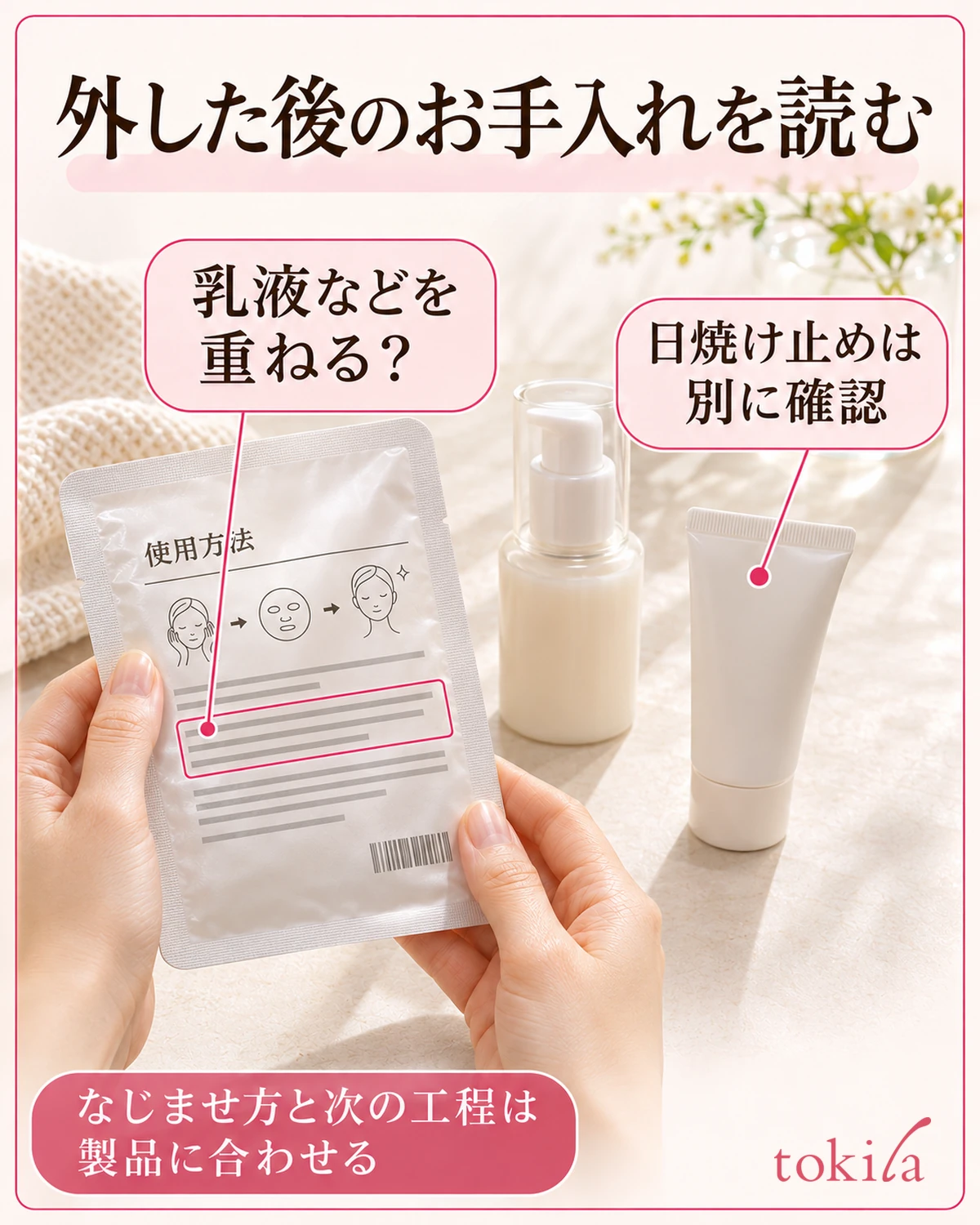
When choosing a mask, do not stop reading the directions at removal. Check whether to work in the remaining liquid with your hands, wipe as instructed, or use emulsion or other products afterward. With a toner-type mask, you also need to plan the care following the toner replacement.
Some products combine morning care in one sheet and say you can start makeup after working in the liquid. However, this does not necessarily mean sunscreen is unnecessary. If using sun protection, check your sunscreen's order and amount separately. Do not confuse labels such as “moisturizing primer” with SPF or PA markings.
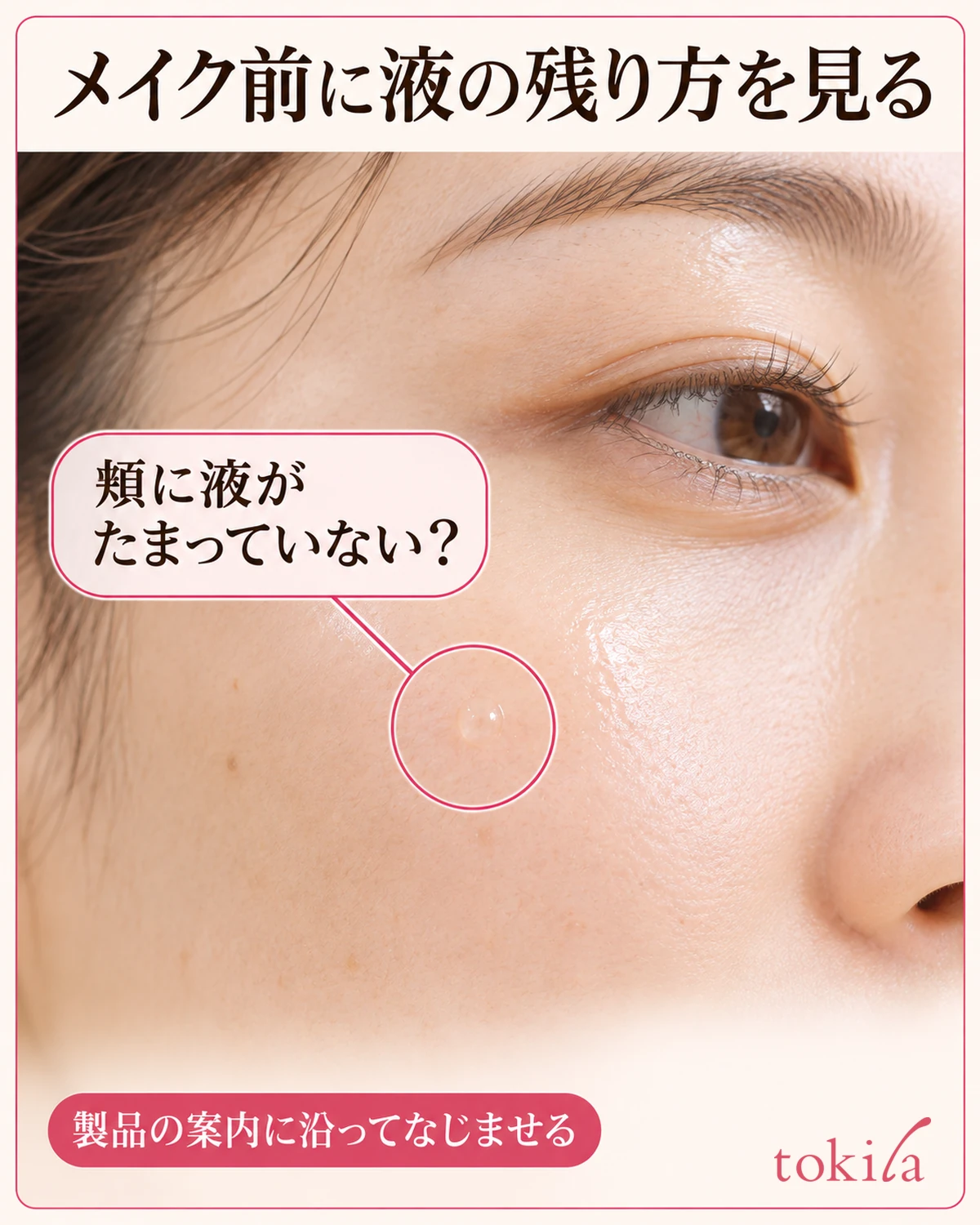
If liquid is pooled immediately after removal, work it in according to the mask's directions instead of applying a thick layer of foundation over it. The photo shows the location of liquid remaining on the cheek surface. Visible clear liquid and greater moisturizing effectiveness are different things; more liquid is not evidence for comparing effectiveness.
If makeup shifts, review what you added after the mask. Rather than increasing toner, emulsion, and primer all at once, recheck which steps you replace and which you add. Do not solve it by arbitrarily reducing sunscreen or primer amounts; follow each product's instructions while reconsidering combinations or the number of products used in the morning.
5. Check the conditions for morning use and introduce one product at a time
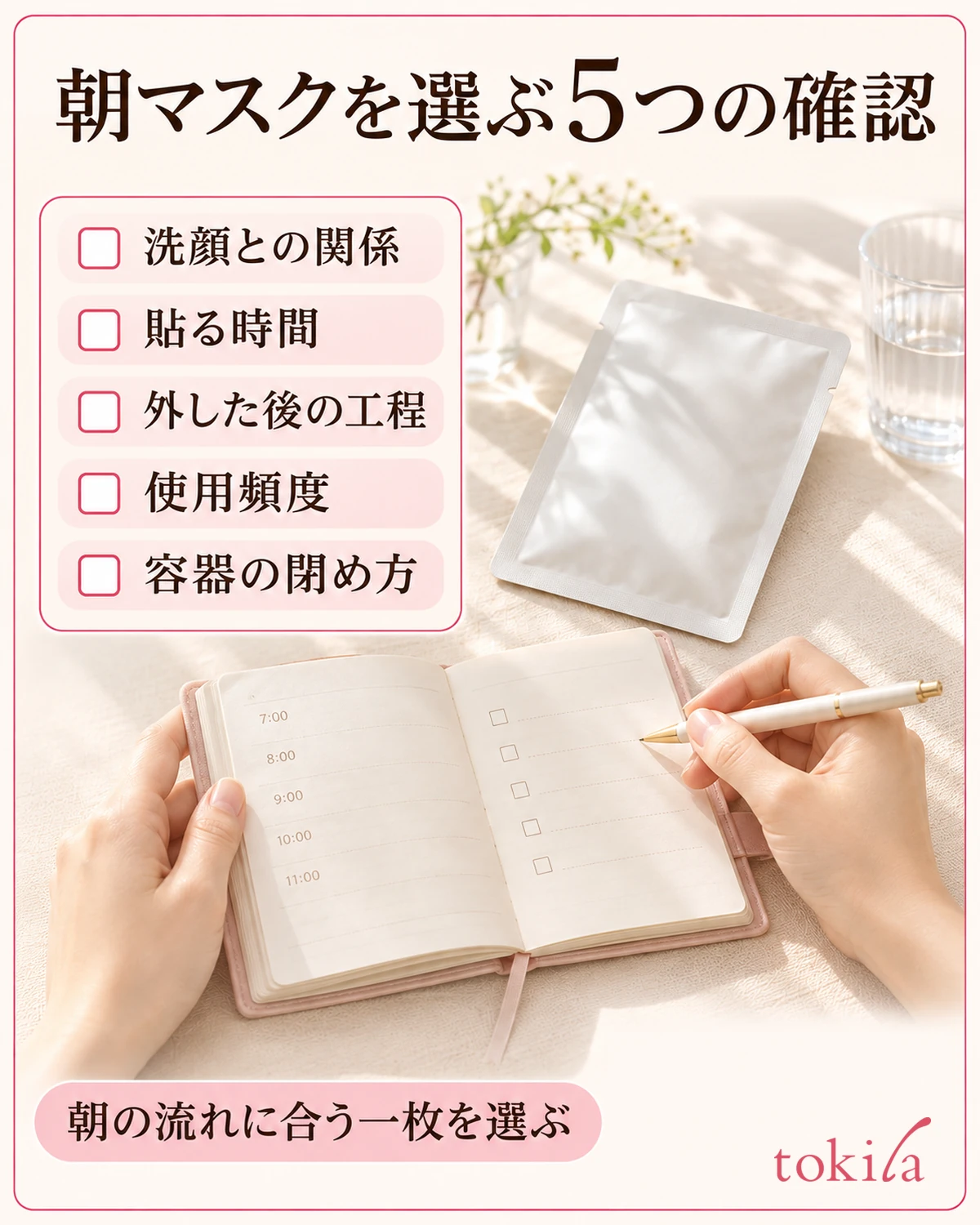
Finally, list each option's conditions in the same order. Knowing five things—cleansing beforehand, wear time, steps afterward, frequency, and how to close the container—helps you decide whether it fits your morning. Compare ingredient names associated with benefits and fragrance preferences after checking whether the method suits you.
Cooling sensations and fragrance can help you choose the feel, but do not guarantee suitability for your skin or stronger effects. Read the ingredients and precautions; if you know an ingredient you could not use before, check for it. Even “morning” or “daily” labels do not mean everyone can use it in the same way.
If redness, itching, irritation, or other abnormalities occur, stop using it and follow the precautions instead of continuing because application is brief. Do not test suitability on areas with wounds or eczema. Changing several other care products at the same time as a new one makes review harder if something does not suit you, so introduce one at a time.
For where to keep it each morning, prioritize the storage conditions on the container. Do not return a removed sheet to the bag, and close the opening after use. At the sink, choose a place where water is unlikely to enter, and do not change conditions such as refrigeration on your own. If taking it with you, read precautions about container orientation and carrying it too.
Rather than choosing a morning sheet mask as something that pushes you to do more in less time, think about how it replaces a step in your morning. Decide its relationship to cleansing, then read wear time and aftercare together. With that settled, choose a shape and feel you can comfortably continue using.