When choosing powder blush, a color that looks pretty in its case may not give you the cheek finish you want. Even pink shades differ in whiteness and depth, and their appearance also changes with pearl reflections, the brush you use and your usual base makeup.
Here we organize the steps for comparing powder blush before buying. The key is to assess color and shine separately and picture how you will use the product, including its case and tools. Use this to help choose your next shade rather than reapply blush you already own.
Decide whether you want color, shine, or both
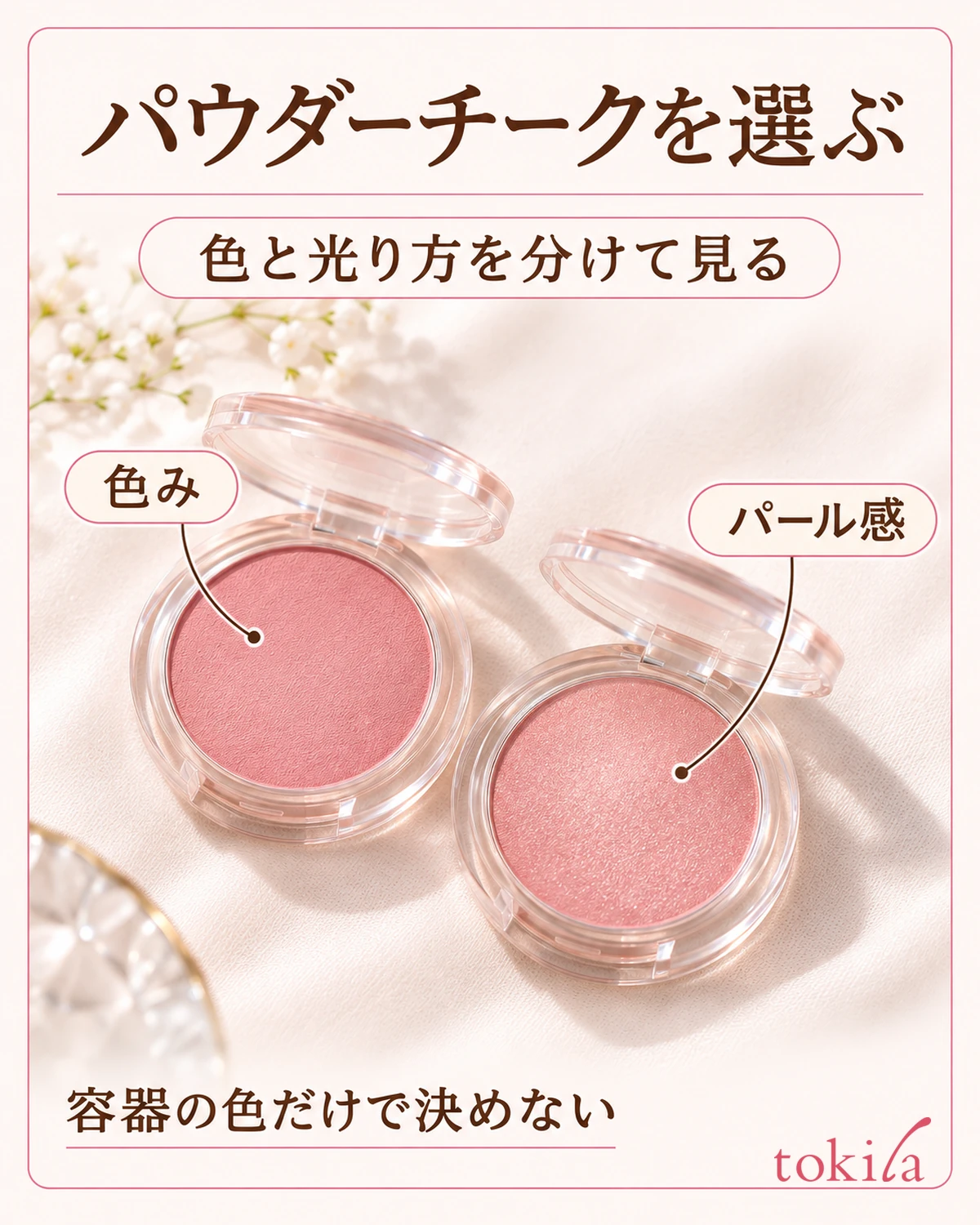
First, put into words one thing you want to add to your current makeup. Separate changes in color from changes in light, such as wanting a subtle pink on your cheeks or enjoying a fine sheen along with color. Even if both interest you, choosing a priority gives you a basis for comparison.
Do not assume that a powder always gives a matte finish. Some products are pearlescent, while others have restrained shine. Start by reading the description of each candidate shade and check whether all shades in the same range reflect light the same way or differ by shade.
Shine here refers to the appearance of makeup. Visible pearl reflections do not prove increased skin moisture or superior moisturizing ability. Read smooth feel, luminous finish and moisturizing-ingredient descriptions as separate items so you do not judge solely by a name or impression.
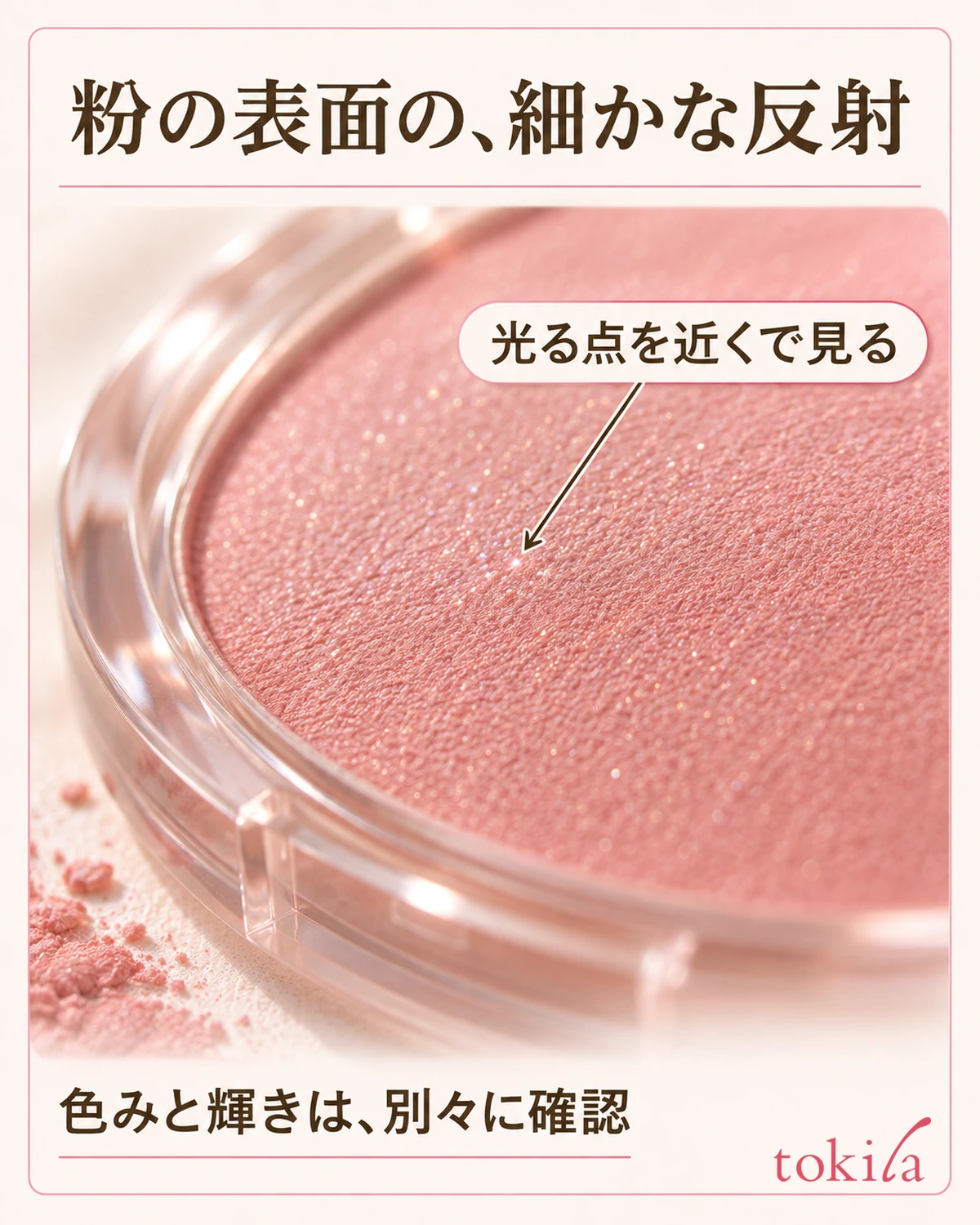
The photo shows small reflections on the powder surface. Looking for individual bright points, rather than seeing the whole powder simply as a light color, helps you practice distinguishing color from shine. However, reflections inside the case cannot tell you how the blush will shine on your cheeks or how long it will last.
If you usually use highlighter, consider whether you also want shine in your blush. You may want different products on days when blush supplies the shine and days when blush adds color while a separate highlighter adds light. Before increasing your products, keep the parts of your current makeup you like.
If your only reason for replacing your current blush is that it looks too faint, another option is to first review what to check when powder blush looks too light. Distinguishing a wish for a different finish from difficulty picking up your current product can help you avoid repeatedly buying more for the same concern.
Look beyond shade names to whiteness, vividness and depth
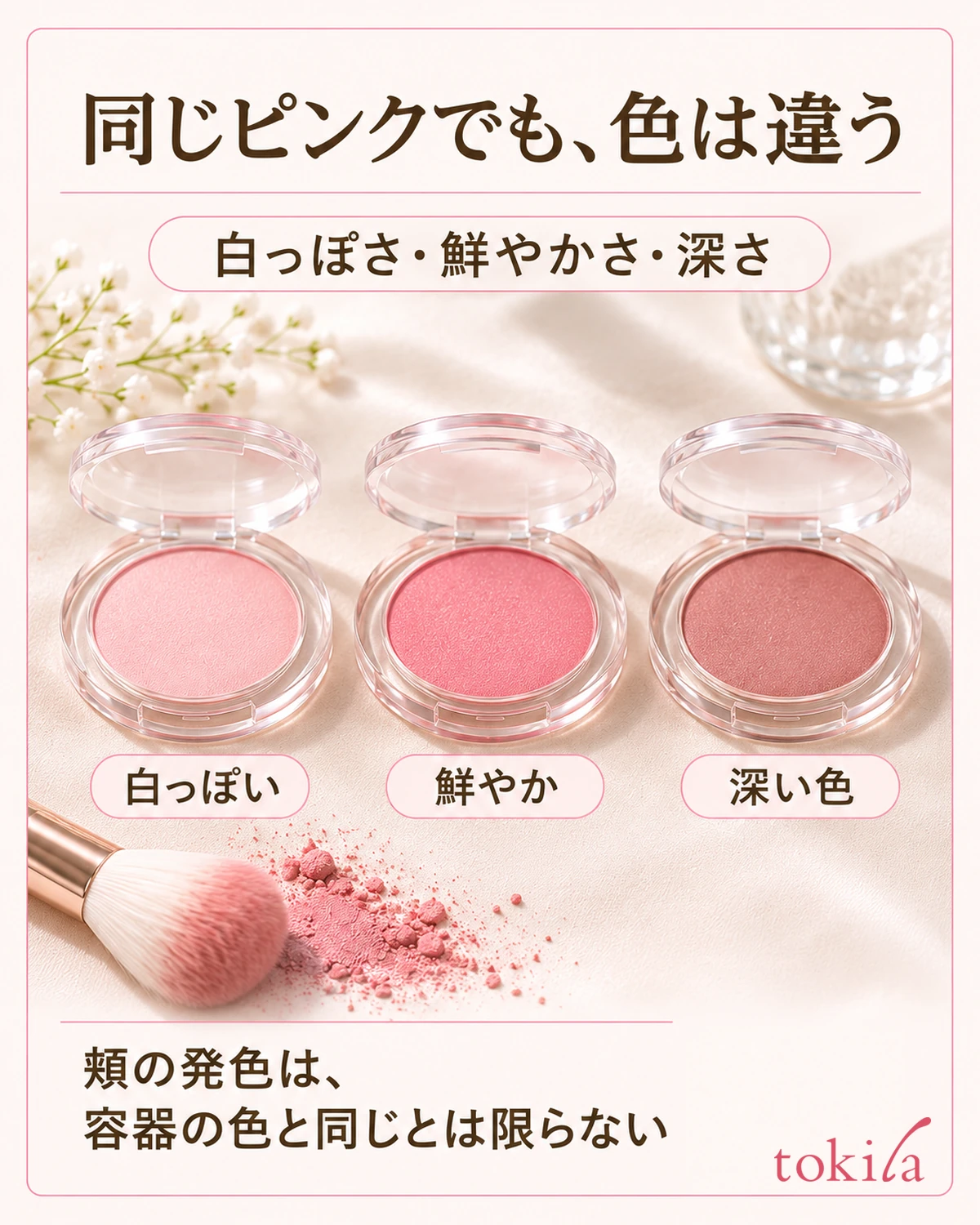
Shade names such as pink, coral and rose can help you start your search. But one name does not describe a single appearance. Look separately at a whitish brightness, vivid color and a deep, subdued tone. This comparison makes the change you want from your current shade more specific.
When coordinating with lipstick you own, consider which part of the face you want to emphasize rather than just finding matching shade names. On days with defined lips, do you want subtle cheeks or to enjoy cheek color too? Picture the makeup you will wear without assuming that every color must match.
A shade that looks deep in the case is not the same as that shade spread thinly. When comparing product photos, check whether they show the powder surface or the product applied to skin. If one shows the container and another a sheer application, you cannot attribute the difference only to the shade number.
When choosing on a screen, compare candidates on the same device at the same brightness. This still will not perfectly match the actual products, so avoid judging subtle differences from photos alone. If you want advice on similarity to your current blush, note its name, shade number and what you want to change.
If you can try products in a store, use clean tools following the counter's guidance. Changing the amount or area of application mixes differences in color with differences in intensity. You do not have to try them on your face, and a hand swatch should be distinguished from the expected finished look on your cheeks. Briefly note where you tested, the base and number of layers.
Even when using a personal color classification, you do not need to rule out shades solely on that basis. Consider your foundation shade, preferred intensity and balance with other makeup. Rather than tolerating a shine you dislike because it should suit you, return to the elements you want to enjoy.
Check included cases and brushes and the set you are buying
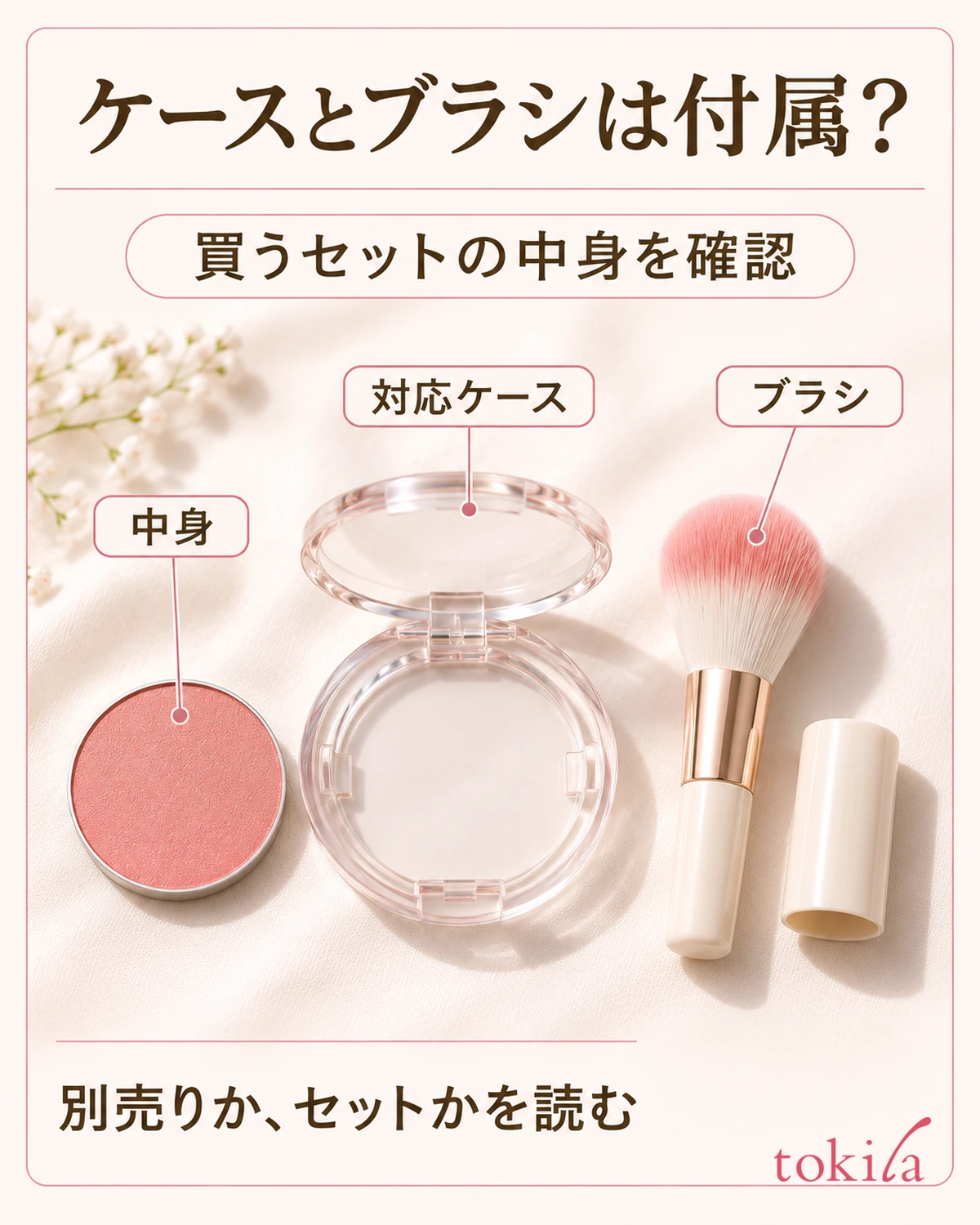
Once you choose a shade, check whether the purchase includes only the refill or also a case and brush. A brush shown in a photo may be sold separately. Read labels such as refill, full product and set to make clear exactly what you are buying.
For products placed in a dedicated case, check compatible ranges and models. Do not assume your existing case works because it looks similar. Read about fastening and compatibility as well as the refill's shape, and do not plan to shave or glue parts to make them fit.
For the brush, consider whether you want to use the included one or a tool you have at home. Check the candidate product's directions for specified or recommended tools. Do not assume that all powders work the same with fingers or give the same color with any brush you own.
For carrying with you, brush storage is another condition to consider. Whether it fits in the case or you need a separate capped brush changes what goes in your pouch. The photo shows the powder area separated from the recess holding the bristles. It helps you examine tool space as well as the outer dimensions of the case.
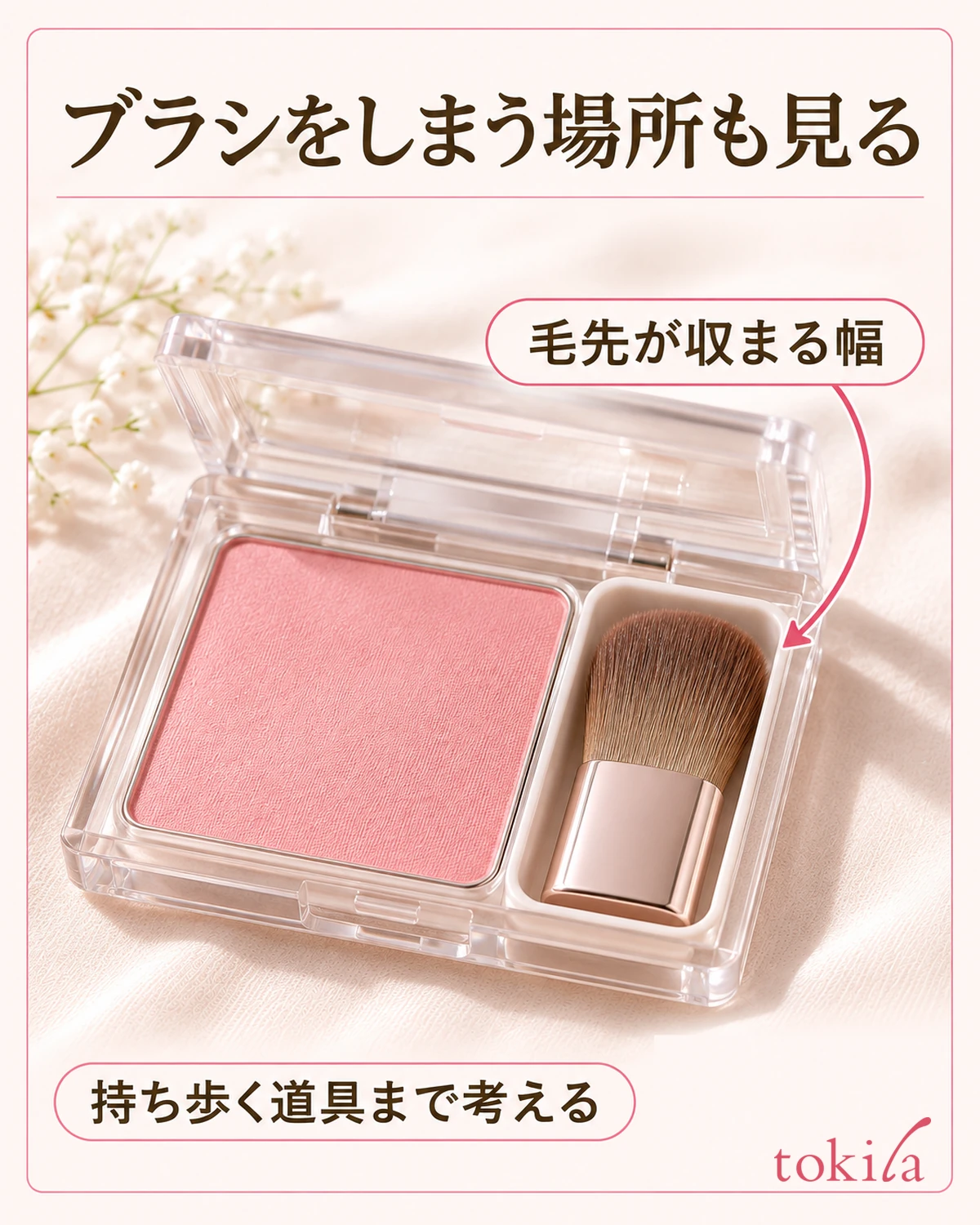
Do not make a rule that small brushes are always easier or large brushes always apply sheerly. Bristle width and shape and ease of handling also matter. Check what you can at the counter, leave unknowns as unknowns and avoid judging application feel solely by whether a brush is included.
Compare the price with any case and tools needed for first use, rather than just the refill. Separating the situation where you already own a compatible case from buying the whole set clarifies what you need. Also avoid inferring ease of finishing the product or low cost per use from capacity alone.
Read where it fits over your base and how to remove it
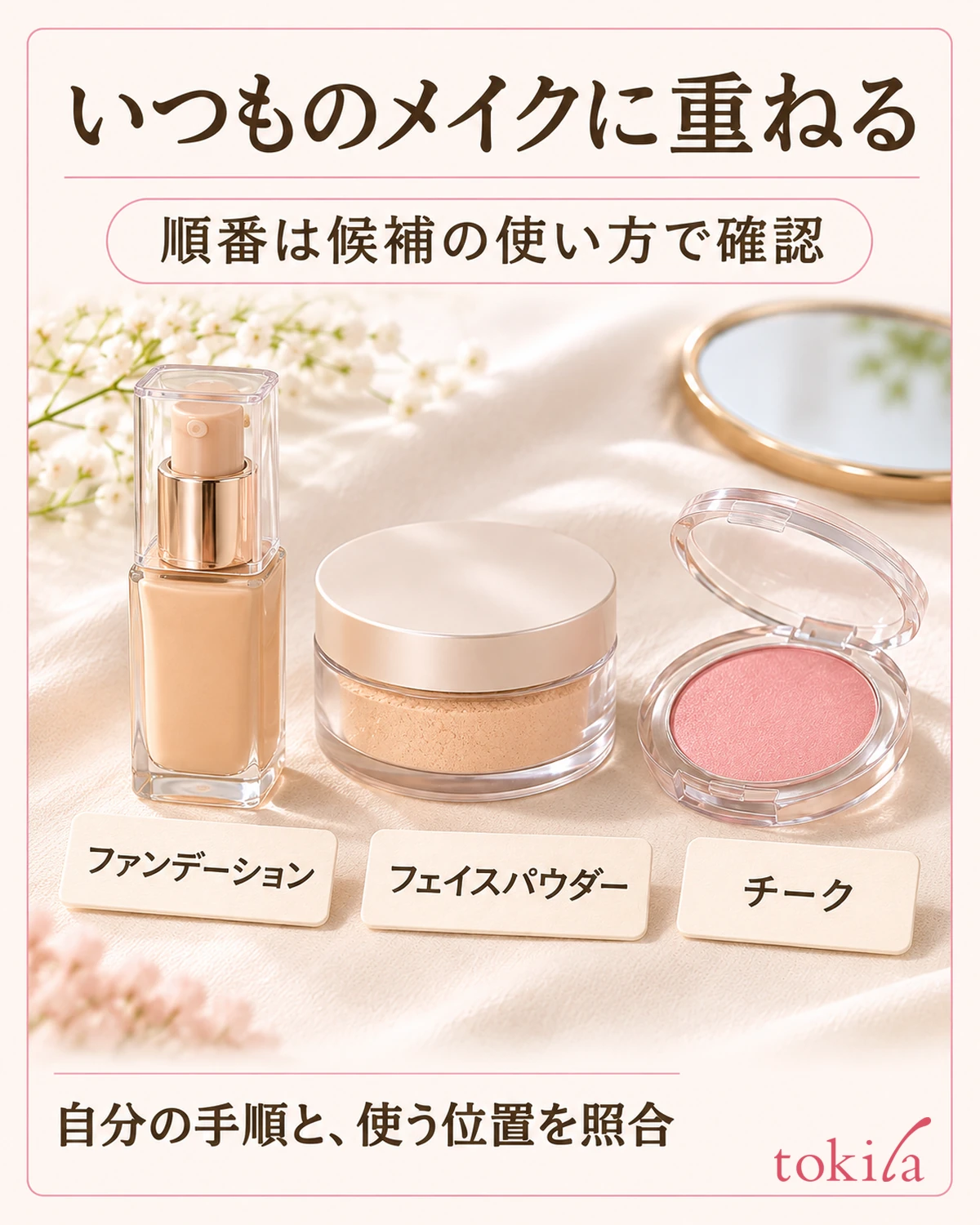
Next, picture your usual base makeup. Check when to use foundation, face powder and blush against the candidate's directions. Avoid transferring the order written for a different blush unchanged to a new product.
For example, a product combining a highlighter shade with a blush shade may direct you to pick them up together. Other products are designed for separate use of multiple shades. Do not invent a way of picking them up based only on visible divisions; check the palette's instructions.
If you do not want extra morning steps, compatibility with your current tools and routine matters. If you want a different texture only on days off, a different method can still be an option. Separating everyday use from enjoying a particular makeup look helps organize your requirements.
Removal is another point to check before buying. If directions say it washes off with facial cleanser under conditions such as use alone, read the condition too. On days when you layer primer or foundation, do not treat the blush's standalone removal conditions as instructions for removing the whole makeup look.
If unevenness or intensity bothers you after starting use, check the product's directions for amount and tools before buying another shade. Changing the product, tools and base all at once makes it difficult to identify what changed. If you develop redness, itching or other skin abnormalities, follow the precautions rather than continuing with quantity adjustments.
Choose one priority and select your next shade
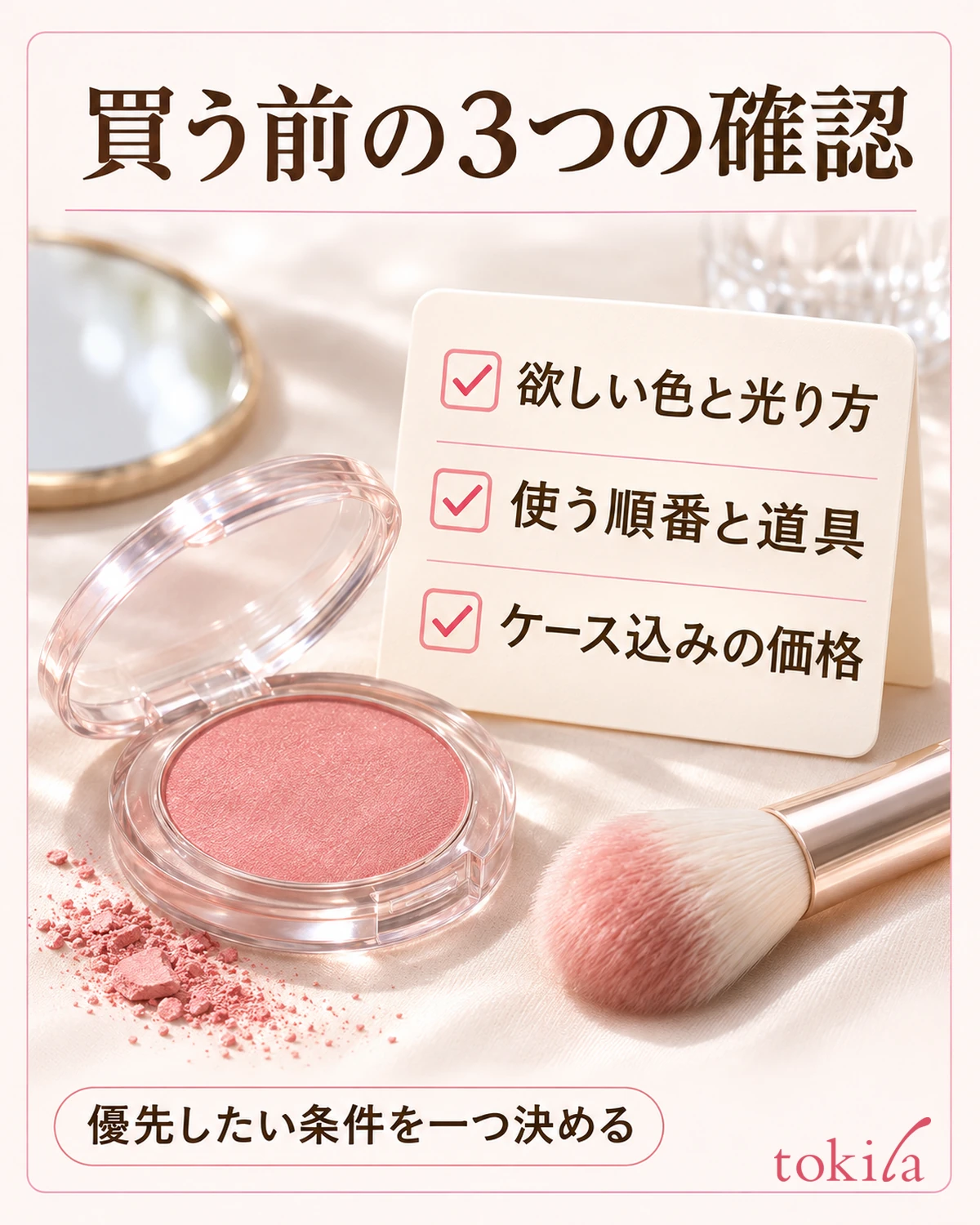
Finally, write the same three things for each candidate: desired color and shine, application order and tools, and price including the case. If everything seems equally important, return to what you want to change from your current blush. Simply increasing the number of colors does not have to be your goal.
If you want shine but choose a product with a different reflection based only on price, you may move away from your original wish. Conversely, even if you like a color, you can put it on hold if preparing its tools each morning does not suit you. Keep one high-priority condition and compare the rest.
When replacing a product, also note what you liked about the current one. Separating what to change from what to keep, such as similar color with less pearl or a different color while retaining brush storage in the case, makes the next candidates more specific. You do not need to keep comparing products that differ in every way.
After purchase, briefly record the shade number, base, tools and shine you liked. Treat a single impression as a record for your next choice rather than a performance assessment that applies to everyone. Also distinguish preferences you discovered through use from what you could check at the counter.
The key to choosing powder blush is to connect color and shine, the full set you use and your usual makeup rather than deciding the finish from powder form alone. Choose one element you want to enjoy on your cheeks and look for a suitable shade using the conditions you can check before buying.