When choosing a new lipstick, do you get stuck on shade names or the color inside the case? Even with the same red or pink, your intended look changes depending on whether your natural lip color shows through, how fully the color covers, and how much shine is visible. Separating color appearance from shine makes options easier to compare than deciding on one flattering color first.
This guide explains what to check before buying a twist-up stick lipstick. Work through color transparency, shine, occasions, container handling, and removal in that order. The generated photos illustrate general shapes; they do not compare actual products' color payoff or wear. Use actual samples of the candidates to choose your own shade.
Choose color transparency and shine separately
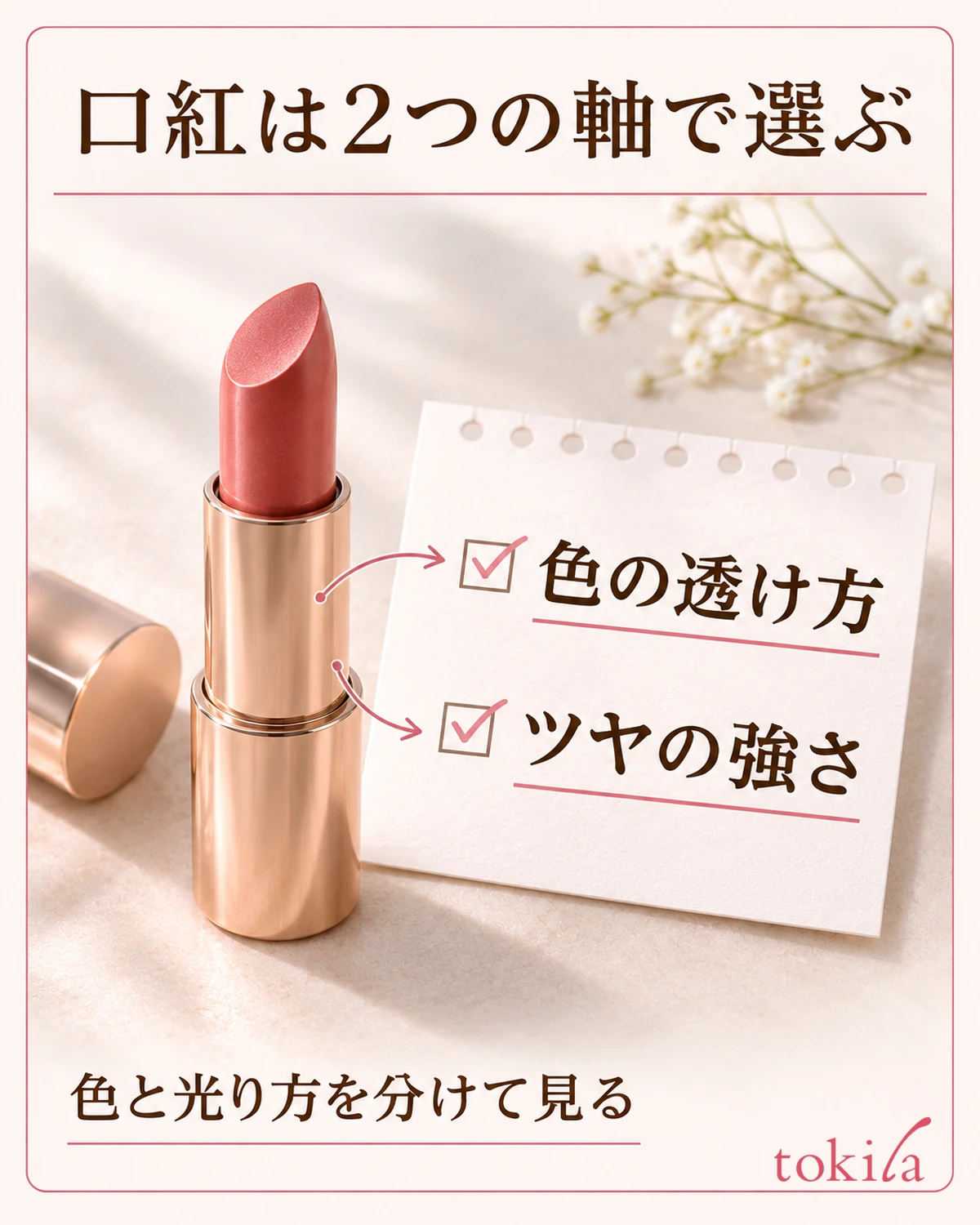
First consider whether you want to highlight your natural lip color or make the lipstick color the focus. Sheer color and fuller coverage look different even under the same shade name. A dark-looking bullet does not necessarily mean a dark result; check finish descriptions and actual swatches.
Next, look at shine. You might enjoy gloss, prefer subdued shine, or seek something in between. Sheer mainly describes translucent color, while matte mainly describes a low-shine appearance. Rather than putting them at opposite ends of one scale, separate color transparency from shine to describe the finish you want.
Check terms such as satin and semi-matte alongside the candidate's description. The same term does not mean identical shine or color payoff across manufacturers. Translate them into two conditions you want to see, such as clear color with subdued shine, or shine that lets your natural lip color show through.
Pearl and glitter sparkle are another element, separate from smooth surface shine. Decide whether you want light-reflecting particles or gloss without noticeable particles. A glossy lipstick does not necessarily contain glitter, and matte does not necessarily mean intense color. Avoiding these assumptions is a starting point for narrowing options.
For example, if you like your usual lipstick's shade but find it too shiny, first look for a similar color with less shine. If you like its shine but want lighter color, look for sheerer coverage. Before changing both substantially, decide what you want to keep from your current lipstick so your reason for choosing again is clear.
Look at lightness, then hue, in color samples
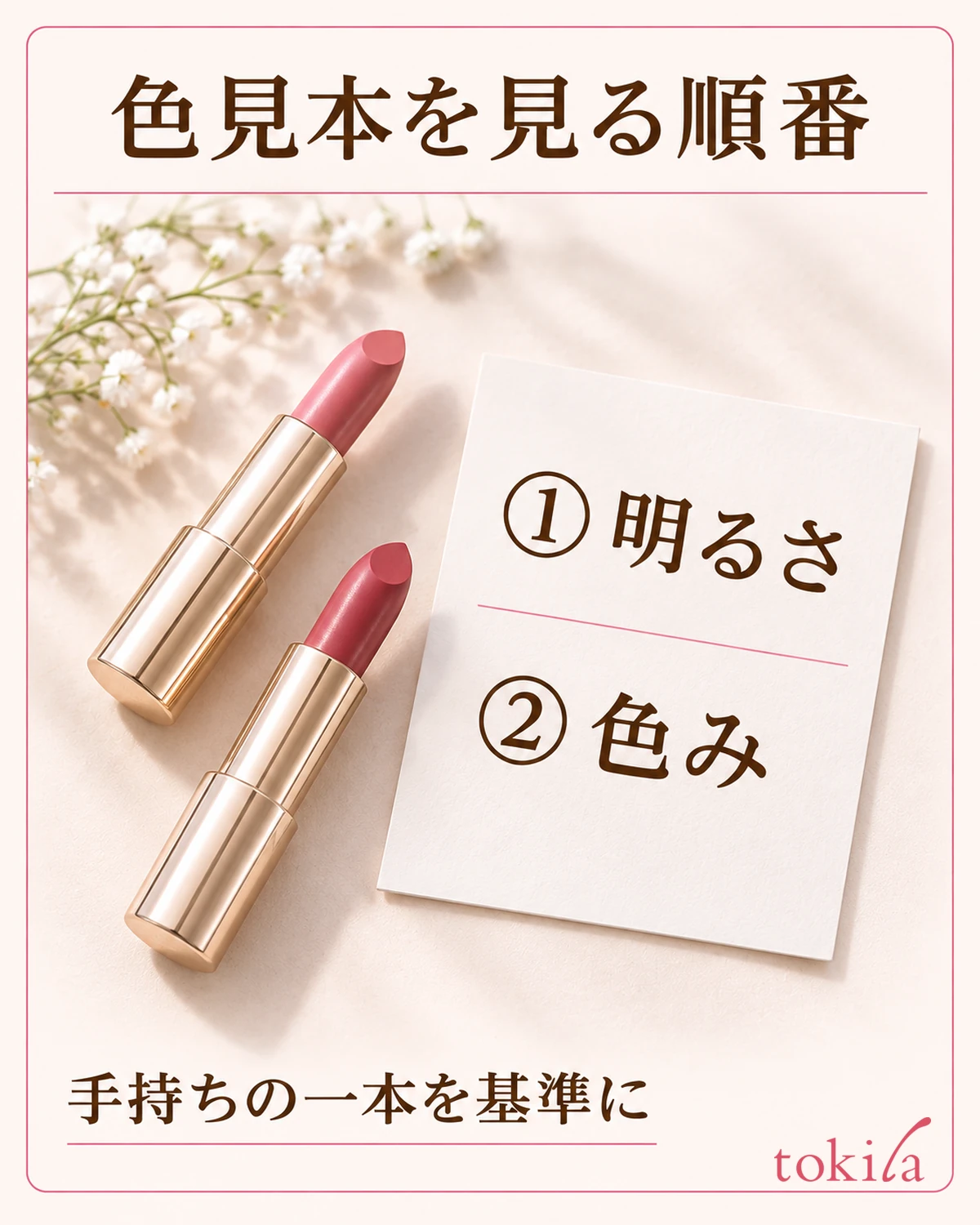
Once you know your finish direction, compare colors. Using your usual lipstick as a reference lets you focus on changes such as slightly lighter color or less redness for a calmer look. Noting the product name and shade number also helps clarify whether you want an addition or a replacement.
First compare lightness or darkness, then the direction of yellow, blue, or red tones. Compare about two similar candidates instead of relying on shade names such as beige or rose. You do not need to match clothing precisely, but checking from a distance where you can see your whole face may reveal a different impression from a close-up of your lips.
If you can try products in a store, follow the counter's hygiene guidance. A hand swatch helps compare hue and texture, but the natural color and surface differ from your lips, so the result may not match. Do not independently apply testers directly to your lips; ask staff if you are unsure how to try them.
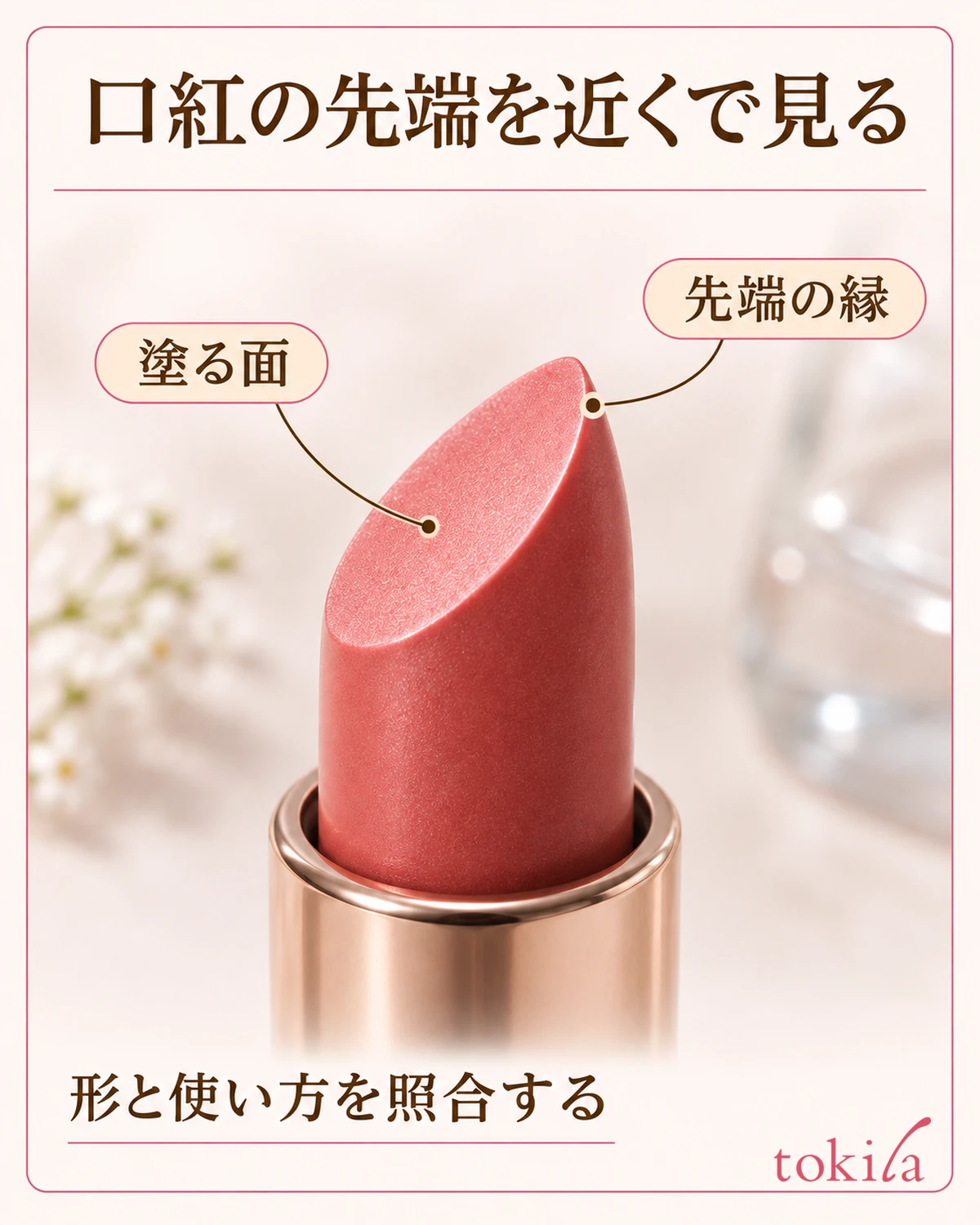
The supplementary photo shows the lipstick's slanted tip and the short exposed section beneath it close up. Separate from a color swatch, it helps you inspect the application surface's width and the tip's outline. Do not infer color intensity from tip shape alone; use it to imagine how the broad face and narrow edge could be used.
Online swatches can look different from the actual item because of screen and shooting conditions. Comparing your own lipstick with its published photo on the same screen can give a sense of display tendencies, but does not guarantee color. If you remain unsure, you can wait for an opportunity to see the actual item rather than buy more shades based only on names.
When comparing under different lighting, do not change conditions for just one candidate. View both colors in the same place, then, if necessary, check both under other lighting. Photos may receive automatic corrections, so remember how they look in person instead of choosing solely from redness in a photo.
Decide whether to finish with one lipstick or layer products
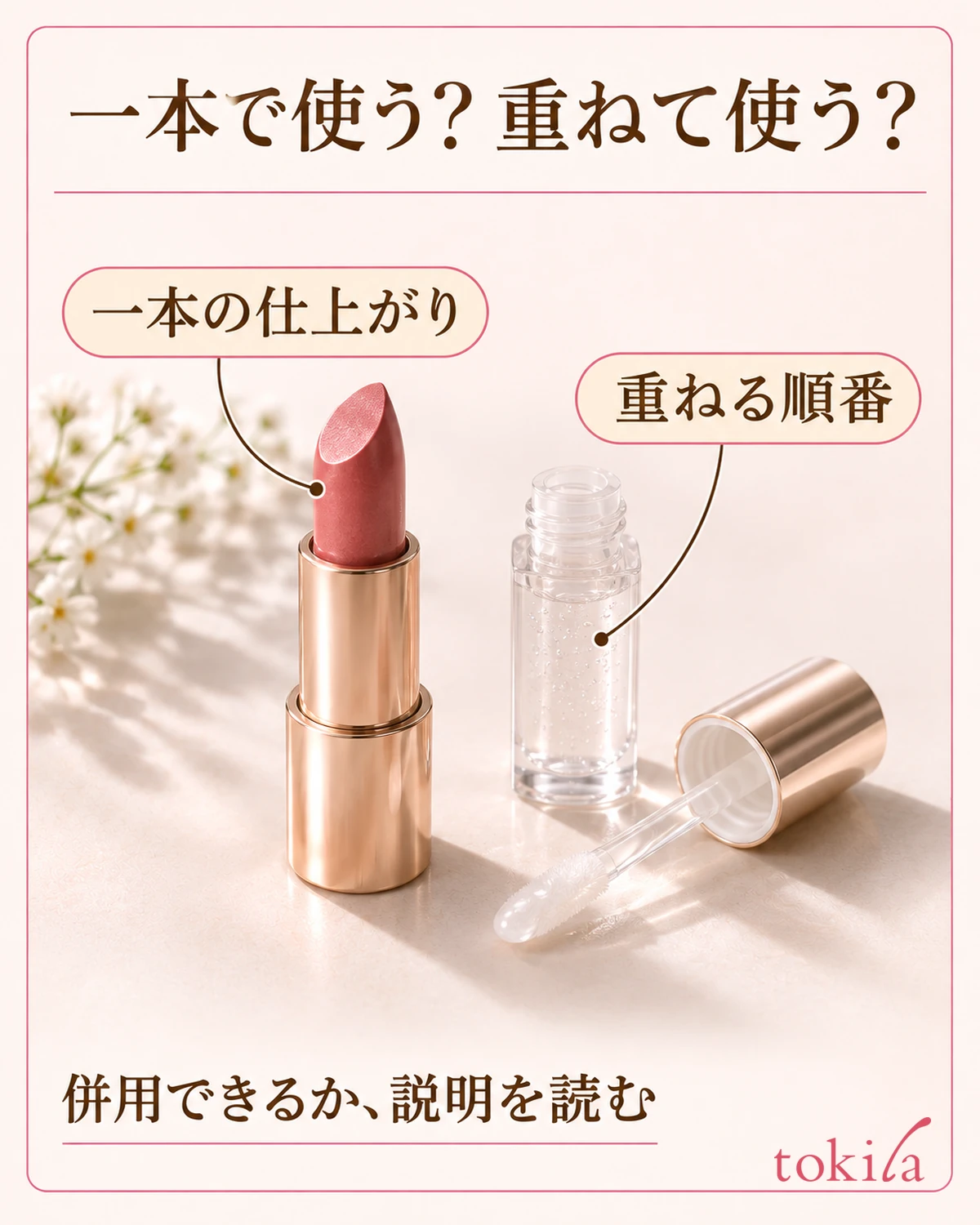
Consider whether you want one lipstick to finish your morning look or want to combine it with a primer or gloss you own. For use alone, assess whether it can approach your desired color and shine by itself. If you plan to add gloss later, checking compatibility and application order also helps you choose.
A moisturizing-ingredient label does not mean you must always layer your own lip balm underneath. Read instructions for use alone, whether a primer is needed, and any waiting period after application. Even long-wear products do not all require the same waiting time or tissue-blotting step.
Even if you prefer subdued shine, the word matte alone does not determine dryness or suitability for your skin. Conversely, shine does not guarantee a moisturizing feel that suits everyone. Read feel descriptions and precautions, and avoid choosing on the assumption that you will rub your lips forcefully or endure discomfort.
If you plan to layer products, begin with one combination. As explained in the guide to layering tinted lip balm and lipstick, distinguish the finish of the product alone from the color or shine you want to add. If compatibility is unclear, choose according to a use you can verify.
On days when you carry it, consider access to a mirror and time for touch-ups. Do not take color-retention descriptions to mean no touch-ups all day; imagine checking the color that remains before adding more. You can keep your lipstick and routine simple without making another color away from home essential.
For example, if you want a quick one-product finish at work and added gloss on days off, consider whether the same lipstick suits both situations. If it is awkward in one, you do not need to combine two lipsticks' roles into one. Choose for your most frequent occasion rather than accumulate seldom-used combinations.
Match the bullet and case to everyday handling
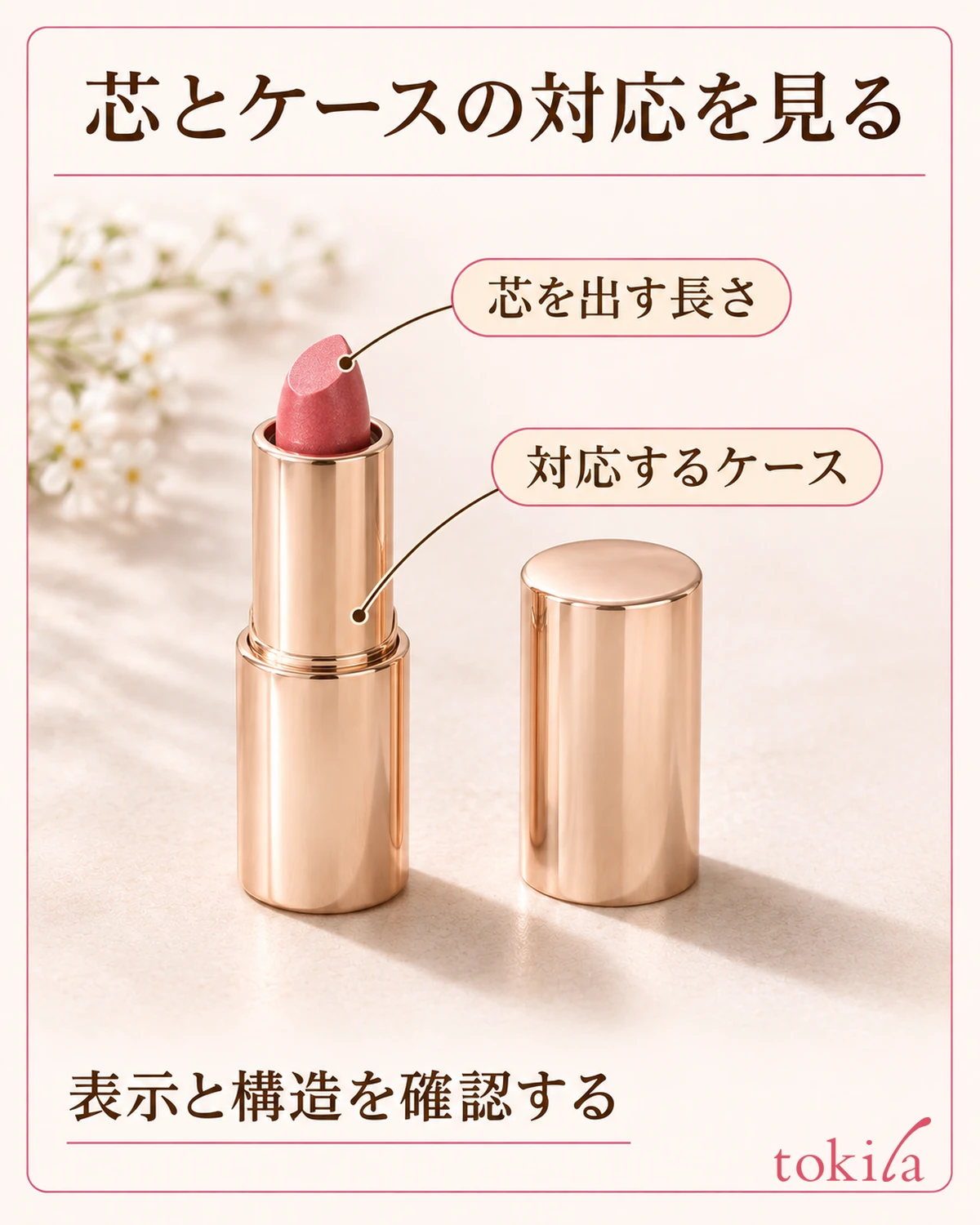
Even stick lipsticks vary in bullet thickness, tip shape, and ease of holding. Consider whether you want to apply to small areas or use a broad surface, and check the instructions. Shape alone does not establish ease of use: a fine tip does not mean everyone can outline neatly, nor does a thick bullet inevitably go outside the edges.
Before buying, read how far to extend the bullet and whether it retracts after use. Soft products may warn against overextending, and some designs do not retract. Use the candidate's guidance rather than the extension length you used with another lipstick. Do not twist unopened merchandise in a store to inspect its mechanism.
If the case is sold separately, verify exactly which refill matches it. The same brand or similar thickness does not mean every case will fit. For a first purchase, check the cost of the necessary complete set; for a replacement, check whether your current case works. Do not compare a refill-only price with the price of a ready-to-use lipstick.
The supplementary photo shows the inside of the cap and where it meets the tube rim. Apart from color or shine, it helps you check how far to retract the bullet so the cap does not touch it after use. Do not treat the pictured position as universal; read it alongside the candidate's design and storage instructions.
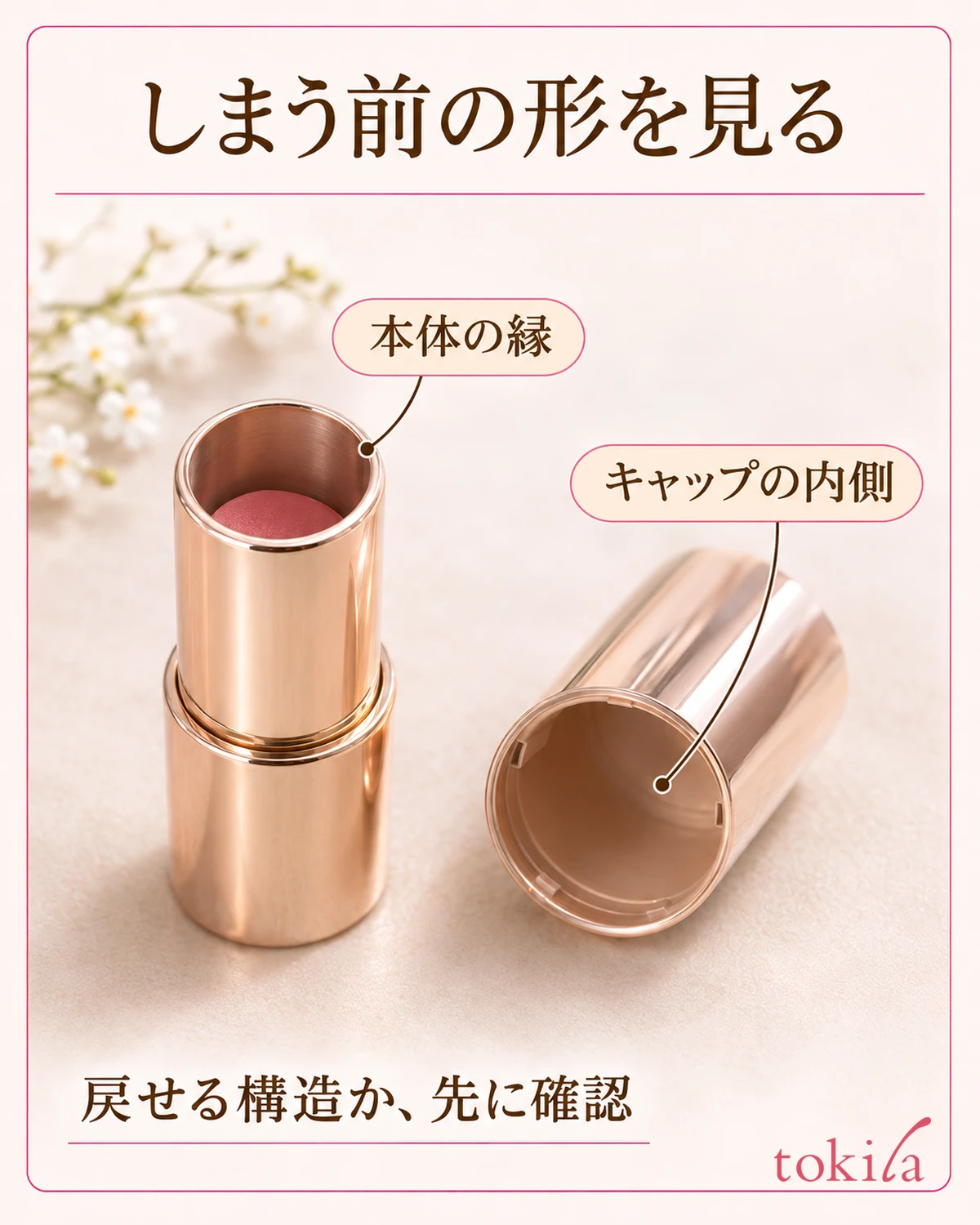
If you want to carry it, also check how to close the cap and its storage conditions. Do not choose a product that specifies avoiding heat or direct sunlight on the assumption that you will leave it in a car. A small case is not necessarily easy to handle, so imagine your grip together with the movement of using a mirror.
Check removal and narrow your reason for choosing
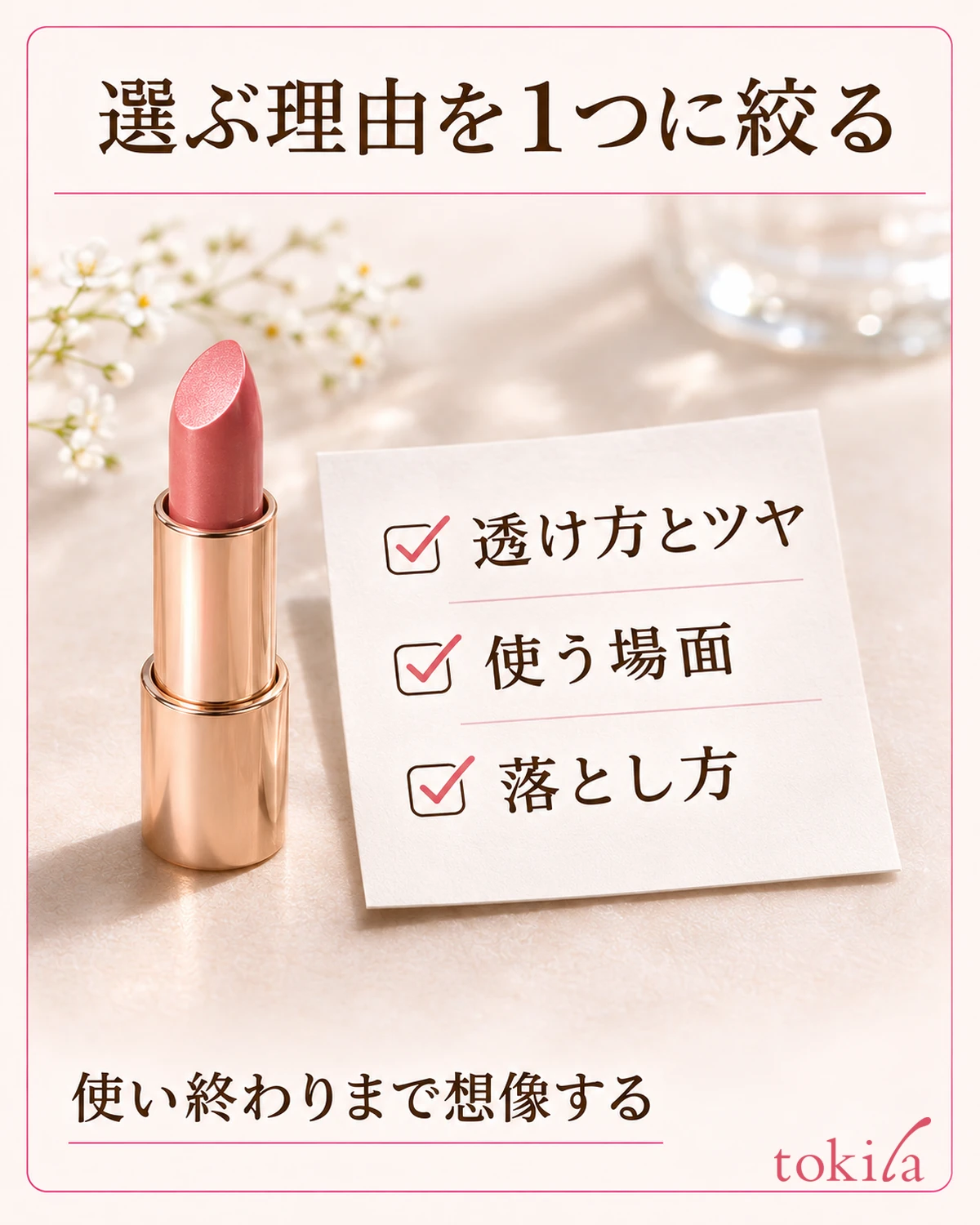
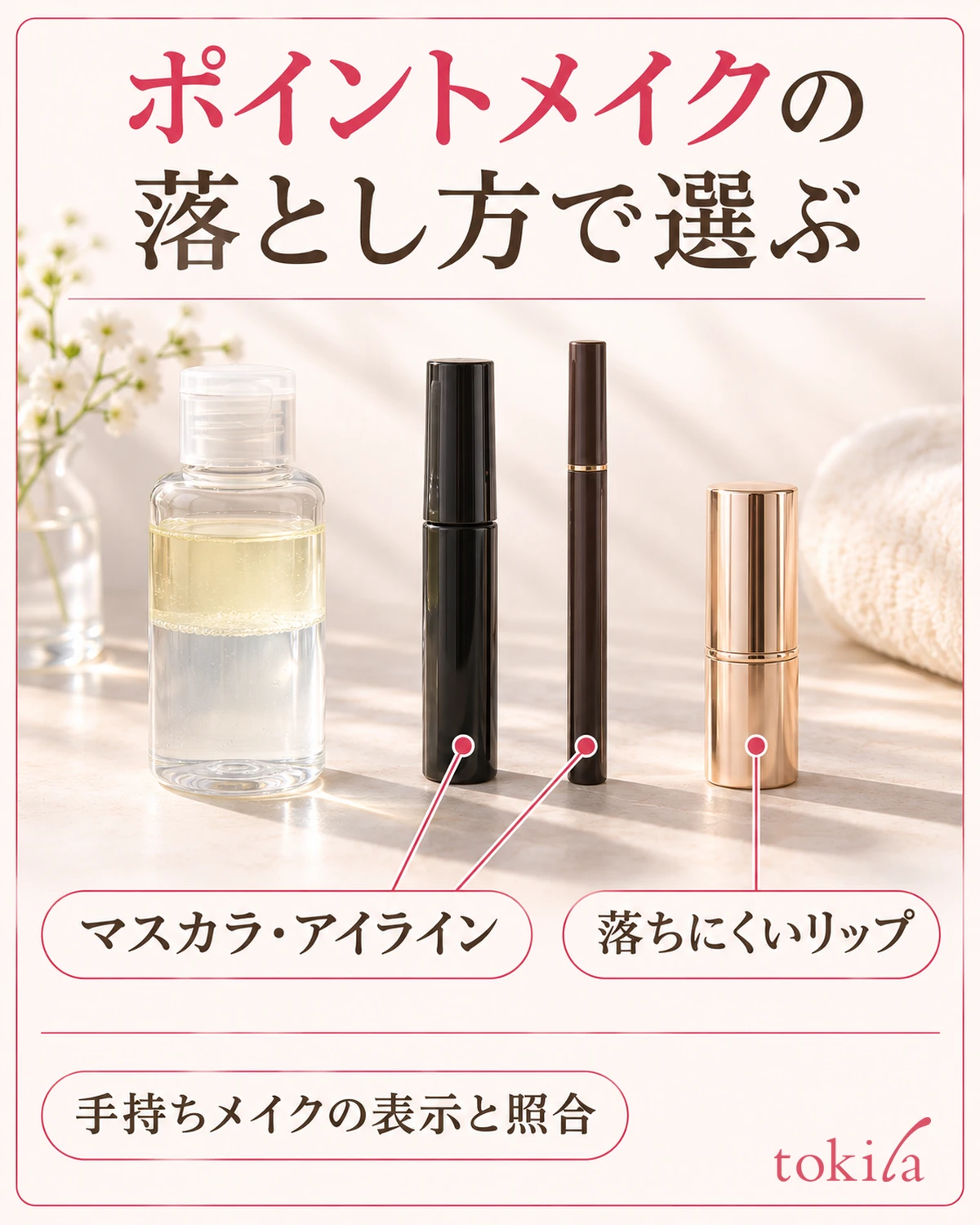
Before deciding, read the removal instructions. Do not infer the necessary cleanser only from terms such as long-wearing or tint; check whether a dedicated eye and lip makeup remover is specified and whether your own remover is suitable. Color-retention descriptions do not mean it is fine to sleep with color on your lips.
If your lips currently have redness, swelling, or wounds, do not keep trying new lipsticks to choose a color. Stop use if itching, irritation, or other abnormalities occur, and consult a dermatologist or other appropriate specialist as needed. Even for a favorite color, do not choose to endure abnormalities to get used to it.
Finally, review transparency, shine, occasions, container, and removal. Rather than seeking perfect scores on every point, return to your original wish, such as enjoying shine while retaining natural lip color, or getting clear color from one lipstick. This makes your reason for choosing clear. With those conditions equal, you can also check whether it is too similar to what you own.
If the color looks stronger than expected after buying, before immediately buying another lipstick, check whether you followed its instructions and identify whether amount, hue, or shine differs from your wishes. The guide to adjusting lipstick that looks too dark can also help. Separating an unsuitable color from excessive quantity makes the conditions for your next choice more specific.
For a candidate you are unsure about buying, note not only its shade number but also what you want to keep and change, such as liking the color but wanting less shine. This carries your criteria to the next counter instead of starting over. Do not regard a flattering color as something you must determine permanently in one attempt; revisit your reason for choosing when your occasions change.