Toner pads let you care for your skin with sheets already soaked in toner or another liquid. They come in round and square shapes, large tubs, and packs of a few sheets, so appearance alone can make choosing difficult. Before comparing sheet counts or ingredient names, decide whether you want to wipe your skin or add moisture to specific areas. This narrows down the instructions to check.
Here we organize the points to check when choosing pre-soaked facial toner pads. Consider these separately from soaking cotton pads yourself or using makeup-removal wipes. Similar-looking products do not necessarily have the same role, so look for one whose instructions match how you want to use it.
1. First read whether the pads are for wiping or spot masks
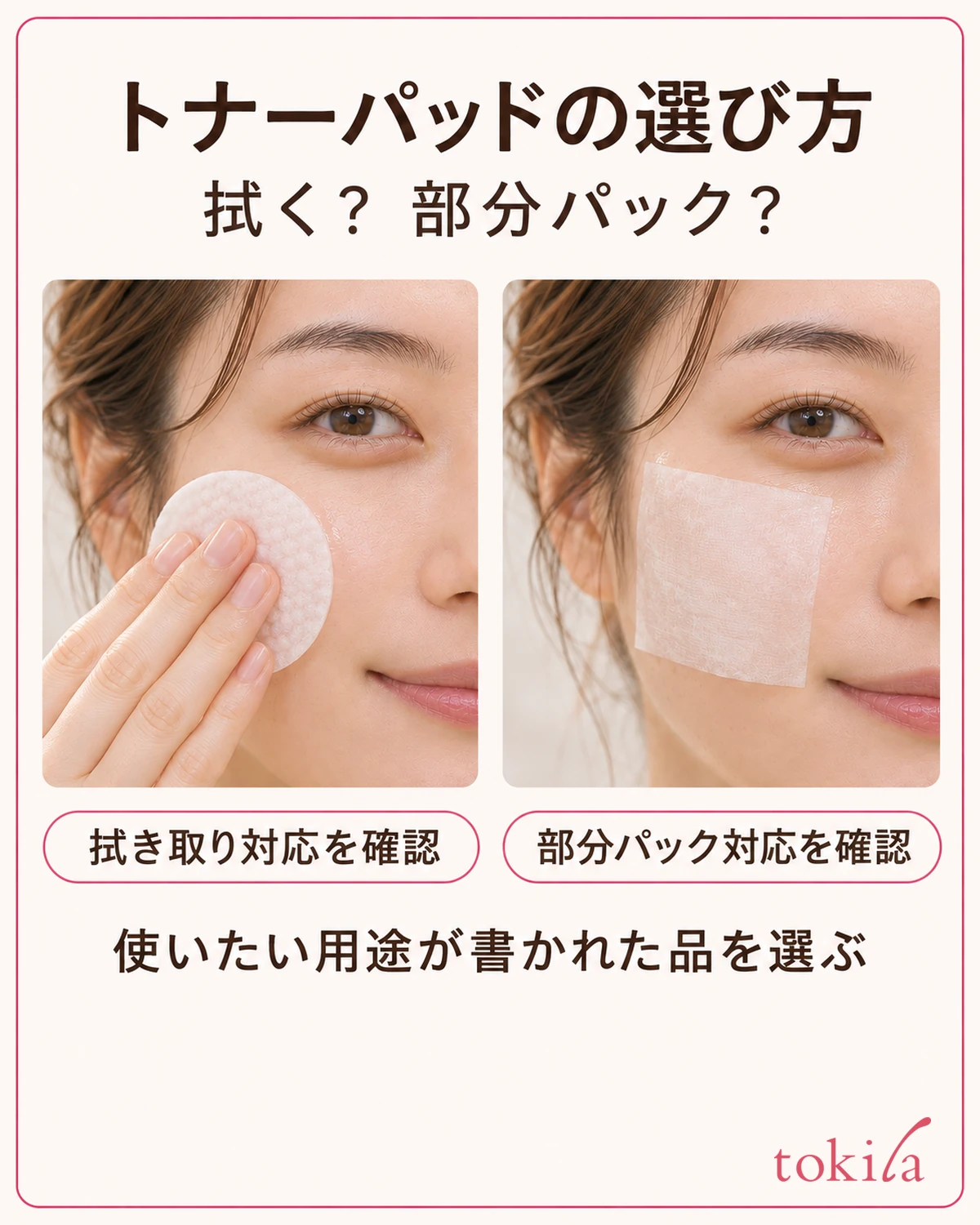
Start with the directions rather than the product name. Some products instruct you to wipe gently, others to place pads on areas such as the cheeks as a spot mask, and some support both uses. The words “toner” and “pad” do not mean every product serves the same steps.
For wiping, check that this use is clearly stated. To place pads on particular areas for moisture, check whether spot masking is supported and whether placement and timing are explained. Even if you want both uses, confirm in that product’s directions whether they can be part of one continuous routine.
Do not assume a product can be used as a mask simply because moisturizing ingredients are listed. Conversely, the phrase “exfoliating care” does not necessarily mean the product must be rubbed firmly. Reading the purpose of ingredients, the side to use, and the movement together helps prevent confusing its role.
When choosing for moisture, also check the care steps after removing the sheets. Knowing whether to work in the remaining liquid or continue with toner or serum helps you picture how it fits your existing products. Do not assume one sheet finishes everything; compare the later steps too.
If you want to use it instead of face washing or cleansing, instructions for that use are necessary. Being a liquid-soaked sheet does not mean you can skip makeup removal. If you wear sunscreen or makeup in the evening, plan to complete the required removal steps first.
To understand the difference from applying liquid to cotton yourself, see how to use wiping toner. Toner pads change the preparation of soaking each sheet, but not every pad replaces the same toner.
2. Choose sheet shape and size for the area you want to cover
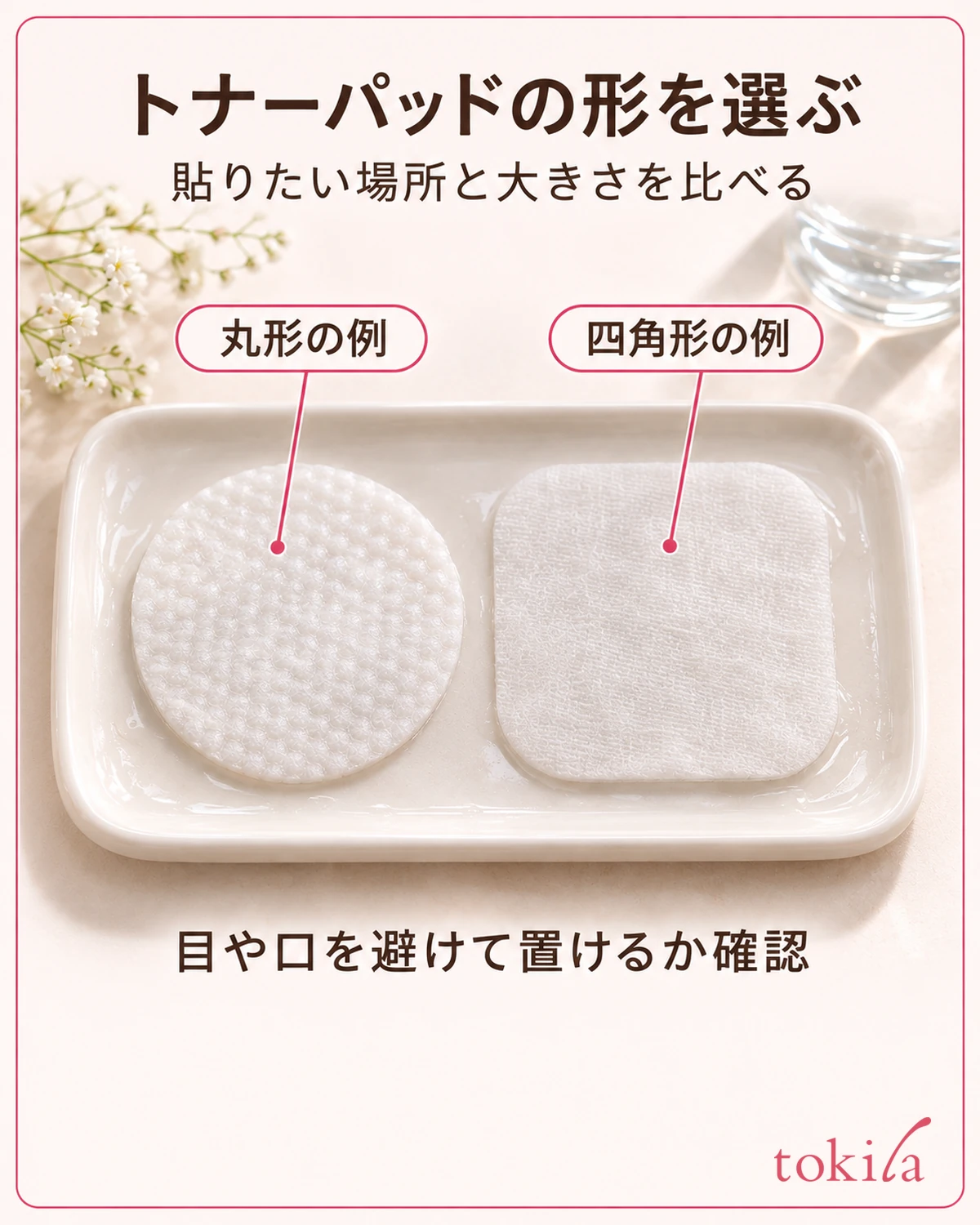
For spot masks, first consider where you want to place the sheet, such as the cheeks. Shapes include circles, squares, and rounded corners. Look beyond container size and check the sheet’s actual dimensions and the areas covered in usage examples.
A shape that is easy to handle over a broad cheek area may differ from one for a narrow area beside the nostrils. Rather than assuming larger is better, consider whether it can sit without covering the eyes or mouth and whether it tends to lift beside the nose, within its approved application areas.
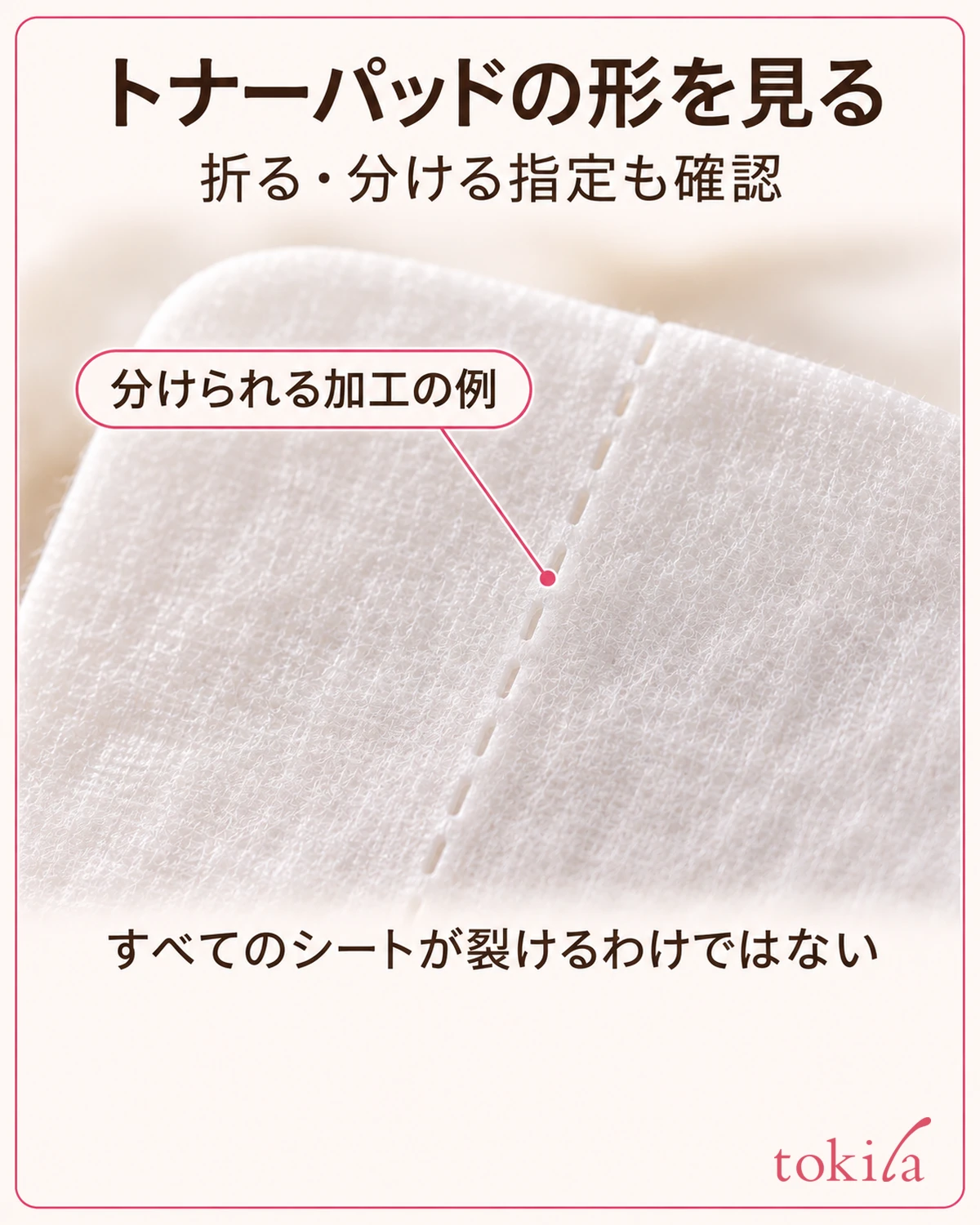
Instructions for folding or dividing a sheet into two can also inform your choice. However, not every sheet can be split into thin layers. Avoid buying a product on the assumption that you will cut it with scissors if it has no dividing feature or instructions; choose one usable in the shape you need.
Thickness is another clue to how easily a sheet can be placed. Sheets may be thin or cushiony, but thickness alone does not determine liquid content or suitability for your skin. Read the material description and handling instructions for placing or wiping, and compare for your intended area.
For a first-time product, you do not need to plan enough sheets to cover the entire face without gaps. Using a product on the areas specified for spot care differs from covering the face like a full-face sheet mask. If a recommended number is given, use that range as your reference.
Do not infer from shape alone that a pad can be used at the eye edges or on the lips. Even if its size seems suitable for your face, instructions to avoid particular areas take priority. If you cannot tell whether your intended area is included, check before buying rather than choosing only for apparent convenience.
3. Compare texture and thinness with the instructions for each side
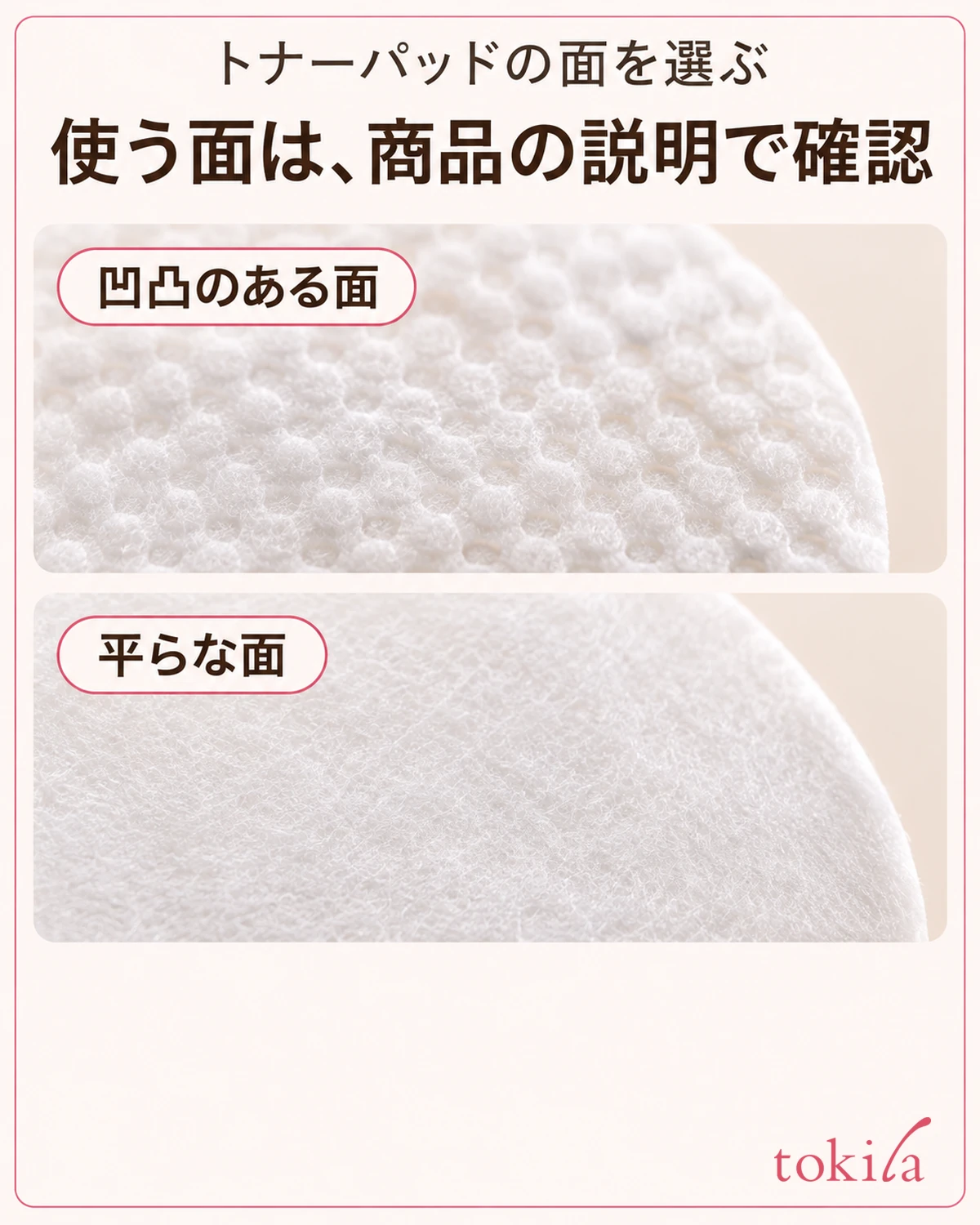
Some sheets have raised textures, some are flat, and others differ on the front and back. If different sides have different uses, read which is for wiping and which is for spot masks. Do not create a universal rule that a textured side must be for wiping and a flat side for placing.
In product photos, distinguish surface patterns from the thickness of the fibers themselves. Even a photo showing embossing cannot establish how soft the sheet feels against skin. Combine photos with material and usage descriptions rather than judging irritation or feel from photos alone.
For wiping, the goal is not to find a stiffness that seems able to scrape off dirt. Check whether you can follow the gentle-use instructions and spread the sheet while supporting it with your fingers. Do not plan to press harder and keep moving if it catches when you begin using it.
If you choose a product with different uses for each side, it helps to be able to reread the instructions after opening. If directions appear only on the box, keep it for reference. If similar-looking sides might confuse you, another option is to shortlist products with clearly explained side differences.
Even products designed to split into thin layers may serve different purposes when used whole and when divided. Rather than tearing them smaller than instructed to increase the number of sheets, check that the instructed method maintains the surface you need.
If fragrance or the feel of the liquid matters to you, compare the sheet and liquid as separate elements. The same ingredient name does not mean the formulation or sheet is identical. Avoid assuming that the feel of a different product you have used is a feature of the new one.
4. Check the opening and handling after opening the package
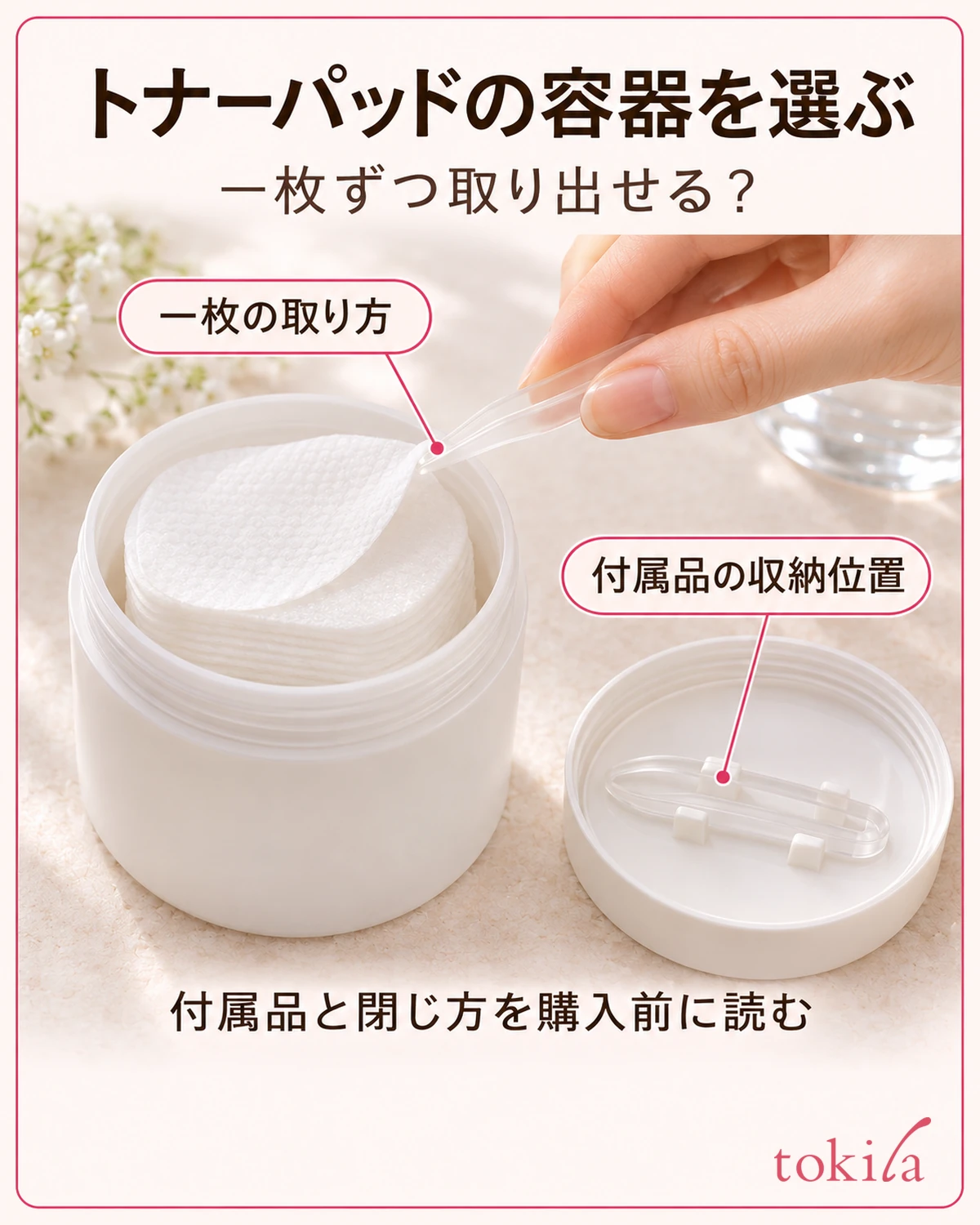
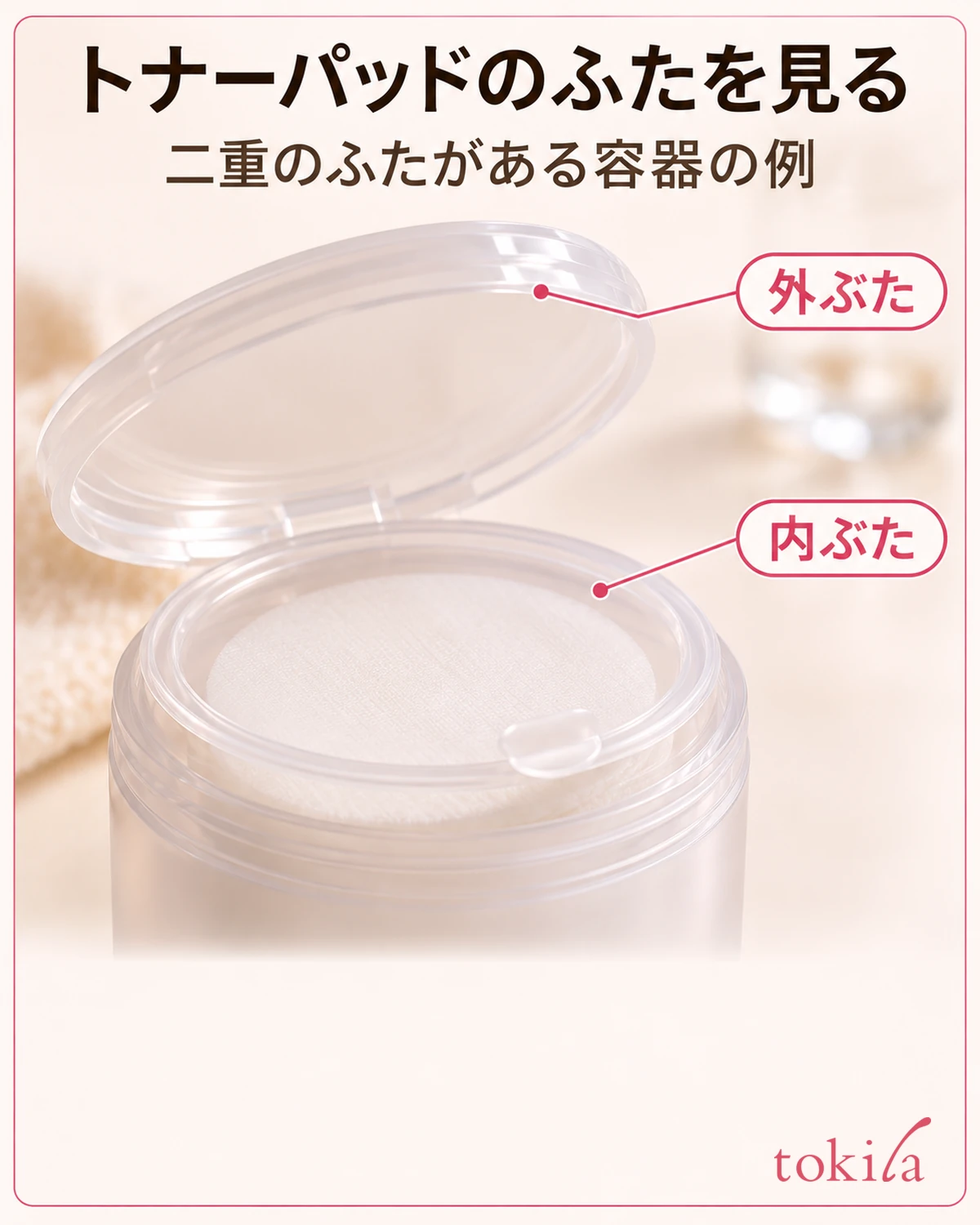
For a large tub, check how to remove one sheet at a time, not just the count. Look at the repeated actions: whether tweezers are supplied, where they are stored, and how the inner and outer lids close. Accessories can vary by product and size, so compare photos with the contents description.
If tweezers are included, imagine whether their tips can separate one sheet and where you will put them after use. Treat them as a removal tool, not a tool to apply to skin. Follow that product’s care instructions and plan to avoid repeatedly touching sheets with a dirty tool.
For pouch packaging, check how the opening closes and how to store the remaining sheets. Neither a small pack necessarily being single-use nor a zipper allowing indefinite storage can be inferred from size or shape. Check before buying that you can find the after-opening instructions.
Avoid leaving removed sheets out for a long time. Establish a sequence of taking what you need and closing the container. Also consider whether you have a stable spot where the closed container can stand, away from places where liquid may spill or water could enter an open tub.
Do not assume you can top up the container with another toner or water when it runs low. Its liquid formulation and hygienic handling were designed for the original product. Also avoid returning used sheets or liquid that has already been taken out to the container.
Read storage precautions, including heat and direct sunlight. Do not make refrigeration a universal practice; follow the stated conditions. If you want to carry the container with you, check transport guidance rather than assuming from its appearance that it will not leak.
5. Choose a product that fits your time and frequency of use
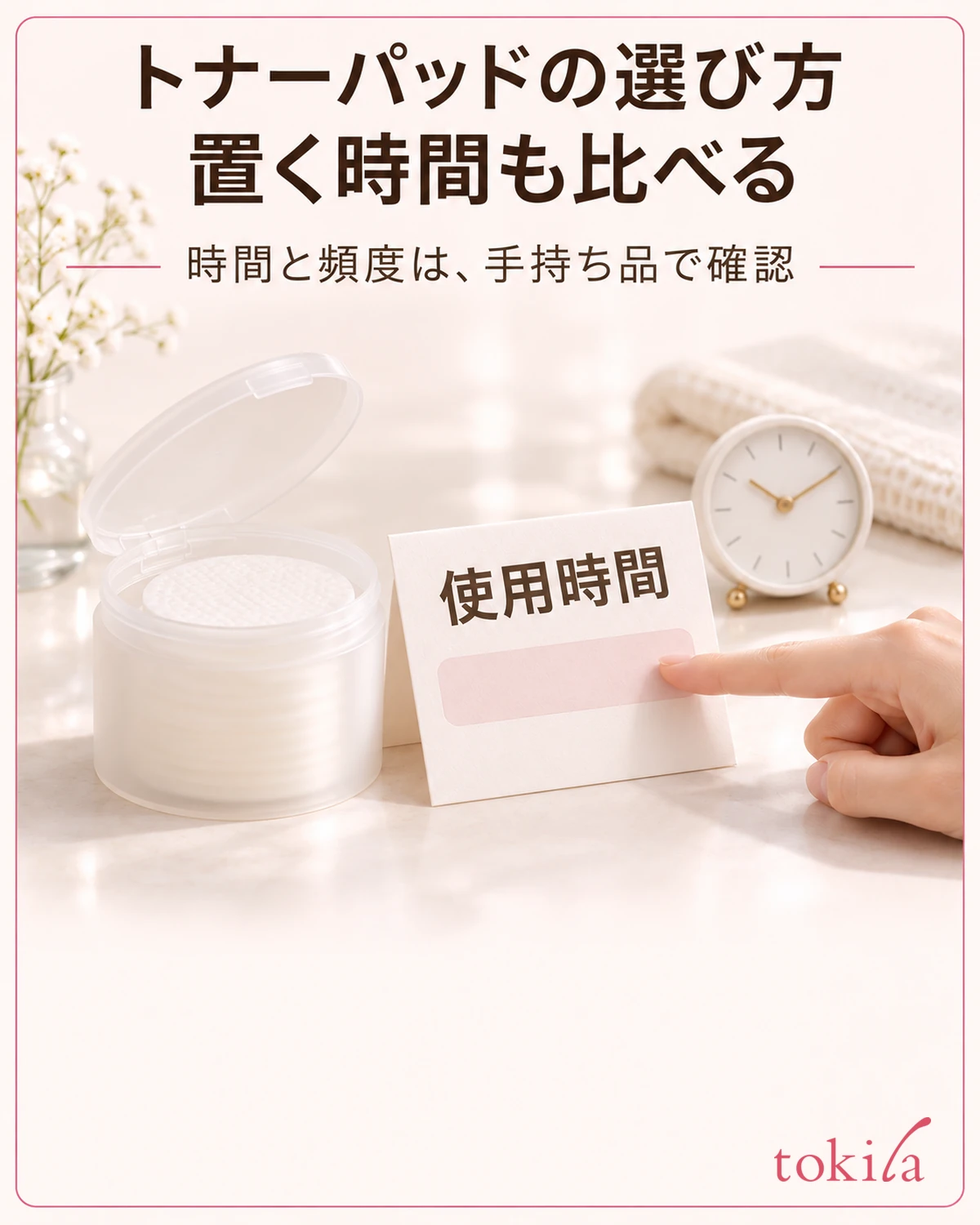
For spot masks, whether the waiting time fits your usual preparation is another selection criterion. Even products removed after a few minutes do not all specify the same duration. Follow your product’s timing rather than assuming longer is better, and treat removal and the next care step as one sequence.
If instructions say to remove before drying, watch the sheet as well as the clock. If you might forget it during a busy morning, consider another time of day or using it on days when you have time. Do not independently extend use into leaving it on while sleeping.
Decide frequency from both your skin’s condition and the product instructions. A large tub does not mean daily use is essential, and a small pack does not mean special occasions only. If you also use wiping or other exfoliating care, read combination precautions before using them on the same day. Do not increase frequency while unsure; review how it fits your current routine.
Not deciding purpose from ingredient names alone is another basic selection principle. Containing moisturizing ingredients differs from curing a particular skin concern. Do not choose a product to self-treat a skin disease. If redness, swelling, itching, irritation, or similar symptoms occur during use, stop and consult a dermatologist or other specialist as needed.
When comparing prices, consider the number of sheets per use, frequency, and handling after opening, not just the price per sheet. Rather than buying more than you plan to use only because it is cheap, choose a size whose purpose and storage you understand and can comfortably fit into your routine.
If you are considering soaking sheets yourself, compare with toner cotton packs. Do you want the convenience of pre-soaked sheets, or to prepare them according to the directions for products you own? Comparing purpose, shape, sides, container, and time in that order helps organize what to check before buying.