You take out your lip balm and find a previous lipstick on the tip, or the rim of the container is sticky. When that happens, before applying it to your lips right away, look at what is stuck where. The places to check differ among color transfer on the surface, product left at the opening and residue inside the cap.
If you push the stick out far to wipe off the dirt, or wash the whole container with water, you may create other problems. Here we explain the order in which to check the labeling on your product, separate the places you touch and then tidy up. These are not steps for deciding that a soiled product can always keep being used.
1. Look at the stick, the opening and the cap separately
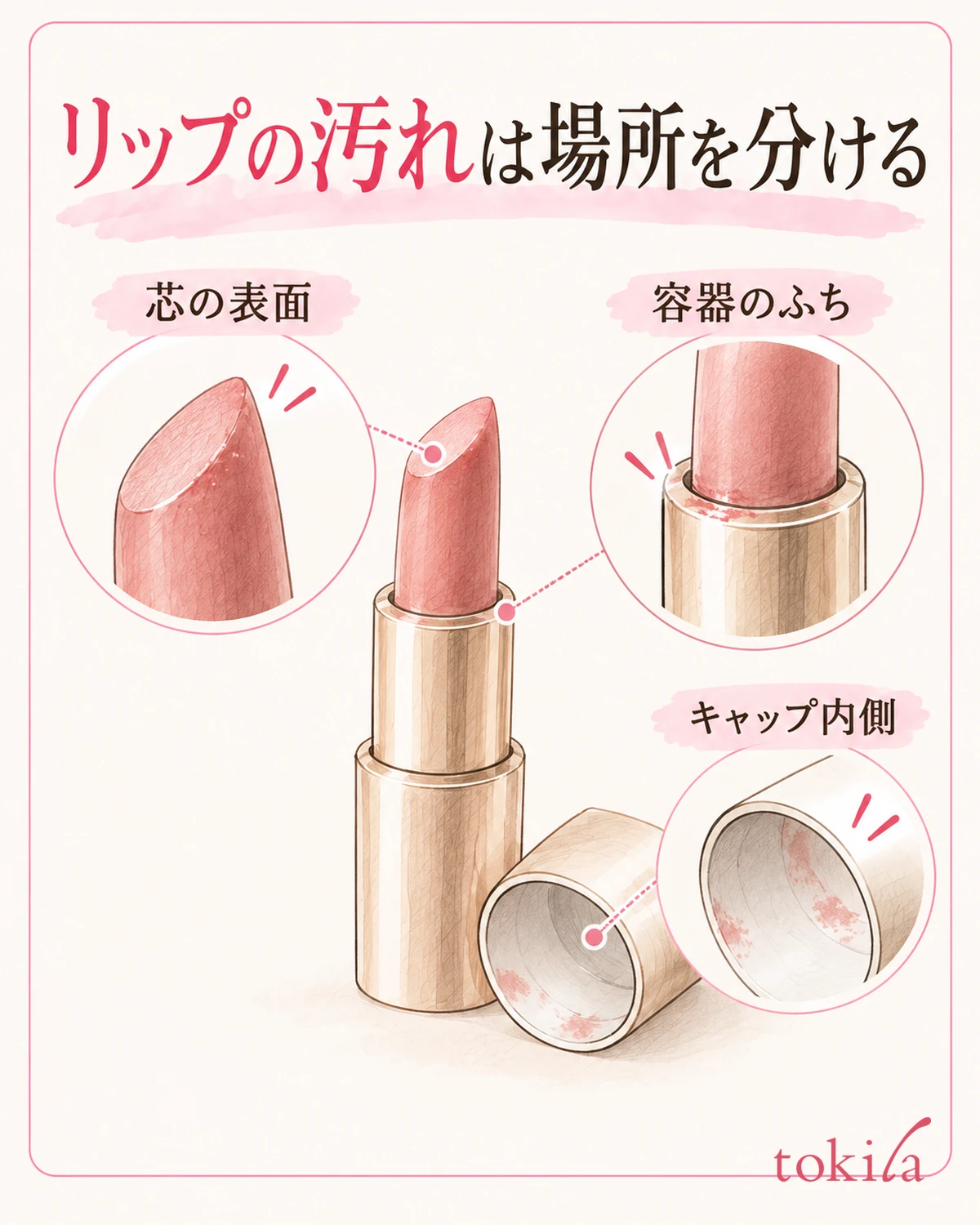
First, clean your hands and place the lip balm and cap on a bright desk. Looking at it away from your lips, rather than checking while applying, makes it easier to tell apart the color on the tip and the product left on the container. Put the cap where it will not roll and where its opening will not touch a dirty surface.
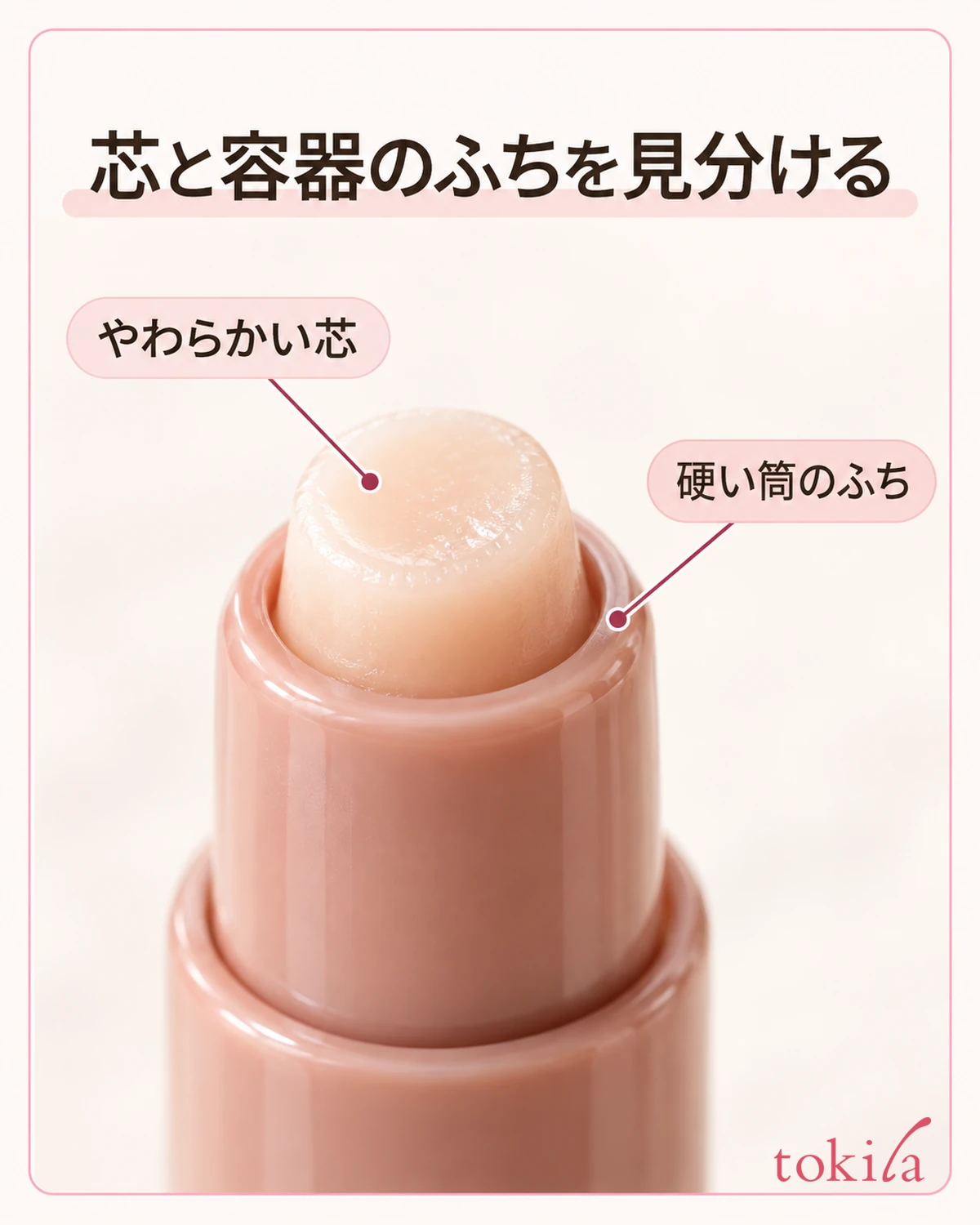
The order to look in is the part that touches your lips, the opening of the container and the inside of the cap. For a stick, check the surface of the stick and the rim around it; for a tube, check the tip and the mouth. Even if the dirt is the same color, it is important to separate it once and look at which part it is on.
Sort out whether the color of a lipstick you layered on has gotten on the tip, or whether product has been left around the container. From appearance alone you cannot judge what the dirt is made of or whether it is hygienic. Also avoid thinking that it is fine because you cannot see any color, or that wiping will always restore it.
The stick and the hard tube rim that surrounds it are different parts. Do not try to shave the stick down to remove residue on the rim as well; look closely at which one it remains on. You do not need to twist the stick out so far that you can see its base just to check the tip.
If you have dropped it on the floor, sand or tiny foreign matter has gotten in, or the stick has badly crumbled, treat this separately from lightly wiping the surface. Do not keep using it after removing only the visible part; follow the product's instructions to confirm whether it can be used.
If you notice an unusual smell, color or shape, do not keep testing it on your lips on the spot. If you cannot tell whether it is just the previous lipstick that transferred, hold off on using it, keep the container and outer box, and check the information you would need to make an inquiry.
2. Check the container type and the care instructions
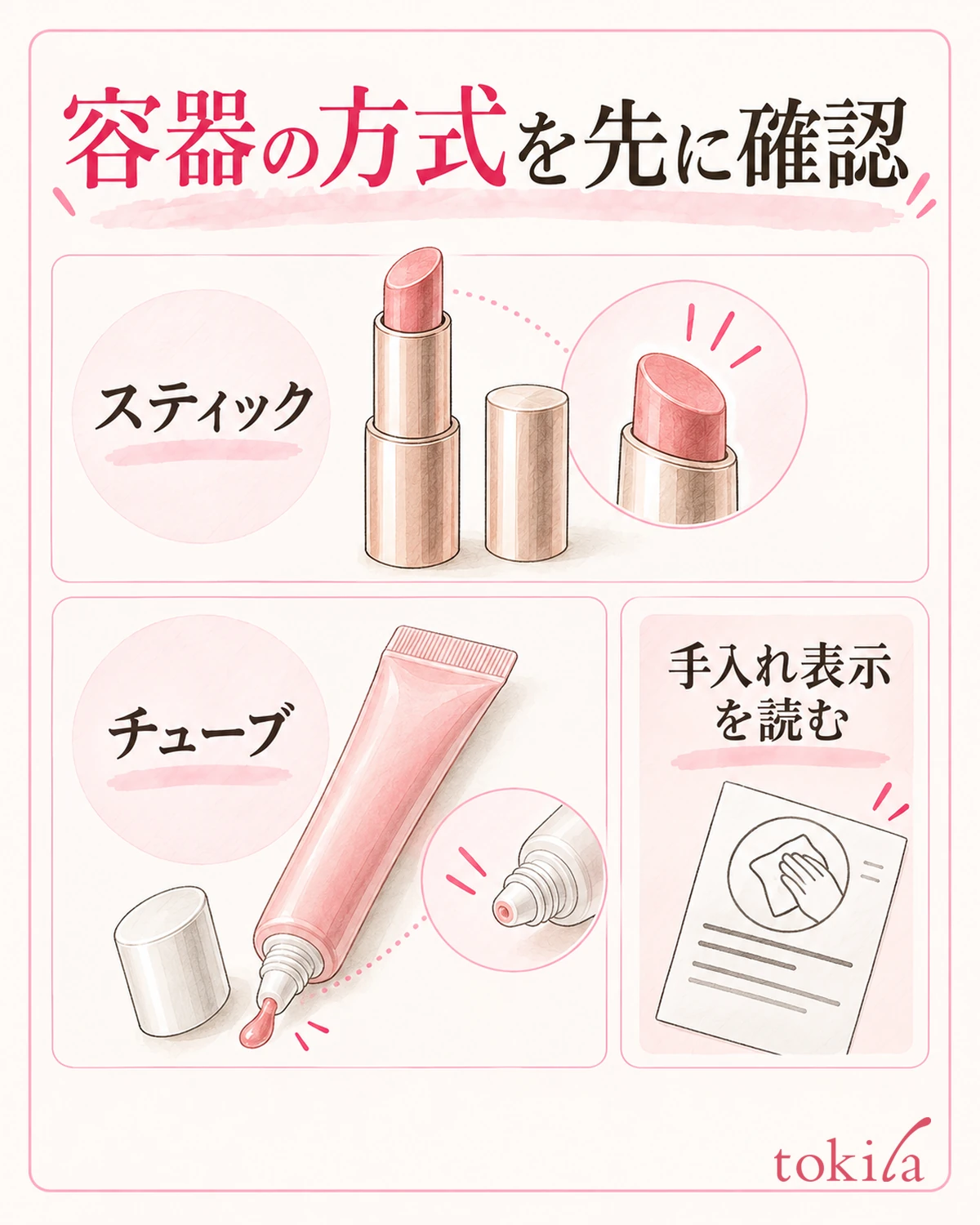
Next, read the directions for use and precautions on the outer box or container. For a stick, a tube and a jar, how you take the product out and which places you can care for are all different. Even when the name "lip balm" is the same, do not apply the steps for a different container as they are.
For a stick, check whether it can be retracted after it is extended and whether there is a specified length to extend it. Do not decide how to operate it based on softness alone; for a type that cannot be retracted, not extending it too far comes first. Do not count pushing in a stick that will not retract with your finger as preparation before removing dirt.
For a tube, check whether there is guidance on wiping the mouth, and whether the tip touches your lips directly in use. For a product that specifies wiping the mouth or the inside of the cap with a tissue or similar, care for it within that range. This does not mean that every container can be washed with water.
For a jar, check what the instructions specify for scooping it out, such as a finger or a spatula. Checking the container opening, which we cover here, is separate from caring for the tool used to scoop out the product. Also read the instructions on the tool side for how to wash the tool you used, and do not return a soiled tip to the product.
If you cannot read the labeling, do not make an assumption by using a similarly shaped product as a model. Check the original packaging and the explanation you received when you bought it, and hold off on what you do not know. Also avoid using disinfecting alcohol or nail polish remover on the stick or inside the container when it is not stated.
In checking the labeling, read not only the directions-for-use section but also the sections on after use and storage. The specified length you can extend and the specified way to retract after use are different things. If you cannot find the figure, do not borrow the length of another lip product; check the explanation within a range that does not force anything to move.
For care, prepare clean tissue or similar that matches the instructions, and a stable place to put things. Do not add steps that make removal easier, such as a pointed metal tool, a toothbrush or hot water. Sorting out what you need beforehand reduces how often you search for tools and touch things while the container is open.
3. Wipe the parts where wiping is specified, in small sections
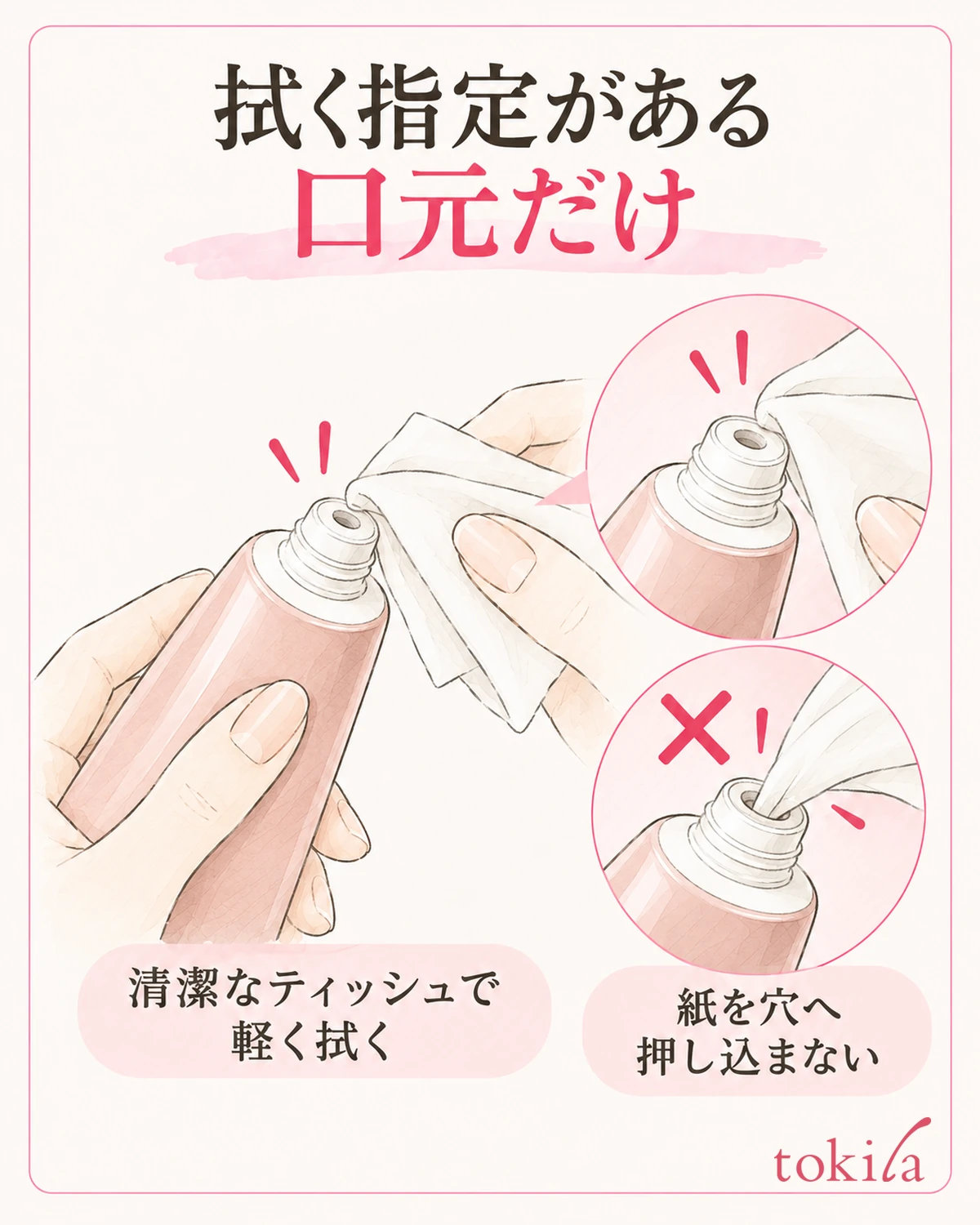
Once you have confirmed the care method, tidy only the places specified. When wiping the mouth of a tube with a tissue, steady the body and apply a clean part of the tissue to the product left outside the opening. Do not stuff the corner of the paper into the hole as if pushing the dirt in.
To make the place you are wiping easier to see, turn the container and shine light on it. Rather than moving the paper by feel when the hole is hard to see, stop at an angle where the tip and the rim are visible, and then touch it. You do not need to peel off the container's label to make it easier to hold.
Once you have touched it, lift the paper away and look at what remains. Rather than rubbing the whole container with the same surface, use separate surfaces: one for the place where you are removing residue, and a fresh one for the next. Before increasing the pressure, check the labeling and the place where residue remains once more.
For the inside of the cap, separate the visible residue from the depths that fingers and paper cannot reach. Even when wiping like that of the mouth is permitted, avoid pushing paper deep inside and leaving torn scraps behind. If you would need to scrape out an unreachable part with a needle, stop that step.
Hold the tissue so that you can tell the surface that has taken up dirt from the surface you will use next. This is a check done with a soft flat surface over a reachable range, not by twisting a thin piece of paper tightly and putting it into the hole. If you see lint or paper scraps, check the condition before closing it as it is.
For a product with guidance on tidying the stick's surface, follow that guidance. Do not add treatments such as shaving the stick down a lot to remove the soiled color, passing it over a flame or soaking it in hot water. The outside being clean and being usable after a drop are different things.
If there is residue that will not come off, pause before rubbing hard again and again. If the container is scratched or deformed, or the contents may have changed, hold off on using it. Care is not for processing an unusable product so that you can keep using it; it is everyday tidying within what the labeling permits.
4. Check how to retract the stick and the inside of the cap, then close it
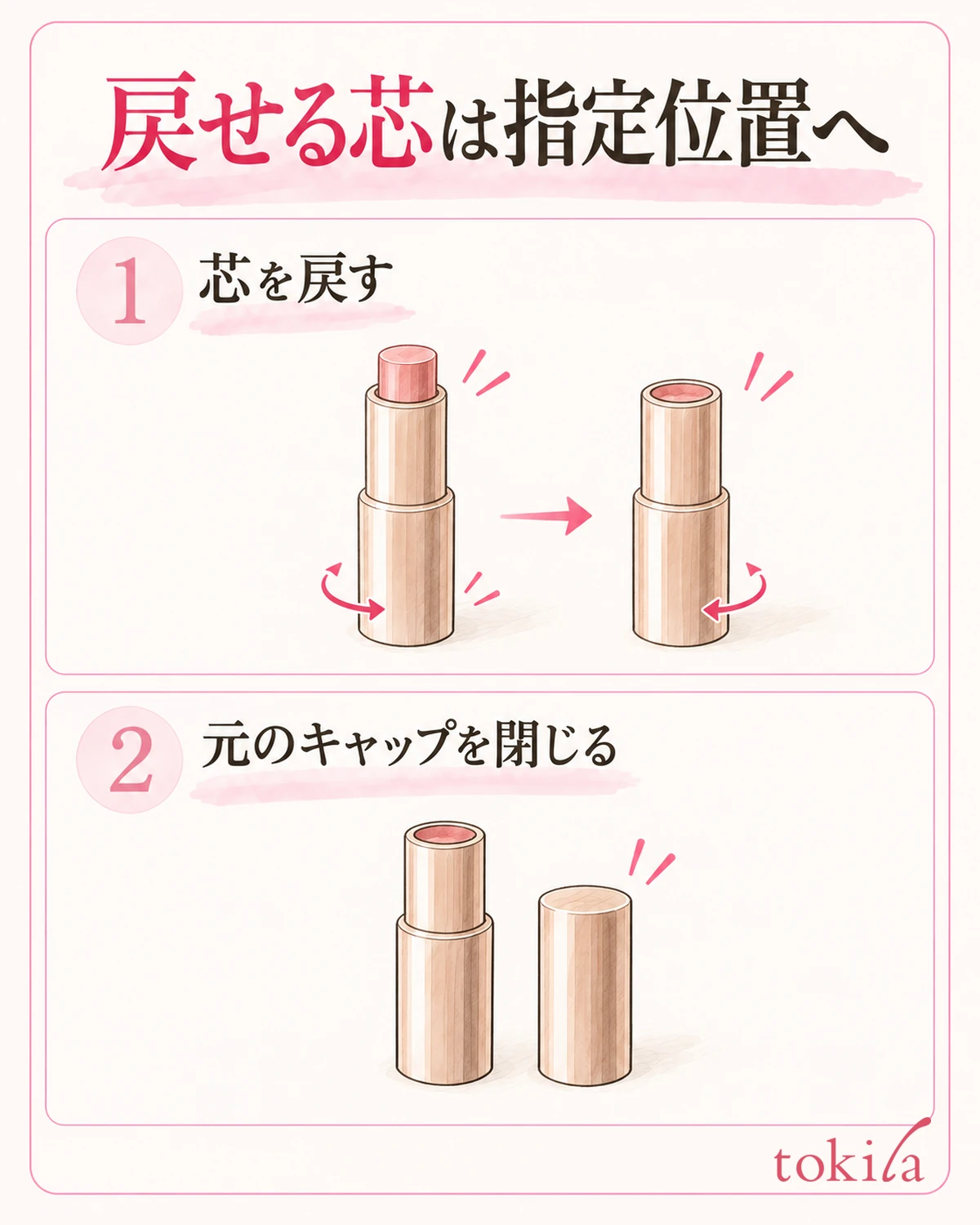
When you finish wiping, look at the stick or tip before closing. For a retractable stick, retract it to the position your product indicates and then put on the cap. Do not press a stick that is still long against the cap and try to push it back with the force of the lid.
If it stops partway while retracting, the stick tilts, or a lot of product gathers at the edge of the container, do not keep turning it; check the condition. Do not grab the stick with your fingers to straighten it, or tap the body to make it move.
Use the original cap that goes with it, without mixing it up. Even if the thickness is similar, with another product's lid it is hard to tell from the outside whether the inside touches the tip. If it feels hard to close, check the parts and their orientation first.
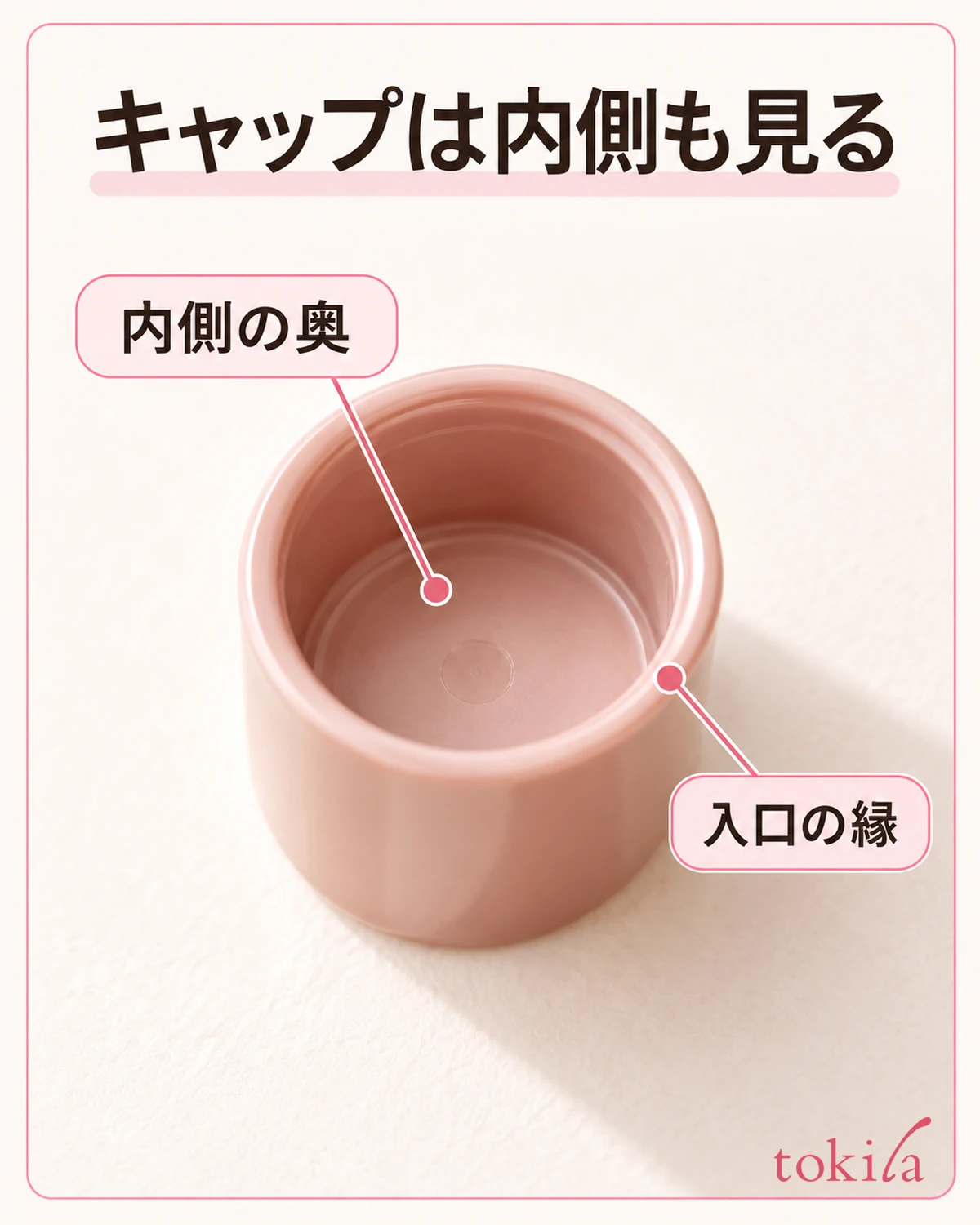
Treat both the depths and the rim inside the cap as places where residue remains. If color or product comes back onto the tip after closing, check the inside as well, rather than wiping only the stick again and again. Do not move on to a workaround of inserting a tool that reaches the depths in your own way.
For a tube, before putting on the lid, also check that no new product has come out at the mouth. Check whether you gripped the body hard while holding it and pushed product out right after wiping. Rather than forcing a stiff lid tighter, recheck that it is the original pair and the condition of the opening.
When you set the lid down, choose a clean place away from the used tissue. If you set the opening face down on the wiped surface, it becomes harder to trace where the residue came from. Keeping the original body and lid pair side by side until just before closing also lets you check for mix-ups.
Finally, check the closed state your product indicates. The sound or the gap will not be the same for every product. If the lid sits up, there is a crack, or it will not close even with normal operation, do not shove it into your pouch and carry it fixed in place by the things around it.
5. If residue keeps recurring, review what you do before and after use
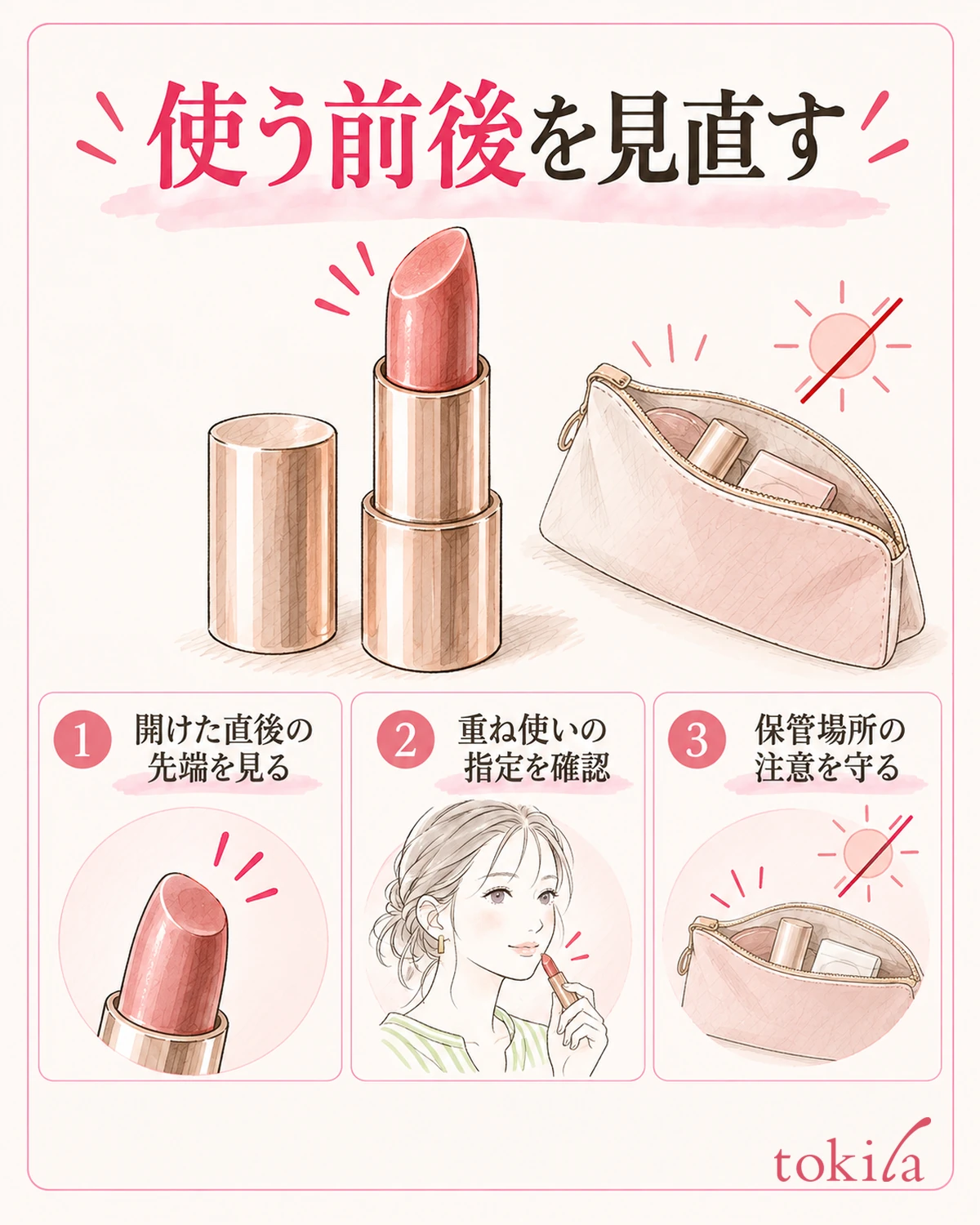
The next time you use it, take a look at the tip and the rim the moment you open it. If you check at which stage after the last cleaning the residue increased, you can sort out whether the lipstick you applied touched it or you pushed product out when closing. Avoid changing every step when you do not know the cause.
If color gets onto the tip when you layer it over lipstick, check whether the product is approved for layering. It is also important not to assume that adding another cosmetic will always improve moisture or color staying power. Distinguish between using it as a base under lipstick and layering it after you have applied lipstick.
If you are also concerned about the amount on your lips and color transfer, also check how to apply lip color to reduce transfer. Reducing residue on the container and reducing the amount you apply to your lips are not the same task. First separate the place where you are having trouble, then adjust.
For storage, follow the temperature and placement precautions for your product. If its shape has collapsed after being left in a hot place, do not assume that cooling it will always restore its usable condition. Even if it seems to have newly hardened, hold off on using it if the change bothers you.
When carrying it, leave enough room so that the closed container is not continually pressed in your pouch. Also check whether another cosmetic's lid has come open, and whether color has transferred to the outside of the lip balm. Do not confuse a dirty pouch with a change in the contents; handle each separately.
Caring for the opening proceeds in this order: separate the places you look at, tidy within what the labeling permits, and close it as specified. The goal is not to process it back to the shape of a new product, but to be able to check its condition before the next use. Keep the judgment that wiping alone is not enough when there has been a drop, foreign matter or deformation.