You like the color of your glasses on their own, yet once you are dressed, only the line around your eyes feels too strong. When that happens, before buying new frames, look at which part of the color bothers you. The front rim and the parts that run toward the sides overlap with your clothes and hair differently, and so do see-through materials.
Here we show how to compare colors with the clothes you already own while wearing the glasses you use every day. Rather than deciding which colors suit you by your skin and hair color alone, think separately about days you want to bring out your eyes and days you want the glasses to blend in. This is not an article about changing prescriptions, comfort or lens functions.
1. Separate the front rim from the side parts and find where the color bothers you

First put on your glasses in their usual position and wear the top you plan to wear today. Include everything from your face to your chest in the mirror, and look separately at the frame that surrounds your eyes from the front and the side parts that extend toward your ears. The side parts are called temples, and some differ in color or material from the front.
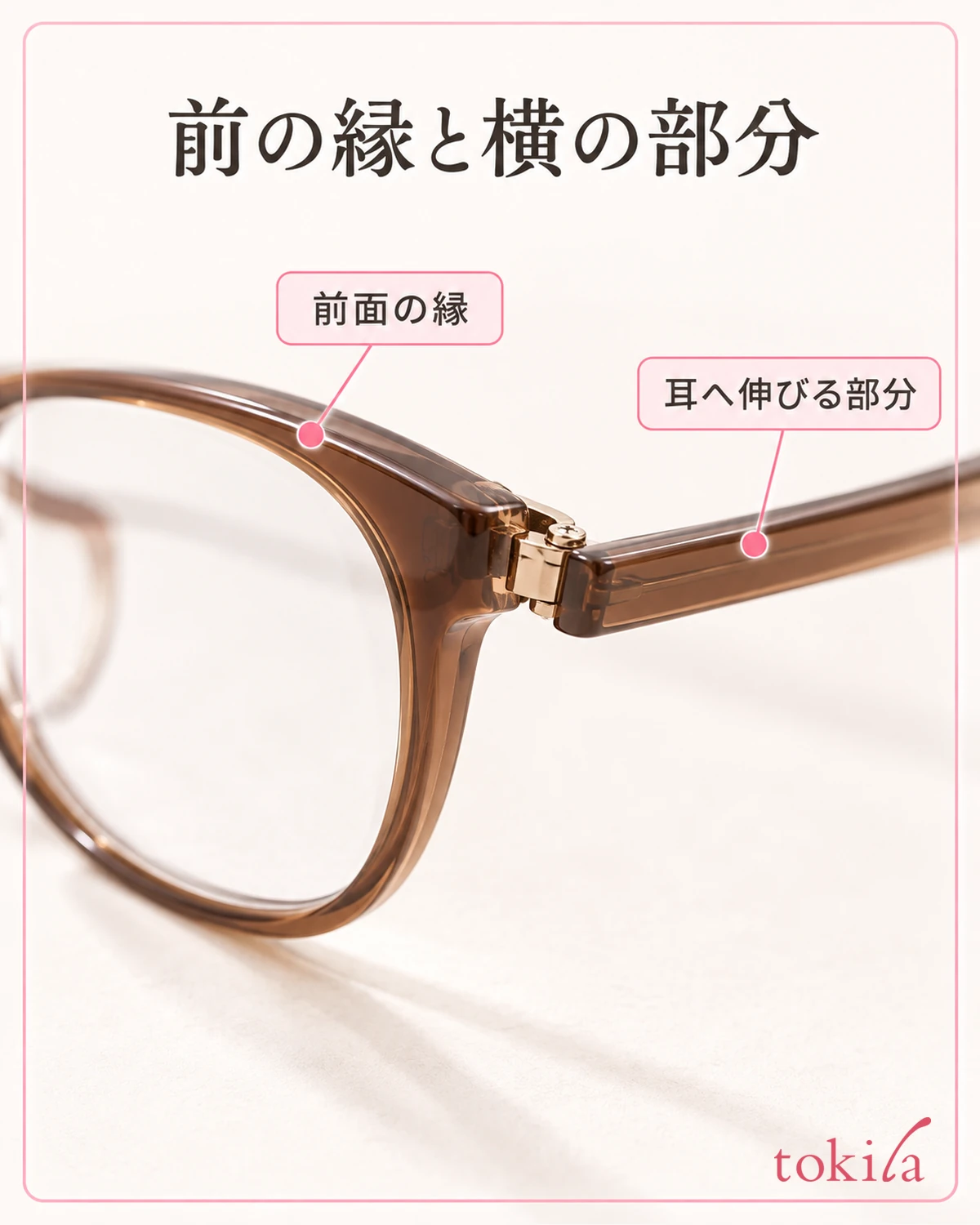
Decide whether what bothers you is the thick line around your eyes or a vivid color you see at the side of your temples. If the black rim at the front bothers you, switching to glasses that are bright only at the sides will not compare the spot you actually want to look at. Instead of "black doesn't suit me", be specific: "on days I wear white, the black line at the front feels strong".
The thickness and shape of the frame also affect how it stands out, so even the same color does not always give the same impression. If you compare thick black rims with thin black metal frames, not only the color but also the width of the line and the way it shines will change. Even if you do not own other glasses, you can use your current pair as the baseline and compare by changing the color of your clothes.
Just holding the glasses next to your face without wearing them does not show how the rim overlaps with your brows and hair. If you need glasses to see, use the pair you can normally wear as the baseline. There is no need to put up with poor vision and keep bringing your face close to the mirror to judge colors.
On days you want to make your eyes stand out, a prominent rim may itself suit your taste. Decide first whether today you want the glasses to blend in or to be a focal point. Do not adjust how the color looks by shifting the position they sit in or bending the temples.
Problems such as glasses that slip just from wearing them, or that hurt your ears or nose, are handled separately from color coordination with clothes. While you compare colors, keep them in the usual comfortable position. Once you know whether the front rim or the side color bothers you more, you can narrow down what to look at next.
2. For see-through frames, check the color as worn
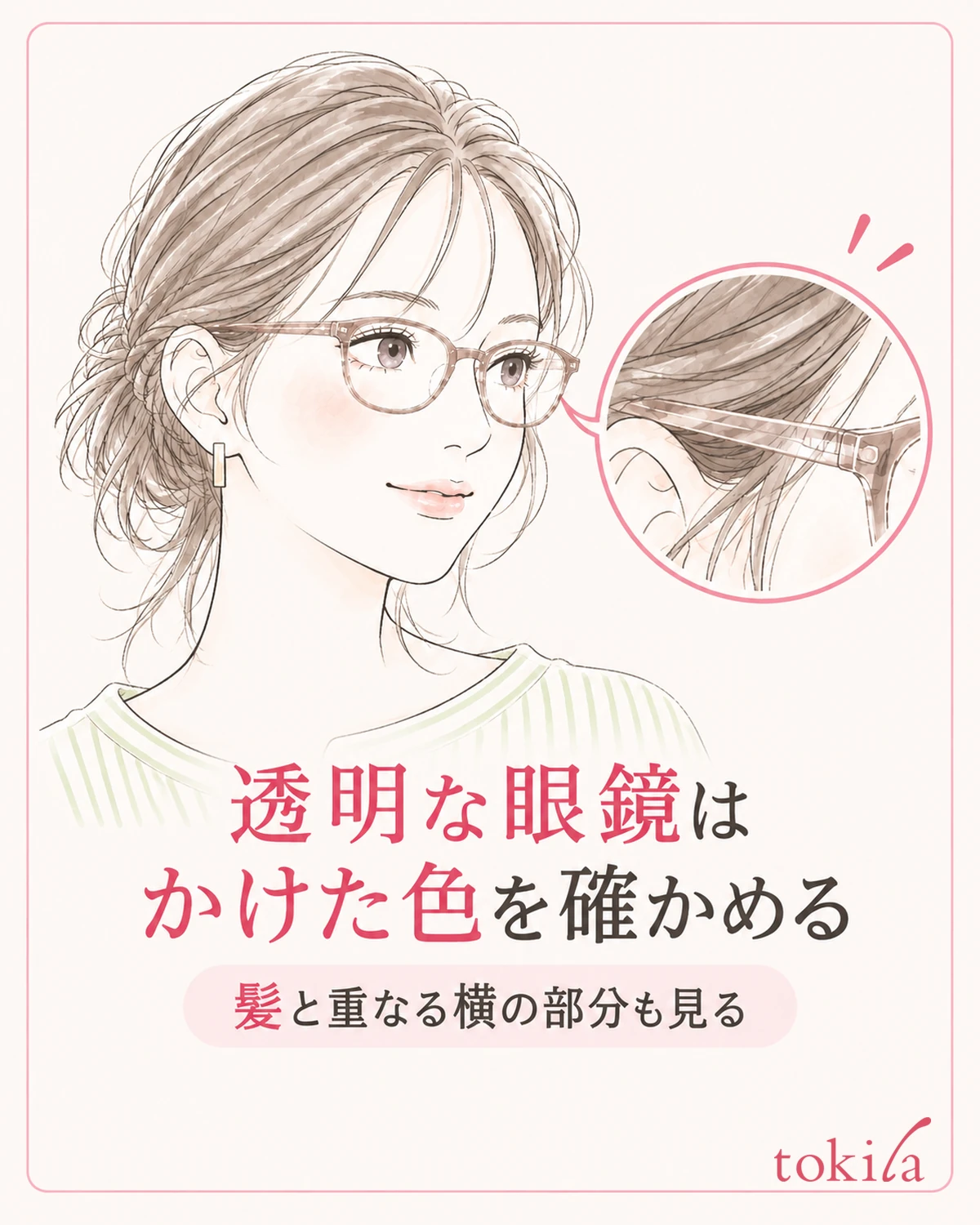
For frames with a transparent look, compare how they look when placed on a desk with how they look when they overlap with your face and hair. Do not choose by color names such as brown or pink alone; check the parts where the color looks dense and the parts you can see through. Not all transparent materials blend in the same way.
First look at the front, then turn your face slightly to the side. Observe how the color at the side looks when hair overlaps in front of your ears and when the hair naturally falls away. If you want to compare by moving your hair, let go once, return to the same orientation and then look in the mirror. Do not compare while hiding the color of the glasses with your hand or fingers.
For example, check how a light brown transparent side part looks when it overlaps with dark hair. Even if it feels different from the color you saw on white paper on a desk, do not conclude right away that the color has changed or that it no longer suits you. The aim is to see, with the glasses on you, whether they feel connected to your clothes.
For frames with a pattern, look not only at the lightest part but also at where the dark parts appear around your eyes. Even if the patterns on the left and right are not exactly the same, check whether there is a line of color that bothers you from the front. You can try picking up one color of the pattern in your clothes, but you do not need to match all the colors.
If lighting reflecting off the lenses makes your eyes hard to see, rather than tilting your glasses, change where you stand slightly so that your face is easier to see. Keep that position the same while you compare two outfits. Do not treat the color of the frame and the reflection on the lenses as the same kind of change.
Even a transparent rim does not necessarily make the outline disappear. If the thickness or the joints of the rim bother you, coordinate the shape too with today's clothes. Do not assume that "being transparent means it won't stand out with any clothes"; judge by the parts that are actually visible.
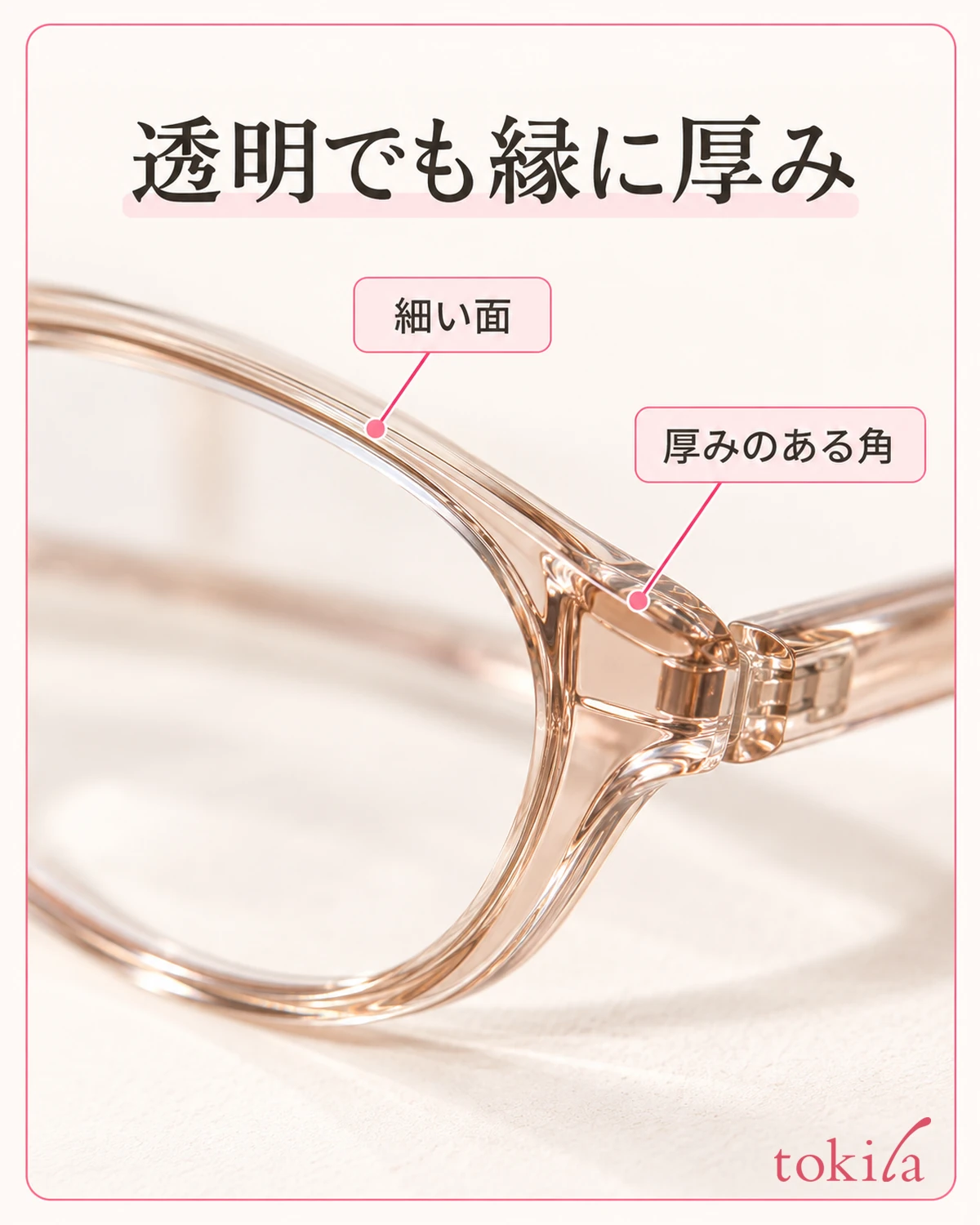
3. Keep the glasses fixed and change the brightness of the top
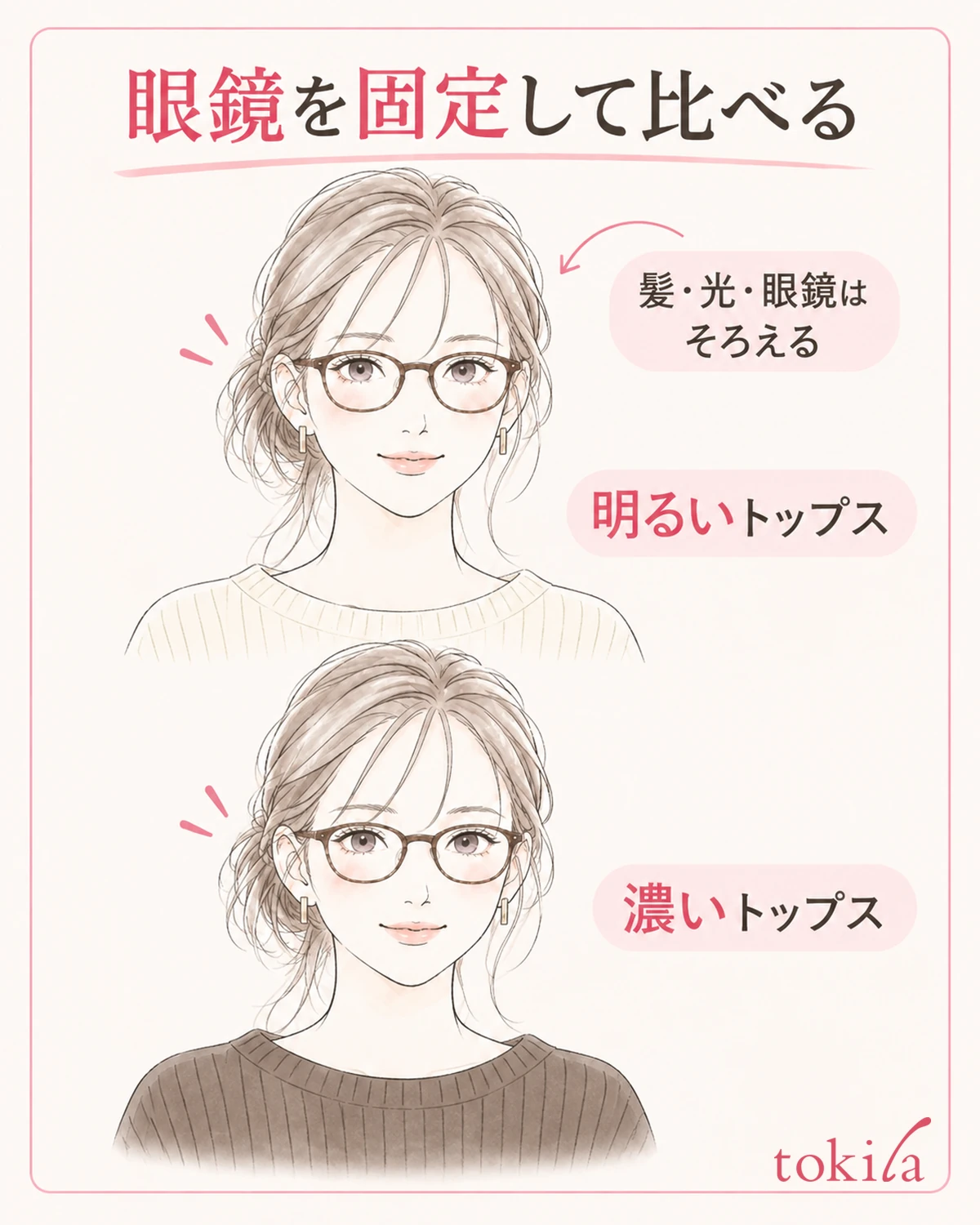
If you want the glasses to blend in, choose two tops while wearing your usual pair. Clothes of similar shape but different brightness are the easiest to compare at first. Keep your hairstyle, mirror, lighting and standing position the same, try on one top at a time, and look from the rim around your eyes down to your neckline.
For example, pair a dark brown frame in turn with an off-white top and a dark brown-toned top. See whether the line of the glasses feels distinct against the light top, and whether a similarly deep color continues at your chest with the dark one. This is not a comparison with a right answer; it is an example for choosing the look closest to your taste today.
Even within the same brown family, differences in redness, yellowness and gloss remain. If you wear clothes close to the color of your glasses and still feel unsettled, do not insist on matching the color names exactly; go back to the first top and compare again. You can keep both the idea of moving toward a similar color and the idea of enjoying a difference in brightness.
If one top has a crew neck and the other a big collar, not only the color but also how much of your neckline is visible changes. In that case, do not conclude that "the lighter color worked"; take it that you liked it including the shape of that garment. If you have clothes of a similar shape next time, you can try again a comparison that changes only the brightness.
When you want to sort out the basics of color combinations, how to coordinate colors may also help. Repeating the color of your glasses in your clothes is one option. You do not need to unify your hair, skin and glasses colors into the same tone.
For the comparison, you do not need to wear glasses you cannot normally use or buy new clothes right away. If you have only one top at hand, simply checking in the same mirror on the next day you wear a different top can give you clues for widening your combinations.
4. For colored frames, try linking them to one color in your clothes

On days you want to enjoy frames in red, blue or another color, start by trying the idea of making the glasses the focal point of your outfit. Keep the clothes in calm colors and see whether you like having color around your eyes. You do not need to keep adding makeup or accessory colors just to make the glasses stand out less.
If the glasses feel detached from the rest, look for a similar color in the pattern of your clothes. For example, burgundy frames with a shirt that has thin burgundy lines. Even if the colors are not exactly the same, check in the mirror whether you sense a shared color between your eyes and your chest.
Start by repeating the color in just one place. If you change the glasses, lipstick, earrings, collar and bag all at once, it becomes hard to tell why you liked the result. At first look at only the glasses and the top, and add one accessory you own if needed.
Also pay attention to the scale of the pattern. With clothes that have a large red area versus clothes with only thin red lines, the amount of color visible apart from your eyes differs. If repeating the color feels too strong, go back to the one with a smaller pattern or a plain one, and compare the idea of leaving the glasses as a single focal point.
If you want to see in more detail how to pick colors from a pattern, you can also refer to matching accessory colors to patterned clothes. Rather than hiding the pattern of your clothes to match your glasses, choose whichever feels comfortable in the outfit as you actually wear it.
With glasses that have color only on the side parts, you may not notice the color shared with your clothes from the front. Do not conclude from straight ahead alone; check also with your head turned slightly to the side. There is no need to change your hairstyle forcibly to show colors hidden by your hair.
5. Decide your color scheme for going out from the front and the side

Finally, look at yourself wearing today's jacket and the glasses you normally use. Turn slightly to the side as well as facing the front, and check the color of the front rim and temples and how they overlap with your hair. If the collar of your jacket hides the color of the top, choose again based on the colors that will be visible when you are out.
After checking the rim in a close mirror, step back to a distance where you can see from your face to your chest comfortably. A line that bothered you while you kept looking only at the glasses may feel like an accent you like within the whole outfit. Conversely, you may notice that a vivid color at the side stands out more than you expected.
If you keep a photo on your smartphone, use it as an aid to remember the combination of clothes and glasses. Because retouching and screen brightness change how colors look, do not judge subtle color differences from an image taken on another day. Make your final preference decision with the actual outfit in a mirror.
When in doubt, go back to the purpose you chose at the start. If you want it to blend in, go back to the one of the tops you tried that felt calm. If you want the glasses to be the star, check that you have not added too many other eye-catching colors. In this way, judge by tying your purpose to the clothes you changed.
For your notes for next time, rather than "red glasses don't suit me", record combinations and points to check, such as "with this jacket, pair a plain top" or "check the side color also with my hair down". On days your clothes or hairstyle change, it is fine to try the same glasses again.
If you ask someone for an opinion, tell them the range of comparison, not just "does it suit me", but "in the two looks with different tops, which look at my eyes do you prefer?". Even if opinions differ, it does not mean the color of your glasses is wrong. Choose a combination you can see well and enjoy with clothes you are comfortable in.