When you dry your face with a towel after washing, you find yourself moving it sideways. You try to remove water drops and stroke the same spot again and again. When that happens, don't just use less force; review where you keep the towel and how you move it as well. The basic idea is to press a soft towel on gently, let it absorb the water, and then lift it away.
This article covers how to remove water from your face after you have rinsed off your cleanser thoroughly. Five diagrams explain how to press the towel on the cheeks, beside the nostrils and on the chin, and how to adjust when water drops remain. It is not a method for improving pores or sagging; it is a procedure for refining a small everyday movement.
1. Before washing, prepare a soft towel and a dry place to keep it
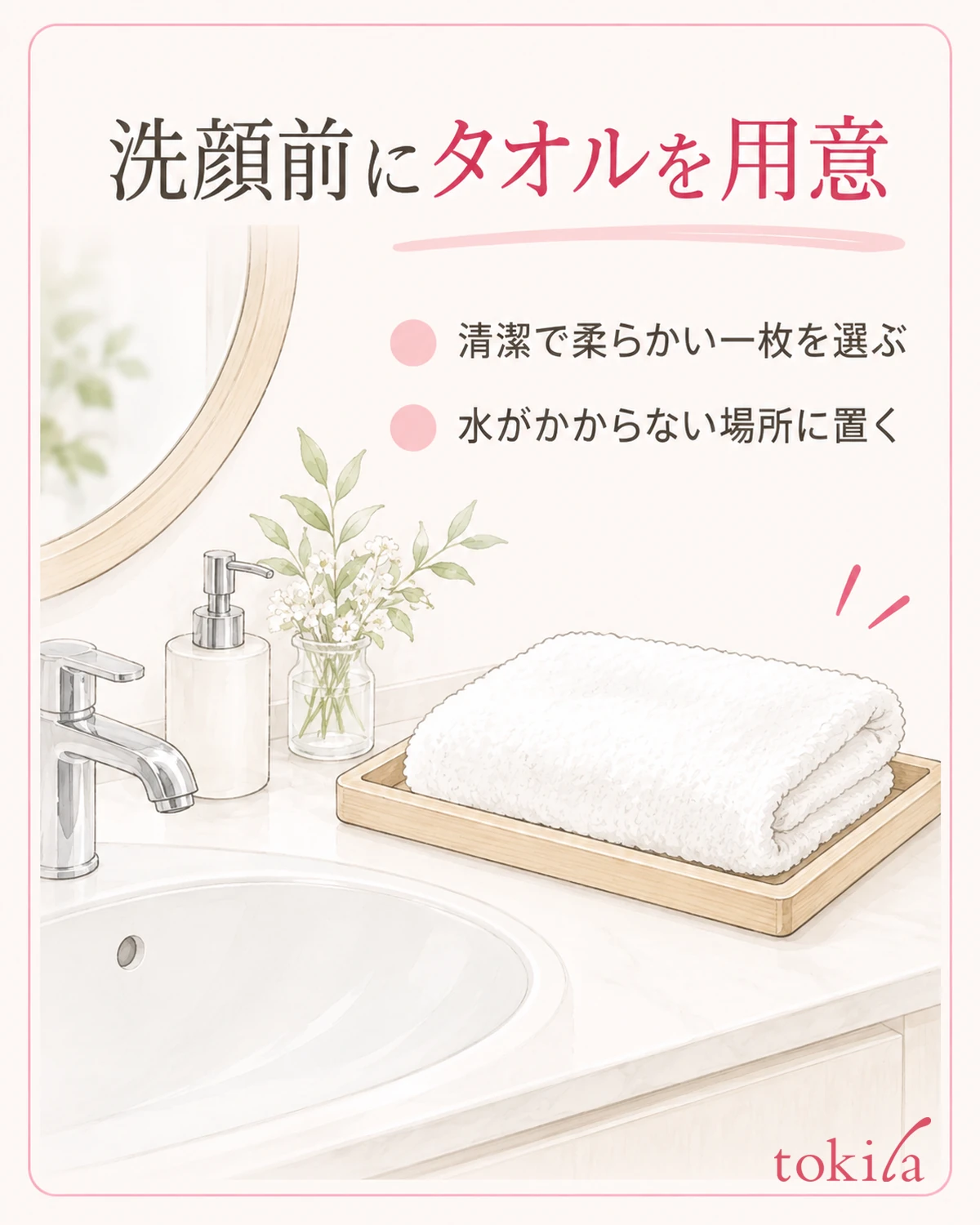
Before you start washing your face, prepare one clean, soft towel. Setting aside the one you use on your face beforehand keeps you from hesitating, and from pressing a side you used to dry your hands or one that has fallen on the floor onto your face. Choose a dry towel that can still absorb water rather than one that is already wet all over.
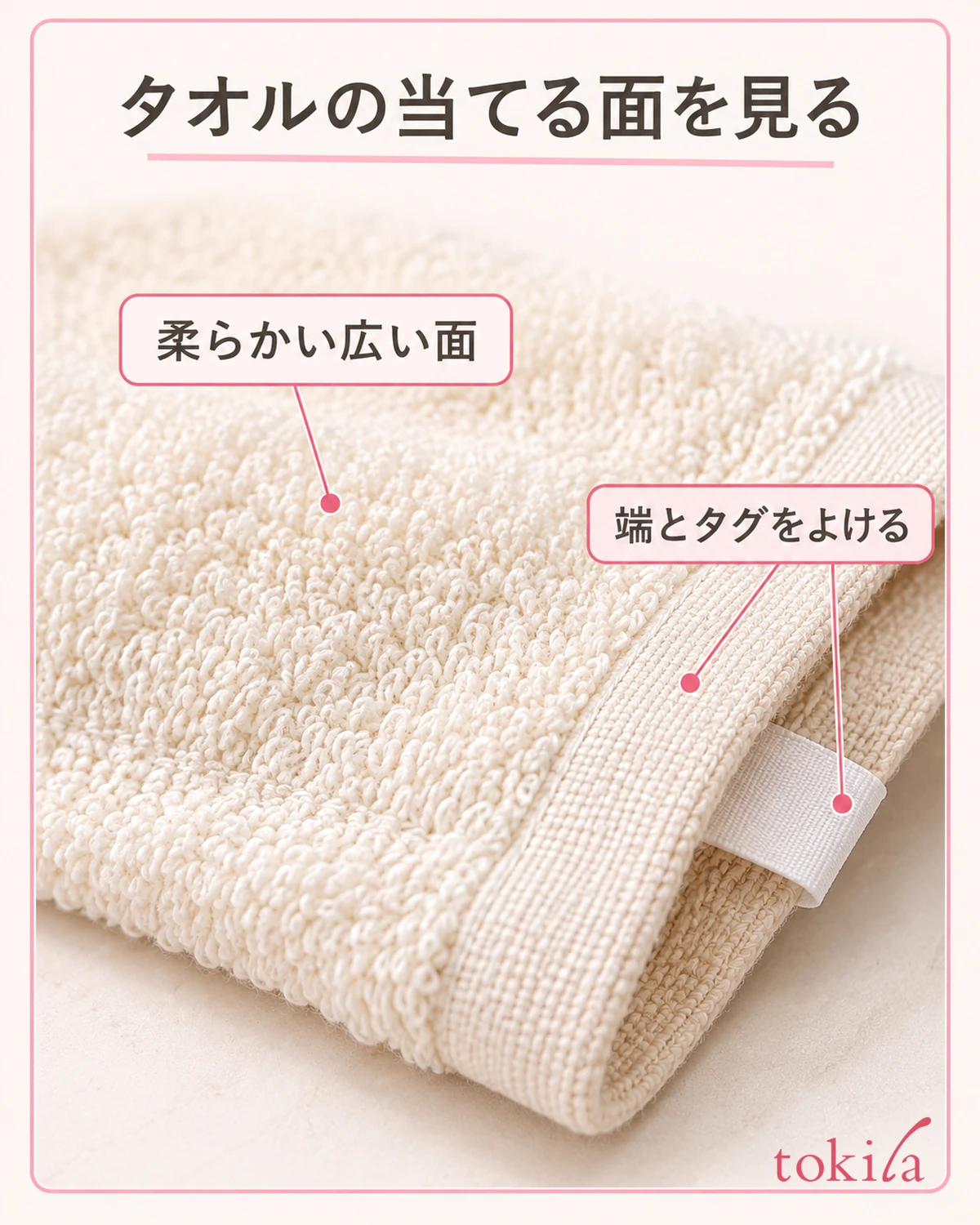
Spread out the towel you have and check for parts that feel stiff to your fingers or seams that catch. What touches your skin is the wide, soft surface. If a stiff edge, embroidery or a tag is likely to touch your face, fold that part inward or switch to a different side. Don't decide by the name of the material alone; check the condition of the part that actually touches.
Keep the towel in a dry spot within reach, such as a shelf or tray, away from where water splashes on the sink. That way you don't have to look for the towel in the middle of washing or pick it up from the rim of a wet basin. If a large towel hangs down to the floor, fold it and put it where it fits.
Right after washing, you may have your eyes closed, so rather than just putting it somewhere nearby, decide on a fixed spot on the side that is easiest for you to reach. If you wipe your wet face with your hands again and again to get the towel, fixing where you keep it first will reduce the movements.
If you use disposable facial sheets, check the precautions for use and whether they are intended for the face. It can't be decided across the board that they are always better than cloth, or that thicker is always gentler. A tool for removing water and a sheet soaked with a wipe-off cosmetic have different purposes.
What you prepare is not any special tool, but one towel that you can press gently on your face and a place to keep it where you can take it without getting it wet. If the space around the sink is small, you can also put a small dry tray out only before washing. Before you start, check that the surface that will touch your skin is dry.
2. On the cheeks, press the towel on gently and lift it without sliding
First check that no cleanser is left. If you can see foam at your hairline or chin, rinse again rather than wiping it off with the towel. Trying to remove cleanser at the water-removing step makes you want to slide the towel. Pick up the towel after you have finished rinsing.
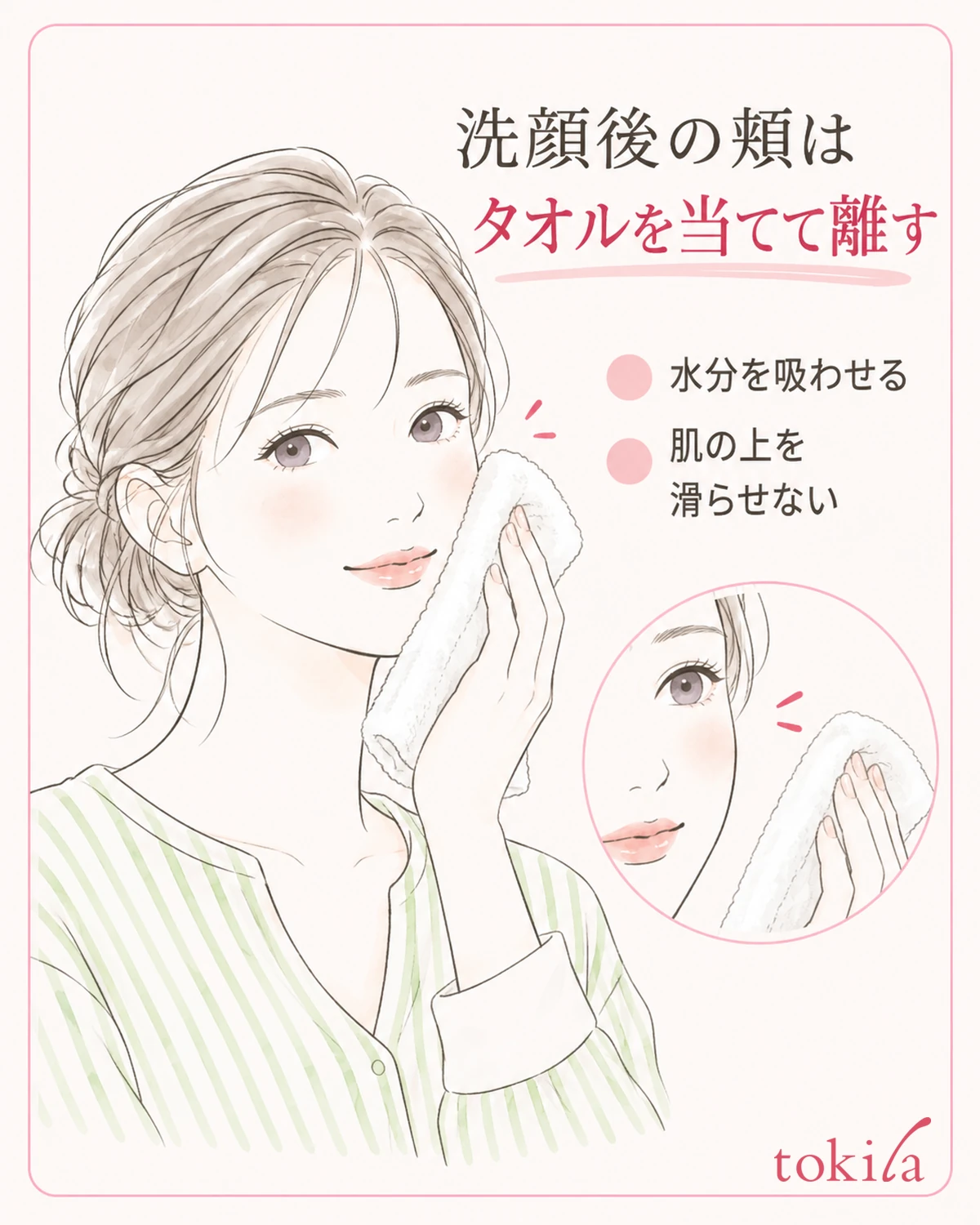
Fold the towel to a size that is easy to hold, and gently press the soft side on your cheek. Support it broadly with your palm, and don't press hard on one spot with only your fingertips. You don't need to cover your whole face at once; one cheek at a time, in a size that feels comfortable, is fine. Hold it in a way that doesn't block your nose and mouth.
Once it touches your skin, don't slide it left and right or up and down; let it absorb the water and then lift it away. "Pressing" does not mean pushing in so hard that your face is dented. It is a movement of letting the cloth lightly touch without greatly changing the shape of your cheek. Review any force that would leave finger marks, or any motion of pressing your face into the cloth.
When moving to the next spot, lift it off your skin once and press it on again. Don't wipe in one line from cheek to chin; separate it into pressing, lifting and changing spots. Even if you mean not to rub, if you are shaking your face sideways while holding the cloth, try keeping your face still as well.
If you check your movement in a mirror, it is enough to look once at whether the towel is traveling across your cheek. Rather than counting times or seconds, pay attention to reducing the moments when the cloth moves sideways while still touching your skin. There is no need to stroke skin that has been wiped hard with the cloth again to check it.
Once the water drops on both cheeks are gone, press and lift the same way on your forehead and chin. You don't need to pull the cloth in order to keep to a set direction, such as from the center of the face outward. Choose an order that is easy for you to press, and avoid going back again and again to places you have finished.
3. Beside the nostrils and on the chin, press with a smaller area of cloth
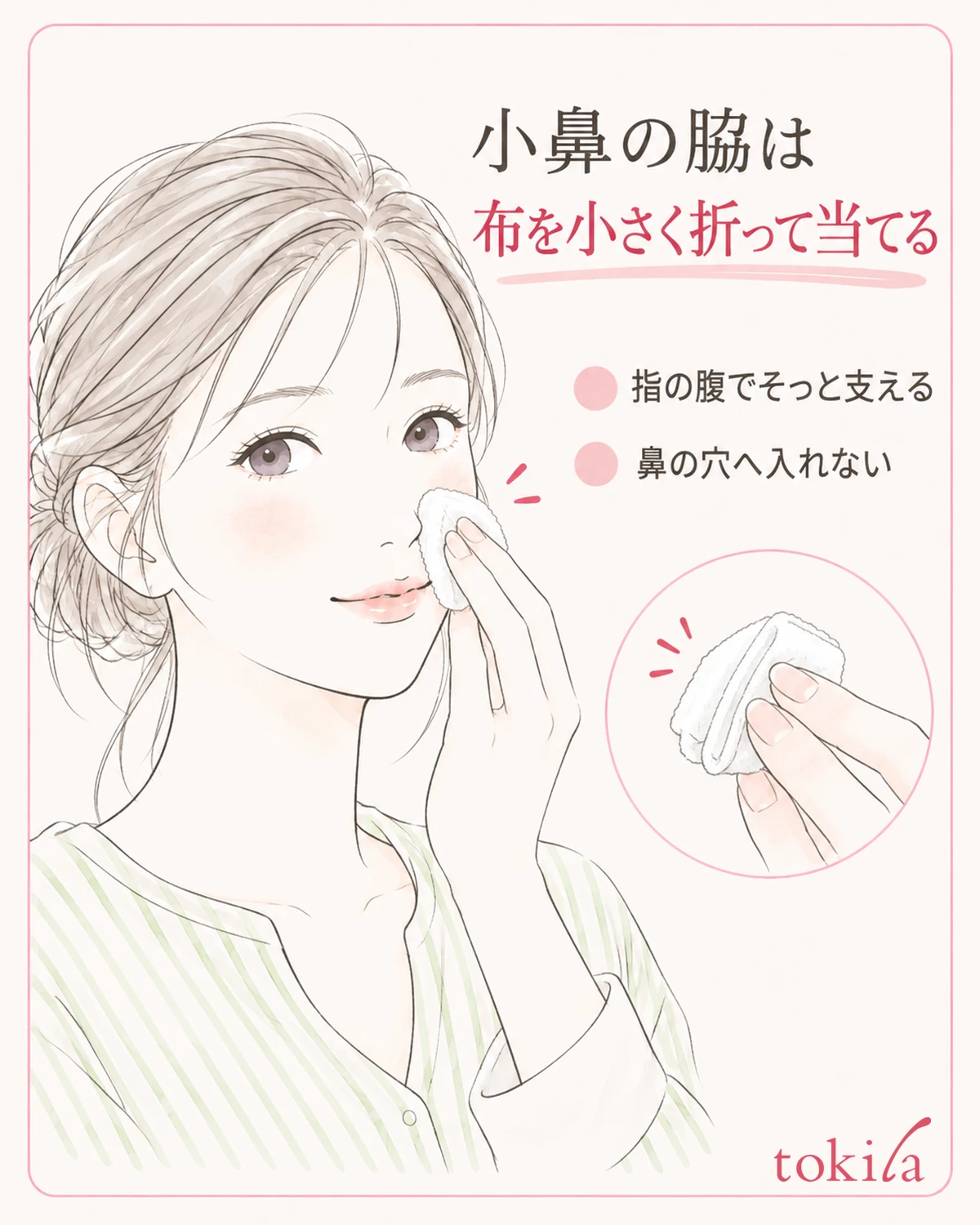
Even if you can dry the wide cheeks, water drops may remain beside the nostrils and under the chin. Rather than pressing a large surface against your face to remove them all at once, fold a soft part of the towel small and press it on the places that need it. Think first about changing the cloth into a shape that reaches, and don't add force.
Beside the nostrils, support the folded cloth with the pads of your fingers and let it lightly touch the hollow on the outer side. Don't make the cloth pointed with your fingertips and push it in, and don't put it into the nostrils. Rather than going back and forth on both sides with the same cloth, press and lift on one side, then press again on the other.
Under the chin, lift your face a little and check where to press. Don't stroke all the way down to the neck in one go; lay a wide, soft surface only on the parts with water drops. At the hairline, too, you don't need to pull your hair while wiping. Move the hair aside as far as you can and press lightly on the skin to remove the water.
Around the eyes, lay the cloth gently over closed eyelids so that you don't push on your eyes. Don't push a corner of the cloth into the inner corner of the eye, and don't pinch and wipe the eyelashes. Drying the insides of the eyes and nose is not part of the purpose of this step.
If a tag or a thick seam comes out on the surface when pressing in a narrow spot, fold the cloth again. Even with the same towel, the part that touches your skin changes depending on how it is folded. Choosing an easier surface again makes the movement easier to control than continuing to push on a place that doesn't reach.
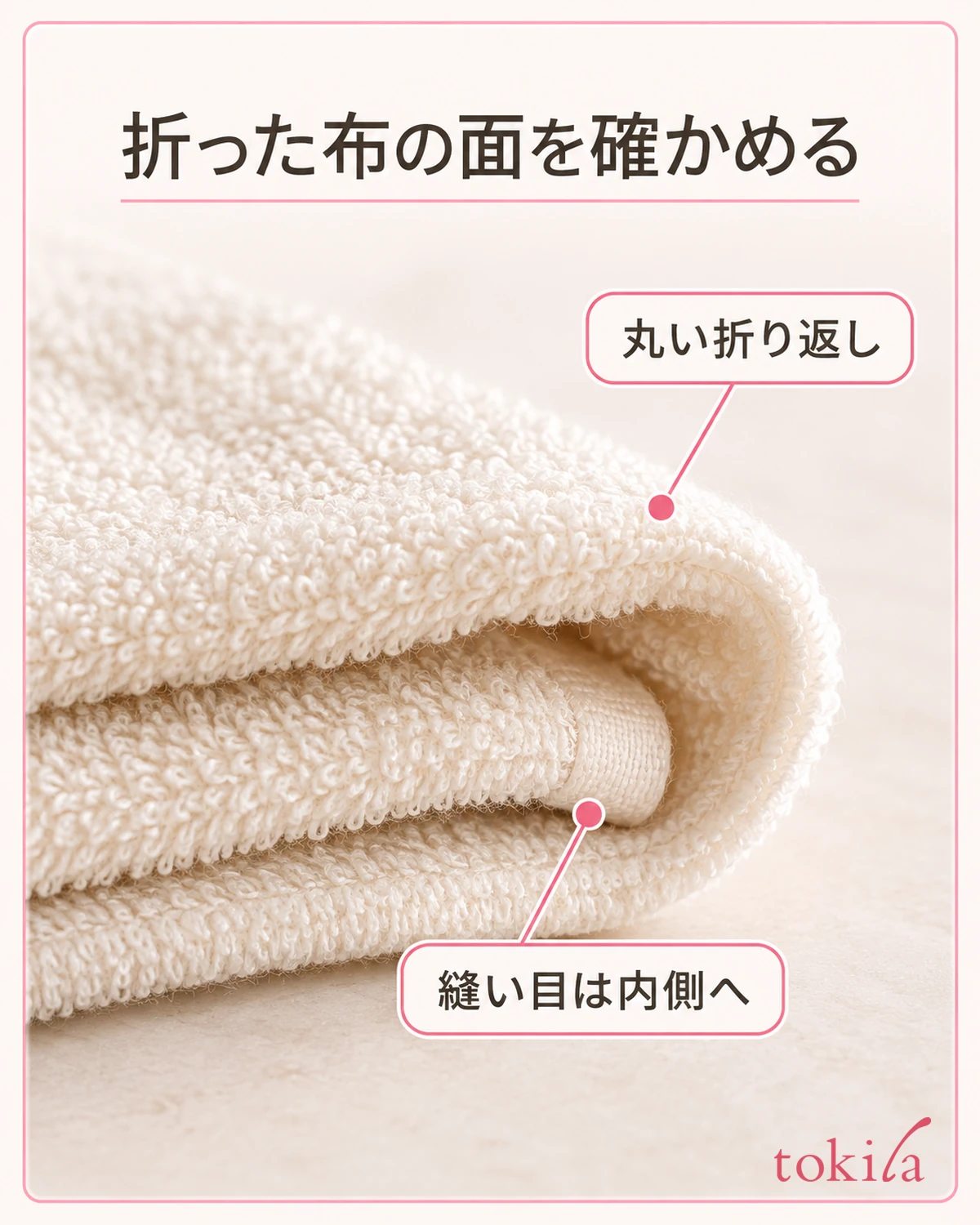
Check in a mirror where the small water drops are, and avoid searching for them by touch. If you make the order an easy-to-remember flow, such as cheeks, forehead, chin and then the fine areas, you can reduce how often you return to the same place. This does not mean the order itself has any special effect on the skin.
4. If water remains, switch to a dry surface instead of adding force
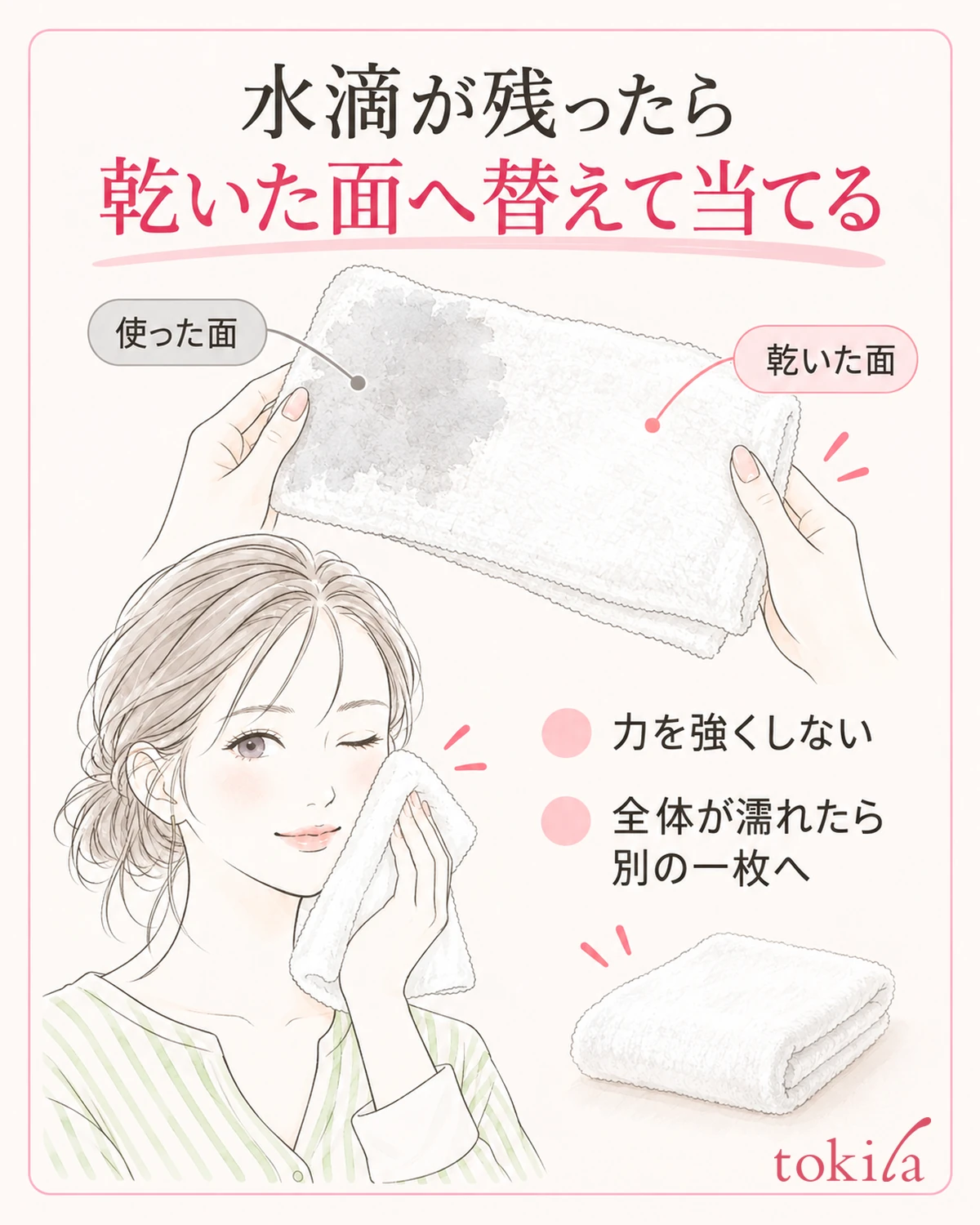
If water drops remain even after pressing lightly, first check which surface of the towel you are using. Are you pressing the same surface that has already absorbed water, again and again? Spread out the towel, switch to a soft surface that is still dry, and try pressing gently on that place once more and lifting away.
If the whole towel is wet, prepare another dry towel rather than continuing to press hard on your face. If a small towel gets wet quickly, next time you can also choose a size that lets you change the surface you press with. Even when you change the size, choose one that doesn't hang to the floor at the sink or become awkward to handle.
If water drops are still visible in the same place after changing the cloth, check whether the surface is actually reaching there. If it only touches the top of the cheek and doesn't cover the area beside the nostrils, fold it small and change where it makes contact. Avoid choosing adjustments such as pressing harder, holding longer or going back and forth many times.
The guide for finishing is that water dripping from your face and large drops are gone. Don't make a feeling such as the skin squeaking, or the sound of rubbing against the cloth, your goal. Instead of stroking with your palm again and again to check whether it is completely dry, look at the remaining drops in a mirror and adjust only where needed.
If you feel redness, stinging or pain, stop the wiping. Don't assume you may continue as long as you use less force; if irritation continues, consult a dermatologist. Changing the towel alone cannot identify the cause of symptoms or treat them.
Leave the points to review next time in terms of actual tools and movements, such as "I was using the same surface that had absorbed water," "the tag was touching" or "I moved the cloth sideways without lifting it." Picking one troublesome situation, rather than changing everything at once, also makes it easier to see when you tend to rub.
5. After removing the water, move on to moisturizing and keep the used towel separate
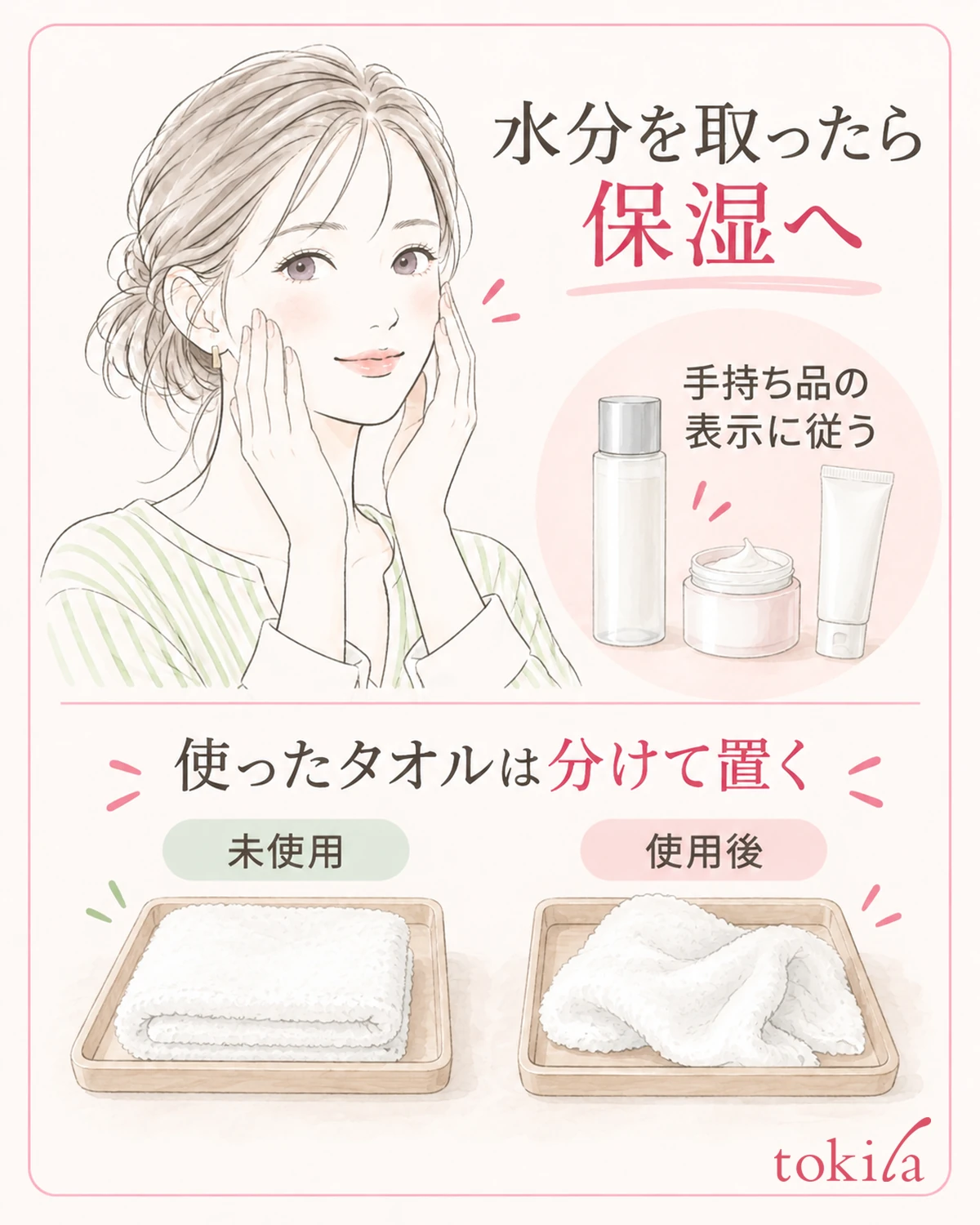
Once you have removed the water from your face, move on to moisturizing care following the labeling of the cosmetics you use. Don't leave your face as it is for a long time just to wipe it again and again with the towel for a final finish. Setting out your care products within reach before washing makes the transition easier.
The order in which moisturizers are used, the amount, and whether the skin may be damp differ by product. It is important not to treat this article on how to use a towel as a common way to use all cosmetics. Use them according to your usual labeling, while watching how your skin looks.
Put the used towel in a different place from the dry towel you will use on your face next. If it is something to be washed, handle it according to the towel's care label. When you spread it out after use, too, choose a way of keeping it that does not stack it on an unused one or put it back inside a wet basin.
If you share the sink with family members, use an easy-to-tell-apart method, such as keeping the face towel in a separate place or moving it to the laundry basket after use. You can also separate them by color or by shelf level. Aim for an arrangement where you don't have to think about which one was used by whom each time you look for a dry surface.
You don't need to add any special massage to remember how to use the towel. Prepare a soft surface, don't slide it while it is on your skin, and switch from a surface that has absorbed water to a dry one. Try adding these three to your usual routine after washing your face.
When you want to organize your skin care overall, the list of skincare know-how may also help. If you fix just one thing from today, start by deciding where to keep the towel before washing. That makes it easier to refine the whole flow from preparation to the end of use, rather than paying attention only to the moment of wiping.