More moisturizing cream came out onto your hand than you expected. It is tempting to spread all of it on your face because it seems wasteful, but first stop taking out more, and check the amount to use for the product you have. Before using up what came out, the first thing is to separate what you will use now from what is left over.
This article explains how to handle moisturizing cream for the face right after you have taken out too much. Five illustrations organize how to read the labeling, how to set aside a portion by hand, what to check after applying, and how to put away the rest. Rinse-off creams, sunscreens and medicated ointments have different purposes, so do not apply the same amount adjustments to them.
1. Before applying to your face, read the product's purpose and the amount to use at one time
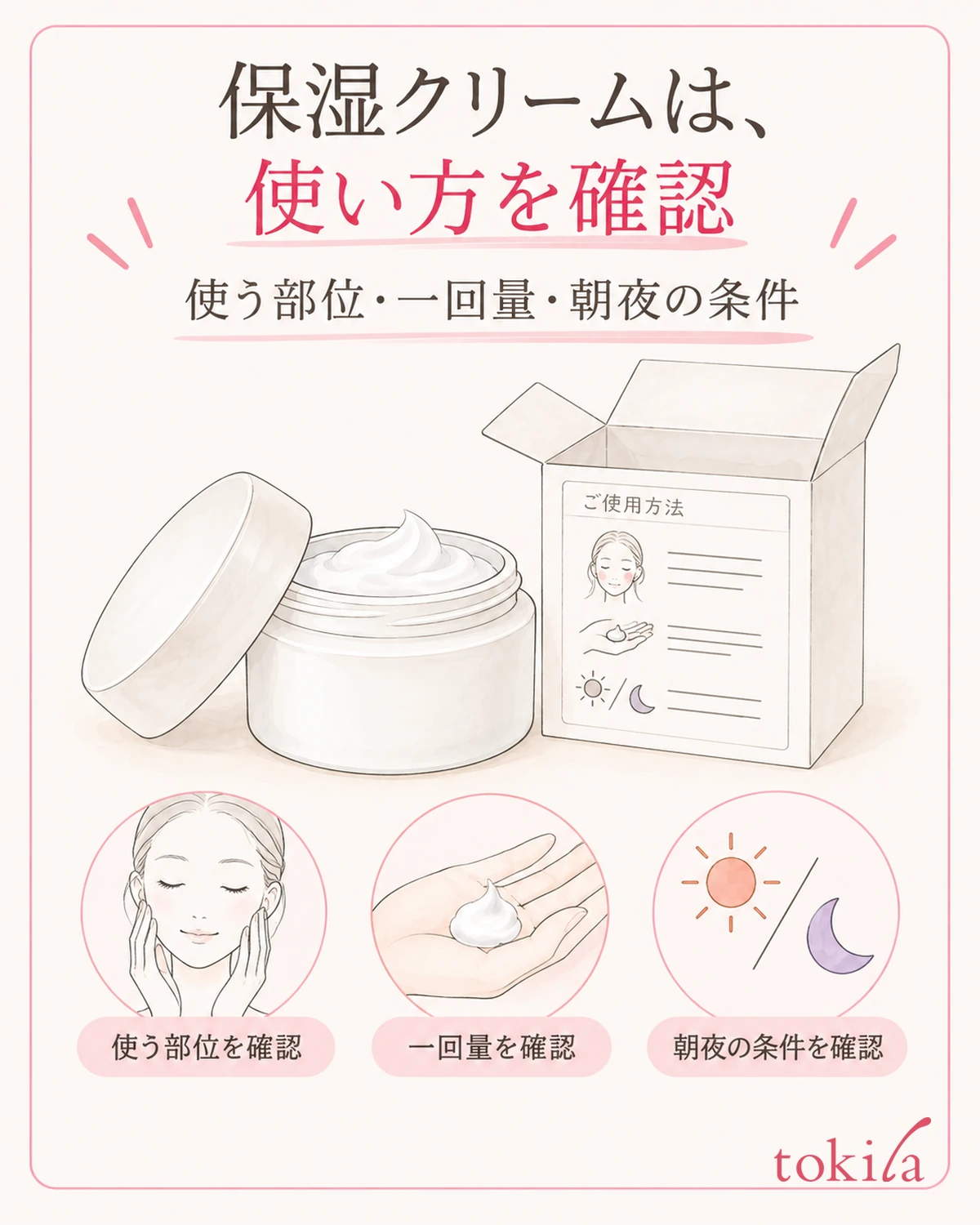
If a lot has come out onto your hand, do not carry it straight to your face; first look at the "How to use" on the container or outer box. Check whether it is a moisturizing cream for the face, when to use it, and how the amount per use is written. Even containers that look alike have different directions if the product is for rinsing off or for one area only.
The amount may be shown as just "an appropriate amount," or indicated by the size of a bead or by an included tool. Do not carry over an amount you learned from another cream; use the guide for the product in your hand as the standard. Do not assume that "one bead" represents the same volume for every product.
If the directions differ between morning and night, also check whether you are about to put on makeup or have finished your evening care. We do not set a general rule such as using half the amount of every cream in the morning. Set aside an amount following those conditions only when a difference in the amount to use is stated.
Before deciding it is "a lot" just from the white mound on your hand, also think back on whether you have already applied some to your face. If you took out more after already putting some on your cheeks, counting only what is in your hand as one portion makes it hard to notice that you have layered too much. Think separately about how many times you have taken it out and which areas you have not yet covered.
What is covered here is organizing the amount you take out and your movements. We do not decide that you may layer beyond the directions because your skin looks dry, or that you should skip moisturizing altogether because the oiliness bothers you. The starting point is to read whether the product's instructions mention adjusting the amount, and not to invent new rules about amounts yourself when you do not know.
If the usage section is small and hard to read, put the outer box on a flat surface and check it in a bright place. If switching your grip on the container while holding cream on your hand feels slippery, it is fine to put your hand in order first and then check again. Do not put using it up in a hurry ahead of everything else.
2. From what came out onto your hand, set aside only what you will use now
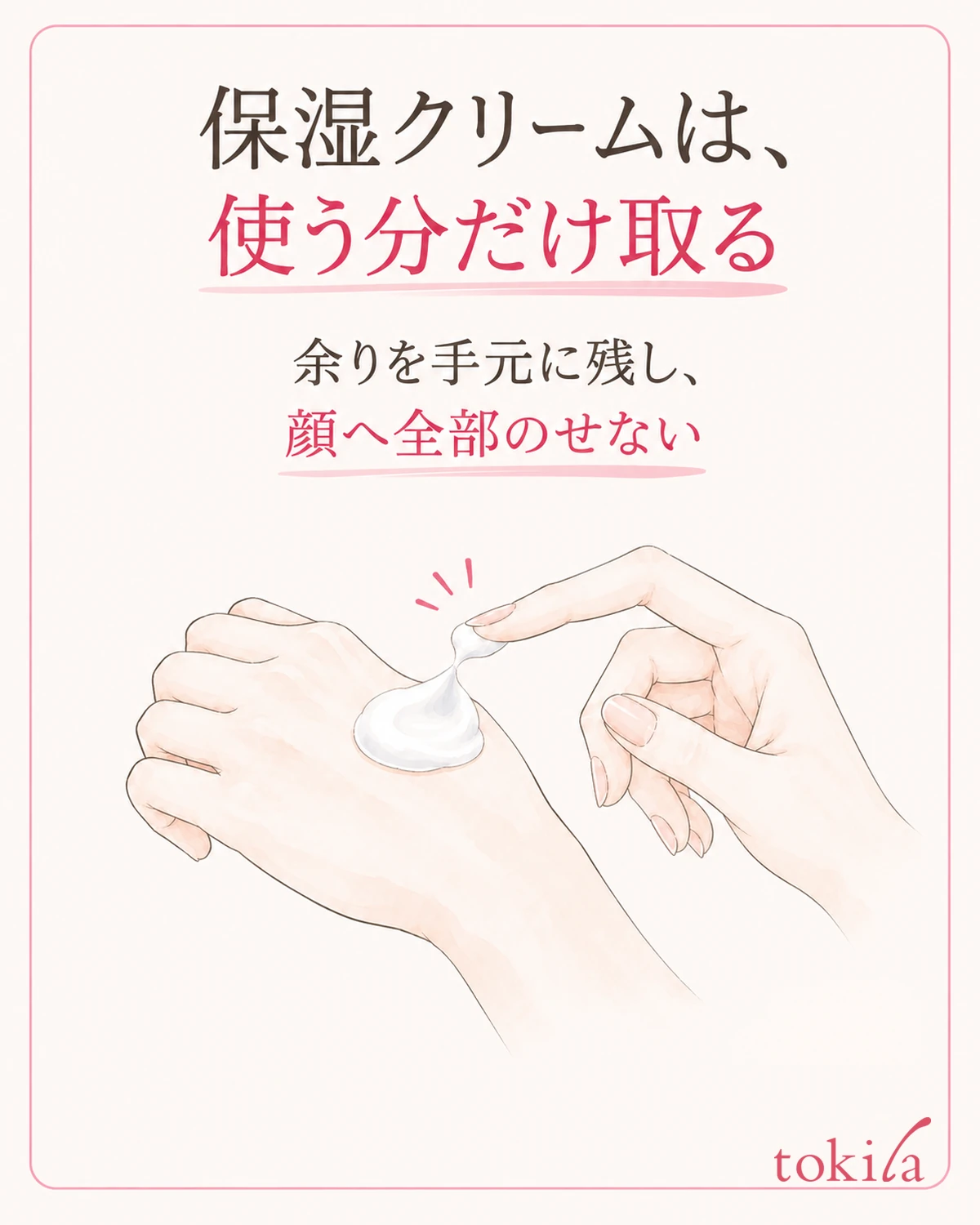
Take the portion for your face little by little with the pads of clean fingers. Leaving the excess where you took it out, such as on your palm or the back of your hand, carry to your face the amount that follows the labeled guide. Do not put a large lump on your cheek first and then try to use it all up by pressing it out across your whole face.
This setting aside is not meant to cut the labeled amount per use down drastically. It is an action of separating, at hand, what you need from what clearly came out in excess. If carrying it all at once makes the amount hard to judge, check the areas you have already covered and add the remaining amount you need. Also look at what remains on your finger, so you do not unconsciously scoop up one more helping.
For products that specify using a clean spatula, follow how to use that tool. Avoid repeatedly scooping from inside the container with a tool that has touched your hands or skin. If it becomes unclear which tool is for setting aside the excess at hand and which is for taking fresh cream from the container, pause the task for a moment.
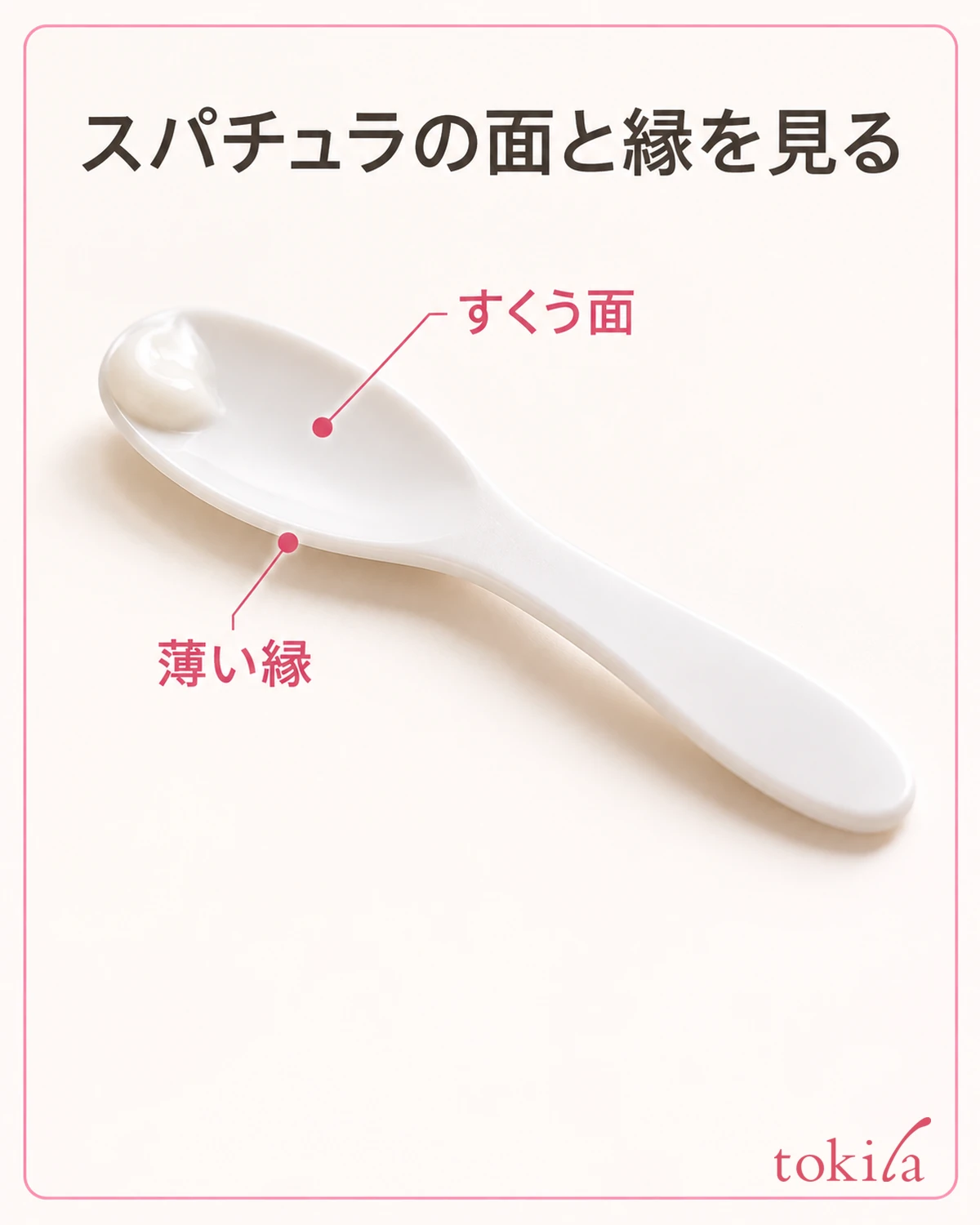
There is no need to dilute the cream by mixing it with water or toner to reduce the amount. Having taken out a lot is different from changing the strength of the product itself. Do not choose to move diluted cream into a small container to use the next day either; set aside only what you will use on the spot.
If a lot got on your finger, before applying to your face wipe off the excess with a clean tissue and recheck the amount remaining on your hand. Do not touch the used tissue to your face or wipe the mouth of the container with the same side. It also helps to prepare so the side you used and the side you will use are not mixed, such as putting your finger back on a tissue laid on the desk.
You do not have to treat taking cream out onto the back of your hand as the directions for every product. Keep the usual specified way of taking it, and choose the amount to use now from the place where it has already come out. The more there is, the more you tend to spread the excess across the wide surface of your hand, so separating the action of taking it onto your finger before spreading the excess makes it easier to check.
3. Spread gently and look at the areas applied and how the surface looks
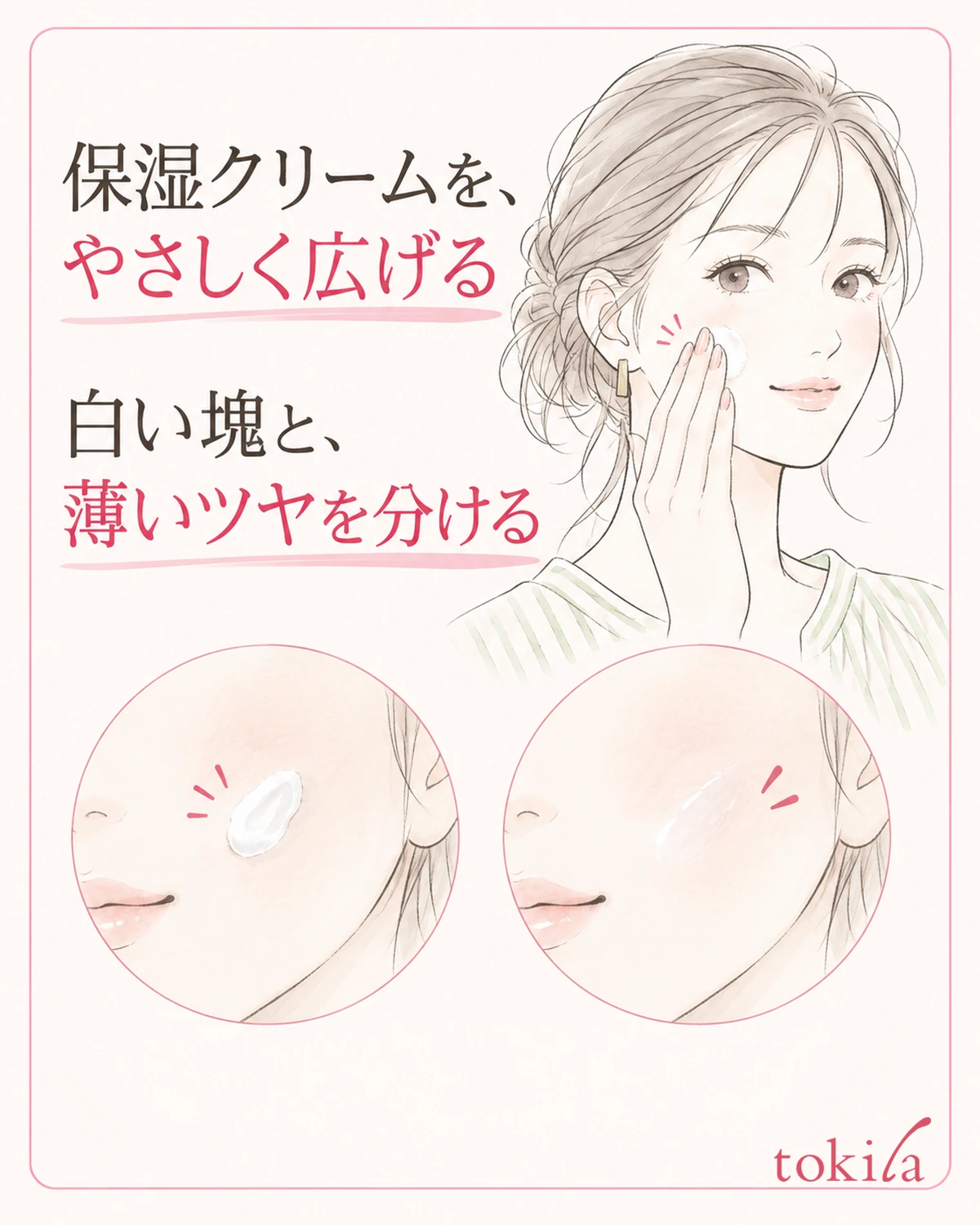
Spread the cream you set aside gently over your face following the product's directions for use. If the directions specify using the pads of your fingers or your palms, follow the shape of your face and do not press so hard that the skin moves a lot. Avoid going back and forth over the same cheek many times to get rid of a white lump in one spot.
As you apply, look at the areas you have not yet covered and the areas you have already spread on. This is to prevent layering such as repeatedly adding more to just the nose when the cheeks are done. Check the areas where it can be used, such as both cheeks, forehead and chin, as you go, and do not push the excess into the inside of your eyes or mouth.
In the mirror, tell apart whether a white lump remains on the surface or it has become a thin sheen. A sheen alone does not mean you have used too much. The original finish and the feel left on skin differ by product, so do not keep touching with your hands or paper until it is completely matte.
Even if a white lump remains, stop layering on new cream. Check the specified way of blending it in, and keep to gently smoothing out what you have already applied. It is important not to add force with the idea that rubbing for a long time will make it sink in or pressing hard will remove the excess.
If you have anything unusual, such as redness, itching or irritation, do not assume it was just too much; follow the product's precautions, such as stopping use. Checking its appearance here is for seeing how the cosmetic remains, not a way to diagnose the condition of your skin or its cause.
To check that you have finished applying, you do not need to run your fingers over your cheeks again and again. Look at the remaining lump in the mirror, and once you have finished the blending method described for the product, take your hands away for now. Do not judge whether you have moisturized enough from the feel right after applying, and do not keep adding more on the spot without limit.
4. Do not return the leftover to the container, and do not rush into your next makeup
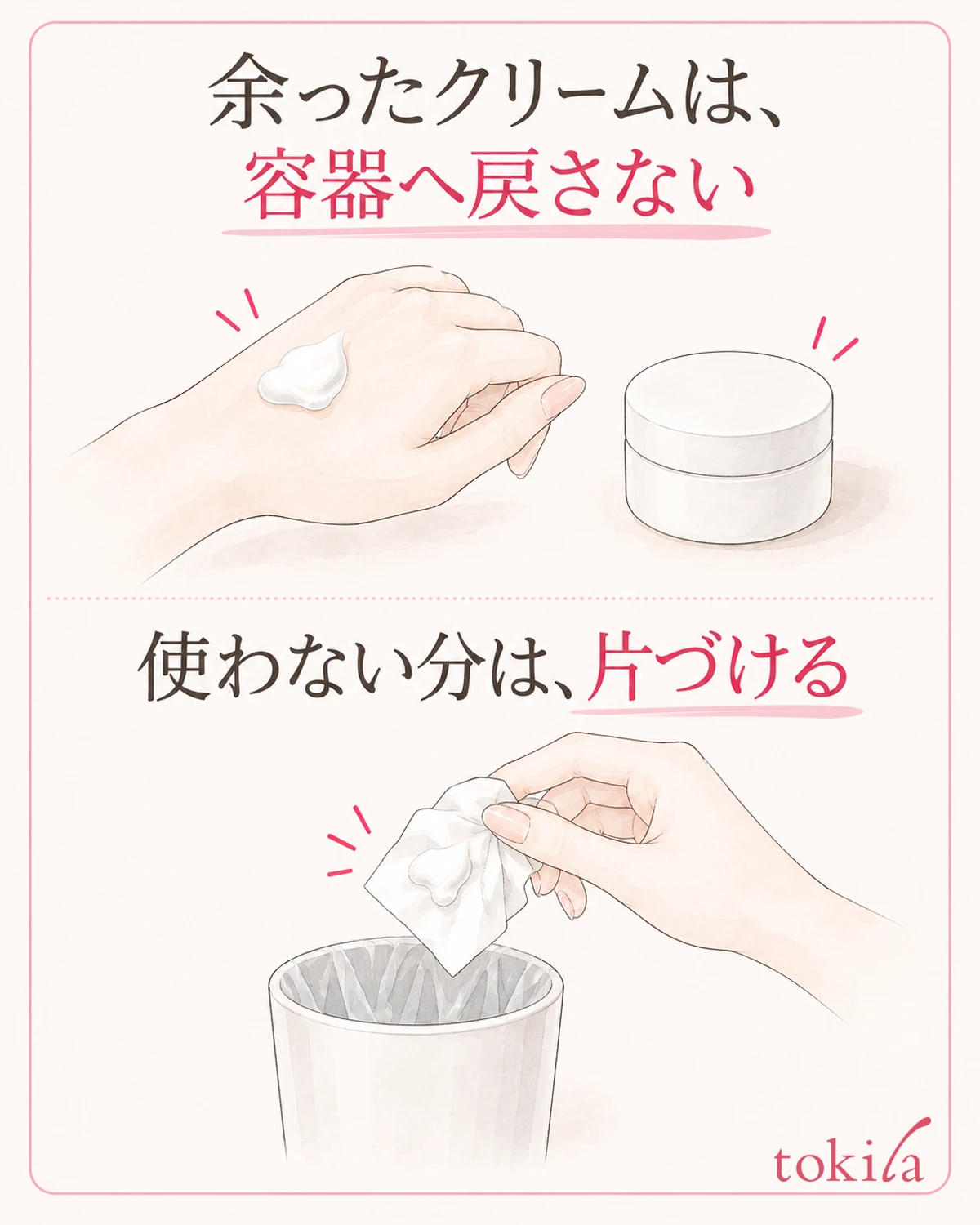
Cream that has once been taken out is not put back into the original container, even if a lot came out. Even if your hands look clean, it cannot be returned to the same state as before it was taken out. Do not choose to store it on the back of the lid or push it back into the mouth of the container either; do not create any place to keep it.
If it is a product that may be used on the neck or hands, you can choose to use it on the spot on the necessary area after checking the conditions for that area and the amount. However, do not assume it can be used all over the body just because it is for the face. There is also no need to layer it thickly on places that do not really need it just to use up the leftover.
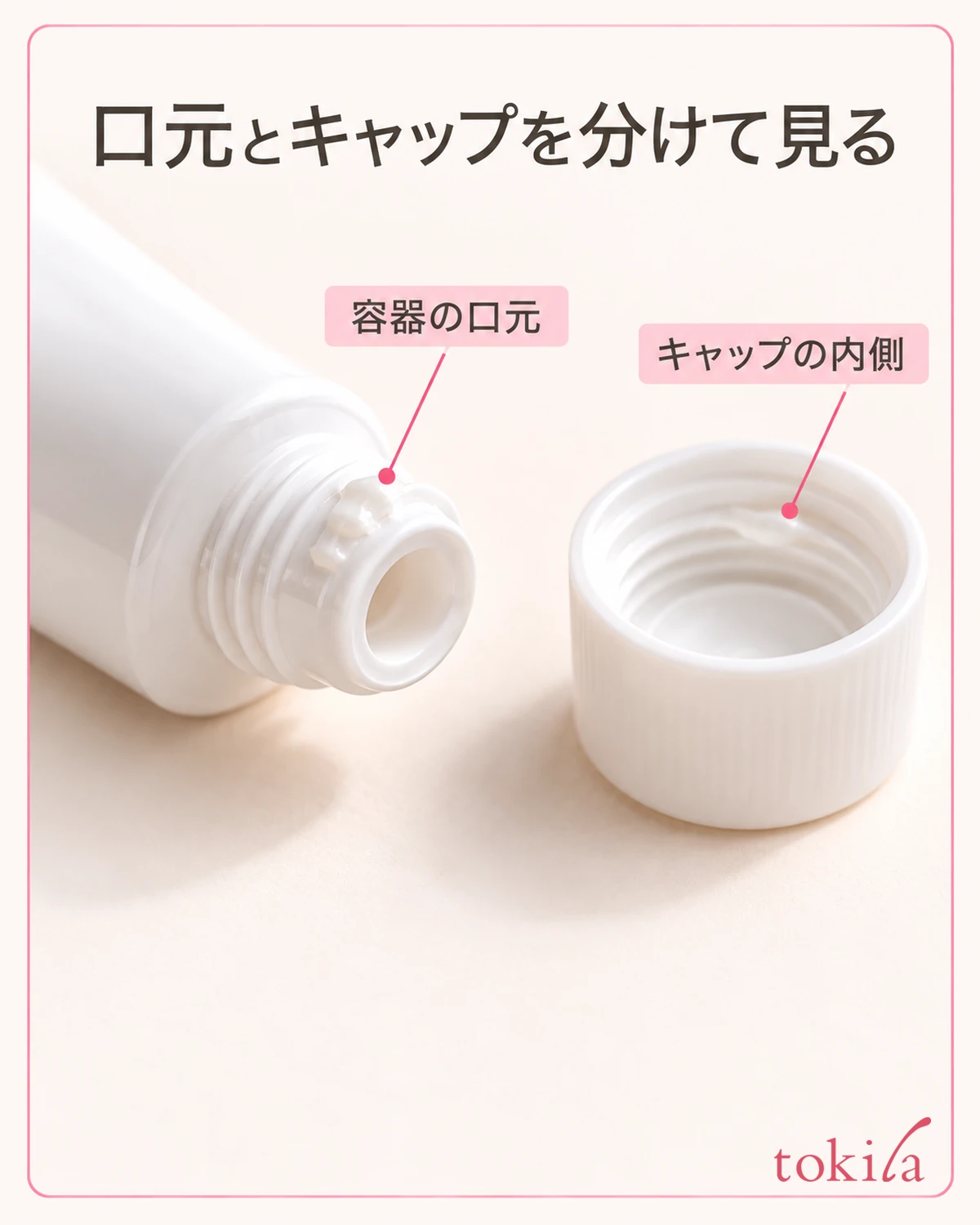
Take the unused leftover onto a tissue or similar, and dispose of it following the product's and your local disposal rules. Do not leave it open until the next day or mix it into the container of another cream. Finally, look at whether anything is stuck around the mouth of the container, wipe it as specified, and close the lid firmly.
If you have already put a lot on your face and are bothered by a thick lump or strong stickiness, stop before adding powder or primer to cover it. Layering another cosmetic to hide the excess makes it hard to tell which layer to fix. Tidying up again in a way that suits the product is also an option.
After you have layered sunscreen or foundation, you cannot always remove only the moisturizing cream. For the part you redo, put your necessary skincare and sunscreen back in order following their directions for use. If crumbly bits appear, also check how to deal with pilling from sunscreen and primer.
5. Next time, review one movement of taking it out of the container
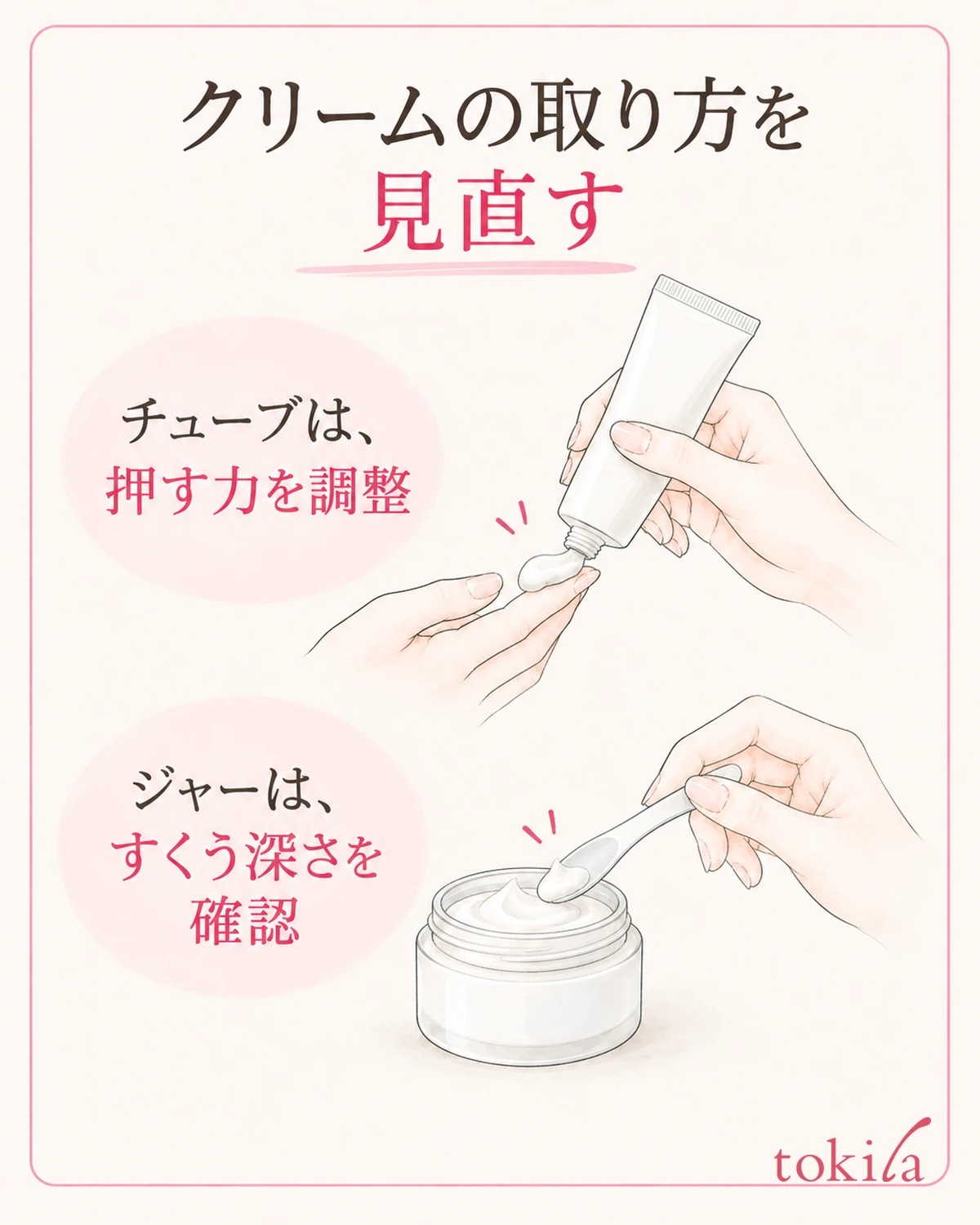
For your next skincare, review how you take the cream out before applying it to your skin. With a tube, add pressure gradually while watching the opening, and stop when you get close to the amount you need. Squeezing hard all at once because little is left makes the amount hard to judge, so check how to handle the container too, according to the labeling.
With a jar, before scooping a deep, large amount from the surface, check the included tool and the labeled amount per use. Think separately about the guide for the amount you scoop and the amount per use that you carry to your skin. If you notice a habit of heaping the tool, change the depth you scoop and make a habit of looking once right after taking it out.
With a pump type, keep to the number of presses if one is specified. Do not assume that stopping partway gives exactly half. Before adding many more presses, compare the product's directions with what is in your hand. There is no need to take the container apart or modify the outlet to adjust the amount.
Choose one movement of your own to change, such as "the force when squeezing the tube," "the depth when scooping," or "looking at the amount right after taking it out." If you keep notes, briefly recording the product name, the situation of use and your own movement is enough. The record is for organizing your own steps, and it is not a test confirming the product's effect.
Clean your hands before use, and after washing your face, connect to your skincare starting with how to remove moisture by gently pressing a towel. If a lot comes out every time, try adjusting how you hold the container and where you keep it before you hurry to apply. Stop before putting on everything that came out, read the labeling, and set aside only what you will use now. Deciding this order in advance makes it easier not to hesitate over what to do with the leftover.
Right after changing containers, it also matters not to take it out with the same force or number of presses as for the previous product. If the softness or the shape of the outlet differs, the amount that comes out will change even with your usual movement. Allow time to check the amount on the first use, and do not use the feel of the container you used before as your standard.