You try to scoop up some cleansing balm and it is harder than you expected. It looks like lumps would remain when you spread it on your face, and you are tempted to break it up with force. When that happens, first separate how the balm is in the container from how you work it in after taking it out.
Balms are cleansers sold in a solid or semi-solid state, but their original firmness and how they change with temperature differ from product to product. This article focuses on the type that you work in with your palms, and covers checks before use, portioning, checks before applying, and reviewing storage. If the instructions on your own product differ, follow them.
1. Separate the original firmness from changes since before

First, check the form and directions for use on the outer box or container of the product you are using now. The name "balm" alone does not mean every product has the same softness. Thinking separately about a product that was solid from the moment you opened it and one that has become harder to scoop than before as you use it will narrow down what to check next.
Think back to when you opened it and where you have kept it, and see what has changed since last time. Pick up only conditions you can actually identify, such as putting it where a bathroom dryer is used, moving it to a sunny shelf, or the lid not being fully closed. Do not blame the season alone; compare against the storage precautions written on the container itself.
Also look at the color, smell and any separation before you touch it and keep using it. If there is a change from the usual, you do not know how long it has been open, or it has been stored differently from the instructions for a long time, do not prioritize softening it and using it up. Stop using it for now and check how to handle your product.
On the other hand, being solid alone does not mean it has deteriorated. Some products explain cracks or the state of the surface, but read such explanations only for the same product. Do not assume that a change in your own balm must be fine by reading the notes for a different balm.
What you are judging here is whether you can continue the checks before use. Appearance and smell alone do not guarantee quality, and the verdict is never that it is always usable as long as nothing looks abnormal. If there is an expiration date or a guideline for use after opening, check that as well.
When comparing how it was at the start with how it is partway through, look at it at the same stage in the container. The softness after you take it in your hand and work it in and the firmness right after you open the lid are different conditions to compare. Think back to how it behaved on your hand before, and do not treat the fact that it does not turn to liquid right away in the container as the only problem.
2. Portion out the stated amount with the included tool

Once you have confirmed that it is in a usable state, read whether the directions say to use it with dry hands or whether your face also needs to be free of moisture. For a product used on dry hands and skin, wipe the water from your washed hands before opening the container. Do not press the surface with wet fingers to test it, and do not add water to the container to soften it.
Set the container on a level, stable surface and take the amount you need with the included spatula or a compatible one. If there is a guideline such as "one scoop of the dedicated spoon," read it as the combination of that tool and that explanation. Substituting a spoon of a different size, or remembering the amount only by how many times you scoop, makes it easy to drift from the stated guideline.
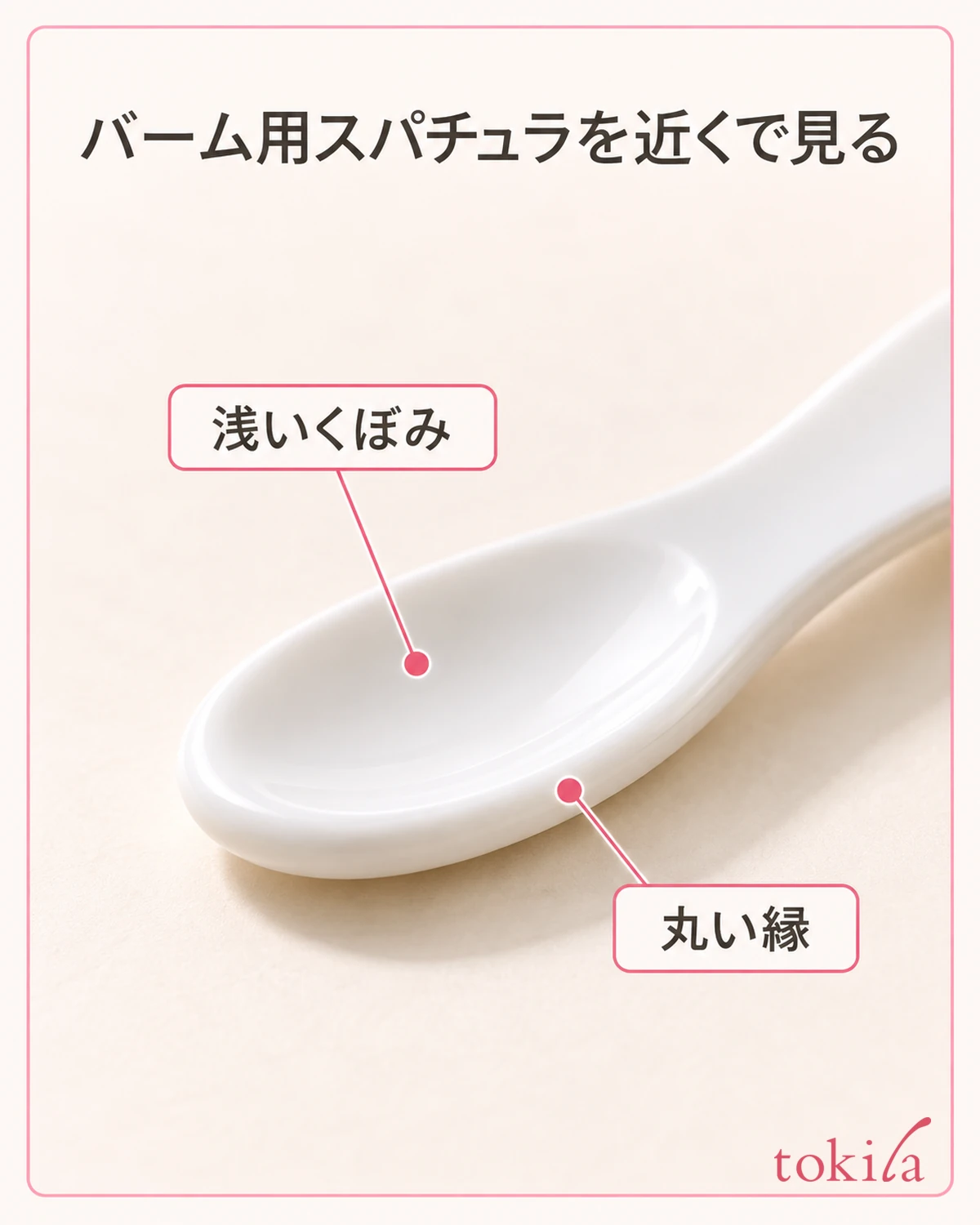
If it is so hard that the tool will not go in, do not lift the container and jab at it; stop for a moment. Check whether the way you are holding it matches the tool and whether the label gives instructions on how to scoop. Do not try to get around the difficulty by pushing in until the tip bends or by breaking it up with a metal blade.
Drastically reducing the amount you use is also not a solution to the hardness. Do not force too small an amount over your whole face; use the guideline for your product as the standard. Keep what you take out separate from what remains in the container, and set up your routine so that nothing that has touched your hands or face goes back into the jar.
If the tool catches on the rim as you put it in and take it out, the check on the spatula's path and where to put it may also help. Here, get the balm's condition and portioning in order first, and handle storage and care according to the instructions for that container and tool.
To check the amount you took, it helps to transfer it to a clean palm, put the container down, and then move on to the next step. Avoid tilting the jar with one hand while chasing the contents with a tool in the other. If you keep being unable to scoop it, stop there and check how to handle it rather than applying force more times.
3. If the directions say to work it in your palms, do not press lumps onto your face

For a product that you lightly work in with your palms before use, transfer the portioned balm to your hand and spread it in the way the instructions specify. Place it on one palm, work it in gently with the pads of the fingers or the palm of the other hand, and check whether it has become easy to handle before you spread it on your face. There is no need to rub your hands together hard.
This step is different from warming the whole container. Do not extend the explanation of working the amount you use in your hand to warming the jar in a hot water bath, aiming a hair dryer at it or putting it in a microwave. Do not mix in water or another oil to change the firmness either, unless the product explicitly describes that method.
If small lumps remain on your hand, do not move them to your face and crush them; first check a way of working it in that matches the instructions for your product. How many seconds to rub it, or how clear it should become, is not common to all products. Do not keep applying force indefinitely, aiming for a clock or for clarity.
Also avoid placing the container near a heater to change it quickly just because your hands are cold. If it is hard to handle even though you portioned it as stated and it is clearly different from before, stop using it rather than trying to restore it with heat. Think of making it spreadable and checking its quality as separate matters.
At the stage of moving it to your face, check whether you can spread it comfortably with the pads of your fingers. Do not press hard particles onto your cheeks or break lumps with your nails. Rather than skipping the working-in step and adding force on your face, include a moment of looking at your hand before applying.
4. After spreading it on your face, work it in and rinse by the product's steps

Once it is in a state you can apply, spread it on your face within the area and in the order the product indicates. Do not press hard on your skin or massage for a long time just because it was hard when you took it out. Keep the step of preparing it in your palms and the step of working it into your makeup separate, each with its own role.
If there is a place where it does not spread well, before adding force check whether you took the stated amount and whether the water conditions of your hands and face were right. If you feel a lump on your skin, do not rub that spot again and again to make it disappear; review the steps for use. It is important not to continue when you cannot spread it comfortably.
The kinds of makeup it can remove also have conditions. If the instructions say to remove heavy eye makeup or hard-to-remove mascara with a separate remover, follow that. Do not assume that using a balm will remove any makeup in the same time and with the same force, and do not keep applying it around the eyes for a long time.
If there is guidance on emulsifying, add water or lukewarm water at that stage as directed. This is different from mixing water into the balm in the container to soften it. Do not use how white it turns as the only sign that cleansing is complete; check the explanations for working it in and rinsing, in that order.
Whether you need to wash your face afterward also differs by product. If you read this before using it, you will not have to hesitate at the end and cleanse twice. If you feel irritation or anything unusual while using it, stop rather than continuing to check the result. Before adding more balm to hard-to-remove areas, review the steps first and then decide.
5. Review where you store it, and if the same change continues, check how you use it

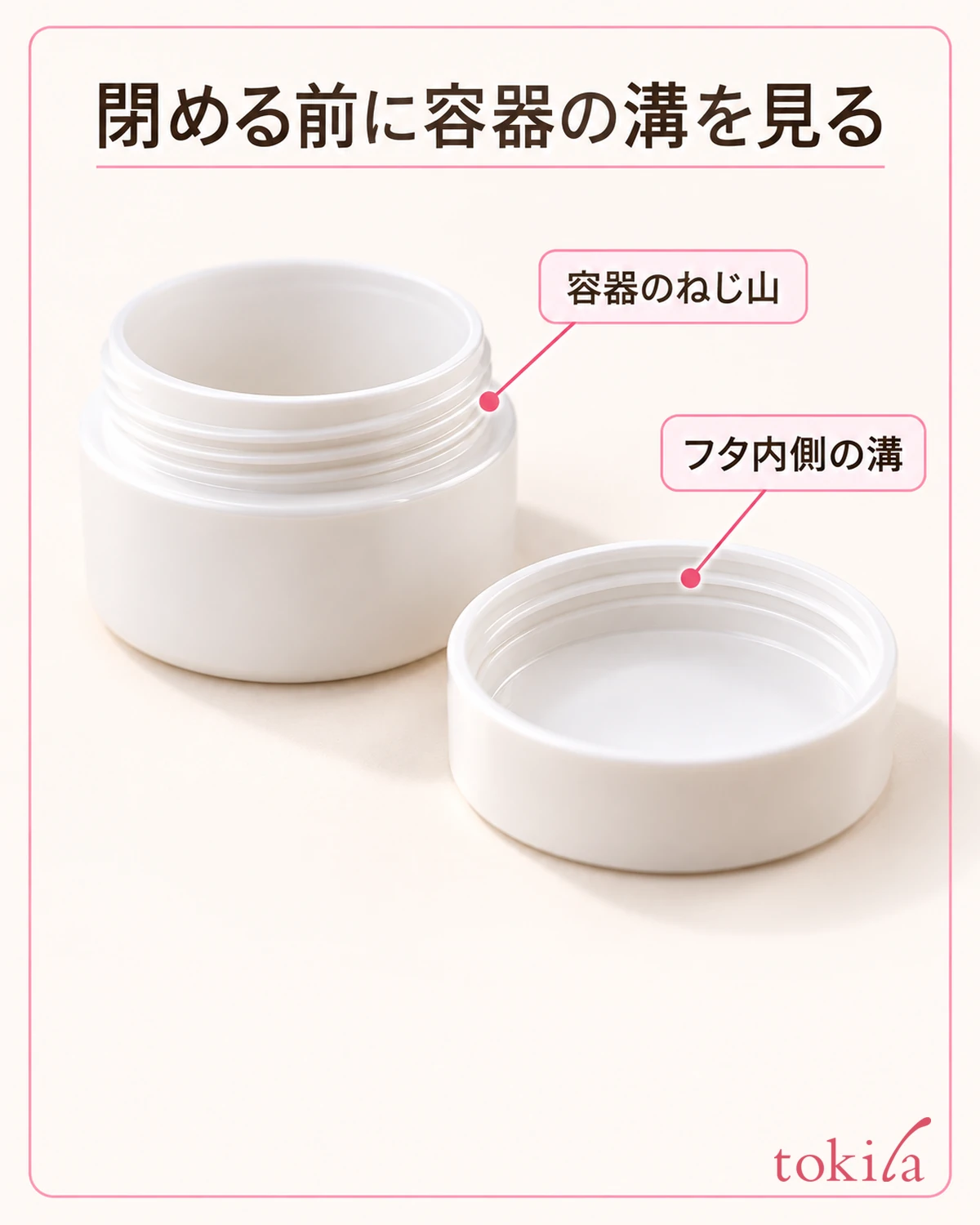
When you finish, check the rim of the container and how the lid closes. Do not close it hard with contents or tools caught in it; remove any residue as the instructions say and close it in its proper state. Finish the care and drying of the spatula as specified, and return it to its storage spot if there is one.
For storage, follow the precautions about temperature and direct sunlight for your product. Review where you actually keep it, such as a bathroom with humidity and temperature swings or a shelf that the heater blows on directly. Do not make a common remedy of alternately moving it to a refrigerator or a warm place just to make it easier to take out.
Next time you use it, separate where you had trouble: "hard to scoop in the container," "it works in on my palm," or "lumps remain even when I spread it on my face." Separating the stages makes it harder to confuse a problem with how you take it with the tool and a state that is hard to handle even when used as directed. The point is not to judge from the single word "hard."
In case the change continues, keep at hand the product name, about when you opened it, where you stored it and since when it changed. If you take photos, take them to record the state of the container and the contents, and do not use them as grounds for guaranteeing quality on your own. If you cannot handle it as the instructions say, do not force yourself to use it up; check how to handle it before resuming.
If you also want to sort out the step of removing moisture after washing your face, you can check how to press a towel against your face too. Check the inside of the container, take the amount you need, work it in your hands if so instructed, and spread it on your face. Adjust this flow to suit the product you have.
Even after you move where you store it, if its firmness changes, do not judge that its quality has been restored. Do not keep trying to make it easier to use by changing the temperature; bring storage back in line with the original instructions. Keeping the container and its instructions together will help you review the lid's condition and the time of use before the next opening.