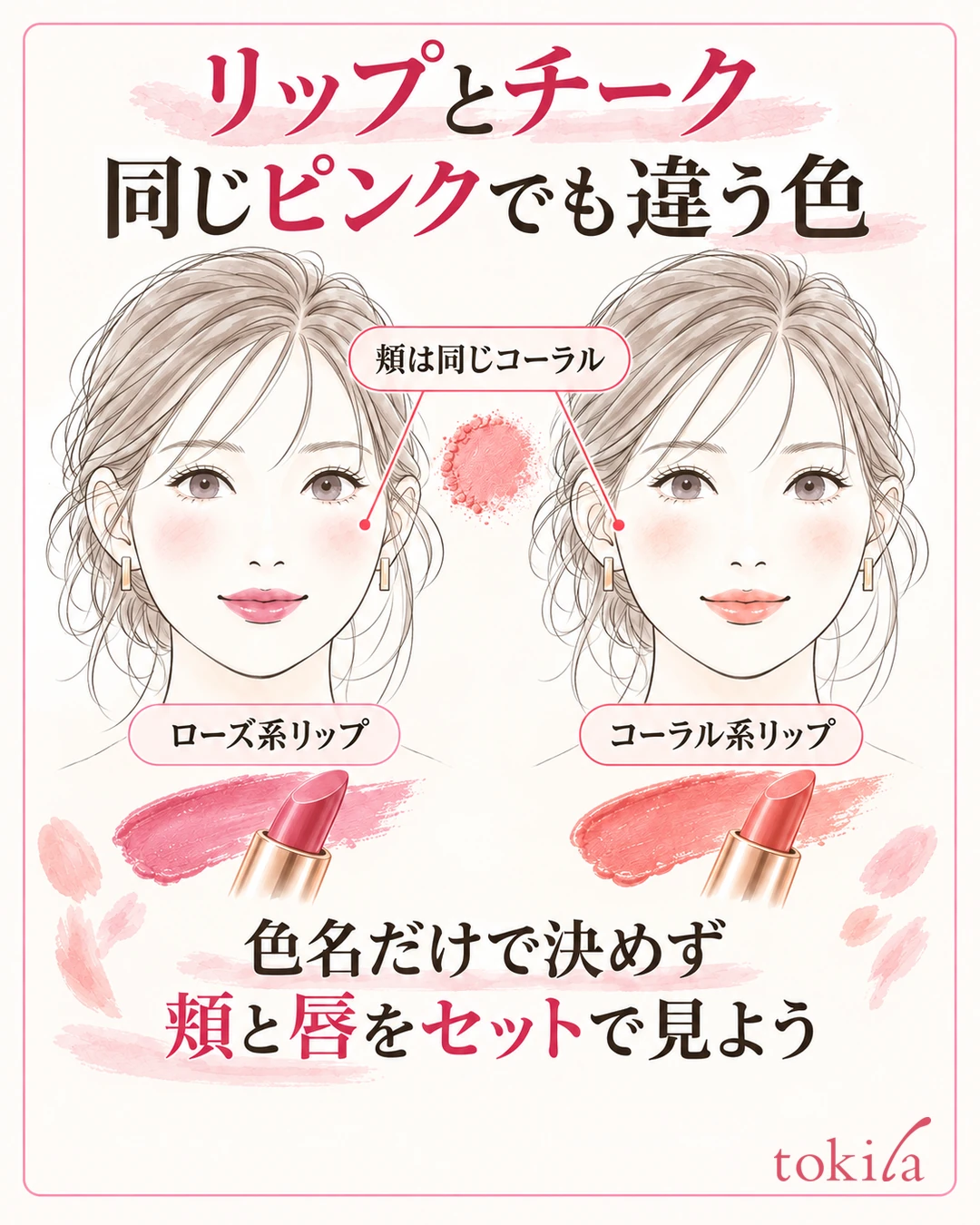
You love your favorite lip color and cheek color on their own, but together the cheeks look like they're floating or the lips feel too strong. Sound familiar? If you're unsure how to match them, start by finding one thing the two colors have in common and deciding whether the cheeks or the lips will be the star.
First, look at your cheeks and lips in the mirror at the same time and pick the one thing that bothers you most: the undertone, the depth, or the shine. Pairing colors with similar undertones and making one of them softer is an easy place to start. Here are three color pairings to compare with the cosmetics you already own, plus ways to fix a look that doesn't feel right.
1. Even the same "pink" looks different on cheeks and lips
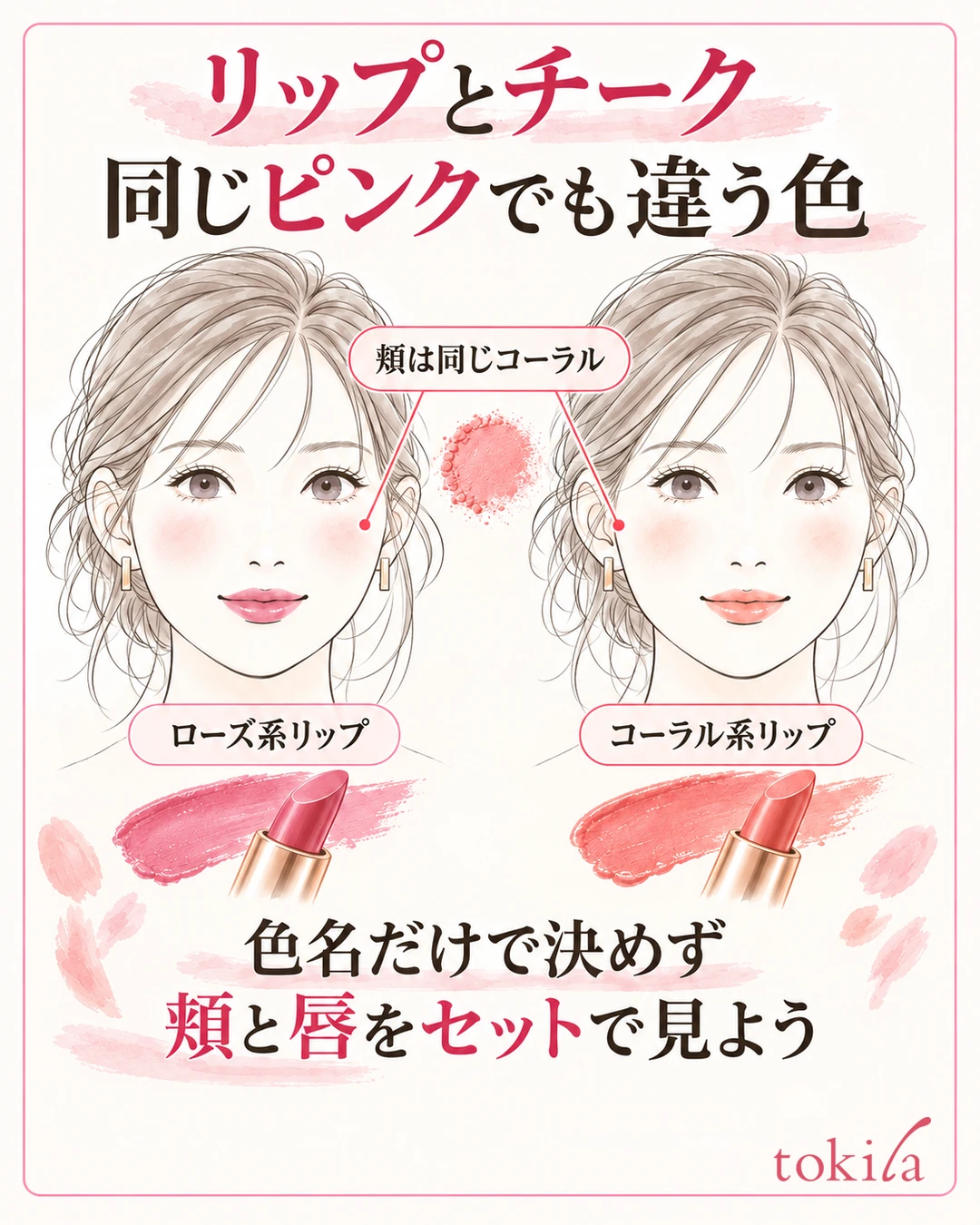
You paired a pink lip with a pink blush, yet somehow it doesn't come together. When that happens, compare the colors as they actually look once applied rather than going by the color names. "Pink" covers a lot: orange-leaning coral, blue-toned rose, and muted shades with beige in them.
Colors that look alike in the case can look different on your lips or cheeks. A lip color layers over the natural color of your lips, while blush layers over your skin or foundation. How it looks also changes depending on whether the color is sheer or richly pigmented.
Check your two colors "on your face"
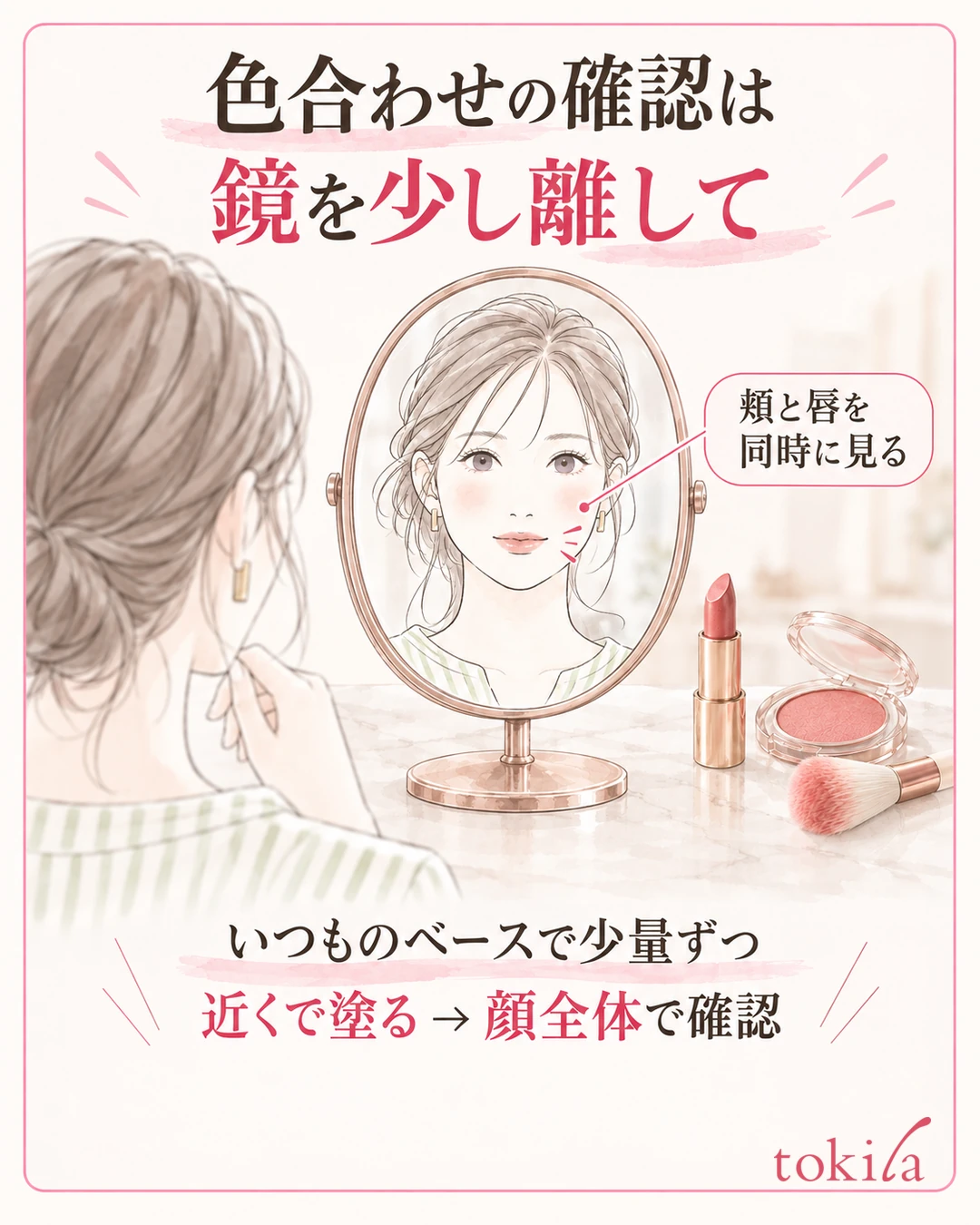
When testing colors, apply a small amount of lip color and blush over your usual base makeup. A swatch on the back of your hand is a useful reference, but you don't need to decide whether a color suits you from that alone. Make the final check on your whole face.
With a mirror close up, your eyes tend to go straight to your mouth, so hold the mirror a little farther away and look at your cheeks and lips together. Checking not only under indoor lighting but also in a bright spot by a window makes differences in color easier to notice. Avoid checking in strong direct sunlight or through a photo skin-smoothing filter.
If it feels "off," first observe whether the undertones are far apart, whether both colors are too deep, or whether only the shine of one stands out. Sorting out the cause helps you find adjustments you can try before buying new cosmetics.
2. Find what the colors share in undertone, lightness and vividness
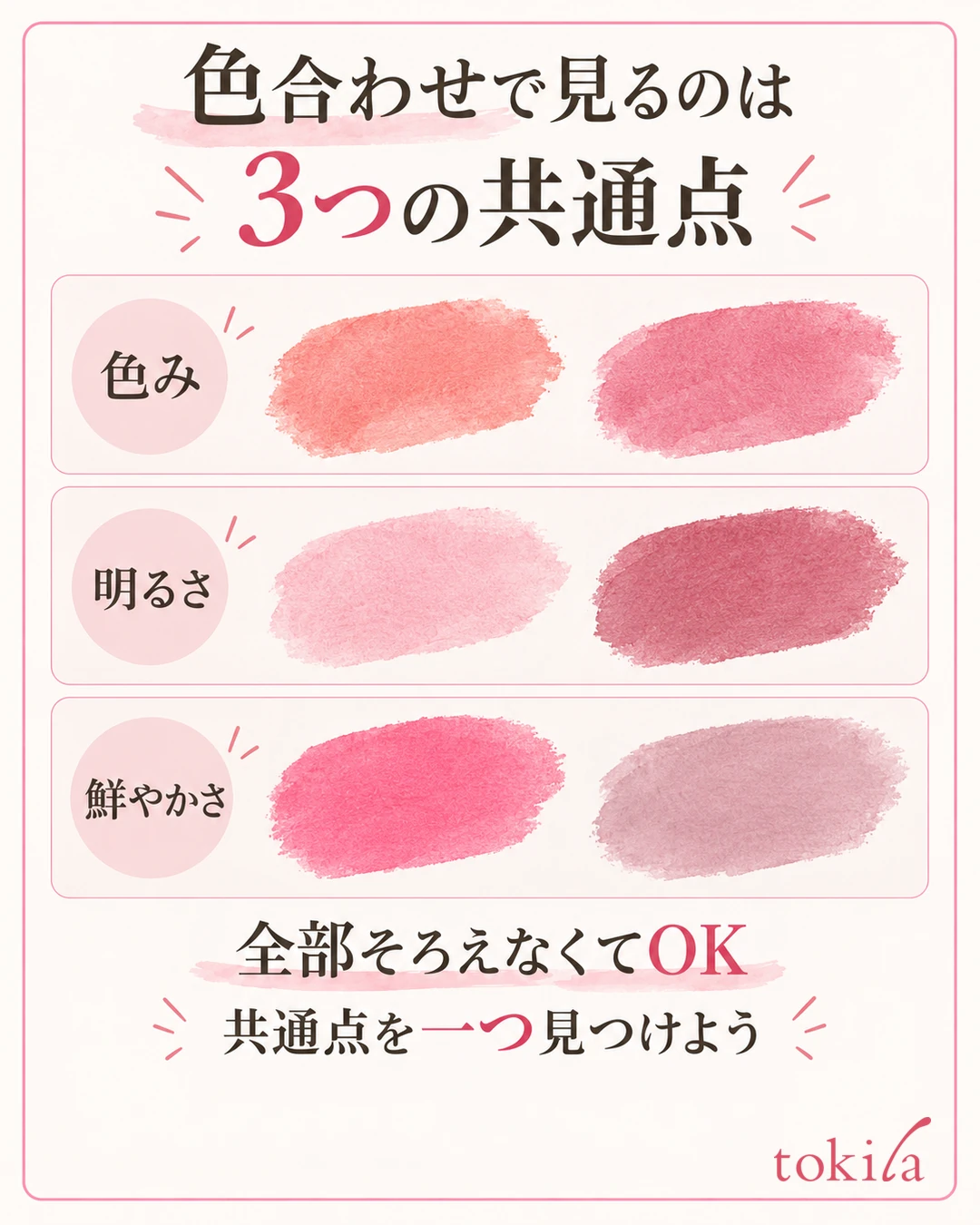
To try a cohesive color pairing, create something the two colors have in common. You don't need to match everything from the start. Breaking it down into three points to look at, "undertone," "lightness" and "vividness," makes the differences easier to sort out.
Bring the undertones closer
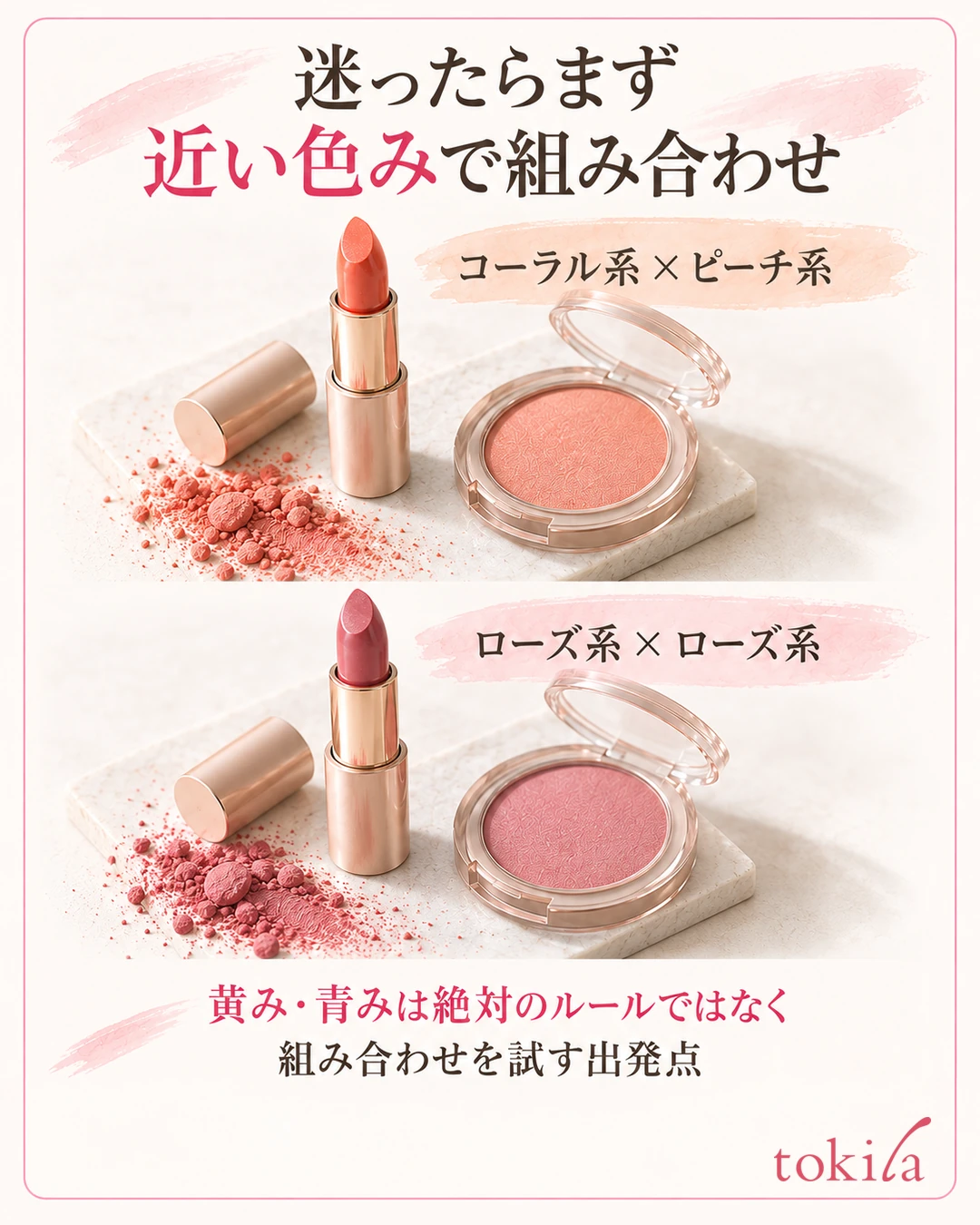
For a coral lip, try a peach or coral blush. For a rose lip, try a rose or bluish-pink blush. Starting with similar undertones gives you a clear axis for comparison.
That said, it isn't wrong to combine warm and cool colors. On days when you want to enjoy different undertones, make one of them softer, or choose a color that contains a hint of the other, and adjust the overall balance.
Compare lightness and vividness too
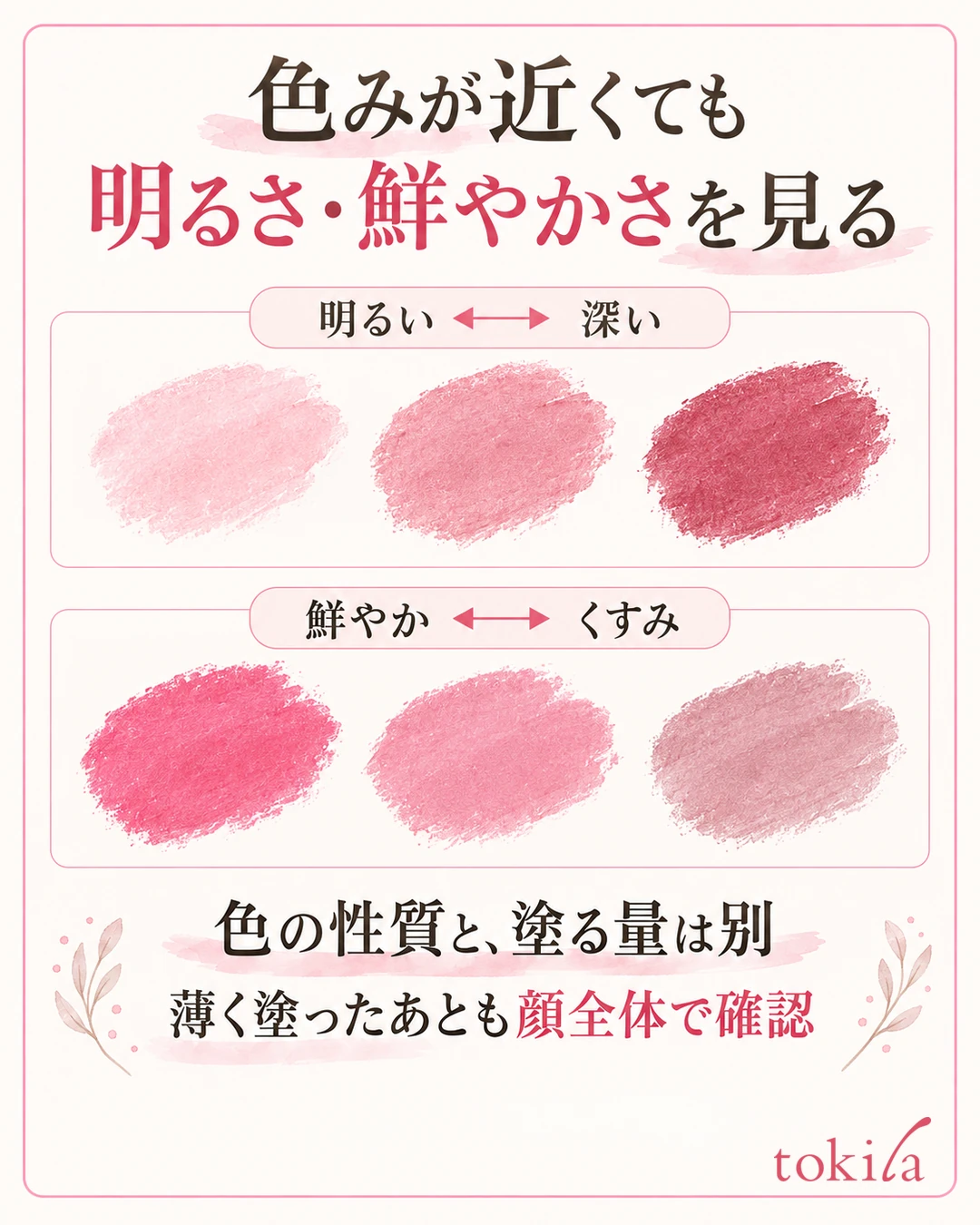
A pale pink and a deep rose differ in lightness. A clear pink and a muted pink with gray in it differ in vividness. Even when the undertones are close, a large gap in these will make the contrast between cheeks and lips stronger. Creating that gap is also a way to enjoy fashion.
If your lip color is subdued but only your cheeks look vivid, start by reducing the amount of blush and compare. If your whole face looks hazy instead, you can add a little more color to the lips alone. Here, lightness and vividness are qualities of the color itself, while depth is how strong the color looks once applied. Applying a deep color thinly won't necessarily make it the same as a light color. After changing the amount, step back and check your cheeks and lips together across your whole face.
If you'd like to learn more about color basics, see how to match colors in color coordination as well. Personal color can be a helpful clue when choosing, but don't limit yourself to "this type can only use this combination"; value how it actually looks on you and your own preferences.
3. Three color pairings to try with the cosmetics you own
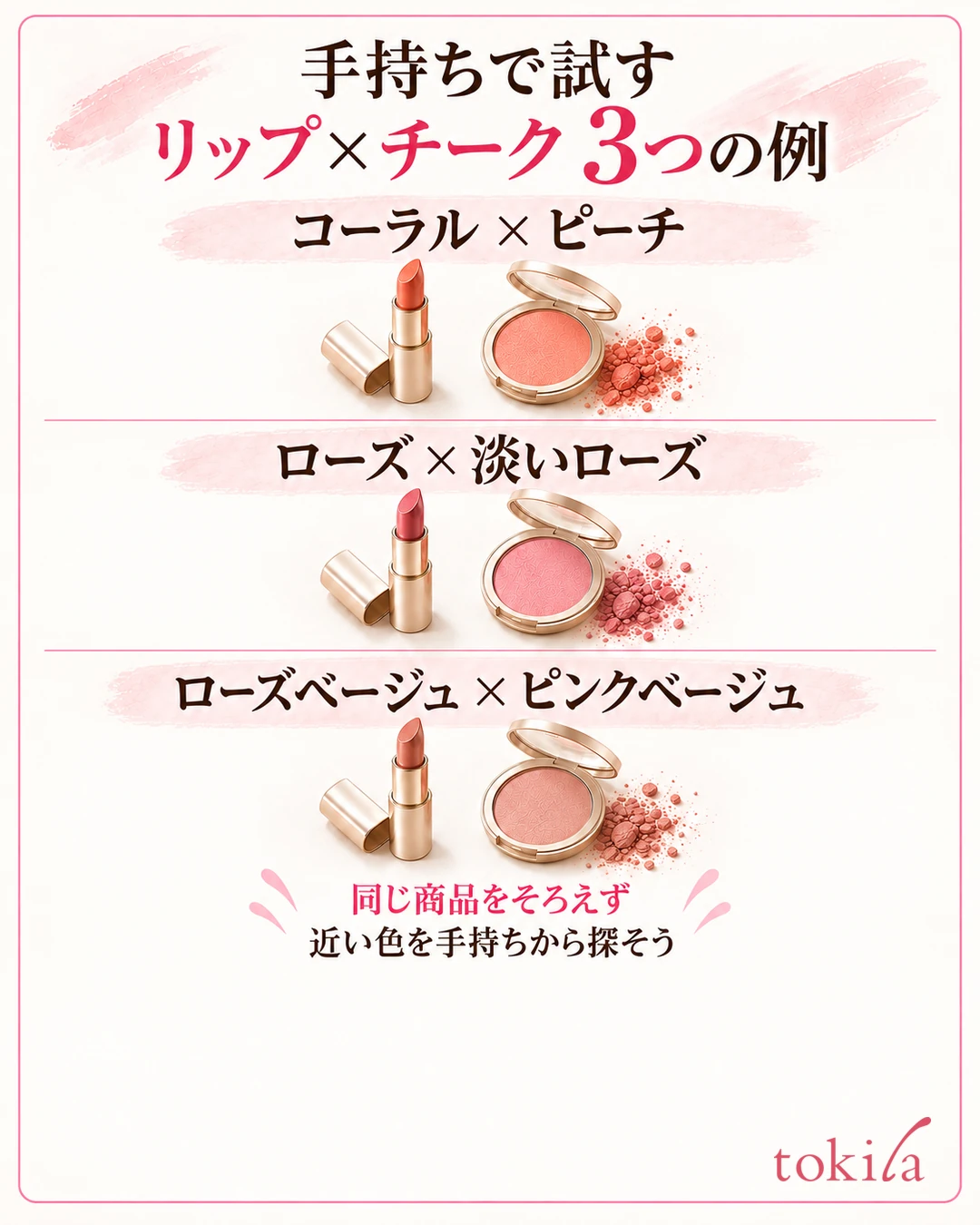
Here are three examples that can serve as starting points for color pairing. Color names differ from brand to brand, so look for the closest shades among what you own. This is not a list for buying the same-named products; it's a hint for comparing your own cosmetics.
Coral lip × peach or coral blush
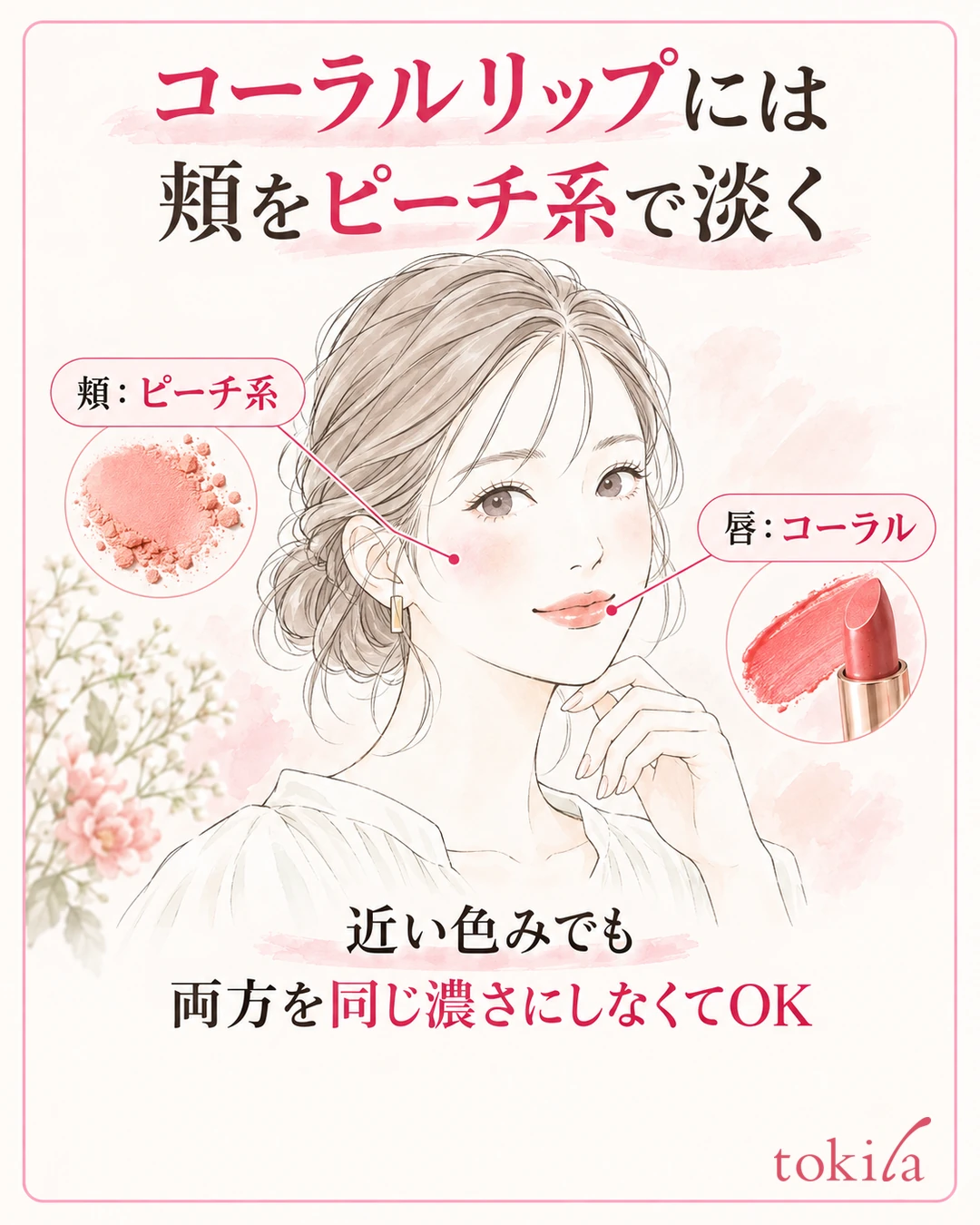
This pairs a pink lip with some orange in it with a blush in the same direction. Finish the lip first at your usual intensity, then apply the blush lightly. If the lip color is vivid, make the cheek color softer and let the lips be the star. If you want to enjoy a stronger blush, you can also go lighter on the lips.
If both feel too orange, reduce the amount of blush to adjust. Even when the undertones are close, the two don't need to be equally deep.
Rose lip × pale rose or pink blush
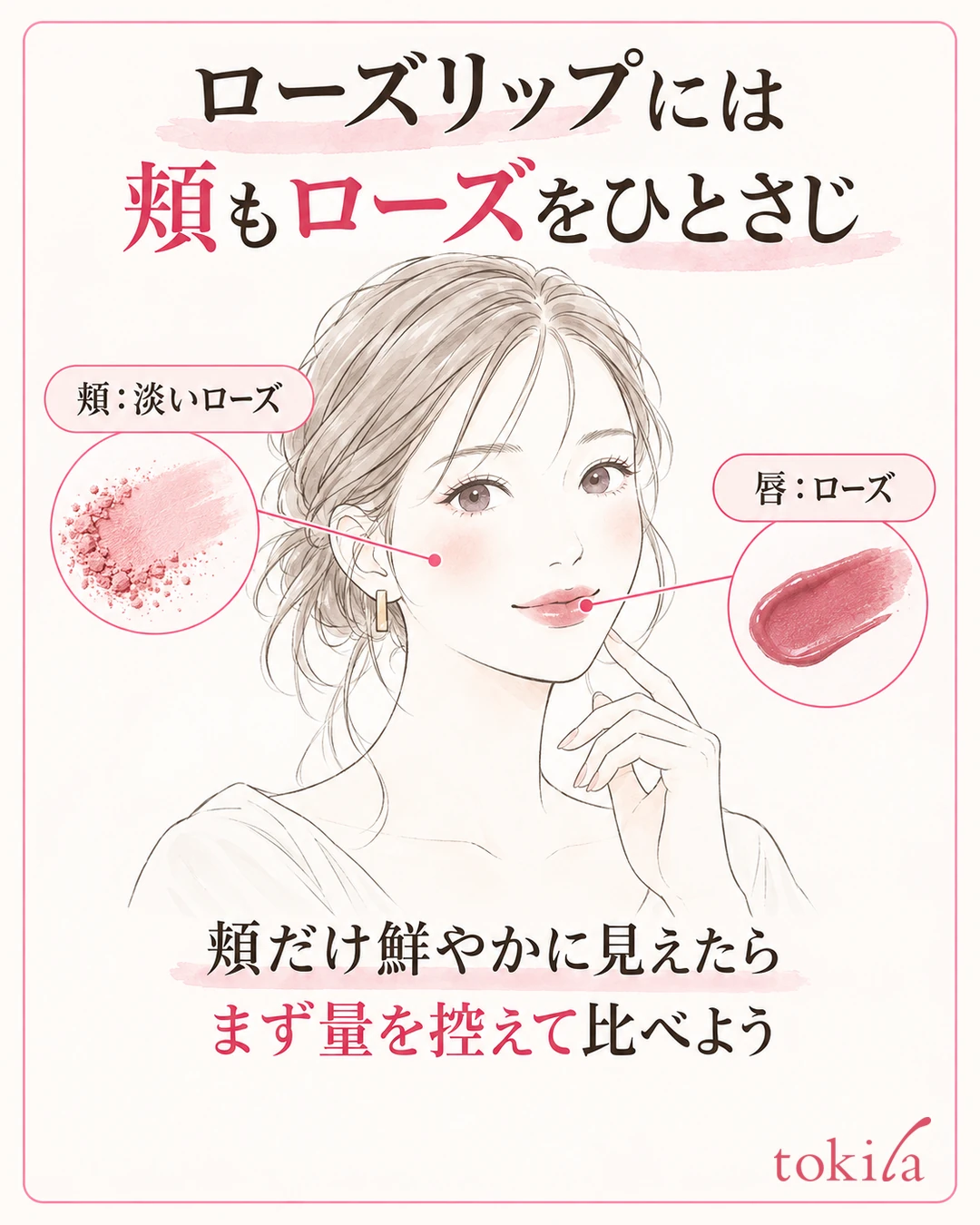
On days you wear a rose lip, choose a blush with a touch of rose too. With a deep lip, it's easier to compare if you pick a blush that looks like a paler version of that color. If a muted rose lip and a vivid pink blush feel mismatched, try making the cheeks less vivid.
Even among pinks, colors with a lot of white in them can stand out. Don't judge by the color in the palette alone; check how it looks against your skin when applied lightly.
Rose-beige lip × pink-beige blush
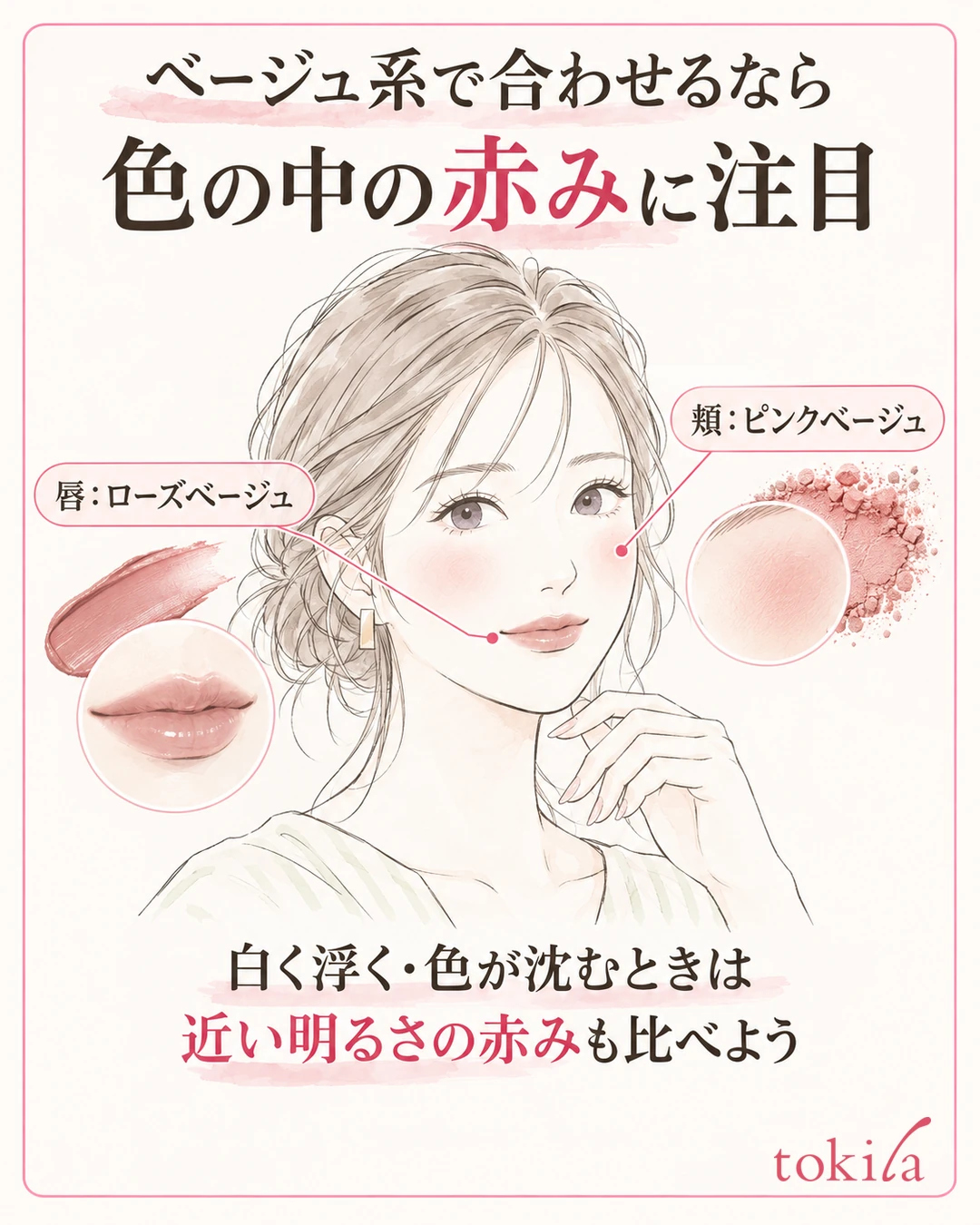
This is an example for when you want a subtle look. Find the pink or orange nuances within the beige and make them the common ground between cheeks and lips. If the lip is pale and your whole face feels a little lacking, try adding blush a little at a time.
Beige shades are not colors that blend into every skin tone. If only the outline of your lips looks white, or the color on your cheeks looks dull, comparing with a color of similar lightness that has a bit of red in it makes it easier to find the finish you like.
4. Lip or cheek: which one should be the star?
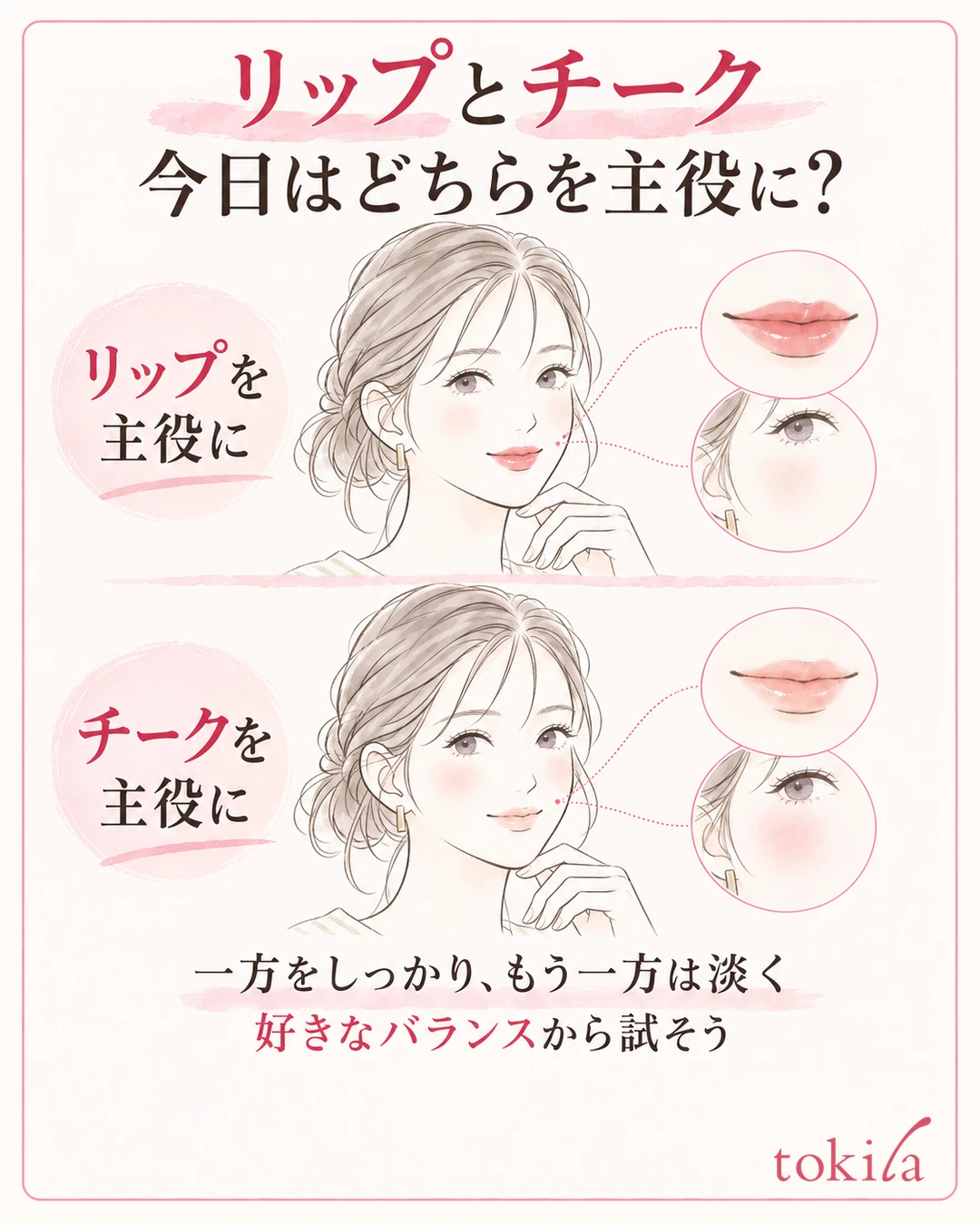
Even when the undertones match, finishing both cheeks and lips boldly can look more glamorous than you intended. Deciding the star first, such as "today I want to enjoy my lip color" or "I want to show a soft color on my cheeks," makes it easier to adjust the amounts.
Days when the lip is the star
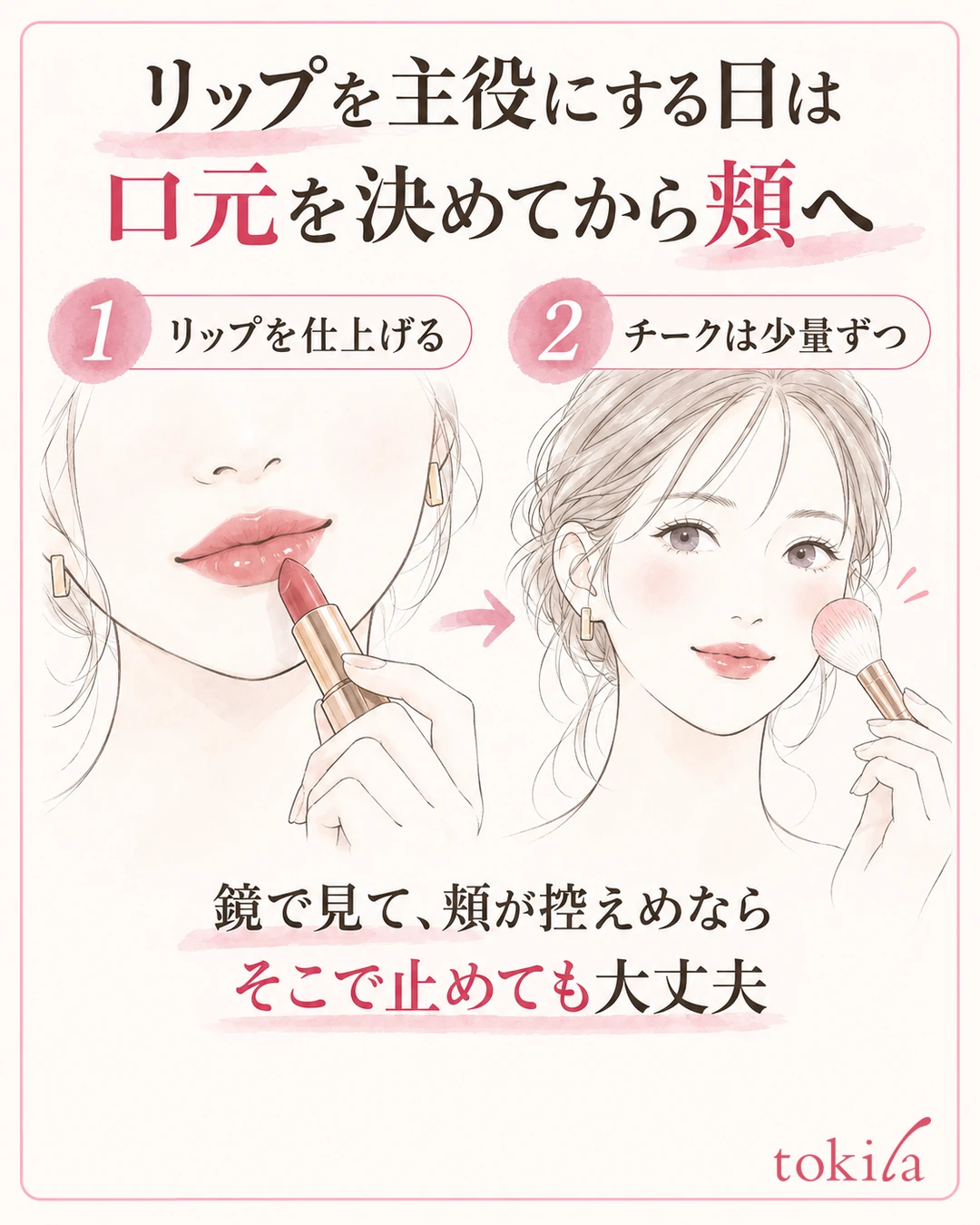
For a lip you want to show off, such as red or a deep rose, finish it first. Then add blush a little at a time and stop at a point where it doesn't stand out more than the lips. Whether to leave the cheeks bare or add a light touch of color is up to your preference as you look at your whole face.
With powder blush, tap off the excess powder from the brush before using it. With cream or liquid products, adjust a little at a time according to the product's instructions. Rather than how many times you moved the tool, check how much color has actually come through.
Days when the cheek is the star
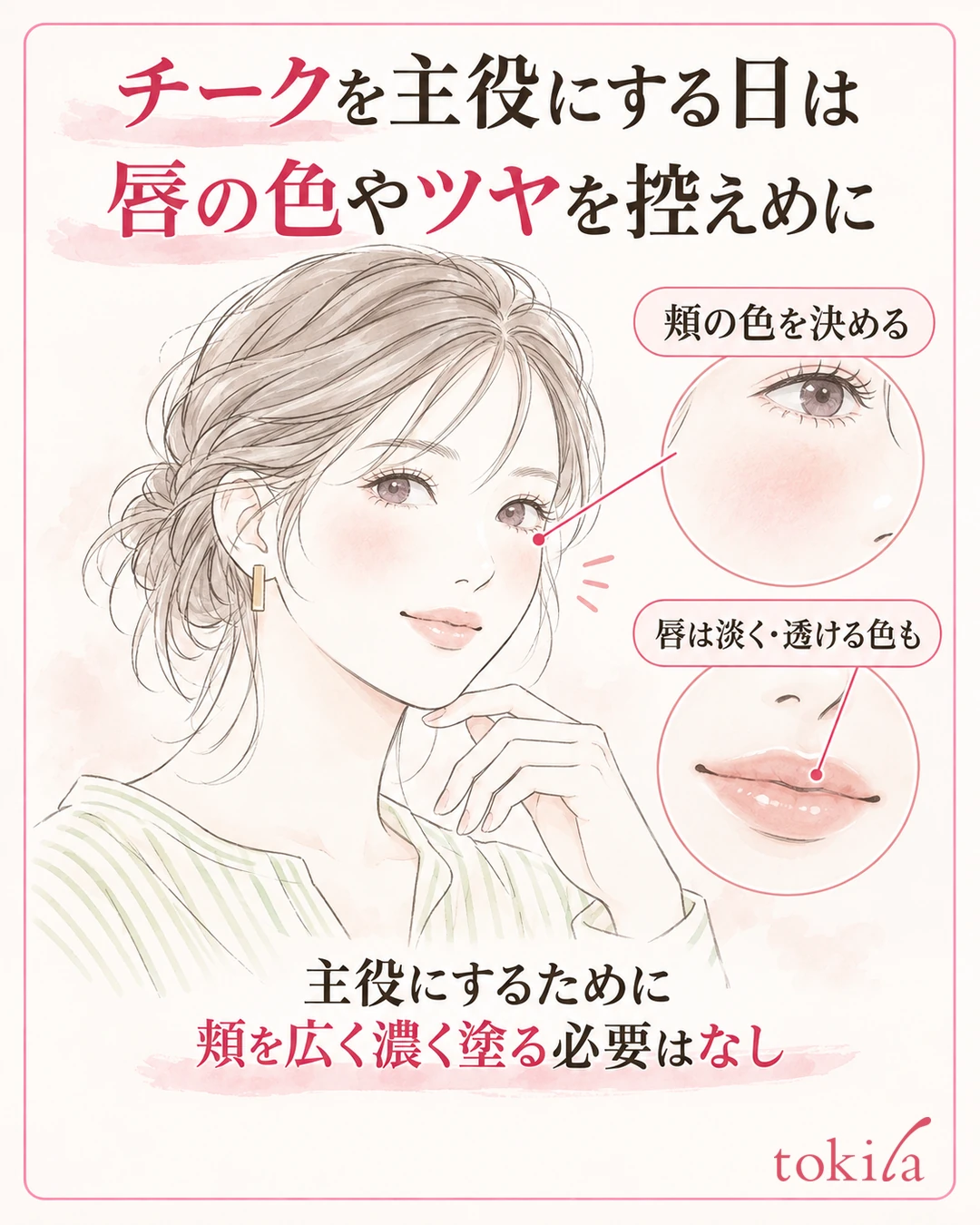
Decide your cheek color first, then finish the lips in a soft color or a sheer shade. If you use a lip that pigments strongly, you can also apply it thinly and see how it looks. Making the cheeks broad and deep is not the only way to make them the star; adjust the area to suit your features and preferences.
Check the combination of shine as well. Some days you may enjoy a finish with strong gloss on both cheeks and lips, and other days you may want to keep one of them subdued.
If you want to rethink the type of blush or where to apply it, see basic knowledge of cheek makeup. For differences in lip textures, see our guide to lip products.
5. When it doesn't feel right, fix one spot at a time
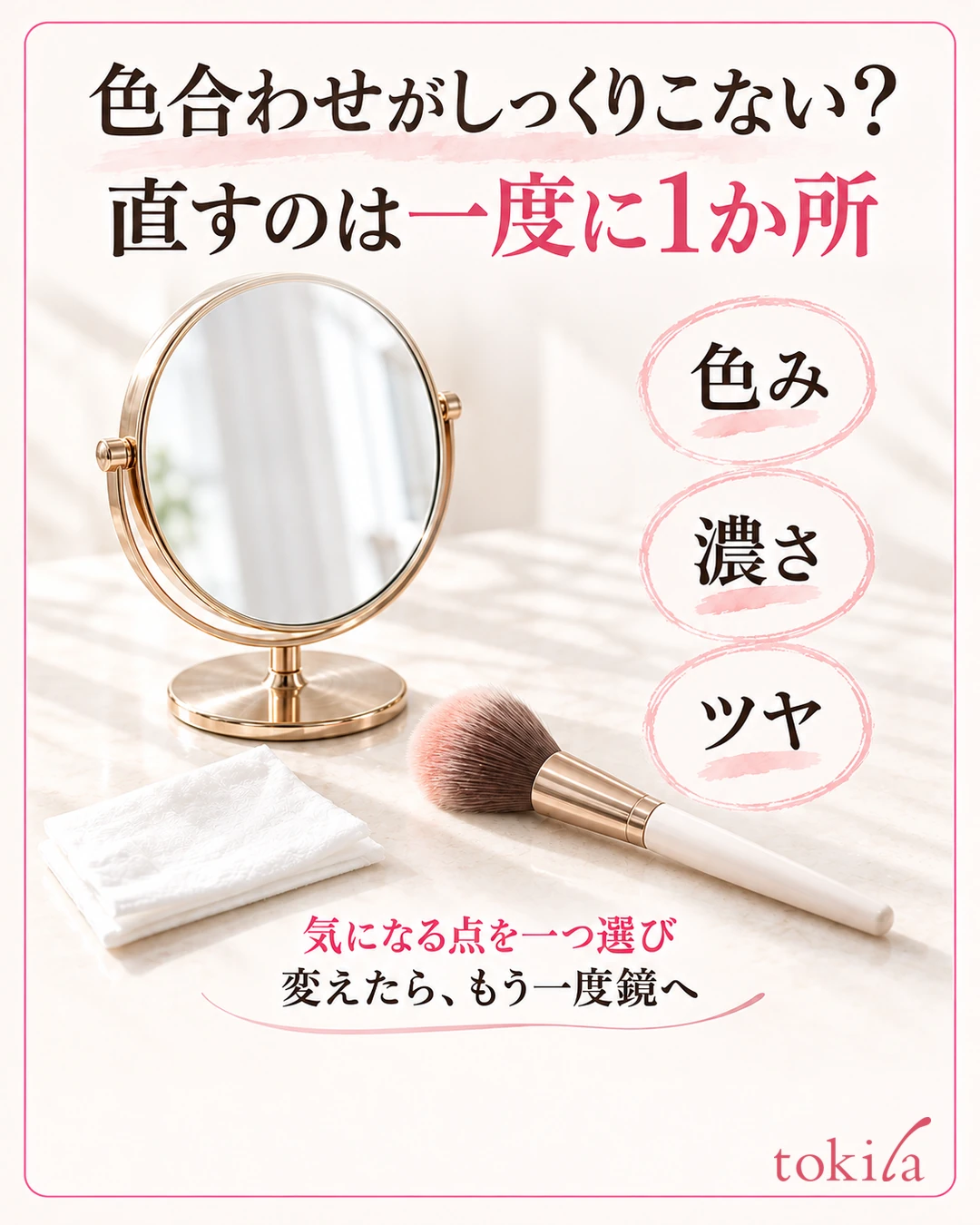
Even if you feel "it still doesn't match," you don't need to redo both right away. Step back from the mirror for a moment and pick the one spot that bothers you most. If you change cheeks and lips at the same time, it becomes hard to tell what improved things.
Only the blush is too deep, or the edge stands out
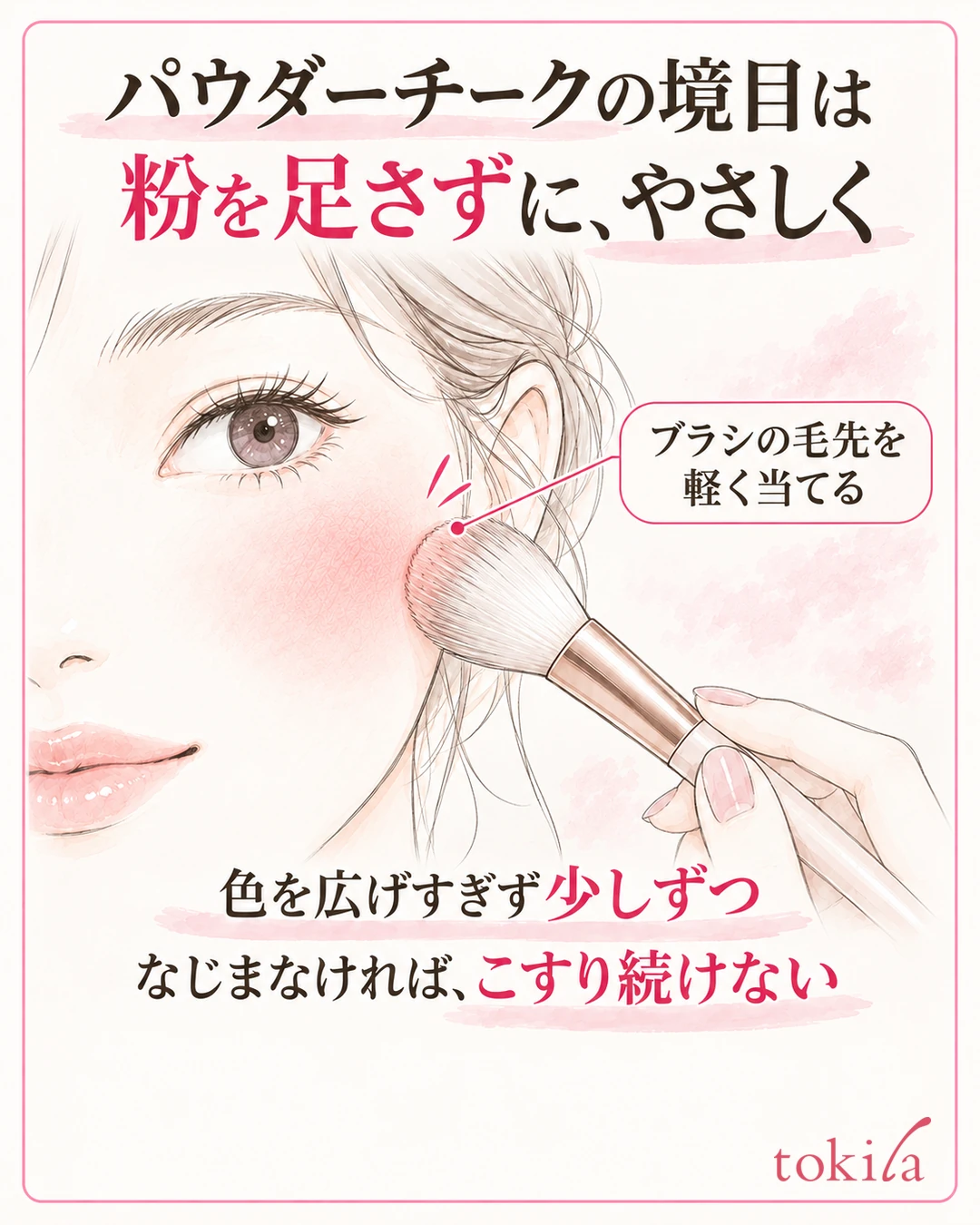
With powder, gently blend the edge with a clean brush that has no added powder. Move it little by little so you don't spread the deep area too far outward. If the edge doesn't blend, stop rather than rubbing repeatedly. Before adding more color, look again in a mirror at a natural distance.
With cream or liquid products, the time you have to re-blend and the suitable tools differ by product. Don't try to thin out color that has already set by rubbing hard; check the product's instructions. If you can't fix it, you can also remove makeup from that area and redo it lightly.
Only the lip is strong, or the shine stands out
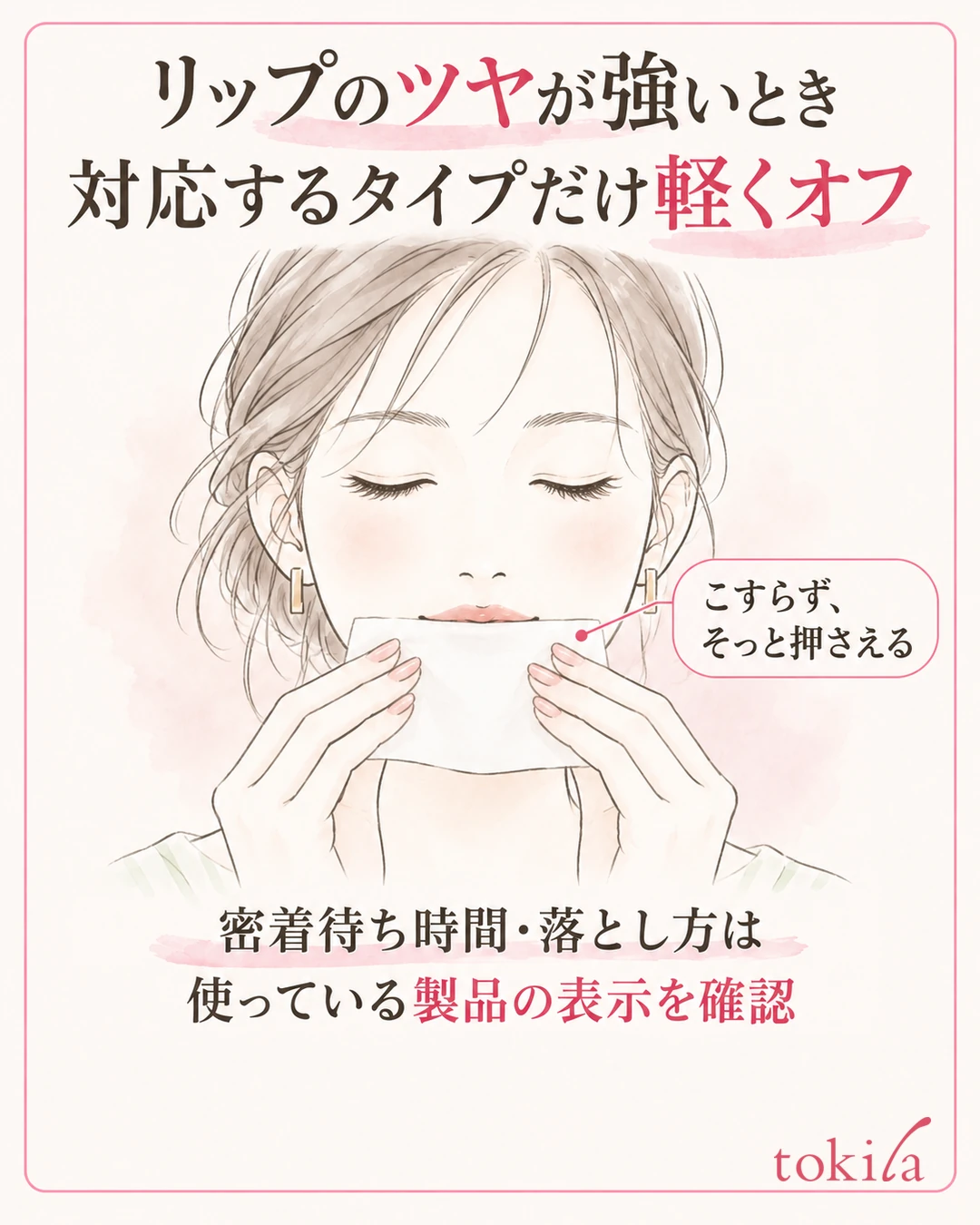
Try using less next time, or look again at how your lips look before adding blush. If the product is the type you can lightly blot with a tissue, adjust the excess color and shine following the product's instructions. For long-wearing types, don't rub repeatedly; correct them with a dedicated removal method as needed. For lip products that specify a waiting time to set, wait for that time before checking the finish.
The difference in undertone bothers you, or both feel lacking
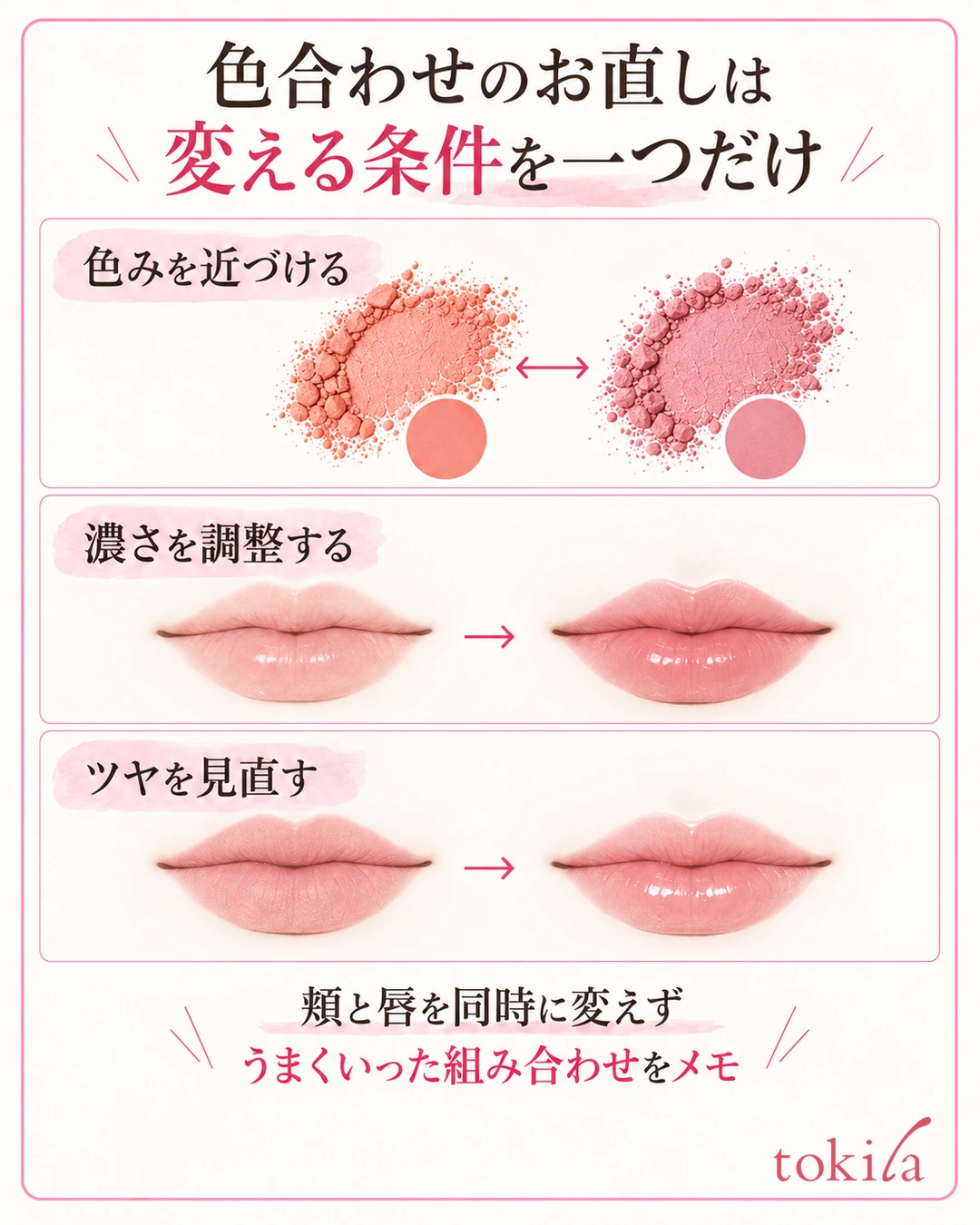
If the undertones look far apart, make one of them lighter and compare, or try a color with a closer nuance from what you own. If it feels lacking, add a little only to the one you want to show. Of color, depth and texture, changing just one at a time makes it easier to grasp your own preferences.
Also, avoid swapping cosmetics made for cheeks and lips and using them as they are. If you want to use one product on both, check that the product states its intended areas of use, such as "lip & cheek." Even if the color is the same, the places you can use it are not necessarily the same.
For a combination that worked, jot down the colors you used and the depth, such as "light on the cheeks, usual on the lips," and it will be easier to recreate the next morning. There is more than one right answer for color pairing. Start by trying your two colors in small amounts and find the finish you like.
The illustrations and photo-style images are AI-generated for illustration purposes. They do not show the color payoff or results of actual products.
If you're also thinking about eye colors, go here. Combining eyeshadow, blush and lip color