When choosing a cleansing milk, do not decide only by how moisturizing it looks. Compare whether it can remove your current makeup, what you need to do after working it in, and whether you can comfortably use the recommended amount each time, in that order. Even products sharing the name cleansing milk have different requirements for rinsing, wiping off, and subsequent face washing.
This article organizes what to look for when comparing two options before buying. Rather than explaining the specific removal method for a product you already own, it helps you find a bottle that fits your nightly makeup-removal routine.
First, list the makeup you want to remove
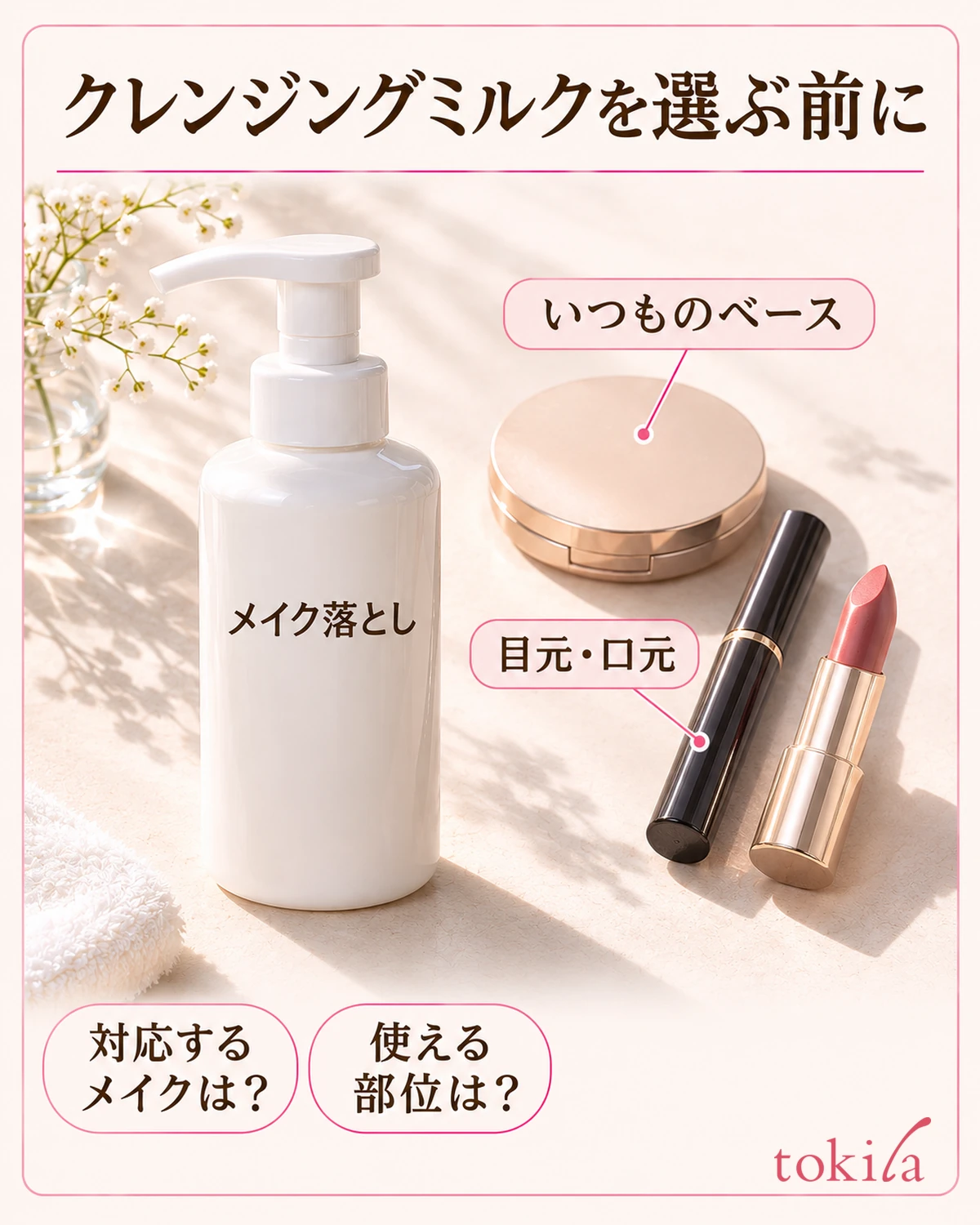
Start by listing your usual base makeup separately from products used around your eyes and lips. What you need from a makeup remover differs between sunscreen-only days, days with foundation, and days with hard-to-remove mascara. Consider the combinations you use most often during the week, rather than only your heaviest makeup day, to narrow down when you want to use it.
Check whether each option explains which makeup it removes and where it can be used. Do not assume from the product type alone that milk is only for light makeup or that one bottle removes everything. Also check any removal instructions on your makeup products, and identify areas that need a separate remover.
For example, if it works for base makeup but specific eye makeup requires a different removal method, you will have two steps: an all-over remover and a targeted remover. Using two products is not itself a failure; compare whether you can maintain that routine. Wanting to use just one bottle is not a reason to plan on using a product around your eyes when its suitability is unclear.
Even if you plan to replace your cosmetics, use your current makeup as the initial reference. Trying to account for all future makeup can broaden the options too much, so first check compatibility with your usual combination. Before going to the store, state your goal in one sentence, such as removing your weekday base makeup, to make the instructions you compare more specific.
Products with milk in their names can serve other purposes, including facial cleansers that must be lathered. Check the intended-use section instead of identifying a makeup remover by the container color or milky contents alone. Distinguishing similar names is the first step toward avoiding a purchase whose routine turns out not to suit you.
Connect rinsing, wiping, and subsequent washing before buying
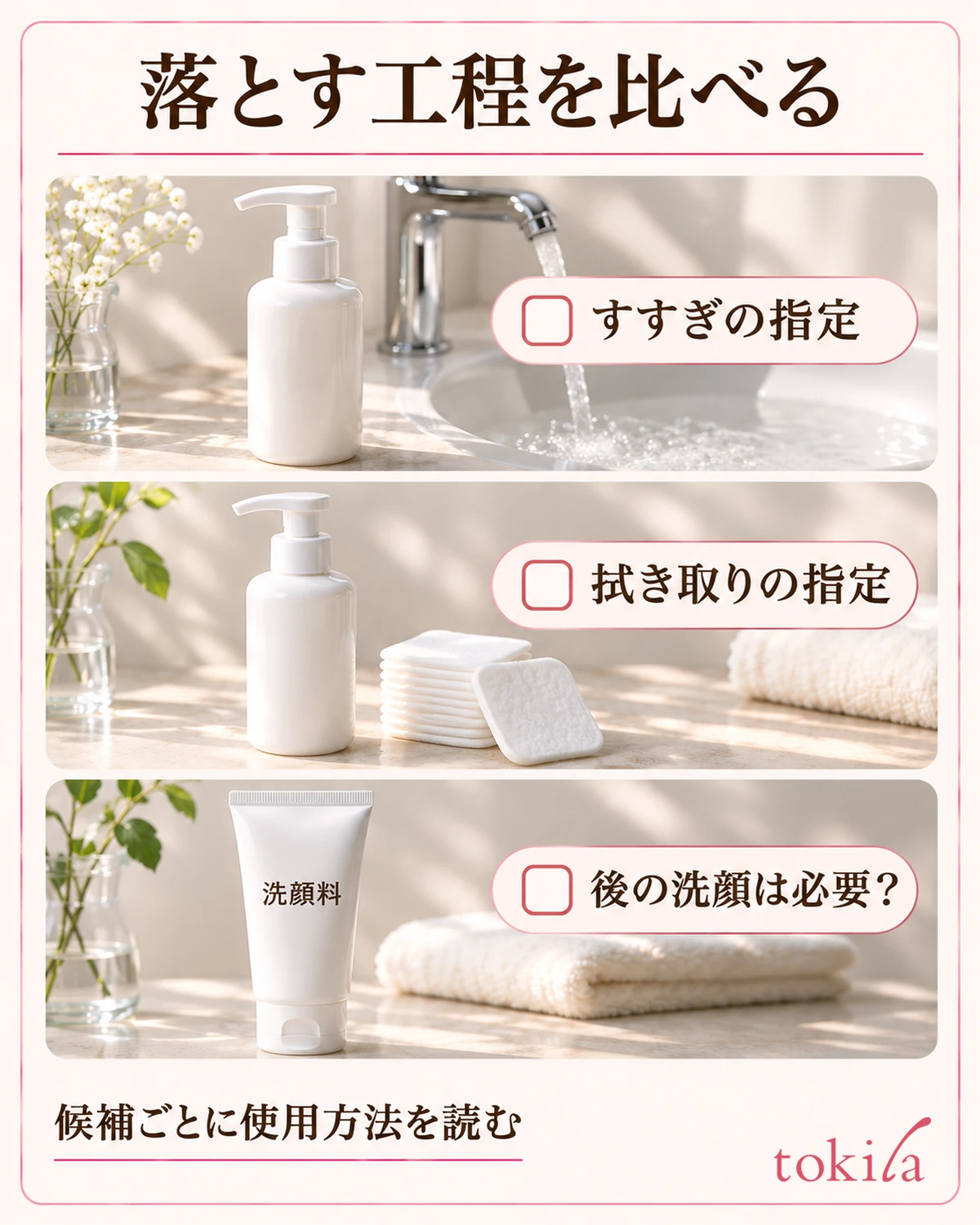
Next, read how to finish after working the product over your face. Some products rinse off, some can be wiped off, and others allow either. Think about whether you want to use it at the sink or remove makeup in your room first, and match the permitted method to the location. Do not infer a method from the name; read each option's directions as a complete sequence.
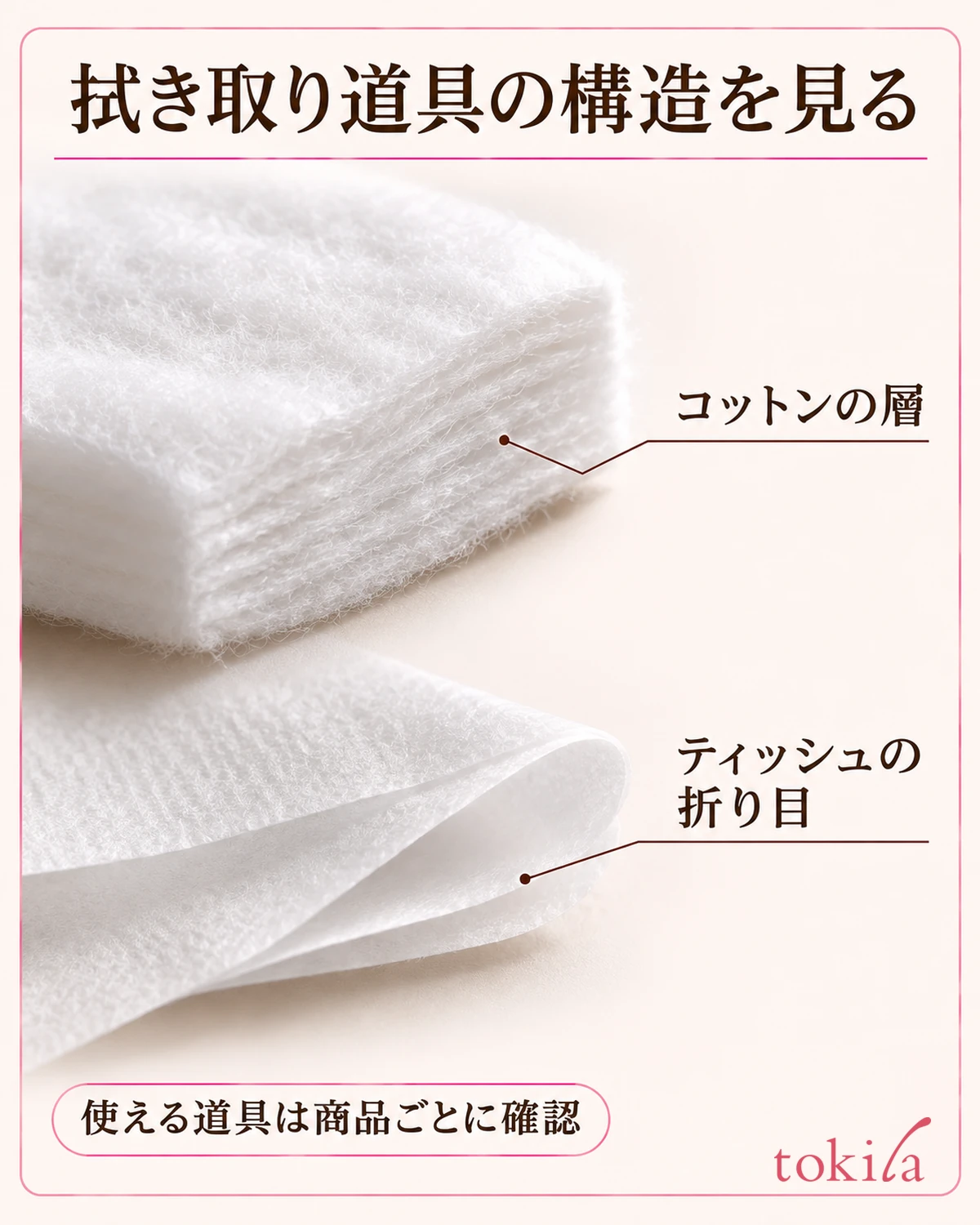
For options that allow wiping off, also check which tools are specified. The suitable materials and methods differ, such as tissues or cotton pads, so items already at home may not necessarily work. The supplemental photo separately shows flat cotton-pad layers and thin tissue folds. It is a close-up for distinguishing what to prepare, not a suggestion that either can always be used.
At the same time, check whether a facial cleanser is needed afterward. Rinsing does not automatically mean no further washing, and wiping does not automatically require it. Lay out your evening routine including any subsequent cleanser to compare the work involved through the finish. Read to the end of the instructions rather than just one side of the box.
When comparing two options, fill in the removal method, required tools, and subsequent washing for both. This avoids including facial cleansing for one option while judging the other faster based on makeup removal alone. Consider storage at your sink and preparing the tools in relation to your own routine.
For the actual steps after purchase, see cleansing-milk removal methods and preparation. Here you are choosing between options, so check whether you can follow a complete routine as directed, rather than assuming you will combine both methods in your own way.
Separate a moisturizing feel from conditions for use
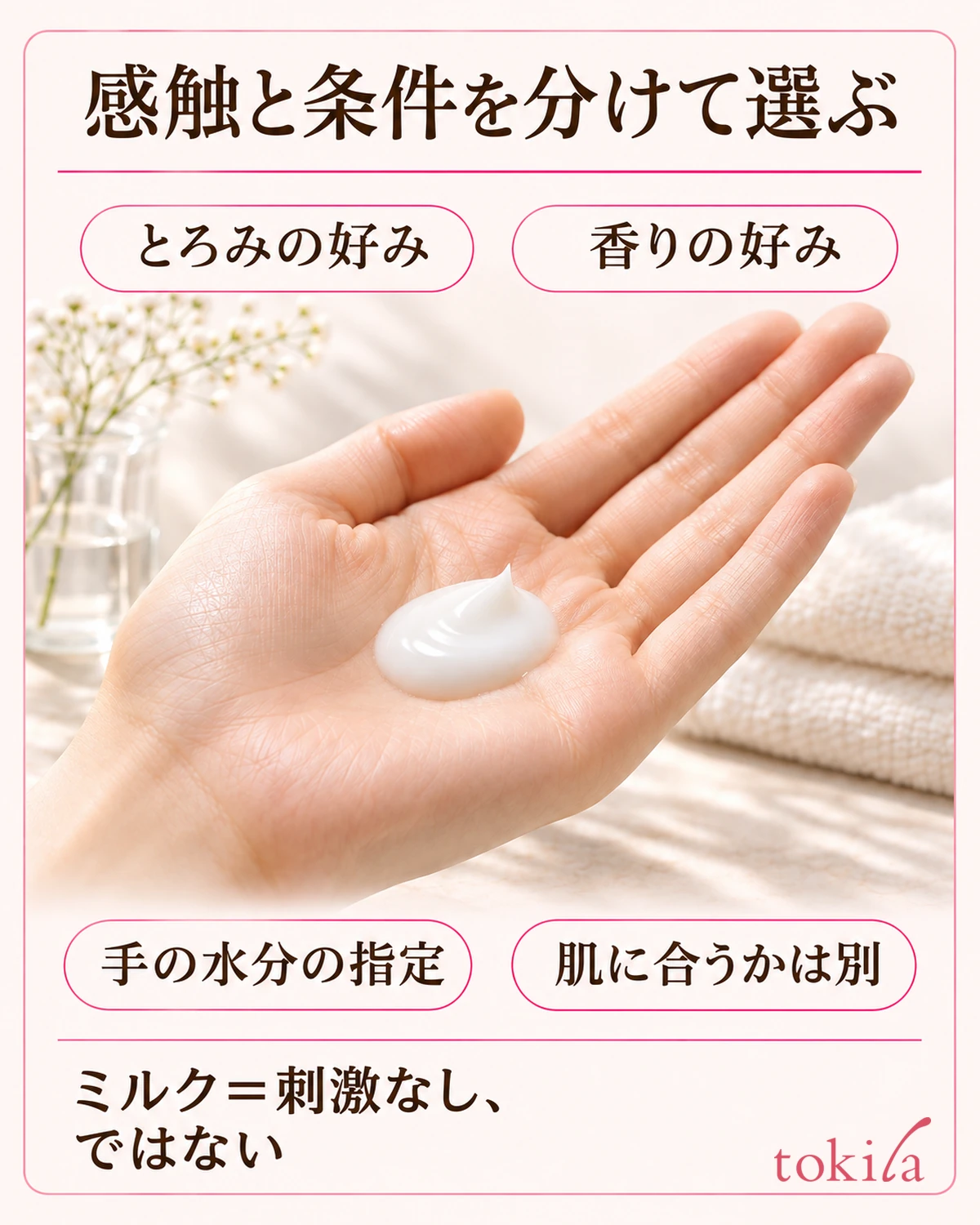
If you like a milky consistency or smooth feel, descriptions of the texture can help you choose. But do not interpret a moisturizing-looking texture as weak cleansing power or an absence of irritation. Your preferred feel, the makeup it removes, and skin compatibility are separate checks. Even if dryness concerns you, the name alone does not make a product suitable for everyone.
If testing is available in-store, follow the location and method the staff specifies. Liking the feel on an allowed area of your hand does not establish how your face will be after use. Base your choice only on what the test actually reveals, such as scent, consistency, and how easily your fingers move as you spread it.
Before buying, also check whether wet hands are allowed or dry hands are required. If you want to use it while bathing, read the conditions for your face and makeup as well as your hands. Do not isolate just one statement permitting use; consider whether the whole situation fits. Permission to use it in the bathroom and where the container can be stored are separate matters.
Fragrance-free or free-from claims do not guarantee that nobody will experience irritation. If you know you need to avoid an ingredient, check the label; do not expand where you test it based on your own judgment while unsure. Follow the product's precautions if your skin has an abnormality or develops one during use.
Keeping one thing you like about your current remover makes choosing easier. Note preferences separately from conditions, such as preferring a subtle scent or being able to keep up a dry-hand routine. Before narrowing your choices, consider whether changing only the consistency really requires a major change in removal method too.
Compare the amount per use and ease of dispensing
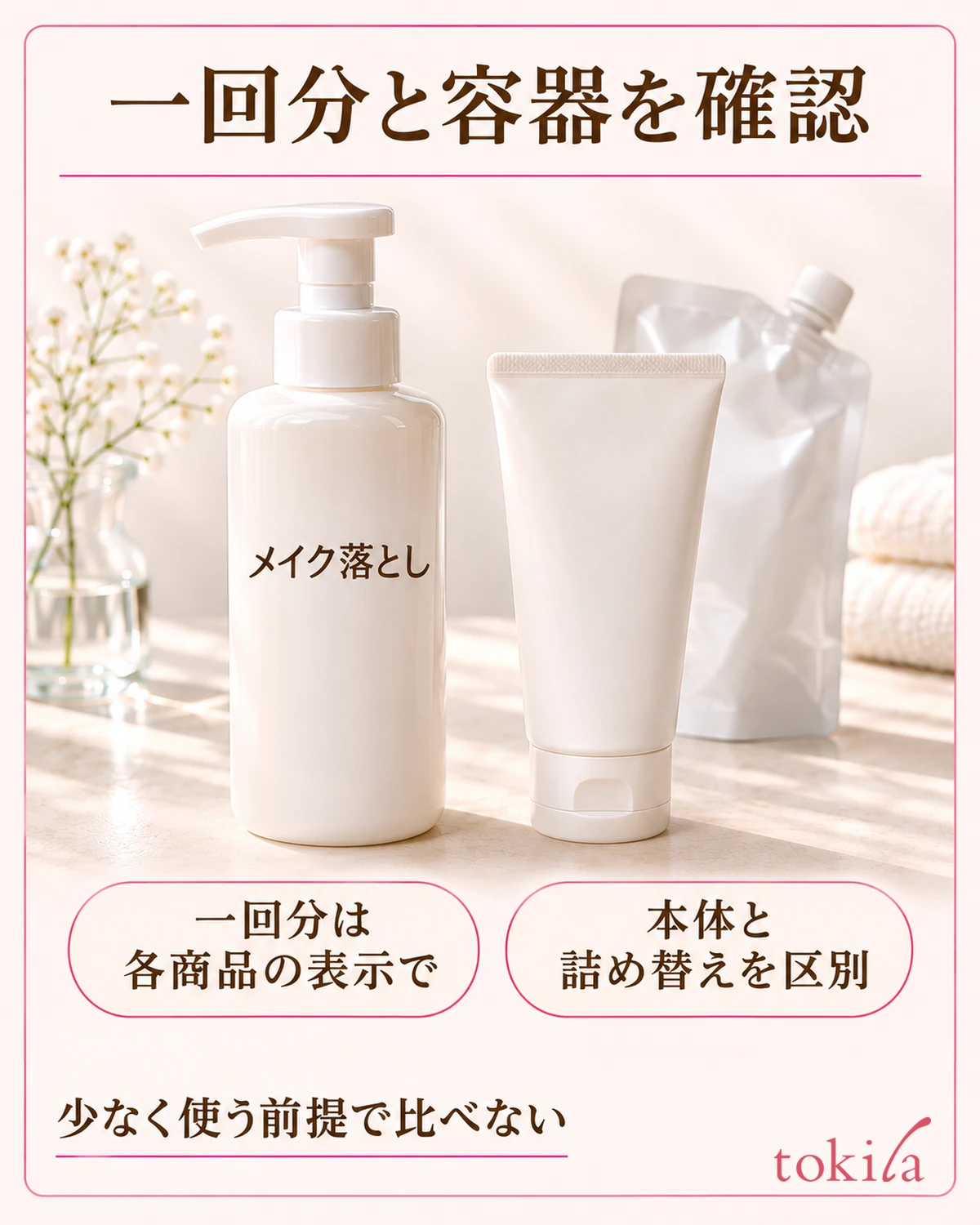
Before comparing volume or price, read the recommended amount per use. It may be expressed in pump presses or a size reference, but one press is not the same amount for every product. Do not transfer the press count from your previous bottle to a new option; compare on the assumption that you will use each one's specified amount. Do not justify a purchase by calculating that using less will make it last longer.
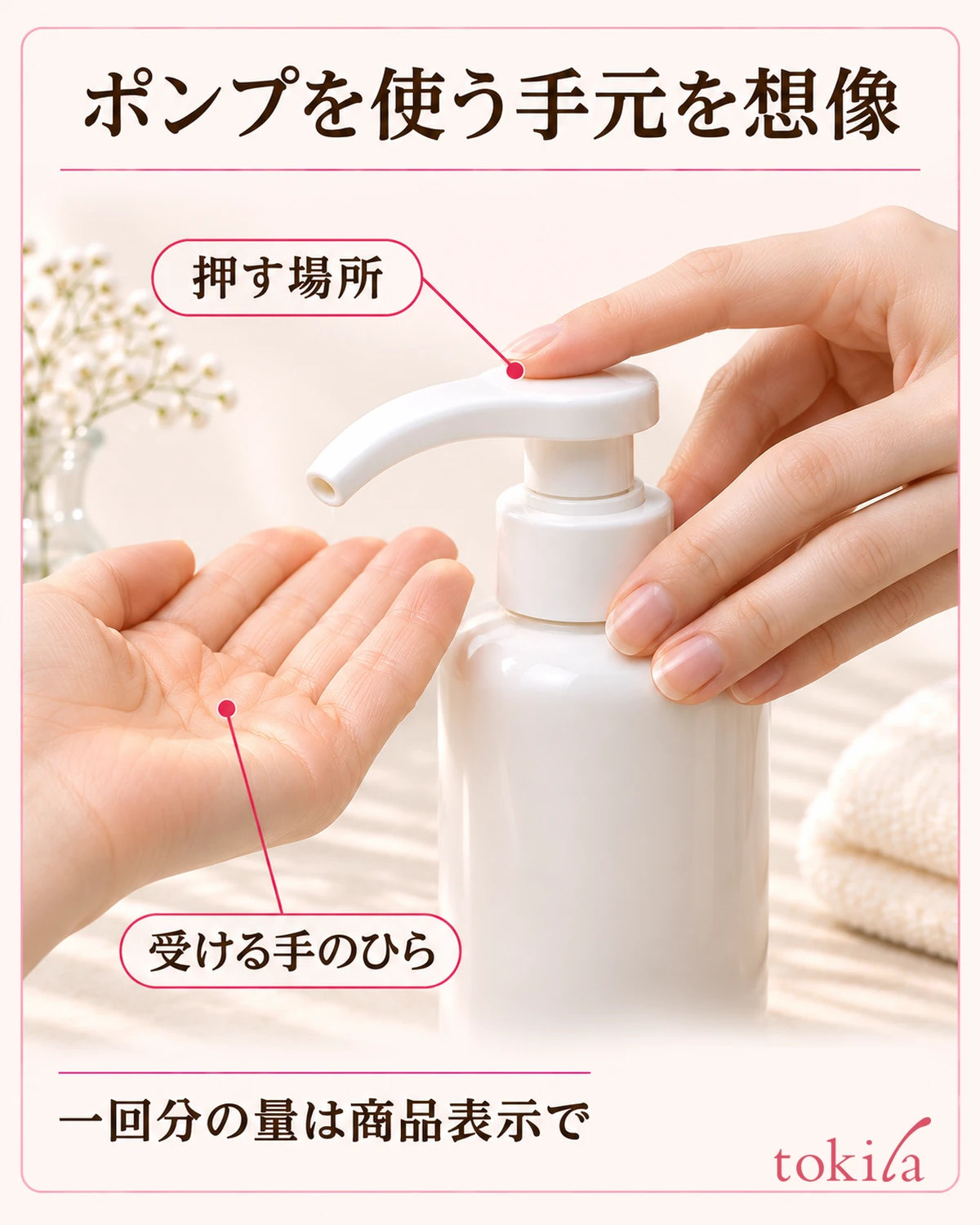
For a pump, consider whether you have a place to set it down and press it; for a tube, whether opening and closing the cap suits you. Keep the focus on the conditions needed to dispense the specified amount, rather than shifting the whole subject to packaging mechanisms. Imagining each use reveals handling considerations that volume alone cannot show.
The supplemental photo shows a gap between the pump outlet and the receiving palm. Its composition distinguishes where your finger presses from where you receive the contents. It does not compare pump counts or real products' output; use it to consider whether you can make that movement at your own sink.
If a product has a main container and refill, also check which you need for your first purchase. Do not compare only a refill's price against a full bottle or assume it can go into another container you own. Add a refill option for continued use only after confirming the compatible container and refill method.
If an after-opening period or storage conditions are given, consider them alongside volume. Weekly frequency and application areas differ among people, so volume alone cannot establish how many days it will last. A large size is not always best; compare it with your plan to use the recommended amount nightly and the size you can comfortably store.
Finally, narrow two options under the same conditions
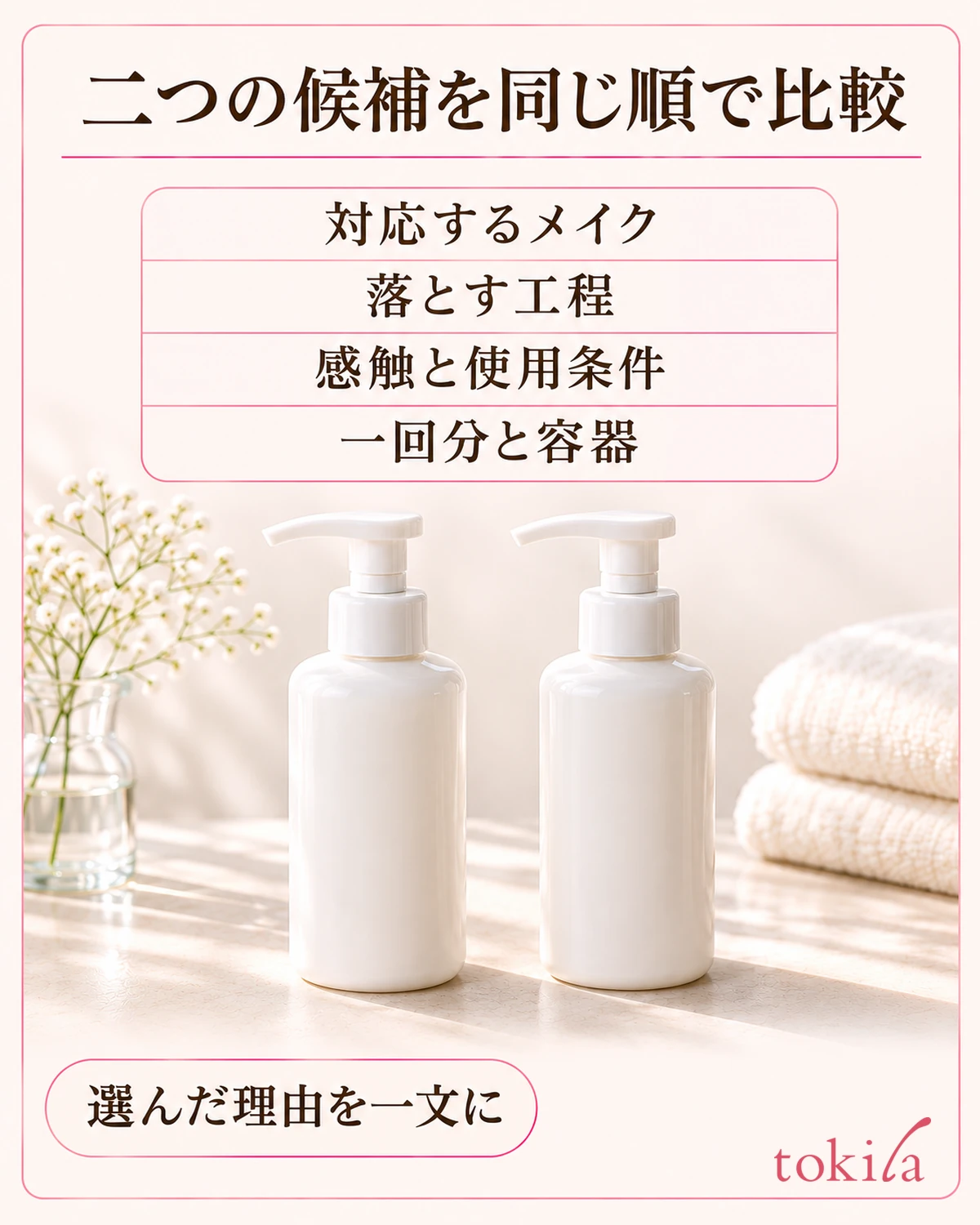
At the end, list makeup compatibility, removal steps, feel and usage conditions, and the amount per use and container in the same order. If both satisfy many conditions, return to what you most want to change in your current routine. One sentence explaining your reason, such as wanting to keep rinsing or prioritizing compatibility with your current makeup, can make deciding easier.
For your budget, include any targeted remover, wiping tools, and subsequent facial cleanser as well as the cleansing milk itself. Separate new purchases from suitable items you already own to see the initial expense. A lower price per unit of volume alone does not mean the daily routine will be the same.
If an option does not explain compatible makeup or subsequent washing, you can pause comparison until you know. Even if you like its appearance, do not fill in unknown fields yourself. Comparing two options with clear required conditions makes it easier to imagine use after buying than continually adding more candidates.
After purchasing, reread the amount, removal method, and storage directions before discarding the box. If makeup seems to remain, do not move toward harder rubbing; check the makeup and compatibility separately from the amount and steps. If it does not suit you or causes irritation or other abnormalities, stop using it and follow the precautions.
It can also help to keep a brief note of why you chose it for your next purchase. Rather than deciding only by appearance or reputation, choose an option you can describe as compatible with your usual makeup and manageable through your nighttime routine. Enjoy the texture while imagining the process all the way to the finish; that is a useful basis for choosing.