Have you bought a serum with powder and liquid packaged separately, only to wonder which to open first or what to do when particles remain after shaking? With a two-part serum, separating the initial mixing preparation from your subsequent skincare routine makes the steps easier to organize.
This article covers serums supplied as a cosmetic set of powder and dedicated liquid that you mix according to the instructions. It does not describe adding an ingredient powder to any toner you have. Let’s review what to look for in your instructions, from the mixing mechanism and dissolved appearance to the amount, order of use, and storage.
1. Check the powder and dedicated liquid pairing
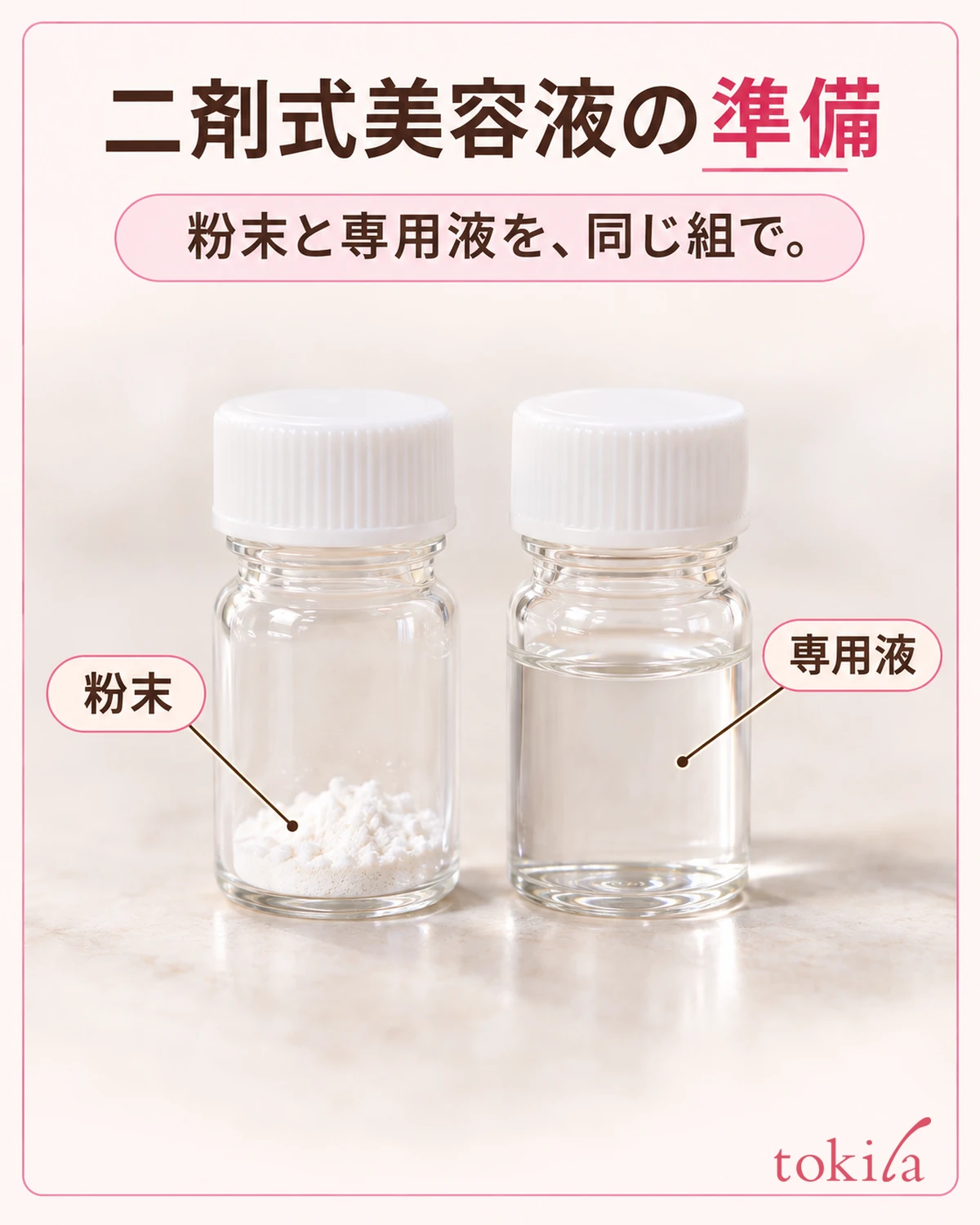
First, gather the main container, powder container, dedicated liquid, and instructions in one place. Check the names and intended uses on the outer packaging to confirm that the components belong to the same set. If replacement or separately sold liquids are available, check the compatible product name as well; do not pair components simply because they look alike.
The initial operation differs between products with powder and liquid in separate bottles and those that keep them apart inside a single container. Before opening, read which bottle receives the other component, or, for a single container, which part to press, twist, or otherwise move. Looking at the container diagram and identifying the same part on the actual container with your finger can help prevent confusion midway through.
Shaking a serum with separate oil and water layers is not the same operation as dissolving powder in a dedicated liquid. Do not assume the same preparation is needed every time simply because the contents appear to be divided into two parts. Make separate notes for operations performed only once at the start and those required before each use.
Use the mixing ratio specified for your set. If the instructions say to combine the full contents of both components, do not divide them by eye because you want to use a little at a time. Increasing only the powder to make it more concentrated, or adding water or another serum to help it dissolve, should not be treated as part of this set’s instructions.
Because the opening and mixing dates may matter for product management, consider when to open the set if you are not starting it yet. Rather than mixing on delivery day just to inspect the contents, first check whether you can use it within the specified period afterward and where you will store it. If you have several bottles, also check whether the instructions require preparing them all at once.
2. Read the mixing steps and the order for closing the container
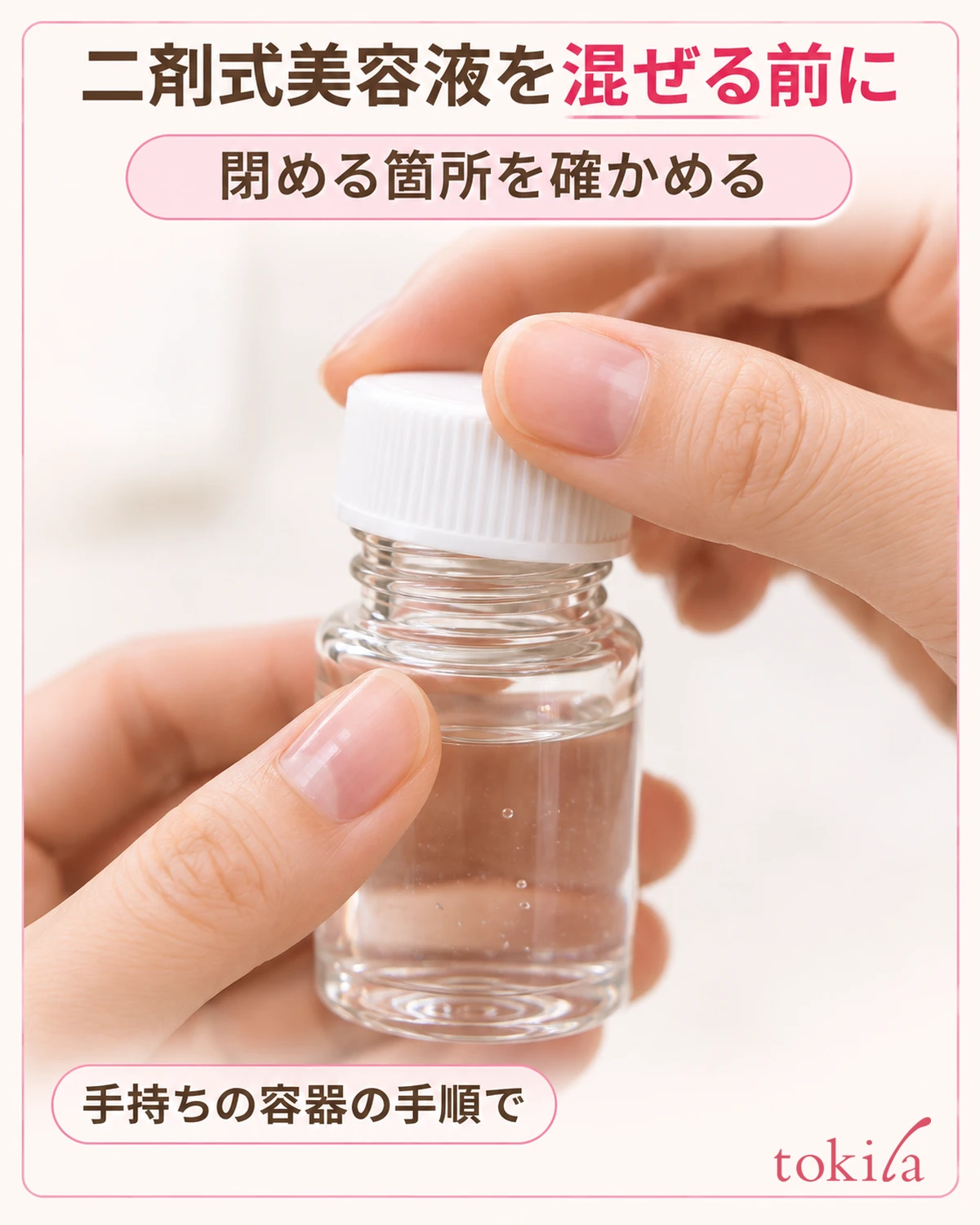
Choose a flat, well-lit surface where the containers can stand upright. Dry your washed hands and open the instructions nearby. Set aside a place where small caps and accessories will not get lost, and avoid touching openings containing powder or liquid with your fingers to inspect them.
For types that require transferring contents from a separate bottle, distinguish the cap to remove from the pump or other part fitted afterward. Removing every cap first can make it hard to remember where each belongs. Follow the instructions one location at a time, and add the amount of dedicated liquid specified for that set. If the opening is narrow and spilling seems likely, check the supplied accessories and procedure again instead of rushing to improvise with unrelated tools.
For types mixed inside one container, read carefully to determine whether the part pressed initially is the same as or different from the pump used for regular dispensing. Do not decide where or in which direction to press based on a video of another product. Rather than applying force that does not suit the structure, such as repeatedly pressing a part designed to twist, stop and return to the diagram if it will not move.
If shaking is specified, first firmly close the designated cap or pump. After checking that it is closed, proceed with the specified shaking method and duration. An instruction to ‘shake well’ and one giving a number of seconds provide different information. Do not apply a duration learned from another serum as a condition for this bottle.
If you spill liquid or powder during preparation, do not return anything from the floor or counter to the container. Also avoid adding water to restore the original volume. The mixing ratio or sanitary condition may have changed, so note the product name, which component spilled, and what you did, then check whether you can continue using it.
3. Confirm the powder has dissolved before dispensing
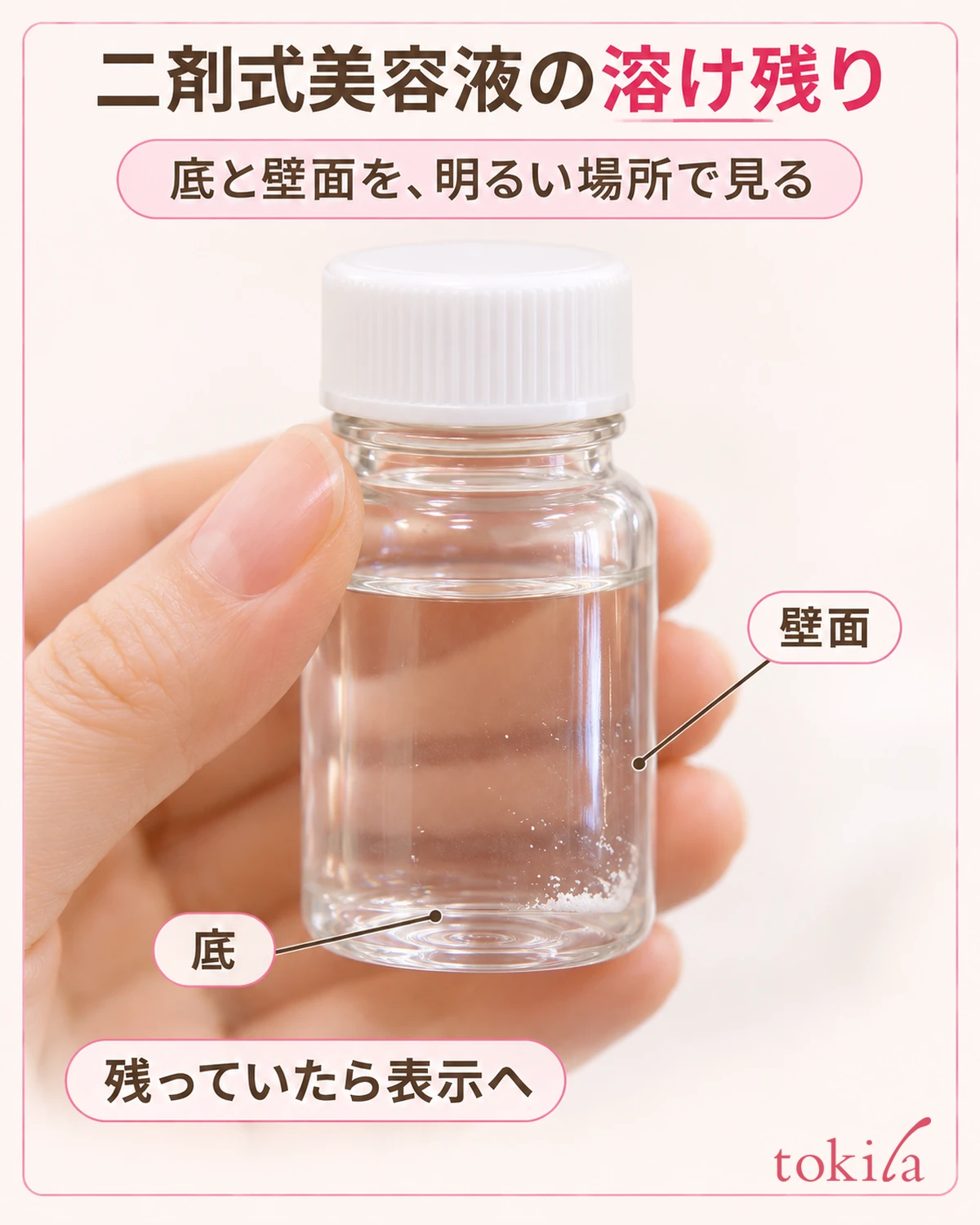
After mixing, read the instructions’ description of the dissolved state and examine the bottom and walls of the container in good light. An evenly colored liquid does not necessarily mean powder in the corners at the bottom has dissolved. With a transparent container, hold it closed and look for particles remaining along the curved bottom or sides.
There is no need to open a hard-to-see container and insert a finger or cotton swab to check. Distinguish fine bubbles at the liquid surface from powder that stays on the bottom or walls. With an opaque container, do not claim to have checked the contents from outside; follow the verification method provided for that container.
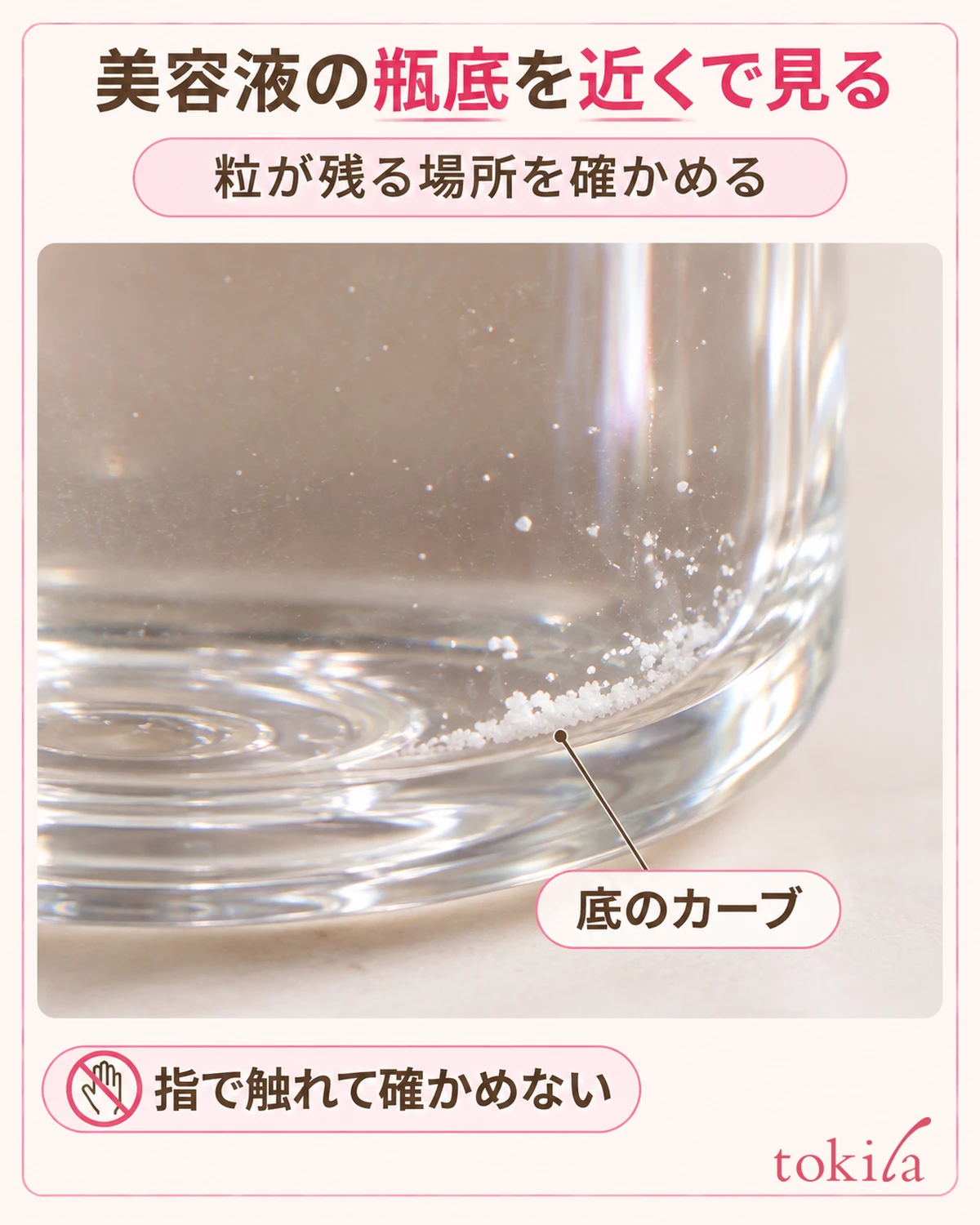
If powder remains, look for instructions to shake again, allow time, or take another step. Handling during dissolution varies by product, so do not set a universal waiting time in seconds. If you still cannot judge the condition after preparing it as directed, describe the condition and ask before using it.
Do not try to speed up dissolution with hot water, a microwave, or a hair dryer. Adding another solvent, crushing particles, or straining out the liquid are also improvised adjustments not stated on the label. Do not try to resolve undissolved powder while spreading the serum on your skin.
What you are checking is whether preparation is complete and the product is ready to dispense as a serum. A decrease in particles alone does not indicate stronger effects or deeper penetration. Use photographs and diagrams as aids showing where to inspect the bottom and walls, and use your product’s instructions as the standard for its normal condition.
4. Determine the amount and its place in your routine
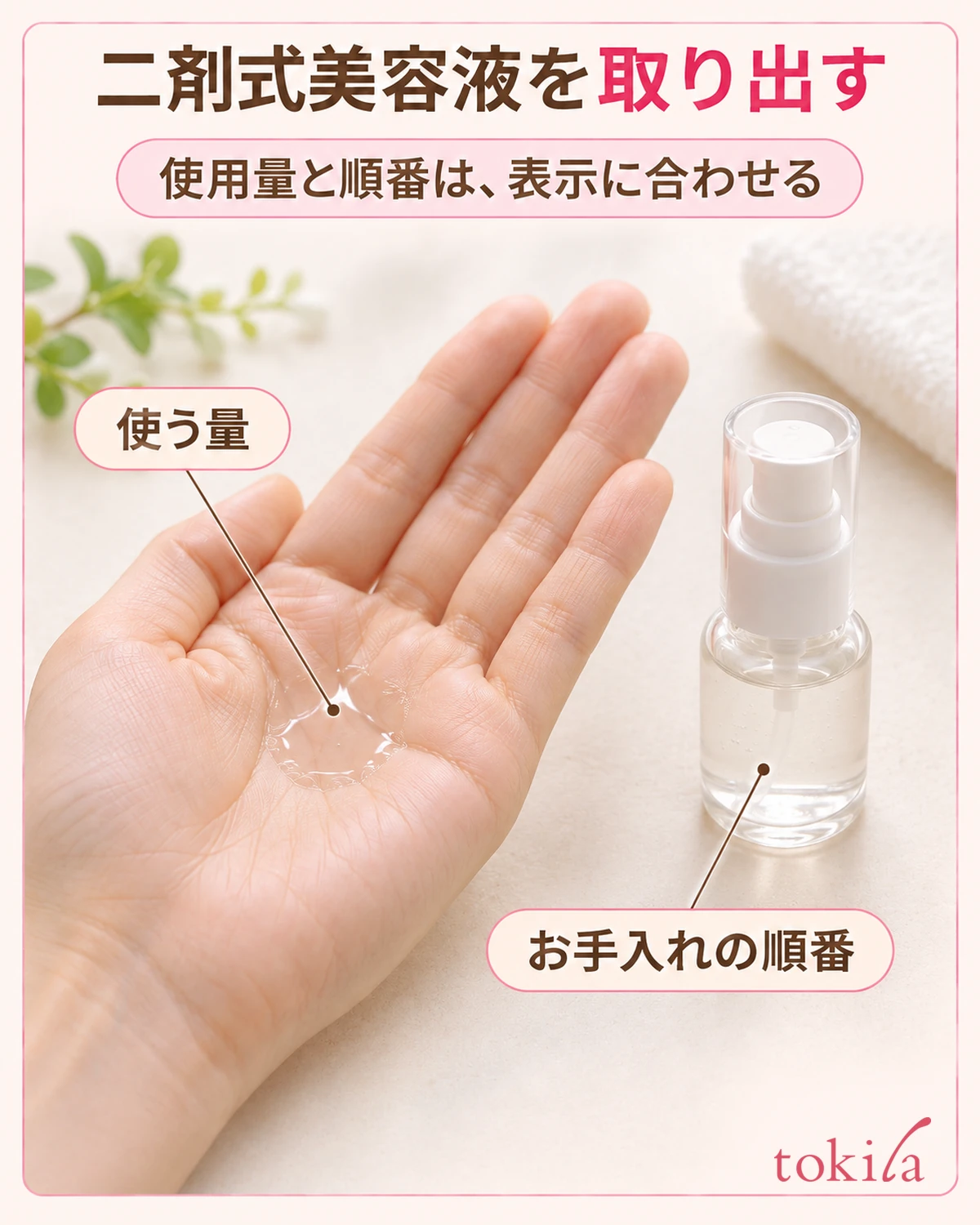
Before starting, check where it belongs in your skincare routine, such as before or after toner, whether to use it morning or evening, the appropriate amount, and the permitted application areas. Do not assume every two-part product is a pre-serum. Line it up with your toner and emulsion and decide in advance where this bottle fits.
Read the amount in the terms used on that container, whether drops, pumps, or an appropriate amount. One press does not necessarily dispense the same amount as another pump. Follow the instructions for initial operation if liquid does not come out yet. Do not interpret a failure to dispense as meaning you need more product; check preparation separately from dispensing.
If instructed to dispense onto your hand, use clean hands and smooth it over the indicated areas. Do not switch to placing powder directly on your face and adding liquid afterward. Avoid increasing the area or amount on your own, and do not return liquid left on your hands to the container. If you follow with an emulsion or cream, continue according to each product’s directions.
If you are unsure how to arrange multiple serums, you can also read how to plan your skincare routine before layering serums. When using multiple serums, distinguish completing the initial mixing from being able to layer them. Do not mix them in one container while the combination or order remains unclear; if needed, list the product names and check. Recording what you used on the day you introduced a new bottle also makes it easier to review your steps later.
If you experience abnormalities such as redness, itching, or irritation, stop rather than continuing in an attempt to get used to it, and follow the precautions. Avoid changes such as adding water to dilute it before restarting. Treat concerns about how it feels separately from whether the container’s dissolving operation is complete.
5. Record the mixing date together with storage conditions
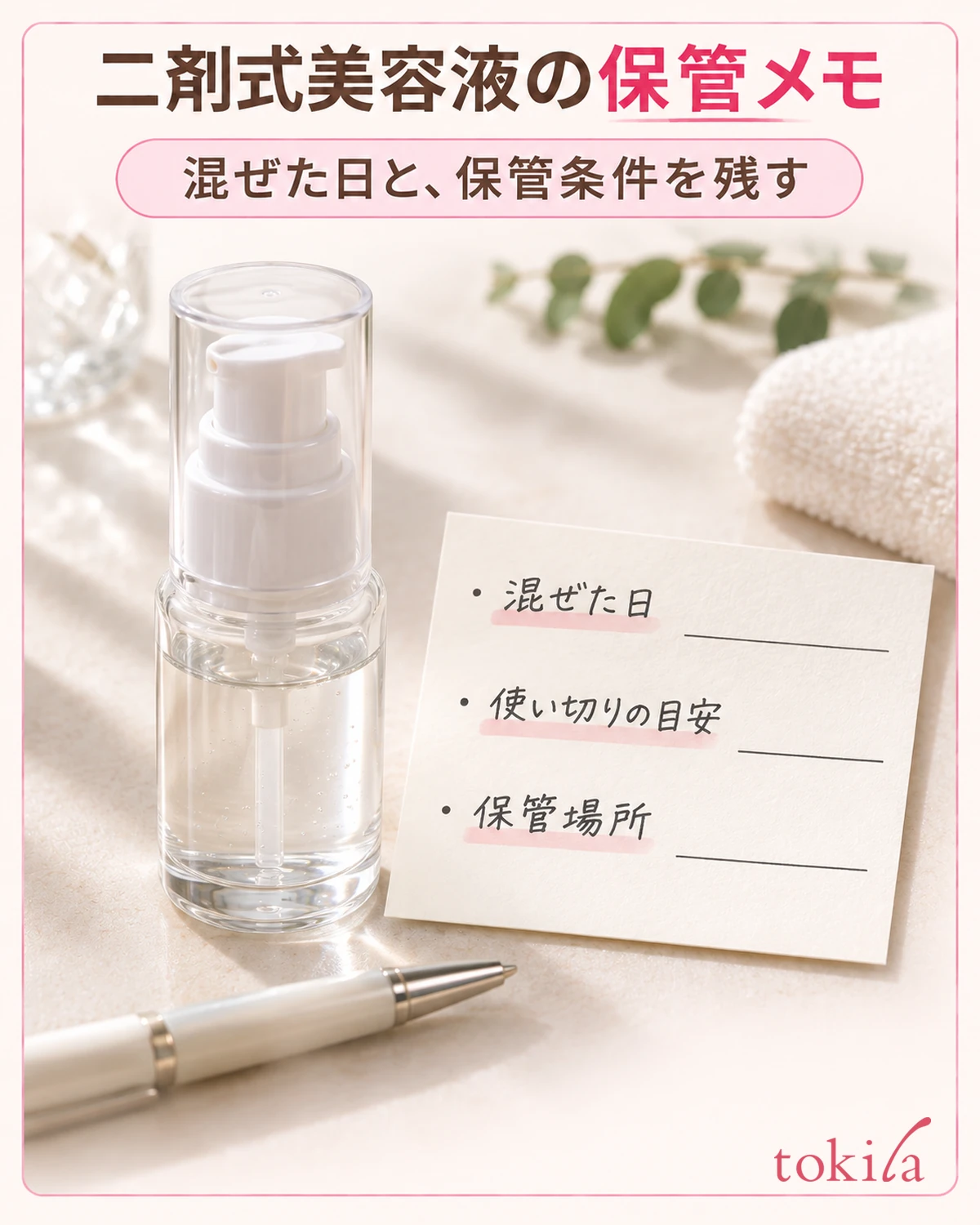
Record the mixing date in the space on the container or in a separate note. Copy the wording that specifies whether the recommended use-up period begins ‘after opening’ or ‘after mixing.’ Check both the date and period together so you do not record only the date and forget the period, or borrow a period from another product.
Choose the storage location according to each product’s conditions. Do not treat products requiring refrigeration and those specifying a cool, dark place alike; also read directions such as avoiding freezing. Do not extend the recommended use-up period on the assumption that cooling makes everything last longer. Also avoid transferring it to another, unlabeled container for storage.
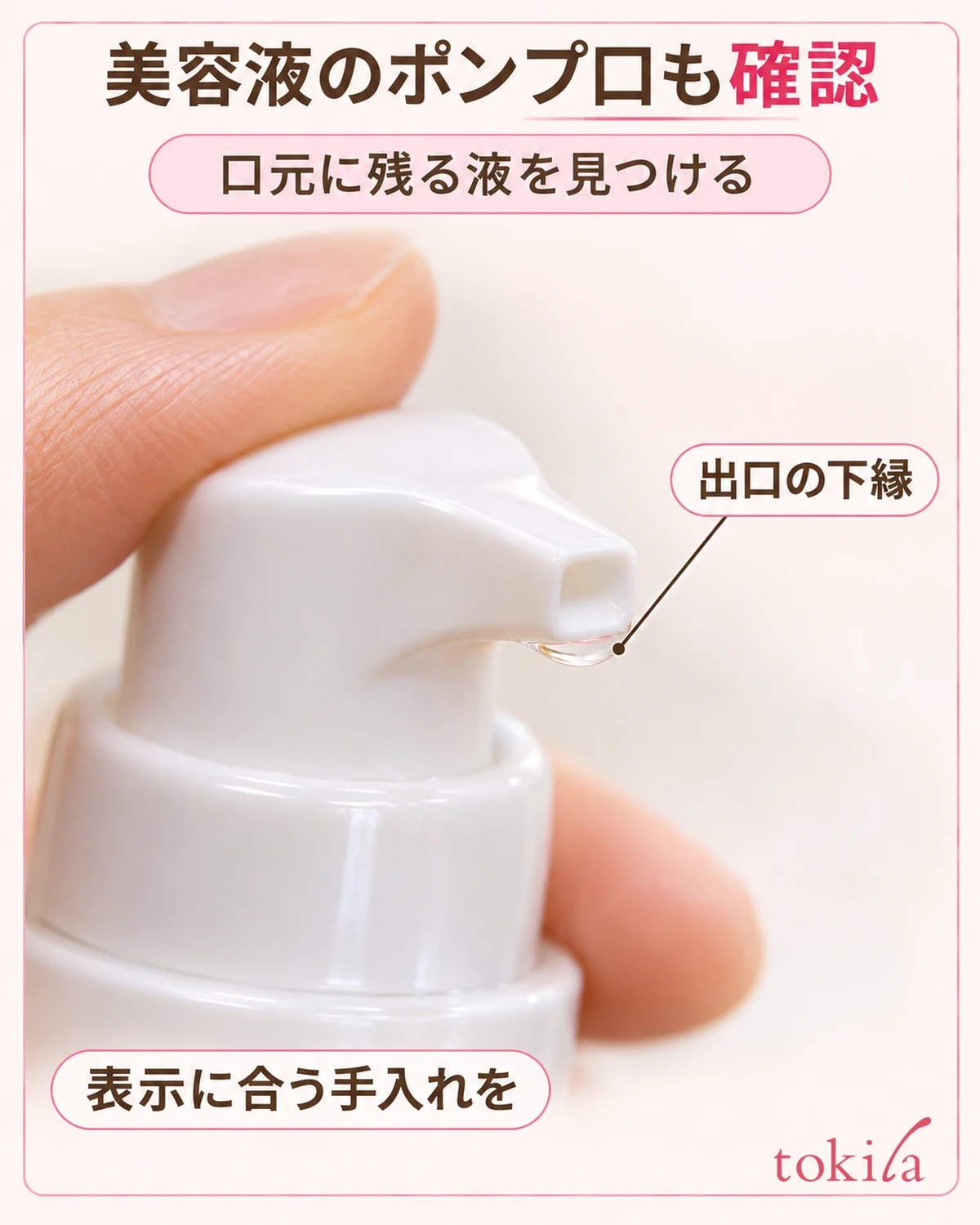
After use, care for the pump and opening according to that container’s instructions. Deciding where to look, such as the lower edge of the outlet, can make it easier to check for remaining liquid. Do not treat pushing leftover liquid back into the container or washing inside the pump with water as universal care instructions.
To avoid confusion next time, divide your notes into three parts: ‘initial operations,’ ‘operations before every use,’ and ‘mixing date and storage conditions.’ For example, clearly mark completed steps so you do not mistakenly think a container whose initial opening mechanism has already been activated needs to be dismantled again every day.
To start a two-part serum, confirm the pairing of powder and dedicated liquid, mix as directed, and check that it has dissolved. Afterward, manage the amount and order of use together with dates and storage. If your instructions leave questions unanswered, do not proceed by guessing. Identifying exactly which operation or condition is unclear and asking about it helps you decide what to do next.