After you finish using a hair iron, you may wonder where to put the still-warm unit, or whether a heat-resistant pouch lets you put it away right away. Think of putting it away in this order: turn off the power, unplug it, let it cool fully in the designated place, and store the cord without strain.
This article explains what to check before putting away a corded household hair iron. We separate the conditions for the unit, the accessories and the storage place, and follow the instruction manual of the item you own. Rechargeable batteries, conditions for carrying it when traveling, and repairing the device are not covered.
1. After use, turn off the power and unplug it
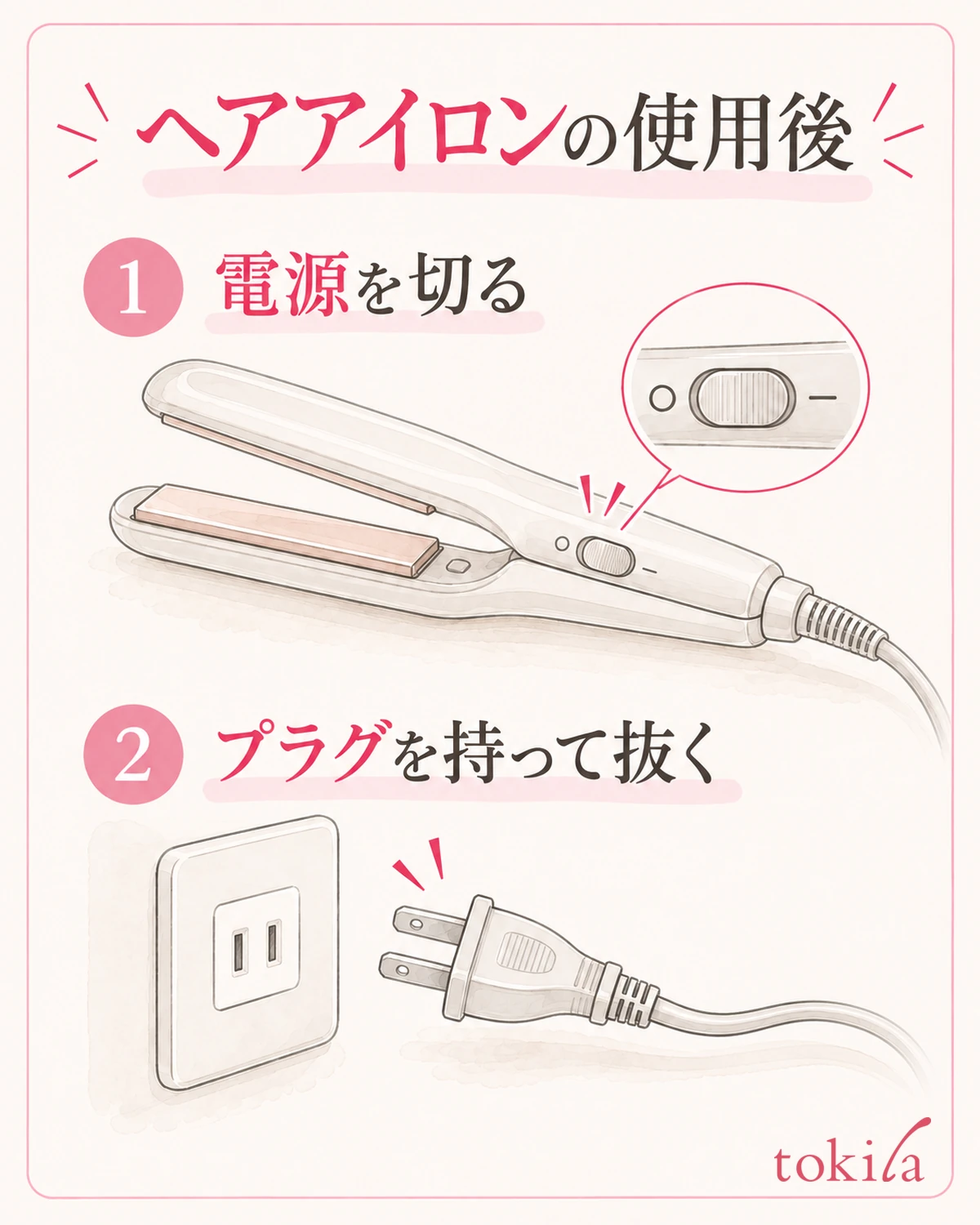
Once your hair is styled, first turn off the power of the unit. Do not consider it done just because you lowered the temperature; make sure you have operated the power switch. How the display or lamp goes off differs by model, so rather than judging by how it usually looks, confirm that the power is off on your own item.
Next, with dry hands, hold the power plug and pull it out of the outlet. Do not pull on the cord; hold the body of the plug. Even if you used it at the sink, do not continue putting it away with wet hands or in a wet place. If it does not reach the outlet, do not drag the hot unit; review the order in which you move things first.
Even if the iron has an automatic shut-off function, do not use it as a reason to skip operating the power after use or unplugging it. Do not leave it thinking "it should turn off when the time comes"; stop it yourself the moment you finish using it. Even when you may fix your bangs once more, if you plan to leave the room, do not leave it on standby.
Even after you turn off the power and unplug it, the heat of the plates and their surroundings does not go away right away. Treat the lamp going out and having cooled enough to store as separate things. Do not press the hot parts with your fingers to check; move on to the next step, cooling.
When you are interrupted while putting it away, for example by a phone call or a visitor, the point is not to leave it in a state of "the power is off but the plug is still in." Even after you have switched it off, do not leave the spot while heat remains, and follow the supervision conditions for your item. For a shared household appliance where it is hard to tell whether it has been used up, also check the display and the state of the plug.
2. Place it in a spot that matches the instructions until it has cooled fully
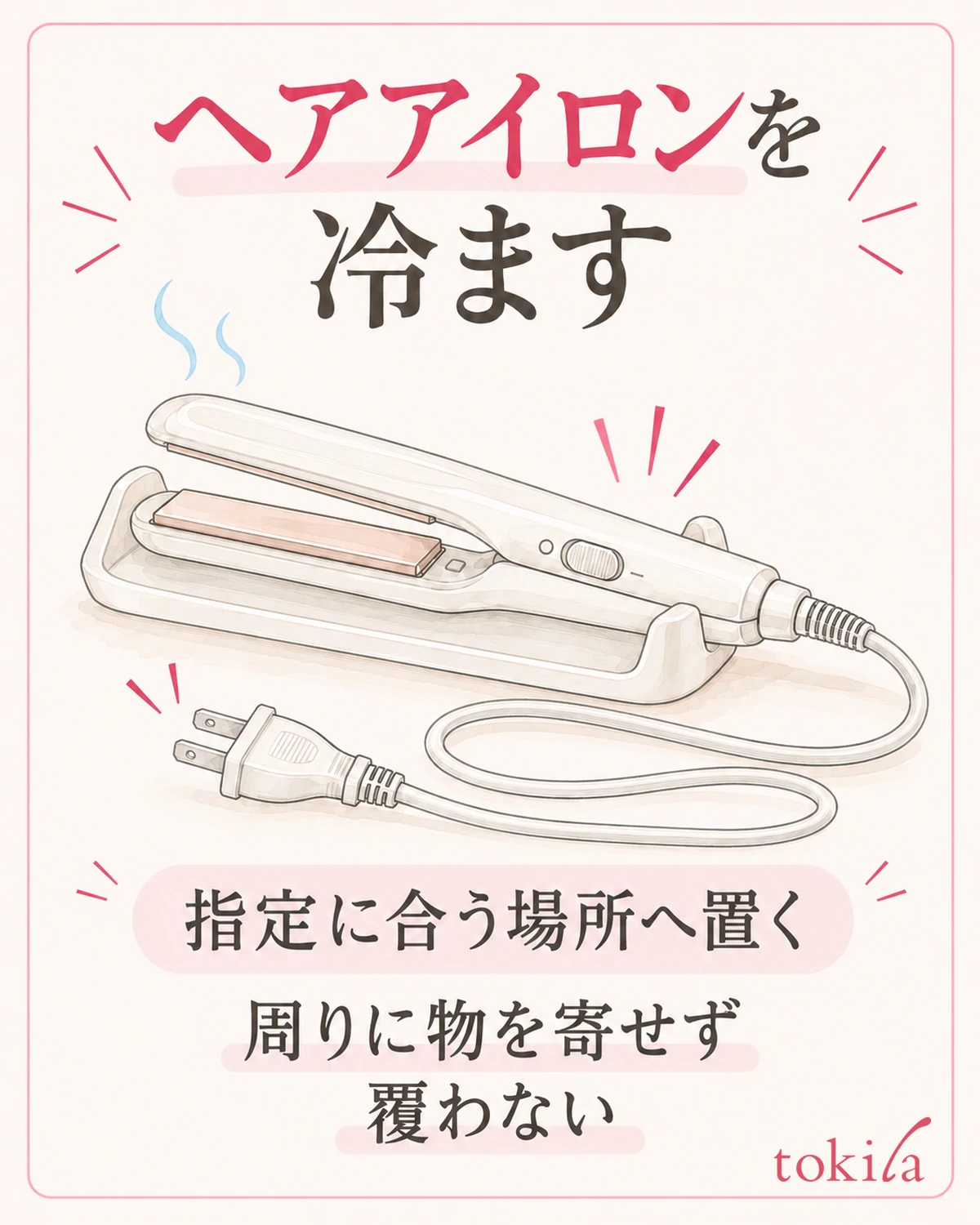
When cooling the unit, check the way of placing it and the conditions for the surface given in the instruction manual. Check whether the hot part may touch the surface directly, or whether it is built to be used with an included stand or the like, and choose a stable place. Straight and curling types differ in which surfaces get hot and in the points of contact when set down, so do not simply copy how another device is placed.
Do not bring towels, paper, pouches, containers of hair styling products and so on near it, and do not cover the unit with anything. Avoid the edge of the sink and spots where it would fall if the cord were pulled. If your usual place is small, securing a spot for cooling before you start using it, rather than clearing things away after you finish, lets you move to it without hesitation.
Placing it on the floor is not necessarily easier to put away. Also check that it is in a position where people will not step on it and children or pets will not touch it. Even in a high place, a hanging cord can catch and move the unit, so it is important not to judge by height alone. Do not hang the cord across a walkway or on a drawer handle.
Do not apply the same time to every device, thinking "it will surely cool in so many minutes." Because the temperature used, the shape and the accessories differ, let it cool fully according to the guidance for your item. Even if you are in a hurry, do not switch to cooling it by pouring water on it or wrapping it in a wet towel.
If you feel like moving it to its storage place partway through cooling, review whether you have confirmed that the storage place can handle a unit that still holds residual heat. Cooling it inside an ordinary drawer or shelf is not the basic approach. Before going out, prepare by including the cooling and storing steps, not just the time to style your hair.
3. Check the heat-resistant pouch labels and the condition in which the unit may be put in
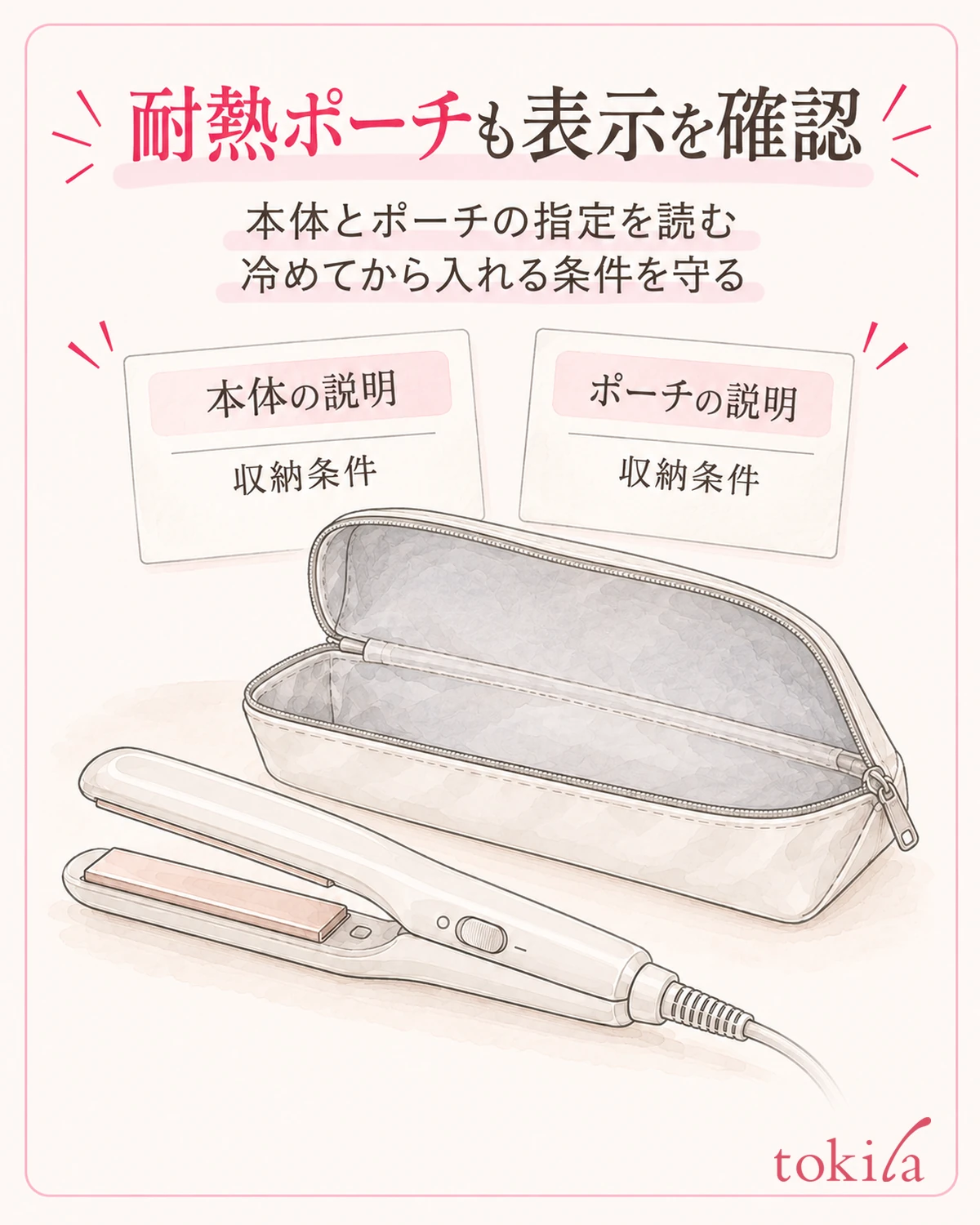
Even if the included pouch says "heat-resistant," it does not always mean you can put the unit in it right after use. Check both the storage conditions on the unit side and how to use the pouch. Do not decide on your own that it is fine if the set temperature is below the heat-resistant temperature you see written there.
On the label, what to look at is whether there is an instruction to store it after it has cooled, in which direction the hot part should be stored, and where the cord goes in the structure. Even for a product that can be spread out and used as a mat, the conditions for closing it as a storage bag are not necessarily the same. Read the guidance for each way of using it separately.
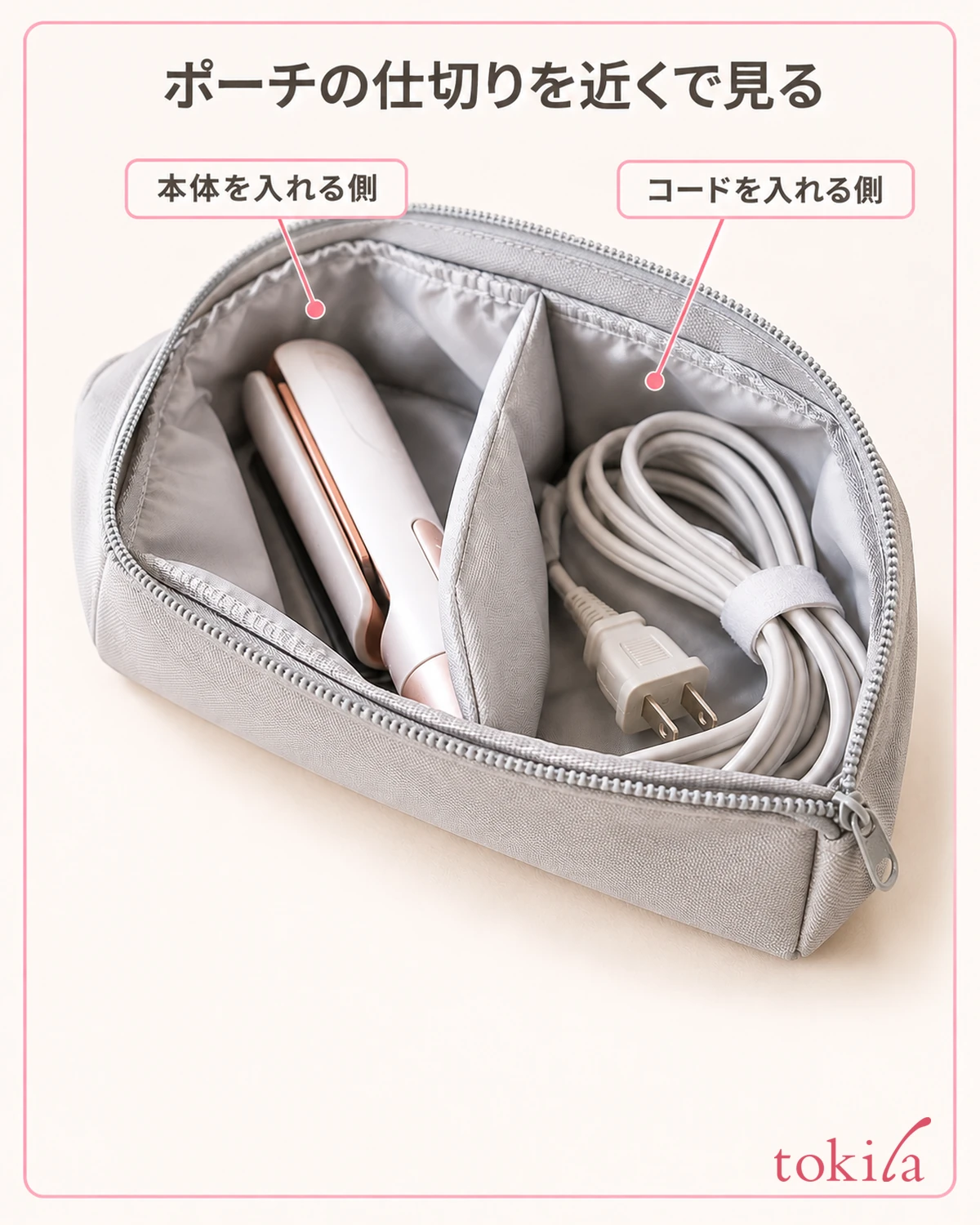
When you switch to a pouch that came with a different device, do not treat it as suitable just because the item fits in. If the length, thickness, position of the hot part or storage direction differ, it may press against the zipper or the seams. Do not recommend wrapping it in a bag or cloth whose compatibility you cannot confirm as a substitute for the dedicated item.
Even when putting in a fully cooled unit, do not force it in and pull the zipper. If it will not go in, take it out once and check the orientation and the combination of accessories. For a device with a lock that closes the handle, follow that model's operation and timing, and do not tighten a device without a lock with a string to make it smaller.
If the pouch has damage or melted marks, do not keep storing the unit in it on the assumption that you will keep using it; check the conditions of use and whether it needs to be replaced. Do not assume that switching to a larger bag solves the cause, either. On a day when you cannot tell whether it can be stored, first let the device cool fully and return it to the original storage method that you can confirm.
If you plan to carry it out with you, think separately about putting it into your storage place at home and carrying it in a bag. Do not hold it down with luggage while the cord sticks out of the pouch, or force it in together with liquid containers such as toner; secure a place where the unit and accessories fit. Do not treat quickly closing the lid as the completion of putting away when you cannot confirm the compatibility conditions.
4. Store the cord without winding it around the unit and without strain
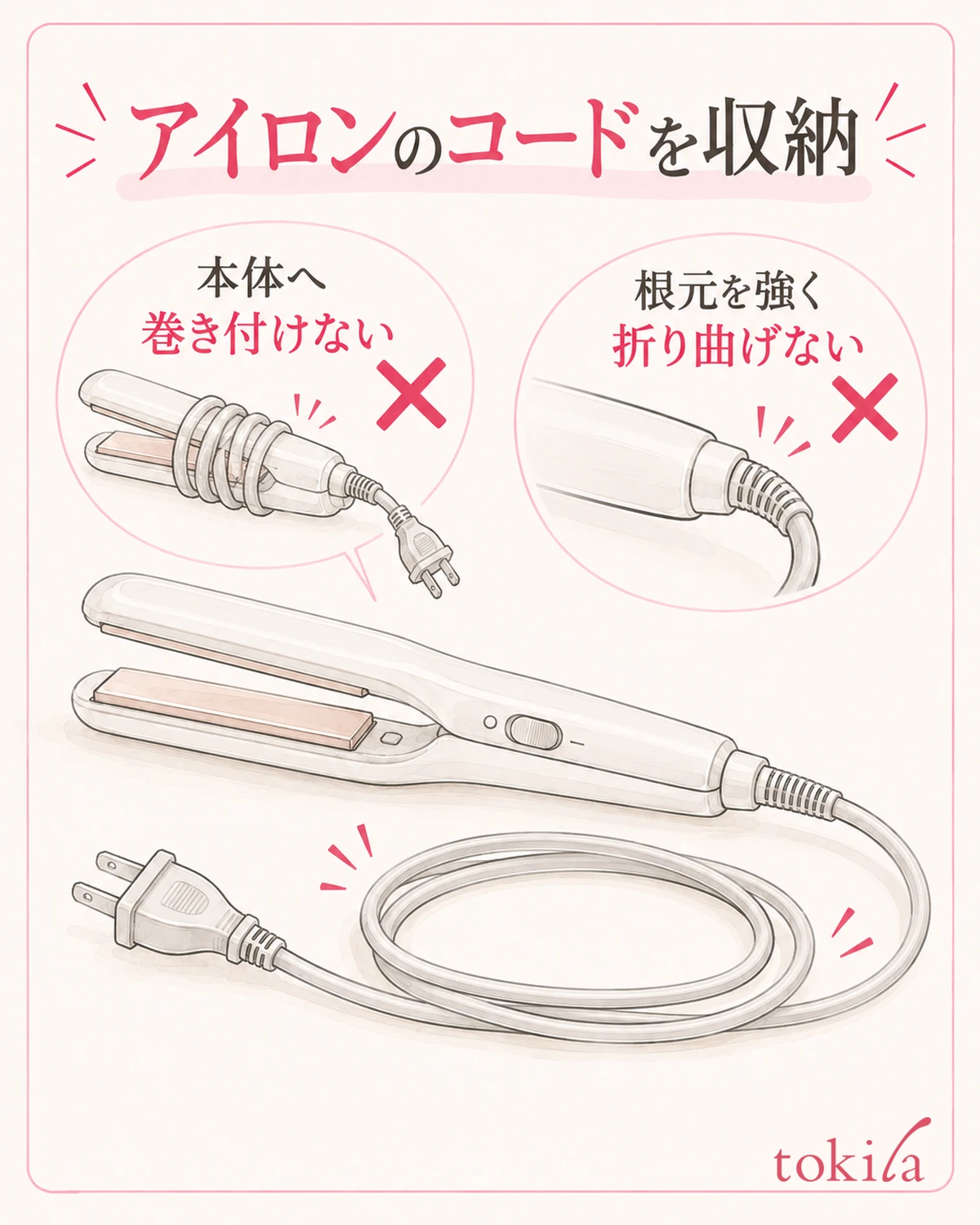
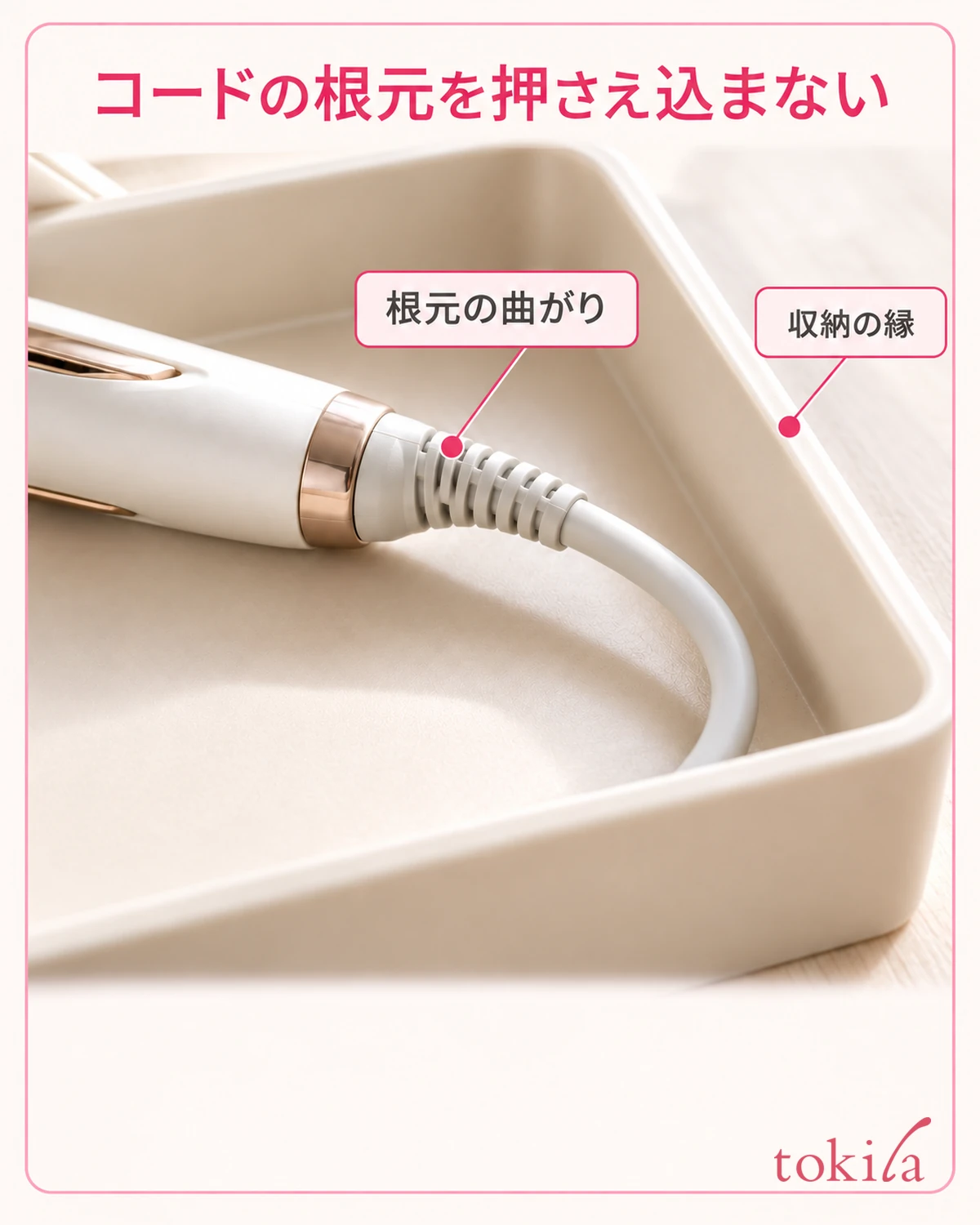
Once the unit has cooled fully, check how the cord is routed. When storing, do not wind the cord tightly around the unit or bend its base sharply. Avoid storage that puts strain on the same spot every time, and if the way to gather the cord of your item is specified, follow that method first.
Before gathering the cord, spread it out so you can see it from the base of the unit to the plug, and check for tangles and twists. Do not pull hard on a caught cord to untangle it, and do not try to fix it by turning the rotating base over and over. If there is anything unusual, such as a twist that does not come out, it needs to be inspected before the next use.
For the shape of storage, give priority to fitting in without putting strain on the cord rather than to making it small. Even if there is an included strap, do not change to a way of using it that folds the bundle extremely small and tightens it hard. If the position of the strap or the shape of the bundle is specified, check it, and if there is not enough storage space, review where you put it.
If there is a pocket for putting the unit and the cord in separately, follow that structure. Also check that the plug and cord are not pinched by the plates, and that they are not caught on the zipper or the edge of a drawer. If the lid closes only when you push things in, do not solve it by closing force; take them out once and change the arrangement.
Even among beauty appliances, the places to care for differ between the air intake of a hair dryer and the plates of an iron. If dust on your hair dryer bothers you, see the steps for checking the care of the air intake. For the iron, follow the care conditions for each model, and even if you notice dirt before storing it, do not start wiping it while it is still hot.
5. Before putting it away, review any abnormality and the storage place
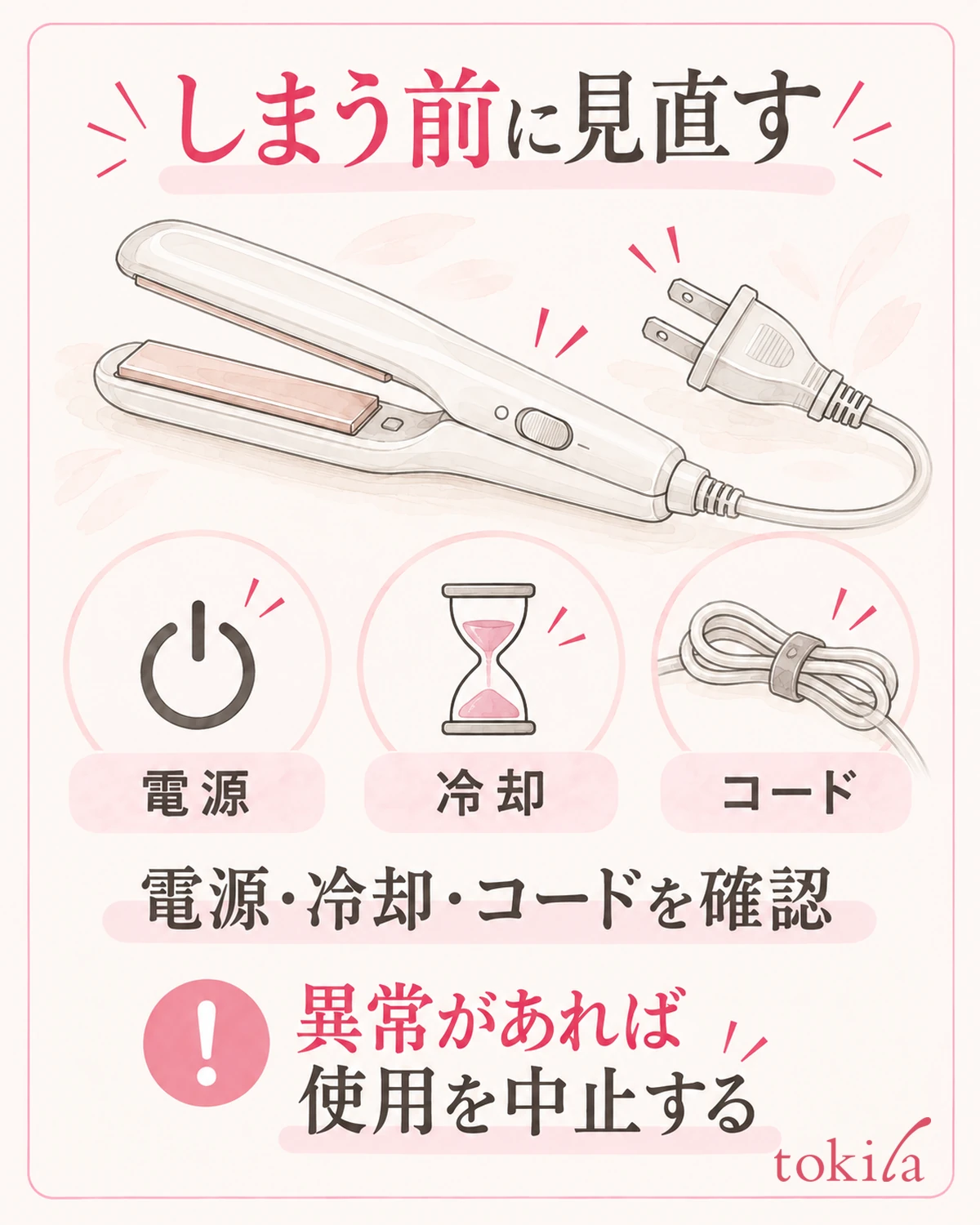
Finally, review that the unit has cooled fully, that the power plug is out, and that there is no worrying change in the cord or the unit. Do not return a device to use next time with the thought "it was put away, so there is no problem" if it had a change such as a cracked cord sheath, abnormal heating of the plug, or stopping partway through use.
If you suspect an abnormality, stop using it and follow the inspection or repair guidance for your item. Avoid turning the power back on while bending a damaged cord to check whether it conducts electricity. Do not hide it with tape or take it apart to fix it yourself; first check whether it can be used again.
For the storage place, check the conditions such as water, humidity, heat and direct sunlight in the instruction manual, and choose a place out of children's reach. Even in a bathroom cabinet, do not stuff it in together with a wet towel or let it touch another heating appliance that is in use. The conditions of the storage place and whether the unit has cooled are separate points to check.
When sharing it with family, arranging things so that it is clear how far the person who used it has put it away makes it easier to check. Decide on a place for cooling and a storage place for after it has cooled, so that the next person does not move a hot device into a bag. If you leave a note, do not place it over the unit; put it in a visible position away from the hot parts.
If you tend to rush to put it away next time too, start by reviewing the time you begin using it and where you cool it. If fixing the marks left in your hair takes a long time, the article on undoing and drying hair-tie creases may also help. Treat styling and storing as one continuous preparation, and finish calmly in this order: power off, cooling, label check, then the cord and the storage place.