When using a foaming serum for the first time, you may wonder whether to spread it in your palms before applying it to your face or place it on directly. Even if it looks like a cleanser, a rinse-off product and one worked into the skin have different roles. First, check the product’s purpose, place in your routine, container handling, and how to spread the foam together.
Here we cover preparation and application for a foaming serum that is worked into the face without rinsing. Even for a product labeled carbonated, do not infer its effects or directions from the foam’s appearance alone. We focus on products whose directions say to use the foam without collapsing it, following the label of the product you own. Treat products requiring wiping or rinsing separately according to their instructions.
1. Confirm that it is a leave-on serum and decide where it fits in your routine
First, read both the product name and directions on the container. Foaming cleansers, wipe-off products, and leave-on serums require different finishing steps even when their containers look similar. Do not assume that a product can stay on your face just because it says “serum” or “foam.” Read through what to do after application before preparing.
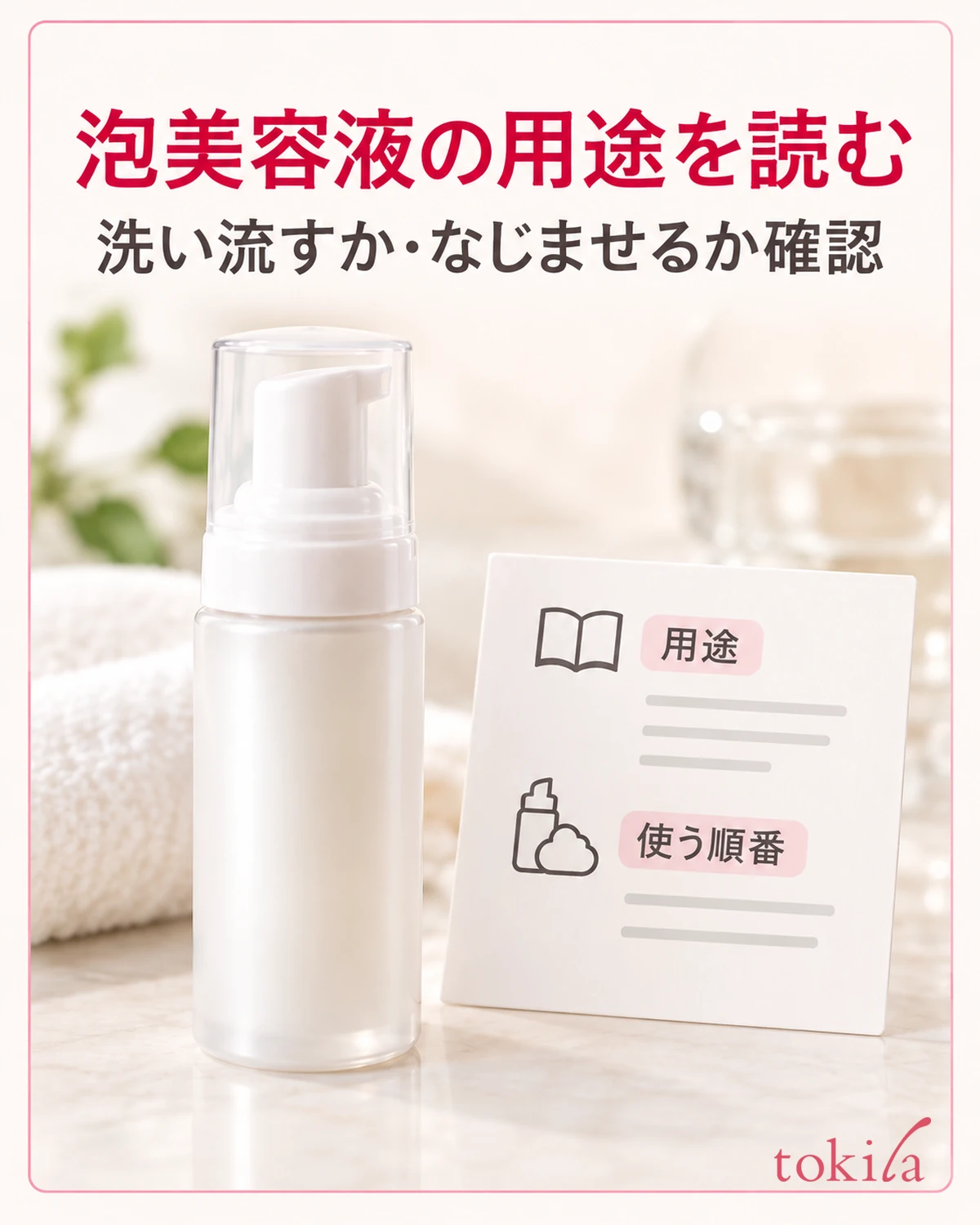
Next, check where it belongs in your routine. If instructed to use it immediately after cleansing, proceed to the serum after washing your face. If it specifies another stage, such as after toner, follow that order. Do not invent a rule that foam always comes first and liquids later.
If you already use a serum, compare each product’s place in the routine and guidance on combined use. Having two foam products is no reason to dispense and mix them together in your hand. When planning to layer serums, check not only their order but also morning versus evening use and the areas of application.
Whether your face may be wet and how to deal with moisture after cleansing are also product-specific conditions. Rather than rubbing hard with a towel or adding water to your hands to create lather, prepare clean hands and skin as directed. Start by keeping the handling of rinse-off foam separate from moisturizing care.
Keep hair away from your face and position a mirror so you can see your cheeks, forehead, and around your mouth. Read any restrictions on application areas and precautions for cuts or swelling beforehand. On your first day, keep the next product within reach so you can focus on application without searching drawers while holding foam.
2. Read the shaking instructions and container orientation, then dispense one application
Before removing the cap, read whether to shake the container and which way to hold it when pressing. Instructions to keep the head upright without shaking and instructions to shake well are different conditions. Do not transfer one product’s handling instructions to another simply because both dispense foam.

If the directions say not to shake, hold the container as it is in the specified orientation. If shaking is required, follow the label for the number of shakes and grip as well. Do not add improvised methods such as warming it or hitting the can hard to improve dispensing. Check warnings about heat and flames for pressurized containers when choosing where to use them.
Read the guide for one application and dispense into a clean hand. If the amount is shown by diameter or a similar measure, treat it as a guide for that product, not a size to reuse for other products. Do not prescribe the same number of seconds of pressing for every product. Watch the distance between the nozzle and hand and follow the dispensing directions.
The supplementary photo shows the nozzle and receiving hand from the side. Check that the nozzle is not pressed against the hand and that there is space to see where the foam emerges. The size of the pictured foam does not establish the correct amount. Check the quantity against your product’s label; use the photo to understand the position of the nozzle relative to the hand.
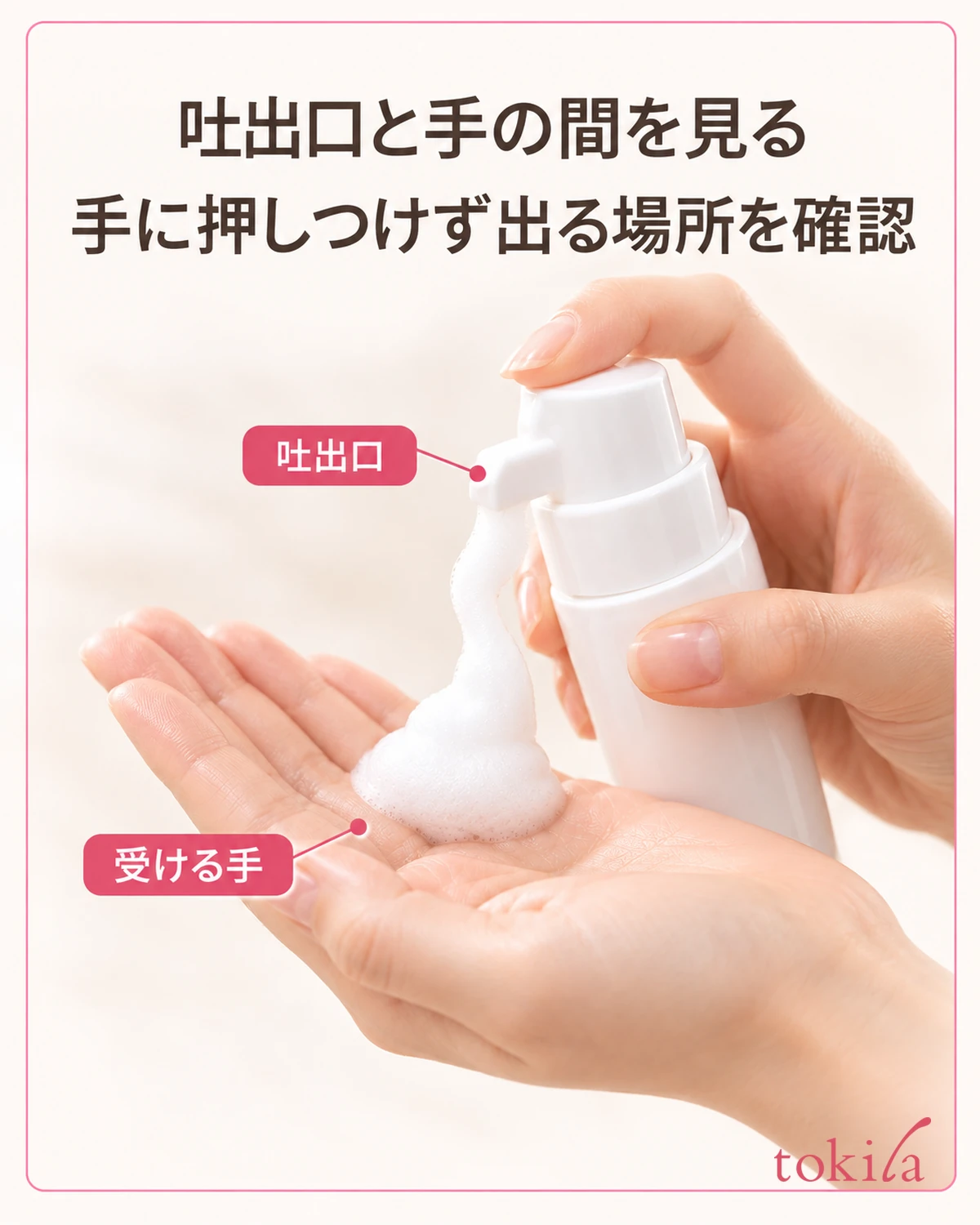
If your pressing finger or the container hides the nozzle, reconsider the orientation of your hands instead of bringing it up in front of your face. Do not substitute spraying directly onto the face for instructions to dispense into a hand. Once you have the required amount, stop pressing and put the container on a stable surface before applying it to your face.
For products with first-opening components or locks, distinguish what to remove from what to leave in place. If nothing comes out, return to the first-use directions rather than prying parts open or inserting a needle into the tip. Also avoid returning foam from your hand to the container.
When positioning a mirror, check both the view of your entire face and the view of your hands. Rather than tilting the container in front of a mirror held too close to your face, lower your hands and look at the nozzle. Decide where to place the mirror before dispensing so you will not need to switch your grip while holding foam.
3. For products used without collapsing the foam, place it in portions on the face
For a serum whose directions say not to collapse the foam, transfer it to your face while preserving its form rather than rubbing your palms together first. If instructed to divide it among areas such as both cheeks, forehead, chin, and nose, follow the indicated order and permitted areas.

If taking small portions with your fingertips, use one hand to hold the foam and the other to transfer it, using the pads of your fingers. Check the indicated distribution before putting the entire amount in one spot on a cheek and trying to stretch it far across the face. If the directions say to avoid the eye margins or lips, prioritize those conditions over the placement shown in a photo.
In the supplementary photo, look at the foam remaining in the palm and the small portion scooped onto a fingertip. This close-up shows how to hold it just before transferring it to the face; it does not compare effectiveness with foam rubbed into liquid. A visible mound of foam does not let you judge penetration or moisturizing strength from its density or size.
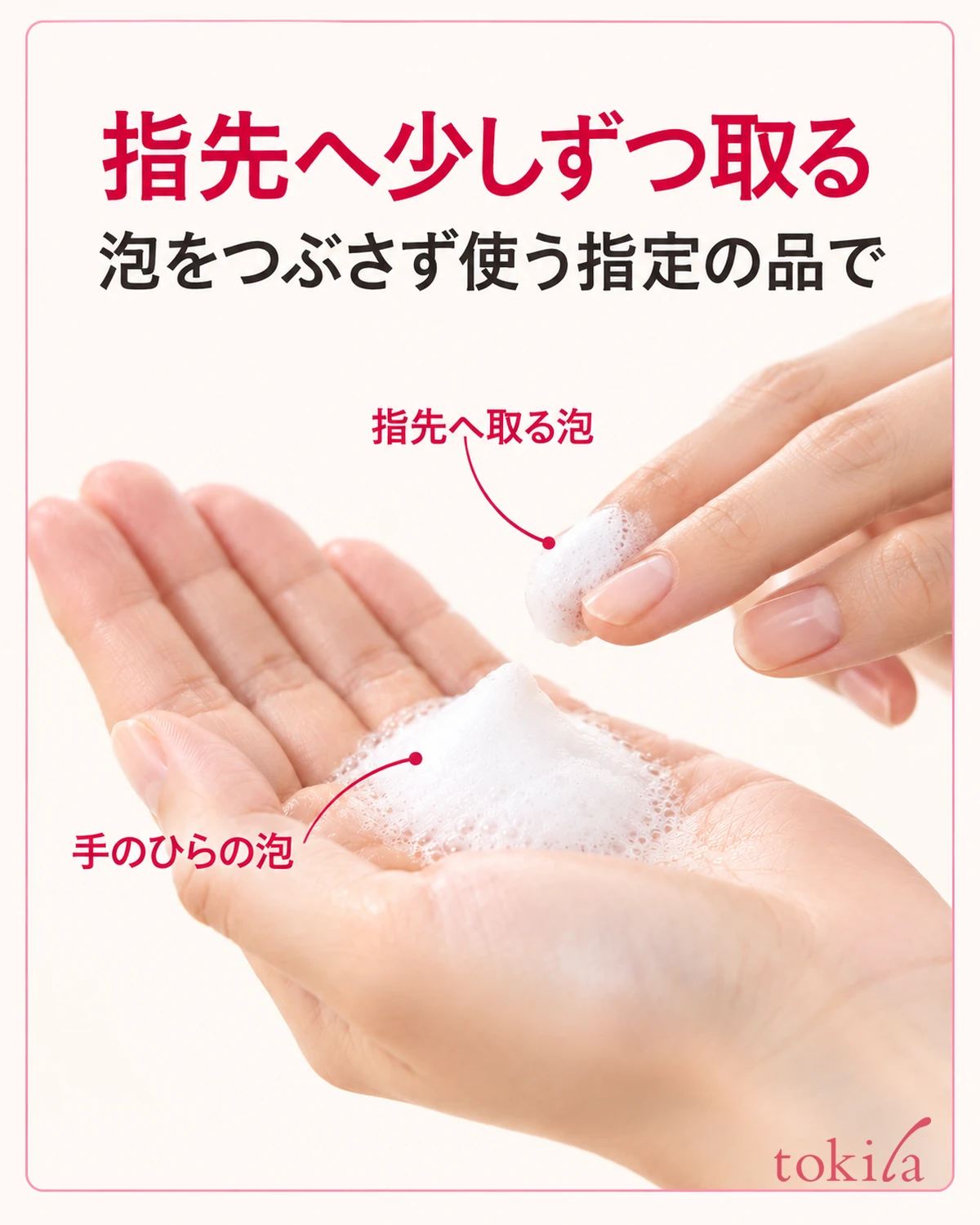
Large hand movements during placement may cause foam to fall from your finger onto another area. Adjust the distance between your hand and mirror and watch the area you are about to touch. Do not pick up fallen foam and return it to your face. If more is needed, first check the product’s amount per application and directions.
Even if white foam is visible at this stage, do not immediately decide to add more. Separate placement on the face from spreading and working it in. Do not press hard to erase the whiteness or layer it on the same spot to intensify the carbonated sensation.
4. Work it in with the specified movements, then continue your routine
Once distributed, spread it gently and slowly according to the product’s instructions. If directed to move your fingertips little by little, check that movement. Whether to cup the skin with your palms or spread with your fingers should also follow the directions rather than a photo’s impression.
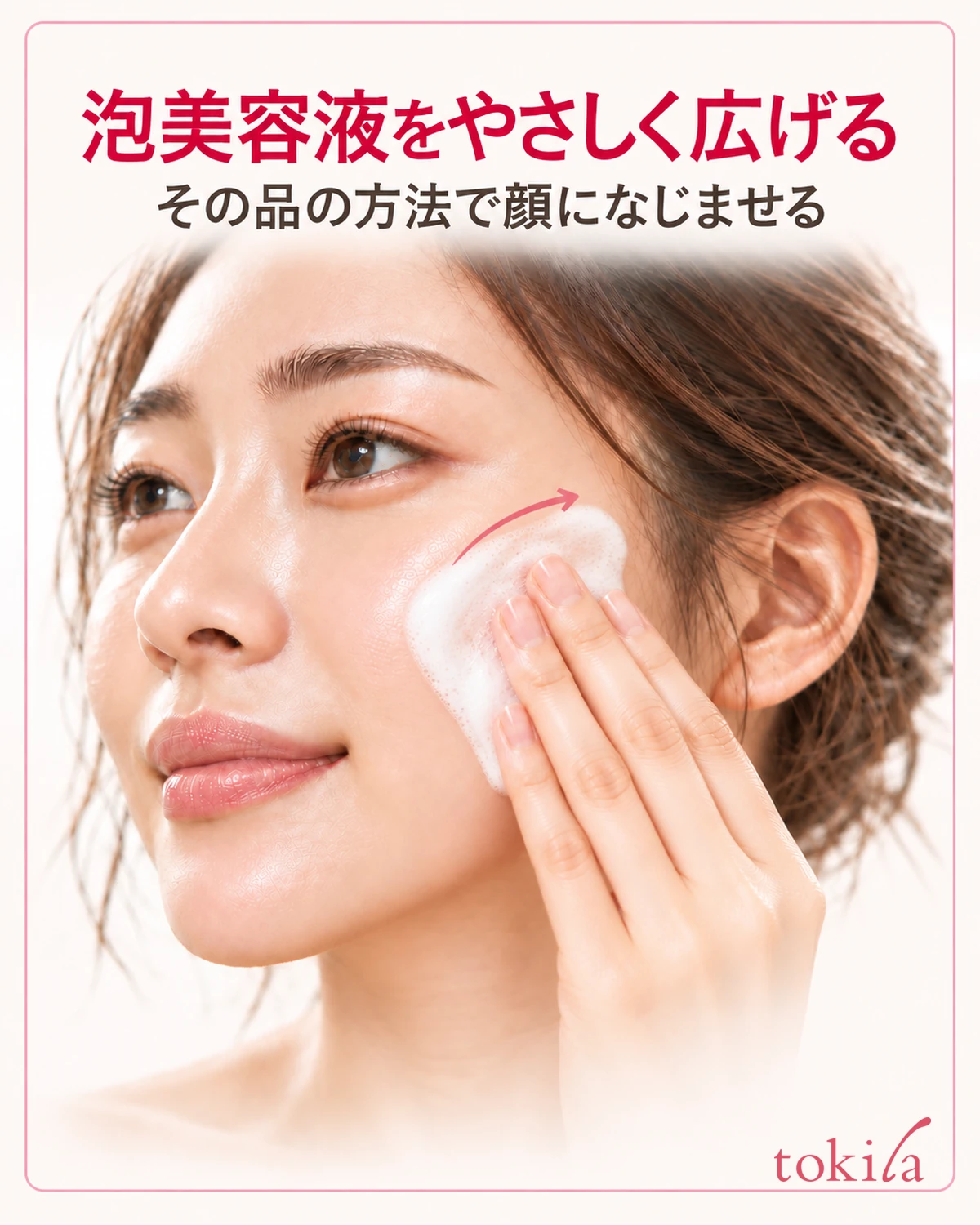
On the cheeks, follow the curve of the face with your finger pads without pulling the skin strongly. At the sides of the nose and chin, reposition your fingers to inspect smaller areas. Instead of repeatedly moving rapidly back and forth over white areas, pause to check whether an area was missed or is still being spread.
Read the label’s instructions for foam entering the eyes as well. If that happens, follow the precautions, such as rinsing immediately and thoroughly. If you feel irritation, do not endure it and continue on the assumption that this is normal for foam; check for skin abnormalities. Tingling is not evidence of greater effectiveness.
After working it in, proceed to the next indicated step, such as toner or emulsion. The disappearance of visible foam does not mean necessary moisturizing or morning sunscreen is complete. Also, do not assign a universal drying time in minutes to every foaming serum; read the directions for the next step.
If residue forms when you layer the next product, do not keep rubbing harder on the spot. Consider which product preceded it, the amount dispensed, and your movements. Do not assume the foaming serum alone caused it; keep a record of the conditions, including products used before and after it.
If hair falls onto your face while spreading, pause rather than repeatedly pushing it away with foam-covered fingers. Arrange your hair again with clean hands so you can see your eyes and cheeks. First ensure that you can see the application areas and move your hands without using force.
5. Separate dispensing problems from skin discomfort before adding more
If foam is difficult to dispense, nearly liquid, or different in shape than usual, first reread the instructions on container orientation before use, shaking, remaining contents, and storage. If you have already applied it, do not keep adding more solely because it dispensed differently. Do not attempt repairs or disassembly not described in the instructions.
Separate how your face feels from problems with the container. If redness, swelling, itching, irritation, or other skin abnormalities occur, stop use and follow the precautions. Consult a dermatologist if symptoms persist. Repeated use with a different shaking method or quantity is not a way to adjust application on affected skin.
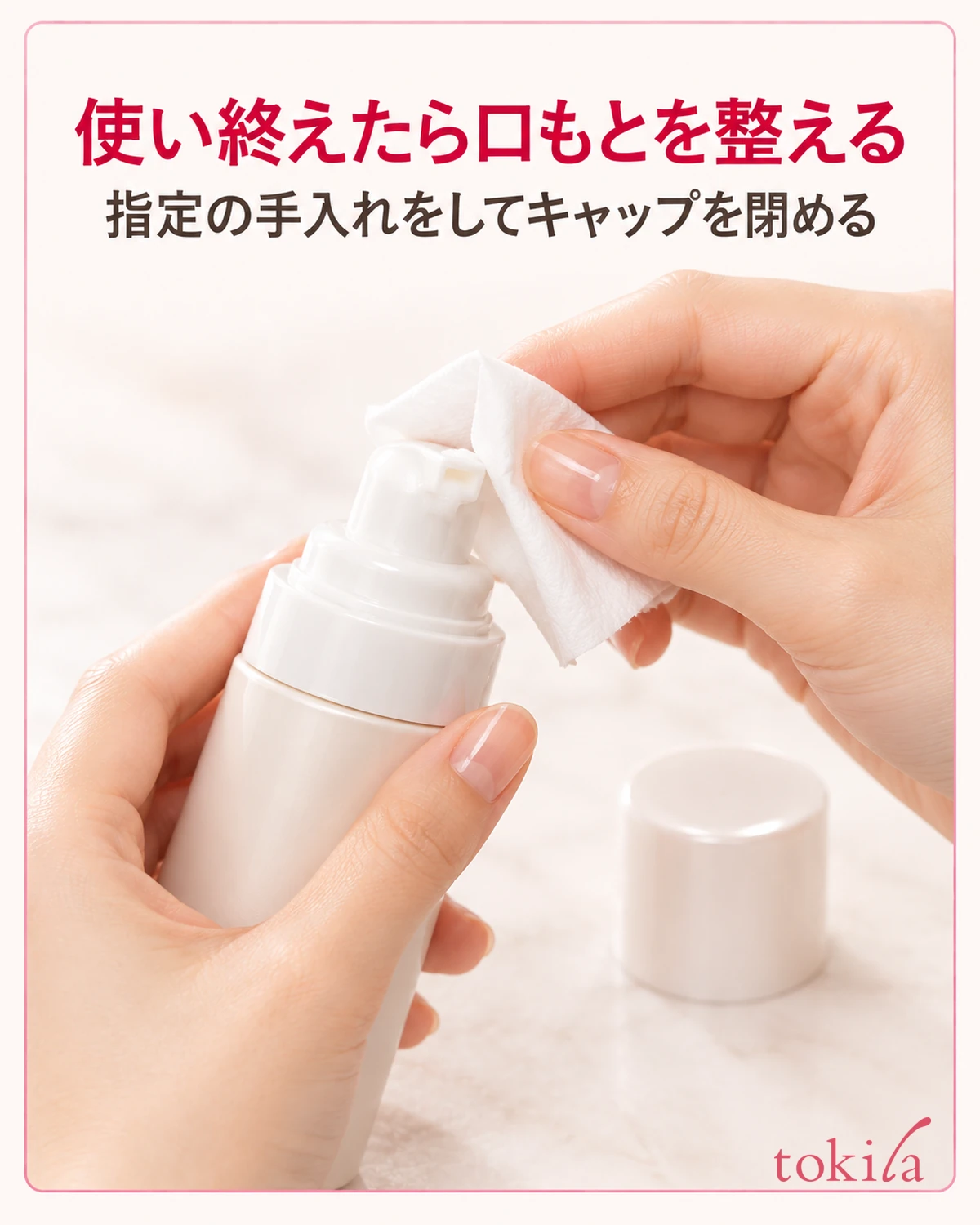
After use, follow the product’s care instructions, such as cleaning the nozzle and closing the cap. Parts specified for wiping are not necessarily washable. Before immersing the entire can in water or transferring the contents to another container, return to the storage and care directions.
For next time, briefly record the product, morning or evening use, handling before dispensing, the amount guide, and where you spread it. Use photos of the foam only to review your procedure, not to conclude that finer bubbles are more effective or faster disappearance means greater penetration.
Start with the conditions written on the product, in order, rather than aiming to create a large mound of foam. Read its purpose and place in your routine, handle the container, dispense one application, and spread it on your face. Try incorporating it into your usual care once you have confirmed how your own product should be used.