Loose powder concealer is picked up differently from liquid applied with an applicator or cream spread with a finger. You work powder dispensed through the container’s holes into a brush and apply it little by little where needed. If too much comes out at once or the covered area looks powdery, checking the bristles before bringing them to your skin helps you identify what to adjust.
This article explains how to use a small brush to apply loose powder to specific areas. It does not describe scraping solid concealer into powder. Follow your product’s directions for application order, where to dispense the powder, and compatible brushes, and first check the amount and spread on one area.
1. Check the order for powder concealer against the base makeup you will layer it with
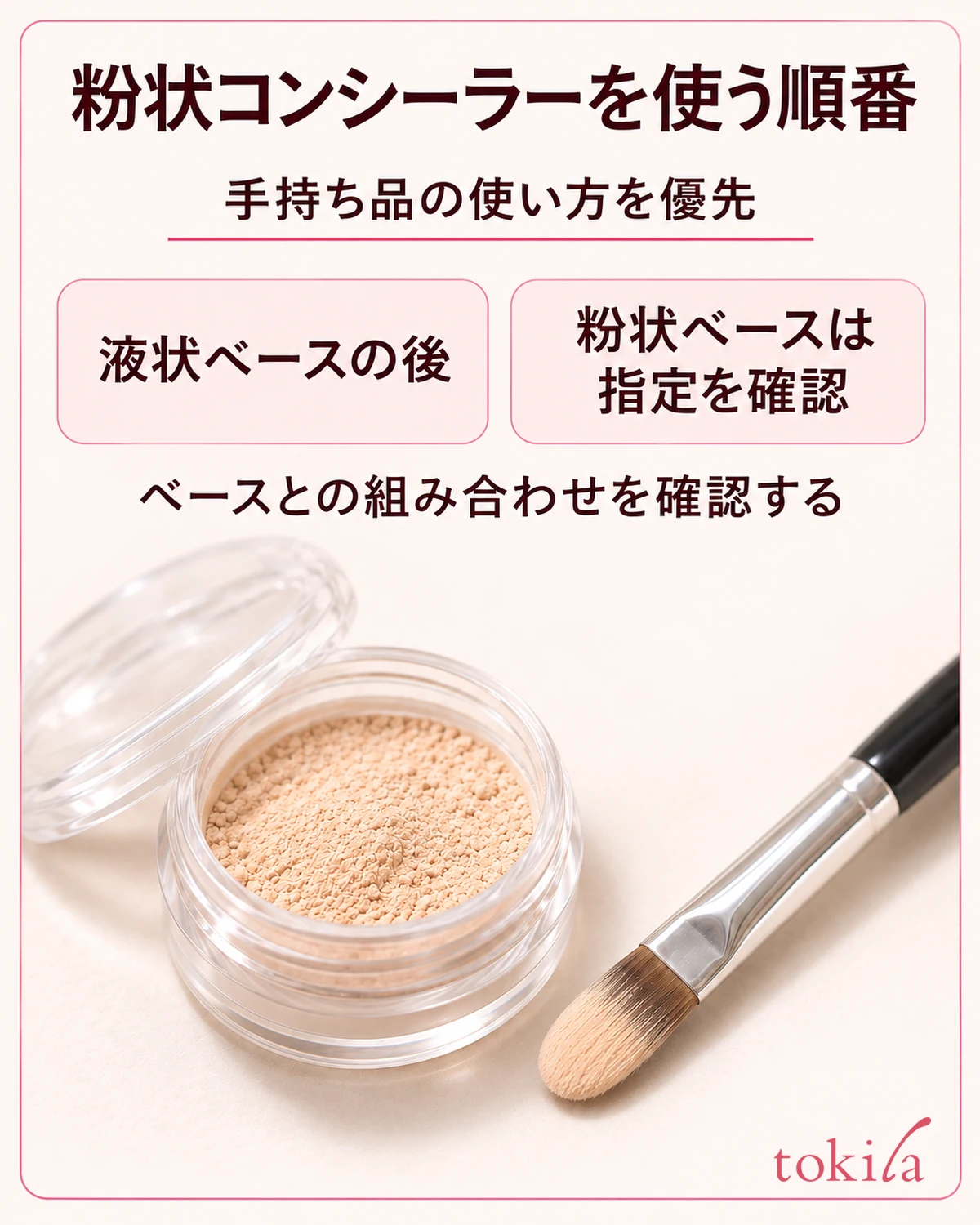
First, check that the container or box says “concealer.” Beige powders can have different purposes from foundation spread over the whole face or finishing powder. Avoid substituting finishing powder by layering it heavily on one spot just because its color or appearance is similar. Here, use a product described as a powder concealer.
Next, compare the application directions for your foundation and concealer. A product recommended before powder foundation may be directed to go after liquid foundation or BB cream. Do not decide that concealer always goes first or that powders always go last based only on their form; read the instructions for today’s combination.
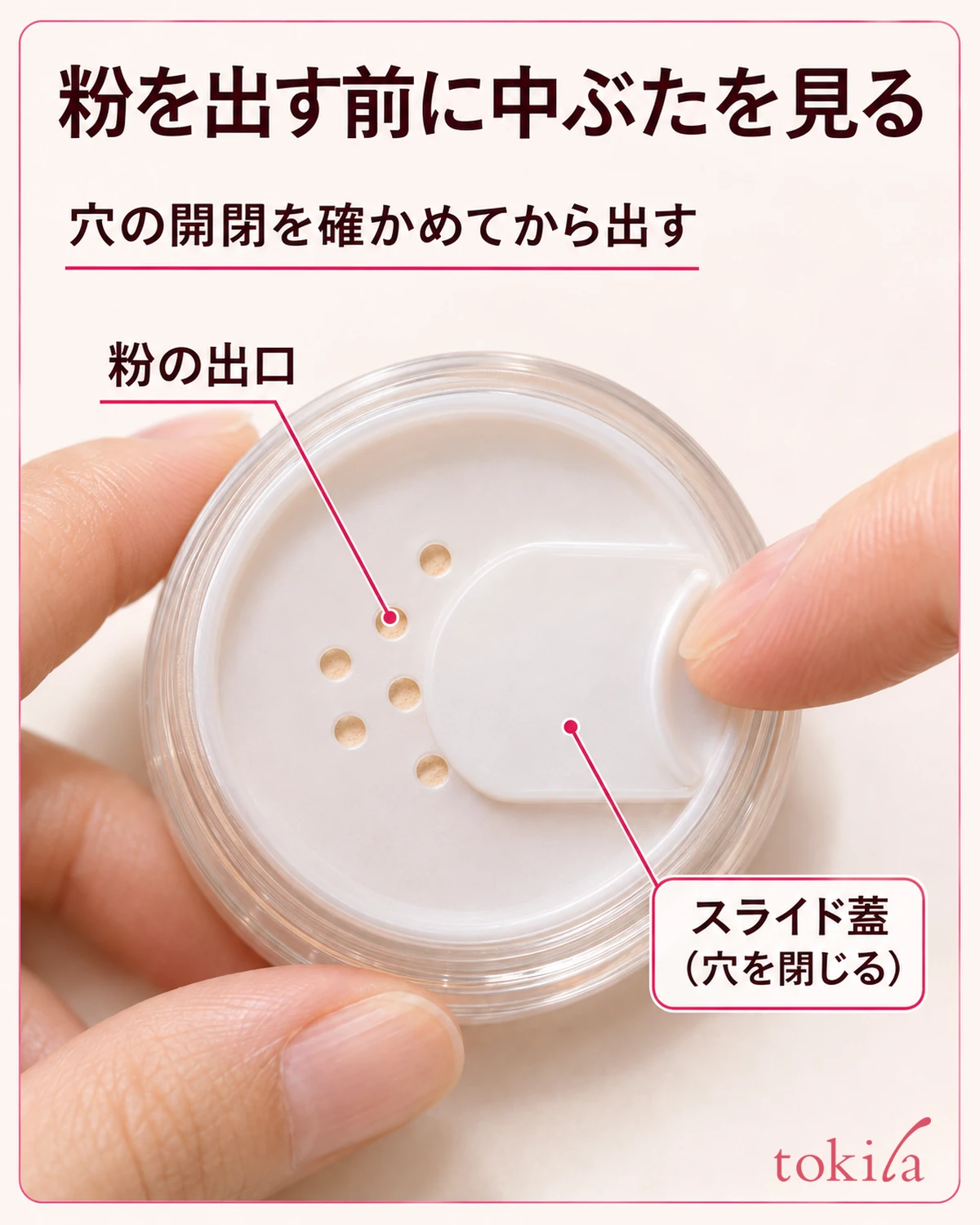
After opening the container, check the sifter holes and any parts that open and close. If the outlet is closed, open it as directed before dispensing. Before shaking the whole container hard because nothing comes out, check whether the outlet is open. Rotation directions and removal methods vary, so do not push a brush into the holes or force off the sifter.
Skin preparation is another condition of use. If the directions call for a non-tacky surface, do not rush to apply powder while freshly spread liquid base still moves. Look at the surface in a mirror and even out any streaks or pooled liquid first. Rather than setting one fixed waiting time, proceed according to the base’s finishing method and your product’s instructions.
2. Dispense a little into the lid and work it into the brush tips
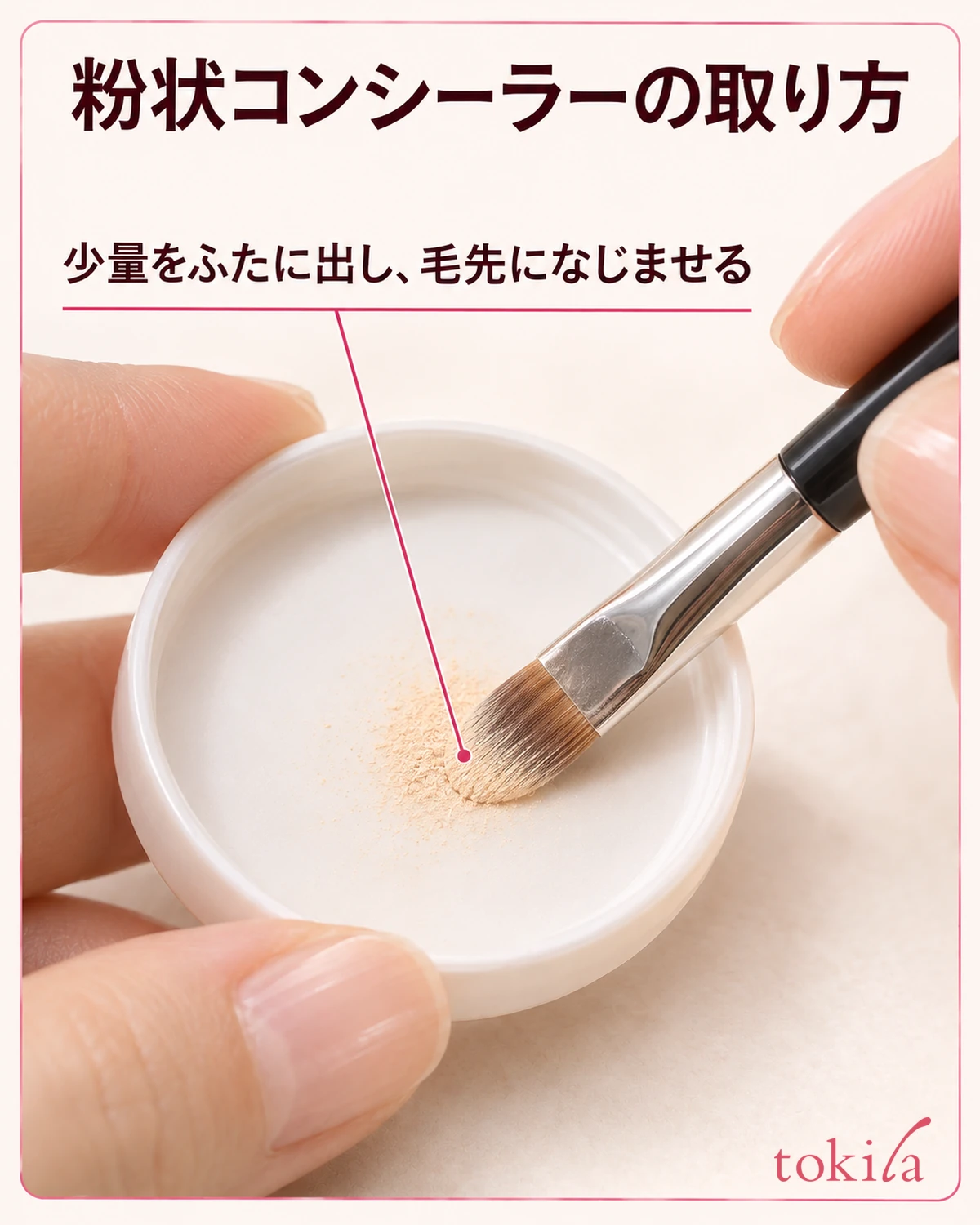
If your product is used by dispensing powder into its lid, place a small amount inside a clean, dry lid. Dispensing once and checking the amount, rather than repeatedly tapping the inverted container, makes it easier to avoid excess. Use a separate receiving surface if one is specified. Do not take the lid shown in this article’s photos to mean that every container’s lid can hold powder.
Use the small concealer brush recommended for the product. A large brush intended to spread powder over the whole face can spread color beyond the target area. Holding the brush tips near, without touching, the intended area lets you compare their width and judge whether they can handle the detail. Even a small tool needs attention first if the bristles are split or retain a previous color.
Lightly touch the tips to the powder in the lid and work the powder into the bristles. Instead of carrying a mound on the tips, work it in little by little against the receiving surface. If the directions include tapping off excess, do so gently inside the lid before touching your skin. Do not add steps that flick powder into the air or blow it away.
Pause here to look at the tips in good light. If you see clumps, reduce the amount before touching your skin. Even if you cannot tell whether powder has attached, first apply it once to a small area instead of immediately picking up more. Adding only what is missing makes it easier to track the adjustment than correcting a thick initial application.
3. Lightly touch the tips to one area of concern
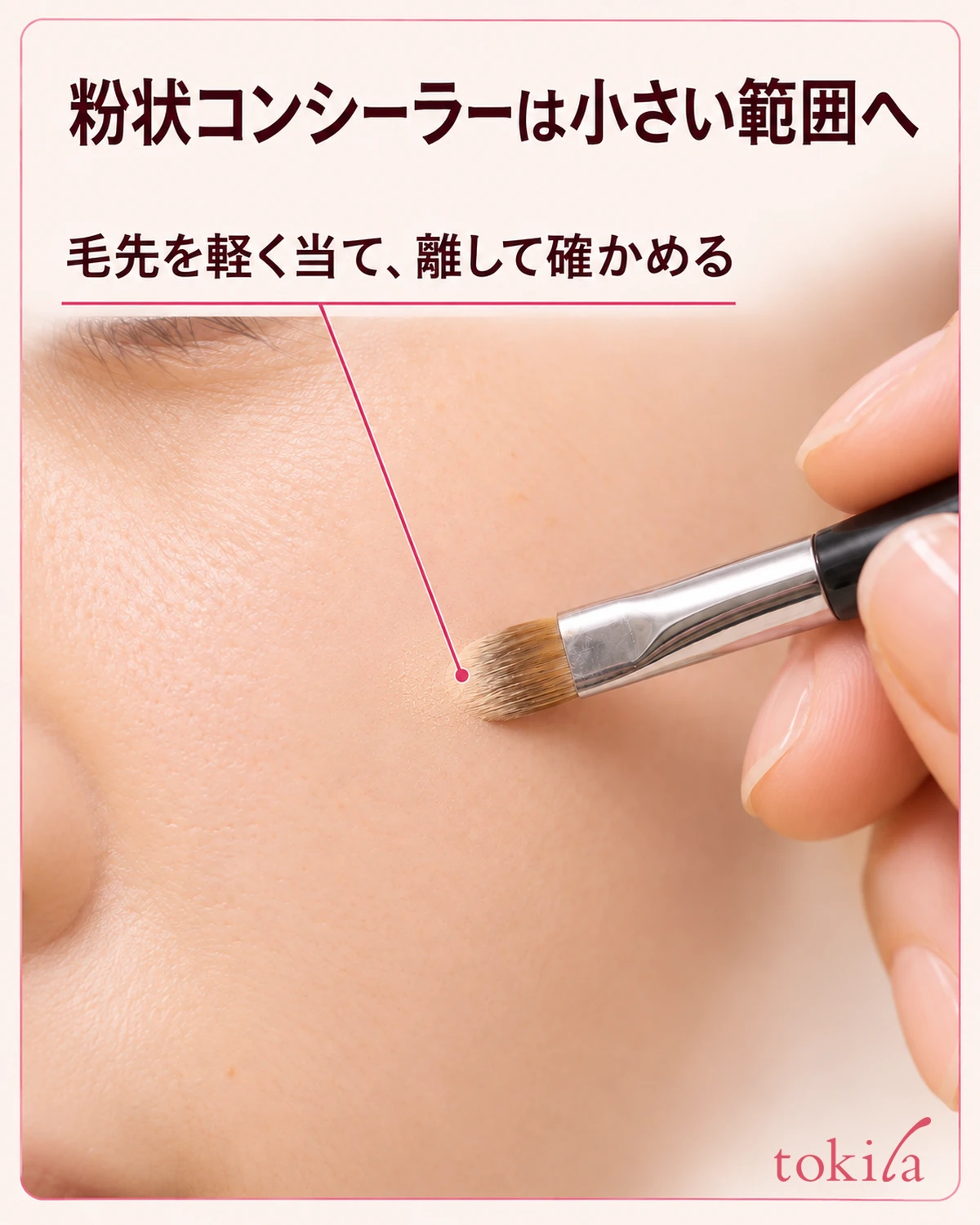
Use a mirror to choose one area to cover today. Starting with a small area of uneven color instead of covering the whole cheek helps you check where and how much you applied. This is positioning to adjust the appearance of color with makeup, not diagnosing your skin in a mirror. Follow any limits on the areas where the product may be used.
Lightly touch the powder-loaded tips to the target and lift away. A small flat brush has a broad face and a narrow edge, so turn the appropriate surface toward the area you want to cover. Rather than flattening the bristles or repeatedly rubbing side to side, lift the brush once and check the color. Keep this placement motion separate from the broad movements used to spread foundation over the face.
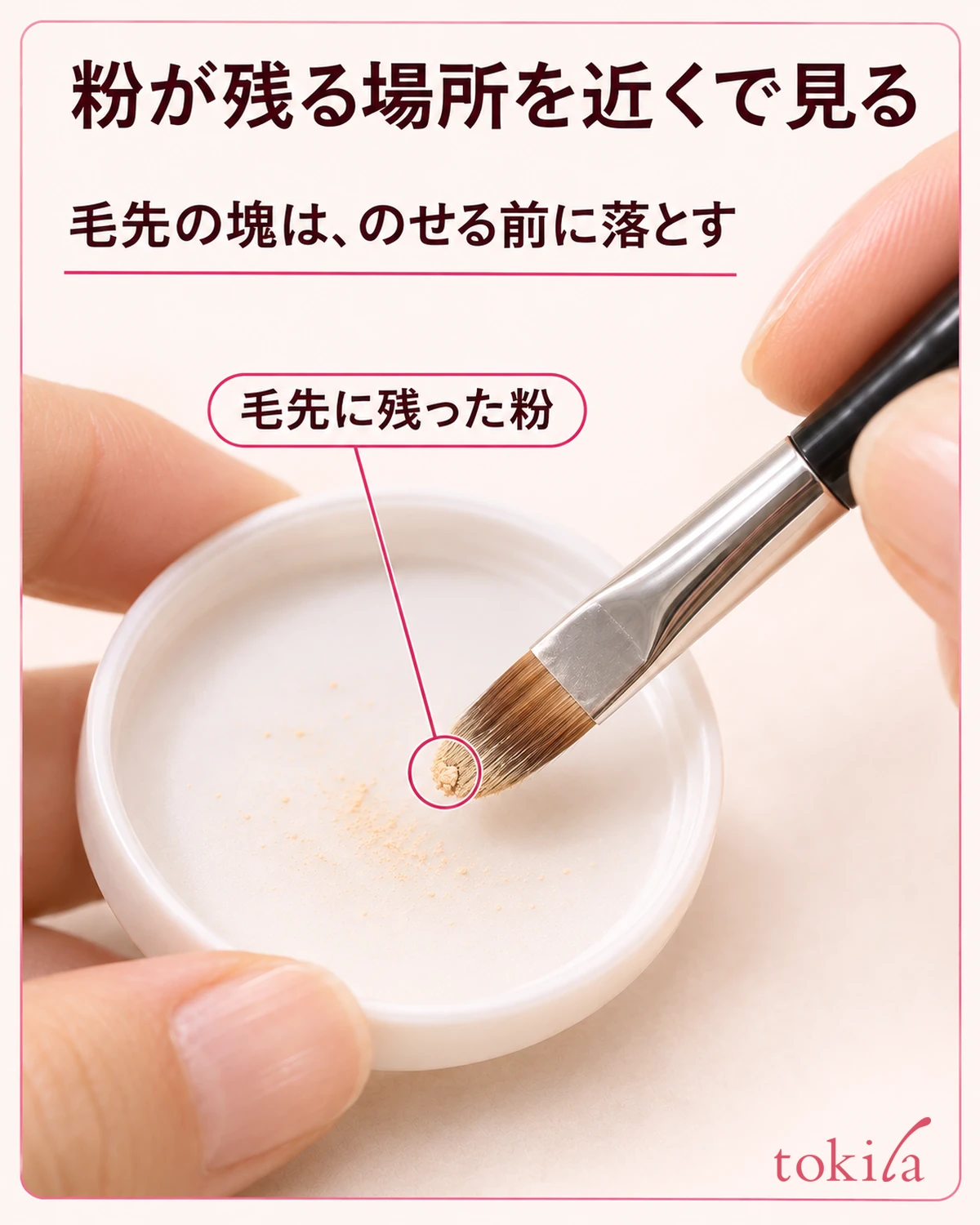
If color spreads into the surrounding area, avoid continuing to draw large circles with the same brush. Stop first and distinguish the center that needs color from the area outside it. When blending the edge, adjust only the narrow perimeter rather than repeatedly touching the center again. For checking the edge, also see how to blend concealer edges.
Before moving to another area, check the powder remaining on the tips. You do not need to pick up the same amount from the lid every time. If enough was deposited on the first spot, you may be able to try the next with what remains. If the tips pick up skin oil or another base product, however, follow the tool’s care instructions rather than returning them directly to the powder container.
4. Compare color and powderiness both close up and across the face
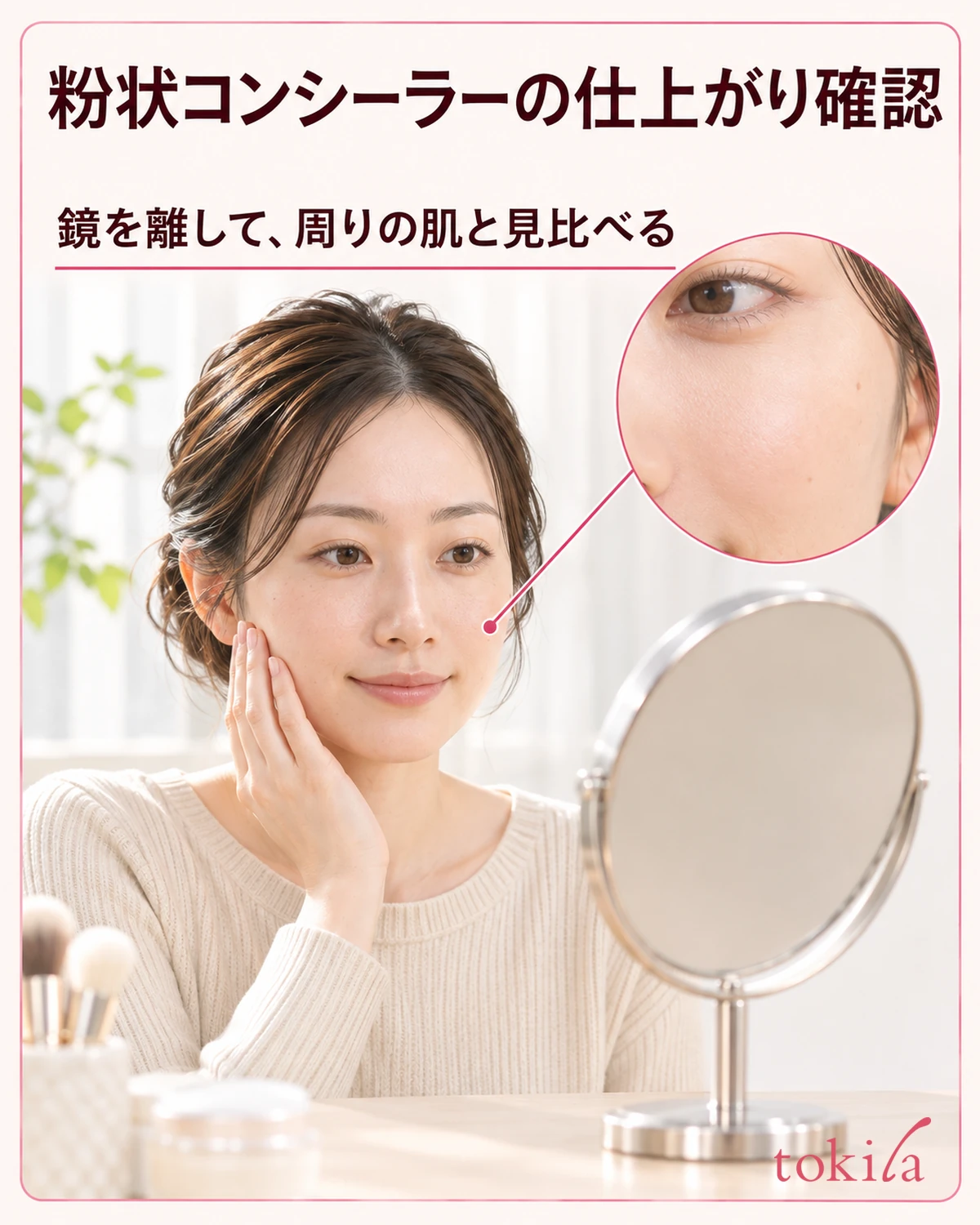
After one application, inspect the powder close up. Check whether color reached the target, whether a single brush mark remains, and whether grains or clumps sit on the surface. Before continuing until the original color is completely hidden, also check whether only the covered area has become thick.
Next, move the mirror slightly away until you can see the whole cheek and compare it with the surrounding base. Small uneven areas that concern you close up may blend in when you view the whole face. Conversely, the target may be covered while the surrounding area looks like a bright ring. Changing distance without greatly changing the light or your face angle makes it easier to sort out what concerns you.
Your next action differs depending on whether color is lacking or excess powder is present. If the underlying color only shows faintly and the surface looks blended, you may be able to layer small amounts on the areas that need it, following the directions. If powder already looks gathered, pause before adding more. Layering the same light powder over an area that is too bright does not change the color you are using.
If you use finishing face powder, check the need and order before adding a large amount over the concealer. All-over powder and targeted powder have different roles. Do not mix them together in a lid simply because both are powders. Keeping them separate by purpose helps you trace the step where the amount increased when reviewing your application.
5. If powder builds up, review the amount and contact before adding more
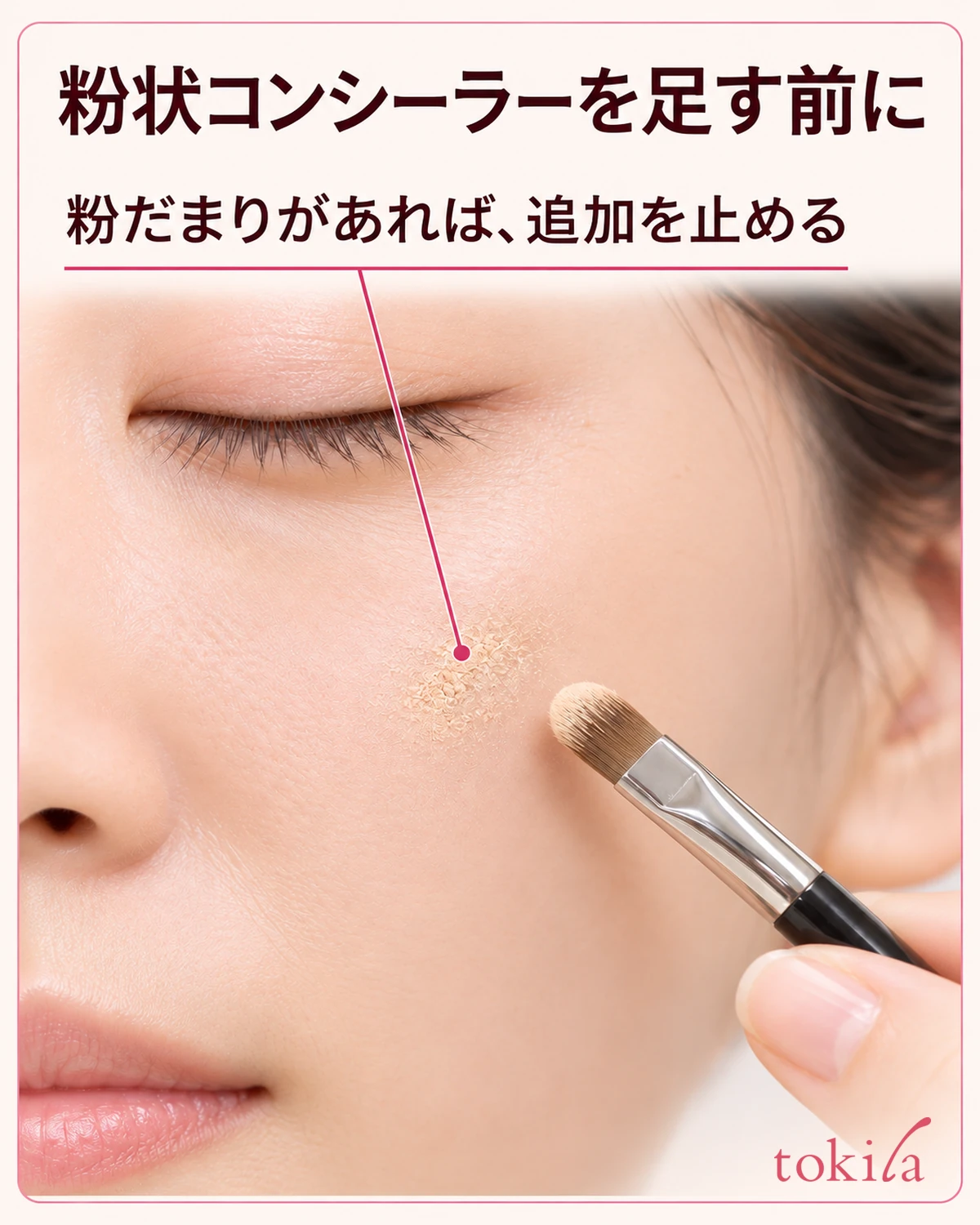
If powder looks thick in one spot, stop picking up more and examine both skin and brush. Did you deposit a clump from the tips, layer the same spot repeatedly, or touch a base that was still moving? Instead of changing everything at once, check the relevant steps in your application one at a time.
To adjust excess powder, work on a small part of the surface using a clean tool compatible with your product’s directions. Avoid improvised methods such as brushing forcefully and spreading color outward, or directly mixing water or cream into the powder on your skin. If localized thickness remains after adjustment, choose to redo the base in that area rather than continuing to layer over it.
If color collects in fine lines under the eyes, do not layer broadly as you would over a small uneven patch on the cheek. Adjustment depends on the location and how the product gathers; see what to review when under-eye concealer creases. Powder form does not mean the same amount suits every area; the permitted area and product directions come first.
After use, check how to handle leftover powder and close the sifter, tidy the container’s rim, and then close it. Care for the brush as directed rather than storing it dirty with the powder. Next time, changing one thing—the amount dispensed, the motion used to work it into the tips, or the number of contacts with skin—makes ongoing adjustments easier.
If the product does not agree with your skin during use, stop using it and follow its cautions. Coverage means adjusting appearance with makeup, not treating a skin condition. Rather than relying only on the amount of powder, pay attention to its combination with your base and to knowing when to stop after checking the finish.