A lip tint whose colored film is peeled off later can be confusing if you try to finish it like ordinary lipstick. Can you press your lips together immediately, how many minutes should you wait, and where should you grasp the film? Before starting, check the entire sequence from application to removal.
This article covers products applied to the lips, dried, and finished by peeling off a cosmetic film. Their steps differ from products finished by wiping or used with a dedicated liquid. Confirm which method your product uses, then follow its stated application area and time.
1. Confirm it is a peel-off product and prepare your lips and workspace
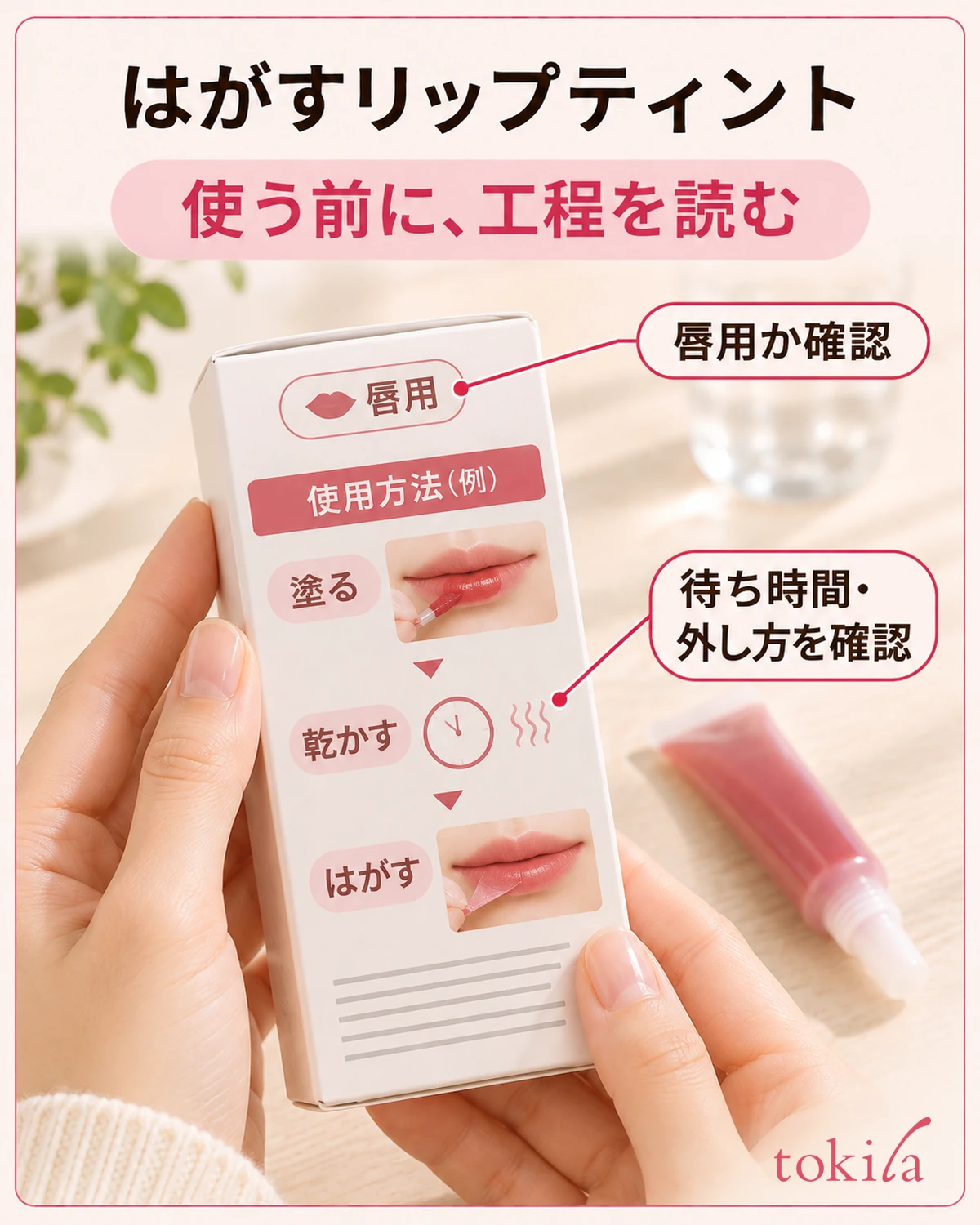
First, read the container or box to confirm it is lip makeup and includes peeling after application. Do not judge only by names such as “tint” or “pack.” Some moisturizing lip masks do not involve grasping and peeling a film. Do not use eyebrow tint on your lips, even if its packaging looks similar.
Next, check the conditions before application, drying time, peeling method, and treatment of remaining film. Products that outline lips with an applicator and those spread over the lips from a tube opening differ in how they are dispensed and where they are applied. Read the instructions before opening so you do not have to search for the next step with the product already on your lips.
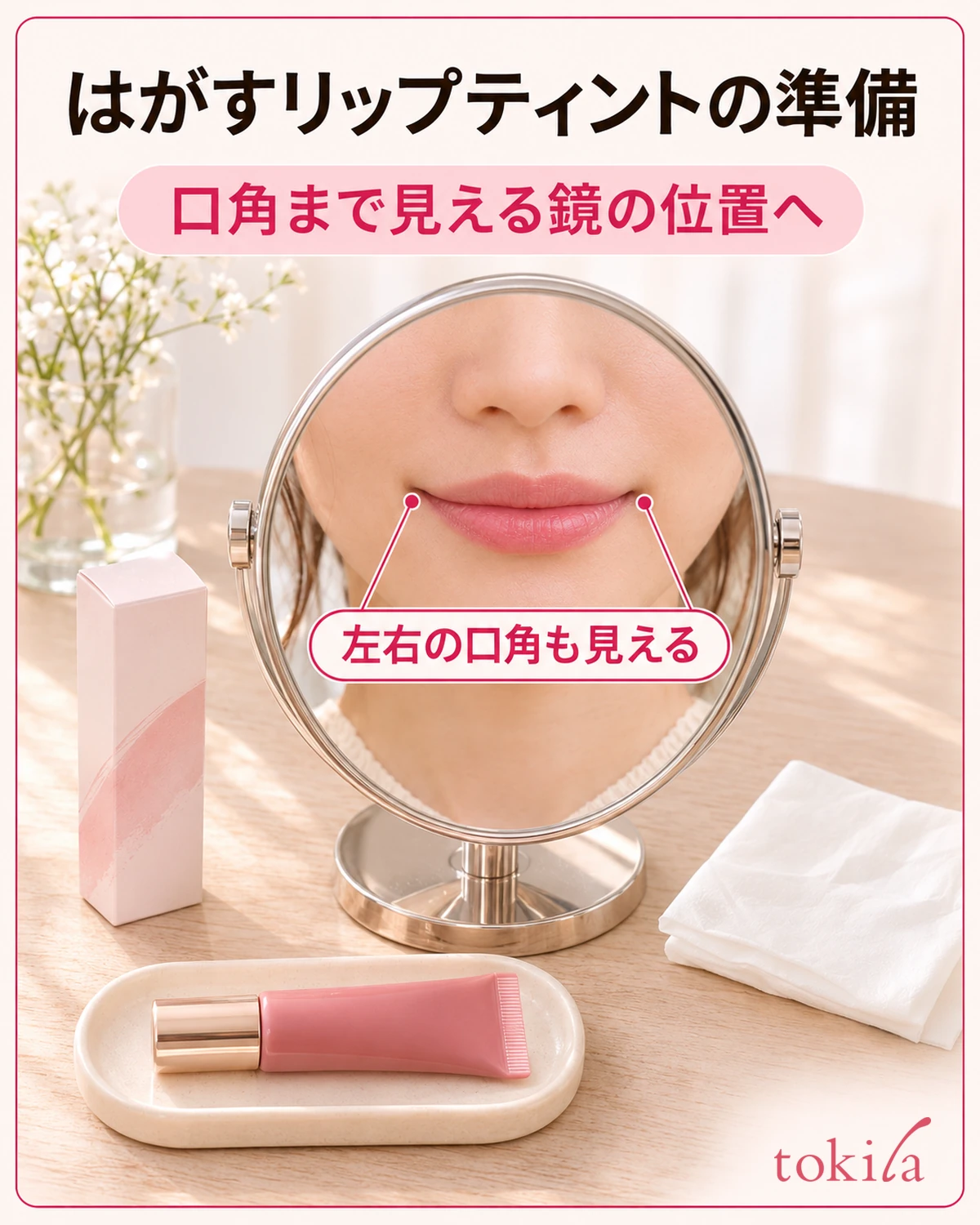
Set the mirror at a height where you can see the Cupid’s bow, lower lip outline, and both mouth corners. Separate the area for reading the box from the place for standing the container, and have clean tissues nearby. Choose a time when you will not need to eat or drink while it dries. Avoiding a rushed first use just before leaving makes it easier to follow the instructions.
If food or other lipstick remains on your lips, remove it appropriately. If application to clean, dry lips is specified, do not start over balm or gloss. This does not mean repeatedly rubbing with dry paper to remove oil. There is no need to add exfoliation as a universal preparation step for all products.
Do not try to improve cracked, injured, or painful lips by covering them with a colored film. Check your product’s precautions for conditions in which it should not be used. Stop if redness, swelling, itching, irritation, or other abnormalities occur, and consult a dermatologist or other professional as needed. Responding to abnormalities takes priority over completing the waiting time.
2. Apply the film-forming liquid evenly within the specified area
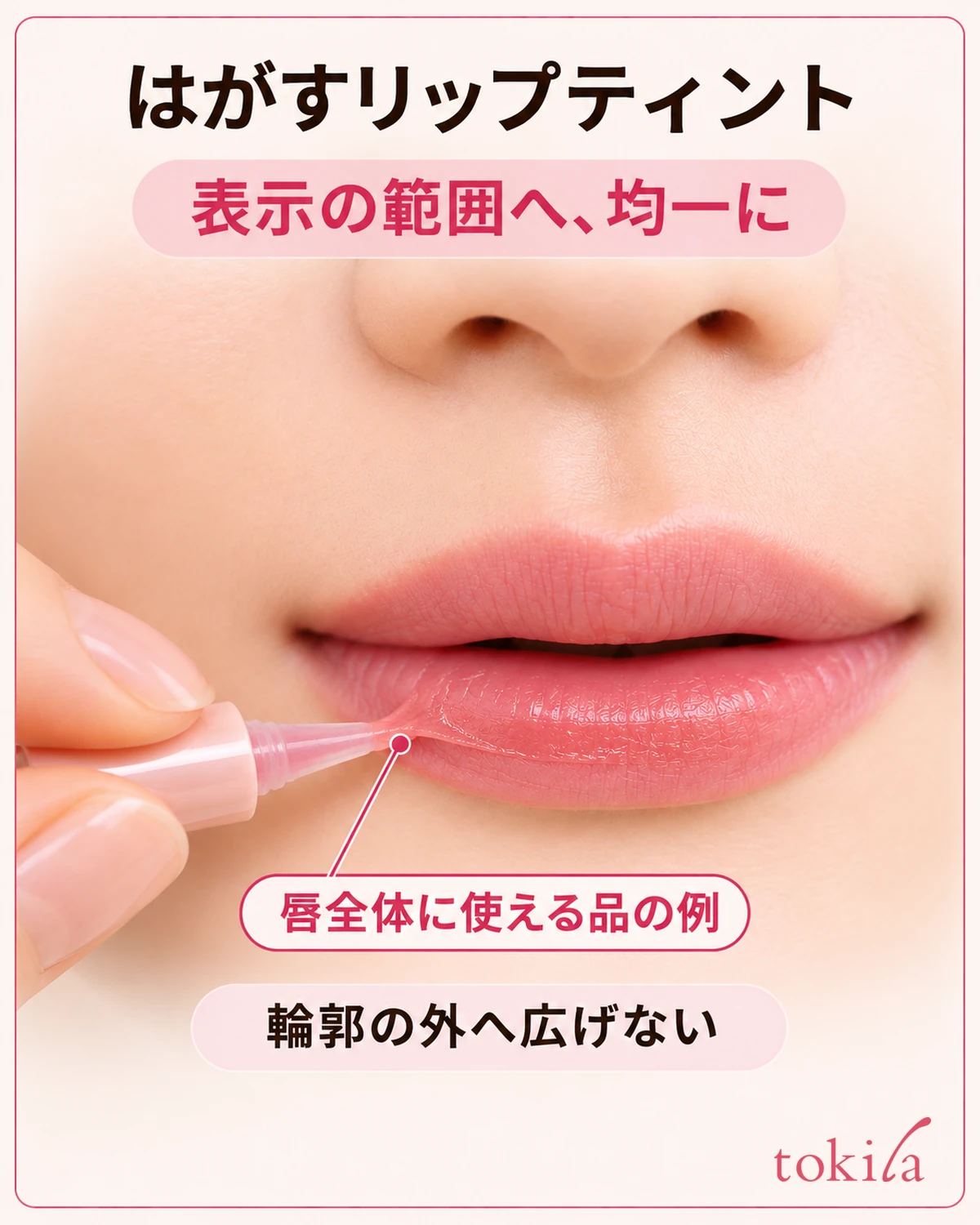
Before applying, check whether the product is for outlining or can cover the whole lips. Instructions to follow the outline do not mean you should extend it onto surrounding skin. Even products for the whole lips are not intended for teeth or inside the mouth. Use a mirror to decide which lip area to color.
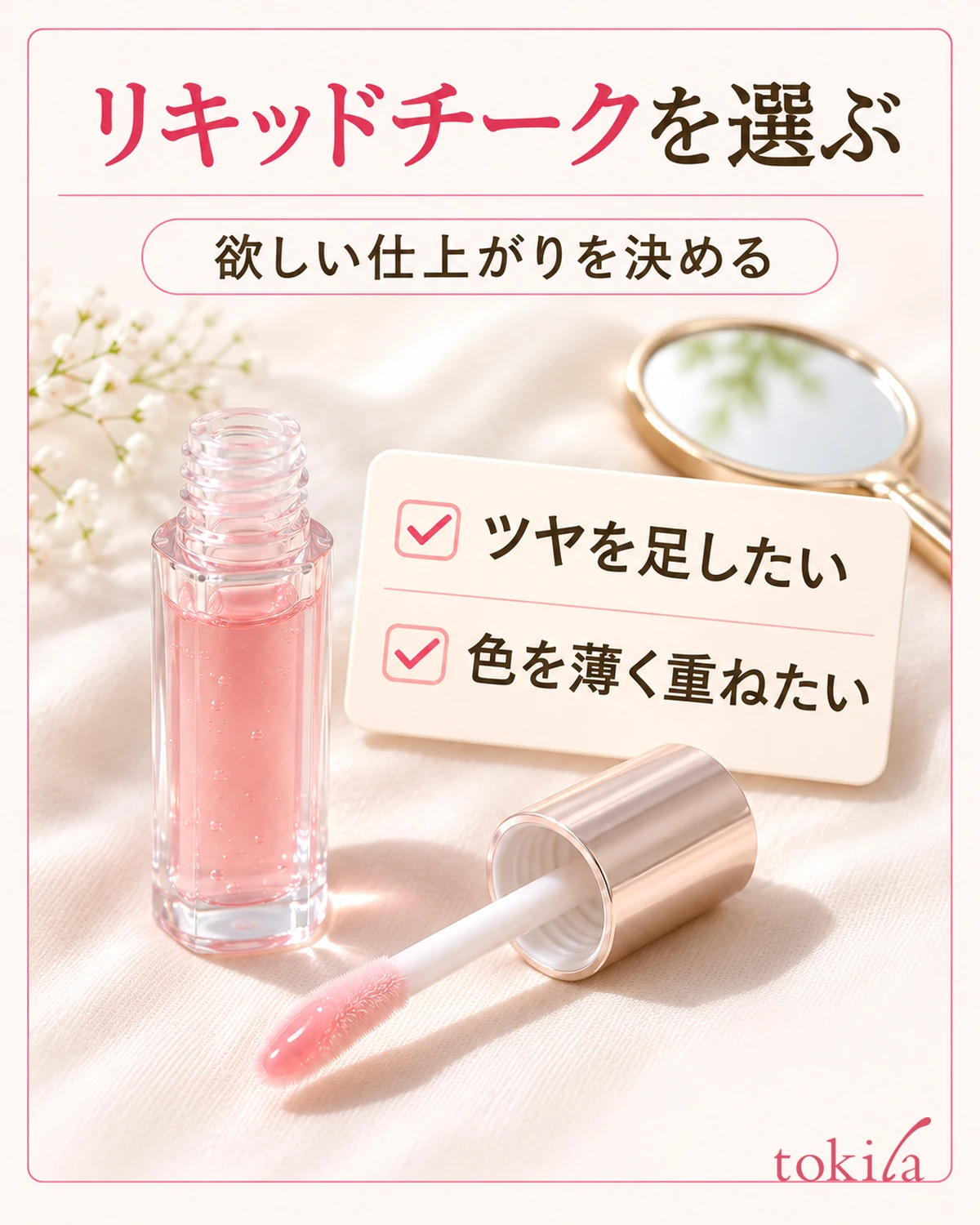
For an applicator, check the liquid on its tip and the direction of its surface before bringing it to your lips. For a tube, dispense the amount indicated. Different containers dispense different amounts, so do not set universal rules such as “one application only” or “always an extremely thin layer.” If a thickness that peels easily is specified, apply evenly as directed.
Keep the upper and lower lips slightly apart so you can inspect them without the coated surfaces touching. Avoid pooling a thick layer only in the center; spread while checking coated and uncoated areas. At the mouth corners, lift the tip away and check its direction rather than pushing it in. Pressing hard enough to indent the lips does not adjust the amount.
For outlining products, watch where the fine tip touches. For full-lip products, check that the liquid connects from the outline inward. In either case, do not spread outside the lips on the assumption that you can peel off all the excess after it dries.
If you go outside the area during application, use the correction method indicated for that product. Some can be corrected before drying with a cotton swab containing a compatible makeup remover, but this is not universal. Lift the tip away, check the instructions, and avoid dragging escaped liquid sideways with your finger.
3. Follow the drying time and wait without pressing your lips together
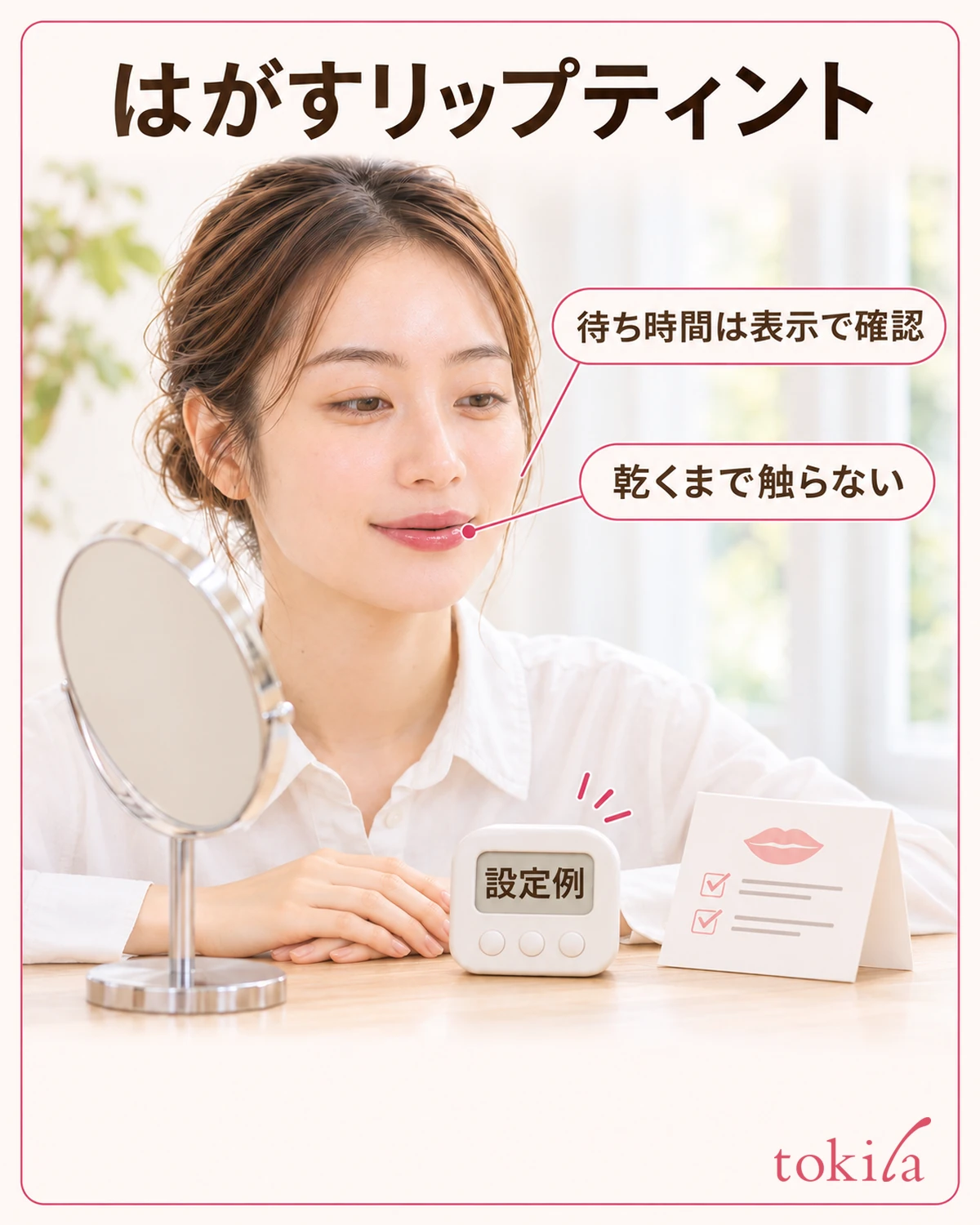
After application, close the container and check the stated waiting time. Even products requiring a few minutes have different guidelines. Do not substitute a time remembered from another product or a long waiting period seen in a video. If using a timer, measure the instructed period from the end of application.
If the coated surfaces must remain apart until dry, avoid rubbing your lips together or repeatedly pursing and moving them. Adding the blending motion used with regular lipstick can change the continuity of the film. You do not need to hold your mouth wide open; wait comfortably with the coated surfaces apart.
While waiting, do not repeatedly test the surface with fingers or tissues. Leave bringing cups or food to your mouth until the finishing steps are complete. Avoid endlessly reapplying to one area because you touched a still-soft section and color transferred to your finger.
Read the time and drying conditions together. If the directions say “after the approximate time has passed and the surface is dry,” do not force peeling of a soft film based only on the clock. Nor is leaving it longer for a deeper color a universal method. If drying differs from the instructions, review the amount and preparation and check the product’s directions for handling it.
Do not add hot air from a hair dryer or powder of your own choosing to speed drying. A dark-looking applied layer does not mean the final color will be too dark. Avoid judging the finished intensity solely from the color before removing the film.
4. Slowly remove the dried film from an edge
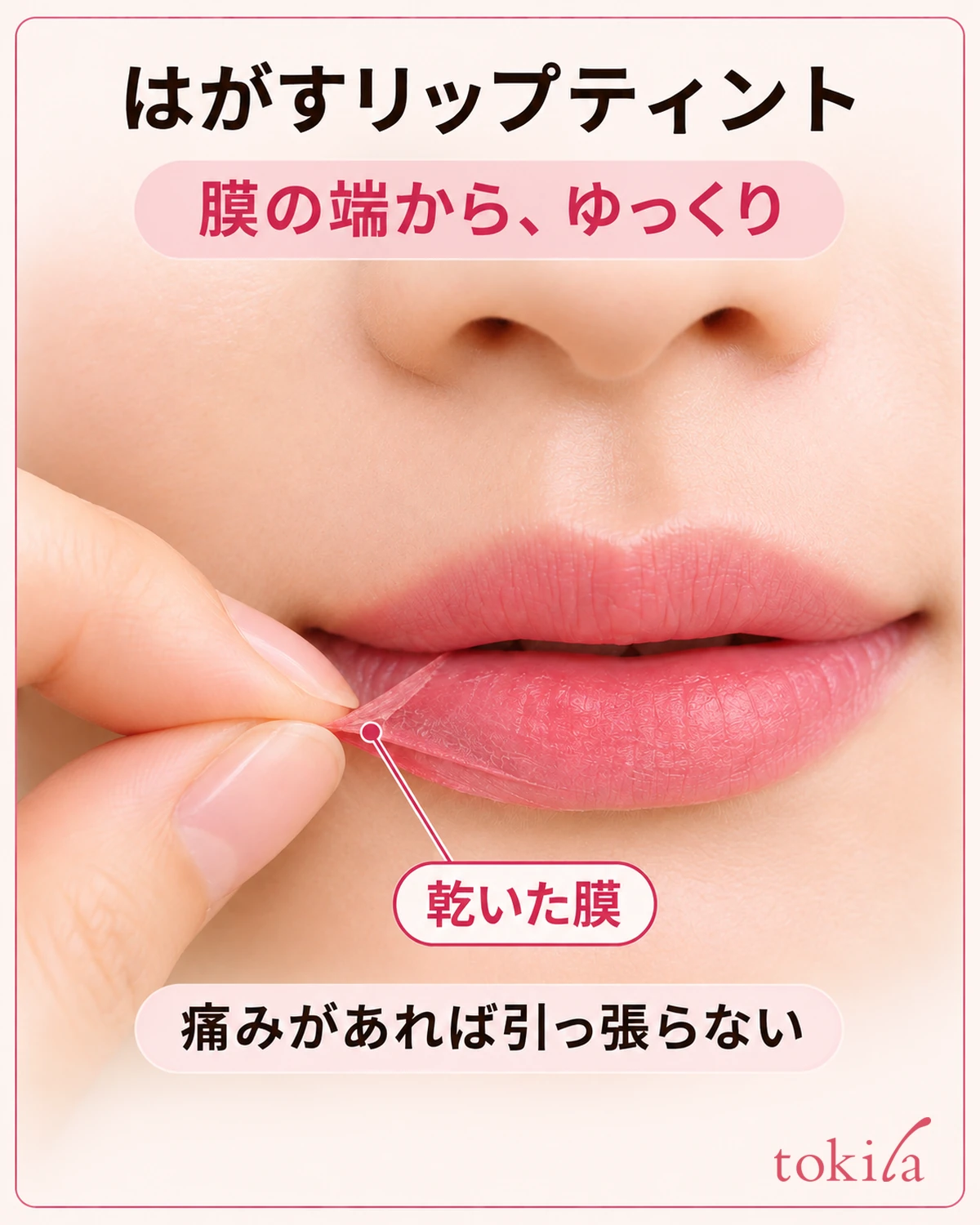
Once the peeling conditions are met, gently hold the edge of the film with clean hands. If instructed to peel inward from the lip edge, proceed slowly in that direction. Do not yank it off; move slowly enough to see the boundary between film and lips. You are removing a cosmetic film, not the skin of your lips.
Pinch only the lifted film edge, avoiding pinching the lip itself. Do not dig up the edge with a nail or grasp it with pointed tools such as tweezers. If being too close to the mirror makes your hands hard to see, move back slightly and check the positions of fingers and film.
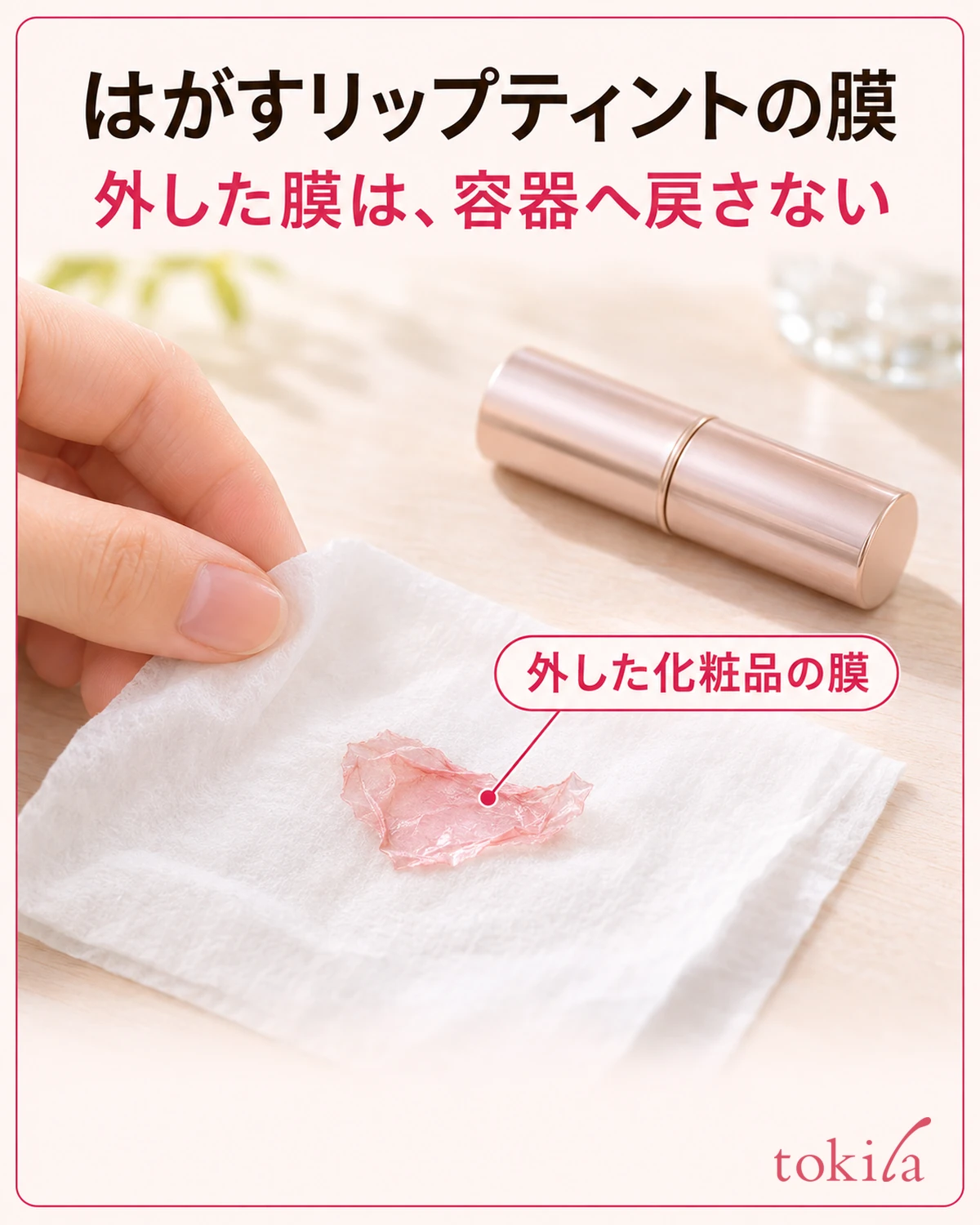
If the film breaks partway through, you do not have to keep it in one piece. Handle remnants by the product’s indicated method. Do not repeatedly tug small fragments while the surface is still wet or scrape stuck portions with dry paper.
If your lip is being pulled, you feel pain, or skin seems likely to lift with the film, stop instead of increasing force. Check the indicated removal method and discontinue use if there is an abnormality. The same remover or added water is not necessarily suitable for every peel-off product, so do not combine instructions from different methods.
Discard the removed film rather than returning it to the container. Check the upper lip, lower lip, and corners in the mirror, distinguishing cosmetic film from color remaining on the lips. Visible color does not necessarily mean film remains; avoid continuing to rub finished lips.
5. Check remaining film and the finish, and plan nighttime removal
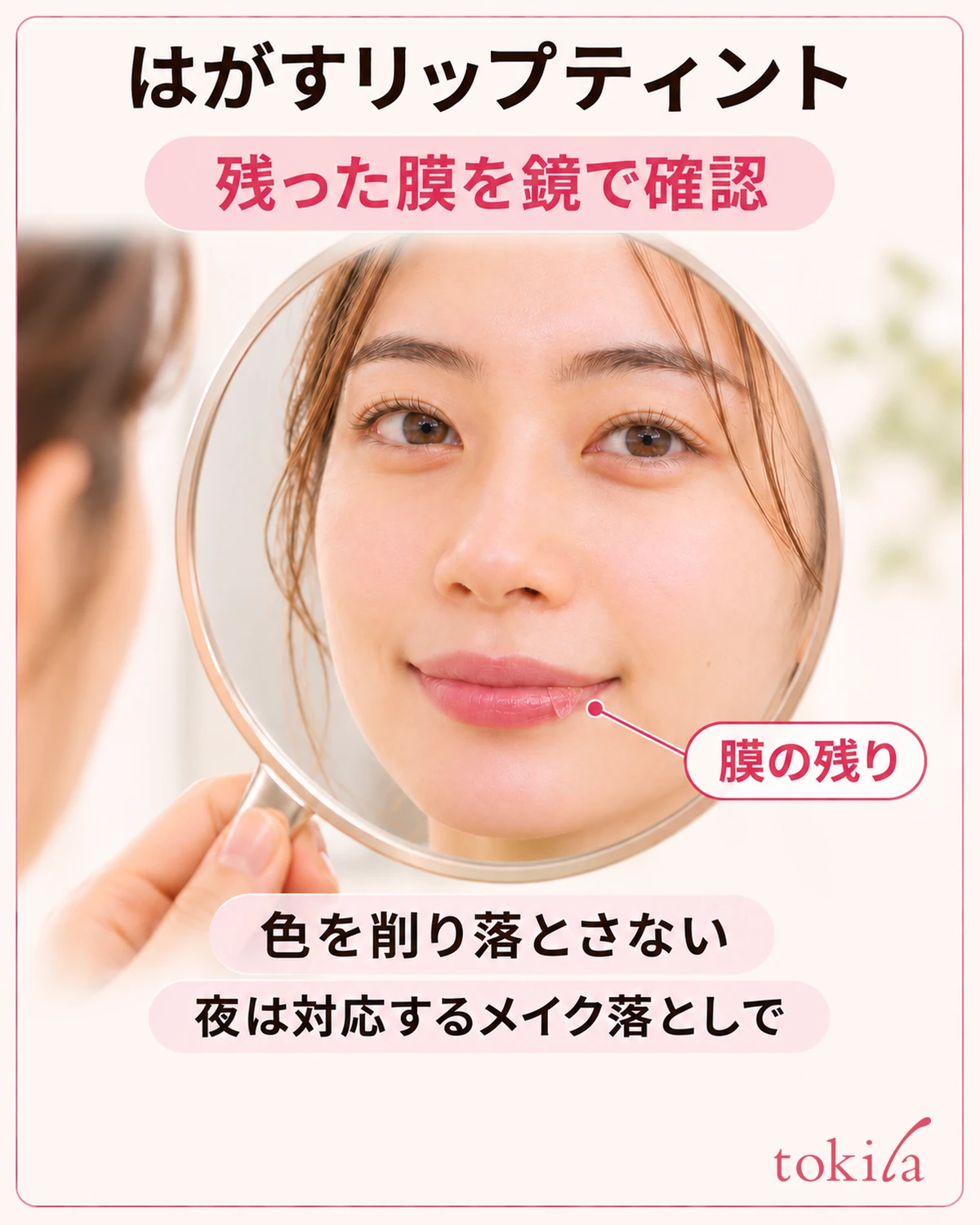
If instructed to wipe away remaining film, finish by that product’s method. First inspect both lips and corners, then address only the necessary areas. There is no need to repeatedly wipe back and forth over areas where the film is already gone. Do not confuse this finishing step with another tint whose main removal step is wiping.
If your product permits clear gloss or balm as a finish, choose it after all film has been removed. First check the tint alone from a distance that shows the whole face and decide whether to add shine. Read layering instructions and application limits before reapplying to add color. Repeated application and peeling are not mandatory from the first use.
A different intensity from immediately after application does not itself mean failure. Consider whether it suits your desired finish and think about color and amount for next time. Do not assume leaving the film longer will guarantee the intensity you want. For the relationship between lip and cheek colors, matching lip and cheek colors can also help.
Even if color remains during the day, do not regard it as makeup that needs no removal. Choose a compatible makeup remover suitable for lips and check the amount, contact time, and wiping or rinsing instructions. Color left after film removal cannot be peeled away again with your fingers. Switch to makeup removal instead of scraping off color with dry paper.
If you want to alternate with an ordinary applicator type, see how to apply liquid lip tint. Even when both are called tints, the steps after application differ. Briefly noting the product, waiting time, and difficulties when removing the film makes it easier to know which instructions to reread next time.