After applying sunscreen to your cheeks and forehead, turn your head sideways in the mirror. You may find that the tops of your ears stick out from your hair. The backs are even harder to see. On days when you tie your hair up or tuck it behind your ears while out, the skin that's exposed can change after you leave home.
To apply sunscreen to your ears, trace the front edge with the pad of your finger, then turn your head slightly and spread it over the skin on the back. Apply it to the visible skin on the outside of the ear. There's no need to put it into the ear opening or press it into the deeper hollow. Here's how to use a sunscreen you dispense into your hand and spread.
1. Move your hair aside and see which parts of your ears are exposed
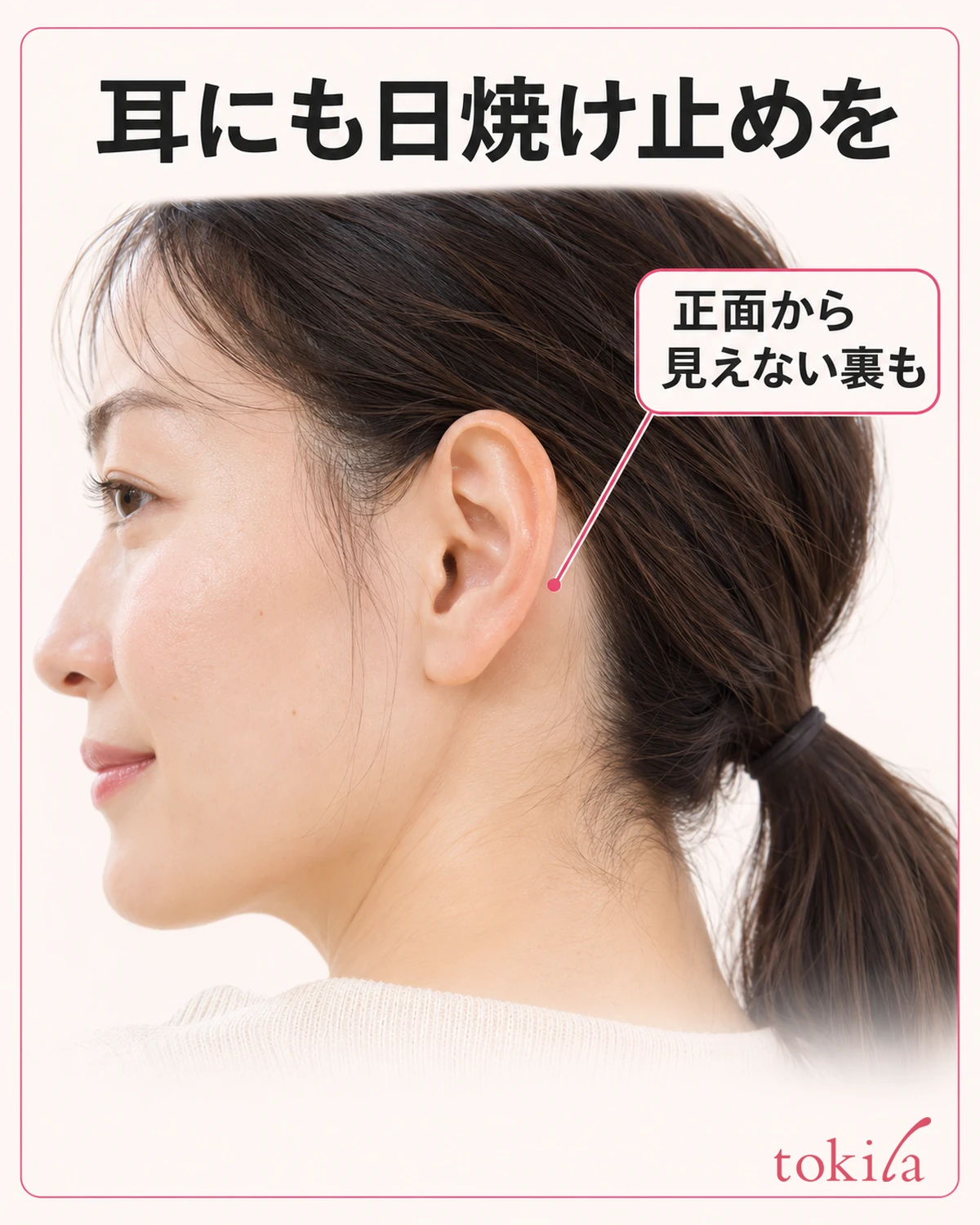
Turn slightly to the side in front of the mirror and look at the top rim, earlobe, and back of your ear in that order. The lobe you can see from the front tends to draw your eye, but turning reveals the upper part and the back that your hair was covering. If your part or the amount of hair tucked behind each ear differs, turn the other way and check both sides.
If your hair covers your ear and makes it hard to reach, clip it back to free both hands. A clip placed right above the ear can get in your finger's way. Gather just the hair a little farther back so you can see a strip of skin between your ear and hair.
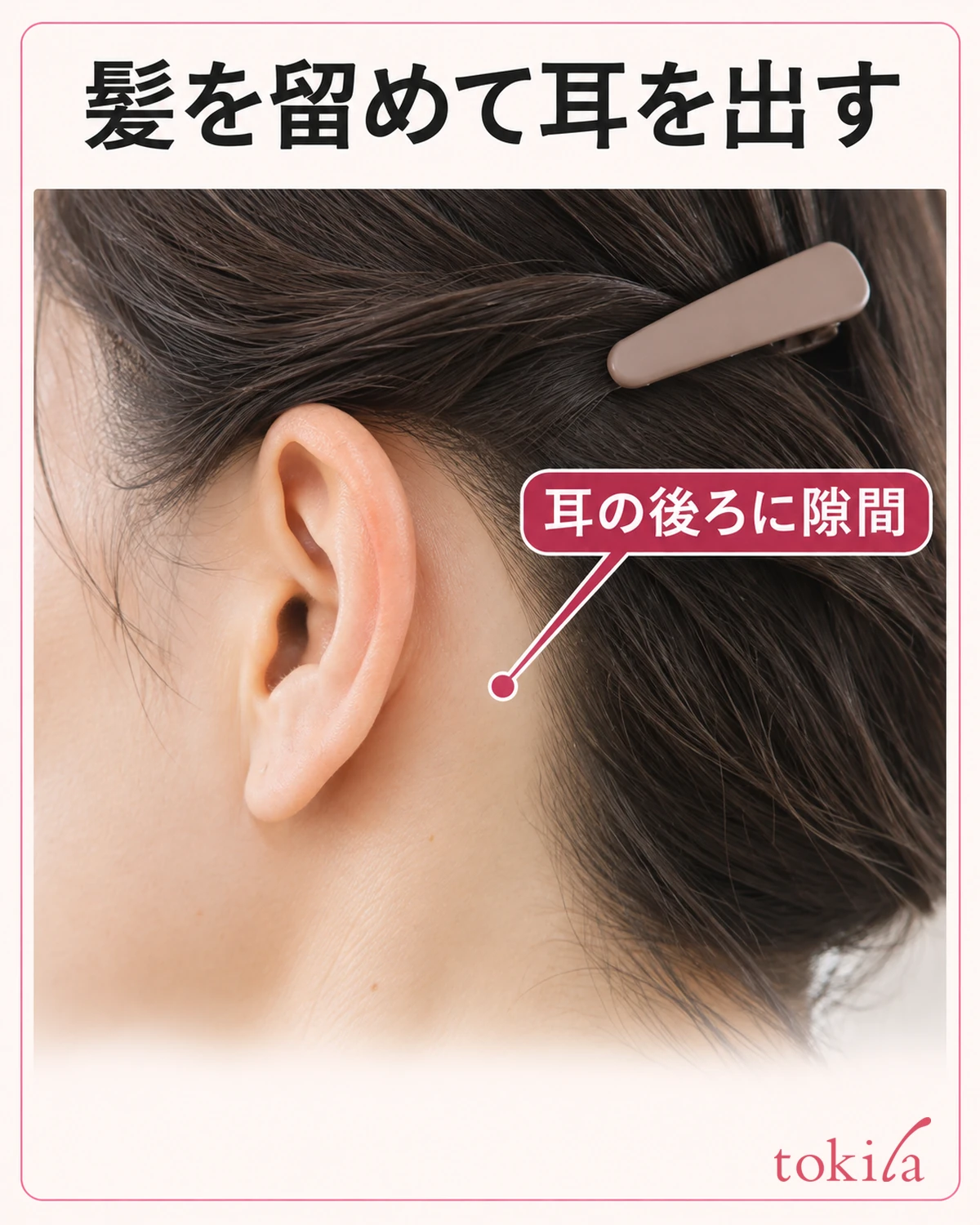
The back of the ear can be hard to see in one mirror even if you turn your head. To get a better look, face the bathroom mirror and adjust the angle of a small handheld mirror. Look for where the outside skin of the ear curves back toward the head. Changing the angle of your hair and face helps you keep track of where to place your finger later without pulling hard on the ear.
The same skin may not be visible on a day when you tuck your hair behind your ears and a day when you wear a hat with your hair down. When you look in the mirror in the morning, consider both your current hairstyle and whether you plan to tie it back while you're out.
2. Read the directions on your sunscreen and dispense it onto your finger pad
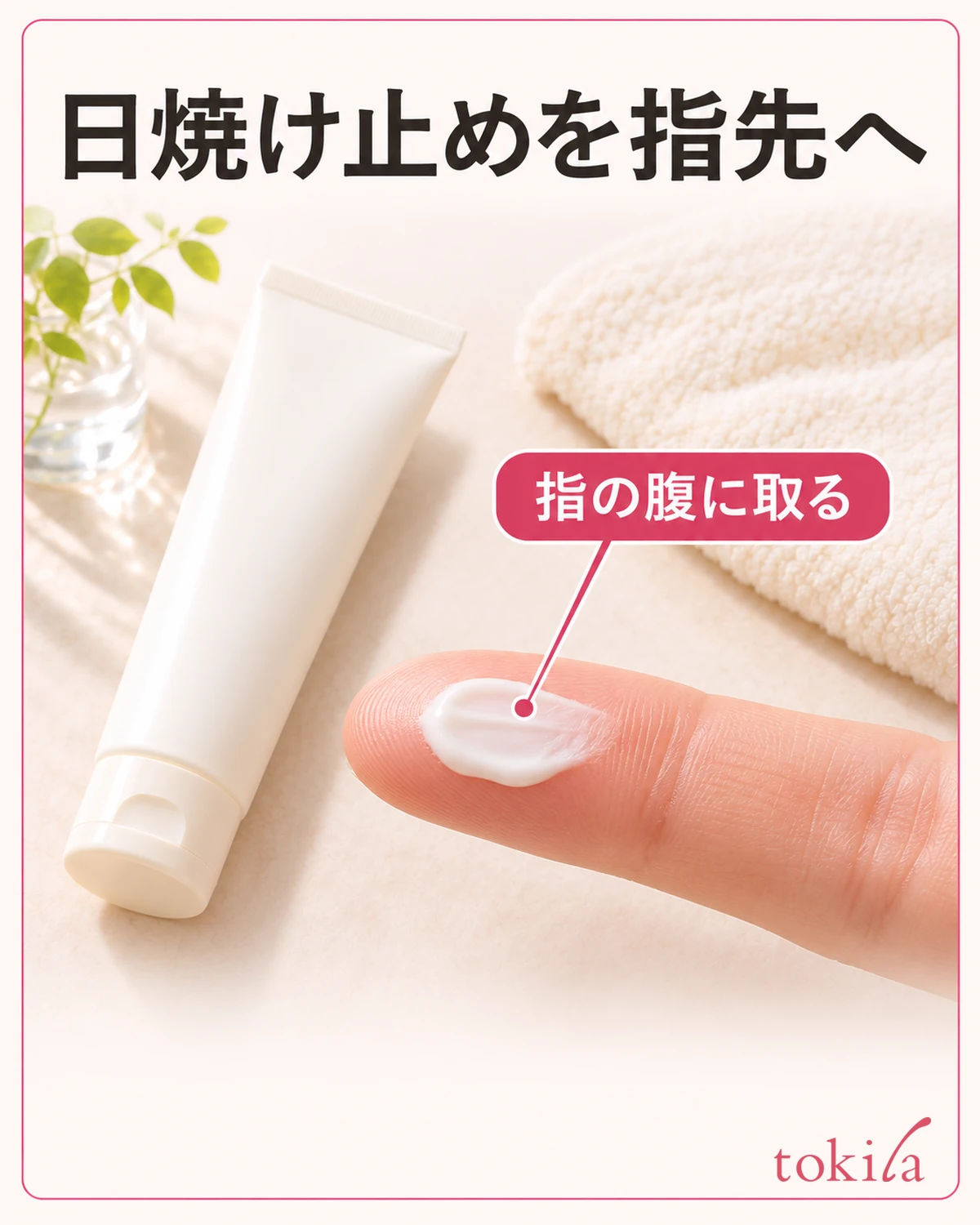
Check the approved areas and directions on the container or carton to see whether your sunscreen can be used on the skin on the outside of your ears. There may be different directions for dispensing it for the face and the body. If the product says to shake before use, close the cap and do so before dispensing it.
Even lotions and creams intended to be applied by hand come out of their containers at different speeds. If the liquid spreads quickly, catch it in your palm first and transfer it to your finger pad to divide the amount more easily. If you only have a spray, check the permitted areas and whether the directions describe applying it by hand before spraying it directly toward your ear.
Using only what's left in your palm after applying sunscreen to your cheeks makes it hard to tell how much you used on your ears. Make your ears a separate step and dispense a fresh amount so you remember to do both sides. Use your product's directions as a guide and put an amount you can handle on your finger pad.
The ear is narrower than the flat areas of your face, and its rim has contours. Placing sunscreen on your finger pad makes it easier to see where it first goes than spreading it across your whole palm. There's no need to set a number of drops for the ears that applies to every product. Dispense it into your hand first and spread it from there instead of applying it directly from the container.
If the liquid runs off your finger easily, turn your fingertip upward before moving your hand toward your ear and work with smaller amounts. If you're unsure whether there's enough left for the second ear after doing the first, work on one side at a time and dispense more as needed.
3. On the front of the ear, move your finger from the top rim toward the lobe
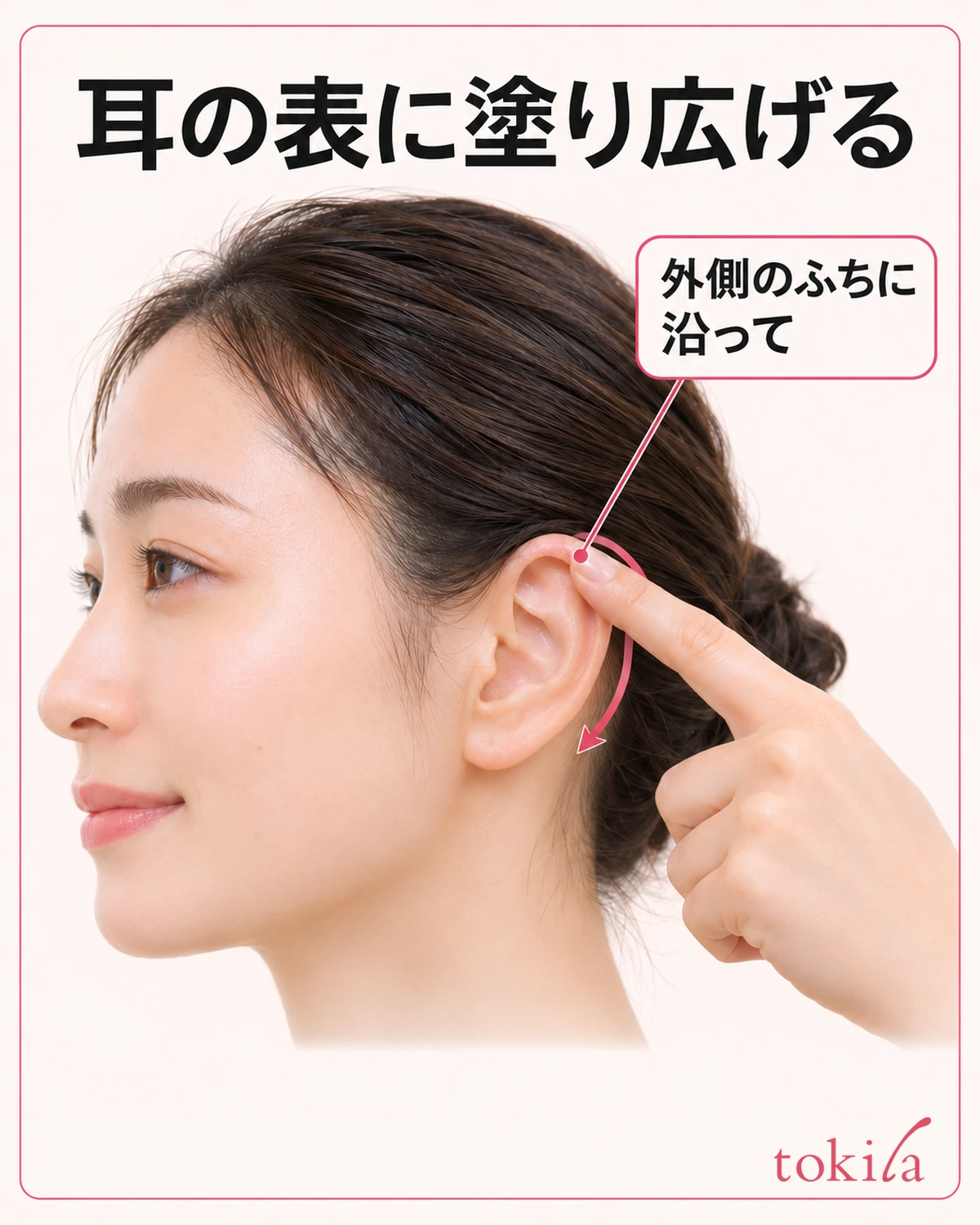
Place the pad of your index finger on the outer rim at the front of the ear, away from the ear opening. Find the upper rim first, then move your finger a little at a time toward the lobe along the outside. You might think you went over the top of your ear when your finger actually slid past your cheek and touched only the hairline. The first time, use the mirror to see where your finger pad actually meets the rim.
Work along the outer rim and then the outer skin visible from the front. Tracing the hollows with your fingertip held upright makes it harder to see where you're moving the sunscreen. Keep your finger away from the ear opening and lay the pad flat on the surface to define the area without pressing hard.
If liquid collects just above the lobe, first look at the area in the mirror instead of rubbing that spot repeatedly. If any outer skin is still uncovered, spread the liquid over it little by little. Repeatedly wiping product out of your hair near your ear can make it easy to lose track of where your finger touched. Clip your hair back again before returning to the missed spot.
On days you wear clip-on or pierced earrings, it's easier to see the front and lower edge of the lobe before putting them on. Deciding when to apply sunscreen and when to put on your earrings can make both easier to fit into your morning routine without repeatedly working around the jewelry.
4. For the back of the ear, place your thumb pad on the outer skin
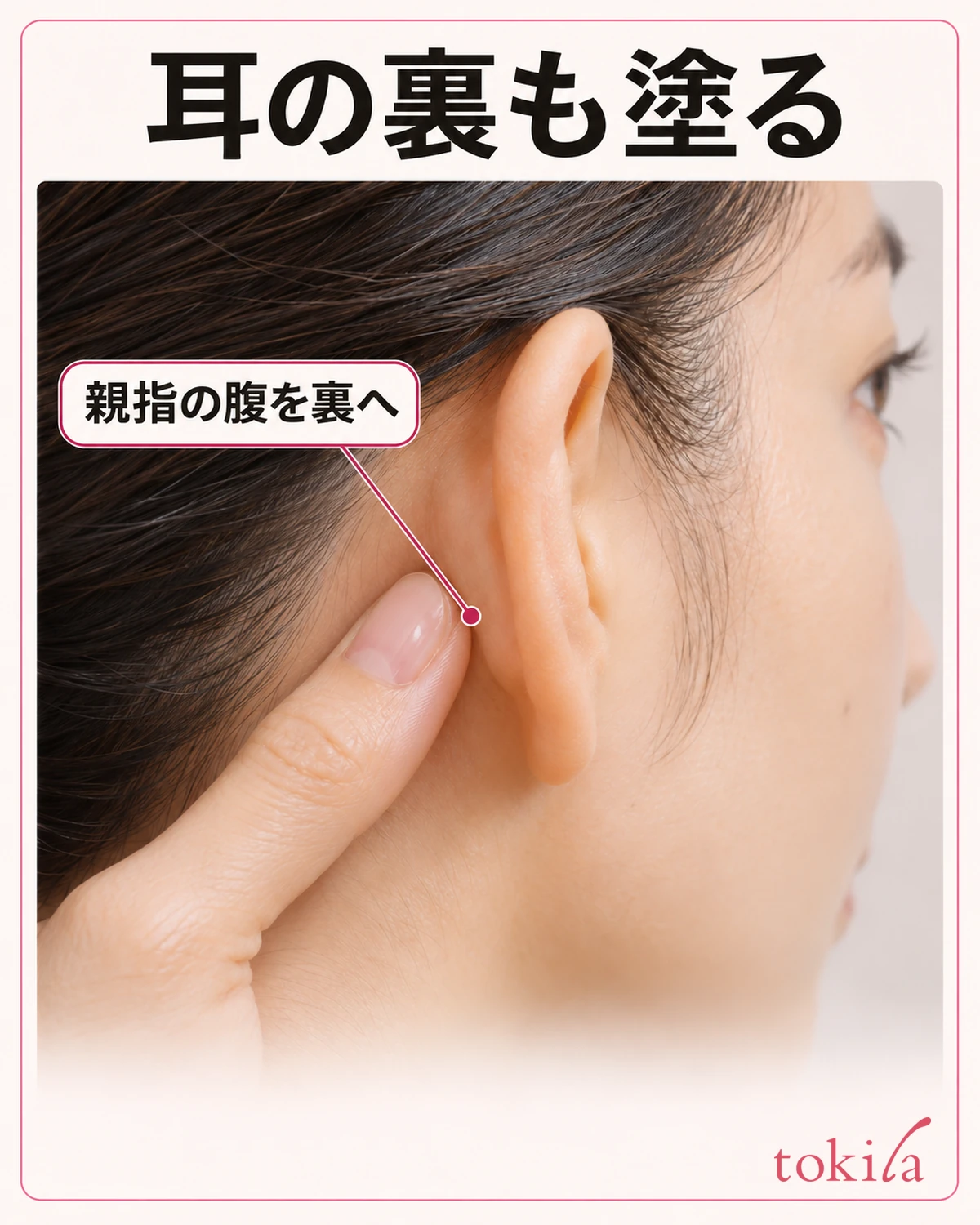
Once you've finished the front, turn your head slightly. Keep the hair out of the way, gently place your thumb pad against the skin on the back of the ear, and spread the sunscreen by moving it a little at a time from top to bottom. Your thumb can miss the back of the ear and touch only the skin on your head, so first check where the pad makes contact before moving your hand.
If it's hard to find the spot with one hand, rest your thumb lightly on the back and your index finger on the front to locate your fingers. There's no need to squeeze the ear between them or bend it. Work in small sections from the upper back of the ear toward the back of the lobe so you can check where you're sliding your finger.
When you're done with the back, take your hand away and check under your ear and along the hairline. If you see a white streak or liquid pooled in one spot, use it as a cue to adjust how you spread it. With a product that goes on clear, it's hard to judge coverage or amount by sight alone. Working through the front, the back, and then the other ear helps you remember what's been covered.
If you're moving on to your neck or the nape after your ears, treat those areas as separate steps. Touching the back of the ear and sweeping across the neck cover different areas. Finish the back of the ear first and then move to the neck so it's easier to recall how far you got along the boundary.
5. Check again after wiping sweat or where your glasses touched
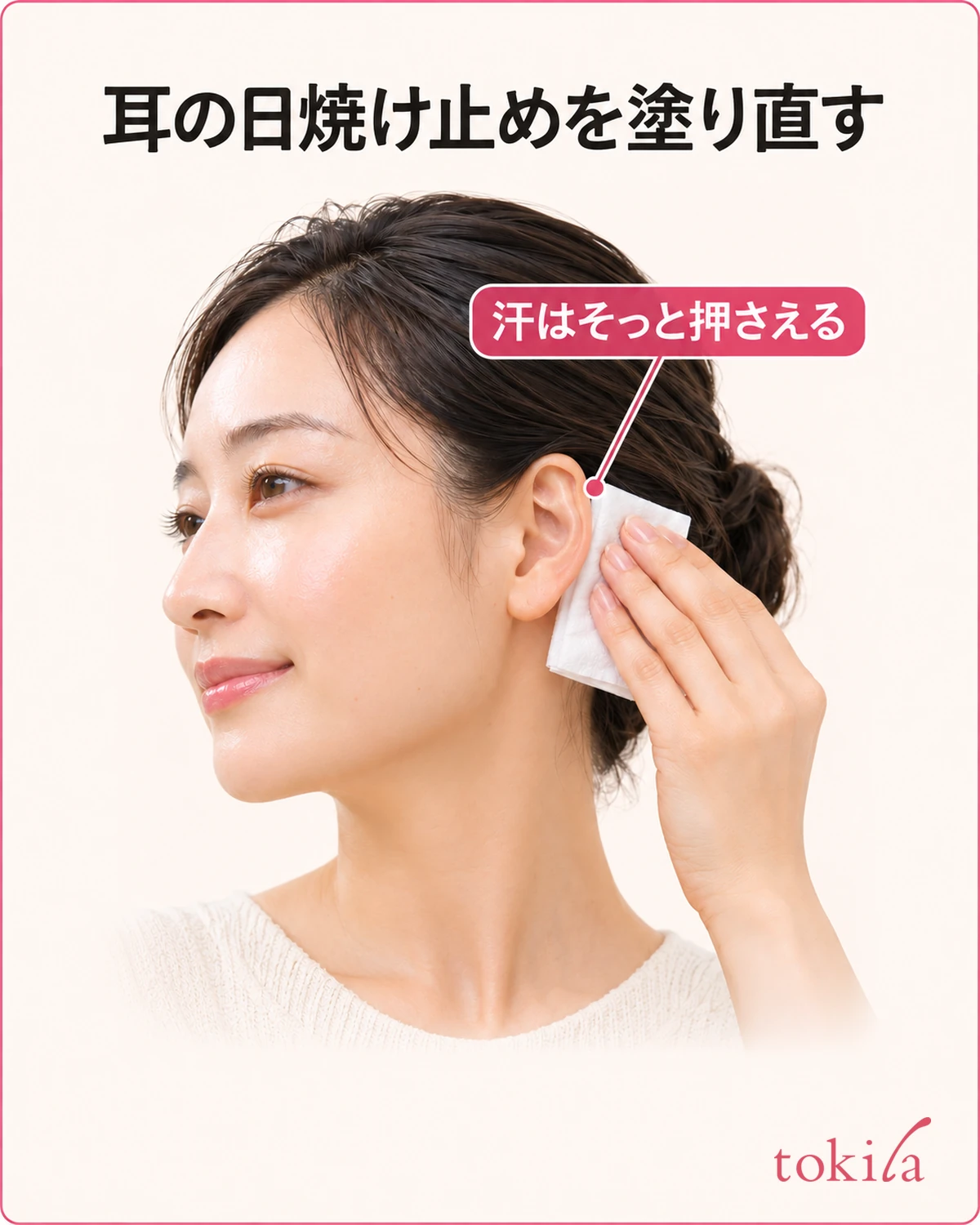
If you wipe away sweat or water while out, check the areas of your ears that the towel or tissue touched as well as your cheeks. If there's still sweat before you reapply, lightly press a clean tissue against the skin. Check the areas that were touched before reapplying according to your product's directions, and avoid rubbing all the way from front to back in one motion.
If you often take off your glasses, look once at where the arms rest above your ears so you know where to check after removing them. The curved part that runs over the ear and the part where a face mask loop rests along the base of the ear are contact points that are difficult to see from the front.
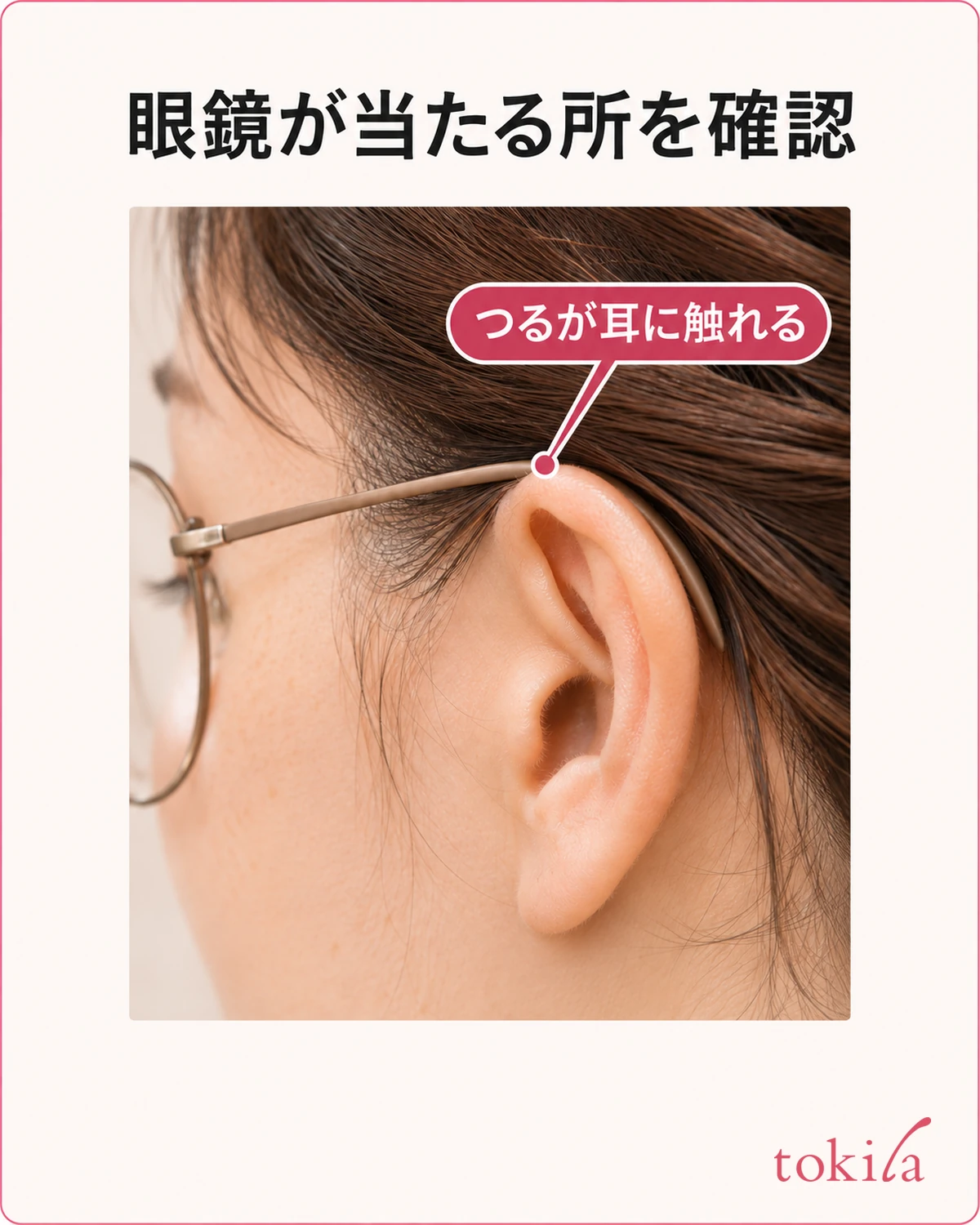
Contact marks alone don't tell you how much sunscreen remains. Think about what just touched the skin, such as a cloth you wiped with, or whether sweat or water washed the product away. Read any directions about applying to dry skin and follow the label and your activities that day when deciding when to reapply.
Link your ear check to something you do while out, like taking off your glasses or putting your hat back on. If you'll be in strong sunlight for a long time, also make use of a wide-brimmed hat and shade. When you get home, remember that you applied sunscreen to the outside of your ears, too, and consult how to remove sunscreen alongside the directions on your own product.