A facial cleanser that dispenses foam when you press a pump lets you skip lathering it yourself. However, the number of pumps and whether to wet your face are not the same for every product. For your first bottle, learn the preparation before dispensing, the motion of spreading the foam, and rinsing as separate steps.
This guide focuses on daily use of facial cleansers that dispense foam from a manual pump. Pastes you lather yourself, nonfoaming gels, and mousses from cans have different containers and instructions. Start by matching the directions on your product to what you actually do, rather than grouping products by the appearance of their foam.
1. Read the label before washing to confirm it is a foam-dispensing facial cleanser
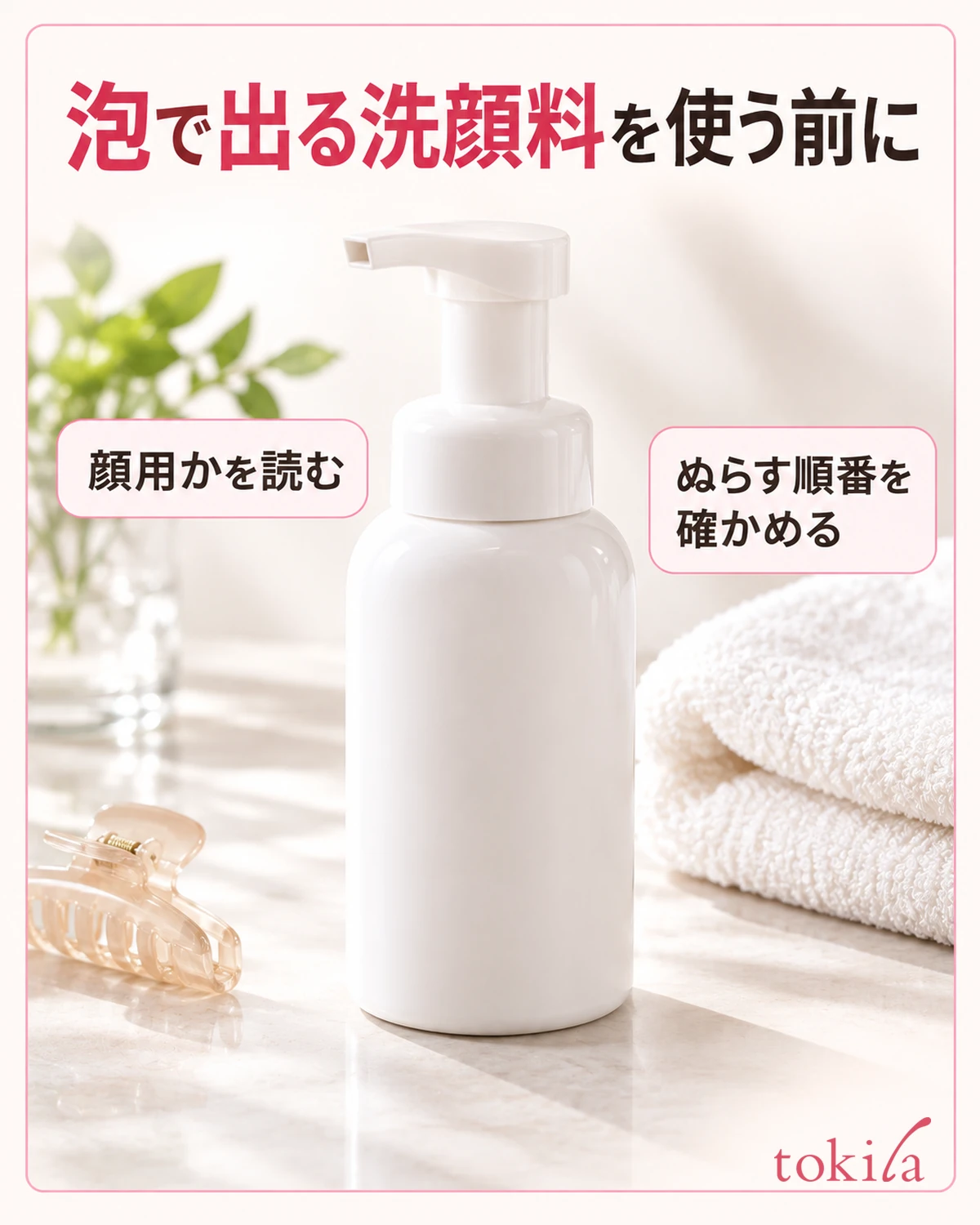
First, check the bottle or outer packaging to confirm the cleanser is for the face. Foam dispensers can also contain hand or body washes, so do not choose by bottle color or pump shape alone. Whether it removes makeup or sunscreen is a separate condition. Dispensing foam does not automatically mean it also works as a makeup remover.
On days you wear makeup, check both the products you have applied and the facial cleanser to determine whether you need a makeup remover first. Keeping the directions for that morning's sunscreen and base makeup, as well as your usual cleanser, at hand makes it easier to check removal methods. Before washing more times, choose steps suited to what you need to remove.
Next, check when to wet your face and hands. If the product is used on a wet face, prepare accordingly first. Some foaming products can also be used on dry skin, so do not assume all foams require the same moisture conditions. The photos here illustrate handling for a product whose directions say to wet the face before use.
Move hair away from your face beforehand, and set out a clean towel for after rinsing. Freeing both hands before you begin helps you focus on bringing foam to your face, rather than looking for a hair clip after dispensing it. Keep the towel away from a spot continually splashed by water at the sink.
For first use, also read the instructions for the pump stopper or lock and any initial empty presses. Products opened by twisting and those requiring removal of a part should not be handled the same way; prepare the dispenser as instructed. Whether to shake the bottle also depends on the product. Do not automatically add steps learned with another cleanser to a foam pump.
Foam size and fineness may be a matter of preference when choosing a product, but their appearance alone does not show cleansing strength or suitability for your skin. Do you want to skip lathering in your morning routine, or choose a form that is easy to handle? Choose for the situation, and avoid comparing effectiveness by the height of a mound of foam.
2. Dispense foam into a clean palm using the stated number of pumps as a guide
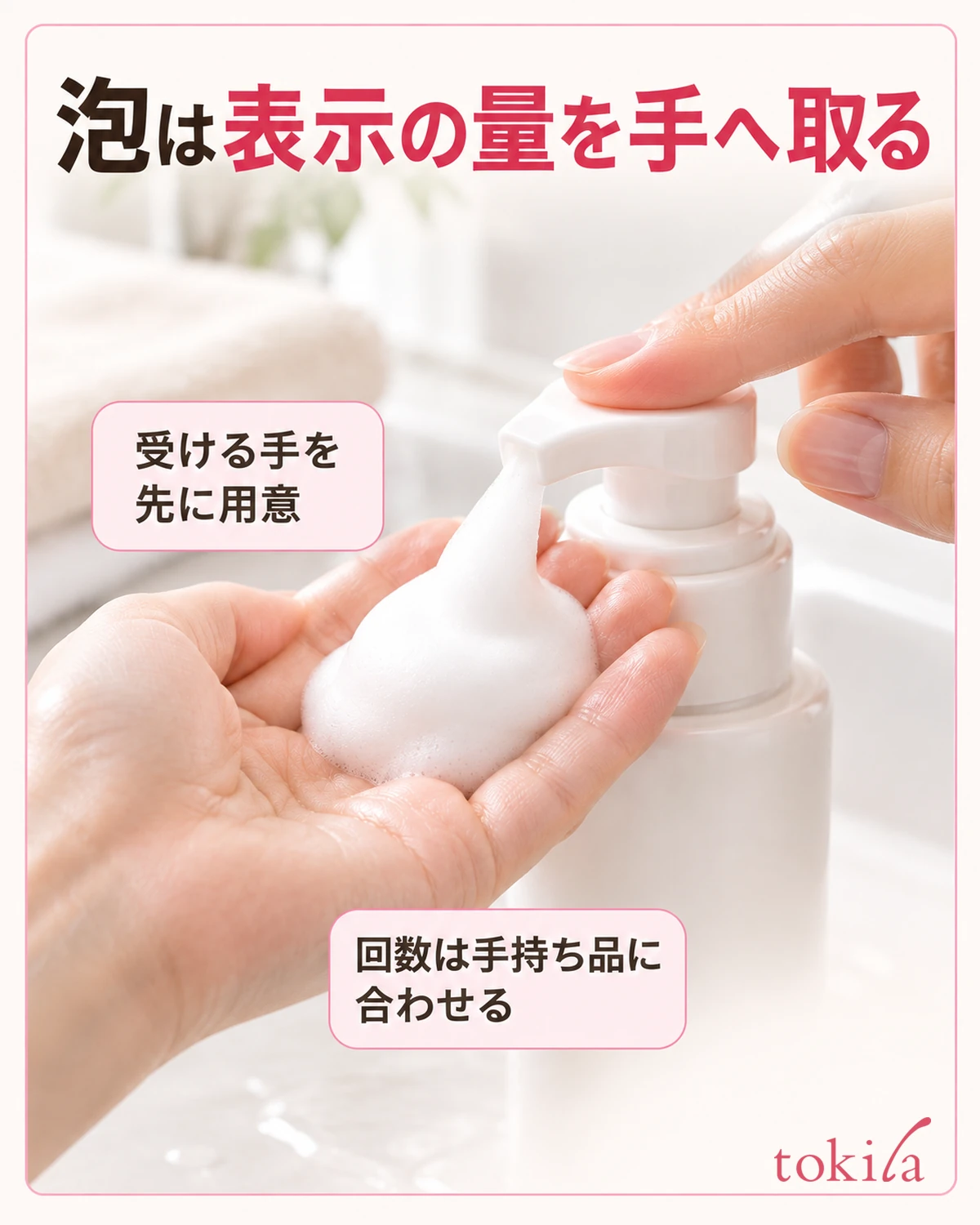
Base the amount on the pump count or other directions given for the product. The amount dispensed in one press varies by container, so do not carry over another bottle's pump count unchanged. When switching bottles, checking the label before relying on habit makes it easier to establish the starting amount.
Set the container on a stable surface and place a clean palm beneath the outlet. Operate the pump with your other hand as directed. Deciding where to catch the foam before dispensing, rather than inserting your hand afterward to chase it, helps keep spilled foam separate from the foam you will use.
Position your hand so you can see the space between the outlet and your palm and check where the foam emerges. Do not press the nozzle into your hand or cover the outlet with a finger. In the close-up photo, look at the relationship between the nozzle tip, the foam below it, and the receiving hand. You do not need to match a numerical distance.
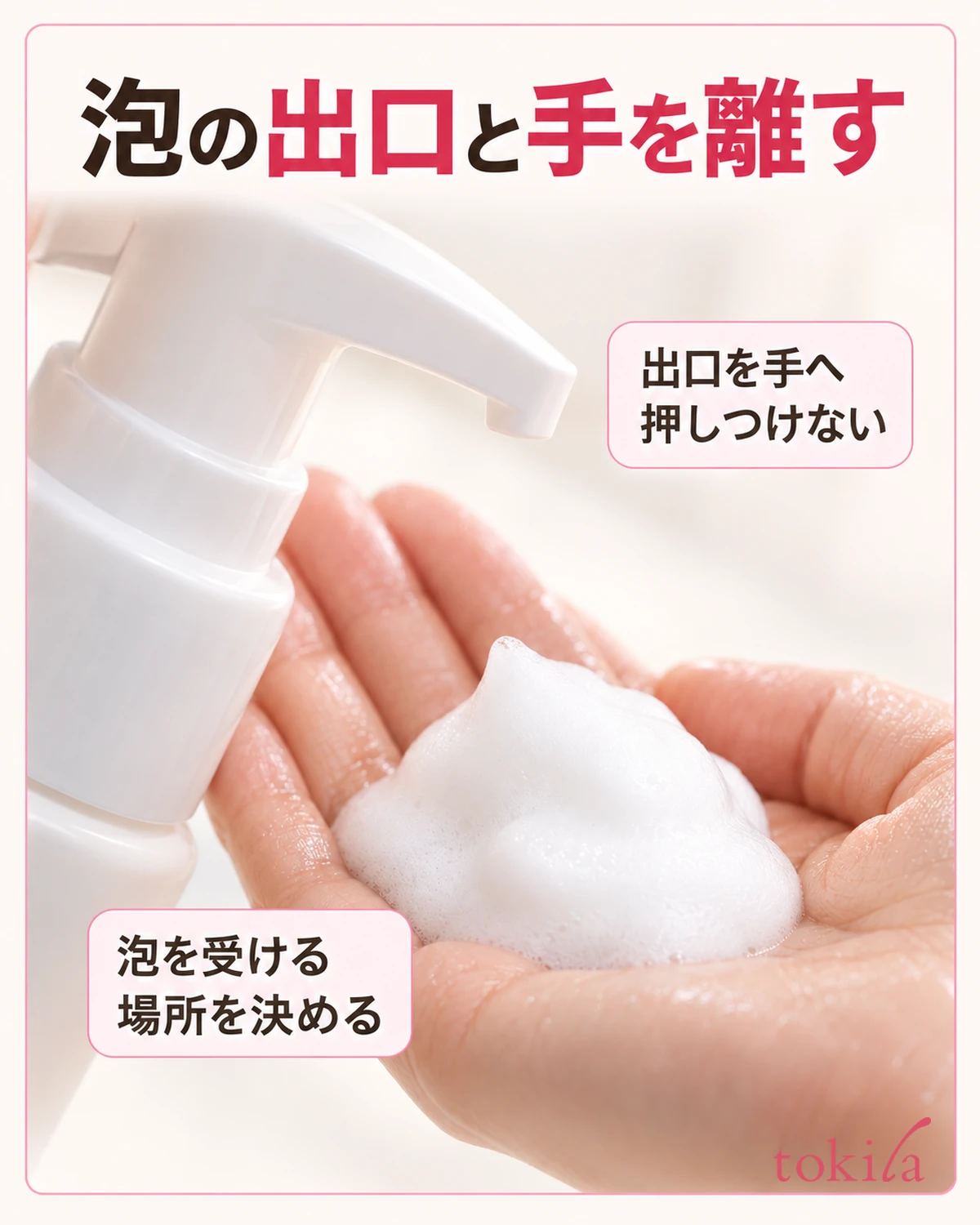
After dispensing one use's amount, bring it to your face as instructed, without adding a step of vigorously kneading it in your hands to remake the foam. Do not simply transfer the water-adding or net motions used for a lathering paste. Distinguish products that supply finished foam from those you lather yourself.
If the foam amount is smaller than usual, comes out as liquid, or the pump does not spring back, check the remaining contents and pump condition before pressing repeatedly. Do not adjust it by adding water or mixing in another cleanser. After refilling, also check the label to confirm you used a product compatible with the container.
Avoid gathering foam that has fallen into the sink back into your hands. Even if you need to dispense more, pause instead of continuing to pump without knowing how much you have applied. Treat a difficult-to-use pump and increasing the amount used on your skin as separate issues.
3. Spread the foam over your face without pressing it down firmly with your palms
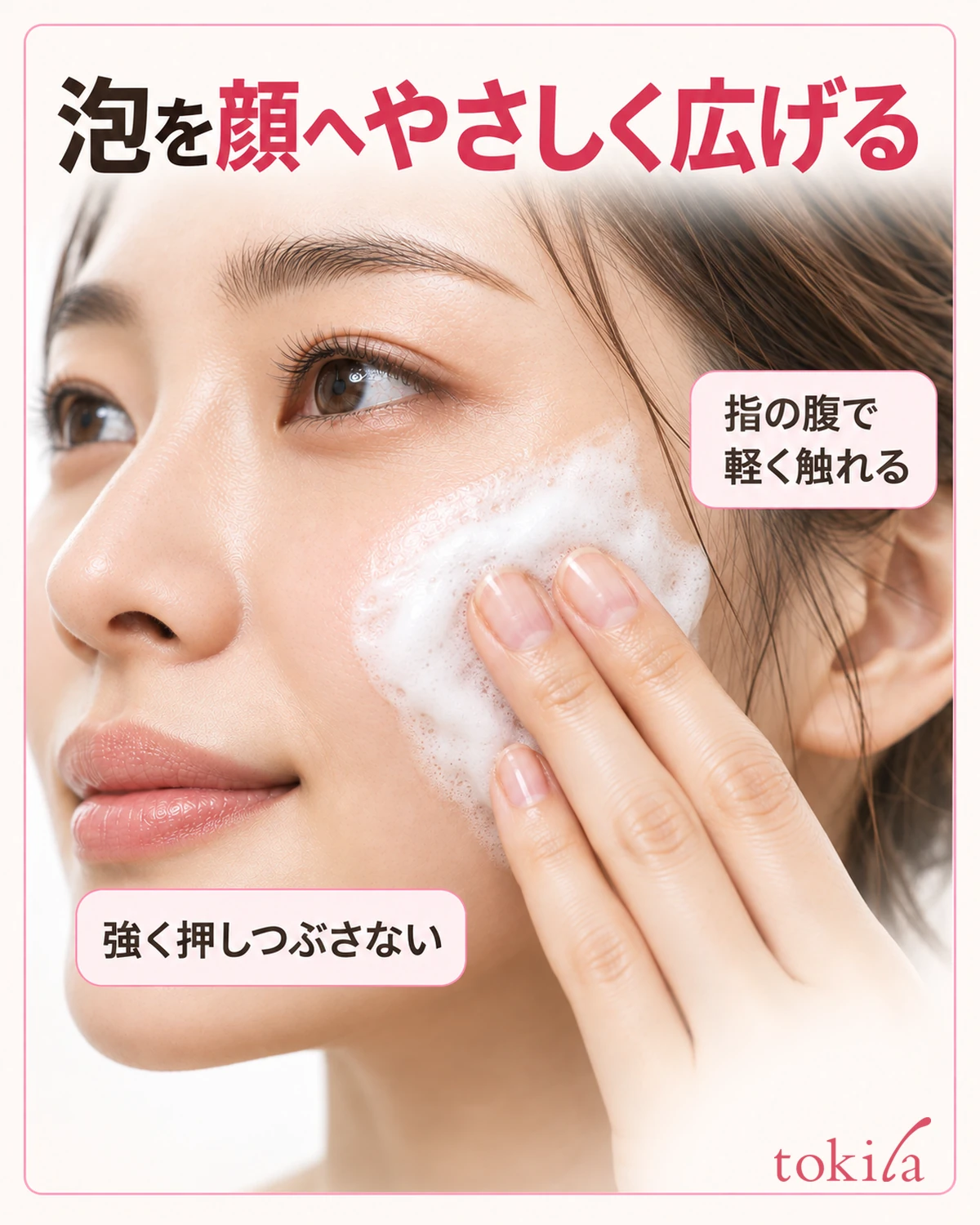
For a product whose directions say to wet your face, spread the dispensed foam over your wet face. Gently transfer it to permitted areas, starting with a surface you can see easily, such as the cheeks. If a sequence for the cheeks, forehead, nose, chin, or other areas is given, follow it. There is no need to set one starting point for everyone.
Move your finger pads with a light touch on the foam, avoiding strong palm pressure on your face or scrubbing details with your nails. Focus on distributing it comfortably over the necessary areas rather than preserving a mound of foam. In the photo, check the contact point where foam lies between the finger pads and cheek.
Around the sides of the nose and chin, check that foam has spread as you work. Do not add prolonged back-and-forth motions on a concern area to push dirt out of pores. Follow any specified application time, and do not turn the cleanser into a mask by leaving foam covering your face.
Around the eyes and mouth, take care to keep it out and follow any instructions to avoid particular areas. Closing your eyes does not mean the product can be used on mucous membranes. Avoid pulling strongly on your face while washing; in places where fingers are awkward to move, first reconsider your position so you can touch gently.
Foam becoming thinner during washing does not necessarily mean insufficient cleansing. Rather than adding more pumps just because foam decreases, check the starting amount, moisture conditions, and area covered. If your issue concerns a product you lather yourself, readhow to reassess facial cleanser foam that disappears quicklyas a guide for that separate type of product.
If you experience an unusual sensation such as stinging, do not keep washing by adjusting pressure or amount. Follow the precautions, including stopping use. A gentle touch does not guarantee suitability for every person's skin. Learning to handle foam and tolerating abnormal skin sensations are separate matters.
4. Rinse with water or lukewarm water and check areas where residue can remain
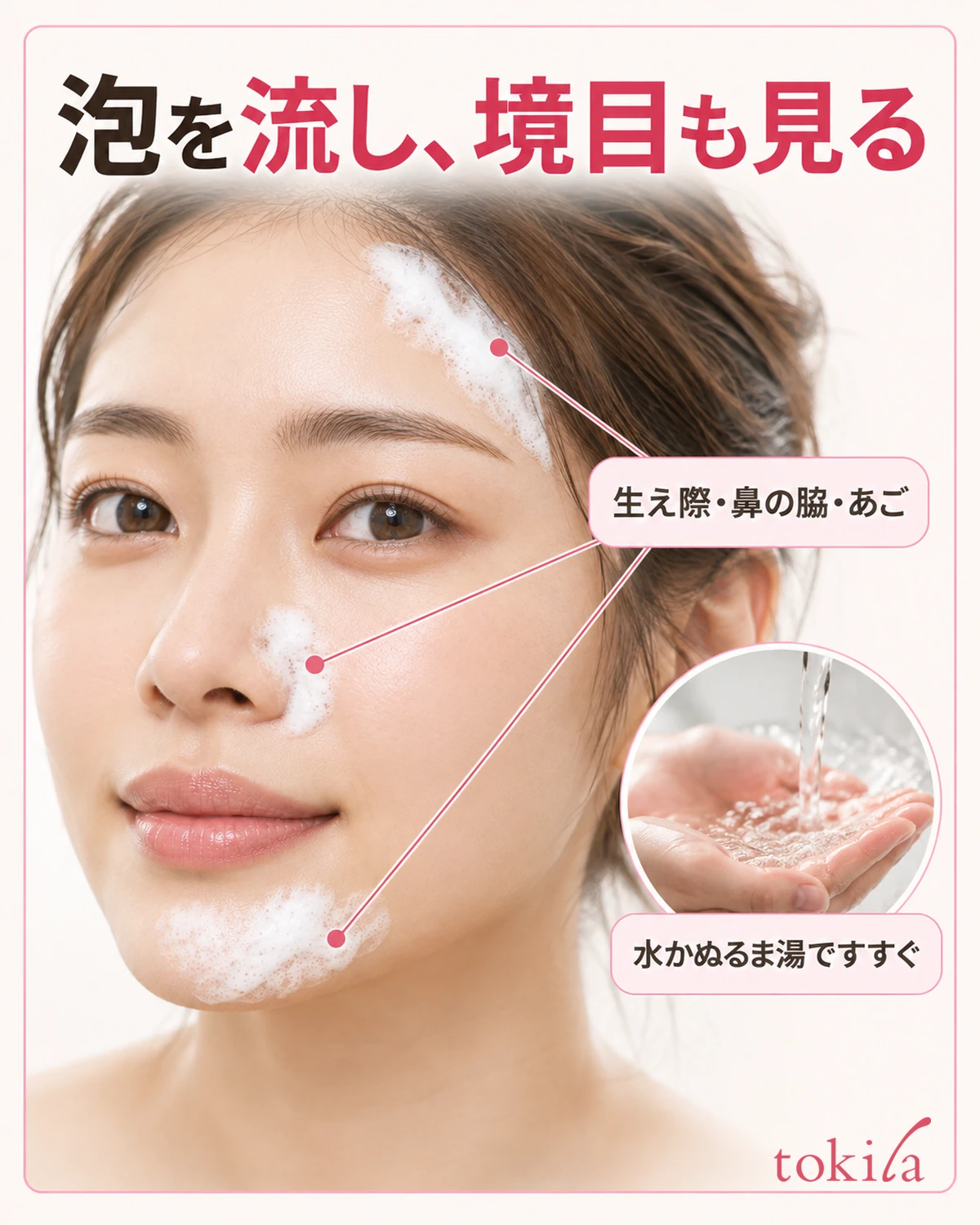
After spreading it over your face, rinse with water or lukewarm water as directed. Cup water in your hands and bring it to your face, repeating rinsing motions rather than rubbing foam away with your fingers. Avoid rushing with hot water or a strong shower stream; choose a posture that lets you bring water to your face comfortably.
After foam disappears from the cheeks, also check the hairline, sides of the nose, and beneath the chin. Do not confuse visible white foam residue with the after-rinse feel of the product. You do not need to rub repeatedly with your fingers until skin feels squeaky. Follow any given rinsing guidance.
If foam remains at the hairline, check whether hair has fallen back onto your face. If an area is hard to see, lift your face slightly, check its position in a mirror, and bring water to it again. Identifying where residue remains, rather than prescribing one rinse count, helps you avoid rinsing only the same cheek over and over.
After rinsing, lightly place a clean, soft towel against your face to absorb water. Instead of dragging it sideways, touch and lift it, then move to an area with remaining droplets. In the close-up photo, note that a flat towel surface touches the cheek, while a firm corner or seam is not the main contact point.
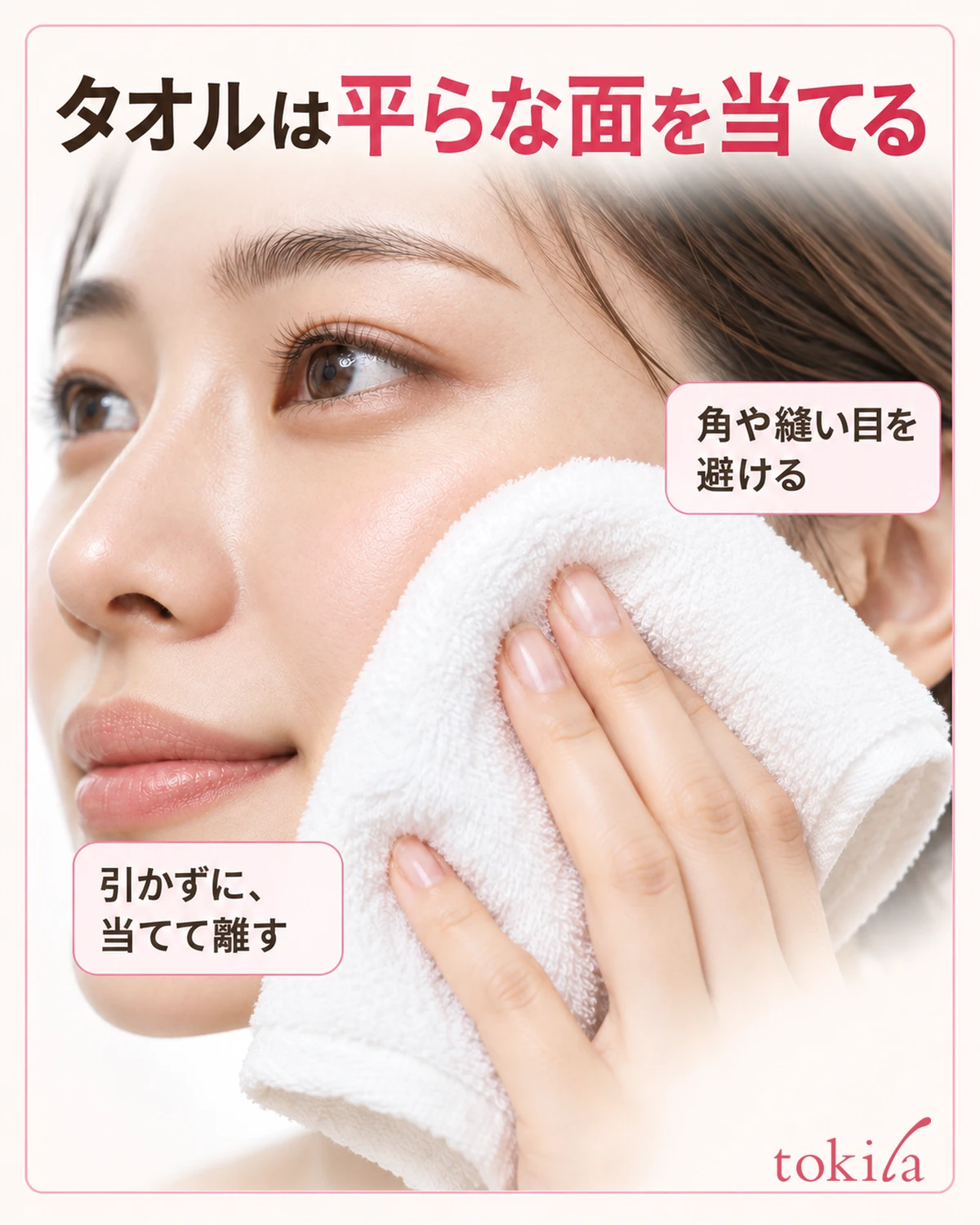
Do not keep your face covered with a towel or make repeated passes until it feels dry. If water droplets remain at the hairline or chin, move the flat surface there and touch gently. For details on removing water, seehow to use a towel without rubbing after washing your facefor further guidance.
If tightness immediately after washing concerns you, review washing conditions separately from moisturizing afterward, rather than washing more to address it. If redness, itching, pain, or other abnormalities occur or continue, stop use and consult a dermatologist or other appropriate professional as directed in the precautions.
5. Move on to moisturizing and adjust one unclear step next time

After removing water, continue with your usual routine. Follow the order and amounts for the toner, emulsion, cream, and other products you are using. Choosing a foaming cleanser alone does not make moisturizing unnecessary. Setting out the next products before washing lets you move on without searching at the sink.
If applying makeup in the morning, also use sunscreen and subsequent products in their specified order after skincare. Do not treat an impression that skin looks brighter after washing, or that the foam was large, as evidence of UV protection or a beauty benefit. Choose washing, moisturizing, and daytime preparation for their individual roles.
After use, check for foam or dirt at the outlet and follow the care and storage directions. Do not add your own steps such as running water into the pump or widening the hole with a needle. If care instructions are unclear, check while the container is still intact, rather than dismantling it first.
When refilling, confirm the compatible product and container combination. Even among foam types, not every product works with every pump. Follow any directions for washing, drying, and handling remaining contents. Do not mix different liquids to make up one use's amount.
For next time, note just one point that was unclear. If the amount was uncertain, check the stated pump count; if foam spilled, review the receiving hand; if residue remained, check the hair and hairline. Adjusting one preparation step for the motion that caused trouble, instead of increasing both amount and washing time, makes the issue easier to review.
Part of the appeal of a foam-dispensing cleanser is choosing a bottle that suits your morning and evening routines while skipping lathering. Read before use, catch it in your hand, spread it over your face, and rinse. Rather than aiming for speed from the outset, build motions you can comfortably keep up.